

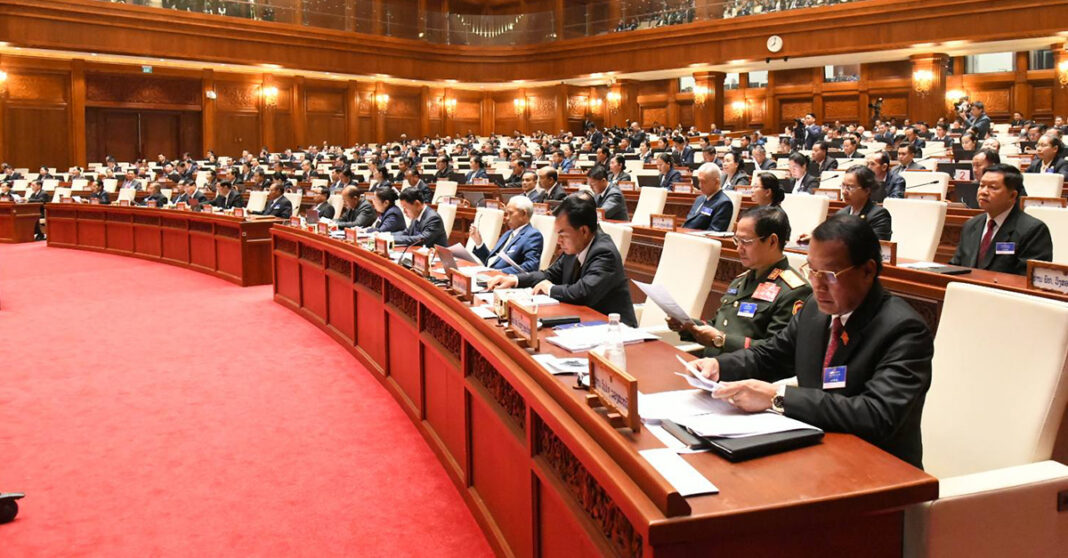
Laos has re-elected President Thongloun Sisoulith and Prime Minister Sonexay Siphandone for another five-year term as the 10th National Assembly opened on Monday. But the session’s most closely watched outcome was the election of Sonexay’s older sister to the country’s second-highest office.
Vienthong Siphandone, a former President of the People’s Supreme Court, was elected Vice President, placing two members of the Siphandone family among the highest government offices.
Meanwhile, Laos has confirmed its three top leaders for another five-year term after the 10th National Assembly convened its first session in Vientiane on Monday, following the general elections held on 22 February.
The results came as no surprise. All three incumbents were returned to office by comfortable margins, extending a leadership lineup that will now guide the country through the 2026–2030 development cycle.
Thongloun Sisoulith was re-elected President, securing 171 of 173 votes cast by the National Assembly members present. The result makes him the most powerful figure in the country by some distance.
He already holds the position of General Secretary of the Lao People’s Revolutionary Party, to which he was reappointed on 8 January at the closing session of the party’s 12th National Congress. At 80, Thongloun now simultaneously leads both the party and the state.
Sonexay Returns as Prime Minister
Prime Minister Sonexay Siphandone was returned to office with 170 of 173 votes. First appointed to the role in late 2022, Siphandone will continue to lead the government through what is expected to be a defining period for Laos’ economic development, including the implementation of the National Socio-Economic Development Plan for 2026–2030.
Lastly, Xaysomphone Phomvihane retained the presidency of the National Assembly, confirmed by the majority of lawmakers. He will be joined by four vice presidents of the legislature: Sounthone Xayachack, Kongkeo Xaysongkham, Vilayvong Bouddakham, and Monexay Laomouaxiong.
Five-day session, five-year agenda
The session runs from 23 to 27 March.
Over five days, lawmakers will review and approve the country’s major national agendas, including the National Socio-Economic Development Plan for 2026–2030, legislative priorities, and institutional frameworks. The 10th National Assembly will hold a total of ten sessions over its five-year mandate.
How the System Works
Laos held its general elections on 22 February, when approximately 4.7 million eligible voters, out of a total population of over seven million, cast ballots to elect all 175 National Assembly members. Under Laos’ political system, it is those legislators, not the public directly, who then vote to confirm the President, Prime Minister, and National Assembly President.
Seats are allocated by constituency, with each province holding a minimum of five and a maximum of 19, based on population. National elections take place once every five years.
