

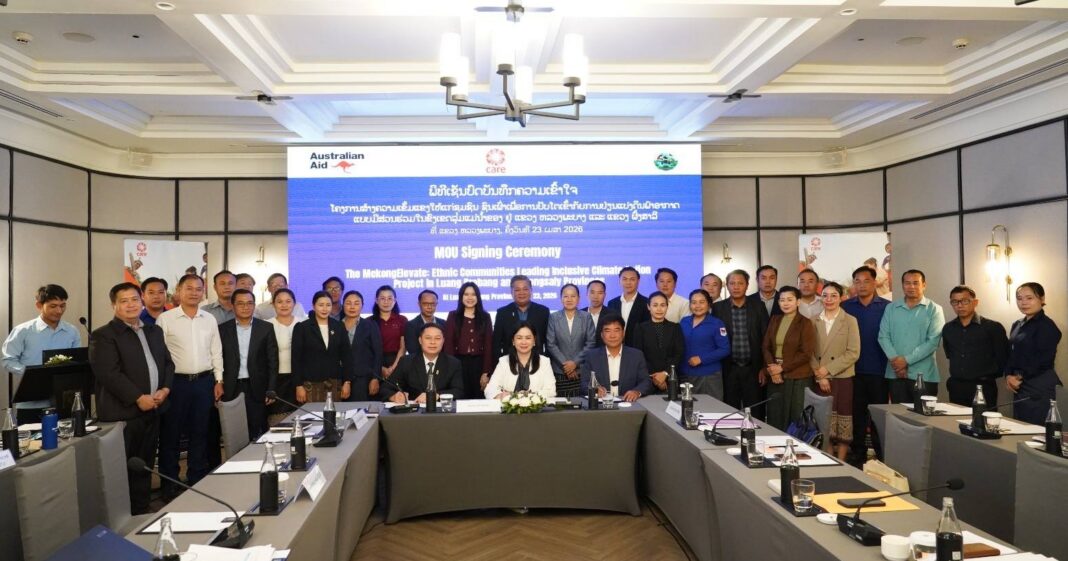
Laos has launched a new climate adaptation project in the north, targeting vulnerable groups including ethnic communities, women, youth, and people with disabilities across 20 villages in Luang Prabang and Phongsaly provinces.
Running until the end of May 2029, the project aims to address the disruption of agriculture and rural incomes caused by shifting rainfall patterns and rising temperatures.
Researchers at the Food and Agriculture Organization of the United Nations indicated in 2023 that Laos was expected to face more intense rainfall flooding, and prolonged droughts in the coming years, which will lead to increased crop failures.
This newly launched project in northern Laos, funded with AUD 2.4 million (approximately USD 1.7 million) by the Australian government through the Australia-Mekong Partnership (MAP), aims to address climate challenges.
It focuses on implementing smart farming, livelihood recovery programs, and strengthening local safety systems to support local communities in Luang Prabang and Phongsaly.
It will also empower communities to participate in climate planning at district and provincial levels.
The project will support a total of 20 villages with a special focus on community-level adaptation and climate-resilient farming
Separate Support Alongside MAP
Australia’s broader engagement in Laos also includes long-term investment in agriculture, which underpins many climate adaptation efforts.
In March, Laos and Australia marked 35 years of agricultural cooperation with a new AUD 15 million (USD 10.6 million) investment supporting climate-smart farming, sustainable forestry, and food security.
Australia’s specialists said this partnership has helped strengthen agricultural and climate resilience through research, innovation, and capacity building, complementing projects in Laos like MAP that focus on vulnerable communities facing climate risks.
