

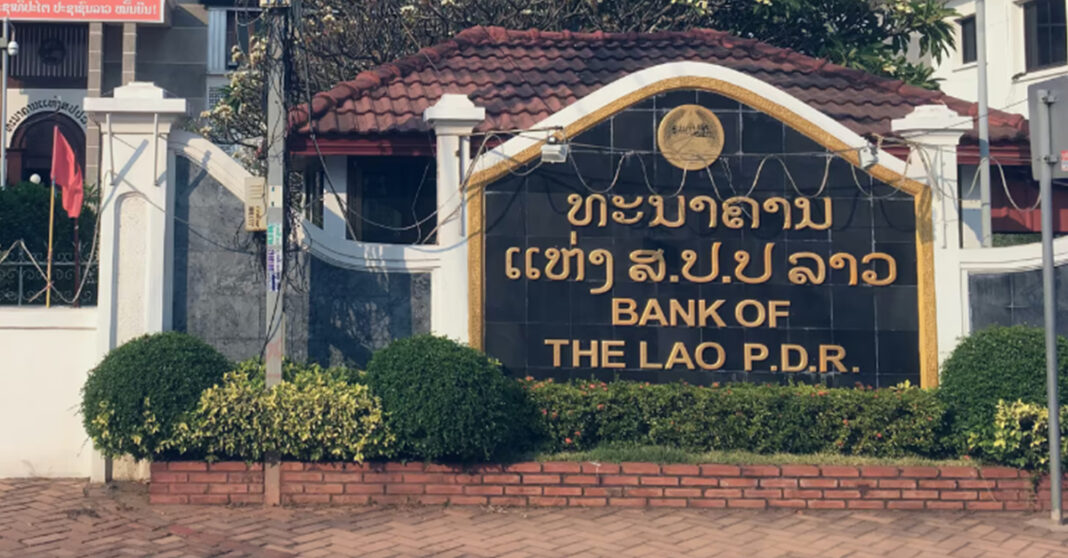
The Bank of Laos (BOL) confirmed it will maintain its 7-day base interest rate at 8 percent per annum following a half-day Monetary Policy Committee meeting on 18 May.
Chaired by Governor Bounkham Vorachit, the session reviewed previous monetary policy resolutions and assessed domestic economic conditions, including fuel supply management, exchange rate stability, and credit provision.
Officials noted that rising oil prices and regional unrest pushed domestic inflation to double digits in April, hitting 10.2 percent, while the continued use of multiple currencies and informal economic activity limited policy enforcement.
To support economic stability, the committee agreed to continue integrated monetary policies. That includes centralization of government deposits, market-based bond issuance, and careful management of foreign exchange inflows and outflows.
Coordination with the Ministries of Finance and Industry and Trade will ensure credit allocation for seasonal agricultural production, import substitution, and export-oriented industries, the officials said.
Policy Changes
The 2026 decision follows a series of adjustments over the past two years.
In November 2025, the BOL cut the 7-day base interest rate from 9 percent to 8.5 percent, aiming to boost liquidity, encourage credit growth, and strengthen the Lao economy amid global fluctuating exchange rates.
At the time, officials noted risks of high foreign debt repayments and persistent domestic weaknesses, although inflation was projected to remain moderate at around 5 percent.
Earlier, in mid 2024, the BOL had raised the rate to 10 percent per annum to address rising inflation and stabilize the kip, while the historical short-term rate stood at 7.5 percent in February 2023.
Monetary Policy Plans for 2026
Looking ahead, the BOL will maintain a mixed monetary policy approach, including ongoing issuance of short-term bonds, a managed exchange rate system, and adjustments to the reserve requirement ratio.
Commercial banks are allowed to operate within a 6.5 percent exchange margin, with daily reference rates adjusted flexibly to monitor currency fluctuations.
The committee also approved four scheduled meetings in 2026 to review measures on commodity price control, tax exemptions, and curbing illegal trade.
Additional efforts will focus on centralizing government deposits and improving next-day transfer processes to prevent idle funds. Coordination with relevant agencies will continue to ensure effective implementation of monetary and fiscal policies.
Officials emphasized the importance of strengthening domestic production, maintaining price stability, and preparing for potential external shocks.
