

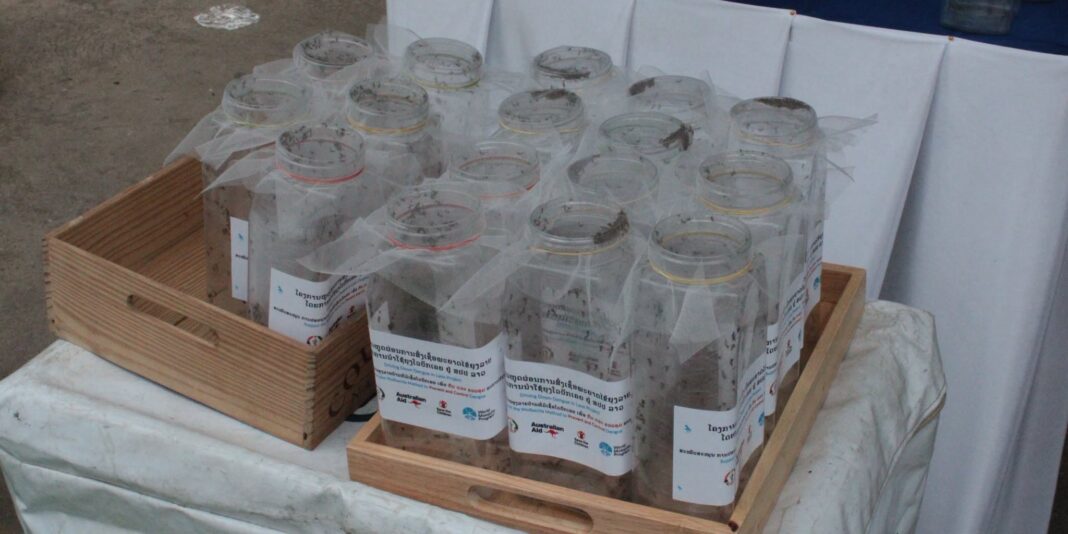
On 9 June, Savannakhet Province launched its first bacteria-enhanced mosquito release program, becoming the latest province to join Laos’ expanding effort to curb dengue transmission.
The launch took place in Kaysone Phomvihane City as part of the Driving Down Dengue in Laos project, led by the Ministry of Health in partnership with the World Mosquito Program (WMP). Releases will cover 22 villages across more than 21,600 households.
The program uses mosquitoes carrying Wolbachia, a naturally occurring bacteria found in many insects. When introduced into Aedes aegypti mosquitoes, the primary carriers of dengue, the bacteria reduces their ability to transmit the virus. The same method also blocks the spread of Zika, chikungunya, and yellow fever. Health officials say the mosquitoes are not genetically modified and pose no risk to people, animals, or the environment.
The expansion builds on earlier deployments in Vientiane Capital, where authorities released large numbers of Wolbachia mosquitoes across all nine districts in August 2025. Previous releases in two Vientiane districts helped protect around 86,000 residents, with community acceptance reaching 99 percent.
WMP plans to scale up releases beyond Vientiane Capital and Savannakhet to Oudomxay, Luang Prabang, and Champasak this month, aiming to protect more than 1.2 million people nationwide.
The push comes as dengue continues to challenge public health across Laos.
The Ministry of Health recorded over 1,300 cases with no deaths as of mid-May this year. Last year saw nearly 12,000 cases, following a harder 2024 that brought more than 20,000 infections and over a dozen deaths. Though case numbers have trended downward, dengue remains endemic throughout the country.
Officials say the Wolbachia method offers a long-term, community-based solution that works alongside existing prevention measures such as mosquito fogging and public awareness campaigns.
