

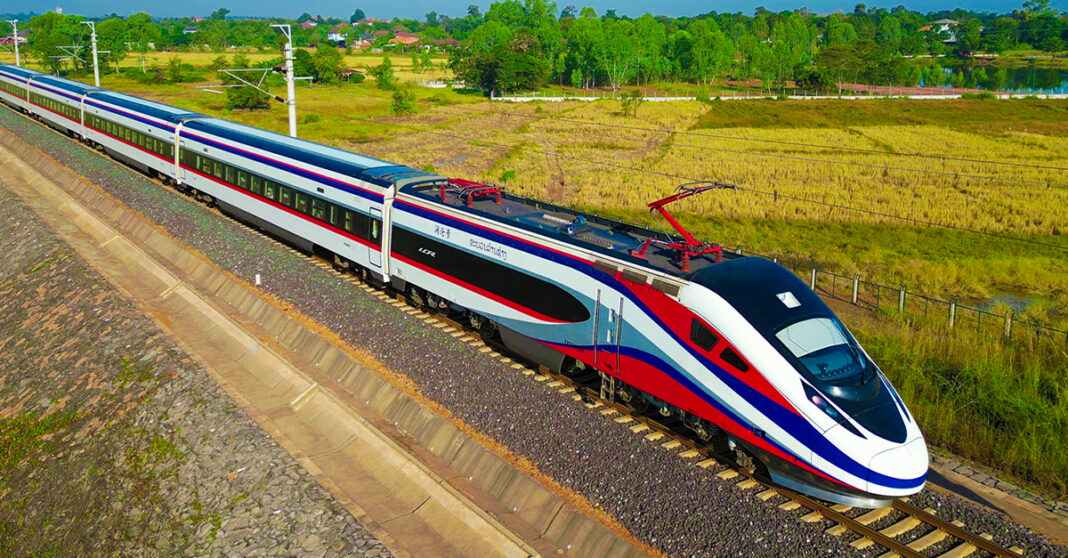
Laos joined an international railway corridor stretching from Southeast Asia to the Baltic coast of Europe, in what officials describe as a historic milestone for the country’s rail sector.
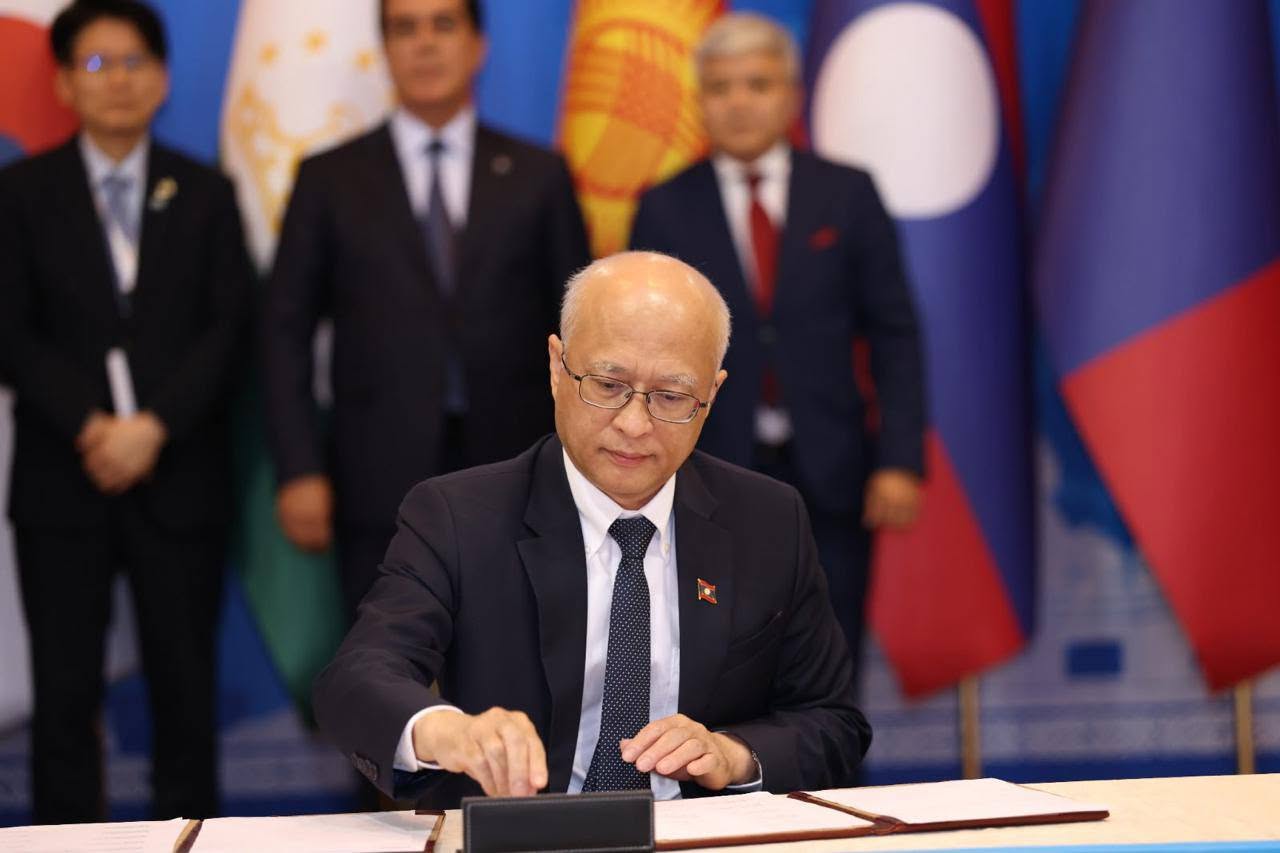
Deputy Minister of Public Works and Transport Ngampasong Muongmany signed an agreement in Dushanbe, Tajikistan,
At the OSJD Ministerial Conference, from 9 to 12 June, Laos agreed to a new rail framework allowing exporters to move goods from Vientiane through China, Central Asia, and Russia to Europe under one system.
The deal also positions Laos as a transit hub for international freight. It builds on the Laos-China Railway, which has operated since December 2021, linking Boten to Vientiane over 422 kilometers.
Among Southeast Asian nations, Laos and Vietnam are the only two OSJD members.
The corridors streamline freight and passenger flows across borders, cut transit times, and harmonize rail operations between member states.
One of the new rail corridors links Laos, Vietnam, China, Kazakhstan, Russia, and Estonia, creating a route from Southeast Asia to the Baltic Sea.
The agreement also strengthens the case for the planned Laos-Vietnam Railway, with construction on the Lao section set to begin in 2026 and operations targeted for 2030.
Once completed, it will link with the Laos–China Railway, forming a continuous regional freight route and giving Laos a formal role in international rail negotiations and logistics investment.
Joining the corridor gives Laos formal standing within a recognised international rail framework, enabling it to negotiate freight terms, access cross-border operating agreements, and attract logistics investment.
OSJD is an international railway organisation founded in 1956 that brings together 30 member countries across Europe and Asia. It manages 13 railway corridors designed to move freight and passengers smoothly across borders, connecting the continent from east to west.
