

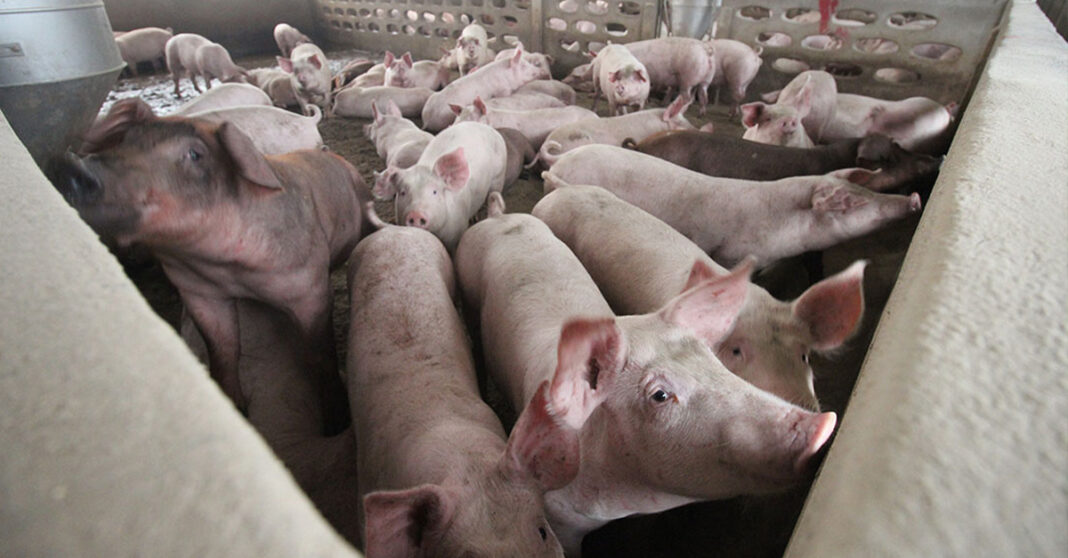
African swine fever has spread across Laos, with 11,369 pigs dead or culled since the outbreak began in Xayabouly Province in June.
The virus has since reached Phongsaly, Houaphanh, Xaysomboun, Luang Prabang and Vientiane Capital, prompting authorities to impose tighter controls on the movement of pigs and pork products.
Vehicles carrying pigs or pork products must undergo disinfection to reduce the risk of spreading the virus.
People who violate the restrictions could face fines or legal action.
The disease has affected farms across multiple districts and villages, with officials warning that further spread could cause significant economic losses and contribute to local pork shortages.
Containing the Outbreak
Authorities have ordered closer monitoring of pig health.
If farmers find sick or dead pigs, they must immediately report them and send blood samples to the Animal Disease Diagnostic Center for testing by veterinary specialists.
Authorities have also ordered farmers to isolate sick animals and keep them on affected farms rather than moving them elsewhere. Carcasses must be disposed of according to technical procedures to prevent the virus from spreading.
Officials are using disinfectants and other disease-control products, including dewormers, insecticides and deltamethrin, where necessary.
Farmers and traders must now strengthen biosecurity on farms. Advised measures include putting up fences around farms, preventing potentially infected animals from entering, setting up disinfection points at entrances and limiting visitors.
African Swine Fever
African swine fever is a highly contagious viral disease that affects domestic and wild pigs. It can cause mortality rates close to 100 percent in infected pigs, although it does not infect humans.
Common signs include high fever, weakness, loss of appetite and red, inflamed or bruised skin. In severe cases, infected pigs can die suddenly.
The disease does not pose a direct health risk to people, but outbreaks can cause major losses for farmers and disrupt local pork supplies.
Authorities are continuing to monitor the affected provinces and strengthen measures to prevent the virus from spreading to more farms.
