

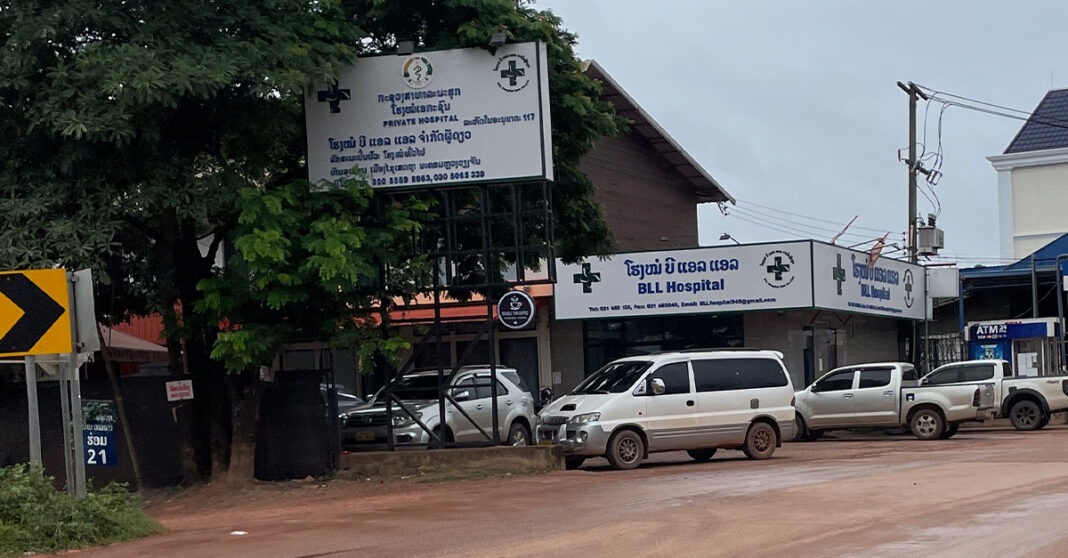
The Ministry of Health announced the immediate closure of BLL Hospital after a Taiwanese media investigation published allegations of organ trafficking at the facility.
Despite the order, patients and doctors were still seen entering and leaving the hospital on Tuesday morning.
The parking lot remained full, with no visible police presence or signs that authorities had begun enforcing the closure.
In a notice issued on 21 July, the ministry said the hospital would remain suspended while authorities investigate the claims, although it did not say how long the inquiry would take.
BLL Hospital is located in Amone village, Xaysettha district, about 7 kilometers from That Luang Stupa in Vientiane Capital. The allegations first surfaced in an investigation published by The Reporter on 19 July, which claimed the hospital was being used as the base of an illegal transnational organ trafficking operation.
According to the report, brokers working with Chinese doctors arranged kidney transplants for patients from Taiwan, China and other parts of Asia at the hospital. It alleged that transplant recipients were quoted between USD 130,000 and USD 180,000 per procedure and were required to pay the full amount in cash.
Public Pressure Mounts
The story went viral across Laos and beyond on 21 July, triggering widespread public reaction and calls for answers.
Authorities are now investigating whether BLL Hospital or anyone connected to the facility violated Lao law, including provisions under the Law on Health Care that prohibit the trafficking of human organs and human tissue.
So far, the Ministry of Health has not named any individuals under investigation or confirmed whether the allegations are true, saying only that the inquiry is ongoing.
Under current regulations, organ transplants in Laos are only permitted at two public hospitals in Vientiane, Mittaphab Hospital and Military Hospital 103. BLL Hospital is not licensed to perform transplant procedures.
As of 22 July, one day after authorities announced the hospital’s temporary closure, cars were still parked outside and people continued to move in and out of the premises. It was unclear whether they were officials carrying out the inspection, hospital staff, patients, or members of the public.
