

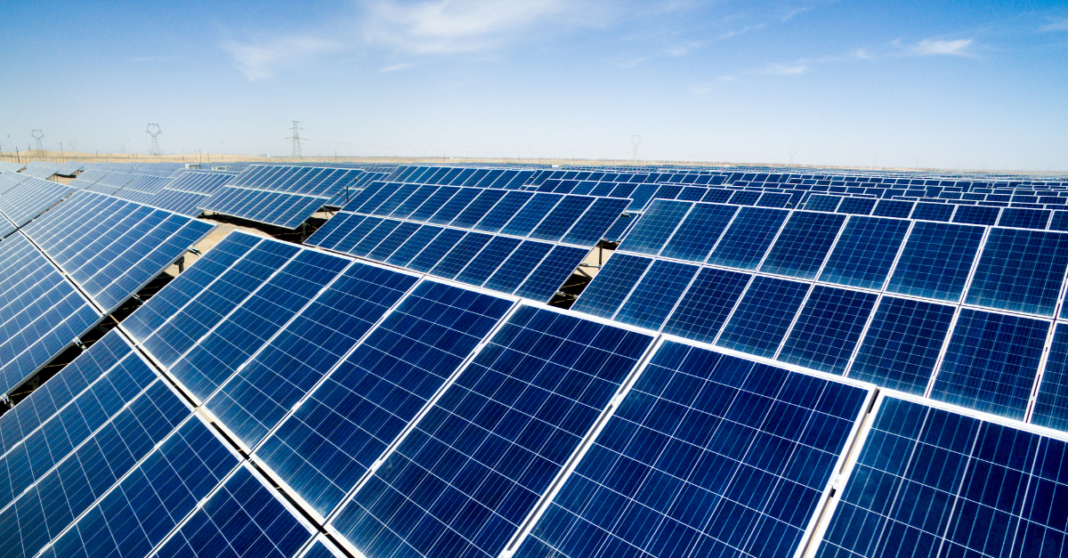
A 100-megawatt (MW) solar project in Bolikhamxay is moving ahead, with developers meeting local communities on 18 September to discuss the planned plant.
The project will cover 140.23 hectares in Nam Ngiep and Khuay Oudom villages in Paksan district. It will use 211,007 dual-glass monocrystalline solar panels and is expected to generate about 197 gigawatt-hours (GWh) of electricity a year.
The Lao government and Thai company APDL Solar Power Sole Co., Ltd. signed an agreement in February to study the project’s feasibility. APDL is developing the project with India’s Kosher Climate India Private Limited.
The 18 September consultation brought together provincial and district officials, local authorities, community members, and the developers to discuss the project, including plans for carbon credits. Authorities have not yet announced when construction will begin.
Solar Projects Expand Across Laos
The Bolikhamxay plant is one of 12 sites selected under the government’s national solar development and power purchasing plan.
In Oudomxay, a 100 MW solar project in Xay district is among the northern priority sites. The project is planned within the Hin Reservoir zone, covering parts of Ban Nalae and Ban Nasankham, and has already signed a feasibility study agreement with South Korea’s CTE Company.
Oudomxay is also home to Laos’ largest solar farm. A 1,000 MW facility covering 2,090 hectares across seven villages in Xay and Namor districts began operating in late 2025. It generates about 1.7 billion kWh a year, with electricity exported to China’s Yunnan Province through the Laos-China 500 kV transmission line, which became fully connected in early February.
The government has assigned the priority locations by region under its clean energy procurement guidelines, which aim to resolve power shortages during the dry season.
Four to five projects will concentrate in the Central and Southern regions, Bolikhamxay, Khammouane, and Champasak, to support provinces with expanding industrial sectors, while another four to five will spread across the North, in Luang Prabang, Xayabouly, and Vientiane provinces, to supplement energy where hydropower dam water levels drop during the dry season.
Also in Savannakhet, a 158-hectare, 100 MW solar farm is under construction near Kaysone Phomvihane city, which prioritizes Lao-made panels, according to Lao state media.
Under Laos’s National Power Development Strategy for 2021–2030, the government plans to increase solar and wind power to 11 percent of the national electricity mix by 2030, diversifying a power sector still dominated by hydropower.
