

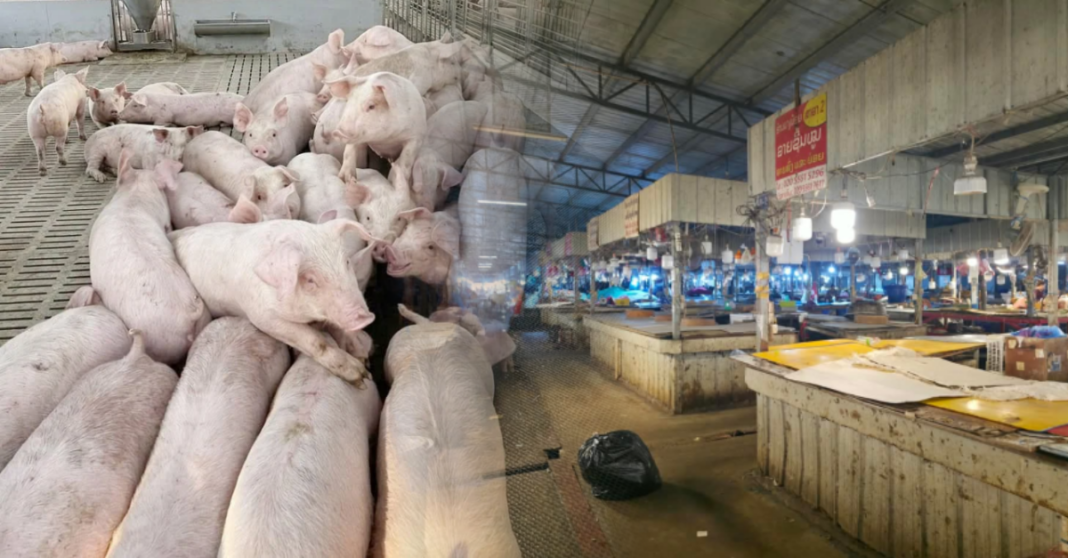
The pork shortage is putting pressure on Vientiane’s meat markets as African swine fever (ASF) spreads across Laos and authorities restrict the movement of pigs and pork.
State media have confirmed outbreaks in two districts and three villages in Vientiane Capital, including Sangthong district, where 115 pigs died across two villages. Local environment officials said the outbreak there has been contained since 4 September and expect pork sales to return to normal. Restrictions on moving pork into the capital, however, remain in place.
At Phontong Market, vendors are already feeling the impact. Noi, a local meat vendor, told the Laotian Times that authorities banned her from selling pork following the outbreak.
She confirmed that beef prices have risen by LAK 20,000 (approximately USD 0.90) per kilogram since the outbreak. With beef already in limited demand, she said higher prices are driving away more customers and hurting her business.
Outbreaks Spread Nationwide
The pressure on Vientiane’s markets is part of a wider outbreak.
Since June, ASF has spread to seven provinces, 19 districts, and 95 villages, according to a Ministry of Agriculture and Environment report issued on 24 September. The ministry recorded 14,002 pigs dead or culled, up from 11,369 in its previous update less than a week earlier.
Family farms have absorbed most of the damage, accounting for more than 79 percent of affected pigs. The ministry estimates financial losses at more than LAK 58.8 billion (USD 2.6 million).
In response, authorities have suspended pork imports and introduced a color-coded zoning system covering red, yellow, and green zones to control the movement of pigs.
Transport is banned in active outbreak zones, while movement is allowed under strict monitoring in areas classified as safe.
Major agricultural hubs including Xayabouly, Houaphanh, and Luang Prabang have also been affected, adding pressure on farmers, vendors, and consumers as authorities try to contain the outbreak and limit its economic impact.
