

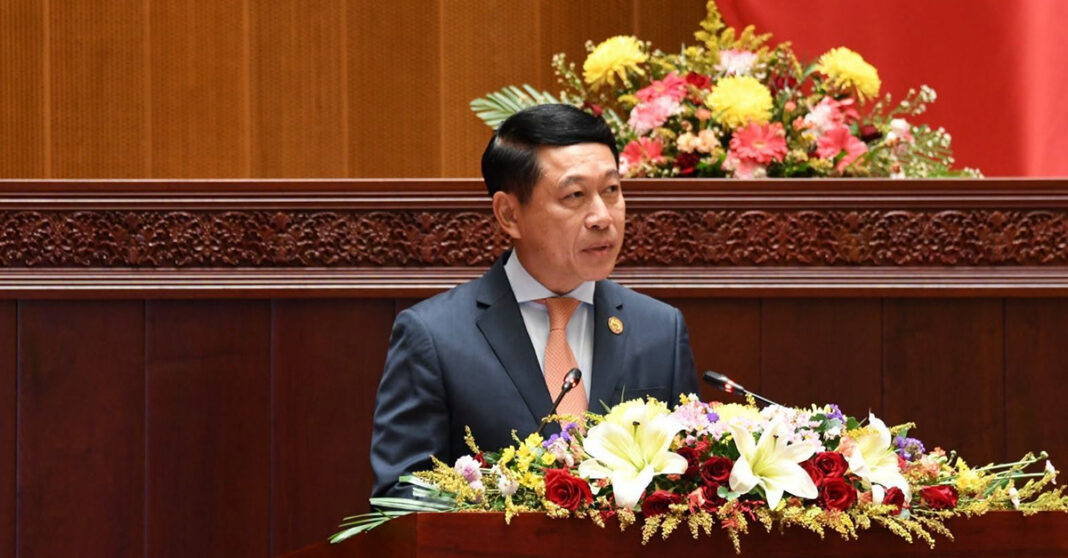
Laos will keep domestic fuel reserves at around 60 million liters or more and encourage companies to buy from multiple countries as the government seeks to reduce the risk of supply disruptions, Prime Minister Saleumxay Kommasith told the National Assembly earlier this week.
Saleumxay, who was elected prime minister on 5 October, answered questions from the National Assembly Standing Committee and lawmakers during the second ordinary session of the 10th Legislature.
The session runs until 21 October.
He said trade conflicts and instability in the Middle East have disrupted global fuel prices and supply chains, with Laos feeling the impact. The country imports almost all of its refined fuel, with Thailand supplying about 97 percent.
The Vientiane refinery in the Saysettha Development Zone, which began operating in late 2020, cannot meet national demand, according to state media.
That dependence became clear when the Middle East crisis erupted in late March. Fuel prices in Laos rose by as much as 100 percent within weeks, while more than 1,000 gas stations shut down during the period.
To reduce its reliance on a single supplier, the government plans to encourage fuel companies to source from Vietnam, China, and Singapore. Authorities will also prioritize fuel supplies to keep service stations open and ensure fuel is available for production.
The government will maintain the excise tax relief approved by the National Assembly and increase inspections of fuel importers, exporters, and distributors to prevent hoarding and sharp price increases. Companies will also be required to follow a transparent pricing structure.
Saleumxay said Laos will sign an agreement with Vietnam during Vietnamese Prime Minister Le Minh Hung’s visit on October 8 and 9. The agreement would cover an oil pipeline from Vietnam to Laos, with storage depots along the border.
The pipeline would give Laos another route for importing fuel and could reduce pressure on existing supply routes and distribution networks.
The government also plans to develop fuel storage facilities in northern, central, and southern Laos, study participation in ASEAN joint stockpiling initiatives, and encourage investment in domestic refining.
It also plans to strengthen the Lao State Fuel Enterprise, which can step in on fuel prices and supplies when private companies are unable to meet demand.
