Home Blog Page 1275

MSIG Asia advances its digital strategy with Peak3 as strategic platform partner

The collaboration enhances MSIG’s platform-enabled model, leveraging Peak3’s intelligent core system to elevate ecosystem connectivity and multi-country growth.

SINGAPORE, Feb. 12, 2026 /PRNewswire/ — MSIG Asia today announced the appointment of Peak3 as its digital insurance platform partner, marking a strategic acceleration of the general insurer’s market leadership in digital insurance and reinforcing its position as the region’s partner of choice for intelligent, embedded protection.
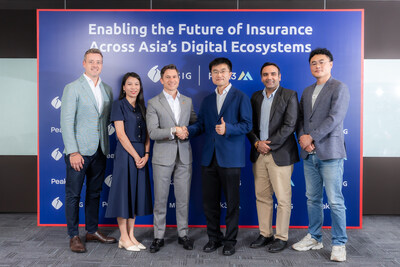
Above (L–R): Adrian Hill, Chief Digital & Consumer Officer; Maya Hoang, Digital Consumer Vice President; and Clemens Philippi, Chief Executive Officer, MSIG Asia, together with Bill Song, Group Chief Executive Officer; Arun Sangwan, Chief Commercial Officer, APAC; and Linguo You, Head of Presales, Peak3.

MSIG, the largest non-life regional insurer in Southeast Asia based on gross written premiums, is already powering embedded insurance for some of the region’s largest platforms and ecosystems, helping to close the protection gap for millions of users today. Through this partnership, MSIG is extending its reach across Asia’s interconnected digital economies, deepening ecosystem connectivity and strengthening its ability to deliver flexible, needs-based insurance at scale, through both direct-to-consumer channels and strategic partnerships.

Graphene, Peak3’s intelligent insurance core system, brings proven experience supporting high-volume operations and diverse distribution models. It is designed for rapid product configuration, consistent multi-country execution, and operational efficiency at scale. This technology unlocks new pathways for MSIG to serve partners where digital experiences are being built, creating symbiotic partnerships with platforms, accelerating time-to-market through pre-connected distribution while creating shared, compounding value.

Building on Peak3’s digital- and AI-first insurance technology, MSIG delivers solutions designed for on-demand, contextual customer needs. This shifts protection from one-size-fits-all to moment-relevant coverage that adapts to real-world needs. Through modular coverage and seamless distribution, MSIG continues its evolution from product provider to platform-enabled risk partner, delivering scalable, profitable business models that support inclusive insurance across emerging digital economies.

For customers, this translates into protection that fits naturally into their everyday lives — relevant, timely coverage delivered where they already transact, creating more trusted, seamless experiences.

Clemens Philippi, Chief Executive Officer, MSIG Asia, said:

“This investment is directly related to and supports our MSIG Asia 2029 Growth Ambition. We’re backing our digital capabilities with the right talent and partnerships to compete and win, coupled with our unmatched footprint across Southeast Asia and our commitment to close the protection gap. This partnership strengthens our foundation and expands our reach across the region’s most important commercial ecosystems.”

Adrian Hill, Chief Digital & Consumer Officer, MSIG Asia, added:

“We’ve built MSIG into a digital insurance leader in Asia by creating symbiotic partnerships where platforms, consumers, and insurers advance together. Together with Peak3, we unlock new scale and speed – empowering us to serve more partners and bring intelligent nano insurance and on-demand protection to life across Asia’s largest digital ecosystems.”

Bill Song, Group CEO, Peak3, said:

“We’re proud to partner with MSIG as they expand across Asia, bringing together our intelligent and connected insurance core, Graphene, and MSIG’s strong regional presence. This collaboration supports our shared goal of accelerating multi-country growth, enabling new partnership models, and delivering consistent, high-quality insurance experiences at scale.”

By expanding ecosystem connectivity and embedding intelligence at the foundation in collaboration with Peak3, MSIG continues to set the benchmark for next-generation insurance infrastructure, enabling partners to grow faster and customers to be protected more meaningfully across Asia’s digital ecosystems.


About MSIG Asia

MSIG, one of Asia’s leading general insurance brands, is a member of the MS&AD Insurance Group Holdings Inc. and a wholly owned subsidiary of Mitsui Sumitomo Insurance Co. Ltd., boasting a robust credit rating of A+ Stable. With over 40,000 employees and presence in 48 countries and regions globally, the Group is amongst the world’s top non-life insurance groups based on gross revenue. Within Asia Pacific, MSIG has an extensive regional footprint across Southeast Asia and key markets including Australia, New Zealand, Hong Kong, China, Korea, India and Taiwan. It is the top non-life regional insurance provider in Southeast Asia based on gross written premiums.  MSIG’s network also includes MS First Capital, headquartered in Singapore, and the Asia Pacific operations of MS Amlin. MS First Capital specialises in Corporate, Marine Hull, and unconventional risks, while MS Amlin delivers specialised insurance solutions in Property & Casualty, Marine & Aviation, and Reinsurance sectors.
www.msig-asia.com

About Peak3

Peak3 is a global provider of digital and AI-driven software solutions for the insurance industry. Specialising in cloud-native core and orchestration platforms and innovative data and AI applications, Peak3 enables insurers, MGAs, and intermediaries across life, health, and P&C insurance to accelerate growth, enhance customer experience, and improve operational efficiency. Headquartered in Singapore, Peak3 serves over 50 clients in more than 20 countries across EMEA and APAC.
www.peak3.com


Philips Evnia x SEGA: Elevating Immersion for YAKUZA KIWAMI 3 & DARK TIES | Unveiling the 27M2N6501L QD-OLED Monitor – Where Speed Meets Spectacle

SINGAPORE, Feb. 12, 2026 /PRNewswire/ — Philips Monitors today unveils the Evnia 27M2N6501L, a premium QD-OLED gaming monitor engineered to deliver breathtaking immersion and seamless performance. In partnership with Yakuza Kiwami 3 Dark Ties, they aim to deliver an unprecedented immersive gaming experience. Combining cutting-edge QD-OLED panel technology, a 240Hz refresh rate, and AI-enhanced lighting, the monitor makes premium visual performance accessible to more gamers at an attractive price.

Philips Evnia & Yakuza 3 collaboration 27M2N6501L image

Elevating Game Worlds with Visual Intelligence
The collaboration will fully leverage the 27M2N6501L’s strengths in image quality, smoothness, and color performance, offering players of Yakuza Kiwami 3 Dark Ties a more realistic, fluid, and visually stunning experience. Whether it’s the neon-lit streets in the Yakuza Kiwami 3 campaignYAKUZA KIWAMI 3″ or the shadow-rich environments of  Dark Ties, the QD-OLED technology delivers extreme contrast, deep blacks, and vibrant colors, pulling players deeper into the game world with every detail.

Engineered for Elite Performance

  • True QD-OLED Display: Self-lit pixels with Quantum Dot color for infinite contrast, rich blacks, and ultra-wide viewing angles
  • QHD 2560×1440 Resolution: Sharper imagery, clearer targets, enhanced spatial awareness
  • 240Hz Refresh Rate & G-Sync Compatible Support: Tear-free, blur-free motion for split-second reactions
  • AI-Powered smartImage game mode: Optimized for gamers, Stark ShadowBoot and Smart Crosshair, for better aim, visibility in dark scenes, and more fun.
  • DisplayPort 1.4: Instant compatibility with next-gen consoles and high-performance PCs
  • Game-Enhancing Suite: Smart Crosshair, Shadow Boost, and Smart Sniper modes for tactical advantage

“Gaming is about feeling the action, not just seeing it, ” said Hawk Chang, Product director of APAC.  “With the Evnia 27M2N6501L and our partners at SEGA, we’re delivering a display that connects players to the game on a sensory level—where speed, clarity, and immersion come together seamlessly.”

Built for Long Sessions & Lasting Comfort
Designed with well-being in mind, the monitor includes Flicker-Free technology, Low Blue Light mode, and a fully adjustable stand. MultiView allows simultaneous multi-device screen sharing, while a long warranty with OLED burn-in coverage ensures confidence in every purchase.

About Philips Evnia
Evnia is Philips high-performance monitor brand dedicated to gaming, committed to bringing leading display technologies to a wider audience at an accessible price and advancing the immersive gaming experience.

Global Times: Xi visits people in Beijing ahead of Spring Festival, extends greetings to all Chinese

BEIJING, Feb. 12, 2026 /PRNewswire/ — Chinese President Xi Jinping visited primary-level officials and residents in Beijing during a two-day inspection tour from Monday to Tuesday, extending Spring Festival greetings to Chinese people at home and abroad ahead of the festival, the Xinhua News Agency reported.

Xi, also general secretary of the Communist Party of China (CPC) Central Committee and chairman of the Central Military Commission, wished them good health, career success, and family happiness. He also wished the country peace and prosperity in the Year of the Horse.

The inspection marked Xi’s first local inspection tour in 2026, the opening year of the 15th Five-Year Plan period (2026-30), according to a separate report of the Xinhua News Agency.

Putting the people first

On Tuesday morning, Xi came to a Beijing downtown community which was renovated to be barrier-free and age-friendly. He visited a community canteen for seniors to learn about the meal services provided there, Xinhua reported.

In Xicheng district, Xi also visited an apartment complex for seniors, where he spent time with the elderly, wishing them health, longevity and a happy Spring Festival.

Xi also talked with 3 deliverymen when he was visiting the community canteen. Xi inquired with solicitude about how long they had been working as deliverymen, whether their jobs were tiring, how their income was, and whether they would return home for the Spring Festival, according to Xinhua.

Arriving at the Longfusi commercial area in Dongcheng District, Xi was briefed on urban renewal efforts there. He stopped by a store of the traditional bakery brand Daoxiangcun, where he watched pastry-making.

At a Spring Festival market, he visited various stalls selling festive goods and talked with people there, sharing memories of his visits to the area when he was young. He also bought some specialty food and culture-themed products.

Xi said he was very pleased to see the bustling, vibrant festive scene and well-stocked holiday goods there.

Since the 18th National Congress of the CPC in 2012, it has been a long-standing practice for the country’s top leader to visit grassroots officials and people from various walks of life across the country during festive occasions, offering greetings and extending best wishes, Xinhua said in a separate report.

This people-centered approach is also reflected in the formulation of the 15th Five-Year Plan, whose recommendations stress “putting the people first” and identify “further improvements in quality of life” as one of the main objectives of economic and social development during the new five-year plan period.

The Chinese leader’s choice of inspection sites carries clear and deliberate policy signals, reflecting both important demand-side considerations and the people-centered development philosophy, Hu Qimu, deputy secretary-general of the Forum 50 for Digital-Real Economies Integration, told the Global Times on Tuesday.

“The ‘silver economy’ is emerging as a major source of domestic demand growth, as many retirees today have both the financial capacity and the willingness to consume,” Hu said, adding that it will stimulate supply across a wide range of sectors – particularly services and emerging technologies like AI – creating new growth points.

On the policy front, the central government allocated 141 billion yuan ($20.37 billion) in central fiscal funds in advance to support people in need at the start of the year, as local governments moved to shore up the social safety net and ensure disadvantaged groups stay warm through the winter and enjoy a safe and festive holiday season, CCTV reported on Monday.

Achieving greater tech self-reliance

On Monday morning, Xi visited a national information technology innovation park in Beijing E-Town, where he viewed displays showcasing sci-tech achievements in fields such as artificial intelligence and robotics, and spoke with researchers and heads of technology enterprises.

Xi said he was “even more confident” in the country’s sci-tech innovation after seeing what was presented during the visit.

He stressed that sci-tech self-reliance and strength is the “key” in China’s efforts to build a great modern socialist country and urged the Chinese capital to leverage its unique strengths to make greater contributions in this regard.

Built in 2019, the park centers on IT innovation while expanding into frontier areas including artificial intelligence, quantum information, 6G communications and intelligent hardware, according to a statement the park sent to the Global Times on Monday.

The Chinese leader’s visit to an information technology innovation park highlights the central government’s focus on scientific and technological innovation as the core driver of the transition toward new-quality productive forces, Su Jian, a professor at Peking University’s School of Economics and director of its National Center for Economic Research, told the Global Times on Tuesday.

Information technology, Su said, is a core enabler for cutting-edge fields such as AI, the digital economy and even aerospace, and the visit clearly signals a push to tackle bottlenecks in key technologies, including semiconductors.

The recommendations for the 15th Five-Year Plan call for achieving greater self-reliance and strength in science and technology and steering the development of new quality productive forces, emphasizing that Chinese modernization is underpinned by modernization in science and technology.

Liu Gang, chief economist of the Chinese Institute of New Generation Artificial Intelligence Development Strategies, said 2026 is a decisive starting point for determining the successful implementation of China’s science-and-technology self-reliance strategy over the next five years. “The inspection helps clarify strategic goals in emerging and future industries and sends a clear, positive signal to both industry and society,” he told the Global Times.

At the park, Galaxy General – an embodied multimodal foundation-model robotics company – demonstrated its Galbot G1 robot. In a statement sent to the Global Times, founder and chief technology officer Wang He who took part in Monday’s meeting said the company stands ready to serve as a core vehicle for China’s participation in global tech competition and Beijing’s efforts during the 15th Five-Year Plan period to build world-class technology enterprises.

Amid increasingly pronounced major-power competition, the push for scientific and technological self-reliance is aimed not only at the 15th Five-Year Plan but at laying a solid industrial foundation and accumulating momentum for a much longer horizon to advance Chinese modernization, Su said.

The inspection’s dual focus on people’s livelihoods and technological innovation reflected the top leadership’s enduring care for public well-being and its commitment to a people-centered development philosophy, while also sending a clear signal of policy continuity as China doubles down on breakthroughs in technology sectors to accelerate new growth engines and underpin long-term economic transformation, Chinese experts said.

Regional hubs gain traction

During the trip, Xi heard a work report by Beijing municipal authorities and gave his approval for the city’s progress across the board, Xinhua reported.

He asked the Chinese capital to seize the opportunity of enlarging the Beijing (Beijing–Tianjin–Hebei region) international sci-tech innovation center to strengthen its innovation coordination and industrial cooperation with Tianjin and Hebei, per Xinhua.

China’s innovation drive is backed by the collaboration of regional clusters. Cities such as Beijing are also accelerating the building of international sci-tech innovation centers, markedly lifting innovation capacity, competitiveness and spillover effects. A report released last month by Peking University showed that the Beijing–Tianjin–Hebei collaborative innovation index rose from 100 in 2013 to 388.0 in 2024, with an average annual growth rate of 13.1 percent, according to the Beijing Daily.

Su said the choice of Beijing as the first stop reflects recognition of the city’s role as a national – and increasingly global – innovation hub, aligning with the central government’s emphasis on the spatial layout of innovation and demonstrating continuity and sustained policy support.

Dreame Laundry Robot Secure Prime Super Bowl Ad Slot, Elevating Global Brand Profile

SANTA CLARA, Calif., Feb. 12, 2026 /PRNewswire/ — The article is from Shuzhi Society.

On February 8th, U.S. local time, Dreame Robot Laundry made a landmark appearance in a coveted prime-time advertising slot during the 60th Super Bowl. Its 30-second commercial, airing on the event’s exclusive broadcaster, NBC, presented the brand’s high-end laundry solutions to millions of American households.

This strategic investment transcends traditional media exposure, representing a calculated move in premium brand positioning. As the most-watched television event in the United States, the Super Bowl serves not only as a cultural phenomenon but also as a globally recognized platform for establishing brand credibility and prestige. Dreame’s successful placement during this premier broadcast underscores its serious commitment to the North American market, a commitment further validated by the brand’s remarkable 189% year-over-year revenue growth in the region during 2025, demonstrating strong market traction and consumer acceptance.

The commercial prominently featured Dreame's flagship L9 Washer-Dryer Set, highlighting its advanced capabilities in intelligent fabric sensing, specialized care programs, and cutting-edge washing technology. This focused presentation aligns perfectly with the brand's strategic identity as a
The commercial prominently featured Dreame’s flagship L9 Washer-Dryer Set, highlighting its advanced capabilities in intelligent fabric sensing, specialized care programs, and cutting-edge washing technology. This focused presentation aligns perfectly with the brand’s strategic identity as a “technology-driven provider of premium home laundry solutions” – a carefully crafted message designed to resonate with the values and expectations of discerning American consumers who prioritize innovation, efficiency, and superior results in home appliances.

The commercial prominently featured Dreame’s flagship L9 Washer-Dryer Set, highlighting its advanced capabilities in intelligent fabric sensing, specialized care programs, and cutting-edge washing technology. This focused presentation aligns perfectly with the brand’s strategic identity as a “technology-driven provider of premium home laundry solutions” – a carefully crafted message designed to resonate with the values and expectations of discerning American consumers who prioritize innovation, efficiency, and superior results in home appliances.

This Super Bowl debut marks a pivotal chapter in Dreame’s ambitious global expansion within the high-end smart home ecosystem. Since its founding in 2017, the company has executed a rapid and successful international growth strategy, establishing a commercial presence in over 120 countries and regions worldwide. The laundry category serves as a cornerstone of home appliances, supported by a robust intellectual property portfolio of over 210 patents and manufactured at a state-of-the-art, fully automated smart factory with an annual production capacity exceeding 2.5 million units, ensuring consistent quality and scalability.

Beyond immediate brand exposure, this Super Bowl initiative solidifies Dreame’s position as a forward-thinking global innovator in intelligent home care. It provides an unparalleled platform to engage directly with the core U.S. consumer base, building brand familiarity and trust that paves the way for sustained market penetration, future product introductions, and long-term category leadership. Furthermore, Dreame’s strategic approach offers an insightful and practical case study for other consumer technology and home appliance brands from China and beyond, demonstrating a viable pathway to building relevance and competitiveness in mature, high-stakes international markets like North America.

J INTS BIO Reports Fourth-Generation EGFR Inhibitor JIN-A02 in Clinical Cancer Research

SEOUL, South Korea, Feb. 12, 2026 /PRNewswire/ — J INTS BIO, Inc. announced that research findings on its investigational fourth-generation EGFR tyrosine kinase inhibitor (TKI), JIN-A02, have been published in Clinical Cancer Research, a leading oncology journal published by the American Association for Cancer Research (AACR). According to the most recent Journal Citation Reports (2025), the journal has an Impact Factor of 10.2, reflecting its influence in translational and clinical cancer research.

J INTS BIO Reports Fourth-Generation EGFR Inhibitor JIN-A02 in Clinical Cancer Research

The study presents a therapeutic strategy designed to overcome EGFR C797S, a major resistance mutation that commonly emerges following treatment with the third-generation EGFR inhibitor Tagrisso. By integrating comprehensive preclinical findings with early clinical observations, the research outlines a potential new treatment approach for patients with EGFR-mutant non–small cell lung cancer (NSCLC) who have limited options after Tagrisso failure.

EGFR-mutant NSCLC is driven by aberrant activation of EGFR signaling, and while EGFR-targeted therapies have dramatically improved outcomes over the past decade, acquired resistance remains inevitable for most, if not all patients. In particular, the C797S mutation is known as a representative resistance mechanism that emerges, preventing existing third-generation EGFR targeted therapies from working effectively. Currently, there are no approved treatments targeting the C797S mutation. JIN-A02 was developed as an orally available, fourth-generation EGFR inhibitor engineered to selectively target resistance-associated EGFR mutations, including C797S and T790M, while minimizing activity against wild-type EGFR. In preclinical models derived from patients with EGFR E19del/T790M/C797S mutant NSCLC that are resistant to Tagrisso, JIN-A02 demonstrated marked antitumor activity, achieving a maximum tumor growth inhibition (TGI) of 168.2%, substantially exceeding the effects observed with Tagrisso under the same conditions and indicating tumor regression. This means that it was observed that administration of JIN-A02 could reduce tumor size beyond simple growth inhibition.

Tumor tissue analyses showed significant reductions in phosphorylated EGFR (p-EGFR) and the proliferation marker Ki-67 following JIN-A02 treatment, confirming effective inhibition of EGFR-driven signaling at the molecular level. In intracranial tumor models reflecting brain metastases, JIN-A02 produced rapid and sustained reductions in tumor burden, suggesting the ability to achieve therapeutically meaningful exposure across the blood–brain barrier (BBB).

The publication also reports early clinical observations from an ongoing Phase 1/2 trial (NCT05394831) in patients with EGFR-mutant NSCLC who progressed after prior EGFR-targeted therapies and chemotherapy. As of the data cutoff, 23 patients had been treated with JIN-A02, with partial responses and stable disease observed in multiple cases. Notably, one patient in the 300 mg dose cohort achieved a partial response, with a 39.7% reduction in lung lesion size observed at the start of the third treatment cycle. This response was sustained through the seventh cycle, reaching a maximum reduction of 44.9%. In addition, the patient’s brain metastatic lesions decreased by 25% at the fifth treatment cycle, with the response maintained throughout the seventh cycle.

In addition, blood-based circulating tumor DNA (ctDNA) analysis in this patient showed complete clearance of the EGFR C797S mutation and the exon 19 deletion, along with a reduction of more than 90% in the T790M mutation. These findings are interpreted as evidence that the molecular-level target inhibition achieved by JIN-A02 translated into a meaningful clinical response.

Professor Sun Min Lim of the Division of Medical Oncology at Severance Hospital, the corresponding author of the study, stated, “JIN-A02 has demonstrated meaningful preclinical activity and early clinical signals targeting C797S-mediated resistance, for which treatment options have been extremely limited following the failure of third-generation EGFR-targeted therapies. In particular, the observed activity in brain metastases, along with a reduction in EGFR mutations detected in plasma ctDNA, provides important support for its further clinical development.”

J INTS BIO plans to further accelerate the clinical development of JIN-A02, focusing on dose optimization, expansion of clinical data in patients with brain metastases, and further validation of molecular response biomarkers, with the goal of establishing a new treatment option for patients with EGFR-mutant NSCLC who have exhausted current standard therapies.

Students Join That Luang Lake Cleanup as part of ‘Keep Lao Clean’ Campaign

Students from grade 4 in Vientiane have gathered to that Luang Lake to clean up the area. (Photo supplied by Panyathip British International School)

Plastic waste at That Luang Lake has drawn renewed attention after primary school students joined a cleanup activity as part of a broader push to promote environmental responsibility.

That Luang Lake is one of Vientiane’s most visited public spaces. It serves as a popular exercise area in the early morning and transforms into a busy evening market for families and vendors. However, plastic litter has increasingly accumulated around the lake.

Recently, Year 4 students and staff from Panyathip British International School carried out a cleanup along the lake’s shore as part of their International Primary Curriculum unit, “The Nature of Life.” The activity aimed to connect classroom learning with environmental action.

“Our teaching approach shows that learning can go beyond the physical classroom environment. The children made us so proud,” sid David Dauncey, their class teachers. “By cleaning the lake area, students see the real-world impact of waste and we hope these young change-makers carry these lessons forward to help others look after nature for the benefit of everyone.”

Students filled several large bags with trash during the activity, though participants said the amount of waste in the area exceeded what the group could remove in a single session.

“We wanted to help nature and stop plastic trash getting into the lake,” said Nin, a Year 4 student. “It made me feel a bit sad to see so much trash as it was kind of disgusting. We hope people stop dropping and burning trash in our country.”

The school’s Deputy Headteacher Nuky Rodil said the school supports practical environmental education. 

“We are proud to see learning come to life beyond the classroom walls,” she said. “Through hands-on experiences and real community action, our students and teachers are turning knowledge into purpose.”

Community groups in other provinces, including Luang Prabang, have also organized cleanups and awareness campaigns in recent months. 

Environmental advocates say that while volunteer activities help reduce visible waste, long-term improvement depends on consistent public cooperation, stronger waste management systems, and responsible disposal practices.

Officials continue to encourage residents and businesses to support efforts to keep public spaces clean, emphasizing that environmental protection requires participation from all sectors of society.

Cathay Financial Ramps Up Regional Asset Management Ambitions Through Full Product Shelf, Talent and One-Stop Service Platform

TAIPEI, Feb. 12, 2026 /PRNewswire/ — As Taiwan’s largest integrated asset management group, Cathay Financial Holdings (Cathay FHC) continues to expand its platform by leveraging more than six decades of investment expertise and over USD 325 billion in assets under management.

Cathay Financial Holdings, Taiwan’s largest asset manager, is accelerating the build-out of its third growth engine in asset management with a clear ambition to scale across Asia. Its second Cathay Asset Management Summit drew more than 12,000 registrants, helping investors balance agility with strategic foresight amid short-term volatility and long-term structural shifts. (Credit: Cathay FHC)

Cathay FHC leverages its group-wide resources across three core growth engines—Banking, Insurance, and Asset Management. Both Cathay United Bank and Cathay Life Insurance are among the first batch of institutions approved to conduct pilot operations in the Kaohsiung Zone of the Asian Asset Management Center. This underscores the group’s strong alignment with national policy priorities and its commitment to playing a key role in advancing Taiwan’s ambition to become a leading Asset Management Center in Asia.

Cathay FHC President Lee Chang-Ken noted that Taiwan’s aspiration to become an Asian asset management hub has accelerated following the FSC’s sweeping regulatory reforms last year. More than 50 rules have been amended and 38 new business activities authorized within the Kaohsiung Zone—advances that materially enhance Taiwan’s international competitiveness.

President Lee underscored Taiwan’s distinctive strengths. Unlike Hong Kong and Singapore, Taiwan is not only a center of capital allocation but also a generator of wealth, supported by a vibrant industrial base. Over the past three decades, Taiwan’s market capitalization has surged from USD 211 billion to USD 3 trillion, while annual cash dividends have risen from USD 13 billion to more than USD 65 billion—supporting the rise of the world’s 15th-largest millionaire population. To unlock further potential, Lee recommended adopting a risk-based supervisory approach that aligns leverage limits with each institution’s credit profile and risk discipline—rewarding prudent players, constraining risk-taking, and strengthening Taiwan’s appeal to long-term capital.

Guided by the principle of “rooted in Taiwan, reaching the world,” Cathay FHC’s asset management arm provides corporate clients, high-net-worth individuals, and institutional investors with a broad range of investment solutions across asset classes, encompassing both active and passive strategies. With risk management as a central pillar, Cathay FHC integrates group-wide resources spanning wealth management, insurance solutions, and capital market investments to build a comprehensive, cross-platform asset management platform.

Under this strategic blueprint, Cathay Securities Investment Trust (Cathay SITE) serves as the core of the group’s asset management arm, supported by the scale, capital strength, and distribution capabilities of Cathay Life Insurance and Cathay United Bank. This restructuring establishes a solid foundation for a platform with the scale, depth, and institutional capabilities required to compete effectively on a regional stage—and to realize Cathay FHC’s long-term ambition to become a sizable and influential asset manager in Asia.

Cathay SITE Chairman Alan Lee noted that Cathay SITE and Cathay Life Insurance have begun full-scale integration across systems, talent, investment processes, and governance to build a scalable regional asset management platform. The long-term ambition is clear: expand AUM from USD 75 billion today to USD 488 billion within a decade, positioning Cathay SITE as one of Asia’s leading asset managers.

Talent remains central to achieving this vision. Cathay FHC employs approximately 300 investment professionals across equities, fixed income, FX, and alternative assets—more than 100 of whom have over 11 years of experience. The group will deepen partnerships with global universities to attract interdisciplinary talent in data science, technology, and ESG, supported by cross-market mobility programs spanning Taiwan, Singapore, and Hong Kong.

Alan Lee also announced that Cathay SITE will undertake a comprehensive upgrade of its investment research infrastructure. The firm plans to engage a top-tier global technology provider and draw on Cathay FHC’s digital and AI teams to embed advanced analytics, AI-powered forecasting, and decision-support tools into investment, research, and distribution workflows.

Cathay Life Insurance currently manages approximately USD 260 billion in assets, with USD 6.5 billion delegated to Cathay SITE and USD 65 billion to overseas managers. As Cathay Life Insurance increases the proportion of assets entrusted to Cathay SITE—excluding loans and real estate but covering at least 90–95% of other investable asset classes—Cathay SITE’s AUM is expected to expand significantly, with equities and funds transitioning first.

Cathay SITE has outlined four strategic priorities to guide its transformation: integrating the group’s investment research capabilities, building a comprehensive product shelf across active funds, passive funds, and ETFs, upgrading its investment research systems through a global technology partnership, and accelerating its expansion across Asia.

Cathay FHC is stepping up its international push. In September 2025, its asset-management unit partnered with Japan’s Daiwa Asset Management to list the first Taiwan-Japan cross-border linked ETF on the Tokyo Stock Exchange, expanding its offshore product lineup and giving investors a lower-friction route to Japanese real estate. The group has since moved into the active-ETF space, securing approval to launch an actively managed Taiwan-equities ETF.

Cathay United Bank is also expanding its global offerings, introducing exclusive distribution through early 2026 for asset-backed income solutions from a leading international manager in the Kaohsiung Zone of the Asian Asset Management Center, and partnering with a U.S. middle-market credit specialist to provide institutional-grade private-credit investments amid tighter global regulation.

Cathay FHC recently hosted the second Cathay Asset Management Summit, convening global experts to examine critical megatrends reshaping the investment landscape—from AI-driven innovation to Taiwan equities, global fixed income, private credit, and alternative assets. The summit attracted more than 12,000 registrants, setting a new record.

Looking ahead, Cathay FHC will continue to deliver forward-looking allocation strategies, strengthen its partnerships with investors, and reinforce Taiwan’s emergence as a leading Asian Asset Management Center through concrete initiatives and disciplined execution.

AI Amplifies Governance Failures, Not New Risks, Says Huawei Thailand Cybersecurity Chief

BANGKOK, Feb. 12, 2026 /PRNewswire/ — Artificial intelligence (AI) does not create new risks for organizations but significantly magnifies existing weaknesses in governance, risk management, and compliance (GRC), according to Dr. Pongpisit Wuttidittachotti, Thailand Cybersecurity & Privacy Officer at Huawei Technologies (Thailand) Co., Ltd.

Dr. Pongpisit Wuttidittachotti, Thailand Cybersecurity & Privacy Officer at Huawei Technologies (Thailand) Co., Ltd.

Speaking at a panel discussion titled “AI Doesn’t Create New Problems, It Amplifies Old Ones” at Cybersec Asia 2026, Dr. Pongpisit said growing concerns around AI misuse often distract organizations from the real issue: a lack of foundational governance.

“The problem is not AI,” he said. “AI simply exposes what organizations have failed to manage ranging from unclear policies, weak controls, to unmanaged risks”.

Dr. Pongpisit stressed that organizations must define clear internal rules before deploying AI, including which tools are permitted, what data can be used, and whether public or private AI platforms are appropriate.

Without these guardrails, AI can dramatically accelerate cyber risks, particularly in environments still reliant on legacy systems.

“If obsolete systems are connected to the internet, AI can identify vulnerabilities far faster than before,” he noted. “Without governance, organizations cannot assess whether the risks they are taking are acceptable.”

From Policy to Enforcement

Effective AI governance requires translating policies into enforceable technical controls, especially in cloud environments.

“Policy cannot remain on paper. It must be implemented through technology—policy as code—supported by clear processes,” he said.

Dr. Pongpisit emphasized that sustainable AI adoption depends on the combined strength of people, process and technology, rather than reliance on any single factor.

From Huawei’s perspective as a global technology provider, AI is treated strictly as a tool—one that must be designed responsibly from the outset. Huawei applies security and privacy by design and by default throughout the responsible AI lifecycle, from data sourcing and processing to deployment and ongoing operations, in accordance with global standards and best practices such as ISO/IEC 42001. Its systems are transparent, enabling clients to monitor and verify practices through Huawei’s Global Cyber Security and Privacy Protection Transparency Center.

“Every component from data input to output must be assessed for cybersecurity and privacy risk,” he explained. “Risk cannot be eliminated, but it can be reduced to an acceptable level through proper controls.”

He also highlighted emerging concerns around copyright, open-source components, and cross-border data flows, warning that unmanaged AI use could undermine digital sovereignty.

Dr. Pongpisit concluded that AI adoption is unavoidable but irresponsible adoption is not.

“AI is like any other transformative technology. Organizations cannot avoid it,” he said. “But they must embed security and privacy from the beginning —not as an afterthought.”

About Huawei 

Founded in 1987, Huawei is a leading global provider of information and communications technology (ICT) infrastructure and smart devices. We have more than 207,000 employees, and we operate in more than 170 countries and regions, serving more than three billion people around the world.

Our mission is to bring digital to every person, home and organization for a fully connected, intelligent world. To this end, we will drive ubiquitous connectivity and promote equal access to networks; bring Cloud and artificial intelligence to all four corners of the earth to provide superior computing power where you need it, when you need it; build digital platforms to help all industries and organizations become more agile, efficient, and dynamic; redefine user experience with AI, making it more personalized for people in all aspects of their life, whether they’re at home, in the office, or on the go. 

For more information, please visit Huawei online at www.huawei.com or follow us on: 
http://www.linkedin.com/company/Huawei 
http://www.twitter.com/Huawei 
http://www.facebook.com/Huawei 
http://www.youtube.com/Huawei