Home Blog Page 2604

Fueling Hangzhou’s Global AI Rise: Zhejiang University Leads the Way in Nurturing AI Trailblazers


HANGZHOU, CHINA – Media OutReach Newswire – 27 September 2025 – As east China’s digital tech hub Hangzhou is gearing up for the 4th Global Digital Trade Expo (September 25–29), a globally watched digital gala centered on “deep integration of digital trade and AI,” many would wonder who are the creators of the world-leading computing infrastructure, large models, embodied intelligent robots, and over 100 AI application scenarios showcased at the expo.
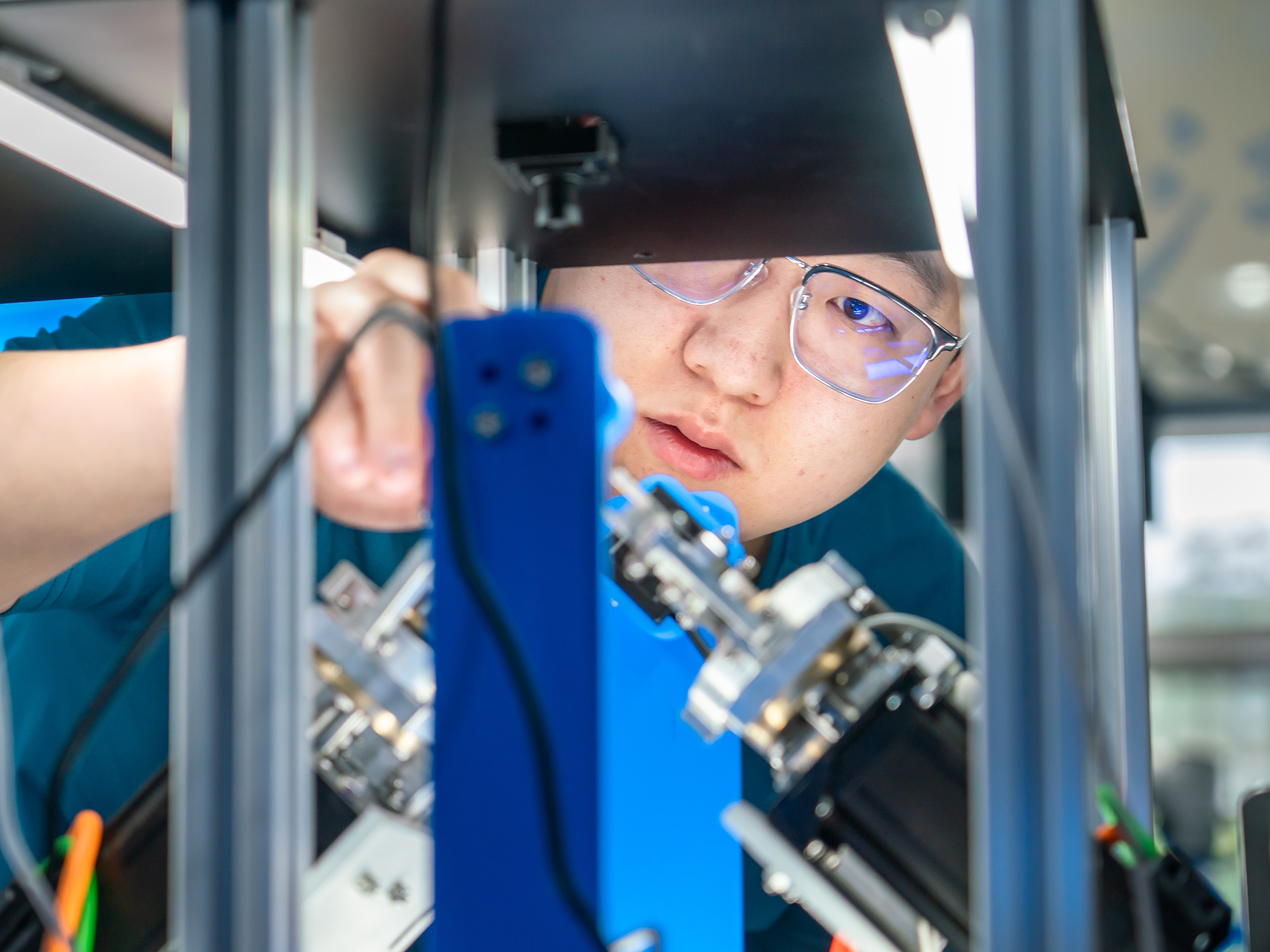
Caption: A ZJU student works on robot development at ZJU’s Innovation Practice Base of Robotics and Intelligent Equipment

The pioneers making Hangzhou’s reputation as what The Wall Street Journal called “global AI competitor” hail from talent cultivation from top institutions like Zhejiang University (ZJU). The rise of entrepreneurs such as ZJU alumnus Liang Wenfeng, founder of DeepSeek, vividly testifies to the university’s AI education success. From early explorations decades ago to today’s systematic innovation, ZJU has long nurtured batches of AI “pioneers.”

ZJU’s AI roots trace to 1978, when it established its Computer Science Department. Founding director He Zhijun prioritized “AI theory research and new computer design” in the department’s blueprint, making ZJU the first in China to enroll AI master’s students and sow the seeds of AI research.

Seizing the opportunity from the 2017 national new-generation AI development plan which mandated AI undergraduate programs, ZJU became one of China’s first 35 universities to launch an AI undergraduate major in 2018. It followed with the nation’s first interdisciplinary AI program in 2019, and in 2024, secured China’s only national AI textbook base.

Now ZJU has built integrated teaching resources—textbooks, courses, faculty, and training platforms—and forged a complete talent pipeline spanning undergraduates to postgraduates for AI professionals and “AI+other majors”, fostering an ecosystem where “everyone can learn AI anywhere, anytime.” This year, it expanded AI enrollment to welcome more young explorers.

As a general-purpose technology akin to the internal combustion engine or electricity, AI inherently drives interdisciplinary collaboration—whether solving scientific/engineering challenges via AI (e.g., AI for Science: predicting 3D protein structures) or optimizing AI through science (e.g., Science for AI: refining neural networks via statistical physics). Future breakthroughs will largely emerge from such intersections. Today, AI is as accessible as water and electricity, thanks to natural language interfaces. Understanding, using, innovating AI, and upholding human-robot ethics have become core competencies for the intelligent age.

In September 2024, ZJU pioneered hierarchical, compulsory AI general education courses and a textbook series—General Education of Artificial Intelligence —the first of its kind in China, tailored for STEM/agriculture/medicine, social sciences, and humanities/art. No more “shying away” from one-size-fits-all content, medical students can find AI-assisted diagnosis insights while art students can explore AI-driven creation.

Interdisciplinary training is ZJU’s forte. In 2021, it co-founded China’s first inter-university “AI+X” micro-major with five other leading universities. Targeting non-computer students, it acts as a “pathfinder” for interdisciplinary talent development. Polished over years, this model upgraded to “AI+X 2.0” in 2025.

ZJU also partnered with China Academy of Art on the “intelligent art and design” micro-major, incorporating cutting-edge fields like “embodied intelligence” and “digital-intelligent organizations” to explore disciplinary paradigm shifts and unlock “X+AI” potential.

Nurturing talent requires elevating faculty and student quality. ZJU released a series of guidance, requiring students to use AI, innovate AI, and uphold ethical boundaries while urging teachers to uphold educational values, master AI knowledge, reform teaching models, and assume social responsibilities.

To deliver AI general courses, ZJU assembled an interdisciplinary teaching team from 40 colleges and trained teachers in intelligent education. It also launched 11 episodes of the DeepSeek online public course, drawing over 50 million views to spread AI knowledge beyond campus. The first national “Qizhen Wenzhi” AI model & agent competition will launch later this year, encouraging inter-university teams to practice in real scenarios.

Classroom AI innovation enlivens learning: In the class of Computer Architecture, AI teaching assistants act as digital doubles—explaining concepts, generating PPTs, answering questions 24/7, designing quizzes, and mapping knowledge. Medical AI class uses generative platforms for heuristic questioning, generative exploration, and focused discussion, with AI as an inspiration assistant for drug design. Even job-hunting gets support from “Xiaoye,” an AI career mentor offering insights and resources.
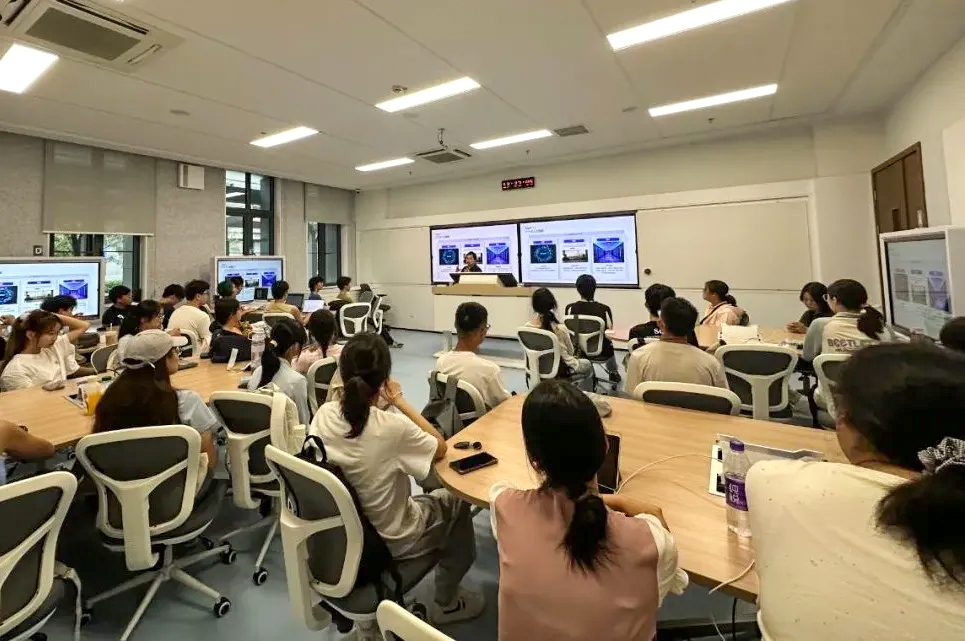
Caption: Students in an AI-related course

ZJU is also strengthening its AI education ecosystem. The 2024-established Artificial Intelligence Education Research Center coordinates campus-wide reform. In March 2025, it launched an AI-empowered education project called “AI STEP” (Start-Train-Explore-Progress), which features “Science, Technology, Engineering & Enterprise, Philosophical & Social Science” interdisciplinary integration, and build a new model for fostering top AI innovators.

As Hangzhou’s expo showcases the AI industry’s vitality, it stands on ZJU’s education-built talent reservoir. From alumni like Liang Wenfeng to campus AI explorers, ZJU’s practice fuels the AI industry with steady talent supply, aligning education and industry to create more “DeepSeek moments” in the AI era.
Hashtag: #ZhejiangUniversity

The issuer is solely responsible for the content of this announcement.

HKIS – Quantity Surveying Division Conference 2025

“Navigating ‘3Cs Role in QS’ in the New Era: Cost Management, Chance and Collaboration”


HONG KONG SAR – Media OutReach Newswire – 27 September 2025 – The Hong Kong Institute of Surveyors (HKIS) Quantity Surveying Division hosted the HKIS Quantity Surveying Division Conference 2025 (the Conference) today at the CIC-Zero Carbon Park.

This year’s theme, “Navigating ‘3Cs Role in QS’ in the New Era: Cost Management, Chance and Collaboration”, reflects the evolving role of Quantity Surveyors during a time of economic restructuring.

The Conference brought together around 250 participants both in person and online, including government officials, industry leaders, professionals, academics, and young practitioners. Mr. David LAM Chi Man, JP, Under Secretary for Development of the HKSAR Government, attended as the Guest of Honour and delivered a keynote speech.

Quantity Surveyors are trained construction cost consultants with expertise in costs, values, finance, contracts, and legal matters related to the built environment. In today’s rapidly changing market, the roles of Quantity Surveyors have become increasingly vital, extending well beyond cost estimation. Through collaboration and technology adoption, Quantity Surveyors act as trusted advisors who safeguard financial viability, enhance efficiency, and unlock value in project delivery.

Mr. David LAM Chi Man, JP, Under Secretary for Development of the HKSAR Government, said in his keynote speech that the conference, covering issues such as construction cost management, opportunities brought by new mega development and new technologies as well as the power of collaborative contracting, underscored the evolving role of quantity surveyors from traditional cost controllers to innovators, facilitators and collaborators, in shaping the future of the industry. The Government is proactively increasing the investment in public works projects. Mr Lam encouraged quantity surveyors to continue upskilling, embracing new tools, and seizing opportunities to lead the industry forward.

Featuring 18 distinguished speakers from Hong Kong, Mainland China, Singapore and Australia, the Conference aimed to stimulate thought-provoking discussions, providing participants not only technical knowledge but also broader perspectives on how Quantity Surveyors can adapt to global trends and take the lead in meeting local needs.

Sr Robin LEUNG Chi Tim, President of the Hong Kong Institute of Surveyors, noted in his welcome speech, “This year’s theme reflects the dynamic evolution of our profession. Quantity Surveyors today transcend cost management roles; they are already well acquainted with emerging opportunities and actively foster collaboration across sectors. In this era of economic restructuring, their specialised knowledge and expertise are indispensable in driving Hong Kong’s development into a resilient and sustainable city.”

Sr Tim NGAI Chi Hang, Chairman of the HKIS Quantity Surveying Division, said: “Amid economic restructuring, Quantity Surveyors are central to safeguarding cost management while creating value and resilience in projects. Today’s conference serves as both a platform for professional advancement and a reminder of the meaningful impact our profession makes on the built environment. QSD will continue to serve our members by promoting professional excellence and fostering innovation.”

Sr Mandy NG Man Yan, Organising Committee Chair of the Conference stated in her closing remarks, “Today’s programme showcased the many ways Quantity Surveyors can lead in a time of economic restructuring — from AI-driven cost management to opportunities in the Northern Metropolis and collaborative contracting. The discussions offered not only technical insights but also broader inspiration on how our profession can adapt, innovate, and thrive in the new era.”

List of Speakers (in order of presentation delivery)

Keynote Speech by Guest of Honour

  • Mr. David LAM Chi Man, JP, Under Secretary for Development, Development Bureau, HKSARG

Session 1: Effective Cost Management

  • Sr Hon. Tony TSE Wai Chuen, SBS, JP, Member of Legislative Council of the HKSAR (Architectural, Surveying, Planning and Landscape Functional Constituency)
  • Mr. LEI Peng, Vice President, Glodon Company Limited
  • Sr Thomas WONG, Director, Beria Consultants Limited
  • Sr LAM Yen Ling, Managing Director, Rider Levett Bucknall Limited
  • Sr Katherine LEUNG Oi Kwan, Assistant Director (Quantity Surveying), Architectural Services Department, HKSARG
  • Ir Sr Tony ZA Wai Gin, Executive Director, Hip Hing Construction Co., Ltd.

Session 2: Chance of QS in the New Era

  • Mr. Michael FONG Hok Shing, JP, Director of Civil Engineering and Development, HKSARG
  • Mr. Elvis LI, CEO, isBIM Limited
  • Sr Pesire LAU Yuen Man, Deputy Director, Rider Levett Bucknall Limited
  • Sr Gareth CHAN, MHKIS, MAIQS CQS
  • Sr Colin KIN, President, Quantity Surveying Division, Singapore Institute of Surveyors and Valuers
  • Sr Dickey LEE Kwok Wing, Director, LESK Solutions Co., Ltd.

Session 3: Collaboration in QS Duties

  • Sr Stanley CHANG Hon Wah, Hon Secretary, Quantity Surveying Division, Singapore Institute of Surveyors and Valuers
  • Sr Alvis WONG Ka Wai, Director, Rider Levett Bucknall Limited
  • Sr Francis LEUNG Lap Ki, Past President, The Hong Kong Institute of Surveyors
  • Sr Betty LO K.Y., NEC Tutor
  • Prof. Isabelle CHAN Y.S., Associate Head of Department and Director of BSc (Surveying) Programme, Department of Real Estate and Construction, The University of Hong Kong

List of speakers and topics are downloadable here
Conference booklet is downloadable here
High-resolution event photos are downloadable here

Photo Caption:
001 Mr. David LAM, JP, Under Secretary for Development of the HKSAR Government, was invited as the Guest of Honour.

002 Sr Robin LEUNG, President of the Hong Kong Institute of Surveyors, delivered the welcome speech.

003 Sr Tim NGAI, Chairman of the HKIS Quantity Surveying Division, delivered the opening speech.

004 The event received extensive support from the government and industry.
From left to right: Mr. KWAN Wai Ming, Chief Engineer (Energy Efficiency) of Electrical and Mechanical Services Department, HKSARG; Sr Katherine LEUNG, Assistant Director (Quantity Surveying) of Architectural Services Department, HKSARG; Ir Prof. Thomas HO, Chairman of the Construction Industry Council; Sr Tim NGAI, Chairman of the HKIS Quantity Surveying Division; Sr Hon Tony TSE, SBS, JP, Legislative Council Member (Architectural, Surveying, Planning and Landscape Functional Constituency), HKSARG; Mr. David LAM, JP, Under Secretary for Development; Sr Robin LEUNG, President of HKIS; Sr Mandy NG, Organising Committee Chair of the HKIS QSD Conference 2025; Mr. Kelvin NG, Acting Deputy Director of Highways Department, HKSARG; and Ms. Grace LEE, Chief Quantity Surveyor of Housing Department, HKSARG.

005 Sr Mandy NG, Organising Committee Chair of the HKIS Quantity Surveying Division Conference 2025 delivered closing remarks.

006 The Conference gathered over 250 industry professionals, participating in person and online.
Hashtag: #HKIS #QS #HKIS-QSD #CostControl #CostManagement


The issuer is solely responsible for the content of this announcement.
The Hong Kong Institute of Surveyors

Established in 1984, The Hong Kong Institute of Surveyors (HKIS) is the only surveying professional body incorporated by ordinance in Hong Kong. As of 25 July 2025, the number of members reached 11,169, of which 8,119 were corporate members. HKIS work includes setting standards for professional services and performance, establishing codes of ethics, determining requirements for admission as professional surveyors, and encouraging members to upgrade skills through continuing professional development.

The Institute has an important consultative role in government policy making and on issues affecting the profession. We have advised the government on issues such as building safety and unauthorised building works, problems of property management, town planning and development strategies, construction costs and housing problems. We have also issued guidance notes on floor area measurement, real estates valuation and land boundary survey, etc.

2025 Global Carbon Neutrality Report highlights implementation gap at Tsinghua University forum

BEIJING, Sept. 27, 2025 /PRNewswire/ — At Tsinghua University today, global experts and policymakers gathered to confront a pressing challenge: the widening gap between climate pledges and real-world progress. The event, held on the 10th anniversary of the Paris Agreement, featured the launch of the 2025 Global Carbon Neutrality Annual Progress Report, a comprehensive study on the world’s climate transition.

Framed around the theme “Global Progress and China’s Practice,” the forum opened with a dialogue featuring Liu Yang, Deputy Director General, Department of Climate Change, Ministry of Ecology and Environment, China, who outlined China’s latest progress toward its “dual carbon” goals and its newly announced NDC. Her remarks were followed by international perspectives, including a call to action from Patricia Espinosa Cantellano, former UNFCCC Executive Secretary.

The centerpiece was the launch of the third annual progress report, led by Professor Wang Can of Tsinghua. The study offers one of the most wide-ranging, science-based assessments of global climate progress, notable for:

  • Tracking 198 countries and regions with 217 indicators across technology, finance, and policy.
  • Adopting an equity lens to evaluate the justice of the global transition.
  • Committing to a continuous, long-term evaluation to inform global climate governance.

For the first time, the report is guided by a 13-member international Advisory Committee, co-chaired by He Kebin of Tsinghua and Erik Solheim, former UNEP Executive Director, underscoring its mix of Chinese leadership and global perspective.

This year’s report identifies a “profound structural imbalance”: while ambition and innovation are driving progress, they are being severely undermined by bottlenecks in climate finance and international cooperation. This has created a critical “implementation gap” between stated goals and tangible results.

The report’s rigorous methodology has earned praise from international climate leaders. “This is the type of research into climate that reinforces our sense of purpose and our sense of hope,” said Patricia Espinosa Cantellano. She added, “What stands out is the four-part framework — target, policy, action, effectiveness — a game-changer for tracking climate progress.”

The findings and dialogues from the forum are intended to provide a scientific basis for shaping stronger NDCs and informing the critical discussions at the upcoming COP30 in Brazil. By highlighting both the irreversible momentum of the green transition and the urgent need to close the implementation gap, the event concluded with a strong call for renewed international efforts to translate commitments into concrete action.

Hamad International Airport and Shenzhen Bao’an Airport Strengthen Partnership to Drive Innovation and Connectivity Between Qatar and China

DOHA, Qatar, Sept. 27, 2025 /PRNewswire/ — Hamad International Airport (DOH) has signed a Sister Airport agreement with Shenzhen Bao’an International Airport (SZX), reinforcing Qatar–China ties and expanding passenger and cargo connectivity between the Middle East and China. Doha and Shenzhen, both innovation-driven cities with strong trade and technology ecosystems, share a vision of leveraging aviation to support economic growth, technological exchange, and cultural engagement.

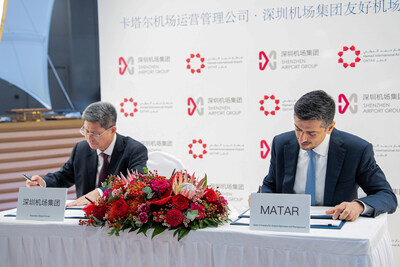
(right to left) Mr. Hamad Al Khater, Chief Operating Officer of Hamad International Airport, and Mr. Chen Fanhua, Deputy General Manager of Shenzhen Airport Group and Board Chairman of Shenzhen Airport Co., Ltd. Signing a Sister Agreement at Routes World 2025 in Hong Kong

The agreement, signed between MATAR, the Qatar Company for Airports Management and Operation, and Shenzhen Capital Group, establishes a framework for collaboration in market insights, coordinated route planning, and technology adoption to strengthen connectivity for passengers and trade flows between China, the Middle East, and beyond.

The MoU was signed at Routes World 2025 in Hong Kong by Mr. Chen Fanhua, Deputy General Manager of Shenzhen Airport Group and Board Chairman of Shenzhen Airport Co., Ltd., and Mr. Hamad Al Khater, Chief Operating Officer of Hamad International Airport, in the presence of delegations from the Transportation Bureau of Shenzhen Municipality, Shenzhen Airlines, Qatar Airways, and airport executives.

Hamad Al Khater, Chief Operating Officer of Hamad International Airport said: “By linking Doha and Shenzhen, with shared values in technology and service excellence, we are creating smarter, more sustainable journeys for future travellers while advancing stronger economic and cultural ties between our nations.”

Chen Fanhua, Deputy General Manager of Shenzhen Airport Group, said: “Hamad International Airport is a leading hub in the Middle East, this represents a meaningful step in Shenzhen Airport’s journey toward internationalization. As one of the gateways of the Greater Bay Area, Shenzhen Airport is committed to expanding its global network and enhancing hub functions. Through this partnership, we will work hand in hand with Hamad International Airport to provide passengers more seamless travel experiences, open new opportunities for trade and tourism, and deliver sustainable value to passengers, airline partners, and economies of both regions.”

Hamad International Airport connects to nine Chinese cities – Beijing, Shanghai, Guangzhou, Shenzhen, Chongqing, Hangzhou, Xiamen, and Chengdu – as well as Hong Kong. These cities link to over 120 global destinations through Doha. From January to August, Qatar’s airport served 1.1 million passengers from these Chinese cities, with more than 2% from Shenzhen.

At Routes World, Hamad International Airport engaged airline partners to strengthen Qatar’s global network and drive demand to Doha, showcasing hub performance and passenger growth.

Recent milestones underscore momentum. In October 2024, Shenzhen Airlines launched thrice-weekly Doha–Shenzhen flights, its first Middle East route and Doha’s ninth Chinese destination.

Qatar Airways also announced the expansion of its codeshare with China Southern Airlines. Starting 16 October 2025, Qatar Airways will share code on China Southern’s three weekly direct flights between Beijing Daxing and Doha, while China Southern will extend its “CZ” code on Qatar Airways flights to 15 destinations in Africa, Europe, and the Middle East.

Photo: https://laotiantimes.com/wp-content/uploads/2025/09/pr_and_social.jpg

E Fund HK’s Two ETFs List Simultaneously on HKEX, with an Initial Offering Size Exceeding HK$1.369 Billion

HONG KONG, Sept. 27, 2025 /PRNewswire/ — Two new ETFs launched by E Fund Management (HK) Co., Ltd (“E Fund HK”) – the E Fund HK MSCI Asia-Pacific High Dividend Index ETF (3483.HK) and the E Fund HK FTSE AI Select Index ETF (3489.HK) – were listed simultaneously on the Hong Kong Stock Exchange (HKEX) on September 26. E Fund HK’s management team, along with representatives from the Securities and Futures Commission of Hong Kong, Hong Kong Exchanges and Clearing Limited, partners, and global investors, witnessed this significant milestone.

Each of these two ETFs boasts unique investment characteristics, and their combined initial offering size reached HK$1.369 billion. The E Fund High Dividend ETF (3483.HK) tracks the MSCI Asia-Pacific High Dividend Index, covering leading companies in Hong Kong, Japan, and Australia with stable dividend payments, providing investors with a tool for seeking low-volatility investments with high-return potential. The E Fund AI ETF (3489.HK) closely follows the FTSE Global AI Select Index, covering core enterprises across the entire artificial intelligence industry chain listed in Hong Kong and the United States, enabling investors to easily capitalize on top global AI growth opportunities. Together, these two products offer investors more diversified and forward-looking asset allocation options.

Mr. Ma Jun, Chairman of E Fund HK, stated at the listing ceremony that this simultaneous listing represents a significant milestone in E Fund’s global product strategy and a crucial step in deepening the firm’s internationalization efforts to serve global investors. In the future, E Fund will continue to leverage its mature index investment management expertise and global research capabilities to continuously innovate product offerings, providing investors with even more diversified and forward-looking asset allocation options.

In Guizhou, Where the Huajiang Canyon Bridge Tops the World

GUIYANG, China, Sept. 27, 2025 /PRNewswire/ — This is a report from Discover Guizhou:


In Guizhou, Where the Huajiang Canyon Bridge Tops the World

Guizhou, the only province in China without a plain, has built more than 30,000 bridges across its rugged mountains, creating what many call an Expressway-Marked Flatland. From suspension bridges to cable-stayed bridges, the province has become a living “museum of bridges,” pushing the limits of engineering.

Five years ago, U.S. content creator Jack first visited Guizhou and was struck by its diversity and innovation. Since then, he has returned almost every year. This time, he came to witness the rise of a new world record: the Huajiang Canyon Bridge, the highest bridge on Earth.

The Huajiang Canyon, also called the “Earth’s Crack,” has long divided local communities. For a century, villagers relied on an iron-chain bridge built in the Qing Dynasty. It endured floods and wars, even serving as a Red Army stronghold. Crossing it once took six hours on foot.

Construction of the new bridge began in 2022. Today, it soars 625 meters above the Beipan River with a main span of 1,420 meters—breaking both height and span records for mountain bridges. For locals like 67-year-old villager Liang Zudong, it is nothing short of life-changing: “This bridge makes life so much easier.”

During construction, the fiercest challenge was the wind, with gales sweeping through the gorge at typhoon strength. Builders tackled it head-on, mastering airflow with wind deflectors and stabilizing plates that turned turbulence into balance. At the same time, they introduced other breakthroughs: a temperature control system to ensure the structural integrity of the concrete, a smart cable-hoisting system that enabled millimeter-precision steel truss installation, and twin main cables embedded with “smart strands” to monitor the bridge’s health in real time. These innovations together made safety and stability possible at unprecedented heights.

In just over three years, Guizhou has transformed a natural chasm into a symbol of human ingenuity. Once open, the bridge will cut travel time across the canyon from two hours to just two minutes.

For locals, the bridge is far more than a transport link. In 2024, villager Lin Guoquan returned home, determined to build a career while caring for his family, and opened a hotel with panoramic views. His videos of the bridge have attracted thousands of visitors online, “Filming the ‘birth’ of this bridge makes me proud.” Now, his rooms are booked weeks in advance.

That fascination is shared by visitors from across China. A 73-year-old backpacker from Sichuan waited three days just to see the bridge clearly. University students from Wuhan were filming a documentary titled “Sky-High Ambition”, exploring how the bridge connects people as much as it overcomes natural challenges.

Beyond transport, the bridge is already becoming a world-class tourism landmark, with plans for glass viewing halls, night-time light shows, and extreme sports platforms for bungee jumping, skydiving, and paragliding.

Built entirely with Guizhou’s investment, design, materials, and construction teams, the Huajiang Canyon Bridge is a “pure Guizhou creation.” For Jack, the bridge represents more than world records; it embodies Guizhou’s power to connect people, ideas, and the future.

Science fiction writer Liu Cixin dissects the popularity of his epic work

BEIJING, Sept. 27, 2025 /PRNewswire/ — A news report from chinadaily.com.cn:

“Epic”, “stunning”, “ambitious”, “brilliant”, “profound”, “genius” — these are some of the words often quoted by users on the book review platform Goodreads, who rated Death’s End, the final installment in the Three-Body Problem trilogy by Chinese writer Liu Cixin.


Science fiction writer Liu Cixin dissects the popularity of his epic work

According to the China Educational Publications Import and Export Corporation, Liu’s Three-Body Problem trilogy has sold over 6 million copies worldwide in 23 languages, making it one of the best-selling contemporary Chinese literary works internationally.

In a speech Liu recently delivered to mark the 10th year of the book’s international publication, he modestly attributed its global success to two main aspects.

He dismissed the idea that its global appeal lies in providing a sci-fi perspective on China.

Instead, he says, the novel’s success stems from its offering of a panoramic depiction of the arrival of an extraterrestrial civilization in the near future, a theme that resonates globally. Science fiction is a worldwide genre where humanity shares a common identity, dissolving national and ethnic differences. It depicts crises and challenges faced by all and envisions a future that unites humanity in aspiration.

“Therefore, science fiction is the literary genre most capable of transcending cultural and racial boundaries, resonating with people worldwide,” he says.

The Three-Body Problem books deal with the theme of human contact with extraterrestrial civilizations, a universal issue for humanity.

He argues that extraterrestrial civilizations pose a real threat, challenging common perceptions. Their potential arrival, whether imminent or distant, is humanity’s greatest uncertainty and could profoundly transform our reality and fate.

GAC Engages at the 2025 Fortune Global 500 Summit, Exploring the Future of the Automotive Industry

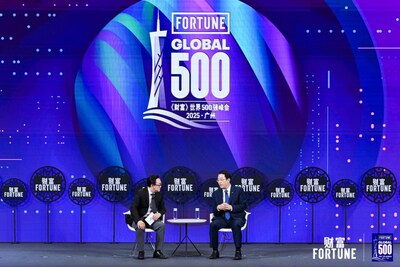
GUANGZHOU, China, Sept. 27, 2025 /PRNewswire/ — On September 25, 2025, Guangzhou hosted the Fortune Global 500 Summit, drawing nearly 300 influential business leaders and renowned experts from around the globe. GAC Group Chairman and President Feng Xingya was invited to articulate his vision for the next decade of automotive innovation.


Feng remarked that the global automotive industry is entering a decisive phase of accelerated transformation, marked by technological breakthroughs, management advancements, and far-reaching industrial restructuring. He noted that future competition will be defined by three fundamental dynamics: intelligent, scenario-driven user experiences; deeper collaboration across the industry ecosystem; and comprehensive lifecycle value creation. The sector’s business models are rapidly shifting beyond traditional hardware sales to integrated solutions that blend hardware, software, and services—unlocking opportunities for sustainable and resilient growth.

Addressing global trends, Feng noted that Chinese automakers have established a tangible lead in the fields of new energy vehicles, green decarbonization, and smart technologies. GAC is rapidly accelerating its global strategy, targeting entry into 100 overseas markets and aiming for annual exports of 500,000 vehicles by 2027. To support this vision, GAC has launched five KD assembly plants worldwide, with plans to double this footprint by 2026. This expansion signals a transition from simple product exports to a holistic ecosystem approach, delivering enduring value to global partners and customers.

Feng further outlined the imperative for auto manufacturers to enhance core competencies in user insight, product integration, intelligence, and marketing. GAC is investing in independent innovation, focusing on advanced electric drive systems and intelligent system integration, while embedding AI in manufacturing to boost supply chain resilience and product safety. The user-centric philosophy drives ongoing improvements to management and development processes, ensuring that products are finely tuned to evolving customer needs and market dynamics.

Recognizing the diverse expectations of today’s auto consumers, Feng pointed to the need for balanced innovation in both functional and emotional dimensions. GAC is responding by pioneering intelligent products and AI-powered services that enhance both safety and satisfaction.

Discussing the future of new energy vehicles, Feng introduced the “Electric Value Index,” illustrating the cost advantages of EVs in most Chinese cities. He affirmed that as the industry shifts toward global integration, GAC Group will continue advancing through innovation, localization, and collaboration—committed to delivering better intelligent mobility experiences for users worldwide.