Home Blog Page 2841

From Practice to Paradigm: JA Solar Pioneers ISSB Implementation

BEIJING, Aug. 13, 2025 /PRNewswire/ — As international sustainability disclosure standards accelerate their global rollout, photovoltaic (PV) companies tend to face challenges such as mismatched metrics and fragmented internal governance when aligning with these frameworks. In response, JA Solar is deepening collaboration with the International Sustainability Standards Board (ISSB). The aim is to develop JA Solar’s own industry-specific implementation based on the ISSB standards, providing an exemplary model for the PV industry to integrate international frameworks.

This commitment manifests through proactive governance reforms and international advocacy. In May, ISSB Vice-Chair Jingdong Hua and Special Advisor to ISSB Chair & Director of International Financial Reporting Standards (IFRS) Foundation Beijing office Zhengwei Zhang visited JA Solar. The company’s board members and senior executives participated in intensive workshops, focusing on critical topics such as addressing global regulatory demands and quantifying climate-related financial impacts. This drives the deep integration of international standards into JA Solar’s corporate governance. In June, JA Solar, as the sole private enterprise representative to share its methodology for sustainability disclosures, joined global experts at the Beijing International Sustainability Conference, with over 13 million online views.

As early adopters of the standards, JA Solar deepens climate analysis based on the recommendations of the TaskForce on Climate-related Financial Disclosures (TCFD) frameworks and the IFRS S2 Climate-related Disclosures issued by the ISSB. The company also integrated its supply chain into decarbonization initiatives, empowering upstream suppliers, and released the industry’s first report of Taskforce on Nature-related Financial Disclosures (TNFD), pioneering biodiversity transparency. Through this “standards framework + industry characteristics” approach, JA Solar has demonstrated the feasibility of full ISSB compliance for PV enterprises. Looking ahead, JA Solar will further collaborate with ISSB to refine disclosure methodologies, helping more PV companies integrate deeply with global frameworks.

Established by IFRS Foundation during COP26 in 2021, ISSB aims to create a high-quality, comprehensive global baseline of sustainability disclosures to enhance ESG transparency. Its IFRS S1 (General Requirements) and IFRS S2 (Climate-related Disclosures) have been adopted by over 120 countries, serving as the “global language” for corporate sustainability reporting.

SARAWAK STRENGTHENS DIGITAL AND GREEN ECONOMY AGENDA WITH PROSPECTIVE NEC PARTNERSHIP

TOKYO, Aug. 13, 2025 /PRNewswire/ — The Deputy Premier of Sarawak, The Honourable Datuk Amar Haji Awang Tengah bin Ali Hasan, today outlined Sarawak’s strategic vision to accelerate its Post COVID-19 Development Strategy 2030 (PCDS 2030) and Sarawak Digital Economy Blueprint 2030 (SDE 2030), while inviting cooperation with NEC Corporation to drive digital transformation and sustainable growth, particularly in areas of digital government, aviation and cyber security.

Speaking at NEC Super Tower, Datuk Amar Awang Tengah highlighted Sarawak’s commitment to becoming an economy which is based on renewable resource-based, environmentally sustainable and technology-driven.

“Our vision is to build a resilient, inclusive, and innovation-led economy, supported by clean energy, advanced digital infrastructure, and high-skilled talent,” he said. “Partnerships with global technology leaders such as NEC can facilitate us in achieving these goals, bringing benefits to both investors and the local community through job creation, technology transfer, and economic spin-offs.”

Datuk Amar Awang Tengah emphasised that public-private partnerships and targeted investments in areas such as AI, cybersecurity, integrated circuit design, and digital services are key to delivering on Sarawak’s development strategies.

“Our journey towards a developed and sustainable Sarawak by 2030 is a shared opportunity,” he concluded. “With NEC’s expertise and our vision, we can create lasting value for investors, communities, and the environment.”

Deputy Premier invited NEC Corporation to explore strategic digital and sustainable investments in Sarawak, noting that the State offers competitive electricity and water tariffs, attractive tax incentives, a skilled workforce, and a business-friendly environment.

In attendance:

No

Name

Designation

1

Honourable Datuk Amar Haji Awang Tengah bin Ali Hasan

DEPUTY PREMIER

Minister for International Trade, Industry and Investment

Second Minister for Natural Resources and Urban Development

SARAWAK

2

Honourable Datuk Dr. Malcolm Mussen Lamoh

Deputy Minister for MINTRED

3

Dato Sri Dr. Wan Lizozman bin Wan Omar

Sarawak State Financial Secretary

4

Dato Sri Haji Mohd. Naroden bin Haji Majais

Advisor (SME), MINTRED Sarawak

5

Dzulkornain bin Masron

Permanent Secretary, MINTRED Sarawak

6

Syed Mohamad Fauzi Shahab

Deputy Permanent Secretary, MUT Sarawak

7

Datu Zaidi bin Mahdi

General Manager, LCDA

8

Timothy Ong

CEO, InvestSarawak

9

Professor Jugdutt (Jack) Singh

Chief Scientist and Chief Advisor, SMA

10

Izran Abdullah

Director, MIDA Tokyo

11

Shariman bin Jamil

CEO of SMD Semiconductor Sdn Bhd

12

Senior Government Officials

NEC

No

Name

Designation

1

Kenji Okutsu

Vice President, Public Safety Business Unit, Digital Government Digital Finance (DGDF), APAC

2

Toshio Suzuki

Director, APAC Global Network Services (GNS) & APAC Center of Excellence (CoE)

3

Chan Chern Pong

General Manager and Head of BU Sales, NEC Corporation of Malaysia

4

Sumita Toshiki

Deputy General Manager, Digital Government Digital Finance (DGDF) BU – Digital Identification Department


FIND – Global Summit 2025: Where Design Leadership Meets the Asian Market

FIND’s three-day conference assembles rockstar speaker line-up to decode Asia’s shifting design landscape, From interior design evolution, architectural frontiers to cultural identity and the rise of interdisciplinary practices.

SINGAPORE, Aug. 13, 2025 /PRNewswire/ — FIND – Global Summit returns in 2025 with its most expansive edition yet, convening leading voices from design, architecture, and business to explore how creativity can respond to urgent global challenges and shape more intelligent, inclusive, and impactful built environments. Across three days featuring over 60 speakers from 23 countries, the summit spans dozens of sessions of critical dialogue – from urban resilience and AI innovation to purposeful luxury and urban transformation. Building on the success of its 2024 edition, which attracted over 2600 attendees, the 2025 summit will take place from 11 to 13 September at FIND – Design Fair Asia, a key event of the Singapore Design Week, at Marina Bay Sands Expo & Convention Centre, affirming its role as a key platform for Asia’s design leadership community.
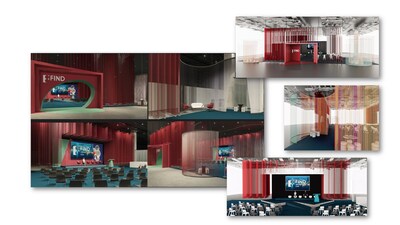
FIND - Global Summit 2025 Theatre
FIND – Global Summit 2025 Theatre

Pre-register by September 10th, 2025, for complimentary access to this must-attend industry event.

The summit brings together a distinguished lineup of global firms and visionary thinkers across the fields of product and interior design, architecture, and business such as Büro Ole Scheeren, Geberit, Gensler, HBA, Henning Larsen, Marriot International, Ramboll, Skidmore, Owings & Merrill, Wimberly Allison Tong & Goo (WATG), and Zaha Hadid Architects. From Tokyo to London, Prague to Bangkok, and Shanghai to Milan, the summit’s speaker community promises to be a catalyst for dialogue, innovation and meaningful cross-border collaboration.

“As organisers, we have to stay agile and ready to pivot alongside the industry – especially through dialogue and collaboration. Our aim is to spark creative exchanges with the ’25 edition of the Summit that extend far beyond the show and help move the industry forward.” – Carl Press, Event Director, FIND – Design Fair Asia

As the global design landscape evolves amid technological innovation, sustainability imperatives, and shifting economic currents, FIND – Global Summit 2025 takes on a sharper, more urgent tone. The programme is structured around three key pillars that will frame this year’s conversations. The Architectural Frontiers pillar delves into how Asia-Pacific is transforming the global architectural landscape through the integration of advanced technology, cultural heritage, and circular design principles. The Asia-Pacific Blueprint explores the region’s rise as a global epicentre of design, architecture, and refined creativity – distinguished by its masterful fusion of cultural depth and artisanal craftsmanship. The Transforming Spaces pillar underscores the region’s leadership in redefining luxury spaces and experiences, pioneering a harmonious fusion of traditional expertise with contemporary innovations, creating spaces we love.

Keynote Speakers

The first Keynote Speech on Day 1, titled Urban Transformation: Architecture as a Catalyst for Change, will be delivered by Simon Yu of Zaha Hadid Architects (ZHA). He will share how the firm envisions urban transformation as a comprehensive strategy to revitalise city life, infrastructure, and landscapes. He will delve into ZHA’s approach to reintegrating fragmented urban fabrics by merging sustainable regeneration – through adaptable infrastructure, passive environmental strategies, and green spaces – with community activation that transforms underused areas into vibrant civic destinations. Drawing on landmark projects from the past decade, Simon will also offer insights into the studio’s ongoing research and evolving vision for the future of urbanism in the region.

Hossein Rezai-Jorabi of Ramboll presents his keynote speech titled One Past, Many Futures, Multiple Presents. The greatest uncertainty in foresight isn’t what kind of future is desired, but what kind of present is required to reach it. Emerging ideas at the intersection of design, technology, environment, and cultural ethos within the built environment reveal new directions. From a futures perspective, the evolving role of design professionals addresses urgent ecological, political, and social challenges. Key questions around creativity, continuity, and system improvement come into focus, emphasising the resilience of both designed systems and nature. Scenario planning explores possible futures by considering paths such as continuing current trends, making significant changes, maintaining stability, or encountering breakdowns, demonstrating how design serves as a strategic tool for creating resilient presents and regenerative futures.

Keiji Ashizawa, who runs the eponymous Keiji Ashizawa Design, a Tokyo-based architecture and design firm, opens Day 2 of FIND – Global Summit with “Layering Volumes: A Holistic Approach to Space and Object”. Ashizawa explores the layered relationship between objects and spaces through his interdisciplinary work across architecture, interiors, and furniture design. His holistic approach weaves together elements – from large-scale architectural forms to the tactile intimacy of furniture – into unified, human-centered environments defined by a cohesive design language grounded in empathy, craftsmanship, and function.

Mario Cucinella, founder of Mario Cucinella Architects is internationally acclaimed for his pioneering approach to sustainable architecture – merging environmental innovation with human-centric design. With landmark projects across Europe, the Middle East, and Africa, he continues to shape the global dialogue on climate-conscious architecture. He joins FIND – Global Summit as a keynote speaker, bringing his visionary perspective to the forefront of design thought leadership in Asia.

Notable Leading Voices and Insights Sessions

In “Pragmatic Sustainability: High Density Transit-Oriented Development in Asia“, speakers Connie Wan of Büro Ole Scheeren, Angela Spathonis of Gensler and Shumin Zheng of SOM will weigh in on how high-density, transit-oriented development (TOD) offers a scalable strategy for sustainable urban growth, particularly in rapidly developing Asian cities. By integrating transport infrastructure with mixed-use urban form, TOD addresses key challenges in resilience, liveability, and resource efficiency. It emphasises implementable solutions that balance environmental goals with economic and social realities. Architects and planners are pivotal in bridging policy, development, and social impact – proving how design can enable more inclusive, future-ready cities.

Bernd Michael Schernau of Henning Larsen leads the session Beyond the Façade: Liveability Through Integration of Greenery into Buildings, exploring how integrating greenery into architecture is more than a visual gesture – it is a tested strategy for improving liveability, environmental performance, and urban resilience. In densely built cities across Asia and Southeast Asia, where space is constrained and climate pressures intensify, incorporating vegetation into façades, rooftops, and structural systems enhances thermal comfort, air quality, and biodiversity.

Public Architecture: Designing for the Next Civic Era will feature Seah Chee Huang (DPA Architecture & Urban Planning), James Lu (Perkins & Will), and Yichen Lu (Studio Link-Arc) in a timely discussion on the future of civic spaces. As Singapore celebrates its 60th anniversary, it stands as a global benchmark for urban planning and inclusive design. Today, civic architecture is evolving beyond iconic forms toward buildings that prioritise wellbeing, access, and environmental responsibility. From libraries and schools to museums and stadiums, public spaces are being reimagined as vital infrastructure for resilience, care, and community connection in a rapidly changing world.

Designing with Intelligence: How AI Shapes Creativity and Reality brings together Carlos Bañon Blazquez (Formas.ai) and Frederico Ramos (Aedas) to explore how AI is reshaping design practice – from boosting creativity and efficiency to bridging digital concepts with built reality. As automation accelerates, the conversation turns to how designers can balance data-driven tools with human-centric values, ensuring that technology enhances rather than overrides the creative and ethical dimensions of architecture.

Michael Allenspach (Geberit), Henry Yew (Index Design), and Markus Cheng (ADDP Architects) explore how bathroom design is evolving from pure utility into a space for restoration and wellbeing. In From Utility to Sanctuary: Designing Bathrooms for Body and Mind, the session looks at how layout, lighting, tactile materials, and intuitive elements can shape environments that are both highly functional and emotionally uplifting.

Moderated by the Summit Content Chair Yoko Choy, Retail as Destination: Merging Culture, Community and Commerce features Ian Hendricks of Central Pattana and explores how retail in Asia is transcending shopping to become a platform for culture, community, and innovation. From hyper-localised experiences in Thailand to digitally integrated lifestyle hubs in China and design-forward spaces in Korea, the region is setting new standards for immersive, consumer-first environments. The discussion highlights how design thinking, architectural storytelling, and experiential strategies are shaping the next generation of retail – offering inspiration not only for Asia, but for a global industry reimagining the purpose of place.

Czech Design Identity: Continuity, Craft, and Contemporary Vision brings together Jiří Pačinek, Guangjun Kung, Radomil Doležal, and Michaela Froňková to discuss how Czech design blends heritage craftsmanship with modern aesthetics and sustainability. From renowned glassmaking and ceramics to furniture and public space solutions, the panel highlights how historical influences like Cubism and Art Nouveau remain present in contemporary work – making Czech design a globally recognised expression of national identity.

Guy Cooke of Wimberly Allison Tong & Goo (WATG) leads the conversation on Design to Perform: Aligning Creativity with Commercial Goals, highlighting how design can be both creative and commercially strategic. By grounding design in market insights and guest behaviour, this approach delivers adaptable, solutions-driven outcomes that enhance brand loyalty, improve user experience, and drive business performance.

As luxury design evolves across continents, opulence alone no longer defines excellence. Today’s discerning guests and residents are seeking more – spaces that speak to identity, purpose, and place. In this shifting landscape, design is called to do more than impress; it must engage, uplift, and connect. In Global Signatures: Where Opulence Meets Purposeful Design, Erin Juhl of EDG Hospitality Design + Branding and Aldwin Ong of CCD examine how hospitality and branded residences are being reimagined to reflect cultural nuance, environmental care, and emotional depth. The conversation will explore how luxury can serve as a platform for meaningful living – where social value, local narratives, and long-term impact are built into every detail.

Admission to the FIND-Global Summit at the FIND-Design Fair Asia is free. Pre-register for free before 10 September 2025. On-site, same day entry is available at S$39 per person to the B2B event.

Highres images are available on https://www.dropbox.com/scl/fo/tcy5d0zrdv7gsfwkxwjc8/AGpDm5fqV4lpPPboi2XPFz8?rlkey=quu21b1r1m6xup4awv5kbnl4q&st=drb667uw&dl=0.

About FIND – Design Fair Asia
FIND – Design Fair Asia is a joint venture between dmg events (organizers of well-known global shows Big5, INDEX, HiDesign etc.) and Fiera Milano (leader in Italy and one of the main integrated operators worldwide in the exhibition and congress industry). It is a combination trade show and design fair, offering a carefully curated selection of furniture, interiors, and design brands. The anchor event of the Singapore Design Week (organized by DesignSingapore Council) acts as a stimulating marketplace connecting leading suppliers across furniture, lighting, décor, textiles, design technology, home, kitchen, bathroom and surface materials with retail buyers, residential and commercial property developers, architects, hospitality professionals, interior designers, high-net-worth individuals, and Asia-based FF&E contractors.

With key stakeholders such as DesignSingapore Council and numerous regional partner associations, FIND is to return to the iconic Marina Bay Sands in Singapore with extended event offerings on over 11,000 sqm, 250 international brands, a VIP buyer program, and exciting on-site initiatives.

Website: https://www.designfairasia.com/
IG: @finddesignfairasia
FB: @finddesignfairasia
LinkedIn: FIND – Design Fair Asia

About dmg events
At dmg events, we understand that rapidly evolving markets are driving organizations to rethink strategies, expand globally, and form new partnerships. As a leading event organizer and publisher, we facilitate and accelerate this transformation by providing direct access to new markets, inspiration and leadership, innovative products, and valuable business opportunities. With a presence in 30+ countries and 13 offices worldwide including Saudi Arabia, the UAE, Egypt, South Africa, the UK, Canada, Singapore and India, dmg events organizes over 95 large-scale events annually, attracting 425,000+ industry professionals. As the largest international event organizer in Saudi Arabia since 2011, dmg events connects international businesses with local demand through its offices in Riyadh and Jeddah. Our growth in the Kingdom is driven by our ability to geo-adapt strong brands, build strategic partnerships and align our events with market needs. Flagship events like Big 5 Saudi, INDEX Saudi, The Hotel Show Saudi Arabia, The Saudi Food Show and Saudi Infrastructure Expo drive industry transformation and lasting impact across sectors.
For more information, visit www.dmgevents.com. Founded in 1989, dmg events is a wholly owned subsidiary of the Daily Mail and General Trust plc (DMGT, www.dmgt.co.uk).

About Fiera Milano
Fiera Milano is a leader in Italy and one of the world’s leading integrated operators in the trade fair and congress sector. The Fiera Milano Group manages the leading exhibition center in Italy and Europe’s largest congress center, presiding over numerous production sectors including: fashion, furniture, home system, instrumental mechanics, tourism, professional hospitality, food, plant engineering and energy, construction and art. In particular, the activity focuses on the management, organisation and hosting of exhibitions and other events, through the provision of equipped exhibition spaces, project support and related services. This is complemented by engineering and set-up services, technical set-up and logistics services, as well as a multi-channel platform that includes web services and conferences. Fiera Milano has been listed on Euronext Milan, STAR segment, since 2002. www.fieramilano.it/en/

About Singapore Design Week
One of Asia’s premier design festivals, Singapore Design Week (SDW) celebrates Singapore’s distinctive brand of creativity, exploring design through three defining festival pillars: Design Futures (the design of the future and the future of design), Design Marketplace (lifestyle trends with a spotlight on Southeast Asia) and Design Impact (innovative solutions for a better world). Organised by DesignSingapore Council, SDW is a celebration of creativity and innovation, championing thought leadership and showcasing the best of design from Singapore and beyond. sdw.sg


US, China Extend Tariff Truce for 90 Days

The US and China have agreed to extend their tariff truce for another 90 days until 10 November. (Phot credit: Knowledge at Wharton - University of Pennsylvania)

By Beiyi SEOW and Isabel KUA/AFP – China and the United States delayed higher tariffs on each other’s imports for 90 days, hours before a trade truce between the world’s two largest economies was due to expire Tuesday, 12 August.

US President Donald Trump signed an executive order on 11 August that will “extend the Tariff Suspension on China for another 90 days,” according to a post on his Truth Social platform.

The White House said its halt on steeper tariffs will be in place until 10 November.

China also said it would continue suspending its earlier tariff hike for 90 days, starting 12 August, while retaining a 10-percent duty, according to a joint statement. 

While the United States and China slapped escalating tariffs on each other’s products this year, bringing them to prohibitive triple-digit levels and snarling trade, both countries in May agreed to temporarily lower them.

As part of their truce that month, fresh US tariffs targeting China were reduced to 30 percent and the corresponding level from China was cut to 10 percent.

Those rates will now hold until November, or whenever a deal is cut before then.

In the executive order posted 11 August to its website, the White House reiterated its position that there are “large and persistent annual US goods trade deficits” and they “constitute an unusual and extraordinary threat to the national security and economy of the United States.”

The order acknowledged Washington’s ongoing discussions with Beijing “to address the lack of trade reciprocity in our economic relationship” and noted that China has continued to “take significant steps toward remedying” the US complaints.

Beijing, meanwhile, said it would ‘take or maintain necessary measures to suspend or remove non-tariff countermeasures against the United States,” as agreed in Switzerland’s  Geneva in May.

Trump-Xi summit?

In Shanghai, China’s commercial capital, residents welcomed the extended trade truce on 12 August.

“I feel that negotiations will definitely steer the two countries toward a better direction,” said Zhang Xuan, a 25-year-old postgraduate student.

Lin Peng, a commercial property leasing agent, told AFP he felt there would be more negotiations between the two nations as Trump is a “businessman” and an escalated trade war would “hurt his own interests too.”

“Beijing will be happy to keep the US-China negotiation going, but it is unlikely to make concessions,” warned William Yang, an analyst at the International Crisis Group.

He believes China sees its leverage over rare earth exports as strong, and that Beijing will likely use it to pressure Washington.

US-China Business Council president Sean Stein said the extension was “critical to give the two governments time to negotiate an agreement,” providing much-needed certainty for companies to make plans.

Since Trump took office in January, China’s tariffs have essentially boomeranged, from the initially modest 10 percent hike in February, followed by repeated surges as Beijing and Washington clashed, until it hit a high of 145 percent in April.

Now the tariff has been pulled back to 30 percent, a negotiated truce rate.

A trade deal would “pave the way for a Trump-Xi summit this fall,” said Asia Society Policy Institute senior vice president Wendy Cutler.

But Cutler, herself a former US trade official, said: “This will be far from a walk in the park.”

Even as both countries reached a pact to cool tensions after high level talks in Geneva in May, the de-escalation has been shaky.

Key economic officials convened in London in June as disagreements emerged and US officials accused their counterparts of violating the pact. Policymakers met again in Stockholm last month.

‘Reciprocal’ tariffs

Trump said in a social media post 10 August that he hoped China will “quickly quadruple its soybean orders,” adding this would be a way to balance trade with the United States.

China’s exports reached record highs in 2024, and Beijing reported that their exports exceeded expectations in June, climbing 5.8 percent year-on-year, as the world’s number-two economy works to sustain growth.

Since returning to the presidency, Trump has separately slapped a 10 percent “reciprocal” tariff on almost all trading partners, aimed at addressing trade practices Washington has deemed unfair.

This surged to varying steeper levels last Thursday, 7 August  for dozens of economies.

Major partners like the European Union, Japan and South Korea now see a 15 percent US duty on many products, while the level went as high as 41 percent for Syria.

The “reciprocal” tariffs exclude sectors that have been targeted individually, such as steel and aluminum, and those that are being investigated like pharmaceuticals and semiconductors.


© Agence France-Presse

Exploring Dunhuang’s heritage with ballet dancer Sabrina

BEIJING, Aug. 13, 2025 /PRNewswire/ — A news report from chinadaily.com.cn


Dunhuang, a timeless gem in Gansu province, China, echoes the spirit of the Silk Road. Explore breathtaking landscapes at Yardang National Geopark, indulge in local delicacies at the lively Dunhuang night market, and discover the artistry of the Mogao Caves, famed for their enchanting flying dance murals. Join ballet dancer Sabrina on a mesmerizing cultural journey through this ancient city, where history and hospitality intertwine.

eazy Insurance Announces Acquisition of G&C General Pte. Ltd.


SINGAPORE – Media OutReach Newswire – 13 August 2025 – eazy Insurance is pleased to announce the acquisition of G&C General Pte Ltd, a family-run agency with a long history in Singapore’s retail insurance sector. This acquisition supports eazy’s broader expansion strategy while maintaining its focus on delivering consistent, client-oriented service.

eazy Insurance Announces Acquisition of G&C General Pte. Ltd.

Integrating Traditional Service with Digital Access

Existing clients can expect operational changes designed to enhance service accessibility. G&C’s client portfolio will now be supported through eazy’s digital insurance platform and broader product range. This acquisition brings together G&C’s relationship-based service model with eazy’s technology-driven processes to enable both continuity and improved access.

“This milestone represents more than just business growth; it reflects our commitment to preserving the trust that G&C has built with its clients over the years, while enhancing their experience through our digital capabilities,” stated Douglas Chia, CEO of eazy Insurance.

Shirley Ling, Director of G&C General Pte Ltd, added, “I am confident that with this acquisition, G&C’s clients will continue to receive dedicated, personalised service. With eazy’s advanced digital platform and comprehensive insurance solutions, we expect to see meaningful improvements in client service and overall satisfaction.”

Part of a Sustainable Growth Strategy

The acquisition of G&C General is aligned with eazy’s approach to sustainable and scalable growth. The company continues to invest in technology, service delivery, and operational improvements that support both client needs and business resilience, while maintaining the service standards its clients have come to expect.

The integration process is underway, with measures in place to ensure that clients experience minimal disruption during the transition.

Hashtag: #acquisition #singaporeinsurancebrokers #corporateinsurance #smeinsurance #employeehealthbenefitsinsurance #healthinsurance #carinsurancesingapore #personalinsurance #homeandfireinsurance

The issuer is solely responsible for the content of this announcement.

About eazy Insurance

eazy Insurance is an that uses a tech-enabled platform to streamline the insurance purchasing process for individuals and businesses. As a broker, eazy aims to represent clients’ interests by offering clear, tailored options—from and to health and personal accident coverage—through a tech-enabled platform.

Lens Technology’s Strategic Insights: Navigating Innovation and Market Growth

HONG KONG SAR – Media OutReach Newswire – 13 August 2025 – On August 11, 2025, Lens Technology, a leading provider of one-stop precision manufacturing solutions for the entire intelligent terminal industry chain, hosted a survey at its Shenzhen office, welcoming 12 institutional investors, including Bosera Asset Management, China Southern Fund and Essence Fund. The session, led by Vice President and Board Secretary Jiang Nan, addressed critical investor concerns, shedding light on the company’s robust strategies in supply chain stability, technological innovation, and diversified business expansion. Below is an in-depth analysis of the survey’s key highlights, illustrating how Lens Technology is navigating industry shifts to strengthen its competitive edge.

Impacts of major North American clients’ investments in cover glass production

Recent reports of major North American clients and related companies increasing investments in U.S.-based cover glass production sparked market interest in their potential impact on Lens Technology. The company clarified that Lens Technology, a global leader in brittle material processing, specializes in enhancing the value of raw glass through advanced processing techniques, rather than producing glass substrates. The company collaborates with strategic partners who supply raw glass via a Hong Kong distribution center and a Hunan bonded warehouse, ensuring seamless and efficient delivery. Lens Technology is actively working with these partners to develop next-generation cover glass, incorporating innovative formulations to elevate product performance and user experience, thereby strengthening its competitive position in the global market.

Foldable Screen Trends: Innovative Strategies and Market Leadership

As a leading global supplier of ultra-thin flexible glass (UTG), Lens Technology capitalizes on its deep expertise, extensive patent portfolio, and advanced production capabilities to pioneer a multilayer foldable screen design. This innovative approach eliminates creases, enhances screen flatness, and sets a new standard for next-generation foldable displays. With a dominant market position, Lens Technology is advancing smoothly in new product development and validation, while actively preparing for large-scale production to meet growing demand.

New 3D Glass: Expanding Market Potential and Value Growth

The market potential and value of the newly designed 3D glass back cover were a focal point for investors. Lens Technology’s innovative 3D glass back cover, featuring flat edges and a convex camera module, optimizes internal device layouts and enhances imaging performance, establishing it as a preferred solution for premium flagship devices. The complex processing of this design drives surging demand, significantly increasing per-unit value and fostering a market trend of rising volume and pricing. Lens Technology anticipates sustained benefits from this technological advancement in the years ahead.

Automotive Business: Technological Edge and Growth Prospects

With decades of expertise in electronic glass processing, Lens Technology leads in the production of lightweight, chemically strengthened, and high-precision automotive glass. Its ultra-thin laminated glass, featuring advanced capabilities such as soundproofing, heat insulation, UV protection, and HUD projection, has been integrated into new models by leading new energy vehicle manufacturers, with mass production commencing in late 2025. Accelerated partnerships with global automotive brands are driving significant growth, positioning Lens Technology as a key player in the evolving automotive industry.

Hashtag: #Lens #藍思

The issuer is solely responsible for the content of this announcement.

Trend Micro Warns of Thousands of Exposed AI Servers

Latest research reveals mounting infrastructure-level risks from diverse components


HONG KONG SAR – Media OutReach Newswire – 13 August 2025 – Trend Micro Incorporated (TYO: 4704; TSE: 4704), a global cybersecurity leader, today urged AI engineers and IT leaders to heed best practices in developing and deploying secure systems, or risk exposure to data theft, poisoning, ransom, and other attacks.

To learn more about how network defenders and adversaries are using AI, read Trend Micro State of AI Security Report, 1H 2025: https://www.trendmicro.com/vinfo/us/security/news/threat-landscape/trend-micro-state-of-ai-security-report-1h-2025

Rachel Jin, Chief Enterprise Platform Officer at Trend: “AI may represent the opportunity of the century for global businesses. But those rushing in too fast without taking adequate security precautions may end up causing more harm than good. As our report reveals, too much AI infrastructure is already being built from unsecured and/or unpatched components, creating an open door for threat actors.”

Trend’s report highlights several AI-related security challenges:

1) Vulnerabilities/exploits in critical components

Organizations wishing to develop, deploy and use AI applications must leverage multiple specialized software components and frameworks, which may contain vulnerabilities one may find in regular software. The report reveals zero-day vulnerabilities and exploits in core components including ChromaDB, Redis, NVIDIA Triton, and NVIDIA Container Toolkit.

2) Accidental exposure to the internet

Vulnerabilities are often the result of rushed development and deployment timelines, as are instances when AI systems are accidentally exposed to the internet, where they can be probed by adversaries. As detailed in the report, Trend has found 200+ ChromaDB servers, 2,000 Redis servers, and 10,000+ Ollama servers exposed to the internet with no authentication.

3) Vulnerabilities in open-source components

Many AI frameworks and platforms use open-source software libraries to provide common functionality. However, open-source components often contain vulnerabilities that end up creeping into production systems, where they are hard to detect. At the recent Pwn2Own Berlin, which featured a new AI category, researchers uncovered an exploit for the Redis vector database, which stemmed from an outdated Lua component.

4) Container-based weaknesses

A great deal of AI infrastructure runs on containers, meaning it is exposed to the same security vulnerabilities and threats that impact cloud and container environments. As outlined in the report, Pwn2Own researchers were able to uncover an exploit for the NVIDIA Container Toolkit. Organizations should sanitize inputs and monitor runtime behavior to mitigate such risks.

Stuart MacLellan, CTO, NHS SLAM: “There are still lots of questions around AI models and how they could and should be used. We now get much more information now than we ever did about the visibility of devices and what applications are being used. It’s interesting to collate that data and get dynamic, risk-based alerts on people and what they’re doing depending on policies and processes. That’s going to really empower the decisions that are made organizationally around certain products.”

Both the developer community and its customers must better balance security with time to market in order to mitigate the risks outlined above. Concrete steps could include:

  • Improved patch management and vulnerability scans
  • Maintaining an inventory of all software components, including third-party libraries and subsystems
  • Container management security best practices, including using minimal base images and runtime security tools
  • Configuration checks to ensure AI infrastructure components, like servers aren’t exposed to the internet

Hashtag: #TrendMicro


The issuer is solely responsible for the content of this announcement.

About Trend Micro

Trend Micro, a global cybersecurity leader, helps make the world safe for exchanging digital information. Fueled by decades of security expertise, global threat research, and continuous innovation, Trend Micro’s AI-powered cybersecurity platform protects hundreds of thousands of organizations and millions of individuals across clouds, networks, devices, and endpoints. As a leader in cloud and enterprise cybersecurity, Trend’s platform delivers a powerful range of advanced threat defense techniques optimized for environments like AWS, Microsoft, and Google, and central visibility for better, faster detection and response. With 7,000 employees across 70 countries, Trend Micro enables organizations to simplify and secure their connected world.