New LEGO Ideas® challenge invites fans to create a first-of-its-kind cross-universe moment in LEGO bricks to celebrate iconic storytelling worlds of Star Wars™ and Marvel.
The announcement was made at New York Comic Con during a panel featuring Kevin Smith; actor, director and Marvel Comics writer.
Now open, fans can choose from three building themes – vehicles, characters, or scenes – to inspire the Star Wars and Marvel mash-up and submit via the LEGO Ideas platform.
NEW YORK, Oct. 12, 2026 /PRNewswire/ — Today at New York Comic Con (NYCC), the LEGO Group announced a first-of-its-kind LEGO® Ideas challenge. For the first time ever, fans are invited to mash-up Star Wars™ and Marvel by reimagining characters, vehicles and scenes from the two universes in LEGO form.
THE LEGO GROUP INVITES FANS TO MASH-UP STAR WARS™ AND MARVEL UNIVERSES FOR THE FIRST TIME EVER IN LEGO IDEAS® CHALLENGE
What’s more, the LEGO Ideas platform means that once the build has been submitted and fans have voted on the design, the favourite submissions will then become immortalised as an official LEGO product.
Fede Begher, Senior Vice President and Head of Product Group at the LEGO Group, said: “This challenge is a milestone for LEGO Ideas and our fan community. For the first time ever, fans can build with both Marvel and Star Wars in a single LEGO Ideas challenge, unlocking entirely new possibilities for creativity and storytelling. We know our fans never stop imagining new ways to bring their favourite worlds together, and we’re excited to see the originality, passion and innovation they bring to this unique crossover.”
As a tribute to the landmark 50th anniversary of the Star Wars franchise in 2027, the Star Wars/Marvel: Hope Assembles comic series was unveiled this past summer. Launching in January, it’s the first-ever crossover between the Star Wars and Marvel Comics universes. The LEGO Ideas challenge celebrates that crossover and honours the 50th anniversary.
Open from today, fans simply need to visit ideas.lego.com, choose from three challenge themes of mashing up Star Wars and Marvel vehicles, characters or scenes, review all challenge rules and guidelines, and then get building with LEGO elements. Voting for the submissions begins December 15, 2026, with the Grand Prize Selections being announced next year.
For more information, please visit ideas.lego.com/campaigns/hope-assembles.
About the LEGO Group The LEGO Group’s mission is to inspire and develop the builders of tomorrow through the power of play. The LEGO System in Play, with its foundation in LEGO bricks, allows children and fans to build and rebuild anything they can imagine.
The LEGO Group was founded in Billund, Denmark in 1932 by Ole Kirk Kristiansen, its name derived from the two Danish words LEg GOdt, which mean “Play Well”.
Today, the LEGO Group remains a family-owned company headquartered in Billund. Its products are now sold in more than 120 countries worldwide.
About the LEGO Ideas platform LEGO Ideas offers fans the opportunity to submit their own brick creations with the chance to have their concept brought to life with the help of LEGO master designers and a share of the profits. Find out more at www.ideas.LEGO.com.
Debut of ASEAN and Qinghai Pavilions alongside four key themes spanning energy, technology, green cities and waste management
ECO Expo Asia 2026 – Connecting the World for a Sustainable Future
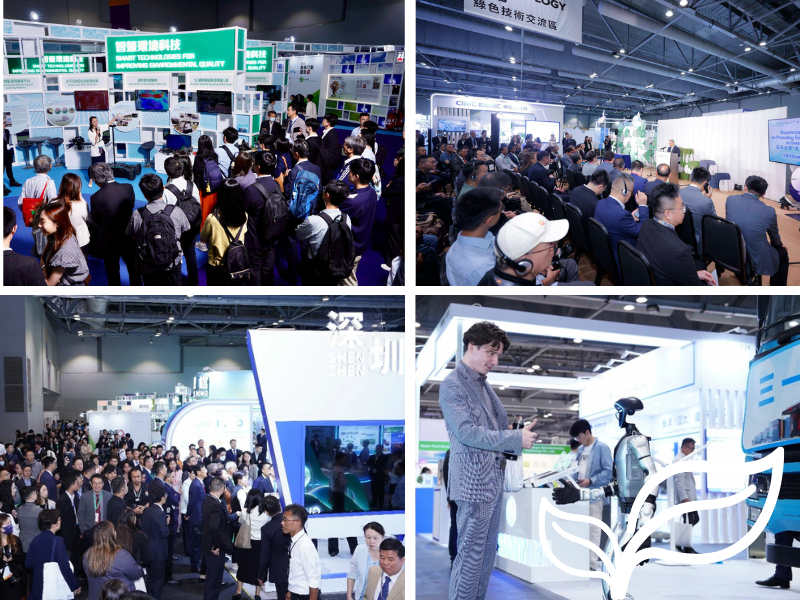
HONG KONG SAR – Media OutReach Newswire – 12 October 2026 – Eco Expo Asia 2026, jointly organised by the Hong Kong Trade Development Council (HKTDC) and Messe Frankfurt (HK) Ltd, co-organised by the Environment and Ecology Bureau of the Government of the Hong Kong Special Administrative Region (HKSAR), will be held from 26 to 29 October at AsiaWorld-Expo.
HKTDC Associate Executive Director Silas Chu said: “Last month, the Hong Kong SAR Government unveiled the Policy Address and first Five-Year Plan, setting out a vision for building a green and liveable city. Across the region and beyond, China, the European Union and many ASEAN economies are actively pursuing carbon-neutrality or net-zero emission targets, and driving decarbonisation through regulations and industrial policies. Green transformation has shifted from policy aspiration to market rule. As global demand for ESG and green solutions continues to grow, Eco Expo Asia will bring together green technologies, innovative solutions, and global business opportunities to help enterprises capitalise on the new prospects emerging from this transition.”
He added, “This year’s Eco Expo Asia brings together over 340 exhibitors from 16 countries and regions, including first-time participants from Indonesia, Laos, Myanmar, the Philippines, Thailand, and Vietnam, highlighting the Expo’s growing international reach. Some 200 key officials and representatives of semi-official organisations from the Chinese Mainland, Hong Kong, Belt and Road countries, and ASEAN, will attend and tour the Expo, further promoting cross-regional cooperation and exchange.”
Speaking at the press conference, the Deputy Director of the Environmental Protection Department of the HKSAR Government, Dr Vanessa Au, expressed: “The 21st edition of Eco Expo Asia, held under the theme ‘Connecting the World for a Sustainable Future’, dovetails with the HKSAR Government’s First Five-Year Plan, and implements the Policy Address precisely aligning with the National 15th Five-Year Plan. It underscores our commitment to advancing Hong Kong’s green transformation, fostering green innovation, seizing the opportunities presented by the low-carbon economy, creating economic benefits and enhancing citizen well-being. Key highlights of this year’s expo include the HKSAR Government booth, the Environmental Campaign Committee Pavilion, the Hong Kong Pavilion and the newly established comprehensive experience zone for green technology. This year during the expo, the Environment and Ecology Bureau and the Ministry of Ecology and Environment of the People’s Republic of China will, for the first time, co-host the Belt and Road Green Innovation Conference in Hong Kong. In addition, the Environmental Protection Department, in association with the Belt and Road Initiative International Green Development Coalition and the Chinese Academy of Sciences, will jointly organise the second edition of the ‘Green Silk Road’ International Training Programme. This expo brings together stakeholders from all sectors, uniting our efforts to advance global carbon neutrality and sustainable development.”
Businesses show continued strong confidence in Hong Kong as an ESG business hub
The HKTDC has also released the “HKTDC ESG Index 2026”. The latest ESG Index stood at 67.3, up from 64.2 last year and well above the neutral threshold of 50, reflecting the continued strengthening of corporate confidence in Hong Kong’s role as an ESG hub. The survey also showed that 93% of respondents have integrated ESG into their overall business decision-making processes, while the share of businesses sourcing or selling ESG-related products and services rose from 29% in 2025 to 46% in 2026.
Silas said, “The rise in the ESG index reflects the continued strengthening of global businesses’ confidence in Hong Kong’s role as an ESG business hub. Results further demonstrate that ESG is increasingly being built into business decisions on investment, sourcing, and supply chain management, fuelling steady growth in demand for ESG products, services and solutions. ESG has evolved beyond a compliance requirement into a source of competitive advantage for companies.”
With strong demand for ESG solutions, Hong Kong is well positioned to unlock commercial opportunities across banking and finance, professional services, and innovation and technology. In terms of technological innovation, surveyed businesses identified the most impactful Hong Kong digital and ESG platforms for boosting performance as sustainable supply chain platforms (45%), AI analytics (37%), and cloud data reporting (30%). On supply chain management, respondents most valued Hong Kong’s ESG certification services (50%), followed by transparency and traceability tools (41%), and ESG audit and risk analysis solutions (36%).
Pavilion line-up expands with ASEAN and Qinghai Pavilion debuts
Eco Expo Asia brings together green innovations and technologies from around the world, offering the industry a platform to exchange ideas and explore new business opportunities. This year, the number of participating pavilions has risen to 18, covering a wider spread of regions. On the Chinese Mainland front, Qinghai Province makes its first appearance with a pavilion of its own, joined by the nine Chinese Mainland cities in the Greater Bay Area, Macao, Guangxi, Hunan, Shanghai, and Nanjing in Jiangsu Province.
Among the international group pavilions, the headline addition is a new ASEAN Pavilion, featuring 13 green technology companies from eight member countries, including Singapore, Laos, Malaysia, Myanmar, the Philippines, Indonesia, Thailand, and Vietnam. An ASEAN networking reception on the opening day will further strengthen business ties with the region. In addition, Korea Institute of Fusion Energy (KFE), bringing two companies, will showcase their marine environmental technologies and waste gas treatment equipment. The US State of Illinois returns after several years, while Canada, Italy, and the Netherlands maintain their regular presence.
Regarding Hong Kong exhibitors, the Hong Kong Science and Technology Parks Corporation once again leads 11 start-ups to the Expo to showcase local green innovation achievements. The Hong Kong Pavilion, supported by the Environmental Protection Department and coordinated by the Federation of Hong Kong Industries, is back with 19 local exhibitors presenting a diverse range of eco-friendly products, technologies and solutions. Rounding off the home-grown line-up, the HKSAR Government booth, featuring 11 bureaux and departments including the Environment and Ecology Bureau, and the Environmental Campaign Committee Pavilion, will highlight the city’s latest work in environmental protection and green development.
As a member of the HKSAR Government’s GoGlobal Task Force, the HKTDC will set up a GoGlobal Connect Zone, helping Chinese Mainland environmental enterprises tap international markets through Hong Kong’s professional services. A seminar on going global rounds out the programme, sharing practical experiences in expanding overseas.
Four thematic areas spotlight green innovation
Aligned with global trends and policy directions, this year’s Expo centres on four areas: Green Energy in Motion, Frontier Green Tech, Building for a Greener City and From Waste to Worth, showcasing the latest innovative green technologies, products, and solutions.
Under”Green Energy in Motion“, the Expo features green energy solutions spanning the maritime, land transport and aviation sectors. Echoing the call in the Policy Address and Hong Kong’s First Five-Year Plan to build a Sustainable Aviation Fuel (SAF) industry chain, EcoCeres Ltd. (Booth: 3-F30), a global leading SAF producer, makes its Expo debut with its advanced renewable SAF made from waste materials, alongside Hydrotreated Vegetable Oil (HVO). The Hong Kong Science and Technology Parks Pavilion (Booth: 3-E02) will also focus on energy, with start-ups presenting innovations such as EV chargers and modular EV conversion technology.
Under the “Frontier Green Tech” theme, around 30 start-ups and university spin-offs will show how research achievements have been transformed into practical environmental applications. Among them, first-time exhibitor Stellerus Technology Limited (Booth: 6-D27) will display the Multi‑Spectral Imaging Carbon Observatory (MUSICO), the world’s first lightweight, high‑resolution, high‑precision synergistic greenhouse gases observatory, which has already been deployed on China’s Tiangong space station. MUSICO monitors greenhouse gas emissions, supporting enterprises in formulating emission-reduction measures and supplying precise data to green finance institutions.
In keeping with the “building a green and liveable city” policy direction under Hong Kong’s Five-Year Plan, the “Building for a Greener City” theme gathers a host of innovations now in real-world use. Green Vigor Limited (Booth: 3-E02) will exhibit a modular hydropower system that converts wasted hydraulic resources from water tanks and cooling systems in buildings into electricity, a solution already in use in local shopping malls, commercial buildings and schools. AEC GreenTech Innovations Limited (Booth: 3-C20) brings a robot designed for plastering and paint spraying, which works at least five times faster than manual labour while halving material use, delivering environmental benefits. The technology has been adopted in local construction projects.
The fourth area, “From Waste to Worth“, assembles a number of leading Chinese Mainland enterprises in the waste management sector, including Chongqing Sanfeng Environment Group (Booth: 3-E30), named among Top 50 Environmental Enterprises in China and the Top 10 Influential Enterprises in China’s Solid Waste Industry, as well as listed environmental companies Dynagreen Environmental Protection Group (Booth: 3-B30) and Beijing Enterprises Environment Group (Booth: 3-D30), showcasing their waste management and resource circular solutions. Hong Kong-based Green AI Technology Limited (Booth: 3-E26) will launch REV, its new generation of the unmanned recycling station at the Expo, demonstrating how AI and automation can be applied to recycling.
Over 30 key events to gather experts from government, industry, academia and research
More than 30 forums and seminars will be held during the Expo, bringing together over 80 government officials, industry leaders and business representatives from the Chinese Mainland, Australia, Malaysia, Thailand, and other Belt and Road countries to share insights on green opportunities, success stories and forward-looking strategies.
The annual flagship event, Eco Asia Conference, will also feature a series of seminars centred on four key themes, with industry and academic experts presenting the latest developments. On 26 October, Professor Su Hui, Chair Professor in the Department of Civil and Environmental Engineering at HKUST, who spearheaded the development of MUSICO, will join ProfessorKenneth Leung, Director of the State Key Laboratory of Marine Environmental Health at CityUHK, to discuss technologies for monitoring extreme weather and explore Hong Kong’s role as a regional green innovation hub. On 27 October, representatives from the Construction Industry Council and China State Construction Engineering (Hong Kong) Ltd will examine green building development from the perspectives of policy, certification and practice.
On 28 October, Avinash Persaud, Special Advisor on Climate Change to the President of the Inter-American Development Bank (IDB) and a member of the High-Level Expert Group on Climate Finance for the COP26, 27 and 28 Presidencies, will take to the stage. Drawing on his extensive experience spanning international finance, public policy, and climate finance, he will analyse emerging global trends in the field.
Public Dayinvites everyone to embrace green lifestyles
The final day of the Expo (29 October) will be Public Day, with free admission for the public, aiming to raise awareness of environmental protection and sustainability and to encourage the adoption of green lifestyles. A series of seminars on climate, environmental protection and food waste upcycling will be held that day. Speakers include representatives from the Hong Kong Observatory, Hong Kong meteorologist and former Assistant Director of the Hong Kong Observatory Leung Wing Mo, and guests from Ways Out HK, a local social enterprise that turns food waste into jewellery. Visitors can also take part in interactive workshops, including a recycled paper making workshop, green cleaners making workshop and green mini games, enabling participants to learn hands-on how to put resource recycling and green living into practice.
NBA legend Chris Bosh and Sir David Beckham visit NBA HOUSE to support Impact Week Sharing the excitement of basketball event, inspiring care and uniting the community
MACAO, Oct. 11, 2026 /PRNewswire/ — As The NBA China Games 2026 entered its final day today, the five-day NBA Cares x Sands Cares Community Impact Week 2026 – co-organised by Sands China and NBA Cares – also drew to a successful close with its concluding event, the Community Basketball Carnival at NBA HOUSE at Halls A and B of Cotai Expo at The Venetian® Macao.
As The NBA China Games 2026 entered its final day today, the five-day NBA Cares x Sands Cares Community Impact Week 2026 – co-organised by Sands China and NBA Cares – also drew to a successful close with its concluding event, the Community Basketball Carnival at NBA HOUSE at Cotai Expo Hall A and B.
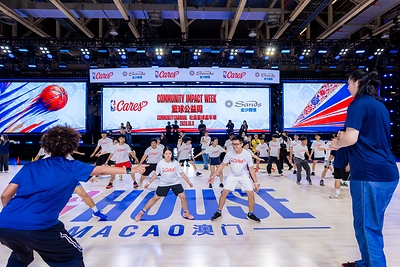
The event brought together a line-up of sports icons, including NBA legend Chris Bosh – Basketball Hall of Fame Inductee and two-time NBA champion – together with Sands Global Ambassador Sir David Beckham, China women’s basketball national team player Zhang Ziyu, and China short track speed skating Olympic gold medalist Wang Meng, alongside members of Macau Special Olympics (MSO), families from Macao’s social service organisations, executives from Las Vegas Sands and Sands China, and Sands Cares Ambassadors. A total of around 200 participants gathered at NBA HOUSE to enjoy a series of basketball-themed carnival experiences and family-friendly activities, fostering meaningful exchanges among community stakeholders while promoting the inclusive power of sports.
The Impact Week fully demonstrates Sands China’s longstanding commitment to serving the Macao community through its Sands Cares spirit. By harnessing the synergies from this sports tourism event, the initiative not only unites strengths across various sectors of society to support Macao’s diversified development, but also extends its benefits into the local community to foster social inclusion.
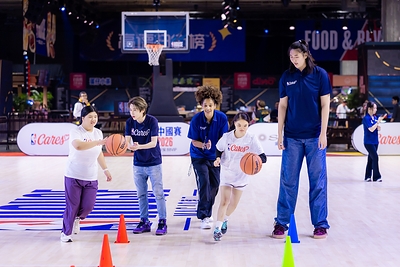
The concluding event of the Impact Week began with a basketball clinic led by an NBA coach, who guided a group of MSO members through basketball skills training. Through demonstrations and personalized instruction, she helped participants enhance their basketball skills while encouraging them to challenge themselves, building self-confidence and fostering a spirit of inclusion in the process. In addition, NBA legend Chris Bosh, Zhang Ziyu and Wang Meng joined the event, engaging with MSO members on-site, adding to the warm and uplifting atmosphere. The MSO athletes exuded great enthusiasm throughout the session, underscoring the power of sport to break down barriers and foster inclusion.
Patrick Dumont, chairman of the board and chief executive officer of Las Vegas Sands Corp., and chairman of the board and non-executive director of Sands China Ltd., said: “Over the past few days, we have not only welcomed basketball fans from near and far to Macao through this world-class event, but also extended its impact beyond the arena through a wide range of community outreach initiatives during the Impact Week, including Greater Bay Area youth exchanges, a school visit, community engagement activities, and a basketball carnival. These initiatives enabled more Macao residents to experience the enthusiasm of basketball and the positive values it inspires.
“We firmly believe that world-class sporting events do more than enhance Macao’s international appeal. They create meaningful opportunities for youth development, cultural exchange, and community participation, demonstrating the power of sport to connect communities and bring people together, while ensuring the benefits of major events are shared across the community. Looking ahead, Sands China will continue to fully support the policy direction of the Macao SAR Government and further strengthen the synergy between tourism and sports. Through these efforts, we aim to further contribute to Macao’s economic diversification.”
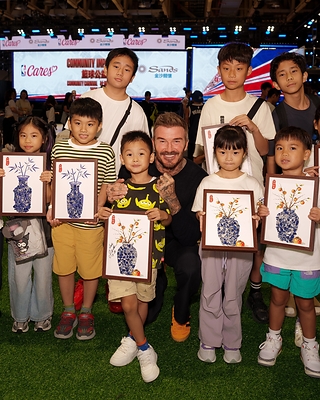
Following his participation last year, Sands Global Ambassador Sir David Beckham once again joined this year’s Impact Week, where he engaged with families from Macao’s social service organisations, including the Macau Tung Sin Tong Charitable Society, the Macao Federation of Trade Unions, the General Union of Neighbourhood Associations of Macau, and The Women’s General Association of Macau. Alongside families of Sands China team members and Sands Cares Ambassadors, they took part in family-friendly activities, sharing joy and laughter together.
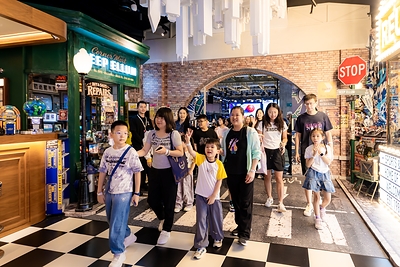
During the event, Sands Cares Ambassadors accompanied families from local social service organisations to explore NBA HOUSE, where they enjoyed a range of interactive attractions and experiences. Participants also received goodie bags assembled by NBA players, executives from Las Vegas Sands and Sands China, and Sands Cares Ambassadors, extending care and warm wishes to the wider community.
The “NBA Cares x Sands Cares Community Impact Week 2026” spanned five consecutive days, Oct. 7-11, featuring a diverse programme of activities focused on youth development, healthy living and community inclusion. Current NBA players and legends engaged with communities across Macao, with the initiative extending the impact of the NBA sporting event into the community and enabling more Macao residents to experience the positive energy and excitement generated by the world-class basketball event.
“NBA Cares x Sands Cares Community Impact Week 2026” is part of Sands Cares, the global corporate citizenship programme of Sands China’s parent company. As an important stakeholder in the Macao community, Sands China has actively fulfilled its corporate social responsibility for more than two decades. Through the programme, the company strives to connect with and serve the community, give back to society, and work alongside different sectors to build a more vibrant and inclusive Macao community.
Sands China Ltd. (Sands China or the Company) is incorporated in the Cayman Islands with limited liability and is listed on The Stock Exchange of Hong Kong Limited (HKEx: 1928). Sands China is the largest operator of integrated resorts in Macao. The Company’s integrated resorts on the Cotai Strip comprise The Venetian® Macao, The Plaza® Macao, The Parisian® Macao and The Londoner® Macao. The Company also owns and operates Sands® Macao on the Macao peninsula. The Company’s portfolio features a diversified mix of leisure and business attractions and transportation operations, including large meeting and convention facilities; a wide range of restaurants; shopping malls; world-class entertainment at The Venetian Arena, The Londoner Arena, The Venetian Theatre, The Parisian Theatre, The Londoner Theatre and Sands Theatre; and a high-speed Cotai Water Jet ferry service between Hong Kong and Macao. The Company’s Cotai Strip portfolio has the goal of contributing to Macao’s transformation into a world centre of tourism and leisure. Sands China is a subsidiary of global resort developer Las Vegas Sands Corp. (NYSE: LVS).
A firm believer in the importance of corporate social responsibility, Sands China Ltd. engages with the local Macao community as a part of Sands Cares – the charitable giving programme of parent company Las Vegas Sands Corp. Sands Cares integrates the company’s philanthropic work worldwide in four key areas: financial giving, community problem solving and collaboration, in-kind donations, and team member volunteerism.
Key areas of Sands Cares in Macao include the Sands Cares Ambassador programme for volunteering in the local community; charitable contributions to NGOs and community organisations; and sponsorship of community events.
NBA Social Impact & Inclusion drives change on issues facing fans and communities by advancing needed resources and proven partners. We create data-driven strategies and programming to empower colleagues to bring their best self. NBA Cares works with NBA players and teams to highlight important issues through the NBA’s digital, social and broadcast channels, live events and partnerships.
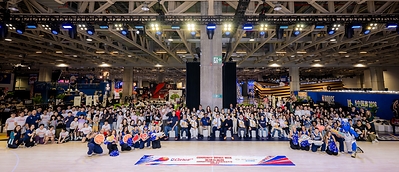
Participants in the Community Basketball Carnival at NBA HOUSE Sunday enjoy a series of basketball-themed carnival experiences and family-friendly activities, fostering meaningful exchanges among community stakeholders while promoting the inclusive power of sports. With around 200 people participating, the event brought together a line-up of sports icons, including NBA legend Chris Bosh, together with Sands Global Ambassador Sir David Beckham, China women’s basketball national team player Zhang Ziyu, and China short track speed skating Olympic gold medalist Wang Meng, alongside members of Macau Special Olympics, families from Macao’s social service organisations, executives from Las Vegas Sands and Sands China, and Sands Cares Ambassadors.
Participants in the Community Basketball Carnival at NBA HOUSE Sunday enjoy a series of basketball-themed carnival experiences and family-friendly activities, fostering meaningful exchanges among community stakeholders while promoting the inclusive power of sports. With around 200 people participating, the event brought together a line-up of sports icons, including NBA legend Chris Bosh, together with Sands Global Ambassador Sir David Beckham, China women’s basketball national team player Zhang Ziyu, and China short track speed skating Olympic gold medallist Wang Meng, alongside members of Macau Special Olympics, families from Macao’s social service organisations, executives from Las Vegas Sands and Sands China, and Sands Cares Ambassadors.
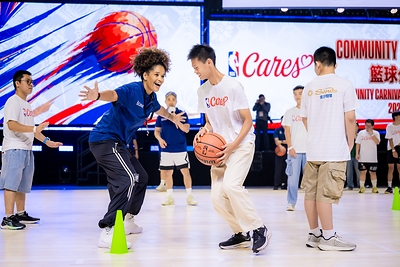
An NBA coach leads a basketball clinic, guiding a group of MSO members through basketball skills training at the Community Basketball Carnival during the Impact Week. Through demonstrations and personalized instruction, she helped participants enhance their basketball skills while encouraging them to challenge themselves, building self-confidence and fostering a spirit of inclusion in the process.
An NBA coach leads a basketball clinic, guiding a group of MSO members through basketball skills training at the Community Basketball Carnival during the Impact Week. Through demonstrations and personalized instruction, she helped participants enhance their basketball skills while encouraging them to challenge themselves, building self-confidence and fostering a spirit of inclusion in the process.
NBA legend Chris Bosh engages with members from local social service organisations at the Community Basketball Carnival, adding to the warm and uplifting atmosphere.
Zhang Ziyu and Wang Meng engage with MSO members at the Community Basketball Carnival, adding to the warm and uplifting atmosphere. The MSO athletes exuded great enthusiasm throughout the session, underscoring the power of sport to break down barriers and foster inclusion.
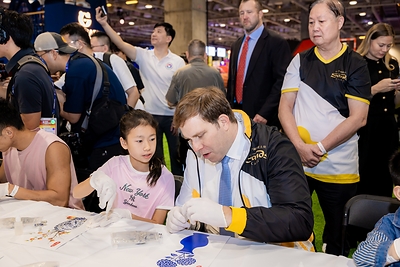
Following his participation in the Impact Week last year, Sands Global Ambassador Sir David Beckham engages with families from Macao’s social service organisations, including the Macau Tung Sin Tong Charitable Society, the Macao Federation of Trade Unions, the General Union of Neighbourhood Associations of Macau, and The Women’s General Association of Macau. Alongside families of Sands China team members and Sands Cares Ambassadors, they took part in family-friendly activities, sharing joy and laughter together.
Following his participation in the Impact Week last year, Sands Global Ambassador Sir David Beckham engages with families from Macao’s social service organisations, including the Macau Tung Sin Tong Charitable Society, the Macao Federation of Trade Unions, the General Union of Neighbourhood Associations of Macau, and The Women’s General Association of Macau. Alongside families of Sands China team members and Sands Cares Ambassadors, they took part in family-friendly activities, sharing joy and laughter together.
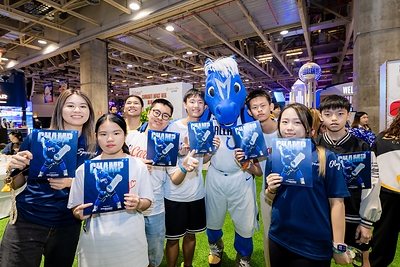
Sands Cares Ambassadors accompany families from local social service organisations to explore NBA HOUSE during the Community Basketball Carnival Sunday, where they enjoyed a range of interactive attractions and experiences.
BERLIN, GERMANY – Newsaktuell – 11 October 2026 – The World Health Summit (WHS) 2026, the leading platform for global health, brings together more than 4,000 participants from 130 countries in Berlin and tens of thousands more online from October 11 to 13. Under the theme “From Crisis to Resilience: Innovating for Health,” the Summit convenes leaders from politics, science, civil society, and the private sector. Discussions address Ebola and other infectious diseases, antibiotic resistance, pandemic preparedness, resilient health systems, health care in conflict settings such as Ukraine, and climate-related health threats. The Summit will also address WHO leadership through a conversation with prospective candidates for the next WHO Director-General.
Against this backdrop, WHS President Axel R. Pries emphasized the need for innovation and collaboration: “Past achievements and continued progress in global health are increasingly challenged by multiple and overlapping crises. To build resilient, effective, and equitable health systems, we need innovation across biomedicine and technology, financing, delivery, and political coordination. This requires partnership and trust within and beyond the health sector and is at the heart of the World Health Summit 2026 leitmotif.”
Announcements and new pledges during the official WHS press conference:
Diene Keita, Executive Director of UNFPA, highlighted the Government of Bangladesh’s landmark investment of 250 million euros in women’s health, supported by the European Investment Bank.
John-Arne Røttingen, CEO of Wellcome, launched the Wellcome Global Monitor 2026, which shows trust in science has fallen since the COVID-19 pandemic.
Ilana Ron Levey, Managing Director at Gallup, shared findings from the State of the World’s Emotional Health 2026 Report, examining the relationship between social media use and emotional well-being.
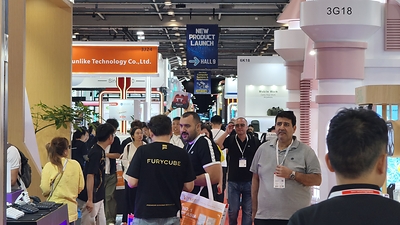
HONG KONG, Oct. 11, 2026 /PRNewswire/ — Phase I of the October 2026 Global Sources Hong Kong Shows opened today at AsiaWorld-Expo, running from October 11 to 14. Under the theme “Connecting Global Innovation, Enabling Sustainable Sourcing,” the Consumer Electronics Show and Gaming Show are held concurrently, covering categories including PC peripherals, gaming peripherals, audio-visual equipment, automotive electronics, personal transporters, photography accessories, and batteries & power products, with a combined total of over 4,000 booths bringing together more than 2,100 quality Asian suppliers.
Phase I of the October 2026 Global Sources Hong Kong Shows opened today at AsiaWorld-Expo, with the Consumer Electronics Show and Gaming Show held concurrently, bringing together over 2,100 quality Asian suppliers across more than 4,000 booths.
Hong Kong SAR’s first Five-Year Plan explicitly calls for consolidating and elevating the city’s status as an international trade center and better fulfilling its role as a “super connector” and “super value-adder.” The Global Sources Hong Kong Shows serve as a concrete platform for advancing this policy, bringing together professional buyers from markets worldwide and helping Chinese mainland brands negotiate directly and match demand on the show floor — translating expansion plans into actionable procurement partnerships and embodying the “Made in Chinese Mainland + Served via Hong Kong SAR” approach to going global.
John Kao, Vice President of Hong Kong Shows & Overseas Shows at Global Sources, said: “The Hong Kong Five-Year Plan and the 2026 Policy Address released this year have clearly charted the city’s development trajectory for the next five years — consolidating and elevating its status as an international trade center, better fulfilling its role as a ‘super connector’ and ‘super value-adder,’ and actively supporting Greater Bay Area enterprises in going global. This is more than a policy declaration; it is a repositioning of Hong Kong SAR amid the global supply chain realignment: beyond production capacity competition, what truly determines whether an industry can sustain its presence in international markets is the ability to simultaneously deliver manufacturing capability, compliance capability, and trust. The Global Sources Hong Kong Shows serve as the concrete platform for translating this national strategy into action — enabling Chinese mainland manufacturing to connect with international standards and professional buyers via Hong Kong SAR, forming a sustainable and replicable ‘Made in Chinese Mainland + Served via Hong Kong SAR’ pathway for going global. This edition of the shows is a timely illustration of this direction: the Asian Games esports boom and the EU’s new compliance regulations are counting down in parallel, offering the most tangible demonstration of Hong Kong SAR’s role in ‘bridging standards and adding value through trust.’ Brands need not rely solely on traffic to go global; instead, using Hong Kong SAR as a launchpad, they can complete the international alignment of product competitiveness, regulatory compliance, and delivery capability — all at once.”
Esports Boom Bridges Tournament Excitement and Industry Procurement; Gaming-Meets-Everyday Becomes a New Sourcing Frontier
2026 marks Hong Kong SAR’s “year of esports blockbusters.” In February, the LCK Cup finals made their debut at Kai Tak Arena. Last month, the Hong Kong SAR team competed in the Nagoya Asian Games esports events and brought home two bronze medals. Come November, the BLAST tournament returns to AsiaWorld-Expo. With international top-tier events landing in succession and strong Asian Games results, esports is advancing on all fronts toward industrialization, elite development, and mega-event hosting. Tournaments generate more than audiences and traffic — they directly drive procurement demand for professional-grade gaming hardware, marking esports’ formal transition from a spectator phenomenon to an industrial economy. At the same time, hybrid work has become the established norm, and the line between office productivity and gaming performance has largely dissolved. Desktop setups that serve both work and entertainment are increasingly popular, giving rise to the “desk setup economy.” As the first major gaming product sourcing exhibition following the Asian Games, the Global Sources Hong Kong Shows are ideally positioned to bridge tournament momentum with hardware procurement demand, helping Hong Kong SAR integrate into the Greater Bay Area’s esports supply chain.
The Greater Bay Area is a leading global manufacturing base for PC peripherals, accounting for more than half of the world’s keyboard and mouse OEM output and over 70% of global game controller shipments. Hong Kong SAR, leveraging its free-port advantages, serves as the international procurement and cross-border trade gateway connecting GBA manufacturers with overseas buyers — enabling “Made in the GBA” tournament-grade equipment to reach global markets via Hong Kong SAR. The show floor features more than 1,600 PC accessory booths and nearly 500 gaming peripheral booths. A roster of leading GBA-origin brands — including Loctek, CE-LINK, RXGAMER, Brateck, Havit, AULA, MCHOSE, ATK, TITAN, and Huntkey — will showcase products spanning high-refresh-rate monitors, mechanical keyboards, gaming headsets, ergonomic chairs, chassis, controllers, and monitor arms, offering a complete desk setup from office to gaming in a single sourcing visit — without splitting procurement efforts across multiple events. Nearly 1,900 additional booths feature audio-visual equipment, automotive electronics, personal transporters, photography accessories, and batteries & power consumer electronics products.
Compliance-First Sourcing Becomes a Procurement Imperative; Batteries & Power Zone Helps Buyers Prepare for EU Regulations
Another focal point is the tightening export compliance environment. The EU’s new Battery Regulation (EU 2023/1542) mandates that, starting February 18, 2027, certain battery products must carry a Digital Product Passport (DPP) disclosing roughly 90 data points, including carbon footprint, recycled content, and full supply chain traceability. DPP requirements for electronics will follow in phases under the Ecodesign for Sustainable Products Regulation (ESPR), putting exporters on a clear and accelerating compliance timeline. For European buyers, this means supplier evaluation now extends well beyond product performance to include data traceability and regulatory readiness at the product selection stage.
The Phase I power supply and charging accessories zone features fast-charging, wireless charging, and energy storage products from suppliers who have already put compliance frameworks in place. Multiple exhibitors have proactively developed products and solutions addressing the EU’s new Battery Regulation, carbon footprint requirements, and other international compliance standards. Buyers can assess suppliers’ DPP readiness on-site and get a head start on export certification and customs clearance planning — significantly compressing the decision cycle from product selection to compliant order placement.
Best of Innovation Awards and Global Sources Summit Run Concurrently; VR Immersive Experiences Draw Crowds
The show hosts the Best of Innovation Awards ceremony, judged by a panel comprising industry association experts, technology media representatives, standards body authorities, senior buyers, and the Global Sources professional jury. Phase I recognizes 20 award-winning exhibitors, with a focus on the consumer electronics sector. Two curated zones — the Best of Innovation Awards Winners Showcase and the Future Tech Discovery Zone — enable global buyers to compare innovative products and inspect samples side by side. On the experiential side, a VR immersive experience zone presented in partnership with VR Star Space offers interactive titles including Star Racing and Star Cyclone, while gaming peripheral brand MCHOSE hosts a Gaming & eSport Arena with hands-on gameplay. Multiple new product launch events will take place concurrently, with several heavyweight products making their global or Asia debut.
The Global Sources Summit also runs alongside the exhibition, featuring experts and certification body representatives from organizations including VTC, Hong Kong Science Park, Tencent, Airoma AI, and SGS to explore cutting-edge industry topics. Summit content centers on consumer electronics and the esports industry, examining how AI is redefining gaming, hardware design, and supply chain planning; how to build smarter, more trustworthy connected devices; and how to navigate global cost pressures, sustainability requirements, and European compliance standards.
About Global Sources
Global Sources is an internationally recognized multi-channel trade platform, connecting Asia with the world for 55 years. The company has been dedicated to facilitating global trade by connecting verified suppliers with qualified buyers worldwide. To date, it has successfully served more than 14 million registered buyers and users globally, providing efficient and convenient trade solutions.
HONG KONG, Oct. 11, 2026 /PRNewswire/ — Carku, a global leader in proprietary BMS design and smart battery integration, unveiled its latest portable power station lineup today at the Global Sources Consumer Electronics Show (AsiaWorld-Expo, Booth 5J24, East Hall).
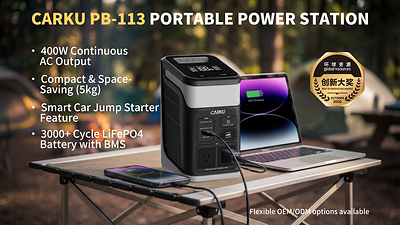
Leveraging Hong Kong’s role as a global trading hub, Carku met face-to-face with longstanding partners and international buyers at its booth, together witnessing a milestone moment as Carku wins Global Sources Innovation Award for CARKU 400W PB-113 Portable Power Station at Global Sources Consumer Electronics Show.
Global Sources Innovation Award winner CARKU PB-113 portable power station set up for outdoor camping
Showcase Spotlight: CARKU PB-113 Redefines All-in-One Portable Power
Anchored by the award-winning PB-113, Carku’s energy storage lineup took center stage with a comprehensive range of models across diverse capacities.
Building on its deep manufacturing expertise and flexible OEM/ODM capabilities, Carku showcased a full lineup of AC-powered energy solutions engineered for outdoor camping and emergency applications, delivering highly customizable options for global brand partners.
400W AC Output: Power for Every Scenario
Equipped with continuous 400W AC output, PB-113 effortlessly supports daily electronics. It translates multi-scenario energy needs into a single, compact solution for off-grid travel support.
Space-Saving, All-in-One Versatility
Weighing just 5 kg, PB-113 saves up to 50% trunk space compared to traditional power stations. Equipped with smart jumper clamps featuring 10-stage safety protection, self-reliant drivers can safely jump-start dead batteries instantly with a single button.
Built to Last: 3,000+ Cycle LiFePO4
Powered by premium LiFePO4 cells engineered for 3,000+ cycles, PB-113 maximizes energy density and thermal stability. Coupled with advanced BMS hardware, it provides real-time operating protection to deliver a dependable energy experience.
Driving the Future of Multi-Scenario Power
Safety is our non-negotiable foundation,” said Carku leadership. “Winning this Innovation Award validates our approach: integrating emergency jump-starting and energy storage into an automotive-grade ecosystem for both roadside assistance and off-grid living.
This multi-functional design directly hits market demand in Asia-Pacific, where disaster readiness and evolving grids drive off-grid power adoption. To accelerate regional rollout, Carku is executing its compliance roadmap—marked by its newly secured PSE certification in Japan—to deliver safe, dependable energy across the region.
About CARKU
CARKU provides OEM/ODM solutions spanning jump starters, starting batteries, and power stations, powered by LIFEBMS and 100W–3600W power capabilities. Backed by 852 patents and meeting CE, FCC, RoHS, and UL requirements.
For more information, visit CARKU’s website and follow us on Facebook.
More than 20 KAPSARC leaders, researchers, and experts to contribute across the Congress’s Executive, Technical, Synergy, and Special Programmes
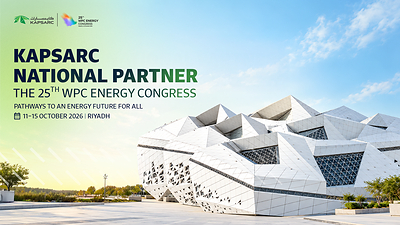
RIYADH, Saudi Arabia, Oct. 11, 2026 /PRNewswire/ — KAPSARC participates as a National Partner in the 25th WPC Energy Congress in Riyadh, bringing its leaders and experts into discussions addressing some of the most important issues shaping the future of energy.
KAPSARC, WPC25 National Partner
Taking place from 11 to 15 October 2026 under the theme “Pathways to an Energy Future for All,” the Congress will be hosted in Saudi Arabia for the first time in its history. First held in London in 1933, the Congress will bring together government leaders, industry executives, policymakers, researchers, and innovators in Riyadh to examine the forces reshaping global energy systems, from security and investment to technology and sustainability.
KAPSARC’s participation extends across the Congress’s Executive, Technical, Synergy, and Special Programmes, alongside additional sessions and activities, reflecting the breadth of the Center’s research and policy expertise. KAPSARC President Fahad Alajlan and Dr. Ghadah Alarifi, Dean of the KAPSARC School of Public Policy, are among KAPSARC’s speakers in the Executive Programme.
Across the Congress, KAPSARC experts contribute research and policy perspectives on energy supply and demand, energy access, natural gas, ESG and governance, the Circular Carbon Economy, artificial intelligence, mobility, and lower-emission pathways for refining and petrochemicals.
Within the Special Programme, KAPSARC leads a Knowledge Sprint session titled “Generative AI for Evidence-Based Oil Markets,” examining how generative AI can support oil-market analysis and policy research. The session explores AI-assisted data workflows, econometric and scenario analysis, responsible AI practices, and the translation of technical findings into decision-ready insights.
KAPSARC also participates in the World Café through a session on “Carbon Dioxide Removal Technologies,” bringing together experts, policymakers, and practitioners to examine the prospects for scaling engineered carbon-removal solutions. The discussion covers direct air capture, bioenergy with carbon capture and storage, and biochar, alongside the economic, infrastructure, regulatory, carbon-market, and regional considerations influencing their deployment.
In the Synergy Programme, KAPSARC experts contribute to discussions on “Accelerating the Circular Carbon Economy Through Joint Action” and “AI Partnerships for Energy Innovation,” bringing research-based perspectives to the intersection of energy, technology, and sustainability.
KAPSARC’s dedicated pavilion provides another platform for knowledge exchange and engagement throughout the Congress. Structured around five thematic hubs, the pavilion brings together KAPSARC research, analytical tools, and expertise across the Oil Hub, Transportation Hub, Clean Energy Hub, AI Hub, and Collaboration Hub. Together, the hubs provide visitors with an integrated view of selected research areas and emerging issues shaping energy systems, while creating opportunities for engagement with policymakers, industry leaders, researchers, and other Congress participants.
The pavilion also features the KAPSARC School of Public Policy (KSPP) and the Saudi Energy Leaders Assembly (SELA), providing additional platforms for policy education, leadership development, and knowledge exchange.
Through its participation across the Congress’s programmes and sessions, alongside its dedicated thematic pavilion, KAPSARC connects Saudi-based research and policy expertise with international discussions on energy security, investment, technology, and sustainability.
About KAPSARC
KAPSARC is an advisory think tank dedicated to advancing knowledge on energy, environmental and regional economic issues. As an accredited observer to the United Nations Framework Convention on Climate Change (UNFCCC), KAPSARC actively contributes to global climate action. KAPSARC’s mission is to advance Saudi Arabia’s energy sector and inform global policies through evidence-based advice and applied research.
SHANGHAI, Oct. 11, 2026 /PRNewswire/ — A report from InJiangsu.
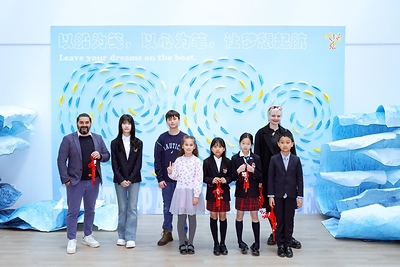
The Shanghai stop of the “Youth Painting Contest” International Youth Art Exhibition opened on March 21, 2026 at the Art Museum of Heping Park in Hongkou District, Shanghai. Under the theme “Painted Together in Shanghai, Art Inspires Sister Cities,” the event brought together nearly 100 Chinese and international young people from Shanghai and Jiangsu, alongside experienced art teachers and inheritors of intangible cultural heritage, to create a cross-regional, cross-cultural celebration of youth art exchange.
The touring exhibition featured outstanding works from international schools in Shanghai, including Dehong and Dulwich, as well as selected entries collected by the “Youth Painting Contest” from home and abroad over the years. The display showcased both the artistic accomplishments of young people from Jiangsu and the diverse, inclusive creativity of Shanghai’s international schools, offering a vivid example of artistic dialogue among youth across borders.
At the opening ceremony, Chinese and international art teachers from Shanghai and Jiangsu held a dialogue on “Eastern and Western Aesthetic Education,” achieving a threefold integration of international education and traditional culture, and of artistic creation and intangible cultural heritage.
The “Youth Painting Contest” International Youth Art Exhibition is a well-known international youth painting exchange brand from Jiangsu. Since its launch, it has connected with numerous international sister cities around the world and has become an important platform for showcasing young people’s artistic talent and promoting cultural exchange between China and other countries.
By coming to Shanghai, the “Youth Painting Contest” further expands new paths for international artistic exchange among young people, injecting youthful energy into cultural co-building and sharing in the context of Yangtze River Delta integration. In the future, the contest will continue to use art as a medium to connect more sister cities at home and abroad, helping young people grow together through cross-cultural dialogue.
“Youth Painting Contest” International Youth Art Exhibition




 https://www.hktdc.com/event/ecoexpoasia/en
 https://www.instagram.com/hktdclifestyle/