Home Blog Page 5947

PhD Education Releases New Edition For Secondary 2 Maths Exam Bundle

SINGAPORE – Media OutReach – 25 August 2021 – PhD Education announces a new edition to its Secondary 2 Mathematics Exam Package, alongside its collection of comprehensive exam packages for the student population. This exam bundle encompasses mathematical problems from the latest syllabus in varying difficulty levels, with real-world contexts to maximise learning.

The package will have two main sections, “Mathematical Concepts and Skills” and “Problems in Real-World Contexts”. The first section will include an extensive range of questions in numerous difficulty levels, allowing students to attain a high level of proficiency in the subject. The following section lets students apply the skills and mathematical concepts gained from the prior section to real-world problems, such as recipes, sports and games, and transport schedules. This will equip students with the ability to solve everyday mathematical problems.

In time, the mathematics curriculum will slowly evolve to include additional topics, like the applications of maths to problems rooted in real-world contexts, to boost students’ learning abilities and skills. However, repetition, drilling, and consistent practice will still hold great importance in learning maths as it is a subject that requires one to master foundational skills to a certain extent to progress. With that in mind, PhD Education hopes to contribute to a student’s learning journey with its updated and complete exam package.

A test paper specialist for primary and secondary students, PhD Education was formed in 2010 with a team of qualified editors and writers. Contents found in PhD Education’s exam packages are consistent with the latest MOE SEAB Syllabuses in regards to O Level English practice exercises or PSLE Maths questions. Meticulous care is also put into graphics creation, content organisation, and layout. Before the exam packages are released, editors who are existing school teachers will conduct due editing and vetting. At PhD Education, the quantity and quality of the contents hold great value, which is why they have released a newer edition of the Secondary 2 Maths Exam Package to develop student learning.


#PhDEducation

Netccentric Delivers Strong H1 FY2021 With Revenue Climbing 60%

KUALA LUMPUR, MALAYSIA – Media OutReach – 25 August 2021 – 


HIGHLIGHTS:

  • Strong revenue growth in the half year (“H1”) ended 30 June 2021, with revenue +60% year-on-year (YoY) to S$5.23 million (A$5.16 million), driven by growth across the Group’s business units
  • H1 FY2021 EBITDA more than doubled YoY to S$0.19 million (A$0.19 million), excluding extraordinary expenses relating to the issue of options, M&A activities and forex movements
  • Netccentric’s 100% owned subsidiary, Nuffnang Malaysia, delivered a strong contribution to the H1 FY2021 results of S$2.51 million (A$2.48 million) with Q2 FY2021 revenue of S$1.34 million (A$1.32 million), representing YoY growth of 65% and quarter-on-quarter growth of 14%
  • Nuffnang Malaysia pipeline continues to grow, with orders in H1 FY2021 up 88% to S$3.00 million (A$2.96 million) compared to H1 FY2020. This complements and empowers the Group’s expansion into social commerce
  • Netccentric retains a strong position to drive continued growth both organically and via M&A with a healthy debt-free balance sheet, S$5.43 million (A$5.36 million) in cash and a proven strategy to deliver end-to-end growth solutions

Social commerce platform provider Netccentric Ltd (ASX: NCL, “Netccentric” or “the Group”) is pleased to provide the Group’s financial results and update for the half-year ended 30 June 2021 (H1 FY2021).

Financial Highlights

Netccentric achieved revenue of S$5.23 million in H1 FY2021, up 60% compared to H1 FY2020 and driven by strong growth across the Group’s business units which built momentum into Q2 FY2021. H1 FY2021 revenue for Influencer Platform (Nuffnang) climbed 49% YoY to S$2.96 million, Social Media Agency (Sashimi) jumped 52% YoY to S$1.21 million and Performance Marketing Agency (Plata & Punta) leapt 126% YoY to S$0.86 million.


Gross profit rose 34% YoY to S$2.23 million. The Group delivered H1 FY2021 EBITDA of S$0.19 million (H1 FY2020: S$0.09 million), soaring 108% YoY, excluding impact of extraordinary expenses relating to the issue of options, M&A activities and forex movements.


Netccentric entered H2 FY2021 with S$5.43 million in cash and no debt, providing strength and flexibility to fund the Group’s growth objectives.


The Group’s financial results reflect continuous financial strengthening as the business gains scale and management executes Netccentric’s growth strategy.


For the detailed announcement, including ‘Strategic and Operations Highlights’, visit https://www2.asx.com.au/markets/company/ncl .


Netccentric closed trade at A$0.15 yesterday (24 August).

More than 100,000 SKUs of Electrical Components Goes Digital on ElectGo.com: A B2B E-Commerce Platform

SINGAPORE – Media OutReach – 25 August 2021 – ElectGo.com is a B2B e-commerce industrial marketplace that focuses on Electrical, Control, Lighting, and Safety Products. It caters to products to meet the demands and shift of buying behaviour in recent years. 


With the increasing number of third-party manufacturers in the market claiming that they sell only genuine products, customers are more doubtful about using these products that will cause damage to their expensive assets and equipment in the long run.


This has brought ElectGo.com to collaborate with trusted brands such as 3M, ABB, Brady, Omron, Onset, Panduit, Schneider Electric, Werma, Weidmuller, and other major brands to ensure authenticity and genuinity of all the products offered on the platform, authorised distributor letters and certifications provided upon request.


ElectGo.com continues its expansion by working with other leading international industrial partners in the region.


Today, ElectGo.com has grown over 100,000 SKUs of electrical components, ranging from data loggers, tower lights, programmable logic controllers, power supply, electrical tapes, variable speed drives, personal safety equipment and more. Furthermore, with the recent increase in the adoption of Electric Vehicles, ElectGo.com has recently listed a series of electrical charging systems from vendors specialising in the EV market. 


ElectGo hopes to alleviate the shopping experience to provide a seamless transaction for our buyers from different countries.  Membership sign up is free for everyone with no hidden charges to enjoy additional discounts, benefits, and keeping up-to-date with the latest promotions. Furthermore, with new built-in features such as product selector and the product recommendation tool, ElectGo.com aims to bring convenience and efficiency for buyers to enhance their buying experience.


With Singapore being a regional logistic hub for major logistic firms, ElectGo.com will be able to support their customers locally and globally, with fulfilment centres currently located in Singapore and Indonesia. In addition, ElectGo.com aims to provide prompt delivery to its customers and has an excellent customer service team to assist and respond quickly to customer’s inquiries. 


On top of all, ElectGo.com also provides relevant industrial updates such as articles, white papers, and solutions that help buyers better understand the products and keep updated with the latest industrial news. 


ElectGo positions themselves as a value-added platform to supply products to fulfil its customer’s needs for installation, upgrading, replacement as well as projects.

#ElectGo


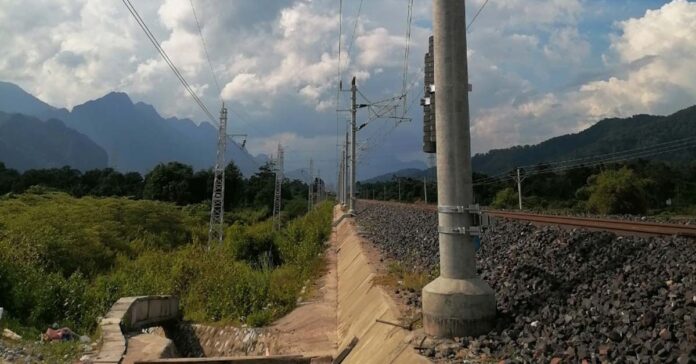
Public Warned About Electrical Hazards Along Laos-China Railway

Public Warned to Keep Away From Electrical Hazards along Railway

Electrical systems and transmission lines are expected to be operational along the Laos-China Railway in the coming days, with the public advised to keep away from electrical equipment.

Summit Ascent Holdings Limited Reports Unaudited Interim Results For 1H 2021

Initial Recovery Observed as Total Revenue Increased

Tigre De Cristal Adjusted EBITDA Grew 1.3 Times Sequentially Albeit Covid

Local Mass & Slots Businesses Offered Downside Protection During Covid


HONG KONG SAR – Media OutReach – 24 August 2021 – Summit Ascent Holdings Limited (“Summit Ascent”, the “Group” or “Company”) (Hong Kong Stock Exchange code: 102) today reported selected unaudited financial data for the six months ended 30 June 2021. All amounts are expressed in HK$ unless otherwise stated.


INTERIM 2021 UNAUDITED RESULTS HIGHLIGHTS:


Summit Ascent: Initial Recovery Observed as Total Revenue Rose 35% YoY & 12% Sequentially

  • 1H 2021 Group Total Revenue of HK$129.5 million, up 35% YoY and up 12% sequentially
  • 1H 2021 Loss attributable to Owners of the Company was HK$(0.13) million, significantly improved when compared to HK$(47.0) million in 1H 2020


Tigre de Cristal: 1H 2021 Adjusted EBITDA Continued Trending Positive While Increased 1.3 Times Sequentially in the Middle of COVID, Thanks to Sustained Local Mass & Slots Businesses

  • 1H Net Revenue from Gaming Operations of HK$122.7 million, up 33% YoY
  • 1H Total Gross Gaming Revenue (“GGR”) of HK$139.1 million, up 9% YoY
  • 1H Adjusted EBITDA of Tigre de Cristal was HK$17.2 million versus negative HK$(22.1) million in 1H 2020, 1H Adjusted EBITDA was also up 131% sequentially versus 2H 2020
  • Average Hotel Occupancy was 44% during weekends and 21% during weekdays in 1H 2021

Balance Sheet: Solid and Liquid Balance Sheet; Zero Gearing

  • As at 30 June 2021, Bank Balances and Cash were at HK$635.3 million
  • Summit Ascent granted a short-term loan of US$120 million that bears 6% interest per annum to SunTrust for yield management to generate interest income for the Group
  • The Group had no outstanding Bank Borrowing throughout the first half of 2021; Gearing Ratio was 0%

Development Update: Tigre de Cristal Phase I Upgrade Ready; Phase II on its Way; Diversifying into the Philippines

  • Tigre de Cristal Phase I upgrade ready – A brand-new Suncity Premium Club, new hot pot restaurant and a new private club are now ready
  • Phase II planning & design on its way – Minor delays due to COVID; Continue development works with Phase II
  • Diversifying into the Philippines – Invest in one of the fastest-growing Asian gaming jurisdictions in Asia, the Philippines; Receiving 6% coupon from convertible bonds and short-term loan investment in SunTrust

Mr. Chau Cheok Wa, Chairman, said:


We are creating the good, and sustaining the bad. Summit Ascent is a blessed company with a solid cash basis and is debt-free. Suncity brought in additional flexibility to become our company’s core mindset. We have a lot of bright ideas for growth; however, being able to sustain for now is the prerequisite to talk about tomorrow. Thanks to the solid local Russian demand, Tigre de Cristal continues to generate a positive-EBITDA in the first half of 2021, even surpassing that of the second half 2020 by 1.3 times. No one knows for certain how long the world will be disordered by COVID. Yet I am certain that even if the pandemic last for a while longer, Summit Ascent is well-equipped to survive the storm. Thanks to the Russian Government, our shareholders, our staff and our suppliers for your support to our company during challenging economic times.

Market Overview


Russia


In Russia, the tourism industry was significantly impacted by the resurgence of COVID-19 pandemic in the first half of 2021. Total foreign arrivals in Primorsky region in the first quarter of 2021 decreased 71 % year-on-year to 19,7881. Borders for international tourism remained closed, and electronic visas to Russia were still suspended. Authorities extended tightened COVID-19 countermeasures, including restrictions on mass entertainment events and limiting restaurants’ operating hours. Russia has launched its vaccination programme since December 2020. Mandatory vaccination was introduced in at least 18 regions in the country for high-risk groups as virus cases surged in the first half of 2021. Russia targets herd immunity by 1 November 2021.


The Philippines


In the Philippines, international tourism has not resumed yet. Manila’s integrated resorts were required to temporarily suspend all operations in late March 2021 as the country entered another wave of COVID-19. Until late May 2021, the casinos resumed operations at limited capacity. The Philippines’ total GGR in the first half of 2021 was PHP50.9 billion (equivalent to approximately US$1 billion), down 8% year-on-year2. Foreign arrivals in January to May of 2021 decreased 97% year-on-year to 46,322 million3. The Philippines government started its COVID-19 vaccination programme in March 2021 and targets to have up to 70 million people vaccinated by 2021.


1         Federal Security Service (FSB) 

2      Philippines Amusement and Gaming Corporation

3      Department of Trade and Industry, Republic of the Philippines


GROUP FINANCIAL RESULTS

Adjusted EBITDA of Tigre de Cristal


The Group recorded a positive Adjusted EBITDA of HK$17.2 million in the 1H 2021, versus a negative Adjusted EBITDA of HK$(22.1) million in the 1H 2020. 

Revenue and Segment Reporting


Revenue of the Group, comprising revenue from gaming operations and hotel operations, was HK$129.5 million in the 1H 2021, increased by 35% compared to HK$96.0 million in the 1H 2020.

Gaming Operations


Our Gross Gaming Revenue (“GGR“), represented the amount of money players wagered minus the winning payouts to them, before commissions rebated, discounted or complimentary products and services provided and redeemable points earned under the loyalty programs, consisted of the following:


1H 2021

Share of GGR

1H 2020

Share of GGR


HK$’000

%

HK$’000

%

Rolling chip business

50,008

39.3%

Mass table business

68,514

49.3%

35,697

28.1%

Electronic gaming business

70,559

50.7%

41,456

32.6%

Total GGR

139,073

100.0%

127,161

100.0%

Rolling chip business


Our rolling chip business primarily targets foreign players. The table below sets forth the key performance indicators of our rolling chip business in 2021 on a quarterly basis.


(HK$’million)

Q1 2020

Q2 2020

1H 2021

1H 2020


Rolling chip volume


1,192

Gross win

50

Less: Rebate

(32)

Net win after rebate  


18

Gross win rate%


4.19%

Daily average number of tables      

     opened (Note)


14


Note: Excluding the period of suspension from 28 March to 13 April and 22 April to 30 June 2020.


Due to the COVID-19 pandemic, no rolling chip activities has been noted in the 1H 2021. Rolling chip volume (measured as the sum of all non-negotiable chips wagered and lost by players) at Tigre de Cristal was HK$1.2 billion in the 1H 2020. Net win after all commissions rebated directly or indirectly to customers from rolling chip business was HK$18 million in the 1H 2020. Gross win rate percentage (represented the ratio of gross win to rolling chip volume) was 4.19% in the 1H 2020.

Mass table business


Our mass table business targets both the foreign tourists and the local market. The table below sets forth the key performance indicators of our mass table business in 2021 on a quarterly basis.


(HK$’million)

Q1 2021

Q2 2021

1H 2021

1H 2020


Mass table drop


123


114


237


141

Net win

24

31

55

34

Net win rate %

19.5%

27.2%

23.2%

24.1%

Daily average number of tables

     opened (Note)


24


23


24


24


Note: Excluding the period of suspension from 28 March to 13 April and 22 April to 30 June 2020.

Mass table drop (measured as the sum of gaming chips purchased or exchanged at the cages) increased remarkably by 68% to HK$237 million in the 1H 2021, compared to HK$141 million in the 1H 2020. Net win from mass table business increased by 62% to HK$55 million in the 1H 2021, compared to HK$34 million in the 1H 2020. Net win rate percentage (represented net win as a percent of mass table drop) decreased slightly from 24.1% in the 1H 2020 to 23.2% in the 1H 2021.


Electronic gaming business


Our electronic gaming business primarily targets the local Russian market. The table below sets forth the key performance indicators in 2021 on a quarterly basis.


(HK$’million)

Q1 2021

Q2 2021

1H 2021

1H 2020


Electronic gaming volume


782


781


1,563


810

Net win

33

35

68

41

Net win rate %

4.2%

4.5%

4.4%

5.1%

Daily average number of electronic

     gaming machines deployed (Note)


285


297


291


304


Note: Excluding the period of suspension from 28 March to 13 April and 22 April to 30 June 2020.

Electronic gaming volume (measured as the total value of electronic gaming credits wagered by players) was HK$1,563 million in the 1H 2021, increased significantly by 93% compared to HK$810 million in the 1H 2020. The electronic gaming business recorded net win of HK$68 million, increased by 66% compared to HK$41 million in the 1H 2020. The net win rate percentage decreased to 4.4% in the 1H 2021 from 5.1% in the 1H 2020. The average number of electronic gaming machines deployed slightly decreased by 4% to 291 units in the 1H 2021, compared to 304 units in the 1H 2020.

Hotel Operations

Revenue from hotel operations, despite largely dependent on foreign tourists, steadily increased to HK$6.7 million in the 1H 2021 or by 82% compared to the 1H 2020. Average hotel occupancy rates increased to 44% (1H 2020: 15%) during weekends and 21% (1H 2020: 20%) during weekdays in the 1H 2021.


Development Update


Tigre de Cristal, Russia


Tigre de Cristal Phase I upgrade has already been completed, pending border reopening to fully utilise the new upgrades. A brand-new Suncity Premium Club, a new authentic hotpot restaurant and a new private club are now ready.


Phase II planning and construction are well underway except minor delays due to COVID-19. When Phase I & II are both running, Tigre de Cristal will triple in its number of rooms, and double in number in its gaming facilities. Together with other integrated resorts in Primorye, they are going to form a gaming cluster known as the Primorye IEZ.

Westside City Project, Philippines


Through investing in the convertible bonds in Suntrust Home Developers, Inc. (“SunTrust”), Summit Ascent has exposure to the Westside City Project in the Philippines.


Construction works are going on at full steam in Westside City Project even though Manila was under lockdown. The construction team on the ground are working around multiple challenges due to the lockdown while they adjust priority to deliver progress. The foundation works have been completed, cranes are now being erected and the focus is to construct the building upwards. Westside City Project is expected to be ready in 2023.


When all phases of Westside City Project are ready, it will consist of:


* Approximately 300 gaming tables

* Over 1,300 electronic gaming machines

* Over 450 five-star hotel rooms

* Approximately 1,000 car park spaces

* Pool club & leisure club etc.


Westside City Project will be integrated with the shopping malls, theatres, restaurants, and shopping streets, etc. to be built by Suncity’s partner Westside/Travellers International Hotel Group Inc. They will also build additional hotel rooms, a shopping mall, a Grand Opera House, restaurants, a theatre district and an additional of approximately 2,000 car park spaces.


Selected Major Awards

Awards

Institution

SUMMIT ASCENT HOLDINGS LIMITED

All-Asia Executive 2021

“Honored Company”

Best ESG, Ranked 3rd Buy-side & Sell-side Combined

Best CEO, Ranked 3rd Sell-side

Best CFO, Ranked 3rd Sell-side

Best Investor Relations Company, Ranked 3rd Buy-side & Sell-side Combined

Best Investor Relations Professional, Ranked 2nd Buy-side & Sell-side Combined

Best Investor Relations Team, Ranked 3rd Buy-side & Sell-side Combined


Institutional Investor

TIGRE DE CRISTAL, RUSSIA

Corporate Travel Awards 2020

(Hotel Resort of the Year)

CEO Today Magazine

Winner of the XVI Business Prize of Primorsky Krai (Company of the Year 2019)

Zolotoy Rog

Top 5 nominees of “Russia’s Leading Resort 2019”

World Travel Awards


Outlook


The COVID-19 pandemic continues to be the most prevalent uncertainty in our business operating environment. While we are being pragmatic in controlling costs across the board, we have been able to crystalise some of the temporary savings into permanent ones by improving efficiencies. We continue to remain cautiously optimistic in the long run for the Group as its long-term fundamentals remain solid and has not been affected by the pandemic.


Under the pandemic, even with zero foreign tourists, Tigre de Cristal was already able to generate a positive EBITDA merely based on local Russian mass and slots businesses, which act as downside protection for the Group. The Group has a strong balance sheet, solid cash and no debt. Unlike some gaming operators which added leverage to their balance sheets during the pandemic, we have never raised any debt to weather this storm. The cash we have on our balance sheet offers us the flexibility to develop for growth while sustaining through the pandemic.


Secondly, the Russian Federation is blessed as it has access to the self-developed vaccines, which means that as vaccination rates in the country continue to be improved, it is less likely that mandatory closure of the integrated resorts will be required again. Therefore, we believe that the worst-case scenario affected by the pandemic has already passed, and as long as the COVID-19 situation remains under control in the Russian Federation, mandatory complete closure is relatively unlikely to happen again.


Thirdly, the hardware for our main growth drivers are ready. The brand-new Suncity Premium Club and the hot pot restaurant are now fully operational in Tigre de Cristal, pending border reopening for full utilisation. In the short run, while our operating expenses can be sustained through continued operations supported by the local mass and slots businesses, growth in premium mass and Suncity Premium business will depend heavily on border policies because of the reliance on tourism in these two segments. As the world continues to fight back the virus with improving vaccination rates, it sets the scene to allow talks of border reopening between countries soon.


In addition, we are excited to observe that international flights are resuming to the Vladivostok International Airport from 2021 onwards from places such as Seoul and Tokyo. Although the number of tourists arriving at Vladivostok via these flights is low due to back-and-forth quarantine requirements, we are confident on the overall long-term appeal of the IEZ Primorye. Together with the recent and would-be openings of new integrated resorts in the IEZ Primorye, the cluster effect can draw tourists and turn the area into a leisure destination on its own. The uncertainty in land-based gaming developments in Japan also poses an opportunity for the IEZ Primorye to fill this gap as it is only a short flight away for Japanese tourists.


Finally, plans for expansion are continuing to move forward. When TdC Phase II is ready in 2023, Tigre de Cristal will triple the number of existing rooms and double the number of gaming equipment. Through the investment in the convertible bonds in the principal amount of PHP5.6 billion with a 6% coupon rate issued by SunTrust (the “SunTrust CB”), the Group is diversifying into the Philippines gaming market.  SunTrust is the sole and exclusive operator and manager of an integrated resort in the Philippines (the “Main Hotel Casino”) expected to commence operations in 2023. Leveraging on Suncity’s successful experience in the gaming industry, we are confident that both TdC Phase II and the Main Hotel Casino in the Philippines will become key growth drivers for the Group when they are both up and running.

About Summit Ascent Holdings Limited (HKEx stock code: 102)

Summit Ascent Holdings Limited (“Summit Ascent“) is a subsidiary of Suncity Group Holdings Limited (“Suncity“, HKEx: 1383). Summit Ascent holds 77.5% in Tigre de Cristal, currently the largest integrated resort located in the Primorye Integrated Entertainment Zone of the Russian Far East. Situated midway from the Vladivostok International Airport to Vladivostok city, the administrative centre of the Russian Far East, Tigre de Cristal is ideally located geographically in the heart of Northeast Asia.

Summit Ascent holds a gaming license granted by the Russian government for an indefinite period, and Tigre de Cristal has opened for business since late 2015, offering a broad range of gaming options on a 24/7 basis. Tigre de Cristal has been certified as a five-star hotel with retail offerings, food and beverage outlets, private club, and named “Russia’s Leading Resort” by World Travel Awards.

Summit Ascent is a member of the MSCI Hong Kong Micro Cap Index. For more information about Summit Ascent, please visit https://www.saholdings.com.hk/eng/

#SummitAscent

Office Rental Premium Between Singapore and Hong Kong Narrowed Markedly Over Last Five Years to 108% in 2020

Positioning of both cities as regional hubs driven by target business geographies

HONG KONG SAR – Media OutReach– 24 August 2021 – The office rental premium between Hong Kong and Singapore have narrowed markedly between 2015 and 2020, according to Cushman & Wakefield.

“When we compared the office rental premiums between the two cities in 2015 and looked at which city had a more competitive edge as a choice of regional headquarters location, the rental gap was at 135% in favour of Singapore. Five years later, this gap has narrowed to 108%, which creates a positive opportunity for Hong Kong as it becomes more competitive,” said Keith Chan, Head of Research, Hong Kong, Cushman & Wakefield.


“As the two cities continue to attract investors and occupiers, we are seeing a more defined role whereby companies looking for more exposure to China will prefer to have Hong Kong as its regional base while Singapore is a better location for companies looking to grow and capitalize on the emerging South East Asian markets. For example, China’s tech companies including Tencent, Alibaba and ByteDance have set up base in Singapore to tap into the opportunities within SEA,” noted Wong Xian Yang, Head of Research, Singapore, Cushman & Wakefield.

“In Hong Kong, small to medium-sized occupiers in the finance sector such as private equity funds, hedge funds, asset managers, wealth management and crypto currency service providers are expanding their presence to leverage the city’s position as the gateway to Chinese capital,” continued Keith Chan, Head of Research, Hong Kong, Cushman & Wakefield.

Below is a snapshot of the office rental performance of both markets between 2015-2020:

  • The rental premium between Hong Kong and Singapore Grade A CBD office rents widened rapidly in 2015 to reach 135% from 71% in 2014 as Hong Kong rents went on an uptrend due to tight supply conditions and strong demand from corporate occupiers especially from Chinese financial firms looking for prime multi-floor space in the CBD.
  • On the other hand, Singapore office rents fell in 2015 as the office market was hit by a double whammy of weak global economic growth and a supply glut.
  • The gap in rents continued to widen to reach a peak of 173% in 2017, at which point the Singapore market started to recover, driven by a recovering global economy and demand from co-working operators and tech companies.
  • The gap then narrowed in 2018, as Singapore market rents rose by 15.3% y-o-y amidst tight vacancies and strong demand while Hong Kong rents rose by a lesser 4.9% y-o-y in USD terms.
  • As business sentiment in Hong Kong weakened amidst the protests in the latter half of 2019, the rental gap continued to close over this time period and was further exacerbated by the pandemic which further drove rents down in both cities. As of end 2020, we saw a 108% difference between Singapore and Hong Kong.


Outlook


Singapore
Despite the ongoing pandemic, the Singapore office market is showing signs of recovery with rental growth turning positive in 2Q 2021. This is fueled by a flight to quality with demand for quality office space driven by technology and investment management companies as they leverage the lower rents to secure spaces in trophy buildings. Also, Singapore’s GDP growth is expected to bounce back in 2021 and business confidence remains firm given Singapore’s relatively strong pandemic track record in the region. Furthermore, new office supply has seen strong pre-commitment rates and the pandemic situation has led to delays in building completions fueling a tight supply situation in the Grade A office market. Nonetheless, the recovery in office rents is expected to be mild over the next few years on the back of lower structural demand for office space due to remote working.

However, the expected increase in Singapore office rents reflects the city’s increasing importance as a hub for stability in an uncertain operating environment and the increased significance of the ASEAN market to corporate occupiers. With the successful roll-out of its vaccination programme coupled with a progressive economic recovery plan, the country has maintained its reputation as a safe and stable investment destination and regional business hub.

Hong Kong
Hong Kong rents are still expected to downtrend till 2023, closing the rental gap between cities. The city’s Grade A new office supply adds up to circa. 5 million sf from now to 2023 and when combined with the sizable stock already available in the market will put pressure on the city’s rentals. Landlords in the CBD are more willing to offer competitive incentives in order to retain existing tenants, or to lure potential tenants relocating from other submarkets.

An ongoing rental adjustment will continue to take place until a significant portion of new stock is being absorbed by the market, which will take about 2 to 3 years. These market changes present office tenants with an excellent opportunity to upgrade their office space and as the market stabilizes and reinvigorates itself, Hong Kong will be well-positioned to capitalize on the expected surge in activity when cross-border travel resumes.

From an office occupier perspective, conversations around business and operational strategies as they relate to location and space requirements will continue to gain momentum amidst the evolving pandemic situation and changes in regulatory framework and policies. It is more important now than ever before for corporate occupiers to be aware of the variability in rental trajectories and proactively strategise to capitalise on expected rental declines or minimise rental increases. They should align their real estate strategy to corporate enterprise goals, especially when considering alternative locations. They should also calculate their space requirements accurately through workplace analysis and apply thoughtful design and fit-out standards to help ensure maximum productivity. These strategies will define how they optimise their office space with minimal cost exposures over the course of their lease period, in whichever city they choose to be.

“We believe the outlook for the Hong Kong office market is positive as Hong Kong is in pole position as the regional finance hub in Asia Pacific due to a number of favourable factors such as the ongoing development of the Greater Bay Area, low tax rates, active IPO market and its position as a global offshore RMB centre, providing unparalleled access to Mainland markets,” concluded Keith Hemshall, Executive Director & Head of Office Services, Hong Kong, Cushman & Wakefield.

Hong Kong vs Singapore Grade A Office Rents

Year

HK Greater Central 

(Grade A) (USD psf pm)

SG Grade A CBD 

(USD psf pm)

HK/SG Rental Premium

2011

16.49

7.72

114%

2012

13.97

7.00

99%

2013

13.89

7.50

85%

2014

13.88

8.13

71%

2015

15.87

6.74

135%

2016

16.98

6.25

172%

2017

18.19

6.67

173%

2018

19.09

7.69

148%

2019

18.05

7.82

131%

2020

14.46

6.94

108%

2021F

13.53

7.14

89%

2022F

12.91

7.18

80%

2023F

12.45

7.40

68%

2024F

13.00

7.65

70%

Source: Cushman & Wakefield


Note: Rents quoted here refer to the total occupancy costs in USD psf pm, which is net effective rents plus service charge, focusing on Greater Central for Hong Kong and the CBD for Singapore.

About Cushman & Wakefield

Cushman & Wakefield (NYSE: CWK) is a leading global real estate services firm that delivers exceptional value for real estate occupiers and owners. Cushman & Wakefield is among the largest real estate services firms in the world, with approximately 50,000 employees in over 400 offices and 60 countries. In Greater China, a network of 22 offices serves local markets across the region, earning recognition and winning multiple awards for industry-leading performance. The firm had global revenues of $7.8 billion in 2020 across core services including valuation, consulting, project & development services, capital markets, project & occupier services, industrial & logistics, retail and others. To learn more, visit www.cushmanwakefield.com or follow us on LinkedIn (https://www.linkedin.com/company/cushman-&-wakefield-greater-china)

#Cushman&Wakefield

Study: One year later, students and educators in Asia Pacific are beginning to crack the code for online learning

  • New study from Lenovo and Microsoft shows enormous opportunities in e-learning, but limited adoption of full range of solutions
  • Challenges such as such as distraction and social isolation still hamper effectiveness of online education
  • New subscription models, smarter collaboration platforms, AI-enabled devices, and virtual reality can unlock future potential


HONG KONG SAR – Media OutReach – 24 August 2021 – As schools cross the one-year mark since the rapid shift to virtual classrooms, a new study commissioned by Lenovo and Microsoft has found that both students and educators see enormous potential in online learning, but are just beginning to enjoy its advantages. The biggest barriers to success in online learning have not been a lack of technology access, but low use of available solutions and social challenges stemming from extended periods of remote learning.

Conducted by specialist firms YouGov and Terrapin across 12 markets in Asia Pacific during May 2021, the study examined nearly 3,400 students, parents and educators to understand their assessment of e-learning since the pandemic began, including 218 students in Hong Kong, and explored how technology can further engage students and support learning.

“With schools closed in many countries for the better part of 2020, educators, parents and students alike have grappled with new learning technologies. This study has helped us better understand how educators, parents and students have adapted to online learning during the pandemic, what the real challenges are, and what solutions can be deployed to help make learning technologies more effective,” said Fan Ho, General Manager, Hong Kong and Macau, Lenovo.

“The role of technology has become a much needed lifeline in enabling teaching and learning between students and educators today. Despite the challenges faced over the last year, we admire the resilience and adaptability students and educators have had as classrooms shifted from traditional set-ups to virtual environments. As we move forward, it is clear innovation will continue to transform learning experiences – and we remain committed in supporting the industry with the right tools and solutions so that they are equipped for the new age of education,” said Larry Nelson, Regional General Manager, Education, Microsoft Asia.

Technology in education became the norm during the past year – with mixed results


Across Asia Pacific, more than 80% of students and 95% of educators increased their use of technology during the past year, while 68% of students and 85% of educators spent more money on technology during the past year than they had in the previous year. This trend will continue, with 66% of students and 86% of educators expecting to further increase their spending on learning technology in the coming year.

Educators and students had differing opinions on the impact of online classes on educational performance. Educators were relatively positive about their teaching performance online, with 59% confident that teaching performance had improved, and 24% believing it had been maintained. However, students’ assessment was mixed: around a third of students believed their performance had improved, another third believed it had stayed the same during the period of online learning, and the remaining third believed their learning performance had declined.

Accessibility and convenience are major advantages of online learning


Among students, accessibility (63%) and flexibility (50%) were named as major advantages of online learning, including the ability to access a broad variety of content and materials from all over the world. Additionally, 62% of students and 67% of educators praised the convenience of eliminating the need to commute.


Meanwhile, 64% of educators highlighted the advantages of centralizing the teaching materials in one easily accessible online resource such as Microsoft Teams for Education , along with 50% who commend the fact that e-learning encourages collaborative learning, and allows for more personalised learning and support.


Students and educators know what they want – but are just beginning to leverage existing solutions


Students and their parents said it was “extremely important” that their technology provides security (50%), privacy (52%), flexible performance (26%), and continuous value (29%). Just 17% considered it to be extremely important to have the lowest possible cost for a technology solution.


Educators were also interested in education-specific security (75%) and data privacy (79%), but additionally named collaboration features (64%), student assessment tools (63%), general ease of use (59%), and accessibility features (53%) as extremely important.


However, although 72% of students used a laptop such as a Lenovo Yoga and 29% used a tablet such as a Lenovo IdeaPad to access online learning, few had embraced the full suite of learning solutions: just 38% of students used video conference apps such as Microsoft Teams, only 20% used cloud-based document sharing, and 14% used remote access files. Around 15% of students had access to an online learning management system.


Almost 95% of educators used a laptop such as a Lenovo ThinkPad for their daily teaching. While 76% had used video conference apps, only 56% used cloud-based document sharing, and just 36% used remote access files. Around 66% used an online learning management system. Additionally, 34% had used a virtual reality platform such as Lenovo ThinkReality.


Students and educators find ways to cope with tech support, but distraction, engagement and isolation are barriers


Physical distance did not deter students or teachers from getting the technical support they needed while e-learning; although many school technical support teams were unable to cope with the volatile demand, students and educators found alternative sources of support. Students were more likely (33%) to ask a classmate, friend, or younger household member for help than they were to go to school tech support staff (15%). Similarly, 47% of educators addressed their concerns to the school tech support team, but 32% simply tried to find an answer themselves, 31% asked another teacher, and at least 11% consulted with a nearby teenager.


Around 14% of educators had embraced device-as-a-service (DaaS). DaaS offers a subscription-based model including laptops, desktops, tablets, tech support, software and management services.


Students and educators found the most profound barriers to online learning in the social sphere. More than 60% of students and educators indicated that they experienced weakened social relationships during the period of online learning. The top four factors listed as challenges by students and their parents were distractions at home (54%), less motivation to attend online classes at home (48%), lack of immediate feedback and interaction with teachers/classmates (46%) and social isolation or difficulty in meeting people (41%).


While video conferencing applications provide many avenues for real-time interaction, attending all their classes through a screen proved to be challenging for students. 75% of educators listed “students get distracted or lose concentration during live sessions” as one of the major barriers to e-learning.


New subscription models, smarter collaboration and devices can unlock potential of online learning


“What we see from this study is that there can be enormous benefits from education technologies, but students and educators have yet to embrace its full potential,” continued Amar Babu. “Both students and educators are looking for collaborative, personalized learning – using technologies that can keep them engaged, with the material and with each other. Lenovo is at the forefront of these technologies, with built-in features leveraging Artificial Intelligence, helping create opportunities for online engagement, and providing convenience and reliability.”


Lenovo’s services portfolio supports ongoing learning by bringing end-to-end solutions to schools and universities.

  • Lenovo Managed Services equips all devices with cybersecurity software and secure collaboration tools that ensure data protection and student safety
  • Lenovo Device as a Service (DaaS) ensures comprehensive technical management, helpdesk, and support for students and educators on and off campus
  • Lenovo Hybrid Classroom solutions create more dynamic learning environments with all-in-one smart collaboration systems like the ThinkSmart Hub, making it easy for students and educators to connect, share, and learn remotely.
  • VR devices and solutions such as ThinkReality and Lenovo VR Classroom 2 allow educators to further engage and inspire students through virtual reality lessons that enhance students’ understanding of subject matter

As the world adjusts to a new normal, education is entering a new age of teaching and learning. Advanced technologies are paving the way for students to experience immersive learning with real-world applications, and empowering educators to help students continue learning through new and different methods, wherever they may be.  

About the Study


Conducted in May 2021, the research surveyed 783 educators in Asia Pacific, along with 669 parents and 1,935 students aged 16 to 25 above about their experience with e-learning during the global pandemic. Respondents surveyed were from Australia, New Zealand, Malaysia, Thailand, Taiwan, Singapore, Hong Kong, Vietnam, Philippines, Korea, India, and Japan.

About Lenovo

Lenovo (HKSE: 992) (ADR: LNVGY) is a US$60 billion revenue Fortune Global 500 company serving customers in 180 markets around the world. Focused on a bold vision to deliver smarter technology for all, we are developing world-changing technologies that power (through devices and infrastructure) and empower (through solutions, services and software) millions of customers every day and together create a more inclusive, trustworthy and sustainable digital society for everyone, everywhere. To find out more visit https://www.lenovo.com and read about the latest news via our StoryHub.

About Microsoft

Microsoft (Nasdaq “MSFT” @microsoft) enables digital transformation for the era of an intelligent cloud and an intelligent edge. Its mission is to empower every person and every organization on the planet to achieve more.

#Lenovo #Microsoft

Industrial Technology Research Institute (ITRI) Borrows Experience of EU Experts to Explore New Business Opportunities in Solar Energy Circular Economy

TAIPEI, TAIWAN – Media OutReach – 24 August 2021 – The lifespan of solar photovoltaic (PV) panels can reach 30 years, if not properly disposed of, it is expected that the cumulative amount of global solar module waste will reach 8 million tons by 2030. How to incorporate waste solar modules into the circular economic model is a major issue. With the support of the Department of Industrial Technology (DoIT) under the Ministry of Economic Affairs (MOEA), the Industrial Technology Research Institute (ITRI) innovated the “Easy-Dismantled PV Module” and reinvented the solar module. ITRI introduced easy-to-dismantle materials and new structure designs in the upstream manufacturing end of the solar module value chain, enabling the complete dismantling of waste solar panels, greatly increasing the value of solar module recycling.

The redesign of PV module can toward the net-zero and truly renewable energy future.


To further introduce the new technology to the international market, ITRI will hold the “Approaching to Green More: Easy-Dismantled PV Module” webinar on September 16th (Thu), 2021, to analyze EU solar panel recycling trends and opportunities for innovative technologies to enter the international market. The webinar has invited Dr. Frank Lenzmann of the Energy research Centre of the Netherlands to share his experiences and discuss the life cycle of solar PV modules and how to solve the latest environmental challenges.


In addition, the ITRI Material and Chemical Research Laboratories will also share the research and development spirit behind the innovation of the Easy-Dismantled PV Module that retains the high conversion efficiency of the PV panel. The webinar also invited high profile listed companies from Taiwan to share the latest PV panel material trends. San Fang Chemical Industry and United Renewable Energy will discuss thermoplastic sealing film technology and trends in the manufacturing capacity of the Easy-Dismantled PV Module. Through this event we hope to unite global companies in availing new technologies and creating industry momentum, developing competitive advantages and becoming future partners. We welcome all of you to join us online!

Event webpage: https://easy-pv-module.itri.org.tw/


#IndustrialTechnologyResearchInstitute