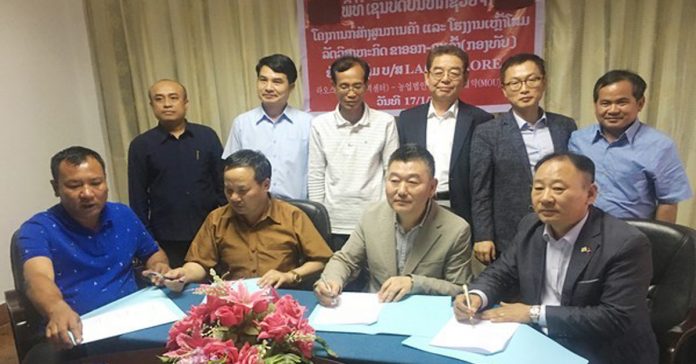
Laos Army Import and Export Trading and Korean firm ROAD have agreed to produce and distribute Korean rice wine in Laos.
Korean rice wine, or known as Makgeolli in South Korea, is a milky, off-white and lightly sparkling rice wine that has a slight viscosity characterized by sweet, tangy, bitter, and astringent tones.
To that end, the two parties agreed to set up a new Laos-based entity and will complete the process of obtaining licenses for its liquor business and the establishment of local production facilities and begin production and sales, according to Dongpo News.
The new entity plans to distribute and sell Korean rice wine not only in the domestic market but also in foreign countries, including China, Thailand, and Vietnam.
Such a move comes amid Laos’ efforts to increase its connectivity with neighboring countries through new railways, roads, and bridges.
For instance, the Laos-China Railway is currently under construction, which is a strategic docking project between the China-proposed Belt and Road Initiative and Laos’ strategy to convert itself from a landlocked country to a land-linked hub.
The 414.332-km railway, with 198-km tunnels and 62-km bridges, will run from Boten border gate in northern Laos, bordering China, to Vientiane with an operating speed of 160 km per hour.
American credit rating agency Moody’s has assigned a B3 rating with a positive outlook to the government of Laos, citing the country’s high economic growth potential.
The rating agency pointed out, however, the country’s weak executive institutions, limited transparency, and the small economy could be potential challenges.
It is the first time for Laos to receive such a rating from one of the three major international rating agencies. The other two are Standard & Poor’s and Fitch Group.
Having sovereign credit ratings means investors can have insights into the level of risk associated with investing in the debt of a particular country, including any political risk.
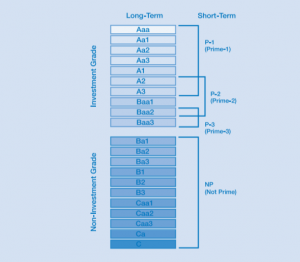
Moody’s rating scale ranges from a maximum Aaa to a minimum C, consists of 21 notches and two categories, namely the investment category for the financially sound companies and speculative category for the companies with a higher risk of default.
Rating scale by Moody’s
Rating B, which is divided into B1, B2, and B3, falls into the speculative category, and the agency suggests that it is “subject to high credit risk.”
Other countries on this scale include Angola, Belarus, Ecuador, Mongolia and Pakistan.
Supporting factors
Moody’s laid out four factors that support the rating.
Laos received “ba3” for economic strength, which balances the country’s high economic growth potential against relatively low incomes, the small size of the economy and exposure to environmental risks.
The country was rated with “b3” for the institutions and governance strength, which balances weak executive institutions, low administrative capacity, and very limited transparency and accountability against a lengthening track record of effective monetary management.
The agency gave Laos “caa1” for fiscal strength, which reflects a high government debt burden for the size of the economy and the government’s narrow revenue base that constrains fiscal flexibility, although the largely concessional debt supports debt affordability.
The country got “ba” for the susceptibility to event risk, driven by external vulnerability risk given structural current account deficits and low foreign exchange reserve buffers.
Positive outlook
The positive outlook is driven by Moody’s assessment that the implementation of large infrastructure projects, including the hydropower dams and the Laos-China Railway, if managed effectively, would deliver net positive benefits to the economy and raise government revenue and exports, Moody’s said in a report on January 8.
“This would allow for a faster reduction in the debt burden and alleviate external risks compared with Moody’s current expectations,” the agency added. “Ongoing fiscal reforms, including efforts to widen the tax base and strengthen expenditure and debt management, also have the potential to shore up fiscal strength and Laos’s credit profile over time.”
What could change the rating
Moody’s explained that prospects of a substantial and sustained reduction in the debt burden, including through fiscal consolidation or revenue expansion beyond Moody’s current expectations, would be credit positive.
“This could happen in the context of effective implementation of the large infrastructure projects that raise economic competitiveness and prospects for diversification, increasing the resilience of the economy to shocks, and raise government revenue. In addition, a reduction in external vulnerability risk, in particular through a sustained accumulation of foreign exchange reserve buffers would also place upward pressure on the rating,” it added.
While saying the positive outlook signals that a rating downgrade is unlikely over the near term, the agency noted that downward pressures on the rating would be likely in case of a further weakening of Laos’s external position, evidenced by a decline of already low foreign exchange reserves coverage of imports and external debt.
It cited a weakening of fiscal and debt metrics and further failures in the banking system that involved material fiscal costs and weighed on growth on a prolonged basis because of constrained credit supply as possible factors that would weigh on the rating.
Gearing up international dollar bond debut
The Lao Government engaged in November last year with Standard Chartered, JP Morgan, and Credit Suisse for its planned international US dollar bond debut.
In December of 2015, Laos sold USD 182 million worth of dollar bonds in two tranches to institutional investors in Thailand and regularly issues sovereign bonds denominated in Thai baht, but it has yet to offer a bond to international investors.
At that time, financial advisor Victor Rattanavong of Kindersen Raleigh & Associates said that China and Thailand are two of Laos’s biggest funding sources, but people in Thailand are getting a bit full with credit, and Laos may need to look elsewhere.
“This is potentially good for Laos because of the wider pool of investors, meaning there will be more liquidity for Lao government bonds,” Rattanavong noted.
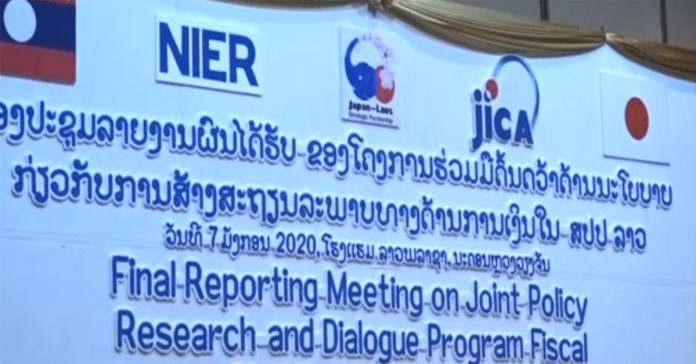
Japan has submitted proposals to Laos on how to improve its fiscal stability as the country faces debt problems due to heavy borrowing from China.
The proposals by the Japan International Cooperation Agency experts stressed the need to make major infrastructure projects profitable and to scrap money-losing state-run companies, NHK reported.
They also pointed out that Laos depends on foreign currency borrowing and advised the country to shift to longer-term loans while maintaining confidence among investors.
NHK quoted Mr. Toshiro Nishizawa, a professor at the Graduate School of Public Policy of the University of Tokyo, as saying that Laos was overly optimistic when it procured the loans.
He added that it’s necessary for Laos to think about how ongoing infrastructure projects can contribute to economic development.
Laos is suffering mounting fiscal deficits amid its reliance on massive loans from China to finance its infrastructure projects, such as railway construction. Accordingly, China has asked Laos to grant rights to operate major infrastructure as collateral.
According to the World Bank, the Lao government is currently seeking to maintain macroeconomic stability by reducing the fiscal deficit and strengthening public debt management.
As a result, there has been fiscal consolidation, with the fiscal deficit expected to decline to 4.3 percent of GDP in 2019 from 4.4 percent in 2018 and 5.5 percent in 2017, according to the bank.
“The government is strengthening revenue administration and efficiency through the introduction of electronic tax payments and modernizing the tax collection system while containing wages and investment spending in 2019,” it added.
Fiscal consolidation is expected to slow down the accumulation of public debt in the medium term, the bank noted.
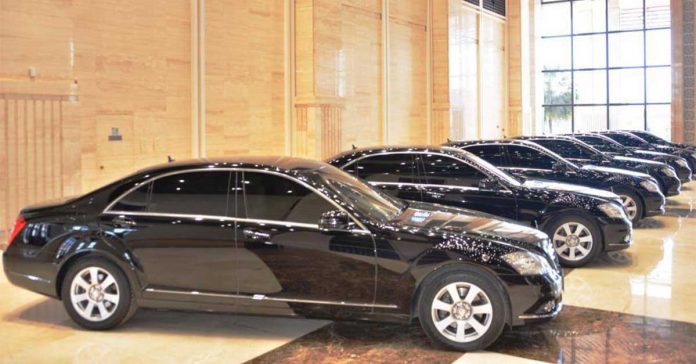
Laos has promulgated a new prime ministerial decree clarifying the import and export of vehicles, dealerships, and assembly plants as different types of business.
According to the new decree, a company that wants to operate all three types of business must obtain three separate operating licences from the commerce ministry. In the past, some companies used a single business licence to enjoy other businesses, Vientiane Times reported.
The new decree, which details information on business areas and requirements for the country’s vehicle industry, can be viewed at: https://www.laotradeportal.gov.la/
The Lao government’s move is designed to help state agencies to agencies to effectively administer vehicle businesses, which have been growing rapidly in recent years.
It is also aimed at limiting the number of operations that sell low-quality vehicles, which are harmful to the environment, while encouraging the sale of vehicles that are environmentally friendly, such as electric vehicles.
The government wants to encourage Lao companies to operate vehicle assembly plants through tax incentives.
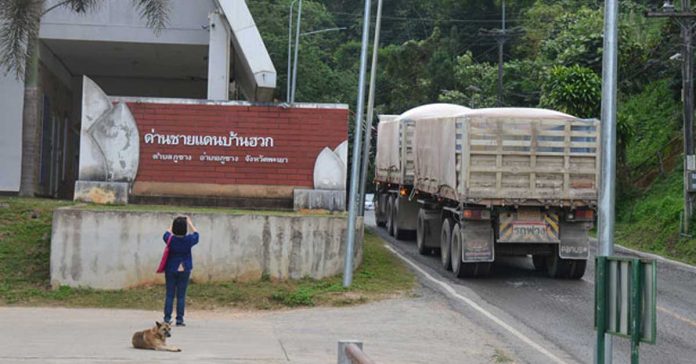
Laos is set to upgrade the Pangmon border crossing that links the country to Thailand, in a move to attract more tourists and facilitate the transport of goods.
The border crossing, located in Khop District, Xayaboury Province, is expected to come into service as an international crossing point on February 1, according to Vientiane Times. If the Pangmon border crossing is upgraded to international status, it will be the fourth in the province.
Xayaboury, which is located in northern Laos and is about 300 km from Vientiane, is home to more elephants than any other province in Laos. It will host the Elephant Festival from February 22 to 28.
More than 140,600 have visited Xayaboury province this year so far, the province attracted over 160,400 visitors in 2018, according to the province’s Information, Culture and Tourism Department.
The border currently remains a temporary checkpoint linking Khop District, Xayaboury, Laos, and Ban Huak, in Phu Sang District, Phayao Province, Thailand.
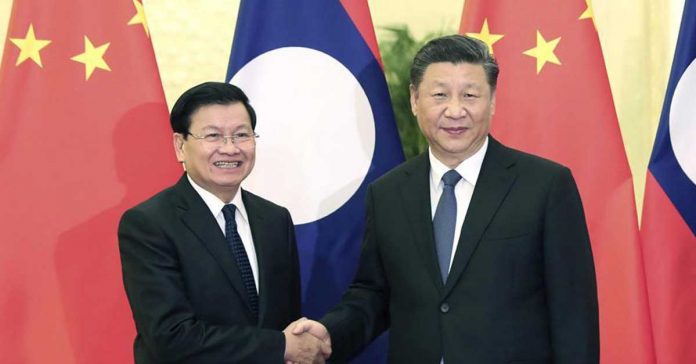
President Xi Jinping said on Monday that China and Laos will enjoy a shared future as good friends, neighbors, and comrades.
Xi hailed Laos as a good friend during talks with Lao Prime Minister Thongloun Sisoulith in the Great Hall of the People in Beijing, during Thongloun’s state visit to China.
He said that the leadership of the communist parties and socialist systems of the two countries defined their political relationship and friendship, calling on both countries to work hand in hand to maintain and strengthen high-level exchanges in governance, and jointly safeguard the interests of countries in the developing world.
Xinhua quoted President Xi as saying, “China will continue to firmly support Lao efforts to safeguard its sovereignty and dignity.”
“Next year is the 60th anniversary of the establishment of diplomatic relations between China and Laos, and therefore the bilateral relationship will enter a critical stage.”
He said that China will cooperate with Laos in the building of a shared future, advancing development through the construction of the China-Laos economic corridor, and through major infrastructure projects such as the Laos-China Railway, as well as special economic zones.
Prime Minister Thongloun congratulated the People’s Republic of China on its achievements since its establishment 70 years ago.
He said that Xi’s leadership of the Communist Party of China (CPC) and its Central Committee will ensure that the nation achieves its goal of building a prosperous society.
Thongloun stated that the plan of action agreed upon by both parties to build a community with a shared future will see Laos working toward the completion of important Belt and Road projects, including the railway, to continue its development and improving the livelihood of its people.
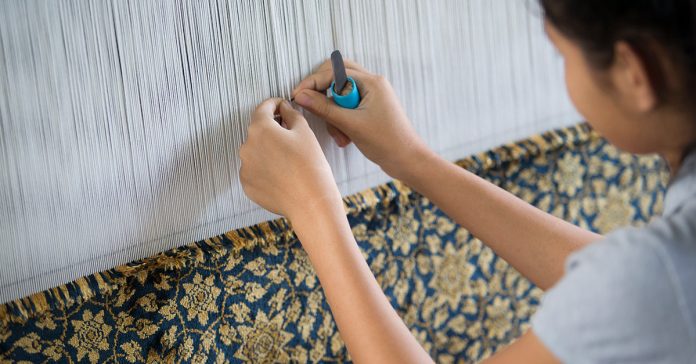
In a bustling workshop in the backstreets of inner-city Vientiane, agile fingers are hard at work and eyes are trained closely on the task at hand. The fine silk flows liberally as a team of mainly female employees hailing from across Laos work their chosen material into intricate and attractive patterns. Creations emerge gradually in a wide range of original and inspired designs that promise comfort, style, and timeless value to their prospective purchasers.
While the high-quality Lao silk found inside is most typically seen in skirts, blouses, scarves and more, it is true to say that the durable textile that passes through this special workshop shall never be worn as apparel. Instead, it’s carpets that these skilled craftspeople are busy creating.
Weaving timeless enchantment and opportunity into the lives of all those it touches, Magic Lao Carpets combines Laos’ ancient and authentic silk traditions with the famed techniques of central Asia. Their exquisite hand-made piles and flatweaves (kilims) emerge from high-quality hand-spun silk, dyed with natural vegetable-based techniques to create timeless pieces. Production comes together under the keen, yet kind, gaze of Laos’ own Souvita Phaseuth (Lani) and her husband Ismit, a native of Turkmenistan, where carpet-making is woven deeply into the culture.
For the past two decades in Laos, they have drawn on countless years of accumulated wisdom to help provide stable and safe employment opportunities for a workforce of Lao young women, including those with disabilities.
“One of our main goals has always been to provide Lao girls with skills and a vocation that will help them to improve their lives,” Lani explains.
“In addition to attitude, they must have a feel for the craft, an artistic sense to love this job. If they have that, then they are able to stay on with us for as long as they want.”
It isn’t just the techniques and hard skills that are transferred to employees, but also the values that have helped to make the business a success. Lani says while the cost of fine carpets and kilims can add up depending on attributes, they prove treasured heirlooms that transcend generations.
“Carpets are investments that increase in value over time,” Lani explains.
Customer satisfaction includes a guarantee as well as a willingness to sit down and craft a design that suits.
“If our clients want something, exclusive or unique, or anything they want, we can do it for them.”
No matter which piece captures your heart, Magic Lao Carpets provides the very best tapestry with a positive impact woven right in.
More information:
Open Mon-Sat 09.00 am – 05.00 pm
Ban Nongdouang Tai, Sikhottabong District, Vientiane
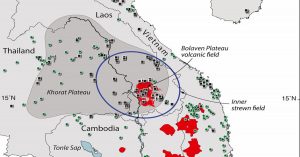
A group of researchers has concluded that Laos’s Bolaven volcanic field is likely to be the impact site of a meteorite that struck the Earth approximately 790,000 years ago.
Prior research revealed that about 790,000 years ago, a large meteorite struck the Earth in the Eastern Hemisphere with debris strewn across the planet’s surface. Bits of debris, such as tektites, have been found in places as far as Antarctica and Australia.
A new study says that the meteorite struck in southern Laos, creating a massive impact crater some 12km in width.
Southeast Asia had been suspected as the likely impact site, but the exact location has been unknown until now. Researchers believed that the reason the crater had not been found is that it was hidden beneath a volcanic field.
The researchers outlined four lines of evidence, including the geochemistry of the tektites in the vicinity of the Bolaven volcanic field, the presence of a 13- to 17-kilometer crater and an outcrop of crudely layered sandstone and mudstone boulders 10 to 20 kilometers from the Bolaven volcanic field.