

Laos is among 42 countries that have had their credit ratings downgraded since the onset of the Covid-19 pandemic.
World Leaders Discuss Finance for Development and Debt Management Amid Covid-19 Fallout

YouTrip Launches $100 Referral Rewards with Continued Growth in Overseas E-commerce

SINGAPORE – Media OutReach – 30 March 2021 – YouTrip, Singapore’s leading multi-currency mobile wallet, is rolling out its biggest user referral programme since its launch in 2018. From 30 March 2021, YouTrip users will earn S$5 with each successful referral, along with a S$50 bonus when they complete the first milestone of 10 referrals.

Despite the pandemic’s impact on global travel, YouTrip saw a 300% increase in overseas e-commerce payments last year after pivoting to promote international online shopping with payments in foreign currencies at sites such as Taobao (CNY), ASOS (GBP), and Amazon (USD). Given the steady increase in popularity of overseas e-commerce shopping behaviour, the company is gearing up for continued growth, starting with the launch of its referral programme.
Caecilia Chu, Co-Founder, and CEO of YouTrip, said “Our users have always been our best spokespersons, and word of mouth has naturally been a huge part of our growth over the years. Despite travel coming to a standstill over the last year, many of our users have continued to use YouTrip to save on their foreign currency spending online. As more people make foreign currency payments online, we feel we’re in a good position to reward our existing users who continue to support us, along with those who come on board.”
This is how YouTrip users can receive referral rewards:
- Existing YouTrip users can copy the unique referral link generated in the YouTrip app and send it to anyone who isn’t already a YouTrip user.
- New users will have to accept the invite via the unique referral link and sign-up for a YouTrip account.
Both referrer and referee will receive S$5 in their YouTrip accounts upon the first successful top-up. In addition, existing users will receive a one-time S$50 bonus upon completing their first 10 referrals, and will continue to receive S$5 per referral thereafter.
As a launch exclusive, the first 250 users to complete 3 successful referrals will also enjoy an additional S$15 bonus.
The launch of the referral programme is part of YouTrip’s plans to be the region’s leading multi-currency mobile wallet. Most recently, YouTrip announced a 6-year partnership with Visa to accelerate its expansion into the rest of Southeast Asia, starting with Malaysia and the Philippines. Currently operating in Singapore and Thailand, YouTrip has amassed over 1 million downloads to date.
For more information about the Referral Programme, please read the Terms & Conditions here.
ABOUT YOUTRIP
YouTrip is a regional financial technology startup, dedicated to creating the best mobile financial services for travellers across Southeast Asia by simplifying overseas spending and creating a fuss-free travel experience. YouTrip first launched in Singapore in 2018 and subsequently in Thailand in 2019.
For more information, please visit www.you.co

Suncity Group Holdings Limited Reports Annual 2020 Results
Suncity Profit Turned Positive
TdC Adjusted EBITDA Turned Positive In 2H 2020 As A Result Of
Solid Local Russian Businesses In Mass & Electronic Gaming Diversify
Into The Philippines, Russia & Japan
HONG KONG SAR – Media OutReach – 30 March 2021 – Suncity Group Holdings Limited (“Suncity”, the “Group” or “Company”) (Hong Kong Stock Exchange code: 1383) today reported results for the twelve-month periods for the year ended 31 December 2020. All amounts are expressed in RMB unless otherwise stated.
A Letter TO SHAREHOLDERS from THE Chairman, Mr. Chau Cheok Wa
Dear fellow Suncity shareholders,
Needless to explain, 2020 was one of the worst years in modern history, as the majority of the year has been affected by the COVID-19 pandemic. We were all being led through a roller coaster ride in a mere short year. Global markets initially bottomed then boomed, yet real economic recovery is still underwater. While Suncity was on the way charting to the new lands as a new comer in the entertainment scene, the monster COVID dragged us back from otherwise arriving at our initial promised land. Regrettably, COVID happened at a time when we have just finished sharpening the flagship sword, Hoiana, after years in the making. Full and ready to strike, yet the virus has put Hoiana’s Grand Opening to a halt. Flights and visas to Vietnam are no longer accessible, leaving us no chance to showcase what a masterpiece that we have created. 2020 was history, and letting bygones be bygones would be the best strategy. As long as we stay afloat while we sharpen other swords, and I am not worried about not having chances to strike in the future.
Amidst the doom and gloom, there are silver linings. Under the Suncity portfolio, we also have integrated resorts that are supported by local markets, such as Tigre de Cristal. COVID has offered a chance to prove that an integrated resort with a local exposure could offer some downside protection, such as Tigre de Cristal, for being EBITDA-positive in the second half of 2020 with the support of the local Russian market. I am also pleased to report a net profit attributable to equity holders of RMB 786.4 million, though non-cash in nature, it sets a good start for the transformation of Suncity into a leading Asian integrated resort operator.
Rewinding the clock to a couple of years ago, I came across Tigre de Cristal in a business trip. As an entrepreneur, I see a multitude of opportunities untapped – its already solid local mass and slot businesses; its proximity to South Korea and Japan; as well as its unparalleled profitability profile, are the beauty of operating this resort Tigre de Cristal. Before Suncity took over, Tigre de Cristal has already delivered fair, though not staggering results. I thought to myself, how could I help to find the missing puzzle to make Tigre de Cristal glow as the highest-return integrated resort in Asia? What if I could take control of it, sprinkle just the right amount of change and add some flavour to make sure that Tigre de Cristal will be the perfect dish that suits well to the tastes of our target Asian customers? This is exactly the gap that Suncity could bridge, because at Suncity we understand the Asian way of conducting entertainment businesses. Now that Suncity has become the parent company of Summit Ascent, I will make sure Suncity will help Tigre de Cristal glow.
I am also blessed to have found another gem in the Philippines, where the next finest and best integrated resort in Entertainment City will be built from scratch with our partner. My team and I are busy crafting the blueprints of this destination on how we could build an integrated resort from the ground up that is tailored to the taste of local Filipino and Asian customers. We gather prime ingredients for a successful integrated resort, putting them under boil utilising the trialled and tested Suncity recipe, while tweaking local flavours to suit each market’s local taste. In terms of design, scale and connectivity, I am confident that Westside City Project would be amongst the best in the entire Entertainment City in Manila.
On a strategic geopolitical basis, we diversify our integrated resorts in North, South and East of Asia. Under the Suncity umbrella, we have everything on the menu of integrated resorts for the pleasure of our guests – sun, sea and sand for the entire family in the tropical Hoiana; skiing, shooting and shots of vodka for adults’ entertainment in Tigre de Cristal; slots and mass entertainment in Westside City Project in the Philippines. Not only does Suncity build and operate integrated resorts, now Suncity also develops skiing and diving hotels in Niseko and Miyako Islands in Japan, so as to increase customer stickiness on non-gaming perspective. The Suncity standard will ensure that our guests will receive the same level of superior services in all of our integrated resorts. The transformation of the company has been ongoing, as the Group has just announced the disposal of the property leasing and property development businesses in February 2021, indicating that the Group is officially on a fast track to develop its integrated resorts and hotels businesses.
I am also delighted to welcome a team of veteran integrated resort professionals to join the Group. Considering Macau is an exemplary illustration of running the world’s most successful integrated resorts, together, we will continue to make good use of Macau as a headquarter for Suncity’s global integrated resort operations. We will bring the Macau-style “World Centre of Tourism and Leisure” hospitality to a global stage by forming a portfolio of integrated resorts in alliance altogether in strategic locations in North, South and East of Asia. The reopening of borders will unleash pent-up demand from tourists where they can travel freely to our integrated resorts for the unparalleled entertainment experience we offer.
Although 2020 was far from perfect, I am grateful to the Chinese government and the Macau government for their swift and decisive actions to protect their citizens during the pandemic. I would also like to thank the Russian government for starting to offer vaccines to our Russian staff, as well as to the Vietnamese and Filipino governments for successfully controlling the pandemic locally. Asia is way ahead of the rest of the world in the pandemic. Progressively, I am glad to witness local businesses are coming back. In undue hard times like now, our guests and our staff’s safety are of utmost priority to us. Our team will deliver all necessary precautionary measures recommended by the local authorities to ensure a worry-free entertainment experience for our guests.
Finally, I would like to extend my gratitude to our global team, our shareholders, our suppliers, our investment partners and our guests for going through a tough 2020 with us. I would also like to thank our valuable team members for their hard work and their patience to grow together with the company. 2020 may have been tough, yet we passed every single hurdle that was laid ahead of us before, and I am sure there is no difference this time.
Mr Alvin Chau Cheok Wa
Chairman
Suncity Group Holdings Limited
FULL YEAR ANNUAL 2020 RESULTS HIGHLIGHTS
Suncity: Significant Turnaround to Profit; though Primarily Non-Cash in Nature
- Since October 2020, Summit Ascent Holdings Limited (“Summit Ascent”) became a subsidiary of Suncity. Suncity now owns approximately 69.66% of Summit Ascent. Subsequently, Summit Ascent increased holdings of Tigre de Cristal to approximately 77.5%
- Full Year Group Total Revenue of RMB199.3 million, down 67% year-on-year
- Full Year Group Consolidated Adjusted EBITDA of RMB(105.2) million, versus RMB(59.4) million in 2019
- Full Year Group Net Profit Attributable to Equity Holders of the Company of RMB786.4 million in 2020, significantly turnaround from Net Loss Attributable to Equity Holders of the Company of RMB(1,484.3) million in 2019, though primarily non-cash in nature
Group & Segmental Results: New Segment in Operation of Integrated Resorts Started to Contribute Following the Acquisition of Summit Ascent
- Full Year Travel Related Products and Services Segment Revenue of approximately RMB110.0 million, down 79% year-on-year
- Post-acquisition operations of integrated resort1 – Tigre de Cristal contributed revenue from gaming and hotel operations of approximately RMB42.4 million to the Group
- Full Year property leasing and management and operation of malls segment revenue of approximately RMB39.0 million, down 12.8% year-on-year
- Full Year hotel and integrated resort general consultancy services segment revenue of approximately RMB7.9 million, down 45% year-on-year
Tigre de Cristal: Solid Local Mass & Electronic Gaming Businesses when Borders were Closed; Adjusted EBITDA Turned Positive in 2H 2020, Cost-Cutting Initiative in Place
- Tigre de Cristal recorded a decent recovery in mass and electronic gaming businesses in 2H
- Full Year Net Revenue from gaming operations of HK$202.9 million, down 58% year-on-year
- Full Year Total Gross Gaming Revenue (“GGR”) of HK$249.7 million, down 69% year-on-year
- Full Year Adjusted EBITDA of HK$(14.7)million, compared to a positive Adjusted EBITDA of HK$214.8 million in 2019
- 2H Adjusted EBITDA of HK$7.4 million, down 93% year-on-year and turned from Adjusted EBITDA of HK$(22.1) million in 1H to positive
- Average Hotel occupancy was 12% during weekends and 19% during weekdays in 2020
Hoiana: Cost-Cutting Initiative in Place ; Ensuring Fiscal Survivability
- Extremely challenging business environment due to COVID-19
- Post-Preview2 Total Net Revenue of approximately US$4.8 million
- Post-Preview2 Total GGR of US$8.9 million
- Post-Preview2 Total Adjusted EBITDA of US$(32.0) million
- Hoiana played unlucky in its gaming operations which decreased its Adjusted EBITDA by approximately US$1.2 million. Normalised Adjusted EBITDA was US$(30.8) million in 2020
Balance Sheet: Strong Support from the Main Shareholder; Enhanced the Group’s Net Asset Position by Exchanging his Shareholder Loans into Perpetual Securities
- Main Shareholder Mr. Chau exchanged his shareholder’s loans into perpetual securities, and committed to a total of HK$6 billion
- Enhanced Group’s Net Asset Position; Enlarged its Capital Base and Reduced Gearing
- Bank balances and cash of RMB2.2 billion as at 31 December 2020
- Total Bank and other borrowings of approximately RMB1.3 billion as at 31 December 2020
Development Updates: Clear Roadmap for Integrated Resort Development in Asia
- Russia: Tigre de Cristal Phase I upgrade ready – Brand-new Suncity VIP room, restaurants and a new private club are now ready. Phase II planning & design on its way, although there were minor delays due to COVID-19
- Philippines: Westside City Project’s main design and piling works are now completed; Moving onto building the superstructure above the ground
- Vietnam: To ensure fiscal survivability in Hoiana until travel resumes
- Japan: Moving forward with plans to develop a diving resort in Miyako Islands, Okinawa; and a skiing resort in Niseko, Hokkaido
- Other international locations: Actively exploring other overseas markets
Market Overview
Unsurprisingly, all jurisdictions that Suncity has exposure to, were affected by COVID-19 to a various extent as tourism has been seriously affected in 2020.
In Russia, the Russian government stopped all tourist arrivals from 16 March 20201 with limited international flights resumed only until July 2020. The issuance of tourist visas, including visas in the form of an electronic document, has also been temporarily suspended. Until December 2020, borders were open to only 14 countries. All non-essential businesses were mandated to close from 28 March 2020 and were allowed to be reopened gradually later. Russia’s GDP declined 3.1%2 year-on-year in 2020. Net inflows of foreign direct investment (“FDI”) was US$1.4 billion in 2020, down 95% year-on-year. In 2020, total tourism arrivals in Primorsky Region decreased 86% year-on-year to 132,2283. The Russian Federation has begun COVID-19 vaccinations in Moscow in December 2020, and has already approved mass use in other cities including Vladivostok, where Tigre de Cristal is located.
Vietnam has suspended all inbound international flights and the entry of all foreigners since 22 March 2020 to contain COVID-19. In 2020, approximately 3.8 million4 international tourist arrivals were recorded, down 78% year-on-year. GDP in 2020 was estimated to increase by 2.9%5 year-on-year, the lowest rate in the period 2011-2020 in the context of the COVID-19 pandemic. FDI recorded VND463.3 trillion (equivalent to approximately US$20.1 billion), down 1.3% year-on-year. The Vietnamese government plans to roll out mass Covid-19 vaccinations in March 2021. Meanwhile, Vietnam has commenced the first phase of human trials of one of the four domestic COVID-19 vaccine in December 2020 and has completed the second phase of human trials in February 2021.
In the Philippines, all integrated resorts were required to be closed from 15 May 2020 onwards and PAGCOR-licensed integrated resorts in Manila were allowed to operate at only 30% operational capacity since 24 August 2020. The tourism industry which involves airlines, hotels, and tourist attractions, and shopping malls were not allowed to operate during the 2-month lockdown. The Philippines total Gross Gaming Revenue (“GGR”) in 2020 was PHP151.5 billion (equivalent to approximately US$3.1 billion), down 24%6 year-on-year. Foreign arrivals decreased 82.1% year-on-year to 1.5 million. GDP in Philippines declined by 9.5%7 year-on-year in 2020.
In Macau, total GGR for 2020 was MOP60.4 billion8, down 79.3% year-on-year. The travel restrictions entering the region, and suspension of Individual Visit Scheme (IVS) for mainland visitors started from late January for eight straight months of the year significantly affected tourist visitations. Total tourism arrivals in 2020 decreased 85%9 year-on-year to 5.9 million. The average hotel occupancy rate in Macau in 2020 was 28.6%10, down 62.2 percentage points year-on-year.
Group Financial Results
The Group recorded total revenue of RMB199.3 million, down 67.4% year-on-year. Adjusted EBITDA was RMB(105.2) million versus RMB(59.4) million in 2019. Net profit attributable to equity holders of the Company was RMB786.4 million, significantly turnaround from net loss attributable to equity holders of the Company of RMB1,484.3 million in 2019.
The profit for the year attributable to equity holders of the Company in 2020 was mainly attributable to (i) a gain on change in fair value of derivative financial instruments of approximately RMB1,359.9 million; (ii) a gain on change in fair value of convertible bonds of approximately RMB213.5 million as a result of the extension of maturity dates of the convertible bonds issued by the Company during the year; (iii) a net gain on bargain purchase on acquisition of Summit Ascent Holdings Limited (“Summit Ascent”, together with its subsidiaries as “Summit Ascent Group”) of approximately RMB200.7 million; and (iv) partially offset by (a) a loss on change in fair value of investment properties of approximately RMB415.8 million; (b) finance costs of approximately RMB345.6 million; (c) share of loss of a joint venture of approximately RMB246.6 million; and (d) impairment loss on interest in an associate of approximately RMB47.4 million.
Upon the completion of Summit Ascent Rights Issue, Summit Ascent owned 60% equity interest in Oriental Regent Limited (“ORL”) and it further acquired 17.5% equity interest in ORL in November 2020, since then Summit Ascent owned approximately 77.5% interest of the integrated resort in the Integrated Entertainment Zone of the Primorye Region in the Russian Federation, Tigre de Cristal, contributed revenue from gaming and hotel operations of approximately RMB42.4 million to the Group during the year, with contribution of approximately RMB45 million total gross gaming revenue (“GGR”) to the Group.
1 Russia Federal Agency for Tourism
2 Federal Office for State Statistics, Russia
3 The Border Service of the Federal Security Service of the Russian Federation
4&5 General Statistics Office of Vietnam
6 Philippines Amusement and Gaming Corporation
7 Philippines Statistics Authority
8 Gaming Inspection and Coordination Bureau, Macao SAR
9&10 Statistics and Census Service, Macao SAR
Revenue
Revenue for the year was approximately RMB199.3 million, decreased by approximately RMB412.5 million or 67.4% when compared to approximately RMB611.8 million in 2019. The revenue was derived from (i) property development, (ii) property leasing and management and operation of malls, (iii) provision of hotel and integrated resort general consultancy services, (iv) provision of travel related products and services, (v) operation of integrated resort in the Philippines and (vi) operation of integrated resort in the Russian Federation. The significant decrease was mainly attributable to the significant decrease in revenue from the travel related products and services segment.
i) Property development – The Group delivered residential units in the aggregate Gross Floor Area (“GFA”) of nil m2 (2019: 621 m2). Since there are no units delivered during the year ended 31 December 2020, no revenue was recognised during the year.
ii) Property leasing and management and operation of malls – The revenue represented mainly rental income from the leasing of Gang Long City Shopping Centre. It recorded a decrease from approximately RMB44.8 million to approximately RMB37.7 million for the year resulting from the continual decrease in occupancy rate from 60% to 58%. The revenue also included approximately RMB1.3 million of revenue for concessionaire sales and provision of retail management and related services as well as revenue from the management and operation of the Group’s leased assets, namely Phase 1 Shopping Mall and Phase 2 Living Mall of Xinguang Tiandi in Zhejiang Province, the PRC, which was generated by a newly acquired wholly-owned subsidiary since 19 November 2020. The occupancy rates of Phase 1 Shopping Mall and Phase 2 Living Mall of Xinguang Tiandi as at 31 December 2020 were 87% and 79% respectively.
iii) Hotel and integrated resort general consultancy services – The Group has entered into several technical service agreements and casino management agreement with integrated resorts since 2017, which generated revenue of approximately RMB7.9 million for the year (2019: RMB14.5 million).
iv) Travel related products and services – Revenue mainly represented the sale of hotel accommodation products and travel agency service income. Due to the outbreak of COVID-19, there has been a significant impact on the Group’s travel and tourism related business in 2020, the Group recorded a substantial decrease in revenue from this segment by approximately RMB415.5 million to approximately RMB110.0 million during the year (2019: RMB525.5 million).
v) Operation of integrated resort in the Philippines – through an indirect 51% owned subsidiary of the Company, Suntrust Home Developers, Inc. (“SunTrust”), the Group is currently developing a 5-star hotel and casino complex at the Entertainment City, Manila, the Philippines (“Main Hotel Casino” or “Westside City Project”) of which SunTrust would be the sole and exclusive operator and manager to operate and manage the Main Hotel Casino upon commencement of operation of the Main Hotel Casino in 2023. During the year ended 31 December 2020, the Group has completed architectural design works and the piling works of the Main Hotel Casino. No revenue was recognised during the year.
vi) Operation of integrated resort in the Russian Federation – Summit Ascent became an approximately 69.66% owned subsidiary of the Company immediately after the taking up of rights shares of Summit Ascent by Victor Sky Holdings Limited (a wholly-owned subsidiary of the Company) as underwriter and shareholder and by the Company as shareholder pursuant to the rights issue of Summit Ascent on the basis of three rights shares for every two existing shares of Summit Ascent at a subscription price of HK$0.6 per rights share of Summit Ascent (“Summit Ascent Rights Issue”). Since the completion of Summit Ascent Rights Issue in October 2020, Summit Ascent contributed revenue from gaming and hotel operations in the Integrated Entertainment Zone of the Primorye Region in the Russian Federation through its approximately 77.5% owned subsidiary of approximately RMB42.4 million to the Group during the year.
Operations of Integrated Resorts
Tigre de Cristal
Gaming operations
Net Gaming revenue of Tigre de Cristal, which consists of three main sources namely the rolling chip business, mass table business and electronic gaming business, was approximately HK$203 million in 2020, decreased by 58% compared to approximately HK$482 million in 2019.
Rolling chip volume (measured as the sum of all non-negotiable chips wagered and lost by players) at Tigre de Cristal was approximately HK$1.4 billion in 2020, representing a decrease of 91% compared to 2019. Net win after all commissions rebated directly or indirectly to customers from rolling chip business decreased by 85% to approximately HK$18 million in 2020 compared to approximately HK$122 million in 2019. Gross win percentage (represented the ratio of gross win to rolling chip volume) increased from 2.90% in 2019 to 3.84% in 2020.
Mass table drop (measured as the sum of gaming chips purchased or exchanged at the cage) decreased by 52% to approximately HK$362 million in 2020, compared to approximately HK$751 million in 2019. Net win from mass table business decreased by 53% to approximately HK$82 million in 2020, compared to approximately HK$174 million in 2019. Net win rate percentage (represented mass table net win as a percent of mass table drop) decreased slightly from 23.2% in 2019 to 22.7% in 2020.
Electronic gaming volume (measured as the total value of electronic gaming credits wagered by players) was approximately HK$2.2 billion in 2020, decreased by 35% compared to approximately HK$3.4 billion in 2019. The electronic gaming business recorded net revenue of approximately HK$103 million, down 45% compared to approximately HK$186 million in 2019. The average net win rate percentage decreased to 4.6% in 2020 from 5.5% in 2019. The average number of electronic gaming machines deployed decreased by 18% to 277 in 2020, compared to 336 in 2019.
Hotel Operations
Revenue from hotel operations, which is largely dependent on foreign guests, decreased to HK$8 million in 2020 or by 84% compared to 2019. Average hotel occupancy rates dropped substantially to 12% (2019: 88%) during weekends and 19% (2019: 63%) during weekdays in 2020.
Key Financial Data of Tigre de Cristal
|
|
FY2020 HK$’million |
FY2019 HK$’million |
|
Revenue: Net Gaming |
203 |
482 |
|
Hotel/F&B/Others |
8 |
51 |
|
Total Net Revenue |
211 |
533 |
|
|
|
|
|
Adjusted EBITDA |
(15) |
215 |
|
Adjusted EBITDA margin |
N/A |
40% |
Gaming Statistics
Hoiana
As at 31 December 2020, the Group held approximately 34% indirect equity interest in Hoiana through the investment in a joint venture. The Certificate for the Eligibility for Casino Business in relation to the casino operation of Hoiana in Vietnam was granted in May 2020, and the preview took place on 28 June 2020. Hoiana features an integrated resort with a casino that holds gaming tables, electronic gaming machines, Asian delights and other international cuisine with more than 1,000 hotel rooms and an eighteen-hole golf course. The commencement of operation of Hoiana was in the midst of the pandemic when international travel restrictions were in place which had significant impact on its business performance. The Group will continue to ramp up the property to prepare for more VIP rooms, hotel rooms, additional food & beverage and retail outlets.
Hoiana’s net revenue since its preview in 2020 was approximately US$4.8 million. Adjusted EBITDA was approximately US$(32.0) million. Hoiana played unlucky in its gaming operations which decreased its Adjusted EBITDA by approximately US$1.2 million. Normalised Adjusted EBITDA was approximately US$(30.8) million in 2020.
Key Financial Data of Hoiana
|
FY2020(i) |
|
|
US$’000 |
|
|
Revenue: |
|
|
Net Gaming |
3,455 |
|
Hotel/F&B/Others |
1,323 |
|
Total Net Revenue |
4,778 |
|
|
|
|
Adjusted EBITDA |
(31,951) |
|
Adjusted EBITDA margin |
N/A |
(i) For the period from 28 June 2020 (the date of commencement of casino operation) to 31 December 2020.
Gaming Statistics
|
|
Q32020(i) |
Q42020 |
FY2020(ii) |
|
(US$’ 000) |
|
|
|
|
Total GGR |
1,432 |
7,501 |
8,933 |
|
Rolling Chip Volume |
84,506 |
165,530 |
250,036 |
|
Gross Win Rate % |
NEG(iii) |
3.5% |
2.2% |
|
Gross Win |
(461) |
5,837 |
5,376 |
|
Mass Table Drop |
5,806 |
6,342 |
12,148 |
|
Gross Win Rate % |
18.8% |
17.8% |
18.3% |
|
Gross Win |
1,089 |
1,131 |
2,220 |
|
Electronic Gaming Volume |
9,482 |
6,208 |
15,690 |
|
Gross Win Rate % |
8.5% |
8.6% |
8.5% |
|
Gross Win |
804 |
533 |
1,337 |
(i) For the period from 28 June 2020 (the date of commencement of casino operation) to 30 September 2020.
(ii) For the period from 28 June 2020 (the date of commencement of casino operation) to 31 December 2020.
(iii) NEG represents negative win rate percentage.
Development Update
Tigre de Cristal, Russia
Tigre de Cristal Phase I upgrade has already been completed. A brand-new Suncity VIP room has been already set up and is now operational. A new authentic hotpot restaurant and a new private club are opened to welcome guests.
Phase II planning and construction are well underway except minor delays due to COVID-19. When Phase I & II are both running, Tigre de Cristal will triple in its number of rooms, and double in number in its gaming facilities.
Hoiana, Vietnam
Hoiana Phase 1 is not yet fully opened. Only the mass gaming floor, the VIP rooms, some hotel rooms and the golf course entered into preview on 28 June 2020.
As COVID-19 continues to overhang, international travel restrictions plague casino revenue opportunities. This has affected our original marketing and promotion plans to international tourists as the target audience has been temporarily shifted to foreign passport holders’ domestic market. Once restrictions are lifted, we are confident that international tourists will return to Danang and Hoi An area.
Given current market situation, hotel rooms will be rolled out in phases according to the demand of the market to balance cost and benefits.
Westside City Project, Philippines
The main design has already been completed. Piling works in Westside City Project has also been completed. Megawide Construction Corporation has been appointed as the main contractor in Manila, the Philippines for the Westside City Project. Construction works at the site is going on at full steam. Westside City Project is expected to be completed in 2023.
When all phases of Westside City Project are ready, it will consist of:
- Approximately 400 gaming tables;
- Over 1,200 electronic gaming machines;
- Over 450 five-star hotel rooms;
- Approximately 1,000 car park spaces; and
- Pool club & leisure club etc.
Westside City Project will be integrated with the shopping malls, theatres, restaurants, and shopping streets, etc. to be built by Suncity’s partner Westside / Travellers international Hotel Group Inc. They will also build additional hotel rooms, a shopping mall, a Grand Opera House, restaurants, a theatre district and an additional of approximately 2,000 car park spaces.
Other international locations
The Group plans to develop a diving resort and a skiing resort in Japan, located in Okinawa and in Hokkaido. In Miyako Islands, Okinawa, the Group plans to develop 40 villas and a hotel with more than 100 rooms. In Niseko, Hokkaido, near Grand Hirafu Mountain, the Group plans to develop 50 villas, 20 townhouses and a hotel with over 40 rooms.
Outlook
We believe that COVID-19 will continue to impact all of the Group’s integrated resorts in the near future. We are especially pleased to see that vaccination progress has been ongoing in Macau and China, with Macau serving as the only cross-border location for Chinese residents to visit without the need to be in quarantine. We are also pleased to witness the start of the vaccination programme for our staff members in Tigre de Cristal in Russia. We are also confident that the vaccination will be rolled out worldwide soon. In that case, countries where the Group has invested in such as Vietnam and the Philippines will no longer be restricted by quarantine, flights or visa constraints.
The Group remains long-term positive to our integrated resort portfolio. Before Suncity’s management stepped in to transform the operations of Tigre de Cristal, Tigre de Cristal itself has already been self-running with a positive Adjusted EBITDA. After the Company became its largest shareholder, as the new operator of Tigre de Cristal, bringing in a wealth of experience in gaming operations, the Group helps Summit Ascent to upgrade its hardware, the facilities; and its software, its service standards. Right now, both software and hardware in Tigre de Cristal are ready for guests once the borders reopen.
In the short run, the Group will bring three major changes to Tigre de Cristal. Firstly, the Group will continue to help to upgrade Tigre de Cristal’s hardware. Secondly, the Group will help to introduce a brand-new Direct VIP segment using the Group’s customer base. Thirdly, the Group will help to bring in a new Premium mass segment, all to be under Tigre de Cristal. The Group will make good use of Tigre de Cristal’s proximity to the Korean and Japanese markets as these two markets are relatively untapped in the north of Asia. The true harvest year for Summit Ascent will be the time when Tigre de Cristal Phase II is up-and-running. Capacity-wise, Phase II will triple the current number of rooms, and double the number of tables and electronic gaming machines.
Hoiana Phase 1 is not yet fully opened. Unfortunately, Hoiana was ready at a time when the pandemic was in full swing. Only a preview could take place in June 2020. Hoiana’s current focus is to stay afloat while continuing marketing to local expats and the Viet Kieu community in the short run. When travel is no longer hindered by COVID-19, the long beaches, white sand and exhilarating entertainment in Hoiana would appeal to our Asian customers. Hoiana offers one of the best integrated resort locations for families in South-East Asia. While the pandemic continues to impede Hoiana’s performance post-preview, we remain hopeful that the situation could have been improved when flights and visas resume.
We like the Philippines as one of the fastest-growing Asian gaming jurisdictions. When Westside City Project is completed, Westside City Project will be running at a similar scale as the other operators in Entertainment City in Manila. With the Group’s expertise in gaming, we are confident that Westside City Project will be one of the best integrated resorts in the Philippines in terms of facilities, design and amenities.
In the meantime, the Group has implemented a stringent cost control program across the board. For example, split shifts and flexible working were implemented in Hoiana, Vietnam; and in Tigre de Cristal, Russia, without significantly affecting customer experience. The Group continues to progress at full speed on various projects across Asia. When the pandemic is over, the Group is well-positioned to capture the growth in entertainment demand in Asia, thanks to the strengthened network of projects and the Group’s access to our proprietary customer database in Sun Travel.
The Group continues to evaluate various integrated resort projects in Asia whilst we remain optimistic in the sector in the very long term.
Selected Awards
|
Awards |
Institution |
|
SUNCITY GROUP HOLDINGS LIMITED |
|
|
Best IR Company – Mid Cap Best IR by Chairman / CEO – Andrew Lo – Mid Cap Best Investor Meeting – Mid Cap |
Hong Kong Investor Relations Association |
|
All Asia Executive 2020 Honored Company |
Institutional Investor |
|
The Best Investor Relations Case Study Award |
3rd Annual China Excellence IR IRSC International Road Show Centre |
|
2020 China’s Top 500 Listed Companies |
Asiabrand, Brand Management Expert Committee of China-Asia Economic and Asiabrand.com |
|
TIGRE DE CRISTAL, RUSSIA |
|
|
Corporate Travel Awards 2020 (Hotel Resort of the Year) |
CEO Today Magazine |
|
Winner of the XVI Business Prize of Primorsky Krai (Company of the Year 2019) |
Zolotoy Rog |
|
Top 5 nominees of “Russia’s Leading Resort 2019” |
World Travel Awards |
|
HOIANA, VIETNAM |
|
|
Best Integrated Resort of the Year – Best of the Best Awards 2020 |
Robb Report |
|
Asia’s Leading Tourism Development Project 2020 |
World Travel Awards |
|
Best Companies to Work for in Asia 2020 |
HR Asia |
|
World’s Best New Golf Course 2020 |
World Golf Awards |
|
GEO Certified® Development status (Hoiana Shores is the first and only golf property in Asia-Pacific to achieve this designation, and one of only half a dozen worldwide) |
Scotland-based GEO Foundation |
About Suncity Group Holdings Limited (HKEx stock code: 1383)
Suncity Group Holdings Limited (“Suncity” or “the Group“) is a holding company that manages integrated resorts across Asia including Russia, the Philippines, Vietnam and Japan. The Group also operates in the travel segment and the property segment.
Suncity holds approximately 69.66% of Summit Ascent Holdings Limited (“Summit Ascent” HKEx stock code: 102), the operator of one of the largest integrated resorts in Russia, known as Tigre de Cristal in Vladivostok. Summit Ascent holds approximately 77.5% in Tigre de Cristal. Situated midway from the Vladivostok International Airport to Vladivostok city, Tigre de Cristal is ideally located geographically in the heart of Northeast Asia.
Suncity is also the controlling shareholder of Suntrust Home Developers, Inc. (PSE: SUN), who develops Westside City Project in the heart of Entertainment City in Manila, the Philippines. In terms of its design, scale and connectivity, Westside City Project will be one of the best integrated resorts in the Philippines.
Hoiana is an integrated resort that Suncity jointly develops with our investment partners. Located in Central Vietnam, Hoiana Phase 1 is an integrated resort with over 1,000 rooms, award-winning golf course and pristine beaches. The Group also plans to develop skiing and diving resorts in Miyako Islands and Niseko in Japan. In addition, the Group operates a travel agency, and operates in the property management segment.
For more information about Suncity, please visit http://www.suncitygroup.com.hk/?lang=en

CPA Australia: Strong customer focus leads to speedy recovery for Indonesian small businesses
- COVID-19 the biggest challenge confronting Indonesian small businesses in 2020.
- Established e-commerce and online delivery services helped businesses shift online quickly.
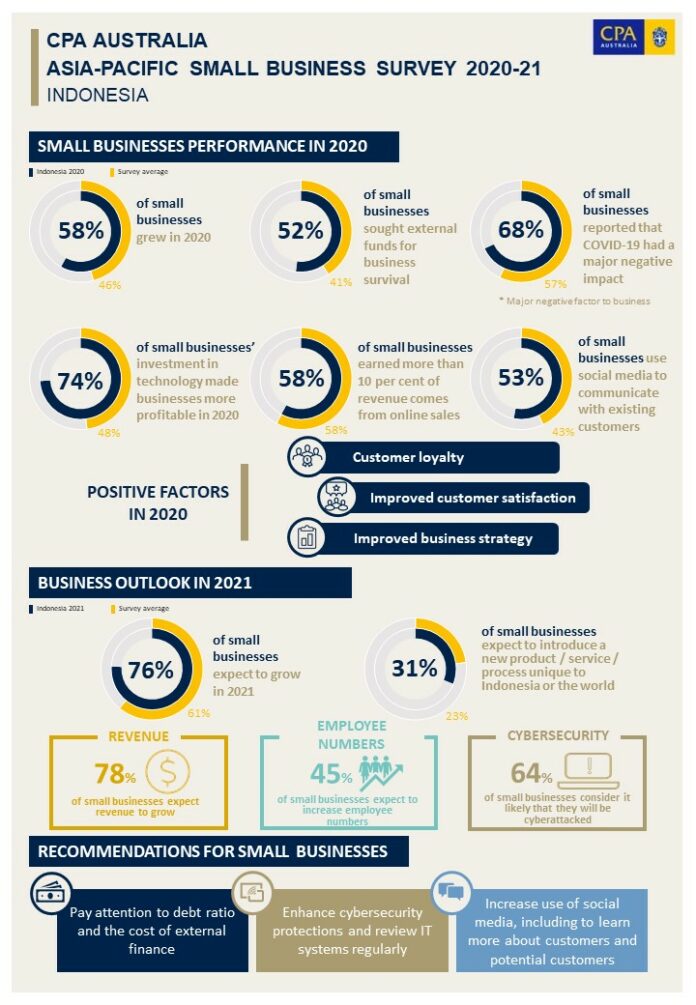
- Seventy-six per cent of surveyed Indonesian small businesses expect to grow in 2021.
JAKARTA, INDONESIA – Media OutReach – 30 March 2021 – Although many small businesses in Indonesia were adversely impacted by COVID-19 in 2020, a strong focus on online sales and customer satisfaction should lead to a rebound in small business activity in 2021, according to CPA Australia.

CPA Australia’s Asia-Pacific Small Business Survey, published today, shows the percentage of small businesses in Indonesia that grew dropped to a record low of 58 per cent in 2020, compared with 87 per cent in 2019. During the year, 52 per cent of respondents sought external funds for business survival, the highest of the 11 Asia-Pacific markets surveyed. Indonesian small businesses were the second most likely to identify COVID-19 as the biggest challenge to their business in 2020, at 68 per cent.
Mr Herwan Ng, a member of CPA Australia’s Indonesian Advisory Committee said, “Small businesses in Indonesia experienced a particularly tough 2020, with COVID-19 leading to extensive restrictions on movement. This disrupted regular business operations and significantly impacted their revenue.”
However, business confidence is building, with 76 per cent expecting their businesses to grow in 2021, the third highest result of any region in the survey.
“Small businesses in Indonesia have a very strong focus on their customers. Customer satisfaction has been one of their most important influences for them for the past three years. Customer-centric strategies allow small businesses to stay actively engaged with their customers even in the face of the pandemic. This makes it more likely that they will rebound in 2021,” Herwan said.
The survey revealed that 53 per cent of small businesses in Indonesia used social media to communicate with existing customers, one of the highest of the markets surveyed. Further, more than half (58 per cent) of small businesses in Indonesia earned more than ten per cent of their revenue from online sales last year. Thirty-eight per cent of Indonesian small businesses either began or increased their focus on online sales in response to COVID-19.
“Well-established e-commerce platforms and online delivery services enabled many businesses to shift their products or services to online quickly, while maintaining a close relationship with their customers,” Herwan said.
Investment in technologies, such as mobile apps, is one way for Indonesian small businesses to rebound post-COVID. This is reflected in 74 per cent of respondents reporting that their business investment in technology in 2020 had improved their profitability, which was much higher than the survey average of 48 per cent.
“To win over more customers, small businesses should continue to invest in technology, accelerate e-commerce adoption and maintain strong communication with customers through social media,” Herwan recommended.
The innovative culture of Indonesian small businesses is reflected in 31 per cent of respondents stating that they will introduce a new product, process or service to Indonesia or the world, higher than the survey average of 23 per cent.
The increasing use of technology means that Indonesia’s small businesses should have a stronger focus on cybersecurity. While 64 per cent expect to experience a cyberattack in 2021, only 43 per cent have reviewed their cybersecurity in the past six months.
“With government policies to develop the digital economy and encourage the adoption of payment technologies, we foresee that Indonesian small businesses will stay competitive. Nonetheless, Indonesia’s small businesses should pay attention to cybersecurity protections as they digitalise.” Herwan suggested.
CPA Australia recommends that Indonesian small businesses consider the following actions to improve their recovery prospects:
- Seek advice from a trusted adviser, such as an accounting professional.
- Focus on improving customer satisfaction.
- Increase use of social media, being mindful of changes in customers’ behaviour.
- Pay attention to debt ratio and the cost of external finance.
- Investing in up to date devices and relevant technologies.
- Enhance cybersecurity protections and review business’s IT systems regularly.
- Explore new opportunities to diversify and expand.
About CPA Australia
CPA Australia is one of the largest professional accounting bodies in the world, with more than 168,000 members in over 100 countries and regions, including more than 20,000 members in South-East Asia. Our Indonesian office, located in Jakarta, opened in 2011. Our core services include education, training, technical support and advocacy. CPA Australia provides thought leadership on local, national and international issues affecting the accounting profession and public interest. We engage with governments, regulators and industries to advocate policies that stimulate sustainable economic growth and have positive business and public outcomes. Find out more at cpaaustralia.com.au

Laos Reports Four Earthquakes in Northern Provinces
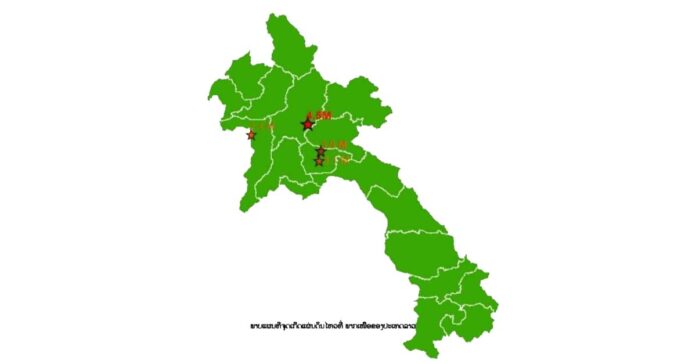
Four earthquakes were recorded across three Northern Provinces of Laos yesterday, with no damage reported.
Online Florist M FLORIST Takes Flower Arrangement to a New Height

Dishing Out Lifelike Flower Cake and Pop Art Bouquets in New Birthday Collection
HONG KONG SAR – Media OutReach – 30 March 2021 – Premium Hong Kong online florist M FLORIST is proud to present a new innovative and pop art-inspired birthday flower collection to indulge all birthday stars.

M FLORIST is a leading online florist specialises in creating high-quality and tasteful flower arrangements galore for all kinds of occasions. Sourcing only the freshest flowers and finest seasonal stems from around the globe, all selected blooms are carefully crafted and handled with care by the professional florist team at M FLORIST.
The online flower shop boasts a wide array of contemporary and stylish flower products with elegant floral designs and luxurious packaging, serving up quality flowers and bouquets as pampering gifts to heighten the beloved’s day or affordable luxury for self-indulgence. The assortment of flowers come in various categories to satisfy any type of floral need – bouquets to convey love and thoughts, flower baskets or hampers as a gift, flower box as a decoration display, just to name a few.
Introducing the Innovative Birthday Flower Cake
The birthday collection consists of 21 options of bouquets, flower boxes, and notably the innovative birthday flower cake. The 3 birthday flower cakes, namely FUNFETTI PARTY, BLUE VELVET, and COTTON CANDY, sport a sumptuous and realistic look that resembles edible, real birthday cakes. All birthday flower cakes come with a transparent cake box, a cake stand, a birthday cake topper and candles.
FUNFETTI PARTY is an energy-packed, bright coral pink flower arrangement that oozes joy and glamour. The playful and free-spirited-looking birthday flower cake is in fact a carefully calculated concoction of peach roses, pink spray roses, periwinkle stocks, and more.
Pop Art Inspired Birthday Bouquets
Another highlight of the collection is the 3 pop art-inspired bouquets. To celebrate the 100th birthday of the renowned American pop art painter Wayne Thiebaud, M FLORIST took inspiration from his iconic pop art style and created a series of inventive floral interpretations, namely APPLE CINNAMON, BAKED RASPBERRY, and FROZEN SWEET.
Widely praised for his use of dynamic and luminous colour palettes, Thiebaud’s artworks are famous for illustrating everyday objects, particularly desserts and snacks, in a serene ambience that reminds viewers of a nostalgic childhood.
The M FLORIST took a new take on Thiebaud’s art style in APPLE CINNAMON, a beaming flower bouquet clustered with peachy roses, oncidiums, alstroemeria, and curcumas with a grand anthurium nestled on top. The cheerful design makes the bouquet a surefire gift to deliver your warm and hearty wishes.
FROZEN SWEET is the culmination of the dreamy and tranquil atmosphere in Thiebaud’s artworks and the artistry of the florists at M FLORIST. This bouquet demonstrated the florists’ discerning eye for beauty, as they aptly pick the silky and delicate blooms like pink gerberas, anthuriums, tulips, and roses and carefully assemble them to portray the airy and intimate feeling from Thiebaud’s artworks. The refined bouquet design lends itself to be a perfect romantic birthday celebration gift.
Complimentary Flower Delivery
M FLORIST strives to offer professional and reliable flower delivery service, as bringing a streamlined and satisfying floral experience to the customers and the recipients is a core value of M FLORIST. M FLORIST provides complimentary delivery around Hong Kong, and on-demand specific date or time delivery. Customers can also pick up the flowers themselves at M FLORIST’s central office.
Follow M FLORIST:
Facebook: mfloristhongkong
Instagram: @mfloristhk
Easy Payment Options
M FLORIST’s one-stop website supports easy and swift payment methods, including credit card (via Stripe Payment), PayPal, Payme Business, and Apply Pay. Cheque by mail and ATM transfer are also available.
The new birthday flower collection is now available on M FLORIST’s website.
About M FLORIST
M FLORIST started in 2017 when a group of young Hong Kong flower enthusiasts envisioned to create floral art with creativity, quality, craftsmanship, and satisfying customer experience.
M FLORIST takes inspiration from art and nature, and combines simplistic aesthetics and natural splendor to create contemporary and stylish flower products galore. The assortment of flower products includes bouquets, flower boxes, flower baskets, and hampers for all kinds of special occasions and celebrations such as Valentine’s Day, Mother’s Day, Mid-autumn Festival, and Christmas. M FLORIST also specialises in creating spectacular and unique displays for high-end fashion brands and luxury hotel groups, weddings, and corporate events.
As online shoppers themselves, the M FLORIST team understands how much an easy purchase process and timely delivery can brighten the customers’ experience. M FLORIST strives to offer a one-stop and streamlined online shopping system and first-class customer service to ensure customers are always satisfied.
M FLORIST offers a complimentary flower delivery service around Hong Kong. Specific time, express delivery, and same-day delivery (for orders placed before 1 PM during the day) are also available for a heightened flower gifting experience.
For more information, please visit M FLORIST’s website.

Effective April 1, 2021: itelligence | NTT DATA Business Solutions will operate as NTT DATA Business Solutions
Rebranding as NTT DATA Business Solutions is part of NTT DATA’s global growth initiative
BIELEFELD, GERMANY – News aktuell – 30 March 2021 – itelligence | NTT DATA Business Solutions, one of SAP’s largest partners globally, which generated annual sales of some 1.072 billion euros in calendar year 2020 with SAP-centric consulting, managed and co-innovation services, will operate under the new company name NTT DATA Business Solutions AG as of April 1. The previous separate branding will be transformed to match the NTT DATA branding. The rebranding of the company forms part of a major global growth and branding initiative conducted by NTT DATA.

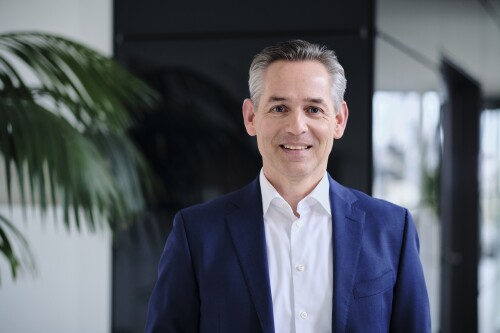
credits: NTT DATA Business Solutions / Constantin Ranke. Together with NTT DATA, one of the globally most successful IT service providers, we are opening a new chapter in our corporate history today

credits: NTT DATA Business Solutions

credits: NTT DATA Business Solutions
NTT DATA Business Solutions AG will remain a stand-alone company with headquarters in Bielefeld, Germany. With more than 10,000 employees worldwide, the NTT DATA Business Solutions group will operate in the market independently. Headed by CEO Norbert Rotter, the executive board and management will continue their responsibilities as before. All contracts with customers, partners and service providers associated with the group will stay valid.
“Together with NTT DATA, one of the globally most successful IT service providers, we are opening a new chapter in our corporate history today,” says Norbert Rotter, CEO NTT DATA Business Solutions, “that will further increase our visibility. At the same time, our main focus remains on being the globally leading SAP partner and reseller to the SME sector. With the power of NTT DATA, we will make further inroads into the large enterprise market as well. I am sure that the well-respected NTT DATA brand will help us to be more successful and well-known worldwide. We will also attract more high potentials to start their international career at NTT DATA Business Solutions.”
Global branding initiative within NTT DATA group starting April 1
“We have taken another major step towards global brand integration,” says Kaz Nishihata, Senior Executive Vice President & Representative Director, NTT DATA. “I believe that strengthening the NTT DATA brand will allow us to provide high-quality services more broadly to clients throughout the world and achieve business growth. As NTT DATA grows to become a TOP 5 IT service provider, NTT DATA Business Solutions will play an important role by strengthening and enhancing its SAP-centric business solution offerings.”
SAP expertise and aspirations documented in the mission statement: We Transform. SAP® Solutions into Value
NTT DATA Business Solutions offers customers and institutions an extensive portfolio comprised of consulting, managed and co-innovation services based on SAP® products and solutions. With offices in 30 countries currently, NTT DATA Business Solutions helps customers in their transformation to become an intelligent enterprise. NTT DATA Business Solutions is one of a few Platinum Partners of SAP and part of the SAP PartnerEdge® program and runs five data centers of its own. According to analyst firm ISG, NTT DATA Business Solutions is leading the field globally in the implementation of SAP S/4HANA® and in assisting customers with their systems transformation. To date, NTT DATA Business Solutions has realized, or is currently implementing, more than 460 SAP S/4HANA projects.
Karl Fahrbach, Chief Partner Officer at SAP said: “Our recent offering RISE with SAP demonstrates the immersive collaboration with partners at SAP. Our ecosystem of partners is key to achieving our ambitious goal, and partners like NTT DATA Business Solutions testify effectively to the power of long-term side-by-side business collaboration.”
“Guaranteeing significant added value and success along all transformation processes and meeting our clients´ individual requirements is our highest aim,” explains CEO Norbert Rotter. “The new mission statement expresses the aspirations of NTT DATA Business Solutions succinctly: We Transform. SAP® Solutions into Value.”
Following on from the intensification of the collaboration between NTT and SAP SE put into effect last year, all parties now welcome the current branding initiative. Not only will NTT DATA Business Solutions benefit from joining the NTT DATA branding in the domestic SME market, it will also help it to attract potential large enterprise customers due to the high profile of the NTT brand.
About NTT DATA Business Solutions
NTT DATA Business Solutions designs, implements, manages and continuously enhances SAP solutions to make them work for companies and their people.
Aiming to help companies to transform, grow and become more successful, NTT DATA Business Solutions connects with a more than in-depth expertise for SAP solutions its clients´ business opportunities with the latest technologies – individually and across all business areas. As part of the NTT DATA group and with close ties to SAP and other partners, NTT DATA Business Solutions gives clients and prospects access to innovative solutions and developments and thus makes an important contribution to innovation and long-term business success.
NTT DATA Business Solutions employs around 10,000 people in 30 countries. In 2020 the company achieved a total turnover of 1.072 billion euros.
About NTT DATA
NTT DATA – a part of NTT Group – is a trusted global innovator of IT and business services headquartered in Tokyo. We help clients transform through consulting, industry solutions, business process services, digital & IT modernization and managed services. NTT DATA enables them, as well as society, to move confidently into the digital future. We are committed to our clients’ long-term success and combine global reach with local client attention to serve them in over 50 countries around the globe. Visit us at nttdata.com.
Any statements in this release that are not historical facts are forward-looking statements as defined in the U.S. Private Securities Litigation Reform Act of 1995. All forward-looking statements are subject to various risks and uncertainties described in SAP’s filings with the U.S. Securities and Exchange Commission (“SEC), including its most recent annual report on Form 20-F, that could cause actual results to differ materially from expectations. SAP cautions readers not to place undue reliance on these forward-looking statements which SAP has no obligation to update and which speak only as of their dates.
SAP and other SAP products and services mentioned herein as well as their respective logos are trademarks or registered trademarks of SAP SE in Germany and other countries. Please see https://www.sap.com/copyright for additional trademark information and notices.

Hung Fook Tong Announces 2020 Annual Results
Gross Profit Margin Rises to 63.7%
Profit attributable to owners of the Company Up 524.6% Year-on-Year
Financial Highlights
|
(HK$’000) |
For the year ended 31 December |
||
|
2020 |
2019 |
Change |
|
|
Revenue |
702,473 |
775,789 |
-9.5% |
|
Gross profit |
447,820 |
488,705 |
-8.4% |
|
Gross profit margin |
63.7% |
63.0% |
+0.7ppt |
|
Profit attributable to owners of the Company As reported |
62,530 |
10,012 |
+524.6% |
|
Excluding one-off government grants and subsidies |
16,984 |
10,012 |
+69.6% |
|
Earnings per share for profit attributable to owners of the Company (HK cent) |
9.53 |
1.53 |
+522.9% |
|
Total dividends per ordinary share (HK cent) |
2.86 |
0.84 |
+240.5% |
HONG KONG SAR – Media OutReach – 29 March 2021 – Hung Fook Tong Group Holdings Limited (“Hung Fook Tong” or the “Company”, together with its subsidiaries, the “Group”; stock code: 1446), the top retailer of Chinese herbal products in Hong Kong, has announced its annual results for the year ended 31 December 2020 (“2020”).
During the financial year, the Group’s retail and wholesale performance was inevitably affected by the difficult conditions owing to the COVID-19 pandemic. Moreover, with regard to the wholesale operation, revenue declined primarily due to the severing of business ties with the majority of key accounts in Mainland China, the consequences of social activities in Hong Kong since the second half of 2019. As a result, the Group’s revenue contracted by 9.5% to HK$702.5 million (2019: HK$775.8 million). Gross profit decreased by 8.4% to HK$447.8 million (2019: HK$488.7 million), which was due mainly to the top-line decline. Despite of this, as well as the appreciation of the Renminbi in the second half of 2020, gross profit margin improved modestly to 63.7% (2019: 63.0%), which is a reflection of the improved sales mix and continuous enhancement in supply chain management.
Owing to cost savings derived from the re-engineering of the Group’s business processes since late 2019, particularly in Mainland China, as well as the receipt of government grants comprising subsidies to retail sector and food licence holders along with funds from the Employment Support Scheme (“ESS”), profit attributable to owners of the Company soared by 524.6% to HK$62.5 million (2019: HK$10.0 million). Even if the one-off government grants and subsidies were excluded, the Group still recorded a surge in profit attributable to owners of the Company of 69.6% to HK$17.0 million.
In view of the sound fundamentals of the Group, the Board has resolved to recommend a final dividend of HK1.96 cents per ordinary share (2019: a final dividend of HK0.46 cent per ordinary share and a special dividend of HK0.38 cent per ordinary share respectively). Including the special dividend of HK0.9 cent per ordinary share paid in September 2020, the total dividends for 2020 amounted to HK2.86 cents per ordinary share (2019: HK0.84 cent per ordinary share).
Mr Tse Po Tat, Chairman and Executive Director of Hung Fook Tong, said, “Despite the stiff headwinds created by COVID-19, I am pleased by the Group’s admirable performance particularly in the retail segment. The outperformance can be attributed to the Group’s efforts in introducing more high-quality and healthy products that were able to allay public concerns over health and wellness; and the prompt adjustment in sales channels to online platforms and delivery services, leveraging its strong brand equity.”
Business Segment Review
Hong Kong Retail
The Hong Kong retail business continued to be the largest revenue contributor of the Group during the financial year. The operation generated HK$548.6 million (2019: HK$581.1 million) in revenue, down 5.6%, and accounted for 78.1% of total revenue for the financial year. The decline was mainly attributed to social distancing and health measures imposed by the government in the wake of COVID-19, which led to school closures, adoption of work-from-home arrangements by government departments and companies, and less contact among the general public. Such measures resulted in a decline in footfall and same-store sales. Despite the revenue drop, segment profit climbed 35.4% to HK$109.8 million (2019: HK$81.1 million), owing to the effective cost control of raw materials, preferential rental concessions secured with landlords; streamlined workforce, and receipt of government grants and subsidies for the retail sector and food license holders totalling HK$10.3 million; and subsidies from ESS.
While no shops were closed due to the impact of the pandemic, three new shops were opened in 2020, resulting in a total of 119 self-operated shops in Hong Kong as at 31 December 2020, which included two Handmade Bakery shops. The Group has maintained its standing as the largest herbal retailer in Hong Kong based on retail network size. Moreover, the number of JIKA CLUB (自家CLUB) members has reached 1,020,000. The increase in average transaction value per JIKA CLUB member helped to partly offset the decrease in customer traffic.
As online retailing and delivery services have increased in popularity, the Group leveraged its early-mover advantage and has allocated greater effort and resources to takeaway food services. In view of growing public concerns over health and hygiene due the pandemic, the Group has launched the new Detox & Heat Relief Soup (清肺解毒湯), and continued to expand the Joyous Series (自家喜慶系列) by rolling out the new Fish Essence (滴虱目魚精) so that customers are offered even more options for protecting their health. The Joyous Series has achieved satisfactory growth with the addition of the new product.
Wholesale
The wholesale segment experienced a drop in revenue of 21.0% to HK$153.9 million (2019: HK$194.7 million), dragged down by sales declines in both the Hong Kong and Mainland China markets, especially the latter. However, the segment achieved a turnaround, moving back to a profit-making position of HK$8.1 million (2019: loss of HK$4.9 million). This can be attributed to an increase in segment results from the Hong Kong wholesale operation, which is the result of a higher gross profit margin and lower selling expenses. Loss from the Mainland China wholesale business has narrowed as a consequence of the re-engineering of the Group’s business processes.
In Hong Kong, the wholesale business generated revenue of HK$132.1 million (2019: HK$135.0 million), which was down 2.1% year-on-year, due to lower revenue from a number of convenience stores and grocery stores, as people tended to stay at home. COVID-19 has also caused a drop in revenue from restaurants and schools, though the significant increase in online sales has helped to partly offset such losses. The Group has tapped more online sales channels, including hksuning.com (蘇寧), Neigbuy.com (鄰住買), HOME+ and foodpanda mall, as well as smaller scale e-shops and online wholesale platforms.
In addition, the Group has introduced more imported food, including Almond Cookies with Milkfish Floss (虱目魚鬆杏仁餅) and Concentrated Chicken Essence (紅羽土雞滴雞精) from Taiwan; Korean Chicken Ginseng Soup (韓國人蔘雞湯) and Army Stew Hotpot Soup (韓國部隊鍋), all of which can be purchased via chain stores or online platforms. Launch of more cross brand promotions and products has been pursued as well, resulting in the introduction of the authentic Hong Kong Milk Tea (鴻福堂 x 檀島港式奶茶) with Honolulu Coffee Shop in July, among other fruitful outcomes.
In Mainland China, the wholesale business contributed HK$21.8 million (2019: HK$59.7 million) in revenue, down 63.5% year-on-year. The decline was mainly due to the severing of business ties with the majority of key accounts owing to social activities in Hong Kong since the second half of 2019. Such relations have gradually been restored with certain key accounts, mainly in southern China. However, the resumption of business has been delayed and the scale of business made smaller due to lockdown measures relating to COVID-19. Still, a number of fresh or long-shelf life bottled drinks have become available once again in Guangzhou, Dongguan, Shenzhen, etc. via several key accounts, amounting to over 6,400 convenience stores.
To optimize its business model, the Group has re-engineered its business processes in Mainland China by shifting logistics and sales promotion duties to its distributors. This has enabled the Group to operate only one office, located in Guangzhou, which in turn has resulted in the successful saving of both operational and management costs, and therefore the segment loss has narrowed.
In respect of other markets, they too were expectedly impacted by the pandemic, specifically lockdown measures in countries such as the U.S., Australia and Malaysia, resulting in a notable decline in sales. Still, the Group has continued to explore new business opportunities in such markets as South Korea and Singapore where trial one-off promotions were initiated.
Prospects
In entering 2021, the global economy looks set to face still more challenges. Despite the uncertain outlook, the management is convinced that challenges coexist with opportunities. With growing concerns for a healthy diet among the general public, and further heightened in the wake of COVID-19, such desires will benefit the Group as it has long been a trusted purveyor of nutritious herbal products, including convenient and hygienic pre-packaged food. Moreover, with work from home and stay at home now a common practice, the Group will bolster its online shopping and delivery services still further so as to serve customers wherever they may be.
Hong Kong Retail
The Group will strive to maintain its market leadership, which will include reinforcing its physical presence by strengthening ties with landlords and seeking their support in terms of rental concessions, lease renewals, renovations and new store openings. In view of a softening rental market, the Group has plans for opening around eight to ten new shops in 2021, including those under the Handmade Bakery brand.
Certainly an exciting development scheduled for 2021 is the debut of “HFT Life”, which is a brand new concept store by Hung Fook Tong. Adapting a minimalistic interior design with gentle touches of wooden and white hues, HFT Life provides a relaxing and rejuvenating atmosphere for customers. Two HFT Life concept shops have opened on Caine Road and in Happy Valley respectively, since February 2021, with several other new shop locations under discussion with relevant landlords.
On the product front, the Group will be extending the chicken essence line by launching Cordyceps Organic Chicken Essence (野生冬蟲夏草有機滴雞精) in January 2021 as a premium alternative for customers. Still other important pursuits will include strengthening the Group’s presence online and in the digital realm. Towards such objectives, it will enhance the Hung Fook Tong mobile application and encourage its download and usage by launching e-discount coupons in the second quarter of 2021. In addition, the new”JIKA ON”(自家ON) online platform will be introduced in the second quarter of 2021, the first phase of rollout will be aimed at promoting engagement or co-operation among staff, companies and charities.
Wholesale
In Hong Kong, the Group will be closely monitoring the development of COVID-19 as it has a direct bearing on the recovery of key accounts. It is determined to strengthen its online sales and presence. The Group will also continue to engage in more cross brand products and promotions that result in special editions drinks. More seasonal and specialty products from different markets, such as soups from South Korea, will be introduced as well.
In Mainland China, the economy has rebounded since the second half of 2020, though the situation remains uncertain as there are still COVID-19 cases as of early 2021. Different brands are therefore expected to aggressively promote and sell their products online to recoup business. The Group will consequently look into the viability of promoting online as well as bringing its products back to online platforms, particularly those for consumers in Guangdong. It will also work closely with key accounts to strengthen business ties and bring more products back on the shelves.
Dr. Ricky Szeto, Chief Executive Officer and Executive Director of Hung Fook Tong, concluded, “Despite the various uncertainties, the Group is well-prepared and capable of overcoming whatever conditions that may arise in the coming year. With the 35th anniversary of Hung Fook Tong set to be the highlight of 2021, the Group will certainly embrace and celebrate this important triumph. At the same time, it will make every effort in ensuring that even more significant milestones are down the road.”
About Hung Fook Tong (Stock Code: 1446)
Established in 1986 and listed on the Main Board of The Stock Exchange of Hong Kong Limited in July 2014, Hung Fook Tong is a modern wellness concept food and beverage enterprise, offering a wide range of additive-free healthy food products for more than three decades. Currently, it has about 119 retail shops in Hong Kong, thus it is the top retailer of Chinese herbal products in Hong Kong in terms of the number of retail shops. To capture the growth potential of the huge consumer market in Mainland China, the Group’s long shelf-life drinks and fresh drinks are sold to third party retailers and distributors covering a number of cities in Mainland China.
Website: www.hungfooktong.com

