Home Blog Page 6531

Lao Judo Fighters Win Medals at International Events

The Lao judo team was able to collect two silver medals and one bronze medal at the Vietnamese International Judo Championships in Vietnam recently.

The silver medallist in the women’s 63kg category of the fighting event was Somsoudalath Venevankham while the other silver medal came from the men’s doubles kata event.

The bronze medallist Khonema Chanthakoumman collected her medal in the women’s under 78kg division.

The Lao judo team comprised four women’s judo fighters in the 52, 57, under 63 and under 78kg categories.

Joining them was one male judo artist who competed in the under 66kg division fighting event.

Competing in the kata or dancing events were male competitors, who managed to come home with a silver medal for their efforts.

Judo teams from more than 10 countries attended the Vietnamese International Judo Championships from October 29-30.

In July, top female judo fighter in the under 63kg category, Somsoudalath Venevankham, won a gold medal at the Thailand International Judo North Bangkok University Championships.

After returning from Vietnam, the Lao judo fighters will continue preparations at a training camp in Vientiane as they get set to compete at the Pre-SEA Games in Malaysia in February next year.

The Lao Judo Federation would also like to select the best men’s and women’s fighters in the different categories ahead of the Pre-SEA Games.

Between them, Lao men’s and women’s judo fighters in various weight categories picked up one gold and four bronze medals at the Thailand International Judo North Bangkok University Championships at the end of July.

In 2014, the Lao judo team won two silver medals at the Judo North Bangkok Championships.

At the 27th SEA Games in Myanmar in 2013, the Lao judo team won one gold and three bronze medals, while at the 2011 SEA Games in Indonesia they won one gold, two silver and one bronze medal.

At the 25th SEA Games in Vientiane back in 2009, the Lao team won two gold, five silver and four bronze medals.


Source: Vientiane Times

Laos to Face Indonesia in Division 3 Rugby International

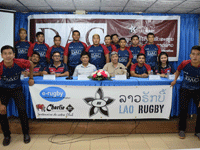
The DAC Lao men’s national team will be ready to face Indonesia at the Asia Rugby Championship Division 3 East test match in Bangkok, Thailand on November 5.

The Lao Rugby Federation (LRF) held a press conference at the Lao Journalists’ Association office last Thursday to report on the team’s preparations before travelling to Thailand.

Previously called the Asian 5 Nations, the Asia Rugby Championship Division 3 East is a premiere rugby 15s competition. With China and Brunei recently pulling out of the competition, Laos will have one test match against Indonesia at the Queen Sirikit 60th Anniversary Stadium.

The Thai Rugby Union will also be fielding a Development Team (with Laos and Indonesia in a different division from the Thai team), and Laos had a warm up match against the Development Team on October 30 at Thammasat University Rangsit Campus in preparation for Saturday’s test match.

The most recent test match for the DAC Lao 15s men’s national team was in 2014 during the Asian 5 Nations Division 3 East competition. Hosted by the LRF at Chao Anouvong Stadium in Vientiane, the Asian 5 Nations competition featured the Chinese, Guam, Indonesian, and Lao national teams. In their second match, the Lao men narrowly lost to Indonesia 11-10.

After two years, the DAC Lao men’s national team looks forward to its rematch against Indonesia in this weekend’s Asia Rugby Championship.

Coached by Head Coach Reweti Montgomery and Assistant Coach Pisa Vongdeuanpheng, the side is made of players from the four senior men’s teams in Laos: the Wild Hogs, Young Stars, Tigers and Buffalos and will be excited to take to the field following the cancellation of the international 15s in 2015.

In preparation for the 15s national team season, these four club teams participated in the LRF’s Colours League Series, an 8-team domestic men’s and women’s senior competition held during September and October, which also gave Head Coach Montgomery the chance to observe the players’ level and skills.

Our team is strong in skill, fitness and character. We have come together well, and we now have some serious attacking power in our structure, he said.

Our goal is to come away with a win and I feel they have what it takes, he added.

LRF thanked long-time Platinum and Elite Sponsor DAC Management LLC for continuing to support the Lao national team and for making the Asia Rugby Championship tour possible.


Source: Vientiane Times

Feuang District Opens its Doors for Adventure

The hidden and untouched nature of Feuang district in Vientiane province will become more widely known, with the district moving to open its doors to adventure activities.

One man who loves the nature there, Mr. Vanna, is now seeking to develop his beloved hometown to become a land of adventure.

Mr. Vanna became a developer for Feung district’s tourism activities after gaining permission from district authorities to make the area more exciting for visitors.

Having previously worked in the tourism sector in Vangvieng, he has seen the potential district’s landscapes, rivers, and mountains when it comes to natural adventures.

Vanna is now developing adventure activities that focus on creating different activities, some of which tourists have never seen in Laos.

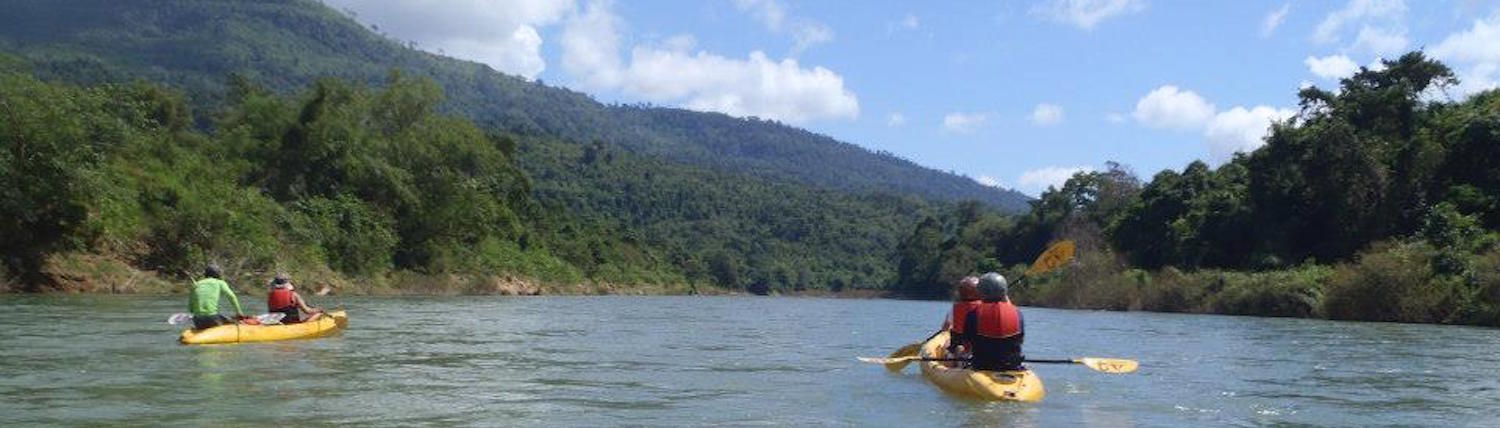
I am making bamboo rafts that tourists can paddle along the Nam Lik River, which brings them closer to nature, Vanna said while driving his minivan.

Of course, the district has a big river which also fuels a power plant, and many mountains which are suited to adventure activities.

Last year, Vanna served tourists for a pilot project of bamboo rafts to bring tourists in touch with nature.

Each bamboo raft weighs between 5-10 kilos, which tourists can paddle by themselves or be helped by a guide as they take in the beautiful surroundings.

Meanwhile tourists can also take power boats to explore the waterfalls through the Nam Lik basin.

There is still no road access so tourists must take a 50 minute boat ride on the Nam Lik reservoir before walking for a further 20 minutes to the waterfall.

When trekking to the waterfall, visitors will be reminded of the Lao proverb that the road to hell is easy but the path to heaven is difficult.

But once they arrive at the beauty of the waterfall, they will quickly forget their tiredness as they take in the crystal clear water and cool fresh air.

Visitors should remember that it is more than two hours to the waterfall and back so they should be careful to plan their trip.

Before you return, don’t miss talking to the fishermen who spend their life fishing from small floating houses along the Nam Lik basin. Easy going and relaxed, they will always welcome a chat.

With all of the adventure in Feung district, you can’t do everything in just one day; there is still the kayaking and famous tubing’ down the Nam Lik river over a distance of 10-15 km.

These activities will let you and your friends make time for sitting by the river and enjoying the spectacular scenery, fresh air and distant laughter.

If you dislike kayaking or tubing you can also hire a speed boat. The prices depend on where you want to go.

If you like swimming in the fresh, cool water in the early evening, you can ask for a guide to take you to the best swimming spots but be warned, the water can be very cool.

Watching the sun rise over the mountains is another photogenic moment. If you want to get a better view you should make your way down to the riverside, where you can relax to the tranquil sounds of the gurgling water.

The lifestyle of the people in this district is easy-going and you can see local residents enjoying a refreshing bath in the river or fishing in the early morning.

The weather at this time of year is perfect for a visit; warm enough for a quick dip in the river and cool enough for a relaxing evening.

Feuang district is still developing its tourism industry, so there are only a few guesthouses and bars to serve visiting tourists.

The district is appropriate for easy-going tourists who love the peaceful touch of nature and the locals’ lifestyles.

How to get to Feuang district

Feuang district is about 100 km from Vientiane along Road No 13 North, where you take a left turn at the junction at Hinheup. You can get there by bus or pickup truck.

If visitors need to book a guesthouse in advance, they should contact the Feuang district Information, Culture and Tourism Office.


Source: Vientiane Times

Laos Looks to Boost Tourism by Enticing Visitors to Linger Longer

The tourism sector holds the potential to promote economic growth and reduce poverty in Laos. But although the sector is growing, it faces serious constraints and seems to be small in comparison with the tourism industry in neighbouring countries.

New strategies are needed to improve tourism policy to make tourism an engine of economic growth, according to the Organisation for Economic Cooperation and Development (OECD).

It is important to attract more tourists from non-neighbouring countries and to increase spending on tourism, improve infrastructure, upgrade skills and human resources, introduce more public-private collaboration and ensure that environmental and cultural protections are in place.

The government of Laos has adopted a broad approach in promoting a range of types of tourism, according to the OECD report on the Economic Outlook for Southeast Asia, China and India 2016 that was delivered at the recent ASEAN-BIS meeting in Vientiane.

The first tourism master plan was to limit the number of international tourists to promote package tours for small groups of upper-market tourists. However, the National Tourism Strategy 2006-2020 took a broader approach, embracing mass-market tourism while focusing on cultural tourism and, in particular, ecotourism in rural and remote areas.

Ecotourism takes advantage of the country’s natural assets, including the Mekong River and numerous waterfalls, and the government takes a role in guiding the private sector to develop tourism with sustainable and long-term potential.

At the same time, the government continues to focus on community-based tourism as a tool to reduce poverty and promote economic growth. This broad approach is consistent with the Greater Mekong Sub region (GMS) tourism sector strategy endorsed by the GMS countries in 2006.

Through this strategy, member countries aim to promote the GMS as a single destination, ensure that tourism contributes to poverty reduction, minimise the adverse impacts of tourism, empower women and develop tourism products and services that distribute the benefits of tourism more widely.

Tourism has been growing significantly in Laos. The number of tourist arrivals increased steadily from 1994 to 2014, with an average growth rate of 18 percent, although the number dipped on two occasions in the early 2000s.

The main factors behind the decrease – from 737,208 in 2000 to 673,823 in 2001, and from 735,662 in 2002 to 636,361 in 2003 – were the terrorist attacks in the United States on September 11, 2001 and the SARS epidemic in Asia in the first quarter of 2003.

Tourism recovered in 2004 and has continued to grow. In 2014, the number of tourist arrivals reached 4.15 million, the OECD reported.

According to the Tourism Development Department, more than 4.6 million tourists visited Laos in 2015, generating revenue of over US$725 million. The department expects this figure to rise to over 5 million visitors generating more than US$800 million.

Of the 4.6 million people who visited in 2015, the number of arrivals from the four countries of Cambodia, Myanmar, Thailand and Vietnam reached over 3.4 million, which represented 73 percent of the total number of tourists.

The OECD noted that tourists were generating large amounts of revenue and employment. Indeed, one of the most important contributions of the tourism sector is the generation of foreign income.

From 1990 to 2014, annual tourist arrivals increased from 14,400 to 4.15 million. By 2014, tourism revenues had reached US$641 million, making the sector the second largest source of foreign exchange, after mineral exports.

Tourism has also led to the creation of many jobs and provides 17,000 full-time jobs and indirect employment for an additional 167,000 people.

It is also helping to drive the reduction in poverty, partly thanks to the government’s strategic promotion of smaller ecotourism and community tourism projects, which can have greater impacts on the poor. These areas of tourism have contributed significantly to poverty reduction.

The expansion of tourism has also fuelled investment, with the addition of new hotels, guesthouses, restaurants and entertainment establishments. The number of hotels increased from 491 in 2013 to 515 in 2014, while guesthouses and resorts increased from 1,868 in 2013 to 1,911 in 2014. The number of restaurants and entertainment establishments also increased significantly.

The Tourism Development Department reported that the number of hotels increased to 542 last year.

The OECD noted that despite the contribution of tourism to the economy and poverty reduction, the tourism sector faces various challenges, including how to attract more tourists from more countries and how to increase tourists’ expenditure per day.

The 18 percent average annual tourism growth rate from 1994 to 2014 is relatively low compared with neighbouring countries such as Thailand, Malaysia, Vietnam and Cambodia. Moreover, the share of tourist arrivals in Laos was about 4 percent of all tourist arrivals in ASEAN in 2013.

Tourism arrivals in Laos increased to 4.15 million in 2014, but most international tourists – a full 80percent – are visiting from ASEAN countries such as Thailand and Vietnam. Tourism is far less diversified in Laos, in terms of the visitors’ countries of origin, than in neighbouring countries such as Thailand and Myanmar. It is important to promote tourism development to attract more tourists from non-neighbouring countries.

Despite the increasing number of tourists, their expenditure per day is relatively small. Tourists from neighbouring countries generally visit on 1-2 day package tours or quickly transit the country. In 2009, tourists from non-neighbouring countries visited for about 6.5 days on average and spent about US$60 per day. These tourists are interested in nature- and culture-based activities.


Source: Vientiane Times

Wedding Fashion Show Promotes Lao Matrimonial Dress

A special wedding fashion show featuring a variety of Lao traditional costumes for grooms and their brides, as well as attire for wedding parties, was organised on Saturday at Vientiane Center, attracting a large number of interested spectators.

The event was described as colourful and meaningful because it was organised to present and promote Lao culture and traditions in relation to wedding ceremonies, showcasing traditional wedding attire for newly-weds as well as their family, friends and other attending guests.

Many fashion outlets which specialise in wedding fashion joined the event to showcase their best attire to interested members of the public.

The fashion show featured a variety of beautiful, colourful, and elegant traditional Lao silk costumes, including those worn by both women and men.

Before the fashion show started there was also a colourful demonstration of a groom’s procession and wedding ceremony which featured the main steps and rituals of a Lao wedding party.

The event was organised as part of the Laos Wedding Fair (lasting from October 29 to November 2) through cooperation between Phouvong Gold Store and Vientiane Center, aiming to promote Lao traditional costumes and their preservation.

The occasion was also timed to mark the celebration of the grand opening ceremony of the new Phouvong Gold Store within the Vientiane Center shopping complex.

The event was attended by Director of Vientiane Center, Mr. Sombath Siriphonevithaya, and Phouvong Gold Store director, Mr Phouvong Phamisith, the organising committee, officials, media personnel and members of the public.

The opening speech was delivered by Mr. Sombath, in which he expressed his impressions on holding the Laos Wedding Fair and fashion show and explained about the importance of the event and blessed the audience for this joyful occasion.

I am very happy to organise this important and meaningful event because it is a good way to promote Lao culture and preserve Lao textiles, especially wedding party costumes, which are very beautiful, charming, and identifiable. I hope you enjoy the fashion show and all the associated activities, he said.

Mr Phouvong said he was very pleased to organise the special fashion show because it meant that he could contribute to preserving the culture and traditions which Lao people have had since ancient times.

Lao people have very identifiable costumes which are different from other countries, especially our clothes made from silk; everyone enjoys dressing in them when attending social events, especially wedding parties.

So, we should preserve this tradition as well as possible. Seeing the importance of promoting and preserving our traditional costumes inspired us to hold this special event, Mr. Phouvong added.

Wedding parties are an important social event which Lao people have carried out from generation to generation.

Weddings are one among other traditions and social events, and also the most important moment of life for each new couple because it is the most special and meaningful time of their lives when they change their status from being single to married.

All relatives, friends, and colleagues are always invited to join wedding parties and they like to dress in Lao traditional costumes and the most popular ones are made from silk.

For the groom and his bride, they are always dressed in elegant full length suits and dresses fashioned from finely woven silk.


Source: Vientiane Times

Boat Operators in Khong District Experience a Decline in Revenue

Boat operators in Nakasang village, Khong district, in the southern province of Champassak have experienced a decline in revenue due to the falling number of visiting tourists.

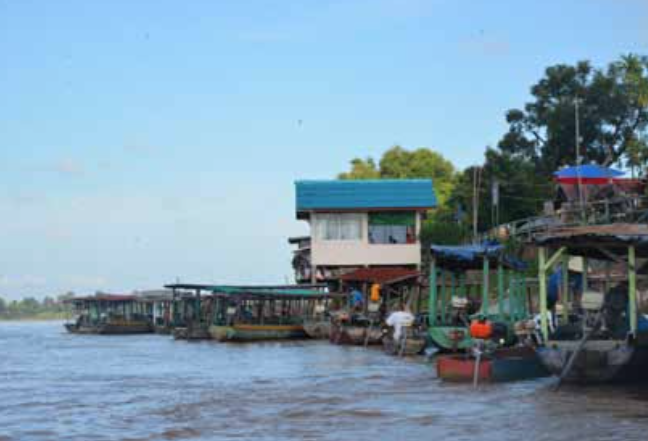
The head of the boat service association in Nakasang village, Mr. Bounseum Chanthalansy, told Vientiane Times that transportation and leisure trips are popular in the area, with both domestic and foreign visitors taking boats to cross the Mekong River for stays on Don Det and Don Khone islands.

The tourist operations also run ecotourism themed boat trips to experience island life, visit the popular Somphamit and Khonephapheng waterfalls and observe the endangered Irrawaddy dolphin.

Currently, the boating association has 132 small boats with the capacity to carry 3-8 people and 26 large boats that carry between 19-60 people. The services run from 7am to 5pm every day.

The boat service is an important source of revenue for both the boat operators and other tourist related businesses in Khong district, Mr Bounseum added.

But boat service operators have seen a decline in revenue due to the low number of visitors coming to the area. This year, the figure fell by 30 percent, compared to same period in the previous year, Mr Bounseum said.

Local authorities have made great efforts to improve infrastructure, in particular the construction of bridges and roads in an effort to attract more tourists. But the district’s move to encourage tourists with the promise of easy access may have come at a cost to the boat operators.

The heavy emphasis on investment in infrastructure has made it easier for tourists to visit local attractions without needing to hire a boat.

In recent years, a new bridge crossing the Mekong River to Khong Island has drawn more visitors to the area with their own vehicles.

Another bridge and road connecting the mainland to Don Sadam island was recently built, which provided a more convenient means for tourists to access the waterfalls and watch Irrawaddy dolphins in the Mekong.

Last year, more than 400,000 tourists visited the area. The visitors consisted mostly of Lao citizens, while the remainder came from Thailand, Vietnam, China, Cambodia and various European countries.

However, the downturn in tourists is projected to change for the better in the coming years. The official projection estimates that over 500,000 people will visit the area next year, which will contribute to the growth of the local economy.

But the effect of the recent changes in infrastructure will continue to remain a question for the boat operators who make a living by providing services for visitors.


Source: Vientiane Times

Saravan Cassava Purchases Cease due to New Tax

Some cassava buyers in Saravan have decided to halt purchases of the crop after the southern province introduced a new levy on shipments of the tuberous roots.

Local media reported yesterday that some companies have stopped buying cassava from growers in the provinces of Champassak and Saravan after the tax was imposed this year.

An anonymous provincial official in Champassak told Vientiane Times on Tuesday that tax officials were charging buyers 15 kip per kilogramme on cassava purchased in Saravan province.

“Tax officials have set up checkpoints where they ask for 15 kip a kilogramme from the cassava trucks on their way to processing factories,” he said.

According to local news outlets some businesses in Saravan’s Lau-ngam district have temporarily stopped buying cassava because many are charged even more than the set tax rate.

The businesses told local media they would restart buying cassava from farmers when Lau-ngam district authorities stopped collecting the tax.

Officials from the provincial Commerce and Industry Department and the provincial Agriculture and Forestry Department in Saravan acknowledged that there have been public complaints about this matter.

They told local media that the authorities had set up a committee to look into the issue.

One company is still buying cassava from farmers at 8,000 kip a kilogramme but only in limited quantities.

Last year, Champassak province officials suggested growers could deliver cassava to factories in Xekong and Attapeu provinces after a tapioca factory in Champassak limited its purchases.

AlterbativelyIn addition, they could sell to Thailand through the Vangtao-Songmek border crossing between Laos and Thailand. But many farmers were concerned about the high transportation fees they would be charged because of the long distance.

Some growers thought the Champassak factory would not buy their cassava because growers were delivering too much or they suspected the owner had financial problems.


Source: Vientiane Times

Ministry, Partners Seek Ways to Mitigate Climate Change Impacts on the Health Sector

Climate change took centre stage at a recent joint event organised by the Ministry of Health, WHO and UNDP to discuss about building a resilient health system that can effectively deal with climate shocks.

Deputy Minister of Health, Dr Phouthone Moungpak said yesterday that climate change poses a risk to our development goals. We need to work with other sectors to mitigate the impact of climate change on the health system and to develop effective response to natural disasters.

WHO Representative to the Lao PDR, Dr Juliet Fleischl, said climate change is reshaping public health and is one of the defining issues for the 21st century. Many of us living in Laos have experienced the impacts of climate variability, especially from flash floods and droughts. These extreme weather conditions bring health challenges with increased outbreaks in waterborne and vector borne diseases, she said.

At the global level, Development Goal (SDG 13) emphasises the need for all countries to take urgent action to combat climate change and its impacts. Laos has also signed the Paris Agreement on Climate Change which provides important leverage points for strengthening the work on health and the environment.

In Laos, a national climate change and health vulnerability assessment completed in 2011 concluded that waterborne diseases like dysentery and typhoid remain a significant source of morbidity and this health burden is expected to increase with climate change. Vector borne diseases, in particularly dengue cases, are also expected to increase.

The other potential impacts include injuries and possible death due to heatwaves, and other extreme weather events.

These weather conditions often result in agricultural losses, and the changing climate patterns will impact food security, which puts the most vulnerable rural populations at risk of undernutrition and malnutrition. Climate-sensitive health management and response plans are needed to support these communities living in vulnerable provinces, districts and villages.

Two areas for mitigation and adaption focused on increasing the resilience of public health infrastructure and water supply system to climate change, and improving public health services for climate change adaptation and coping with climate change induced impacts.

Recognising the limited awareness of health risks in relation to climate change among health workers, and insufficient data and monitoring of climate-sensitive health outcomes, WHO and UNDP are helping the government to develop the Global Environment Facility (GEF)project proposal that will focus on four main objectives.

The GEF project will advocate and raise awareness of climate change impacts on public health, strengthen partnerships among related sectors, and enhance scientific evidence collection and analysis to strengthen the health system in order to improve their resilience to climate shocks.

It will also cover gender mainstreaming, stakeholder involvement plan, monitoring and evaluation indicators, expected outputs and long term sustainability of the project. Health partners agree to mainstream resilience, adaptation and mitigation measures into health policies and plans.

UNDP Deputy Representative in Laos, Mr. Balasubramaniam Murali, repeated the need to strengthen the country’s resilience to climate change, saying The GEF project will support the country development goals and SDG 3, 5 and 13. UNDP will extend full support for the development and implementation of climate related strategies that are in line with the country’s priorities.

Long term solutions are required, including enhancing the capacity of national health systems and institutions to be able to respond effectively to climate change impacts on morbidity and mortality in vulnerable population groups.

Recognising climate change challenges is a start, but the long term goal is to build a resilient health system that is responsive to climate change.


Source: Vientiane Times