Home Blog Page 6536

Chinese Group Backs Poverty Eradication Efforts

The International Poverty Reduction Centre in China (IPRCC) will provide US$5 million this year to assist in eradicating poverty in two villages in Vientiane and Luang Prabang province.

The money will be used to alleviate poverty in Xam village of Sangthong district, Vientiane and in Xienglome village of Luang Prabang district, Luang Prabang province.

At the end of this month a Memorandum of Understanding signing ceremony will be held in the capital between representatives of the National Committee for Rural Development and Poverty Eradication (NRDPE) of Laos and the Coo peration Division of IPRCC.

At the same time, the International Poverty Reduction Centre in China will meet with representatives of Myanmar and Cambodia to sign agreements to assist in their respective poverty eradication efforts.

A Lao-Chinese Seminar on Poverty Reduction was held at the NRDPE on Monday, and was attended by Vice Chair of NRDPE Mr. Thongvanh Vilayheuang, Chief of Cooperation Division, IPRCC Ms Li Shaojun, and senior officials from various organisations.

The seminar’s aim was to share lessons learned by Lao officials from training programmes in China, to discuss the roles and functions of the Chinese delegations visiting Laos and perspectives of NRDPE tasks, while also targeting capacity building in rural development and poverty eradication for Lao government staff from different sectors.

Mr. Thongvanh said the seminar was very important for assisting poverty eradication and strengthening the traditional and longstanding good relationship between Laos and China.

Laos has been collaborating with the International Poverty Reduction Centre in China, engaging in seven types of training programmes and high level visits to focus on sharing experiences and upgrading methodologies based on China’s extensive efforts to alleviate poverty.

We are exchanging experiences with each other to try to eradicate poverty. Laos has good land, electricity and water so the country has a good environment with its small population. Laos is in a better condition than China with its very large population and about 50 million people around the country still living in poverty, Ms Li said. Cooperation with neighbouring countries was crucial to exchange lessons learned and to facilitate poverty eradication efforts, she added.


Source: Vientiane Times

That Luang Stupa Gilded with New Gold Crown

Vientiane authorities yesterday placed almost 10 kilogrammes of gold atop the That Luang Stupa to mark the 450th anniversary of the stupa’s construction.

The ceremony was attended by President Bounnhang Vorachit, Vientiane Mayor Dr Sinlavong Khoutphaythoune, Deputy Minister of Information, Culture and Tourism Mr. Bouangeun Xaphouvong, monks and other Buddhists.

The gilding of the grand stupa is a historic milestone, with nine kilogrammes and nine baht weight of gold being added to the tip.

The stupa has been partially restored under the That Luang Stupa Restoration Project to mark the 450th anniversary of the iconic structure, which is being celebrated alongside the annual That Luang festival from November 12-14.

Mr. Bouangeun said the restoration involved improvements to the main structure, paintwork, garden, drainage, electrical system and other features, as well as renewing the gold coating on the main spire.

Most of the work has been finished while the project committee promised that the remaining repairs would be finished ahead of the festival. The committee is continuing to raise funds for the restoration.

The work will cost about 15 billion kip. So far the committee has received 16 kilogrammes and 44 baht of gold, and over two billion kip in cash from government and private donations.

The stupa was originally built during the ancient Khmer civilisation, when Vientiane was inhabited by people known as the Cham. Researchers believe the structure was originally a four-sided stone obelisk.

The site was built as a place for people to worship and pray to idols.

The structure was renovated on the orders of King Xaysetthathirath in the 16th century when the original site was covered with a bigger stupa. From then on the monument took the name That Luang, or Grand Stupa.

The Cham period saw the second wave of Buddhism in Laos. Under the patronage of Emperor Ashokka of India, the venerable monks Sona and Outala and five scholars brought what believers understand to be pieces of the pelvic bone of Lord Buddha to Vientiane in the Buddhist calendar year 218 (BCE). The ruler of Vientiane at that time, Lord Chanthabouly Phasitthisack, had a stupa built over the obelisk in 236 BCE. The sacred site was then named Pha Chedi Lokachulamany.

According to legend, Emperor Ashokka authorised the relics to be placed inside the That Luang stupa.

The same legend claims that the remains of Lord Buddha were distributed to all corners of the globe where there were Buddhist followers and his ashes were placed inside 84,000 stupas. This number corresponds to the 84,000 points that believers are required to study in the Buddhist scriptures.


Source: Vientiane Times

U.D.A Farm Moves One Step Closer to Listing on LSX

U.D.A Import-Export Public Company or U.D.A Farm announced Oct 27 that it has submitted initial public offering (IPO) documents to the Lao Securities Commission Office (LSCO), signalling its intention to make 25 million shares available to the public through the Lao Securities Exchange (LSX).

The announcement was made in attendance of the Chief Executive Officer (CEO) of the LSX, Mr. Vankham Voravong in Vientiane Capital along with Deputy Director General of the LSCO Mr. Khamkeo Visisombath, business people, and representatives of relevant sectors.

U.D.A Farm will use the funds raised through the LSX to produce another 2,000 sows in its farm to ensure that there is a sufficient supply of pork and baby pigs for domestic markets.

Some funds will be used for debt payment to the Agriculture Promotion Bank and as working capital of the company.

Financial advisors said food consumption is increasing due to constant economic growth in the country, partly driven by investment from both domestic and foreign investors.

U.D.A Farm President Mr. Nitsavanh Luangkhotpravongvienkham told a press conference that the company had submitted an IPO application to the LSCO to issue 25 million shares at 2,000 kip per share.

The company currently has 100 billion kip of paid-up capital. Once registered on the LSX, its paid-up capital is expected to reach 150 billion kip.

The farm currently produces around 8,000 baby pigs per month and about half of them are sent to Luang Prabang Province. With the funds raised through the LSX, the company will be able to produce around 12,000 baby pigs monthly.

“Besides baby pig production, we also give importance to environmental management. We use waste from those pigs to produce biogas, which is then used as fuel for electricity generation in the company. This aims to reduce spending on electricity in the company,” saidU.D.A Farm Vice President Mrs Channoune Sipaseuth.

CEO of APM (LAO) Securities Co., Ltd. Mr. Somphop Sakpunpanom, who is a financial advisor to the U.D.A Import-Export Public Company, said that the company recorded revenue of 52.97 billion kip (over US$6.49 million) and a net profit of 868 million kip (over US$106,000) last year.

In 2014, the company recorded revenues at 39.8 billion kip and a net profit of 1.1 billion kip. Meanwhile 2013 witnessed the company fetching 26.4 billion kip in revenue and a deficit of 708 million kip.

U.D.A Farm appointed APM (LAO) as its financial consultant to facilitate its structural improvement and registration with the LSX in July 2015.

The company, located in Mai village (KM46) on National Road No 13 North, Phonhong district, Vientiane Province, was established in 2010.


Source: KPL

Chinese Government Supports 28th, 29th ASEAN Summit Hosting

Chinese government has donated US$261,000 in support of the hosting of the 28th and 29th ASEAN Summits held early last month in Vientiane.

The handover was held in Vientiane Capital on Oct 28 between Chinese Ambassador to Lao PDR Mr. Guan Huabing, and Deputy Minister of Foreign Affairs Mrs Khamphao Ernthavan.

The handover took place in the presence of Minister to Prime Minister’s Office Mr. Phet Phomphiphak and officials of both sides.

At the ceremony, Mrs Khamphao expressed gratitude to the Chinese Government for its generous support for the hosting of the regional summits and related events thus helping enhance the cooperation and relations between Laos and China.

She also hoped that the China Embassy would continue to extend support to Laos in the future.

Source: KPL

Chamber of Commerce and Industry, MMG Sepon Support Occupational Safety

The Lao National Chamber of Commerce and Industry organized a training workshop titled “Occupational Safety and Health Management” for private companies in Lao PDR on Oct 21.

This training is the first of a series of trainings to be held on occupational health and safety. Chairing the workshop was Ms Sengdavone Bangonesengdet, Secretary General of the Lao Chamber of Commerce and Industry.

The workshop welcomed key resource persons from MMG LXML Sepon (LXML). Mr Viboon Sithimolada, manager for safety, health, the environment and community from LXML gave the presentation, “Why safety is important and why safety leadership matters in the context of fast growing industries in Laos.”

Participants also learned about safety basics, safety management tools, and workplace inspections.


Source: KPL

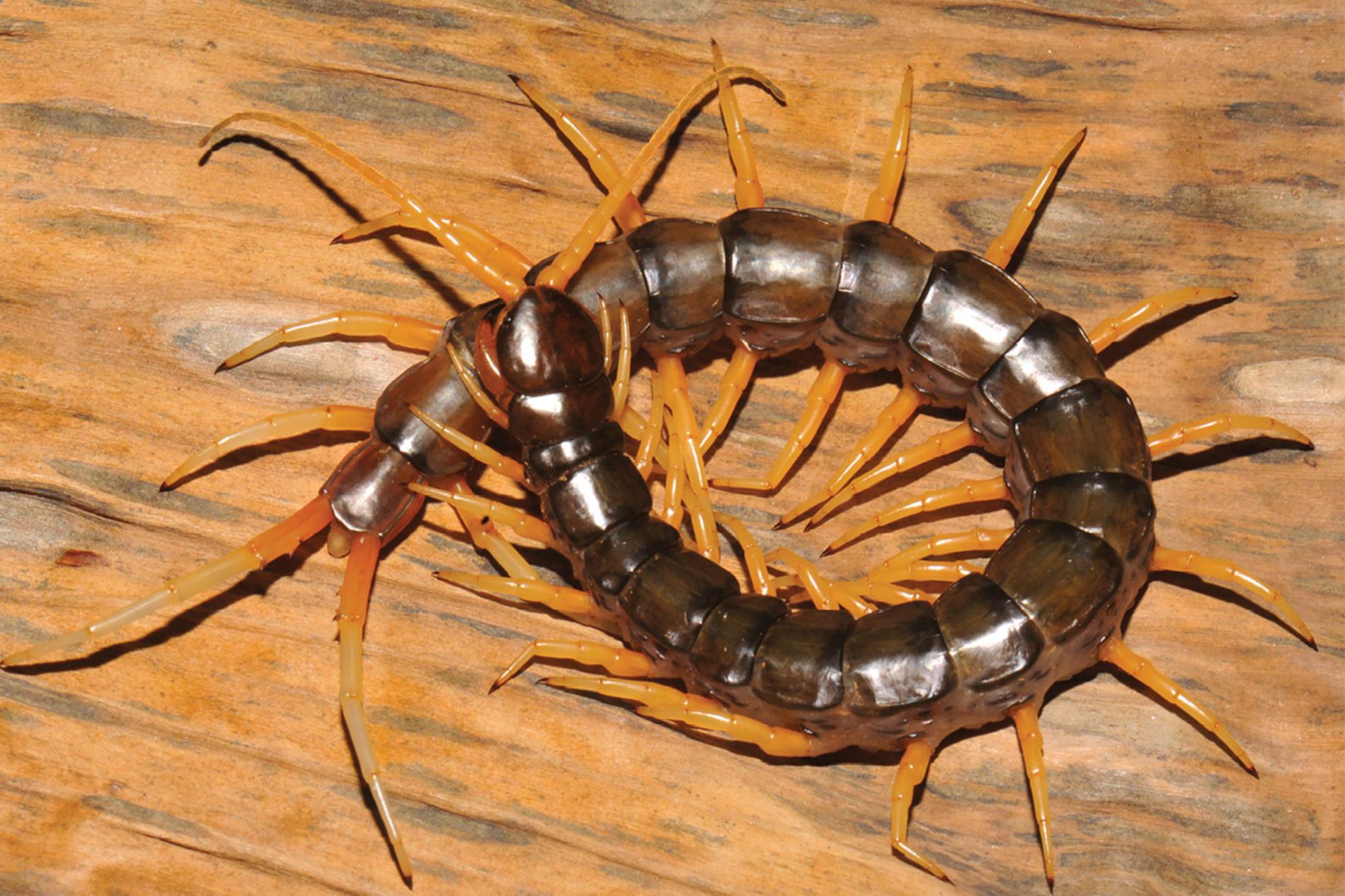
‘Horrific’ First Amphibious Centipede Discovered

This giant, venomous creepy-crawly is as comfortable swimming and walking underwater as it is on land, in a finding that surprised scientists.

Just when you thought it was safe to go in the water—look out for giant, swimming centipedes!

Scientists have recently described the world’s first known amphibious centipede. It belongs to a group of giant centipedes called Scolopendra and grows up to 20 centimeters (7.9 inches) long.

Like all centipedes, it is venomous and carnivorous. Thankfully, this new water-loving species appears to live only in Southeast Asia. The creature’s description was published last month in the journal ZooKeys.

Centipede Serendipity

George Beccaloni of the Natural History Museum in London was on his honeymoon in Thailand in 2001. And like any good entomologist, he was looking for bugs.

“Wherever I go in the world, I always turn over rocks beside streams, and that’s where I found this centipede, which was quite a surprise,” says Beccaloni.

“It was pretty horrific-looking: very big with long legs and a horrible dark, greenish-black color,” he says.

When Beccaloni lifted the rock it was hiding under, the centipede immediately escaped into the stream, rather than into the forest. It ran along the stream bed underwater and concealed itself under a rock.

With some difficulty, Beccaloni captured the centipede and later put it in a large container of water. He says it immediately dove to the bottom and swam powerfully like an eel, with horizontal undulations of its body. When he took the centipede out of the container, the water rolled off its body, leaving it totally dry.

Beccaloni brought his specimen back to the Natural History Museum in London and asked a centipede expert about his observations. The expert was skeptical, because Scolopendra are found in dry habitats and no centipedes were known to be amphibious. So the specimen sat in the museum’s collection for years.

Finally, a New Species

Meanwhile, Beccaloni’s colleague at the Museum, Gregory Edgecombe, and his student in Thailand, Warut Siriwut, were on the verge of describing a new species of centipede.

They had collected two specimens near waterfalls in Laos, and DNA analysis confirmed it was a new species. They named the centipede Scolopendra cataracta, from the Latin for “waterfall.”

Beccaloni shared the observations of his specimen’s amphibious behavior with Edgecombe, and they confirmed that his honeymoon centipede was an example of S. cataracta.

The entire species is known from just four specimens: the two collected in Laos, Beccaloni’s swimming specimen from Thailand, and a fourth specimen that was collected in Vietnam in 1928 and was in the collection at the Natural History Museum in London, misidentified as a more common species.

Beccaloni believes S. cataracta exploits a different ecological niche from other centipedes.

“Other Scolopendra hunt on land,” he says. “I would bet this species goes into the water at night to hunt aquatic or amphibious invertebrates.”

Like all centipedes, this new amphibious species is venomous. Although you would not want to be bitten by one, it probably wouldn’t kill you—it would just cause agonizing pain.

“All large Scolopendra can deliver a painful bite, the ‘fang’ of the venom-delivery system being able to pierce our skin,” says Edgecombe.

Bites from related centipedes of about the same size as S. cataracta cause a burning pain that can spread the length of the entire arm or leg if a finger or toe is envenomated. Edgecombe says the pain may persist for a few days, but probably won’t leave one with any longer-lasting effects.

It sounds like some people’s worst nightmare: if you go for a dip in a nice stream at night, there might be giant centipedes lurking in the water.

But to scientists like Beccaloni and Edgecombe, the new discovery is further proof of all the wonders of nature that are still unknown to us.

“People tend to study streams in the tropics during the day, but there is probably a whole other range of interesting amphibious things that come out at night,” says Beccaloni. “It would be good to study these streams and their fauna then to see what is actually going on under the cover of darkness.”


Source: National Geographic 

Vientiane Global Shapers To Host the First TEDx Event in Laos

The Vientiane Global Shapers, a global initiative under the World Economic Forum, has secured the license for TEDxLaneXangAve, which will be held on Saturday, November 26th, 2016 at the French Institute in Vientiane Capital. The theme of this year’s event is Changing Currents. This is the first time that a TEDx event will be organized in Laos.

The TEDx Program is designed to help communities, organizations and individuals to spark conversation and connection through local TED-like experiences.

“For TEDxLaneXangAve, we are proud to present several speakers who have been carefully chosen from a variety of different fields. Each will be given a chance to speak for 10 minutes,” says Vientiane Global Shaper Curator, Benjamin Soo. Details regarding the backgrounds and content of the speakers will be released in the coming weeks.

Vientiane Global Shaper Vice-Curator, Mary Bounthalath, adds that “while TEDx has a number of guidelines, all to which will be strictly adhered, we generally ask all our speakers to surprise audience members and expose them to topics they would not normally come across in order to create an experience that is at once dynamic and informative.”

The Vientiane Global Shapers have strategically partnered up with the Office of the Embassy of Canada to the Lao PDR to host the TEDx event.

TEDxLaneXangAve has engaged leading event management firm, Sengdara Communications, most notably known for their experience with organizing activations projects for Google and The Lao Music Awards, for assistance in public relations, media and event management. “I’m very honored that we can be a part of this truly global brand. I’m very grateful to the Vientiane Global Shapers for allowing us the opportunity,” says Deputy Managing Director, Aditta Kittikhoun.

Sponsorship opportunities are currently open. All interested parties are urged to contact Benjamin Soo at +856 20 5810 8800 or Amy Chanthaphavong at +856 20 2889 8999.

Tickets are priced at 200,000 kip (early bird offer – before Nov. 15) and will go on sale on November 7th at Sengdara Fitness Center (Saphanthong Neua Village) in a first-come first-serve basis. Tickets sold after November 15th will be priced at 250,000 kip. Only 100 seats are available.


About TED

TED is a nonprofit devoted to spreading ideas, usually in the form of short, powerful talks (18 minutes or less). TED began in 1984 as a conference where Technology, Entertainment and Design converged, and today covers almost all topics — from science to business to global issues — in more than 100 languages. Meanwhile, independently run TEDx events help share ideas in communities around the world.

Power Company Gives Boost to Luang Prabang School

Nam Ngum 5 Power Co., Ltd. has given educational equipment to Chim Secondary School in Chim village, Phoukhoun district, Luang Prabang province.

The items donated included 80 desks, four teachers’ tables and four whiteboards, valued at 47 million kip.

The supplies were presented to Chim Secondary School on Tuesday in the presence of the Deputy General Manager of Nam Ngum 5 Power Co., Ltd., Mr. Phonesavanh Keohavong, Deputy General Manager Mr. Tian Shao Qiang, Deputy Governor of Phoukhoun district Dr Phetsamone Vongsipaseuth, local education and sports officials, teachers and students.

Mr. Phonesavanh said that over the last two years the company had helped to build a school, a village club and an infirmary for Chim and Namting villages in Phoukhoun district.

At the end of this year, the company also plans to build a flood rescue centre and a new school in Chim village at a cost of more than 500 million kip.

Principal of Chim Secondary School, Mr. Somboun Yenuthor, said the school opened in the 2008-09 academic year and now had 508 pupils.

During the ceremony, district Deputy Governor Dr Phetsamone asked the company to continue to support education in Phoukhoun district. He also called on village authorities, teachers and students to maintain the equipment they had been given.

Dr Phetsamone asked the company to consider helping to create a football pitch in Bangkalo village.

The Nam Ngum 5 hydropower plant is located on the Nam Ting river, which is a major tributary of the Nam Ngum river upstream in a mountainous area. The power plant is about 300km north of Vientiane. The dam is located in Luang Prabang province and the powerhouse is located in Xieng Khuang province.

The total investment in the project is US$199 million. Sinohydro Corporation Ltd owns a 85 percent share and Electricite Du Laos owns a 15 percent share. The project’s chartered commercial operation period is 25 years.

Work on the project began in October 2008 and the plant became operational in December 2012.


Source: Vientiane Times