Home Blog Page 6573

An Interview with Thongloun Sisoulith, Prime Minister of Laos

Prime Minister of Laos Thongloun Sisoulith

A senior news reporter from Thailand, Mr Suthichai Yoon, released a frank and interesting video interview with Dr Thongloun Sisoulith, Prime Minister of Laos. In this friendly exchange, the Lao prime minister opened up about managing a country, and the direction of the Lao government. In the most interesting part, the prime minister of Laos states that the goal of becoming the ‘battery of Asia’ is overly ambitious.

View the video below or click here to view in YouTube:


A First Look: The Largest Lao Food Festival in Laos

Lao Food Festival 2017

The much anticipated 12th Annual Lao Food Festival officially opened at the Chao Anouvong Park in Vientiane Capital today, exhibiting a variety of foods from across the nation.

The aim of the festival is to bring attention to Lao cuisine, and to showcase some of the little-known dishes that are more common in the provinces.

Visitors are able to taste-test a variety of Lao foods, and hungry patrons can dine at the many restaurants that have opened their kitchens to the festival.

This year, the Lao Food Festival boasts 178 booths, the highest number on record. The festival runs for three full days, from 25-27 January 2017 at the Chao Anouvong Park (9am-8pm).

Here’s a first look at the festival:

[ngg_images source=”galleries” container_ids=”8″ override_thumbnail_settings=”1″ thumbnail_width=”100″ thumbnail_height=”75″ thumbnail_crop=”1″ images_per_page=”20″ number_of_columns=”0″ ajax_pagination=”0″ show_all_in_lightbox=”0″ use_imagebrowser_effect=”0″ show_slideshow_link=”0″ slideshow_link_text=”[Show slideshow]” template=”/home4/laotiantimes/public_html/wp-content/plugins/nextgen-gallery/products/photocrati_nextgen/modules/ngglegacy/view/gallery.php” order_by=”sortorder” order_direction=”ASC” returns=”included” maximum_entity_count=”500″ display_type=”photocrati-nextgen_basic_thumbnails”] 

Lao Military Instructor Killed by Grenade; 26 Students Injured

Lao Military Instructor

A Lao military instructor was killed and 26 students injured after a live grenade exploded during a military drill.

The instructor, First Lieutenant Somphone, had brought both live and disarmed grenades to his training course at the secondary school in Xay District, Oudomxay Province. The trainer mistakenly pulled the safety pin from a live grenade instead of a disarmed grenade when giving a demonstration to students.

According to a statement by police, First Lieutenant Somphone quickly realized his mistake, and selflessly used his own body to cover the grenade in the hopes of smothering the explosion, and saving the students.

Lieutenant Somphone was killed instantly, and 26 students suffered minor injuries. They were rushed to Oudomxay Hospital for treatment.

A statement by Dr Somphan Oudomphan of the provincial hospital confirmed that the students suffered shrapnel wounds, but none of them had been severely injured.

Military drills conducted at secondary schools around the nation include regulations prohibiting live grenades. It is unclear why in this case the instructor brought live explosives to the training course.

Short military training courses are compulsory for secondary school students in Laos.

Lotteria Opens Second Lao Branch at Dongdok

Lotteria Opens Second Branch at Dongdok

Popular Korean fast food chain Lotteria has opened a second branch at Dongdok, near the National University of Laos.

Lotteria is a leading business in Korea that has been writing the history of the domestic fast food industry through ceaseless business innovation, aggressive investments, and new product development.

The restaurant chain continues to work to please customers by developing menus that suit the local palate, ad designing sophisticated stores that keep up with the quickly changing trends and demands.

The restaurant chain is now in the process of transforming from a fast food restaurant into a cafe-style environment, attempting a bold change to build a new image as a Quick Service Restaurant.

Lotteria was founded in South Korea in 1979. The chain soon expanded to Vietnam, Indonesia, Cambodia, Myanmar, and now Laos.

Lotteria has captured the taste buds of domestic customers by combining traditional fast food concepts with a touch of Korean flavor. The restaurant continues to meet the diverse needs of customers by maintaining quality while offering more than just hamburgers, including side menu items such as chicken, and a wide range of desserts and coffee.

[ngg_images source=”galleries” container_ids=”7″ override_thumbnail_settings=”1″ thumbnail_width=”100″ thumbnail_height=”75″ thumbnail_crop=”1″ images_per_page=”20″ number_of_columns=”0″ ajax_pagination=”0″ show_all_in_lightbox=”0″ use_imagebrowser_effect=”0″ show_slideshow_link=”0″ slideshow_link_text=”[Show slideshow]” template=”/home4/laotiantimes/public_html/wp-content/plugins/nextgen-gallery/products/photocrati_nextgen/modules/ngglegacy/view/gallery.php” order_by=”sortorder” order_direction=”ASC” returns=”included” maximum_entity_count=”500″ display_type=”photocrati-nextgen_basic_thumbnails”] 


The first store in Vientiane was very well received by local people and is especially popular among teenagers.

“A wider range of chicken dishes have been offered for the menu in Laos, and as Lotteria is a Korean brand, we have had a good response to our Korean chicken, which is sweet and spicy. We also introduced our signature burger, the Bulgogi Burger,” said a Lotteria representative.

“We opened the second branch in Dongdok because our brand tends to be popular among the youth and among young families. Dongdok is a new residential area and also home to the National University,” she continued.

Lotteria plans to open 14 branches throughout Laos over the next five years.

LANIC Officially Takes Over Dot.La Domain Suffix

dot.la domain

Management and operation of Laos’ internet top-level domain (.la) was officially launched by the Lao National Internet Center (LANIC) yesterday.

The top-level domain for Laos, dot.la is based on the Laos country code, and was established in 1995. It was recently returned to the Lao government, after being leased to a foreign company.

During the time the dot.la domain was leased out, the Ministry of Post and Telecommunications has been training its staff, drafting regulations, and preparing to take over full management and operations of the domain.

The ministry has authorized local internet providers to provide services for the .la domain, and has allowed a foreign company to provide services abroad.

The National Information Center now manages the top-level domain dot.la, and also supplies cloud computing systems, services for co-location, and web hosting. It will become an important infrastructure system for future electronic government systems.

There are around 70,000 users of the .la domain name around the world, with only a few hundred users in Laos itself, according to officials at the Lao National Internet Center.

Until now the .la suffix has been notably popular in the United States, and has often been reserved by websites based in Los Angeles (LA).

Now, the Lao government hopes to promote its use domestically.

Lao Stock Report: Jan 23

Weekly Stock Report (Jan 23rd): Lao Securities Exchange Index was stable points for the first two days, and then continued dropping respectively in the last three days of the week. However, there was a very surprise trading on Friday. Overall the week, total trading volume was 2,789,400 shares and total trading value was over 13.867 million kip. Comparing since January 2016. High: 1,232.09. Low: 963.74 point.

BCEL price unchanged 6,000 kip/share and lacked of matching for four days unexpectedly for this week. Overall the week, the total trading volume was 1,100 shares and total trading value was 6,620,000 kip. Comparing since January 2016. High: 6,600 kip/share. Low: 4,200 kip/share.

EDL-Gen price ended down to 5,050 kip/share with a lot of trading on Friday. Even was not trading for two days in the price of 5,500 kip/share. Overall the week, The total trading volume was 2,735,700 shares and total trading value was over 13.687 million kip. Comparing since January 2016. High: 6,200 kip/share. Low: 4,700 kip/share.

LWPC price closed 5,800 kip/share after touched down to 5,750 kip/share without matching. However, this week was an interesting trading if compared to many months ago. Overall the week, The total trading volume was 12,800 shares and total trading value was 73,945,000 kip. Comparing since January 2016. High: 7,300 kip/share. Low: 5,400 kip/share.

PTL price unchanged 2,500 kip/share and there was not any share executed for three days for this week. Overall the week, the total trading volume was 39,800 shares and total trading value was 99,500,000 kip. Comparing since January 2016. High: 3,000 kip/share. Low: 2,300 kip/share.

SVN price unchanged 2,800 kip/share and there was not any shares matching all for this week. Comparing since January 2016. High: 3,400 kip/share. Low: 2,700 kip/share.

Source: Lanexang Securities Public Company

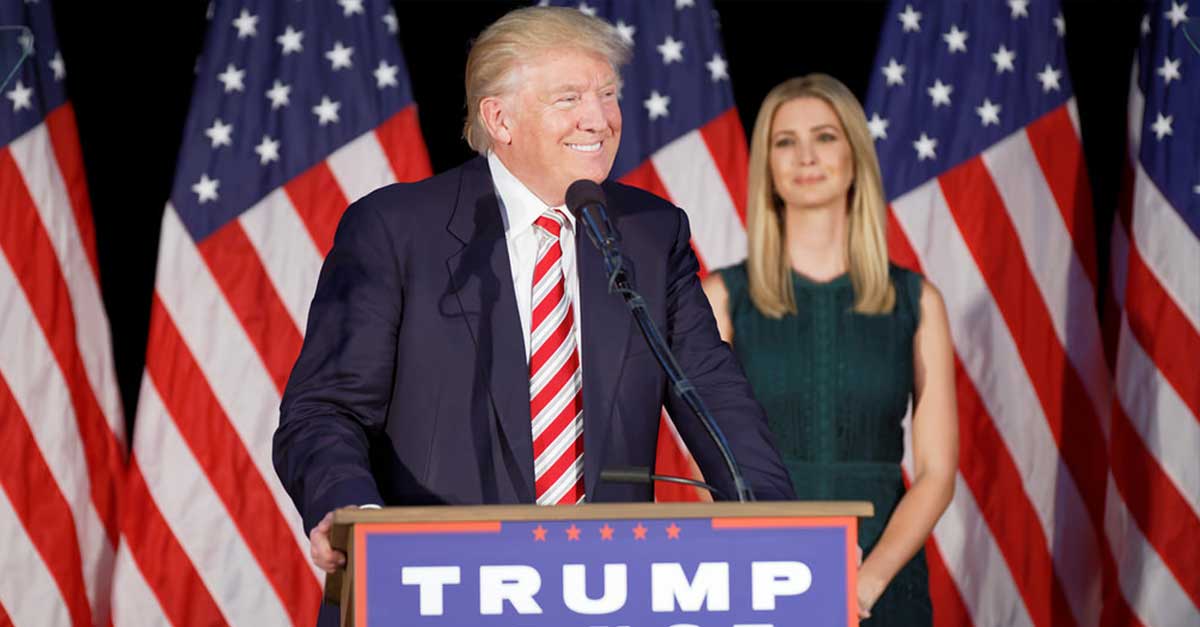
The Trump Presidency And Its Implications for Laos

The Trump era has begun.  What does this mean for the famed Pivot to Asia? Could this turn the tide on US relations? And just what does Trump mean for Laos (apart from hiring a Laotian-American designer to redecorate the White House)? 

The United States and the Lao People’s Democratic Republic have significantly warmed to each other in recent years, stepping up dialogue and enhancing ties, culminating with the first visit to Laos by a standing US President last year. Obamamania gripped the nation as Air Force One touched down at Wattay Airport, and the political waves of that recent visit have not yet fully ebbed away.

But…Trump

Asia Foundation Country Coordinator, Nancy Kim writes:

“Laos’ economic outlook is broadly positive in 2017, with the country on track to remain one of the fastest growing economies in Asia. While the massive 70 percent increase in foreign direct investment in the lead-up to the 2016 launch of the ASEAN Economic Community is unlikely to be matched, Laos will likely continue to attract FDI from throughout Asia, as well as a new Trade and Investment Framework Agreement with the U.S. Laos is in a strong position to foster more inclusive, broad-based economic development, and in 2017 we should see the country’s new leadership reflect on domestic priorities and reinforce its commitment to the social and economic well-being of its citizens.”

It is true that Laos will continue to receive FDI from all over Asia and that this will be one of the primary drivers of its economic growth. In the past few years, we have seen well-known multinational corporations and brands expanding and entering the Lao market in cinema, hotel and restaurant business. In terms of trade with the US, according to the Office of the USTR, two-way goods trade between the two countries grew five-fold in the past 10 years to $70 million. Two-way agricultural trade grew eight-fold in the same period to $8 million.

However, it remains to be seen whether the Trade and Investment Framework Agreement signed by Minister Khemmani Pholsena and US Trade Representative Michael Froman will constitute any further major contribution to growth, especially with the uncertainty around the future foreign policy directions of President Donald Trump.

What Does the Rise of Trump Mean for ASEAN and for Laos?

Many experts have predicted that Trump’s expected foreign policy changes could potentially change the post-war international order. The new President, judging by his election promises, endeavors to reshape much of the United States’ current policy in Asia, however the degree to which he will change them is yet to be determined.

But certain things are clear: the President has advocated the re-evaluation of core aspects of US East Asian foreign policy, namely, its alliances, regional institutions and trade.

Concerning American allies in East Asia, Mr Trump has revealed that he would like America’s allies in the region (especially Japan and the Philippines) to contribute their fair share to regional security, instead of depending heavily on US military power. Consistent with this line of thought, he is expected to have little to zero patience in maintaining, in his mind, America’s costly multilateral partnerships; including institutions like ASEAN.

Unlike his predecessor, Obama, Trump may view the US relationship with ASEAN as not a long-term investment to counterbalance against Chinese influence in the region, but more of an unnecessary short-term expense to the American taxpayer, who voted him into power. To balance China, he may go at it directly: mano-a-mano.

Can ASEAN Solidarity Survive Trump’s Penchant for Bilateralism?

With a regional economic output in excess of $2.5 trillion, ASEAN is effectively the world’s 7th largest economy, and currently the 4th largest export market for the US. Thus no matter the rhetoric, the Trump administration has to tread carefully. Deciding to ignore the region or to take an overly protectionist stance would be at the peril of both Southeast Asian and American interests.

Secondly, the US, even under Trump, won’t completely shun ASEAN, some of whose members are staunch US allies. And allies will still be allies – such is the game that is international politics. However, Trump may change the way the game is played. Not being too fond of multilateralism, Trump may be more in favor of negotiating with each of the US’s Southeast Asian allies on a one-on-one basis. This is understandable, as ASEAN is known to take quite a long time to act due to its consensus modus operandi (all 10 member countries must agree in order for a decision to be made).

Given Trump’s low patience and volatile temper, bilateral partnerships may be the preferred method of engagement. Only time will tell if ASEAN Member States will be able to stay and act together as a regional grouping, as they always officially aspire, or begin to break apart in the face of Trump.

So far, ASEAN diplomats have shared that even if the US under President Trump engages less with ASEAN, the regional powerhouse can still focus on regional integration among the ten states and strengthen partnerships with key players like China, Japan, Korea, India, Australia and Europe.

Secretary of State Rex Tillerson

A senior Lao diplomat has shared with the Laotian Times that the Lao leadership and those of the ASEAN Member States have been closely following Trump’s activities, in particular his choice for Secretary of State (the US counterpart of Minister of Foreign Affairs), ex-CEO of ExxonMobil, Rex Tillerson.

“It remains to be seen whether the new American Presidential Administration headed by Trump will prove to be as bad as everyone expects he’ll be for ASEAN. With the US Senate approval of Rex Tillerson as Secretary of State, we will be facing a diplomatically inexperienced man – in a formal sense – with a fierce negotiation style that is very business-oriented. It will be diametrically different to what we had been accustomed to with John Kerry or even Hillary Clinton, who are statesmen known for their more diplomatic styles. Let us see what happens in a few months after Trump takes office,” the diplomat continues.

It is too soon to predict how Rex Tillerson will perceive US relations with ASEAN and how he will subsequently advise President Trump. But needless to say that if any one official in the Cabinet that will have the power to shape Trump’s decisions concerning ASEAN, it is Mr. Tillerson.

How does this affect Laos?

Insofar as having its interests represented in the international arena, ASEAN is essential for Laos. Given its limitations in size and development, the small nation of almost 7 million has and will continue to align its foreign policy objectives with those of its surrounding, larger neighbors. And ASEAN provides Laos with the regional clout and support with which to maneuver diplomatically. The success of Laos serving as Chair of ASEAN last year is a case in point.

In this light if ASEAN is not taken seriously by President Trump’s USA, then Laos could be at some disadvantage in dealing with the US on a bilateral basis. And the political vacuum would drive Laos to pursue even closer relations with China and Vietnam.

Laotian Times Editorial Board

Lao Leaders’ Luxury Cars to be Auctioned Next Month

Lao Leaders Luxury Cars

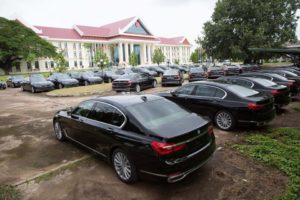
Lao leaders’ luxury cars are expected to be auctioned next month.

The first auction will see bidding on six BMW 7 Series vehicles, and five Mercedes-Benz cars that were driven by Lao leaders.

Party and government leaders have agreed to forgo luxury vehicles as part of a new strategy to encourage frugality and lead by example.

Prime Minister Thongloun Sisoulith and President Bounnhang Vorachit gave up their BMW 7 Series cars last week. Both leaders now ride in Toyota Camry 2.5 vehicles, while Vice President Phankham Viphavanh is to return his own BWM today.

A Decision was signed last week to return all BWM and Mercede-Benz vehicles in the fleet purchased for personal use by individual leaders (with blue license plates). These vehicles are to be sold at an auction and replaced with less luxurious brands, such as Toyota.

A total of 36 Mercedes-Benz 15 S-Class, and 21 E-Class vehicles were purchased for use in state affairs, and were also provided to high-ranking officials.

On top of this, a further 11 BMW 7 Series cars were purchased for use by Party Politburo members, including those who had already retired. These will be more difficult to reclaim as many were offered to retired party members as gifts.

According to an article by the Vientiane Times, Vice President Phankham Viphavanh said in a meeting on Friday that the BMW’s given to retired leaders will not be reclaimed.

An agreement has been made to hold the first auction of luxury cars early next month, with eleven vehicles to be showcased at the National Convention Center.  These are to be sold first to make an example.

Following this first auction, a further twenty luxury cars being used in other provinces around the nation will be reclaimed.

16174673_1101404826637322_7731458418564284330_n