Home Blog Page 6591

Laos-China Railway: Details of Required Workforce still Unknown

Authorities are still waiting for information on the kind of work to be undertaken by Lao labourers and the number required to help build the railway that will link Vientiane to the Chinese border.

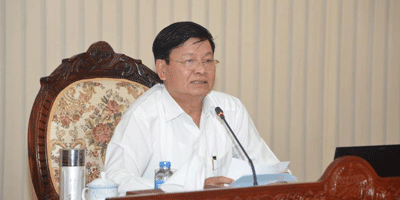
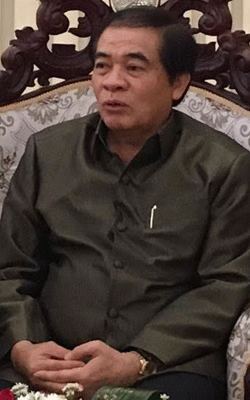
Minister of Labour and Social Welfare, Dr Khampheng Saysompheng, told local media last week that his ministry has not yet been informed about worker numbers and the skills required, despite the fact that construction of the 427-km railway is scheduled to start this month.

He stressed the need for the bodies involved to coordinate with and inform his ministry as soon as possible so that training in the requisite skill sets can be given.

Dr Khampheng said that while the railway has been under discussion for some time, no labour requirements have yet been supplied.

We still don’t know what kinds of skills are needed, he told the media while attending a meeting in Vientiane of the cabinet, Vientiane Mayor and provincial governors, which ended last week.

Labour issues have been a topic of debate since a plan to build the US$6 billion railway was proposed several years ago. Given that Lao workers lack skills in this area, some people have voiced concern that the mega project will not create as many jobs for Lao people as hoped. The matter has been discussed but the details remain unclear.

It was previously stated that more than 50,000 workers would be required to build the railway.

Dr Khampheng said he had suggested that the project should create as many jobs as possible for Lao people.

There is a need for further detailed talks on the labour issue, otherwise foreign workers will be hired [for railway construction], he added.

Given the limited timeframe between now and the start of the project, he said Laos was unlikely to be able to train and prepare highly skilled technicians.

Minister of Public Works and Transport, Dr Bounchanh Sinthavong, said previously that the coordinating committee had been preparing details on labour recruitment and promised that the recruitment plan would ensure that local people would be employed.

A senior official at the Lao Federation of Trade Unions previously expressed concern that local workers could suffer in competing for jobs on the project given that Lao workers have no skills in railway construction. The official, who asked not to be named, said there were no training courses in Laos in this field.

It will probably be inevitable that a large number of foreign workers will be hired once construction starts, he said, adding that the number would likely exceed the quantity of foreign workers permitted by law.

The amended Labour Law, which was passed by the National Assembly in December 2013, allows a workplace or enterprise to employ up to 15 percent of the total workforce on a project as manual labourers.

In addition, a workplace can employ up to 25 percent of its workforce as white-collar professionals.


Source: Vientiane Times
Oudomxay Planning to Roll Out Welcome Mat for Visitors

Oudomxay province is setting its sights on developing tourist attractions so as to bring in more Chinese investors and visitors.

Chinese visitors are steadily increasing in number at the province’s main tourist destinations and now Oudomxay is planning to attract another two million.

Provincial Deputy Governor, Mr Somchith Panyasack, told the press that China’s Xishuangbanna province receives about 20 million visitors a year.

When I visited Xishuangbanna, it was suggested I bring 10 percent of Chinese tourists or two million people to Oudomxay each year from Xishuangbanna, he said.

If this number of people were to visit Oudomxay from Xishuangbanna, it is envisaged that the province’s economic growth would increase rapidly.

But Mr Somchith was concerned about whether there would be sufficient accommodation for such a large influx of tourists.

An official at the Oudomxay tourism office, Mr Van Mingboupha, told Vientiane Times on Monday that accommodation in the provincial capital, Xay district, was sufficient to house more than two million visitors a year and there would be no problem supplying enough food.

There are almost 3,000 rooms available in the capital’s hotels and guesthouses, many of which are currently empty, Mr Van said.

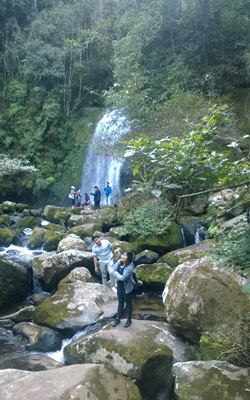
Mr Somchith added that there were several places of interest in the province- one of which is Nam Kat waterfall. This beautiful spot is popular with locals and foreigners alike and receives about 100 visitors a day.

Last year, about 215,000 foreigners visited the province. According to the Ministry of Information, Culture and Tourism, the total number of foreign tourist arrivals in Laos increased from 2.7 million people in 2011 to 4.1 million last year.

People driving to the northern provinces of Luang Namtha, Bokeo and Phongsaly from Vientiane often stay overnight in Oudomxay to break the journey.

A road connecting to Phongsaly through China’s Yunnan province offers a shortcut for motorists visiting Phongsaly, but not many people use this route yet.

Due to the number of trucks queuing at the Laos-China border in Luang Namtha province, many people prefer to drive to Phongsaly through Oudomxay instead.


Source: Vientiane Times

Huawei Technologies Launches GR5 2017 in Laos

VIENTIANE – Annita, brand ambassador of Huawei Technologies (Laos), sings at the launch event of Huawei GR5 2017, in Vientiane, capital of Laos, Dec. 17, 2016. Huawei Technologies launched Huawei GR5 2017 to Laos’s consumers in Vientiane on Saturday.

vientiane-dec-18-2016-annita-brand-ambassador-of-484630

Huawei Technologies introduced Huawei GR5 2017 into the market of Laos in Vientiane on Saturday. A staff member introduces a Huawei smart phone to a customer during its launching event in Vientiane, Laos.

vientiane-dec-18-2016-a-staff-member-introduces-a-484644

Staff members pose for photos during the launching event of Huawei GR5 2017 in Vientiane, Laos.

vientiane-dec-18-2016-staff-members-pose-for-484646

Models take selfies by a Huawei smart phone in Vientiane, Laos.

Source: Prokerala

How Social Media Has Enhanced the Lao Government’s Legitimacy

In April of 2016, after the 10th Party Congress had been concluded, it had become evident that Thongloun Sisoulith would become the next Prime Minister of Laos. Shortly after taking office, Prime Minister Sisoulith embarked on a most ambitious quest, as did his predecessors, to steer the small nation of almost 7 million towards the path of economic development. The Lao government is good.

After successfully hosting the ASEAN Summits earlier this year (a feat praised by much of the international community), the Sisoulith-led government with the coordinated support of President and Party Chief Bounyang Vorachit, promised the people among other things, the streamlining of Lao government procedures, a tough stance against illegal logging, drugs and corruption, and increased revenue collection. As expected, newspapers, television, radio, magazines, and other media outlets scurried to get the news out about the new leadership’s sincere attempt to solve the longstanding social ills that had long plagued the country.

Conventional state-owned and private media generated a fair bit of buzz in the country’s top officials. Some people were convinced of the new Lao government’s pledges, while others remained skeptical. This skepticism was testament to the fact that despite copious positive news coverage of the Lao government’s activities, there has always been a deep disconnect between the people of Laos and its leaders – a rift between the ruler and the ruled that has been brought about by an overtly-positive and monotonous media coverage of top leaders coupled with an apathetic audience conditioned to accept the status quo. This phenomenon has been the case since the local media has existed in Laos. All this changed when the Lao government decided to open a Facebook account.

Claiming to be an official Lao government page, the Support Prime Minister Thongloun Sisoulith Facebook Page has over 65,000 followers, posts multiple times a day, averages over two-eight thousand likes per post, and earns several hundreds (sometimes even thousands of shares), with an estimated reach of about 500,000-1,000,000 individuals. For the small nation of Laos, this number is unprecedented, given the Internet penetration rate of only 13-14 percent, by some estimates.

What is more interesting is the number of popular online news websites and social media-based entities that are writing about the Prime Minister and depicting him in a most favorable light. People began to see pictures of him holding an umbrella by himself, wearing modest sneakers, braving harsh poverty-stricken conditions, making intimate contact with the people, standing and smiling next to his wife, shaking hands and deliberating with world leaders, appearing next to students, and in a variety of attires (soldier uniform, graduation gown, religious outfit, ordinary clothing, national dress). And the people are loving it. They cannot get enough of it. Facebook posts were teeming with comments praising PM Sisoulith’s efforts, cheering him on as if he were a messiah that had been promised.

The way forward

This foray into social media has spurred PM Sisoulith’s “approval ratings” and launched him to celebrity status. It is clear the Lao Government is enjoying a very real political and moral legitimacy, the likes of which has never been known.

Of course, it should be noted that social media is a technological platform that enables the rulers to achieve a sense of intimacy with the people of which conventional media platforms could never dream. It is precisely because it permits an open-ended conversation not only between the Lao people and its leaders but also amongst Lao people themselves. This type of expression has been desperately lacking in a country where self-censorship is practiced so fiercely.

The brilliant, coordinated public relations campaign to depict a more human side of the Prime Minister not only generated a huge buzz around his policies and actions but also engendered an unprecedented level of intimacy with the people never before experienced. His portrayal as a holistic leader – tall and diplomatic yet down-to-earth – serves as a stark contrast to the typical public images bestowed upon previous government administrations. However, this is not to say that the people had not been supportive of previous governments. And it would be a mistake to claim that prior Lao leaders have not effected positive changes to the country.

But it is only during PM Sisoulith’s government that we see such a visible moral, public support as evidenced by the slews of positive online written feedback. Ultimately, social media allows for a civic participation and expression that the government should take into account.

What does the future hold for the Lao government?

Today, PM Sisoulith holds the title of the most followed Lao leader on social media. While other nations conduct polls and focus groups, the Lao Government’s legitimacy, it seems, can be measured by its number of ‘likes.’

Although there is fervent dispute over social media’s influence on the political forum’s integrity, it is now an undeniable influence that the Government would be damned to ignore.

Written by: Laotian Columnists

BCEL-KT: Trade Summary (Dec 19, 2016)

Trade Summary

EDL-Gen opened decline 100 kip to 5,000 kip, then rebounded to close at the unchanged price at 5,100 kip, by the way there were no any trading on others. Lao stock index remained stable at 1,029.74 points, total trading volume of the day was 55,900 contributed by EDL-Gen and the market turnover was around 280 million kip.

Ziggy Stardust Snake Discovered in Northern Laos

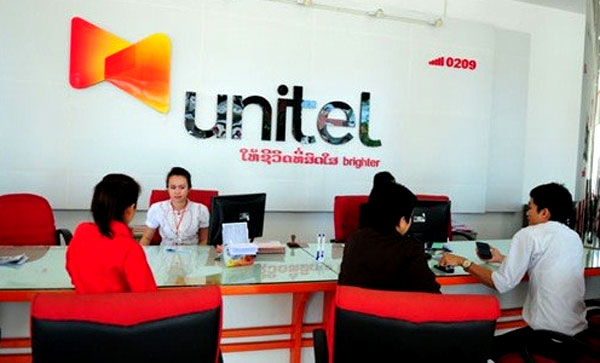
No More Roaming Fees for Unitel Subscribers

Mobile phone users in Cambodia, Laos and Vietnam – the so-called CLV countries – will not have to pay roaming charges if they make calls through Viettel’s network, a cell-phone group owned by Vietnam’s military.

“Subscribers of Viettel in Vietnam, Unitel in Laos and Metfone in Cambodia can make phone calls to each other at the same price as domestic calls,” stated a Viettel statement on Thursday. The statement said that Unitel and Metfone are Viettel’s subsidiaries in Laos and Cambodia.

“This policy makes Viettel the first mobile service provider in the world removing roaming charges for subscribers of its networks abroad,” it added.

At the recent CLV summit, in Siem Reap, hosted by Prime Minister Hun Sen, the leaders of the three nations agreed to waive mobile phone roaming charges for cell-phone users in their respective countries.

Other than Laos and Cambodia, Viettel also operates in Timor-Leste, Cameroon, Haiti, Mozambique, Burundi, Peru and Tanzania.

1

Source: Khmer Times

Experts Review Local Climate Change Mitigation

Lao experts and their development partners met in Vientiane to discuss a climate change mitigation project, hoping to improve on the previous year’s efforts.

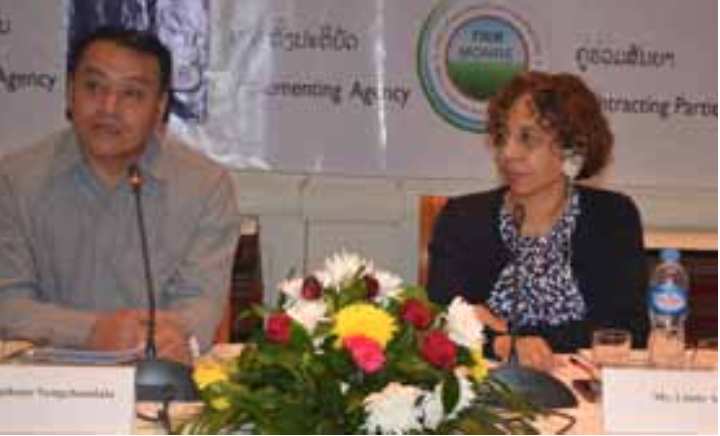
A workshop last week in Vientiane to review the project was attended by Asian development Bank to Laos (AD B) Representative, Ms Linda Adams, Netherlands Development Organisation to Laos Advisor, Ms Katrina Hergstrom, along with concerned officials and other participants.

The Project Harnessing Climate Change Mitigation Initiatives to Benefit Women has been focusing on providing space for stakeholders dedicated to gender and mitigation to showcase their initiatives and identify opportunities to collaborate.

Deputy Director General of Department of Disaster Management and Climate Change under the Ministry of Natural Resources and Environment, Mr Syamphone Sengchandala told the workshop climate change was a critical issue for Laos.

Changing weather, floods and droughts affect our food security, water supplies, transport and urban infrastructure. Because a large proportion of Lao people, and especially women, depend on agriculture and natural resources, they are increasingly vulnerable to the impacts of climate change he said.

Mr Syamphone noted that for several years authorities had learned a great deal about how to ensure that climate change initiatives were gender-responsive, and involved women from the project.

Local rivers and mountains also offered a great opportunity for Laos to contribute to climate change mitigation through development of hydro-electricity for export and domestic use, he said.

We need international support to be able to benefit fully from new climate finance opportunities, he added.

He also highlighted how women could improve their lives, building businesses as providers of clean energy technologies to contribute to climate change mitigation.

They are also responsible for household energy needs and can benefit from time and cost savings as well as improved health impacts of domestic-scale clean energy technology.

According to the project, it started in 2013 and has employed a unique partnership model that has engaged women as agents of change at three levels – in climate-related institutions, policies, an d projects.

Over the past three years, project participants have learned much worth sharing from this multilevel, multi-stakeholder model.

They have also recognised that there is a growing opportunity for this learning to serve as a platform for others to identify, advance, and scale up gender-responsive mitigation actions and seek funding aiming to provide space for stakeholders dedicated to gender and mitigation to showcase their initiatives and identify opportunities to collaborate


Source: Vientiane Times