Home Blog Page 6607

China Funds Mekong Road Construction

The Chinese government has funded construction of a 22.5 km road along the Mekong River linking Tonpheung district in Bokeo province with Sing district in Luang Namtha province to facilitate transport and boost northern development.

A signing ceremony for construction of the 225 million yuan (more than 268 billion kip or US$32.7 million) road took place recently in Vientiane between representatives from the Chinese Embassy to Laos and the Lao Ministry of National Defence, the Lao Army Newspaper reported yesterday.

Construction of the seven-metre-width road will commence in January next year and will take 36 months to complete. The project will asphalt and widen the existing unpaved five-metre road.

The road, which will connect Mom village in Tonpheung district with Pakhouaylong village in Sing district, is part of the planned road construction project to link Tonpheung district with the Chinese border over a total distance of 238 km.

Deputy Director General of the Engineering Department of the Lao ministry Colonel Dr Siphonxay Khamthongveun said he believed once the road was operational it would contribute significantly to socio-economic development of the northern region, which shares a border with China. He added the project would also contribute to enhancing security in the region.

The Colonel said the Lao side would continue to seek financial sources to upgrade the remaining section of the 238 km road, which will stretch through the golden triangle area.

Source: Vientiane Times
Dry Season Rice Plan Under Consideration

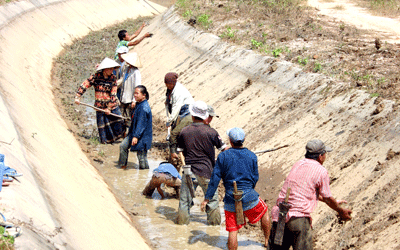
The Ministry of Agriculture and Forestry is considering whether the figure for this year’s dry season rice plan should be revised downwards or remain stable after the last four harvests failed to reach the target.

Last dry season, farmers planted only about 99,000 hectares or 88 percent of the area targeted, which represented a reduction of 2,210 hectares on the previous crop.

The figures were reported to the National Assembly meeting last month by the Ministry of Agriculture and Forestry.

The major factors influencing the decline in dry season rice plantings included the fact that large numbers of rice farmers, especially those in the northern parts, shifted to growing commercial small crops such as beans, sweetcorn, melons, pumpkins, chilies, eggplants and sweet potatoes.

Those farmers reported that their reasons for shifting included lower capital costs as well as better financial returns on their labour.

The crops also require less water to supply production and produce three or four times a year.

Cold weather and lack of water from irrigation systems are important issues affecting dry season rice production, according to the Department of Agriculture.

Meanwhile another factor is the lack of labour to produce the crop as members of their family have shifted to other forms of employment in the towns.

Next fiscal year, the ministry plans to encourage farmers around the country to produce a total of 4.3 million tonnes of rice.

Officials are confident the target can be reached after farmers achieved 98 percent of the planned 4.2 million tonnes this year.

Irrigation systems were able to guarantee a supply of water to about 180,000 hectares of crops this dry season, even though some systems are in need of repair.

About 120,000 hectares of the irrigated land will be given over to rice, while other crops will be cultivated on the remainder, according to the Irrigation Department.

The country currently has over 11,600 irrigation projects, most of which supply water to the central and southern provinces.

To supply sufficient water in this dry season, the Department of Irrigation is working with relevant sectors around the country as it plans to rehabilitate damaged or degraded irrigation systems.

The department also advised local authorities and farmers to use water from reservoirs, rivers and other ponds by utilising pump machines when necessary.

To increase productivity, agricultural authorities urged farmers to use modern technology and good seed varieties.

For planting other crops this dry season, the ministry focused on various staples, especially sweet corn, potatoes, fruits and vegetables.

Source: Vientiane Times

European Union, CARE Support Nutrition Project in Northern Provinces

The European Union and CARE Denmark are providing over 17. 4 billion kip (2 million euro) to support food and nutrition security projects in Luang Namtha and Phongsaly provinces.

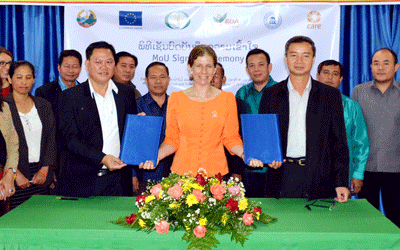
The four-year project on promoting agricultural production to improve food and nutrition security through multi-sector coordination (SUPA) were signed by CARE Assistant Country Director Ms Alison Rusinow and the Luang Namtha provincial Agriculture and Forestry Department’s Deputy Director Mr Thuang Namvongsa.

Ms Rusinow and Mr Thuang also signed documents on a related project with Phongsaly provincial Agriculture and Forestry Department’s Deputy Director, Mr Visanh Vongnakhone, according to a recent report from CARE.

The signing ceremony took place recently in Luang Namtha province in the presence of representatives from provincial authorities and other guests.

The project will build on the experience of several stakeholders in linking nutrition, agriculture and natural resource management (the LANN approach) and will work in cooperation with these stakeholders to support poor communities to address nutrition challenges.

This project will be implemented in collaboration with concerned government counterparts, including provincial agriculture offices, health sectors and other concerned authorities.

The project shall receive technical support from other organisations most experienced in the LANN approach and hygiene and sanitation, namely CARE, Committee Cooperation with Laos, Lao Organic Promotion in Agriculture and Rural Development Agency.

The project’s aims were to support the government to implement the National Nutrition Strategy and Action Plan. The government has identified 22 priority nutrition-specific interventions (identified by each concerned line ministry, the so called convergent approach.)

The project will contribute to the realisation of all of the agriculture priorities and some key priority interventions under the health sector.

All selected districts in this action are part of the government’s priority districts and the selected activity packages in this action correspond to the government’s priority interventions, as proposed during the consultative planning workshop for this project in 2015 with relevant provincial/district representatives.

The project is designed to provide clear and concrete changes in the nutrition and health status of local ethnic communities in Luang Namtha and Phongsaly. In addition, it aims to support the provincial and district government to address the needs of communities and implement nutrition-related policies.

At the same time, CARE has committed to use this additional four year period to maximise learning, sharing and piloting of good practices.

These projects not only fully align with and complement local government priorities but also link well with other projects within CARE Laos’ Remote Ethnic Women programme.


Source: Vientiane Times

Kaleang Cave to be New Tourism Site in Saravan Province

Local authorities of Saravan Province are preparing to develop the Tham Kaleang Cave to be one of the new of tourist attractions of the province.  Tham Kaleang Cave is expected to open for visitor around the Lao New Year in 2017.

Mr Ounthoung Kaophan, Deputy Minister of Information, Culture and Tourism recently took a working visit to Saravan Province to survey the new tourist site commenting that the site will be the new face of tourism in the province.

During the working visit to the province, the Deputy Minister of Information, Culture and Tourism stressed to the local authorities of Saravan Province that while developing the tourist site, it is important to preserve and protect the existing natural environment to impress visitors.

Mr Ounthoung Kaophan and his delegation also took a sightseeing tour to the Tham Nam Lord waterway through the cave and the Tad Nam Lord waterfall while inspecting the basic infrastructure of the area to ensure that will provide convenience to visitors to the area.

Saravan Province spans Laos from its western border with Thailand to its eastern border with Vietnam.  It is situated on the Bolaven Plateau, is devoted to agriculture and offers idyllic natural scenery.

Saravan Province is also home to the ecotourism destination Phu Xieng Thong National Biodiversity Conservation Area.  It is the only park in the country on the Mekong River.  It covers nearly 1,000 sq km in the western part of the province and is home to a wide variety of animal and plant species.

It is thought that Asiatic black bears, banteng (a species of wild cattle), clouded leopards, Douc langurs, elephants, gibbons, guars, Siamese crocodiles and tigers inhabit the area. 


Source: KPL

BCEL-KT: Trade Summary (Dec 5, 2016)

Trade Summary

Lao stock exchange resumed trading after a long weekend with no change in the index. But the trading volume failed to match the pre-holiday volume, with only 300 shares in total. EDL-Gen, BCEL and SVN had 100 shares traded each, with the closing prices of 5,100 kip, 5,100 kip and 3,000 kip respectively. PTL and LWPC closed unchanged with no matching.  


Laos Launches New Law Application

Members of the general public can now download an application about Lao laws via App store, a new choice for disseminating laws that was developed by the Law Dissemination Department, Ministry of Justice.

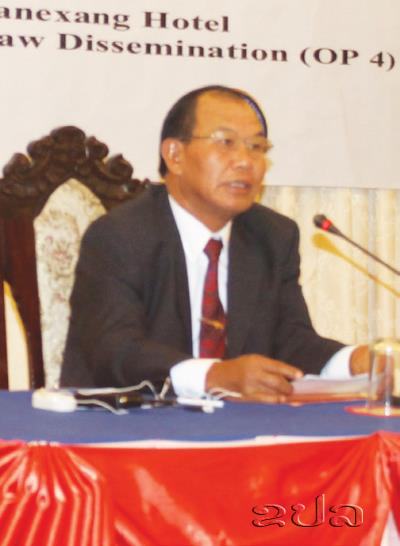
The launching ceremony of the Lao Law Application was held in Vientiane Capital on Monday Dec 5 in the presence of Minister of Justice Mr Xaysy Santivong, a country representative of United Nations Development Programme, and local media.

The new Lao Law Application aims to create favorable conditions for Lao people to simply gain and access the laws of Lao PDR. The app will give notifications via mobile phones about new and amended laws and help app users to look for specific words about law in both English and Lao.

The app will benefit students, translators, civil servants and private companies.

The mobile app has been developed since October 2015 by the Ministry of Justice.

Interested persons can do as follow: first open Safari to get access to www.Laolaw.org/laolawterms.html for download and then access via App Store.

The ministry officially opened its website last year under the web address www.moj.gov.la to promote state policies, laws and implementations by the justice sector,” said Mr Xaysy.


Source: KPL

Let’s Break Down Stereotypes in Laos: Australian Volunteer

Gender stereotypes have resulted in serious impediments to the social, political and economic empowerment of women in Laos, an Australian volunteer has said.

Women living with a disability are one of the most marginalised and vulnerable groups due to the many forms of discrimination they face in their homes and communities, and within society as a whole.

When I worked in the Philippines at a community run micro-finance organisation (MFI) providing micro-loans for women living in poverty, I was exposed to the daily hardships faced by people living with disabilities. I became aware of the stigma directed at people with disabilities, Australian Volunteer Ms Zena Van Bemmel said.

Ms Bemmel observed that the experience empowered her to train MFI staff about disability so that they could advocate within their MFIs to ensure that people with disabilities could also be considered for micro-finance loans and livelihood trainings.

There are many attitudinal and environmental barriers which can prevent the full and effective participation of people with disabilities in society on an equal basis with others, and contribute to gender stereotyping.

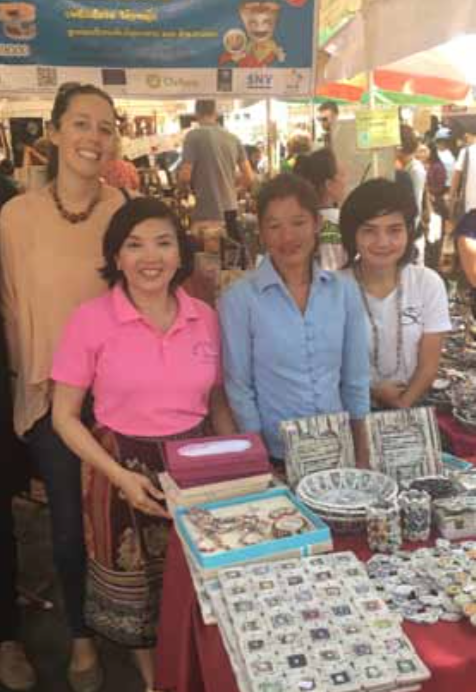
I now work as a Social Enterprise Support Officer at the Lao Disabled Women’s Development Centre (LDWDC), where I have been working as a volunteer with the Australian Volunteers for International Development programme, an Australian Government initiative, Ms Bemmel said.

According to the results of the National Population and Housing Census 2015, an estimated 2.8 percent of the population of Laos has a disability. Disability is both a cause and consequence of poverty that impacts boys, girls, women and men differently.

During her short time at the LDWDC, Ms Bemmel said she has heard many stories from the staff about their struggles in accessing and securing education and employment because of constant barriers at different stages of their lives.

The inspiring Founder and Director of the centre, Ms Chanhpheng Sivila, was home-schooled herself whilst supporting her 11 siblings to attend school.

Another one is Ms Boualiphan Hatsady, who was a child of 10, born into a very poor family and with a congenital impairment in both of her legs. She was only able to study in her village until Year 3, after which it became impossible for her to continue her schooling because of the long journey to school each day, without the support of any assistive devices.

Now Ms Boualiphan is a sewing trainer and wheelchair user at the centre, and defeated all odds by competing and winning a bronze medal in the 100 metre swimming competition at the 7th ASEAN Para Games in Myanmar.

Each employee at the centre brings a unique life experience of being a woman with a disability. This gives the LDWDC a great opportunity to take an active role in advocating bringing change for the rights of women living with disabilities.

Through the LDWDC’s core activities, it is helping to shatter misconceptions about women and disabilities by empowering disenfranchised women.

Through its vocational training programme, young women with disabilities from rural areas are being provided with vocational, literacy and life skills training.


Source: Vientiane Times

Three Die on Vientiane Roads Over Long Weekend

Three people were killed and others sustained injuries in road accidents in the capital over the three-day period from December 2-4.

Vientiane Traffic Police Department of the Ministry of Public Security recorded 19 road accidents in the capital from December 2-4 in which three people died, 31 people were injured and 39 vehicles sustained damage.

The accidents resulted in 12 people suffering critical injuries, while another 10 were seriously injured and nine people were slightly injured.

One vehicle was written off, 20 sustained moderate damage while eighteen vehicles sustained minor damage, according to the police report.

Police said most of the accidents occurred as a result of drunk driving and non-compliance with the traffic rules. Meanwhile, Xaythany district recorded the most number of accidents.

An officer with Vientiane Rescue 1623 under the Foundation for Assisting Poor People of the Lao PDR also reported that over the same period the group attended to over 100 accidents in capital in which over 100 people were injured. Most of the incidents occurred between the evening and early morning.

Many accidents occur on weekends and special occasions when people get together to drink. Alcohol is recognised as being a major cause of road accidents, and this year incidents of drunken driving have been higher than ever.

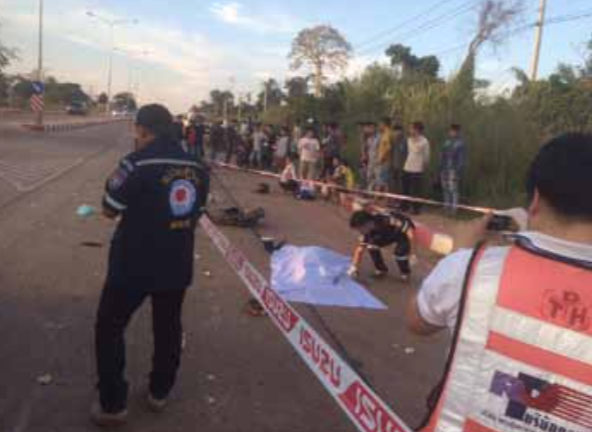
A recent accident occurred in Dongmakkhai village, Xaythany district when a motorbike and a bicycle were involved in a fatal collision which killed a cyclist instantly.

Another accident took place along No.13 North Road in Phangheng village, Naxaithong district when two motorbikes collided, killing the two riders instantly while the two passengers also sustained critical injuries.

Vientiane Traffic Police Department reported that Mr Vilaphon, 20, and his passenger Mr Vilaxay, 20, both of Phangheng village were entering from a side road when they collided with Mr Sinxay, 16, and his passenger.

The Vientiane Traffic Police Department is continuing to investigate the accidents.


Source: Vientiane Times