Home Blog Page 6606

PM Pushes Ministry on Governance, Administration

Prime Minister Thongloun Sisoulith has called on the Ministry of Home Affairs to adhere to scientific ways in the development of governance and administration, with their strong roots developed from an early stage.

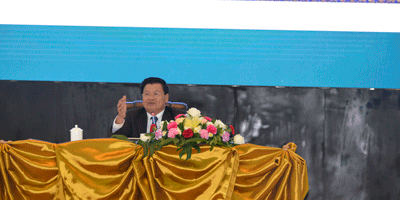
Mr Thongloun made the call yesterday in his address at the annual meeting of the ministry to review the achievements in the past year and discuss the plan for the future.

He spoke about the country as a body, which he said has an architectural structure.

If the architectural structure has strong fundaments, we will not need to modify it in the future, Mr Thongloun said.

We should build the foundation as strong as possible because it would be better if only little modifications are made through necessity, he added.

Prime Minister Thongloun stressed for any change not be made based on the desire of an individual, but accompanied by scientific discussion and consultation, research and analysis.

He commented some mistakes were allowed concerning this sector in the past, especially the arrangement of unnecessary jobs for people, saying this would have long term effects.

Arrangement of unnecessary jobs or posts has been made so that someone could be employed. This caused the gradual expansion of the organisational structure, which at last become ineffective, Mr Thongloun said.

He suggested that not all ministries and government agencies at the central level should have subordinate departments or offices in provinces and districts as these have consumed a considerable proportion of the state budget.

Developing a more streamlined organisational structure and building transparency in the public service as well as personnel development were noted by the prime minister for the ministry to make more efforts in breaking through.

Mr Thongloun called on the ministry to ensure the clear delineation of jobs, while noting that recruitment needs to be strict in terms of sourcing competent people, who have good attributes, quality of knowledge and skills and responsibilities.

He said he supported the children of government officials, children of retired officials and participants of the revolutionary movement being promoted for recruitment but they should be developed to be competent and serve as r ole models in any organisation.

However, he added, if the children do not have competency, their promotion could be harmful. In the same way, Mr Thongloun spoke about sending a student of a low grade to study at a high standard university, saying he would become a fool in the face of the difficulties.

In his address, Prime Minister Thongloun revealed that he has ordered that all salaries be paid on time for soldiers, police officers, teachers and medical staff, while stressing that the budget allocated for salary payments not be used for other purposes.

He suggested that the budget funding allocated for other purposes can be used by authorities for salary payments if the salary budget is not ready.

He also proposed that salaries be paid through ATMs even at the district level, where the service is available, noting that offenders concerning the slowness of salary payments in their sectors will be punished.


Source: Vientiane Times
Luang Prabang Handicrafts Festival Attracts more Visitors

Luang Prabang Handicrafts Festival has attracted more than 3,000 local and foreign visitors since the event began on December 4.

The weeklong festival is being organised by Luang Prabang Handicrafts Association and before it concludes on December 11 it is hoped they will be able to attract at least 9,000 visitors.

Ms Keo Oudomvilay, who is in charge of the organising committee told Vientiane Times about the visitor target yesterday.

This year marks the fifth year the festival has been held, Ms Keo said.

Holding this festival aims to coincide with celebrating the 21st Anniversary of Luang Prabang as a UNESCO World Heritage Site, she added.

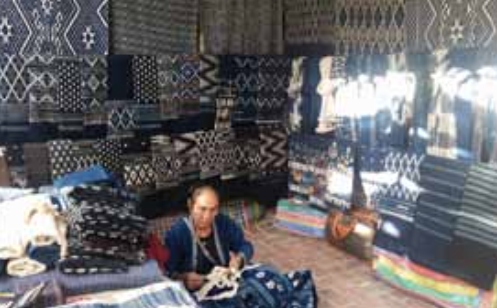
Ms Keo said the festival has featured 20 booths and tourists can shop at the producers’ market as well as join demonstration events.

This year, it is mostly artisans and handicrafts makers participating in the festival. They are selling an extensive variety of products including textiles and many other cultural items from Luang Prabang and surrounding areas.

Beautiful handmade pieces are on sale to suit all budgets, from inexpensive souvenirs to exquisite high-end collectables, she said.

Food products such as coffee, tea, oils and spices produced in Laos are also a key feature of the event.

Moreover, visitors will be able to experience Lao cuisine, coffee and tea as well as witness traditional music and dancing performances.

Ms Keo added that visitors to the festival will notice that many women still wear a traditional tube skirt or sinh .

The sinh is usually made of silk, cotton or a combination of fibers and is woven with motifs that reflect the ethnic culture of a community or region, or the occasion for which it is intended.

Traditionally, a sinh is completely handmade; from the hand spinning of the silk or cotton threads to the dyeing process, preparation of the pattern and loom, and finally; hand weaving.

UNESCO declared the town a World Heritage Site in 1995 and since then tourist arrivals have risen with each passing year.

Luang Prabang is the former capital of the Lane Xang Kingdom, meaning the Land of a Million Elephants. The town is a cultural centre in the region, with its numerous temples paying testimony to its former glory.

Its landmark attractions are its centuries-old Buddhist temples and monasteries, Kuang Xi waterfall, Phousy hill and Buddha cave, all of which are easily accessible.

Luang Prabang was most foreign visitors’ first choice because of its old and attractive temples and the activities of the monks who live in these temples.

According to the Luang Prabang Tourist Office, over 400,000 tourists of all nationalities visited Luang Prabang province last year. They hope to boost the number to 700,000 tourists by 2020.

Source: Vientiane Times

Laos Reaffirms Commitment to Pursue Paris Climate Change Agreement

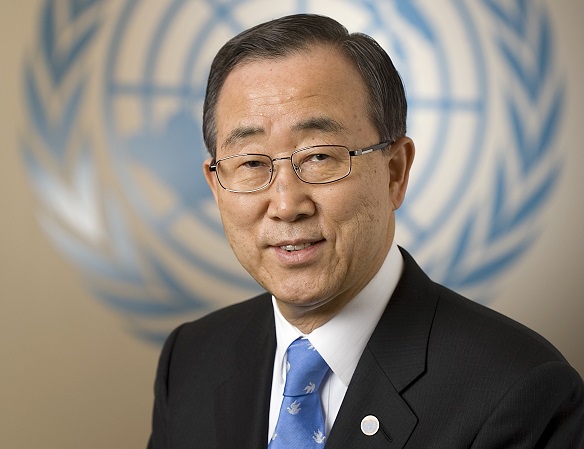
Portrait of SG

The Lao government is determined to join hands with the international community in implementing the Paris Agreement on Climate Change, a Lao senior diplomat told the international community recently.

Delivering his speech at the recent high-level segment of the 22nd Conference of the Parties (COP 22) to the UN Framework Convention on Climate Change (UNFCCC) in Morocco, Deputy Minister of Foreign Affairs, Thongphane Savanphet, reaffirmed the commitment of the Lao government to the accord.

He added that Laos, as a mountainous and landlocked developing country, has been exposed to more frequent, broader and severe natural disasters as a result of climate change. The country is highly vulnerable to the impacts of climate change due to its low adaptive capacity and limited resources.

Having fully recognised that climate change poses challenges to the sustainable development of Laos and to the livelihood of the people, the Lao government ratified the Paris Agreement and submitted its instrument of ratification to Secretary General Ban Ki-Moon during his participation in the 8th ASEAN-United Nations Summit in Vientiane in September this year.

I would like to reaffirm the Lao PDR’s commitment to pursue practical policy and concrete action in implementing the Paris Agreement, including our national contributions, while mainstreaming climate change and natural disasters risk reduction and management along with the Sustainable Development Goals into our National Socio-Economic Development Plans, he told the participants.

We stand ready to work closely with the international community in implementing the Paris Agreement.

He told the conference that the Lao government has been implementing the National Strategy on Climate Change via its action plans for the period of 2013-2020, which define mitigation and adaptation actions in sectors such as agriculture, forestry, water resources, energy, transportation, industry and public health.

At the regional level, Laos has been working closely with other ASEAN member states in addressing the climate change issue. At the recently concluded 28th and 29th ASEAN Summits held in September in Vientiane, ASEAN leaders issued the ASEAN Joint Statement on Climate Change to the 22nd Conference of the Parties (COP-22) for the United Nations Framework Convention on Climate Change (UNFCCC), which highlighted ASEAN members’ commitment to strengthen the management of ASEAN’s diverse ecosystems and landscapes through a landscape-based approach. The aim is to build climate resilience and enhance ASEAN countries’ rapid response capacity to be more efficient and effective in the event of natural disasters.

Source: Vientiane Times

This Month, Volunteer Teachers Will Begin Examinations

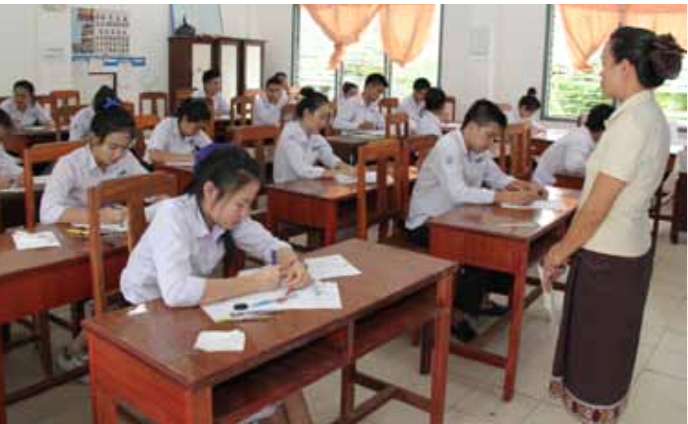
Volunteer teachers in Vientiane, along with newly graduated education students, will participate in an examination on December 10 of this year in the hope to become full-time civil servants of government.

This year, more than 1200 volunteer teachers, including newly graduated students from the Teacher Training College, have registered at the Vientiane Education and Sports Department to be employed as civil servants, officials confirmed.

Currently, there are around 700 volunteer teachers in Vientiane who are still waiting for a quota allocation to become fully paid state employees.

The exam assesses their competency as a way to resolve quality issues and ensure fairness for all volunteer teachers.

A senior official from the Vientiane Education and Sports Department, Mr Khampanh Bounphaxaixon, told Vientiane Times yesterday the objective of the exam this year is to help solve the problem of teacher selection and ensure that only the best qualified teachers are recruited to serve the country.

The Vientiane Education and Sports Department wants to allocate a quota of 200 new teachers in order to respond to the needs of the education sector, but the government has only approved a quota of only 107 staff.

Mr Khampanh said for many years it has been a concern among volunteer teachers that they are not allocated enough places to join the ranks of fully paid state employees in the education sector.

Once the move is instituted, newly graduated teachers who can pass the competency exam will be among those interviewed as prospective state employees, he said.

I think this exam serves as an important function in solving the concern among volunteer teachers about fairness in the selection process, he continued.

Personnel Department Director General of the Ministry of Education and Sports, Mr Chansamout Keosouttha, said the majority of young teachers who do not receive a quota allocation to become state employees end up leaving their volunteer government posts to go and work in the private sector instead.

Private school jobs are considered by some as more secure because volunteers do not know if or when they will receive their quota allocation to work as a state employee.

He said the demand for teachers at private primary schools is also increasing every year and the schools offer negotiated salaries and welfare provision for their teachers while the government cannot guarantee volunteers an allocated assignment.

The other reason many volunteer teachers decide to work with private schools immediately after graduating is they worry they could miss out on a long-term employment opportunity if they wait for a government job, Mr Chansamout said.

A volunteer teacher has to work at least two years to be eligible for a promotion to the status of civil servant, according to the old policy.

The majority of the provinces have allocated full-time placements to newly graduated students, because others have been unable to comply with the policies of the ministry.

Mr Chansamout said directly giving recent graduates a quota allocation has held back the development of the education system in the country because some of the volunteer teachers who are elevated to the status of civil servants still lack experience.

We think the exam system can solve these problems and create more transparency in the education sector, he noted.

According to the ministry, there are currently around 10,000 volunteer teachers nationwide who are still waiting for a quota allocation to become fully paid state employees.


Source: Vientiane Times

Xayaboury Prepares for Annual Elephant Festival

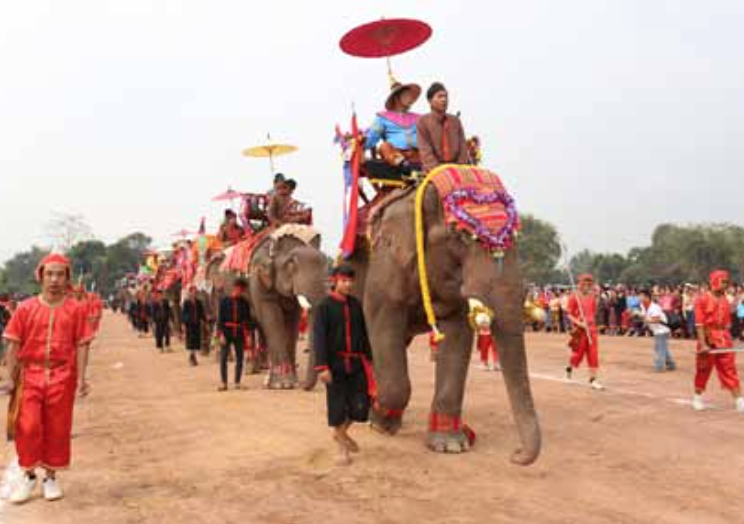
Almost 70 elephants will feature in Xayaboury’s annual elephant festival from February 13-19, aiming to promote the province’s colourful culture and local livelihoods.

The aim of the festival is preserve the culture and livelihoods of Lao people who work with elephants. Elephants are a longstanding part of the nation’s history and have been an integral part of Lao life since ancient times.

Deputy Governor of the province, Mr Yanyong Sipaseuth, who also is a member of the event organising committee told media recently the 11th elephant festival will take place from February 13 to 19 at Xayaboury district stadium with the official opening being held on February 17.

Every year, provincial authorities plan many activities to celebrate the festival and this coming February 68 elephants will take part in events such as a grand parade, a baci ceremony, and even a beauty contest. The animals will also demonstrate their skills and the close relationship they have with their mahouts.

Visitors can take a ride on an elephant and watch them being bathed in the river.

In the evening there will be a vibrant street market featuring local products and goods from neighbouring countries.

The festival will spotlight the past and present role that elephants play in Laos, and their importance in Lao history and lifestyle.

It also highlights the plight of these endangered animals, whose numbers are dwindling fast.

Currently, elephant owners are being encouraged to care for their animals so that they are not overworked and can reproduce. Their former role as the mighty haulers of massive tree trunks through forests is becoming a thing of the past and instead they are living an easier life in the tourism industry.

The first elephant festival was held in 2007 in Hongsa district, when it was organised by the conservation group ElefantAsia.

It was subsequently held in Paklai district and then in Xayaboury district, which has hosted the event since 2012.

Source: Vientiane Times

Sekong Bridge Completion Delayed to 2018

Construction of the Sekong Bridge on National Road No.16B in Sekong province has experienced delays and completion is now slated for 2018 instead of next year as previously projected.

The construction of the bride began in 2014 at a projected cost of US$15 million and was originally expected to finish in March this year but they experienced some delays causing extensions beyond the project plan.

According to the construction project deputy head, Mr Khamkeng Keosouvanh, at present work on the project is about 70 percent complete.

The bridge will be 300 metres in length and 11 metres in width.

Therefore, the project developer proposed to extend the construction period for another ten months in order to improve some aspects of the work in accordance with accepted international techniques, he added.

So far, we have completed works under and above the bridge and the remaining works are bridge surface pavement and the bridge entrance approaches on each side, in order to ensure a quality finished product, Mr Khamkeng said.

To achieve the plan, the project developer will accelerate efforts to complete the remaining works, he added.

Sekong province is divided into two areas by the Sekong River as there is no connecting bridge. The eastern parts of the province are relatively undeveloped.

The first project aims to vitalise the regional economy across the river by improving transportation through the construction of a bridge, which will stimulate economic activities on both sides.

This will help improve the residents’ financial situation, particularly in the lesser developed areas.

If National Road No.16B is connected by this bridge, it would also increase cross-border trade between the southern part of Laos and its neighbouring countries.

Source: Vientiane Times

New Law to Determine Red Cross Future

Determining the right position, obligations and role of the Lao Red Cross will ensure the humanitarian organisation is able to serve the needs of the Lao people and bring them the greatest benefits.

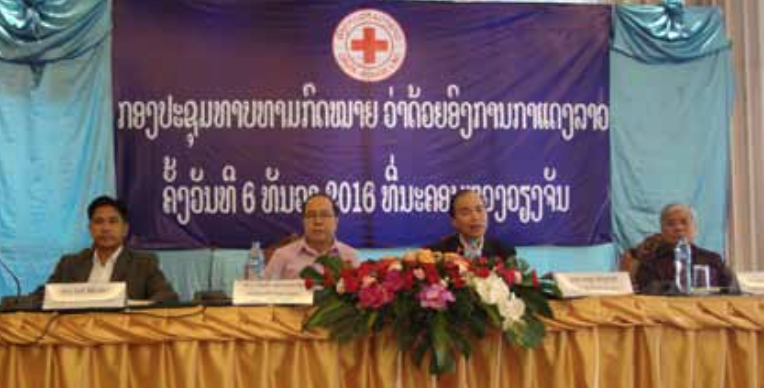
This issue was noted by top LRC leaders as the central focus of discussions on the draft Law on the Lao Red Cross at a meeting held yesterday in Vientiane.

The meeting aimed to facilitate final discussions on the draft law and achieve consensus before it is submitted to the government for consideration and approval.

The LRC has been working for humanitarian purposes and benefited Lao people for 60 years but it has lacked a strong legal structure to ensure its continued development and the greatest benefits for the people .

A strong regulatory structure is especially necessary for a relief and disaster organisation in Laos as a least developed country which often faces natural disasters.

In deliberation on the draft law, LRC President Mr Khamhoung Heuangvongsy reminded the participants, who included officials from the Ministry of Justice, Ministry of Labour and Social Welfare (MOLS), Ministry of Health (MOH), and lawyers about the position, which he said is still unclear.

He told the meeting that since it was established 60 years ago, the organisation has moved around from one government agency to another, from the MOH to the Government Office, from the Government Office to the MOLS.

This situation has interrupted the continuation of the organisation’s development, and had impacts on those working for it, Mr Khamhoung said.

He confirmed that despite the LRC having a political philosophy which links with the Party and government, it works independently under the international convention, and the seven fundamental principles of the International Red Cross and Red Crescent Movement.

However, Mr Khamhoung said, the way the LRC would be defined by the upcoming law was under international observation.

The LRC has four technical units, which have 97 civil servants working at the central level, 290 civil servants working at the provincial level, and 187 civil servants working at its districts offices.

According to Mr Khamhoung, the LRC relies on the government budget only for salaries and other allowances, while all its activities have been implemented via domestic and international support.

If the LRC becomes too government-oriented, it will not receive sufficient support from the international community, he said.

Meanwhile, Mr Khamhoung spoke about the Red Cross organisations in countries where communist parties are ruling, including the countries of the former Soviet Union in central Asia, saying they are almost entirely dependent on their governments.

He pointed to the Red Cross in Vietnam as an example of a successful humanitarian organisation, saying it could mobilise support from a broad cross section of the public.

This 72-article draft law on the Lao Red Cross defines the humanitarian organisation as a civil society organisation of the Lao PDR, which works independently under the Party’s direction, constitution and laws of the country, international conventions, and the seven fundamental principles of the International Red Cross and Red Crescent Movement on humanity, which the country is a party to.

The last paragraph in the draft states any stipulations contradicting this law, are canceled.

Source: Vientiane Times

SCG Providing Scholarships for Vientiane and Khammuan Students

Siam Cement Group (SCG) is to provide 250 scholarships today to students from Vientiane and Khammuan province worth 450 million kip.

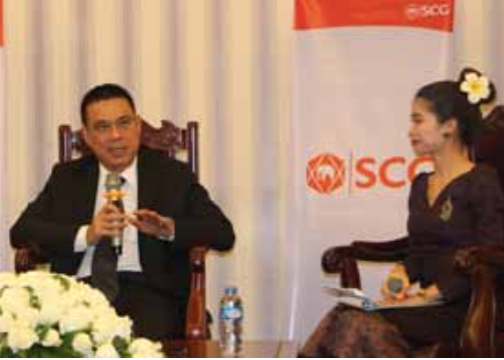
President and CEO of SCG, Mr Roongrote Rangsiyopash told media at a press conference yesterday that this is the fifth anniversary of the SCG Sharing the Dream scholarship programme in Lao PDR.

This year we will be providing 150 scholarship funds to Vientiane and 100 scholarship funds to Khammuan province he said.

The SCG Sharing the Dream scholarship programme targets outstanding secondary level students from poor families and is set to double the number previously awarded.

The programme distributed scholarship application forms and also visited target students at their schools and homes. The company has been operating in Thailand since 1913 and has provided scholarships to students in Laos since 2012.

In the first year 99 scholarships were awarded in Vientiane and Khammuan but this has continued to increase every year.

The project has collected information about target students’ studies and the status of their families to ensure the programme is well directed to deserving recipients.

SCG will hold a handover ceremony today to provide the scholarships to students from Vientiane and Khammuan province.

SCG, one of the leading conglomerates in the ASEAN region, currently comprises three core businesses: SCG Cement-Building Materials, SCG Chemicals, and SCG Packaging. Throughout its 103 years, SCG has conducted its business in line with good corporate governance and sustainable development principles.

SCG has pledged to become a business leader in the ASEAN region and prepare itself for competition in global markets. The group is committed to ongoing organisational development to create innovations in value-added products and services that meet the needs of customers. Moreover, SCG is striving to contribute to the sustainable progress of local communities where it operates.

Source: Vientiane Times