Home Blog Page 1181

Laos Develops National AI Strategy Guided by UNESCO Ethics Framework

An illustration to show what Ethical AI for National Development sectors includes Transparency, Inclusion, Governance, Education & Skills, Research & Innovation, Digital Infrastructure, and Cultural Identity.

On 27 January, the Government of Laos announced that its upcoming National Artificial Intelligence Strategy will be guided by findings from UNESCO’s Artificial Intelligence Ethics Readiness Assessment Methodology (RAM), aiming to ensure the responsible and inclusive development of artificial intelligence (AI) nationwide.

The event marked the official launch of UNESCO’s Artificial Intelligence Ethics Readiness Assessment Methodology Country Report for Laos, based on a national assessment carried out since January 2025.

Speaking at the workshop, Minister of Technology and Communications Santisouk Simmalavong said artificial intelligence could play a key role in modernising sectors such as the economy, agriculture, education, tourism, culture, and public administration. He said the assessment would guide Laos in developing AI solutions that reflect national values, reduce the digital divide, and ensure technology benefits all citizens.

The UNESCO assessment reviews Laos’ readiness to govern artificial intelligence across areas including policy and regulation, institutional coordination, human capacity, infrastructure, and social and cultural impacts. While existing information technology, e-government, and digital economy policies provide a foundation, the report also highlights challenges such as uneven access to technology, limited skills, and gaps in research capacity.

UNESCO Regional Director in Bangkok Soohyun Kim said investment in research and development remains essential to ensure artificial intelligence delivers real social and economic benefits. 

She noted that Laos’ National Science, Technology and Innovation Strategy sets long-term goals to increase research and development investment and stressed the importance of aligning education systems with rapid technological change.

Laos is among 77 countries worldwide, and eight in Southeast Asia, using UNESCO’s assessment tools to support the development of national artificial intelligence policies.

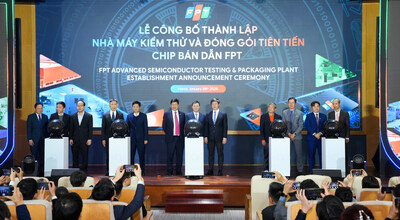
FPT announces the establishment of an Advanced Semiconductor Testing and Packaging plant, accelerating the integration of Vietnam’s Semiconductor value chain

FPT Signs Key International Agreements to Advance Vietnam’s Mastery of Semiconductor Technology

HANOI, Vietnam, Jan. 29, 2026 /PRNewswire/ — On January 28, 2026, in Hanoi, FPT Corporation officially announced the establishment of the FPT Advanced Semiconductor Testing and Packaging Plant, aiming to strengthen connectivity across the semiconductor value chain and to realize Vietnam’s major national orientations on mastering core and sovereign technologies, in line with Resolution No. 57-NQ/TW, Decision No. 1131/QĐ-TTg and Decision No. 1018/QĐ-TTg, thereby enabling Vietnam to move deeper into the global semiconductor supply chain. This is the first semiconductor testing and packaging plant in Vietnam fully owned and operated by Vietnamese entities, contributing to the completion of the national semiconductor ecosystem with a full spectrum of activities spanning research, design, manufacturing, training, testing and packaging, and commercialization—positioning Vietnam more prominently in the global semiconductor value chain.
FPT Announces the Establishment of an Advanced Semiconductor Testing & Packaging Plant

The announcement ceremony was attended by representatives from the Ministry of Science and Technology, leaders of Viettel Group, leaders of FPT Corporation, representatives from enterprises, research institutes and universities, members of the Au Lac AI Alliance, the Low-Altitude Economy Alliance, and major semiconductor enterprises and partners from Vietnam, Japan, South Korea, Taiwan region, and other countries.

The announcement of the establishment of the FPT Advanced Semiconductor Testing and Packaging Plant underscores FPT’s strong commitment to implementing the Politburo’s Resolution No. 57-NQ/TW on breakthroughs in science, technology, innovation, and national digital transformation; the Prime Minister’s Decision No. 1131/QĐ-TTg on strategic technologies; and Decision No. 1018/QĐ-TTg approving the national strategy for semiconductor industry development, which sets the target for Vietnam to have 10 advanced testing and packaging facilities by 2030.

This initiative also represents a strategic move to harness the collective strength of the national semiconductor alliance, jointly developing and mastering core technology capabilities, and completing an integrated semiconductor ecosystem spanning research, design, manufacturing, testing, packaging, and commercialization—thereby enabling Vietnam to move further up the global semiconductor value chain.

In addition, the plant will provide hands-on training and practical learning opportunities for semiconductor students within Vietnam, contributing to the enhancement of human resource quality in the semiconductor sector and supporting the national goal of developing 50,000 semiconductor professionals by 2030, including at least 35,000 professionals in manufacturing, packaging, testing, and other key stages of the semiconductor industry.

Speaking at the event, Mr. Truong Gia Binh, Chairman of FPT Corporation, stated: “If Vietnam is to become a prosperous nation, there is no other path than mastering semiconductor technology. If we count Vietnamese professionals around the world, we are a significant force in the semiconductor industry. Our biggest challenge is to connect and build our own ecosystem. With today’s event, we take another step toward completing Vietnam’s semiconductor ecosystem. FPT has grown through hardship, so we always pursue practical solutions: products must be market-ready. We will closely collaborate with Viettel and domestic partners—wherever chips are manufactured, FPT will participate in testing and packaging—so that Vietnamese technology chips can soon be applied in real life”.

Lieutenant General Tao Duc Thang, Member of the Party Central Committee, Chairman and CEO of Viettel, emphasized: “FPT’s investment in a semiconductor testing and packaging plant holds strategic significance in completing the ‘Make in Vietnam‘ semiconductor ecosystem, fully aligned with the spirit of Resolution No. 57-NQ/TW on breakthroughs in science, technology, innovation and national digital transformation. The testing and packaging plant, together with Viettel’s chip fabrication plant scheduled to break ground in January 2026, will serve as a “hands-on” environment for training, developing, and retaining semiconductor engineers domestically, thereby helping curb brain drain and build a core workforce for this strategic industry. Viettel consistently believes that semiconductor industry development must be based on close cooperation between the state-owned and private sectors, in accordance with Resolution No. 79-NQ/TW on state-owned economic development and Resolution No. 68-NQ/TW on private sector development”.

Dr. Nguyen Bich Yen, Honorary Chairwoman of the Institute of Semiconductor and Advanced Materials – Vietnam National University, Hanoi; Chairwoman of VSAP Lab and IEEE member, commented: “Vietnam is no longer merely talking about semiconductors—Vietnam is taking synchronized and serious action. Pioneer enterprises are driving progress through concrete commitments and collaboration to build a Vietnamese semiconductor value chain. Key components—from materials, design, packaging, testing and manufacturing to digital infrastructure and human resources—are gradually taking shape. In this picture, FPT stands out as a major pillar, not only enhancing technological capacity but also serving as a connector, leader and trust-builder for the entire ecosystem”.

The FPT Advanced Semiconductor Testing and Packaging Plant is expected to emerge as a leading advanced testing and packaging facility in the region. In Phase 1 (2026–2027), the plant will be located at Yen Phong II-C Industrial Park, Yen Phong and Tam Giang Communes, Bac Ninh Province, with a total floor area of 1,600 square meters. The facility will be equipped with 06 functional testing lines (ATE testers and handlers) and 01 dedicated reliability and durability testing area, including Burn-in, Reliability Test, and Failure Analysis Test. All equipment systems comply with international quality management standards ISO 9001, ISO 14001, and IATF 16949, as well as specialized semiconductor technical standards such as JEDEC, AEC-Q100, and AEC-Q101, ensuring product quality, stability, and reliability throughout the entire product lifecycle.

With the capability to flexibly deliver both rapid testing and in-depth customized testing tailored to individual customer requirements, the system enables customers to optimize costs without the need to distribute quality inspection processes across multiple locations. Notably, a key competitive advantage of FPT lies in its Make-in-Vietnam testing software development, developed and fine-tuned to meet the specific requirements of different products. The completion of the six functional testing lines and the dedicated reliability and durability testing area is scheduled to coincide with celebrations marking the anniversary of the Liberation of the South and National Reunification later this year.

In Phase 2 (2028–2030), FPT plans to expand the plant’s total area to approximately 6,000 square meters, with 18 newly installed functional testing lines, 3 reliability and endurance testing zones, expanded both conventional packaging lines (QFN, QFP, DFN, etc.), additional CSP (Chip Scale Package), WLP (Wafer Level Package) lines, along with advanced IC packaging lines, collectively ramping the plant’s total output to billions of units per year.

These investments are expected to raise the plant’s capacity to billions of products annually. In parallel, FPT will strengthen its testing capabilities for high-end chips serving IoT, automotive applications, and AI-on-the-edge SoC (System-on-Chip) solutions, further completing the semiconductor value chain.

At the event, Mr. Bui Hoang Phuong, Deputy Minister of Science and Technology, affirmed: “Vietnam has advantages in human resources and has attracted numerous chip design companies to invest and employ Vietnamese engineers, laying the foundation for domestic chip design enterprises. In the global supply chain, Vietnam plays an increasingly important role in packaging and testing, although these stages are still largely dominated by foreign companies. FPT’s investment in an advanced testing and packaging plant completes a critical missing link, helping to close Vietnam’s semiconductor ecosystem. This concrete project demonstrates FPT’s commitment to turning aspirations into action—bringing Vietnamese intelligence to the world and positioning Vietnam more clearly on the global semiconductor map.”

Notably, FPT signed a series of cooperation agreements with leading semiconductor technology partners in Vietnam and internationally. Partnering with major domestic and global corporations represents a strategic approach for FPT to master semiconductor technologies in the long term.

Specifically, FPT and Viettel entered into a comprehensive partnership to build sovereign semiconductor capabilities through end-to-end value chain integration, covering training, design, fabrication, testing, packaging, and commercialization. The collaboration focuses on the joint development of AI-on-the-edge SoC chips on 28–32nm process nodes, serving ecosystems of cameras, drones, unmanned aerial vehicles (UAVs), and smart devices. This strategic alliance between two of Vietnam’s leading technology groups aims to complete a closed-loop national semiconductor ecosystem. Together with Viettel’s groundbreaking ceremony for Vietnam’s first semiconductor fabrication plant, FPT’s announcement of the establishment of the FPT Advanced Semiconductor Testing and Packaging Plant represents a strong and concrete action, reaffirming Vietnam’s determination to master key stages of the national semiconductor value chain.

In parallel, FPT also signed agreements with prominent international semiconductor partners, including Restar—to advance R&D in semiconductor testing and packaging technologies and to commercialize chips tested and packaged by FPT; Winpac—to promote semiconductor commercial cooperation and explore potential joint investment in FPT’s testing and packaging facilities in Vietnam; and VSAP LAB—to pursue comprehensive cooperation from research to mass production, optimizing advanced packaging and testing capabilities while jointly developing highly specialized semiconductor talent.

At the event, FPT also announced plans to research and develop AI-on-the-edge System-on-Chip (SoC) solutions, aiming to fully master the smart device ecosystem encompassing cameras, drones, and unmanned aerial vehicles (UAVs).

FPT is a pioneering Vietnamese enterprise in the development of “Make in Vietnam” chips, with more than a decade of engagement in the semiconductor industry. To date, FPT has built a comprehensive semiconductor ecosystem spanning chip design, packaging, testing, and workforce development, with the ambition of positioning Vietnam as a key semiconductor hub in the region.

FPT focuses on the research and development of core chip product lines, including power ICs, power management ICs (PMICs), and AI-on-the-edge SoC chips. In parallel, FPT is accelerating high-quality workforce development, targeting the training of 10,000 semiconductor engineers by 2030 through a multi-tier education system and international collaboration. A flagship initiative is the “2+2” program, under which students study two years at FPT University, followed by two years of specialized training in Taiwan region or South Korea, and subsequently undertake internships at leading companies. In 2025, FPT inaugurated the High-Tech and Semiconductor Center in Da Nang and the Vietnam Semiconductor Incubation and Development Center (V.S.I.C) in Hanoi. Notably, in December 2025, FPT became the first Vietnamese enterprise to export commercial semiconductor chips to Japan, reaffirming its growing position in the global semiconductor value chain.


Citi Enriches Private Market Offerings for Citigold Private Clients in Collaboration with Blackstone, Blue Owl and KKR

Citigold Private Clients will gain access to alternative asset classes including private equity and private infrastructure

SINGAPORE and HONG KONG, Jan. 29, 2026 /PRNewswire/ — Citi Singapore and Citi Hong Kong have announced strategic partnerships with leading global private market firms Blackstone, Blue Owl and KKR, to launch evergreen funds for high net-worth clients who are seeking enhanced wealth solutions and greater portfolio diversification.

Through the partnerships, Citigold Private Clients in Asia and the Middle East will gain access to private markets, including equity, credit, infrastructure, and real estate. These alternative asset classes have traditionally been reserved for institutional investors.

The funds will be structured in an evergreen format, offering simplified access to private markets with more flexible subscription and liquidity terms than traditional closed-ended private markets solutions, subject to a minimum initial holding period.

The launch of the funds has started and the funds will continue to be rolled out in the next few months.

Citigold Private Clients will be able to diversify their portfolios, capture opportunities for uncorrelated returns and long-term growth, as well as participate directly in the value creation inherent in private markets assets.

Ms Yeo Wenxian, Head of Wealth for Asia South, Citi, said: “We are excited to work with Blackstone, Blue Owl and KKR to leverage their industry leadership, investment expertise and robust deal-sourcing capabilities. These investment vehicles will deepen and broaden Citi’s comprehensive wealth management offerings, further cementing our role as a trusted partner to our clients in their wealth journeys.”

Ms Vicky Kong, Head of Wealth, Asia North and Australia, Citi, said: “In today’s complex and volatile market, our clients are rightly seeking resilient, diversified sources of returns beyond traditional public markets. This collaboration with Blackstone, Blue Owl and KKR directly addresses that demand, providing sophisticated access to private markets that were once the exclusive domain of institutional and private bank investors. This is more than a product expansion, it’s a significant step in our commitment to delivering comprehensive wealth management solutions to our affluent clients, and empowering our clients to build long-term portfolios fit for the future.”

Mr Ed Huang, Head of Asia Pacific for Blackstone Private Wealth, said: “We are delighted to build on our longstanding relationship with Citi, combining its robust network and Blackstone’s position as the world’s largest alternatives manager, with proven performance in scaled offerings and a 23-year track record serving individual investors. We remain committed to expanding access to institutional-quality private market opportunities for Citi’s high-net-worth clients, helping them diversify their portfolios. Education is the cornerstone of our platform, and we look forward to deepening our partnership by providing enhanced resources and insights into private markets.”

Mr Sean Connor, CEO and Global Head of Private Wealth at Blue Owl Capital, said: “Our global partnership with Citi for their platform expansion in Asia is a critical milestone in our collective effort to provide best-in-class access to the private markets for investors. We are pleased to bring Blue Owl’s differentiated investment capabilities, all-weather solutions, along with dedicated service and support for Citi financial advisors and their clients. Our priority is to continue to provide differentiated access to institutional-grade solutions that empower investors to unlock the full potential of the private markets in their portfolios with leading global partners like Citi.”

Ms Jacqueline Zhuang, Managing Director and Head of Global Wealth Solutions Asia Pacific ex-Japan at KKR, said: “This strategic partnership with Citi provides their advisors and clients across Asia and the Middle East with differentiated access to KKR’s suite of evergreen private equity, infrastructure and private credit strategies. Individual wealth investors expect access to the same private markets investment opportunities as institutions. Together with Citi, we are focused on delivering a comprehensive solution that combines investor service, education, and access to KKR’s differentiated investment capabilities.” 

About Citi
Citi is a preeminent banking partner for institutions with cross-border needs, a global leader in wealth management and a valued personal bank in its home market of the United States. Citi does business in more than 180 countries and jurisdictions, providing corporations, governments, investors, institutions and individuals with a broad range of financial products and services.

Additional information may be found at www.citigroup.com | X: @Citi | LinkedIn: www.linkedin.com/company/citi | YouTube: www.youtube.com/citi | Facebook: www.facebook.com/citi 

Bybit Leads Global XAUT Spot Trading with ~16% Market Share as Tokenized Gold Rallies to New Highs

DUBAI, UAE, Jan. 29, 2026 /PRNewswire/ — Bybit, the world’s second-largest cryptocurrency exchange by trading volume, announced that it has become the No.1 centralized exchange for spot trading of Tether Gold (XAUT), commanding approximately 15.75% of total XAUT trading volume among centralized venues, according to CoinGecko data.

Bybit Leads Global XAUT Spot Trading with ~16% Market Share as Tokenized Gold Rallies to New Highs

The surge in XAUT activity coincides with the token hitting new all-time highs around $5,500, closely tracking spot gold’s breakout above $5,000. Gold prices have climbed on rising macroeconomic uncertainty, persistent inflation risks, geopolitical tensions, and continued central bank accumulation of gold — factors that have reinforced gold’s role as a global hedge and store of value.

“Spot gold rose over 64% in 2025 — its biggest annual gain since 1979,”  said Han Tan, Chief Market Analyst at Bybit Learn. “As long as the macro backdrop remains conducive, and central banks and ETF investors sustain their purchases, gold should have little trouble posting fresh all-time highs in 2026.”

As interest in gold-backed tokens accelerates, Bybit has become the primary liquidity and price discovery venue for XAUT, with trading activity remaining strong across weekends and periods when traditional commodities markets are closed. The exchange’s liquidity depth has made it a central hub for traders seeking to gain or adjust gold exposure in real time, regardless of traditional market hours.

The concentration of XAUT trading on Bybit reflects a broader shift in how market participants are approaching the current bull cycle. More traders are turning to tokenized real-world assets (RWAs) such as gold-backed tokens to balance volatility in digital asset portfolios, while retaining the speed, accessibility, and global reach of crypto markets.

“Gold’s resurgence is being mirrored on-chain through XAUT, and traders are choosing Bybit as their primary venue to trade,” said Emily Bao, Head of Spot at Bybit. “Our focus has been on building the deepest liquidity and most reliable market access, enabling efficient execution as tokenized gold becomes a core macro asset in crypto markets.”

Bybit’s comprehensive product suite enables traders to capitalize on XAUT’s momentum through multiple strategies. The platform offers spot trading, margin trading with up to 10x leverage, and derivatives trading with up to 50x leverage. Traders can deposit XAUT across multiple blockchains including Solana, Ethereum, Mantle, Monad, and TON. The exchange also supports automated strategies such as DCA/recurring buys and Grid Bot, alongside onchain tools for alpha trading and yield farming, giving users flexible options to participate in the gold rally.

As the tokenized gold market continues to expand, Bybit remains committed to delivering strong liquidity, 24/7 trading access, and institutional-grade market infrastructure, reinforcing its position as the leading centralized exchange for XAUT trading during the current gold-driven bull run.

#Bybit / #CryptoArk / #IMakeIt 

About Bybit

Bybit is the world’s second-largest cryptocurrency exchange by trading volume, serving a global community of over 80 million users. Founded in 2018, Bybit is redefining openness in the decentralized world by creating a simpler, open and equal ecosystem for everyone. With a strong focus on Web3, Bybit partners strategically with leading blockchain protocols to provide robust infrastructure and drive on-chain innovation. Renowned for its secure custody, diverse marketplaces, intuitive user experience, and advanced blockchain tools, Bybit bridges the gap between TradFi and DeFi, empowering builders, creators, and enthusiasts to unlock the full potential of Web3. Discover the future of decentralized finance at Bybit.com.

For more details about Bybit, please visit Bybit Press

For media inquiries, please contact: media@bybit.com

For updates, please follow: Bybit’s Communities and Social Media

Discord | Facebook | Instagram | LinkedIn | Reddit | Telegram | TikTok | X | Youtube


New Study: AI Ads Match Human Creative in Major Report from Columbia University, Harvard University, Technical University of Munich, and Carnegie Mellon University; Taboola Data Shows AI Wins by Appearing Authentically Human and Prioritizing Visual Trust Signals

HONG KONG, Jan. 29, 2026 /PRNewswire/ — Taboola, a global leader in delivering performance at scale for advertisers, today announced the findings of a major field study conducted in collaboration with researchers at Columbia University, Harvard University,Technical University of Munich, and Carnegie Mellon University. The research provides the first-ever look at how generative AI (GenAI) compares to human creativity in driving consumer action by analyzing large-scale real-world ad performance.

New Study: AI Ads Match Human Creative in Major Report from Columbia University, Harvard University, Technical University of Munich, and Carnegie Mellon University;

While GenAI has revolutionized production speed and cost, its impact on actual performance has remained a subject of intense debate. The new study, titled, AI Ads That Work: How AI Creative Stacks Up Against Humans,” analyzed hundreds of thousands of live ads running on Realize, Taboola’s performance advertising platform, totaling more than 500 million impressions and 3 million clicks.

Key insights from the academic research include:

  • GenAI ads perform just as well as human-made ads: AI-generated ads performed just as well as human-made ads. In raw data, AI ads saw a slightly higher average click-through-rate (CTR) (0.76%) compared to human ads (0.65%), though they performed comparably when researchers applied the tightest statistical controls.
  • AI ads win the most when they don’t “look” like AI: AI-generated ads that did not “look like AI” achieved the highest engagement of all groups, significantly outperforming both human-made ads and AI ads that were perceived as artificial.
  • Human faces are the “secret ingredient” for trust: The study found that one of the most important factors in making an ad feel “human” and trustworthy was the presence of a large, clear human face. Interestingly, based on Taboola’s best practices and policy restrictions, AI-generated ads were more likely to include these trust cues than their human-made counterparts.
  • Brands no longer have to choose between speed and quality: AI-generated visuals increased or maintained click-through rates without reducing downstream conversion performance, proving that advertisers do not have to trade quality or conversions for production scale.
  • Food, drink, and finance brands were among the first to adopt AI ads: Specific sectors; most notably, the “food and drink” and “personal finance” industries were early to adopt AI ads.

“Taboola’s platform provided us with a literal gold mine of real-world data that is simply unavailable in a lab setting. By analyzing over 500 million impressions, we were able to move past the hype of GenAI and uncover its real impact in large scale settings,” said Oded Netzer, Vice Dean for Research, Columbia Business School. “Our findings prove that when AI is used to enhance human cues—like the trust found in a human face—it doesn’t just match human performance; it often sets a new ceiling for engagement.”

Methodology

The study utilized a quasi-experimental “sibling ads” approach, comparing matched pairs of AI-generated and human-made ads created by the same advertiser for the same campaign on the same day. This methodology allowed researchers to isolate the impact of the GenAI creative while controlling for external variables like the identity of the advertiser, timing, audience targeting, and landing pages.

About Taboola 

Taboola empowers businesses to grow through performance advertising technology that goes beyond search and social and delivers measurable outcomes at scale.

Taboola works with thousands of businesses who advertise directly on Realize, Taboola’s powerful ad platform, reaching approximately 600M daily active users across some of the best publishers in the world. Publishers like NBC News, Yahoo, and OEMs such as Samsung, Xiaomi and others use Taboola’s technology to grow audience and revenue, enabling Realize to offer unique data, specialized algorithms, and unmatched scale.

Vinfast Signs Agreement to Develop Transportation Infrastructure in Indonesia


SUBANG, INDONESIA – Media OutReach Newswire – 29 January 2026 – VinFast Indonesia announced a strategic cooperation agreement with the Subang Regency Government and a key infrastructure partner to develop an interchange on the vital toll road connecting Cikampek and Palimanan (Cipali Toll Road). This milestone marks a significant step in VinFast’s long-term development strategy, reinforcing local transportation and industrial infrastructure while generating positive socio-economic impact in the Indonesian market.

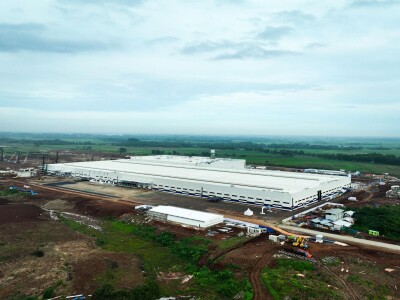
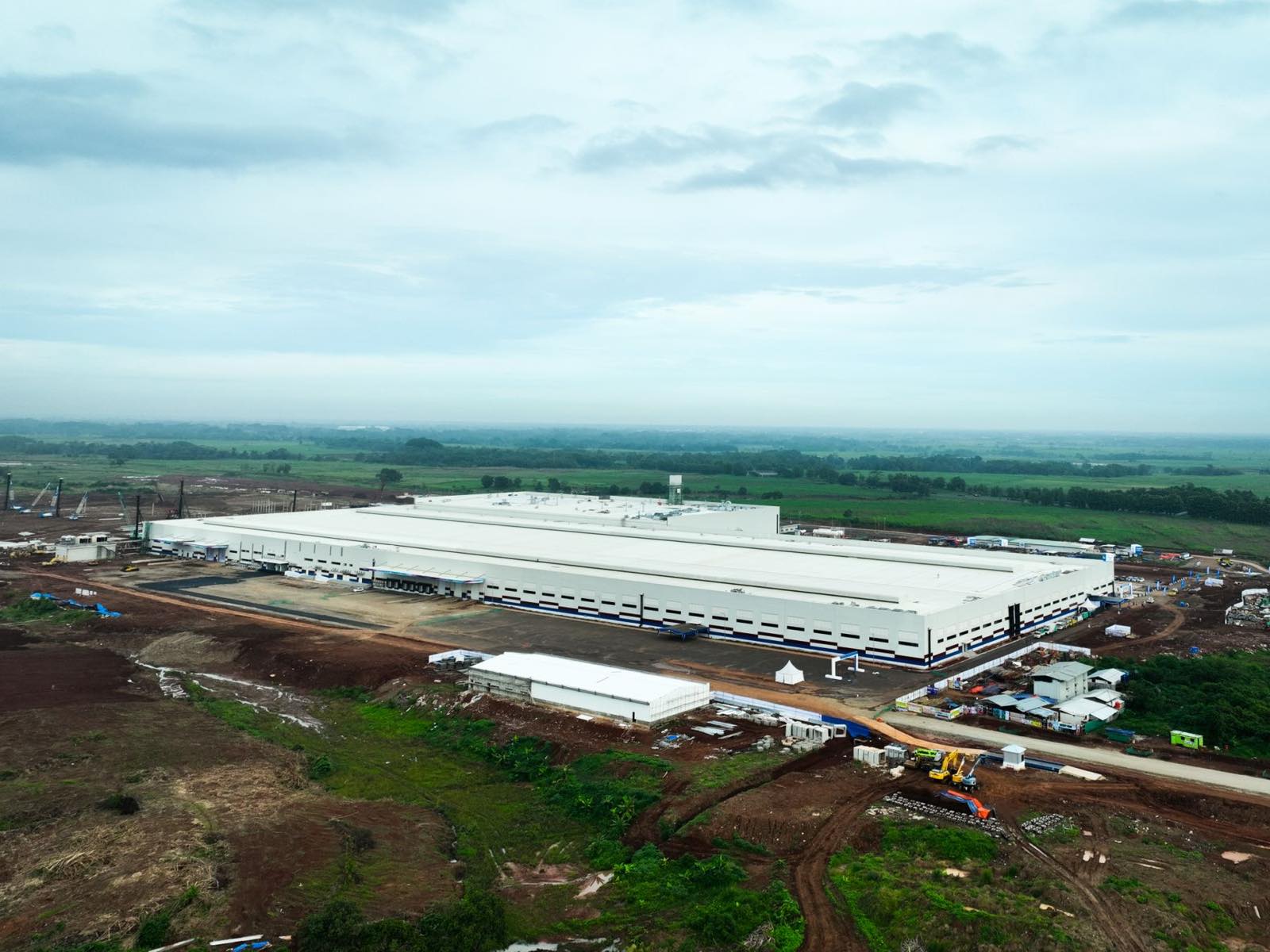
VinFast’s factory in Subang, Indonesia, was brought into operation in just 17 months, underscoring VinFast’s strong execution capability and long-term commitment to sustainable development in Indonesia.

Under the agreement, VinFast Indonesia will act as the strategic investor and fully finance the project. The parties aim to enhance transportation infrastructure without placing additional pressure on the local government budget, while accelerating project implementation and optimizing logistics costs to ensure the interchange becomes operational at the earliest possible stage.

Specifically, on January 14, 2026, VinFast Indonesia, the Subang Regency Government, and PT Lintas Marga Sedaya (PT LMS) – the operator of the Cipali Toll Road – signed a joint agreement for the construction, operation, and maintenance of the Manyingsal Interchange at Km 115+500 on the Cipali Toll Road.

VinFast Indonesia will fully finance all project-related expenditures, encompassing master planning, feasibility studies, permitting, construction, and ancillary costs, while working in close coordination with the Subang Regency Government to secure approvals from Indonesia’s Ministry of Public Works.

The Subang Regency Government will serve as the central coordinating authority, directly overseeing and processing all licensing procedures, including permits for the use of toll road space. It will designate specialized entities to implement the project, coordinate the completion of technical documentation, detailed design, and environmental impact assessments through to official project approval and operational licensing, and conduct periodic monthly supervision and evaluations.

In its capacity as the toll road operator, PT LMS will collaborate in developing technical cooperation programs within its mandate, while actively engaging in discussions and reaching agreement on detailed operation and maintenance plans under supplementary agreements.

On December 15, 2025, the project received in-principle approval from Indonesia’s Ministry of Public Works. Accordingly, the maximum project completion timeline is three years from the date of permit issuance. Upon completion of construction and receipt of the Operational Feasibility Certificate (SLFO), all land and interchange assets will be transferred by the Subang Regency Government to the Ministry of Public Works for management in accordance with state asset regulations.

Mr. Pham Sanh Chau, CEO of VinFast Asia, commented: “In every market we enter, we are committed to building enduring partnerships that generate shared prosperity. We do not view infrastructure as a peripheral investment, but as a foundational catalyst for sustainable socio-economic advancement. Our commitment to Indonesia is long-term and holistic, working alongside government and communities to strengthen competitiveness, create employment, and elevate quality of life. ‘Move people ahead, bring the nation forward’ is the principle that anchors our strategy and guides our actions across the region.”

The agreement not only underscores VinFast’s long-term investment commitment to Indonesia’s automotive sector, but also reaffirms the Company’s proactive role in partnering with local authorities to advance strategic infrastructure development.

Strengthening transportation infrastructure is expected to enhance logistics efficiency, improve Subang’s economic competitiveness, and generate sustainable growth momentum for the broader region. At the same time, the project is anticipated to create thousands of new employment opportunities, making a meaningful contribution to Indonesia’s ongoing industrialization and modernization efforts.

In under two years since entering Indonesia, VinFast has inaugurated its Subang facility, introduced a diversified electric vehicle portfolio, and rapidly expanded its ecosystem, from dealership and aftersales networks to a nationwide charging infrastructure developed in partnership with global charging network developer V-Green, as well as strategic alliances with leading banks and financial institutions.

Through bold policy frameworks and an integrated ecosystem strategy, VinFast is accelerating Indonesia’s green mobility transition and consolidating its position as a transformative force in the region’s sustainable transportation landscape.

Hashtag: #VinFast

The issuer is solely responsible for the content of this announcement.

WuXi Biologics and Sinorda Biomedicine Enter Strategic Collaboration to Accelerate Development and Manufacturing of Innovative Bispecific Antibody

SHANGHAI, Jan. 29, 2026 /PRNewswire/ — WuXi Biologics (2269.HK), a leading global Contract Research, Development, and Manufacturing Organization (CRDMO), and Sinorda Biomedicine today jointly announced a strategic collaboration for the development and manufacturing of SND006, a novel bispecific antibody, for the potential treatment of inflammatory bowel disease (IBD) and other autoimmune diseases.

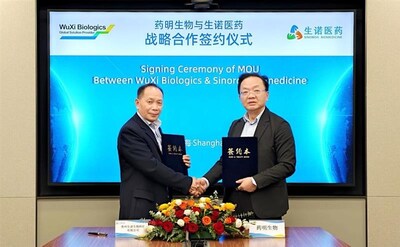
Dr. Chris Chen (right), CEO of WuXi Biologics, and Dr. Pingsheng Hu (left), Chairman and General Manager of Sinorda Biomedicine, signed the partnership agreement

Under the agreement, Sinorda Biomedicine will leverage WuXi Biologics’ extensive experience and manufacturing capabilities in biologics development and manufacturing to advance SND006’s preclinical pharmacology studies and clinical supply, accelerating the Investigational New Drug (IND) application process. SND006 is an innovative bispecific antibody independently developed by Sinorda Biomedicine, for which the company holds worldwide rights. Sinorda Biomedicine has completed in vitro functional validation studies of SND006 and plans to submit IND applications to both the National Medical Products Administration (NMPA) in China and the U.S. Food and Drug Administration (FDA) in 2026. In the future, the two companies will further expand their collaboration around Sinorda Biomedicine’s potential pipeline, including multiple integrated projects spanning from molecule discovery to clinical manufacturing.

Dr. Chris Chen, CEO of WuXi Biologics, commented, “Over the past decade, we have accumulated experience across hundreds of projects in bispecific and multispecific antibodies, which have become one of our fastest‑growing areas. We are pleased to accelerate the development and manufacturing of Sinorda Biomedicine’s innovative bispecific antibody SND006 through our integrated technology platforms and comprehensive capabilities. Looking ahead, we will continue accelerating and transforming biologics discovery, development and manufacturing to empower global partners and make innovative biologics more accessible and affordable for patients worldwide.”

Dr. Pingsheng Hu, Chairman and General Manager of Sinorda Biomedicine, commented, “SND006 is a potentially best-in-class innovative bispecific antibody discovered and developed by Sinorda Biomedicine, with the potential to deliver breakthroughs in the treatment of gastrointestinal and multiple autoimmune diseases. WuXi Biologics is a global leader in CRDMO services, offering truly end‑to‑end solutions underpinned by accumulated know-how, comprehensive technology platforms, and a strong track record—particularly in the development and manufacturing of bispecific antibodies. We believe this collaboration will accelerate the IND filings of our innovative biologics in China and worldwide, address unmet medical needs in autoimmune diseases, and ultimately bring safe and effective therapies to patients.”

About WuXi Biologics

WuXi Biologics (stock code: 2269.HK) is a leading global Contract Research, Development and Manufacturing Organization (CRDMO) offering end-to-end solutions that enable partners to discover, develop and manufacture biologics – from concept to commercialization – for the benefit of patients worldwide.

With over 12,000 skilled employees in China, the United States, Ireland, Germany and Singapore, WuXi Biologics leverages its technologies and expertise to provide customers with efficient and cost-effective biologics discovery, development and manufacturing solutions. As of December 31, 2025, WuXi Biologics is supporting 945 integrated client projects, including 74 in Phase III and 25 in commercial manufacturing.

WuXi Biologics regards sustainability as the cornerstone of long-term business growth. The company continuously drives green technology innovations to offer advanced end-to-end Green CRDMO solutions for its global partners while consistently achieving excellence in Environment, Social and Governance (ESG). Committed to creating shared value, it collaborates with all stakeholders to foster positive social and environmental impacts and promote responsible practices that empower the entire value chain.

For more information about WuXi Biologics, please visit: www.wuxibiologics.com

About Sinorda Biomedicine

Sinorda Biomedicine was established in 2010 and is a biomedical innovation company in the commercialization stage. The company focuses on the research and development and industrialization of innovative drugs for digestive tract diseases, tumor immunity and autoimmune diseases. It has a bioinnovative drug technology platform, a clinical medical R&D platform and an experienced international R&D team, with successful experience in innovative drug applications in China, Europe, America and other countries.

Linaprazan glureta (X842), the company’s self-developed class 1.1 new drug for treatment of gastric acid-related diseases, has been successfully approved for commercialization and industrialization. The sentinel lymph node T cell project for solid tumor treatment has clinical IIT research results for various tumors. In addition, the company has a number of early-stage product pipelines, including bispecific antibodies for the treatment of autoimmune disease IBD.

The company has developed rapidly through extensive cooperation with domestic and foreign pharmaceutical companies and R&D institutions, and is committed to becoming the most valuable innovative pharmaceutical enterprise in China.

WuXi Biologics Contacts

Business
info@wuxibiologics.com

Media
PR@wuxibiologics.com

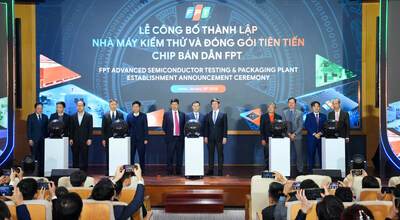
FPT Announces the Establishment of an Advanced Semiconductor Testing & Packaging Plant, Strengthening Vietnam’s Position in the Global Value Chain

HANOI, Vietnam, Jan. 28, 2026 /PRNewswire/ — FPT Corporation officially announced the establishment of the FPT Advanced Semiconductor Testing & Packaging Plant.

FPT announces the establishment of an Advanced Semiconductor Testing and Packaging plant

The ceremony was attended by representatives of the Ministry of Science and Technology, together with leaders of FPT Corporation, Viettel Group and its domestic and international partners.

The establishment of the FPT Advanced Semiconductor Testing and Packaging Plant underscores FPT’s commitment to implementing Vietnam’s national technology strategies, including Resolution No. 57-NQ/TW and Decisions No. 1131/QĐ-TTg and 1018/QĐ-TTg, which set the target for Vietnam to have 10 advanced semiconductor testing and packaging facilities by 2030.

The project strengthens the national semiconductor alliance, advances mastery of core technologies, completes an end-to-end semiconductor ecosystem, and supports the goal of 50,000 semiconductor professionals by 2030.

According to Mr. Truong Gia Binh, Chairman of FPT Corporation shared: “With today’s milestone, we take another step toward completing Vietnam’s semiconductor ecosystem. We will work closely with domestic and international partners to rapidly bring Make in Vietnam chips into real-world applications”.

In Phase 1 (2026–2027), the plant covers 1,600 square meters with six functional testing lines (ATE testers and handlers) and a dedicated reliability and durability testing area (Burn-in, Reliability Test, Failure Analysis). All systems comply with semiconductor global standards, ensuring quality and reliability throughout the product lifecycle.

In Phase 2 (2028–2030), FPT will expand the facility to 6,000 square meters, with 18 newly installed functional testing lines, 3 reliability and endurance testing zones, expanded both conventional packaging lines (QFN, QFP, DFN, etc.), additional CSP (Chip Scale Package), WLP (Wafer Level Package) lines, along with advanced IC packaging lines, collectively ramping the plant’s total output to billions of units per year. The plant will also enhance testing for IoT, automotive, and AI-on-the-edge SoC chips, further completing the semiconductor value chain.

FPT signed strategic cooperation agreements with leading domestic and international partners to integrate the semiconductor value chain from training to commercialization, including Viettel Group (Vietnam), VSAP Lab (Vietnam), Restar (Japan), Winpac (Korea).

FPT also announced plans to research and develop AI-on-the-edge System-on-Chip (SoC) solutions, aiming to fully master the smart device ecosystem encompassing cameras, drones, and unmanned aerial vehicles (UAVs).

With over a decade in semiconductors, FPT pioneers “Make in Vietnam” chips, invests in R&D, develops high-quality talent, positioning Vietnam as a key semiconductor hub.