Home Blog Page 1214

Linnovate Celebrates Ten Years with New Brand Identity

SINGAPORE, Jan. 26, 2026 /PRNewswire/ — Linnovate, a global provider of integrated asset services for the alternative investment industry, today announced the launch of its new brand identity, reflecting a decade of growth, innovation, and strategic evolution. Formerly known as Linnovate Partners, the simplified name and refreshed visual identity mark a key milestone in the firm’s journey from a specialized service provider to a global technology-powered asset services leader.

Linnovate delivers a full suite of technology solutions that integrate operations, compliance, and reporting, helping clients manage assets with precision, efficiency, and confidence. What began as a collaborative, client-focused firm has expanded into a global platform supporting alternative investment managers across private equity, venture capital, real estate, and other private investment strategies. The rebrand reflects this evolution and Linnovate’s clear purpose to transform the way asset services are delivered through technology, expertise, and operational excellence.

The new identity is designed to better represent the firm’s role today as a provider of integrated, technology-powered asset services with global reach, operational depth, and a strong focus on efficiency, accuracy, and transparency. Henry Lin, Founder and CEO of Linnovate, commented “When we started as Linnovate Partners a decade ago, our focus was on rethinking how fund services could be delivered – combining expertise, efficiency, and technology. Over the years, we’ve grown our capabilities and expanded globally, and this rebrand reflects the full scope of what we do today – helping alternative investment managers operate with precision and confidence.”

The refreshed brand also aligns with Linnovate’s continued global expansion, and investment in talent and technology infrastructure, enabling the firm to deliver consistent asset services across jurisdictions and fund structures. Andrea Balboa, Senior Manager of Marketing & Communications at Linnovate, added: “Our new brand identity brings clarity to our story and confidence to our presence. It represents the progress we’ve made as a firm and how we show up today – for our clients, our people, and the industry. While the name and design have evolved, our focus on delivering seamless, scalable, and precise asset services remains the same.”

The new logo and brand design will be rolled out across Linnovate’s global offices, digital platforms, and client communications in the coming weeks.

HKUST President Prof. Nancy IP Engages in Global Dialogues at Davos 2026 on Neuroscience, University Leadership, and the Future of Research

HONG KONG, Jan. 26, 2026 /PRNewswire/ — Prof. Nancy IP, President of The Hong Kong University of Science and Technology (HKUST), joined global leaders at the World Economic Forum (WEF) Annual Meeting 2026 in Davos-Klosters, Switzerland. As the sole university president representing Hong Kong, she participated in high-level dialogues on neuroscience, the evolving role of universities, the future of global research, and health innovation.

Held under the theme “A Spirit of Dialogue”, this year’s Annual Meeting convened over 3,000 esteemed leaders from government, business, civil society, and academia from more than 130 countries—including nearly 65 heads of state and about 850 top CEOs—to address complex geopolitical and technological challenges.

As an internationally acclaimed neuroscientist, President Ip contributed to the staged panel “Latest Discoveries about the Brain”, alongside leading scientists and innovators from the University of Oxford, ETH Zurich, and health-tech company Viz.ai. She highlighted the paradigm shift in brain care driven by the convergence of neuroscience and technology, affirming the transformative potential of this integrated approach. “Molecular biology, imaging, and AI are enabling a true multi‑scale understanding of the brain, from molecules to networks to clinical outcomes.”

“Our work on the profiling of multiple proteins in the blood enables us to predict Alzheimer’s risk more than a decade before symptoms appear, monitor treatment response, and tailor interventions to individual’s biology. This shift from reactive to proactive care, powered by blood tests, AI, and lifestyle insights, could truly transform how we preserve and restore brain circuits.” President Ip believes this convergence is laying the foundation for precision medicine that harnesses the brain’s intrinsic capacity to heal, adapt, and learn.

President Ip expanded on academia’s institutional role at the Global University Leaders Forum (GULF), where she was the only Hong Kong representative. Speaking at the roundtable lunch on “Leadership in Transition: Universities and the World Ahead,” she emphasized that universities must serve as public-good institutions, fostering dialogue, trust, and impartial exchange of ideas.

“Our mission must align with societal needs—from cultivating student diversity to preparing graduates as global citizens,” she said. “Diversity enriches intellectual engagement and equips students to address complex challenges. Universities should prioritize social good over profit to remain anchors of integrity in a divided world.”

She also highlighted the need for knowledge diplomacy and cross-sector collaboration. “Partnering with governments, industries, and philanthropies helps translate research into public value. By co-creating solutions with diverse stakeholders, universities can tackle real-world problems while maintaining academic independence—a balance key to sustaining trust and relevance.”

President Ip also contributed to high‑level discussions on the future of research and the economics of healthcare. In the GULF roundtable “High‑Level Dialogue: Securing the Future of Research,” she stressed that translating scientific discoveries into real‑world impact is essential.

“Safeguarding the future of research requires diversified and resilient funding models. Public-private partnerships stand out as a particularly robust approach,” she stated. “The HKSAR Government has introduced various funding schemes, including matching funds, to enhance the innovation ecosystem by fostering collaborations between academia, industry, and venture capitalists. As another key initiative, InnoHK is dedicated to developing the city into a global hub for research collaboration by establishing world-class research laboratories in partnership with world-renowned universities and research institutes.”

“Since 1999, HKUST has been committed to cultivating Hong Kong’s entrepreneurial ecosystem. By bringing together government, investors, and industry, we have established joint laboratories across strategic research fields, building a dynamic environment that enables students and faculty to turn world‑class research into ventures with societal impact. With more than 1,900 active startups founded by our community, including 10 unicorns and 17 exits through IPO or M&A, HKUST continues to propel innovation and entrepreneurship in Hong Kong, across the region, and beyond,” she added.

In a separate session on “Health Innovation as Economic Growth Strategy: Financing Smarter to Deliver Better Healthcare,” President Ip remarked. “For too long, healthcare has focused on reacting to illness rather than preventing it. We must shift toward a proactive, predictive and deeply personalized model of care. By investing in preventive healthcare powered by AI, wearables, and edge computing, we can improve population health, boost economic productivity, and build more sustainable healthcare systems for all.”

President Ip’s presence at Davos underscored the vital role of leading research universities like HKUST as global hubs for frontier science and collaboration. Reflecting on the meeting, she affirmed the value of engaging with more than 20 fellow university presidents and other global leaders.  “Participating in this unique convergence of global thought leaders was deeply rewarding. Davos provides an unparalleled environment for the cross-pollination of ideas to build a brighter future, and I am honored to contribute perspectives from HKUST and the dynamic region we represent. We remain committed to acting as a bridge for international partnership and sustainable innovation.”

Download photos here: https://hkust.edu.hk/news/hkust-president-prof-nancy-ip-engages-global-dialogues-davos-2026-neuroscience-university

Montage Technology Launches PCIe® 6.x/CXL® 3.x AEC Solution to Enable High-Efficiency Interconnects for Next-Generation Data Centers

SHANGHAI, Jan. 26, 2026 /PRNewswire/ — Montage Technology today announced the launch of its high-performance PCIe 6.x/CXL 3.x-based Active Electrical Cable (AEC) solution. Designed to address the evolution of data center architectures from intra-rack to more complex inter-rack, the solution adopts Montage Technology’s PCIe 6.x/CXL 3.x Retimer to deliver high-bandwidth, low-latency interconnects for the hyperscalers and high-performance server platforms.

Montage Technology's PCIe® 6.x/CXL® 3.x AEC Solution
Montage Technology’s PCIe® 6.x/CXL® 3.x AEC Solution

Driven by the rapid growth of artificial intelligence and cloud computing, the data center infrastructure is evolving toward distributed multi-rack architectures. As the core interconnect interface linking CPUs, GPUs, NICs, and high-speed storage, PCIe continues spanning from rack server to supernode. As a result, copper connections powered by AECs are critical for maintaining signal integrity with longer reach.

Montage Technology’s PCIe 6.x/CXL 3.x AEC solution leverages its in-house SerDes technology and innovative DSP architecture, as well as the high-density OSFP-XD form factor to support stable PCIe x16 connectivity. It also offers comprehensive link monitoring and diagnostic features, significantly enhancing system maintainability and deployment efficiency. Flexible configurations are available to accommodate diverse hyperscaler infrastructure topologies.

“As the data center infrastructure scales to multi-rack level, robust and efficient interconnects have never been more critical,” said Mr. Stephen Tai, President of Montage Technology. “Leveraging its long-term technical investments on high-speed interconnect segment and deep insight into technology trends, Montage has timely captured the substantial potential demand with the PCIe 6.x/CXL 3.x AEC solution which empowers the customers to better meet their challenges.”

Montage Technology has completed the development and system-level validation of the PCIe 6.x/CXL 3.x AEC solution, jointly designed with leading cable manufacturers in China. The solution has successfully passed interoperability tests with CPUs, xPUs, PCIe switches, NICs, and other devices. It meets the stringent PCIe interconnect requirements driven by supernode architecture.

Looking ahead, Montage Technology will continue expanding its high-speed interconnect product portfolio, including the PCIe 7.0 Retimer and Ethernet PHY Retimer, to deliver more comprehensive interconnect solutions to customers worldwide.

ST Telemedia Global Data Centres Launches Southeast Asia’s First HVDC-Powered AI Infrastructure Testbed

Advancing R&D, talent development and the region’s energy transition


SINGAPORE – Media OutReach Newswire – 26 January 2026 – ST Telemedia Global Data Centres (STT GDC), one of the world’s fastest growing data centre colocation providers headquartered in Singapore, today announced two significant initiatives that strengthen Singapore’s position in the global digital and energy transition: the launch of the FutureGrid Accelerator, Southeast Asia’s first live High Voltage Direct Current (HVDC)-powered AI infrastructure testbed; and a suite of strategic Memoranda of Understanding (MOUs) with four Institutes of Higher Learning (IHLs) to advance skills development and expand internship and early career pathways for Singaporeans entering the workforce. These initiatives align with national efforts to support talent graduating into a challenging job market, while building the specialised capabilities required for next generation power and digital infrastructure.

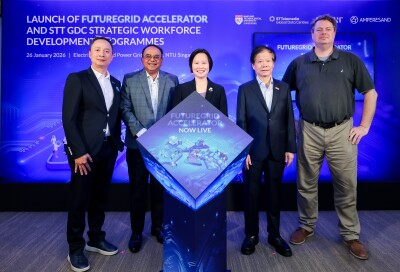
Celebrating the official launch of the FutureGrid Accelerator; a new benchmark for HVDC-powered AI infrastructure in the region. [Pictured from left to right] Lim Kian Tiong, Chief Financial Officer, LITEON; Bruno Lopez, President & Group Chief Executive Officer, ST Telemedia Global Data Centres; Minister Gan Siow Huang, Minister of State, Ministry of Foreign Affairs & Ministry of Trade and Industry; Professor Lam Khin Yong, Vice President (Industry), Nanyang Technology University Singapore; Brian Dow, Chief Executive Officer, Amperesand.
Celebrating the official launch of the FutureGrid Accelerator; a new benchmark for HVDC-powered AI infrastructure in the region.

[Pictured from left to right] Lim Kian Tiong, Chief Financial Officer, LITEON; Bruno Lopez, President & Group Chief Executive Officer, ST Telemedia Global Data Centres; Minister Gan Siow Huang, Minister of State, Ministry of Foreign Affairs & Ministry of Trade and Industry; Professor Lam Khin Yong, Vice President (Industry), Nanyang Technology University Singapore; Brian Dow, Chief Executive Officer, Amperesand.

Officiated by Ms Gan Siow Huang, Minister of State for Foreign Affairs and Trade & Industry, the announcement underscores a national push to build capabilities not only for AI-ready data centres, but also for the wider energy ecosystem, as Singapore and the region pursue net-zero ambitions.

FutureGrid Accelerator: HVDC innovation for AI and the wider energy transition
Located at the Nanyang Technological University, Singapore (NTU Singapore) Electrification and Power Grids Centre (EPGC) on Jurong Island, the FutureGrid Accelerator is a pioneering initiative jointly developed by STT GDC and LITEON, supported by the Energy Research Institute @ NTU (ERI@N) and NTU deep-tech spinoff Amperesand. It is the region’s first live testbed demonstrating HVDC integration with real AI workloads, addressing the high-density and high-resiliency requirements of next-generation AI computing.

While central to the future of AI data centre architecture, HVDC represents a broader opportunity: it is a foundational technology that supports more efficient, resilient and integrated power systems. This is critical for Singapore’s long-term energy strategy, its transition to low-carbon energy grids and the region’s increasing need for sustainable power delivery.

Why HVDC Matters: A scalable platform beyond the data centre
As AI and high-performance computing workloads scale, traditional alternating current (AC) power systems face inherent limitations. HVDC overcomes these constraints and delivers several transformative benefits:

  • Up to 30% overall energy savings compared to conventional AC systems
  • A reduction of up to 400 tonnes of CO2 equivalent (CO2e) per megawatt per year
  • 45% lower copper consumption and a 30–40% smaller power-infrastructure footprint
  • The ability to support ultra-high-density racks exceeding 1,000kW, with higher reliability and lower cost
  • Native compatibility with renewable power sources able to feed directly to the direct-current system, avoiding inefficient power conversions

“The FutureGrid Accelerator is a strategic investment in Singapore’s long-term digital leadership,” said Bruno Lopez, President and Group Chief Executive Officer, ST Telemedia Global Data Centres. “By bringing together global industry leaders like LITEON with local deep-tech talent such as Amperesand, we are building infrastructure that is ready for future AI workloads while pioneering sustainable practices and setting new benchmarks for energy efficiency and carbon-conscious innovation. This initiative reflects our commitment to future-ready technologies and reinforces Singapore’s position as a global Centre of Excellence for advanced sustainable digital infrastructure. It is a bold step forward in shaping the future of data centres and accelerating energy transition across the region.”

Ms Gan Siow Huang, Minister of State for Foreign Affairs & Trade and Industry, said: “The FutureGrid Accelerator demonstrates how industry and academia can work together to drive innovation and strengthen Singapore’s global leadership in cutting-edge technologies. I also welcome STT GDC’s partnerships with ITE and SP, which will add to the suite of training options for the rapidly growing areas of AI and energy-efficient systems.”

The FutureGrid Accelerator will validate HVDC system performance at power loads of at least 325kW, incorporating the latest AI servers. The environment incorporates LITEON’s data centre reference architecture with Amperesand’s Solid State Transformer (SST) technology—an enabling innovation for next-generation HVDC deployment. STT GDC plans to deploy this technology in future data centres in Singapore and progressively scale adoption across its global operations.

“LITEON is committed to advancing the frontier of power management efficiency, and our collaboration with STT GDC and Amperesand is key to establishing the next standard for sustainable AI infrastructure in Asia,” said Jason Tsao, Head of Direct Current Microgrid at LITEON. “By deploying an end-to-end data centre reference architecture and integrated power management system in a live environment with STT GDC and partners, we are validating a high-density, energy-saving solution ready to meet the extreme demands of global technology leaders.”

“The FutureGrid Accelerator underscores NTU’s role as a strategic partner in shaping the future of sustainable AI infrastructure”, said Prof Lam Khin Yong, NTU’s Vice President (Industry). “By integrating cutting-edge HVDC technologies with our research capabilities and the entrepreneurial drive of NTU spin-offs like Amperesand, we are advancing impactful solutions that can significantly enhance energy efficiency and grid resilience. This collaboration showcases how universities can drive transformative innovations at the intersection of energy, digitalisation and sustainability.”

“Amperesand is obsessed with revolutionising Medium Voltage to critical load power delivery for next-generation AI data centres, defence, and other essential electrified assets. We focus on first principles to achieve market leading power density, efficiency, and reliability,” said Brian Dow, CEO and Co-Founder of Amperesand. “In this era of AI data centre and other critical power systems becoming economic and national security interests for many countries, Amperesand’s MV SST Platform enables in-country cyber-secure controls and data, regionally available supply chains, and low CAPEX intensity local manufacturing. Our solution is an intelligent, universal Medium Voltage power source that works on-and-off grid to improve critical infrastructure resilience as new large electrical loads come online.”

Developing Energy-Ready Skills: Partnerships with ITE, SP, NTU and NUS
STT GDC signed MOUs with the Institute of Technical Education (ITE), Singapore Polytechnic (SP), NTU Singapore and National University of Singapore (NUS). These partnerships will benefit more than 8,000 Singaporeans over five years through industry-aligned training in AI infrastructure and sustainable energy systems. This ensures the scaling of HVDC—and the broader energy transition—is matched by the transformation and availability of skills, jobs and talent development pathways.

Mr Lopez added, “Talent is the decisive enabler as we advance AI and sustainability infrastructure. These partnerships build a skilled workforce needed to strengthen Singapore as a global hub for advanced digital and energy systems.”

Key initiatives and impact:

  • Building a talent pipeline: STT GDC will provide internship placements across ITE, SP, NTU and NUS over the next five years, with support from Enterprise Singapore. The programme offers immersive, hands-on experience in data centre operations and corporate functions such as IT, sustainability, finance and marketing, supported by mentoring from industry professionals. In addition, STT GDC will offer 100 sponsorships for Data Centre Foundation Certificate (DCFC®) offered by EPI, a global certification body for data centre facilities, data centre operations and industry professionals, accelerating entry into the sector.
  • Developing industry-ready talent with ITE: The collaboration with ITE will benefit approximately 800 students annually — totalling 2,400 students over three years — from ITE’s engineering and information and communications technology (ICT)-related Higher Nitec and Work-Study Diploma courses. Key initiatives include co-developing industry-relevant curricula for full-time and Continuing Education & Training (CET) courses in data centre operations and sustainability; deploying a data centre virtual reality system at the ITE Extended Reality Centre for immersive training; supporting lecturer attachments and student internships; and enabling students to pursue the sponsored DCFC® course.
  • Sustainability leadership with SP: The partnership with SP develops expertise in environmental sustainability and green data centre solutions. Initiatives include joint exploration of green technologies and practices; industry seminars and events to promote sustainable solutions; and targeted programmes for training, mentorship, applied projects and internships.
  • Innovation and research leadership with NTU: The partnership with NTU combines cutting-edge joint R&D of solutions for AI data centres powered by direct current sources; training, curriculum and talent development for the AI data centre sector; industry and career talks; and internship opportunities across STT GDC’s group of companies.
  • Graduate pathways with NUS: STT GDC’s collaboration with NUS supports accessible entry points for graduates through internships, training opportunities and ongoing career and industry engagement to raise awareness of digital infrastructure pathways.

Hashtag: #STTelemedia

The issuer is solely responsible for the content of this announcement.

About ST Telemedia Global Data Centres

ST Telemedia Global Data Centres (STT GDC) is one of the fastest-growing data centre providers with a global platform serving as a cornerstone of the digital ecosystem that helps the world to connect. Powering a sustainable digital future, STT GDC operates across Singapore, the UK, Germany, Italy, India, Thailand, South Korea, Indonesia, Japan, the Philippines, Malaysia and Vietnam, providing businesses an exceptional foundation that is built for their growth anywhere. For more information, visit

Appendix: Partner Quotes

Mr Peter Lam, Chief Executive Officer, Institute of Technical Education (ITE): “At ITE, our focus is on equipping our students with future-ready skills for Singapore’s evolving economy. Through the partnership with STT GDC, our students gain valuable real-world training and exposure to advanced tools in data centre operations. This strengthens our efforts to prepare career-ready students and develop talent for Singapore’s growing digital infrastructure sector.”

Mr Soh Wai Wah, Principal and CEO of SP: “Singapore Polytechnic is committed to developing a future-ready workforce that can support Singapore’s growing demand for sustainable and resilient data centre operations. This partnership with STT GDC brings together our strengths in training, applied learning and industry collaboration to nurture talent in environmental sustainability and green solutions for data centres. Through co-developed programmes, mentorship, student projects and internships, we will build deeper capabilities and broaden pathways for learners to contribute to this important sector. SP looks forward to advancing this effort with STT GDC to support Singapore’s long-term industry and sustainability goals.”

Professor Lam Khin Yong, Vice President (Industry), Nanyang Technological University: “STT GDC is a partner that shares our commitment to advancing impactful research and developing future-ready talent. Leveraging NTU’s strengths in artificial intelligence, energy-efficient systems and translational innovation, this partnership will accelerate the co-development of next-generation AI data centre technologies while providing our students and researchers with valuable real-world experience. Together, we are helping to build a robust pipeline of skilled professionals who will support Singapore’s ambitions in sustainable and AI-driven digital infrastructure.”

Ms Joan Tay, Senior Director, NUS Centre for Future-ready Graduates: “NUS’ partnership with STT GDC is timely, as demand grows for skilled professionals to manage complex, high-density AI infrastructure. Through internships, training, industry engagement and access to recognised certification, we bridge education and industry to equip students with the skills and experience needed to thrive in today’s fast-evolving digital infrastructure space.”

Singapore Biennale 2025: Experience Singapore Anew Through Art

SINGAPORE, Jan. 26, 2026 /PRNewswire/ — The eighth edition of the Singapore Biennale 2025 (SB2025) is on view through 29 March 2026. Guided by the theme of pure intention, audiences are invited to experience Singapore through immersive, participatory, and site-responsive works that reflect the rituals, histories, lived experiences and aspirations that have shaped our environments. These encounters encourage the public to discover different layers of the city’s rhythms and evolving identity, opening new ways of seeing, feeling, and connecting through art.

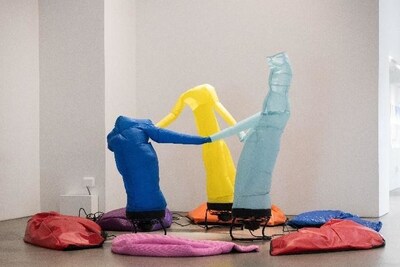
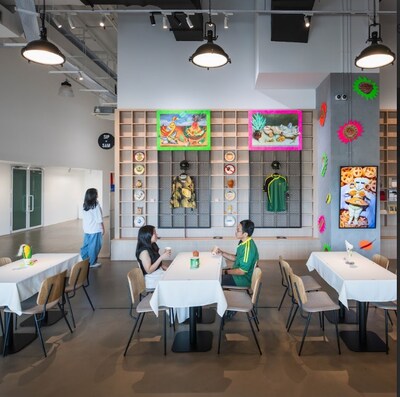
SB2025 activates five neighbourhoods across the city, comprising over 100 artworks by more than 80 artists, alongside independent presentations from a diverse network of invited curatorial collectives. At Singapore Art Museum at Tanjong Pagar Distripark, artworks explore the complex interplay of history, technology, memory, and daily life. Paul Chan’s bright nylon figures greet visitors, evoking shifting notions of the body, pleasure, and one’s relationship to nature. In the gallery, Álvaro Urbano’s stainless steel plants become characters in a carefully staged environmental theatre, reflecting on our layered histories of plantation agriculture and orchid diplomacy. RRD (Red de Reproducción y Distribución) explores everyday expressions from street-food packaging to artisanal plates, presenting unexpected connections between Singaporean and Mexican culinary cultures.

Along Singapore’s Orchard shopping belt, SB2025 activates strata-titled malls and the former Raffles Girls’ School at 20 Anderson Road. Step into the school field to encounter a transdisciplinary project by curatorial contributor Hothouse that questions the tamed definition of “nature”. Look out for a “lucky cat” hidden amongst greenery, as Salad Dressing examines the ethics of rewilding, displacement and spiritual ecology.

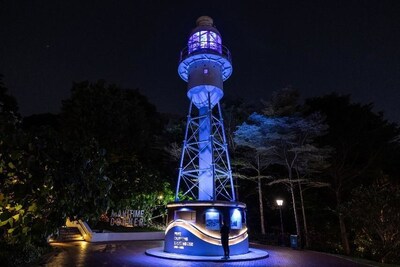
In the Civic District, the Biennale activates monuments and public spaces like Fort Canning Park. lololol presents an after-dusk journey with a site-responsive light installation at the Lighthouse, and a sound walk around the park that speaks to the history of wayfinding. Scan the QR code to kickstart a GPS-enabled, self-guided sound walk, and immerse in a narrative shaped by the artists’ encounters with lighthouses, keepers and crypto-linguists.

Along the Rail Corridor and its surrounding spaces, artworks explore how infrastructures shape how people live and belong. At Wessex Estate, Blenheim Court, the sea lingers in Jesse Jones’ film and installation, where oyster shells are used to explore hydrofeminism and prehistoric ecofeminism. Have a kombucha by Huang Po-Chih, with unique flavours using ingredients from the artist’s hometown in Taiwan, and economic crops that were once widely grown in Singapore. The work is also sold at multiple sites for Biennale-goers to enjoy.

SB2025 is commissioned by the National Arts Council, Singapore, supported by the Ministry of Culture, Community and Youth, and organised by Singapore Art Museum. Find the full list of venues, artists and programmes at SB2025’s website, or follow Facebook (@SingaporeBiennale) and Instagram (@sgbiennale).

Paul Chan's Khara En Tria (Joyer in 3).
Paul Chan’s Khara En Tria (Joyer in 3).

Salad Dressing’s Square Forest.

lololol's Light Keeper.
lololol’s Light Keeper.

RRD’s (Red de Reproducción y Distribución) Gastrogeography: Stories from Mexico to Singapore.


HanchorBio and WuXi Biologics Enter Strategic Partnership to Advance Next-Generation Bi-and Multi-Functional Fusion Protein Pipeline

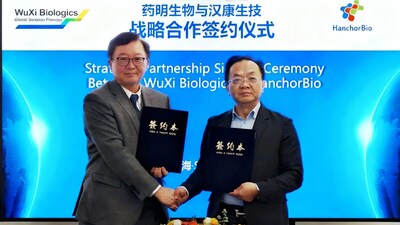
SHANGHAI, TAIPEI and SAN FRANCISCO, Jan. 26, 2026 /PRNewswire/ — HanchorBio, Inc. (TPEx: 7827), a global clinical-stage biotechnology company advancing next-generation immunotherapies for oncology and autoimmune diseases, and WuXi Biologics (2269.HK), a leading global Contract Research, Development, and Manufacturing Organization (CRDMO), jointly announced today the signing of a strategic collaboration agreement to support the development and manufacturing of multiple next-generation bi- and multi-functional fusion programs from HanchorBio’s pipeline.

HanchorBio Chairman Scott Liu (left) and WuXi Biologics CEO Chris Chen (right) at the signing ceremony of strategic partnership.

Under the agreement, WuXi Biologics will provide integrated, end-to-end biologics development and manufacturing services, including cell line development, process and bioassay development, drug product formulation development, and GMP manufacturing. The collaboration is designed to accelerate clinical translation, enhance CMC execution efficiency, and support scalable global development and manufacturing of HanchorBio’s innovative fusion protein portfolio derived from its Fc-Based Designer Biologics (FBDB™) platform.

This partnership reflects HanchorBio’s strategy to advance its platform-derived, multi-asset pipelines with development speed, manufacturing robustness, and capital efficiency from early clinical stages through commercialization. By leveraging WuXi Biologics’ proven capabilities in complex biologics and its global quality systems, HanchorBio aims to shorten development timelines and maintain flexibility across multiple clinical programs.

WuXi Biologics brings extensive experience in complex modalities, including bispecific and multi-specific antibodies, antibody-drug conjugates (ADCs), and fusion proteins. As of 2025, WuXi Biologics’ integrated platform supports 945 projects, approximately 60% of which involve bi- and multi-specific antibodies, ADCs, and fusion proteins, underscoring its strong track record in accelerating the development and manufacturing of advanced therapeutic modalities. Its proprietary technology platforms, such as WuXia™ TrueSite targeted integration (TI)-based CHO cell line platform and WuXiHighTM high-throughput formulation development platform, are designed to enhance speed, quality, and scalability.

For HanchorBio, the collaboration supports continued expansion of its proprietary FBDB™ technology platform, which enables the rational design of multi-functional fusion proteins intended to modulate both innate and adaptive immunity. The partnership represents a significant step in aligning discovery innovation with industrial-scale and globally compliant execution as HanchorBio advances its oncology and autoimmune pipelines toward global clinical development.

Scott Liu, Founder, Chairman, and Chief Executive Officer of HanchorBio, commented: “This partnership with WuXi Biologics strengthens our ability to translate platform-driven innovation into high-quality clinical and commercial assets. As we advance multiple next-generation fusion protein programs, execution speed, manufacturing reliability, and scalability are critical. WuXi Biologics’ proven expertise in complex biologics and global development makes them a strong strategic partner as we build a differentiated, multi-asset immunotherapy pipeline.”

Dr. Chris Chen, Chief Executive Officer of WuXi Biologics, said: ” We are excited to embark on this collaboration with HanchorBio, which underscores the strong trust they placed in WuXi Biologics’ comprehensive, end-to-end capabilities for developing next-generation biologics, especially complex molecules. By leveraging our industry-leading technology platforms, proven expertise, and unwavering commitment to quality, we strive to accelerate the development of HanchorBio’s innovative bi-/multi fusion proteins and help bring transformative therapies to patients worldwide.

About HanchorBio

Based in Taipei, Shanghai, and the San Francisco Bay Area, HanchorBio (TPEx: 7827) is a global clinical-stage biotechnology company focused on immuno-oncology and immune-mediated diseases. The company is led by an experienced team with a proven track record in biologics discovery and global development, aiming to reshape the landscape of cancer therapies. HanchorBio’s proprietary Fc-based designer biologics (FBDB™) platform enables the design of multi-functional biologics with diverse targeting modalities, aiming to activate both innate and adaptive immune pathways to overcome the current challenges of anti-PD1/L1 immunotherapies. The FBDB™ platform has successfully delivered proof-of-concept data in several in vivo tumor animal models. HanchorBio is advancing a portfolio of innovative biologics designed to address significant unmet medical needs through differentiated molecular configurations in R&D and scalable CMC strategies. 

For more information, please visit: https://www.HanchorBio.com

About WuXi Biologics

WuXi Biologics (stock code: 2269.HK) is a leading global Contract Research, Development and Manufacturing Organization (CRDMO) offering end-to-end solutions that enable partners to discover, develop and manufacture biologics – from concept to commercialization – for the benefit of patients worldwide.

With over 12,000 skilled employees in China, the United States, Ireland, Germany, Singapore and Qatar, WuXi Biologics leverages its technologies and expertise to provide customers with efficient and cost-effective biologics discovery, development and manufacturing solutions. As of December 31, 2025, WuXi Biologics is supporting 945 integrated client projects, including 74 in Phase III and 25 in commercial manufacturing.

WuXi Biologics regards sustainability as the cornerstone of long-term business growth. The company continuously drives green technology innovations to offer advanced end-to-end Green CRDMO solutions for its global partners while consistently achieving excellence in Environment, Social and Governance (ESG). Committed to creating shared value, it collaborates with all stakeholders to foster positive social and environmental impacts and promote responsible practices that empower the entire value chain.

Asia Pacific Maritime Returns to Singapore Bringing Next Energy to Focus; Accelerating Maritime Decarbonisation Forward

SINGAPORE, Jan. 26, 2026 /PRNewswire/ — Asia Pacific Maritime (APM), Asia’s premier exhibition and conference for Shipbuilding & Marine, Workboat, Offshore, and Electric & Hybrid Marine, will return for its 19th instalment, from 25-27 March 2026 at Marina Bay Sands, Singapore, with its largest edition to date. Organised by RX and anchored by the theme “Future of Vessels, Solutions for Tomorrow”, APM 2026 is set to convene the global leaders to examine how the next energy technologies and innovation are driving the future of maritime.

As decarbonisation targets intensify and digital innovation accelerates, the maritime sector is entering a decisive phase of energy transition. Energy is now the force behind the progress of maritime decarbonisation, including newbuild specifications, fuel strategies, operational optimisation, and the capital and contracts that back them.

Driven by this momentum, APM 2026, opening with a welcome address from Guest-of-Honour Ang Wee Keong, Chief Executive, Maritime and Port Authority of Singapore (MPA), will present a sold-out exhibition featuring over 700 exhibitors, featuring 18 pavilions across six exhibition halls. The exhibition spotlights solutions tied to the use of alternative fuels, electric and hybrid technologies, wind assisted propulsion and solutions influencing decarbonisation.

On the conference side, APM will welcome close to 100 global speakers, covering key topics including Future Fuels & Zero Emission Ships, Next-Gen Shipbuilding: Design, Build, Retrofit & Repair; Electric & Hybrid Power; Finance, Risk & Insurance for the Future Fleet; Maritime Cybersecurity; and Smart & Autonomous Ships.

Weichai, one of the world’s largest industrial equipment manufacturers, commented, “APM is the largest meeting place in Asia and has played a pivotal role in accelerating our growth across the region, since establishing our presence in Singapore. Returning for our tenth appearance at APM in 2026, we look forward to presenting our largest and most ambitious showcase yet.”

“Earlier this month, we celebrated the successful completion of a 1,000-hour sea trial of Pinnacle Marine’s (Singapore) President 100. The vessel, operated by Prestige Ocean Pte Ltd, is the first of its kind vessel powered entirely by 100% biodiesel made from renewable feedstock and by B100 engines manufactured by Weichai. This milestone will be commemorated during a testing certification ceremony alongside partners NTU’s Maritime Energy & Sustainable Development Centre of Excellence (MESD) and the China Classification Society Singapore at APM, and we are excited to feature our B100 product series at our booth.”

Exhibition Highlights New Energy Pathways to Cleaner Shipping

Electrification continues to gain traction as one of the most immediate pathways to reducing emissions at sea, and battery systems, in particular, are enabling shipowners and operators to improve efficiency without compromising operational reliability.

“Battery electrification will help ship owners and operators to immediately improve vessel efficiency and reduce fuel consumption and GHG emissions. The vessel’s power plant needs to be flexible and adaptable, so that it can still use traditional combustion engines to support the demand but also draw on batteries, which support the power plant to improve overall efficiency. As such, future-proof design should already be included at the new-build phase,” said Jan-Erik Räsänen, Chief Technology Officer at Foreship, part of RINA.

Reflecting this shift, APM 2026 will feature leading electric and battery technology providers, including AYK Energy, CALB, Eve Energy, MT Power, Roypow, and Shenzhen Racern Technology.

To support shipowners and operators more closely, APM 2026 introduces a new feature – the Electric & Hybrid Consultation Lounge. The lounge brings together experts from key industry stakeholders, including the Maritime Battery forum, CharIN, the International Electric Maritime Association (IEMA) and the Zero Emissions Ship Technology Association (ZESTAs), to provide practical guidance in achieving more efficient operations. Discussions will focus on four critical areas shaping adoption: high-power charging in e-mobility, maritime battery systems, next-generation electric marine technologies and zero-emission shipping.

In the renewables aspect, wind propulsion is re-emerging as a viable decarbonisation pathway for deep-sea shipping, and APM will present cutting-edge equipment in wind propulsion. It was reported by Clarksons that there were 89 vessels adorned with a wind-propulsion system in December 2025, and the International Windship Association (IWSA) commented in the same month that there are indications of up to 130 of these vessels under construction, scheduled for delivery by 2028.

In response, APM 2026 spotlights wind-enabled solutions that can propel future fleets, with exhibitors including Chantiers de l’Atlantique (CDL), CWS Morel, Dealfeng New Energy Technology, Econowind BV and Norsepower Oy Ltd.

Visitors can also expect prominent exhibitors who are advancing alternative fuels, sustainable engine solutions, and technology that drives operational efficiency, including Advanced Polymer Coatings, DAIHATSU INFINEARTH, International Paint, Mitsubishi Heavy Industries Engine System Asia, Nippon Paint Marine, PPG Coatings, Rolls-Royce Solutions Asia Pte Ltd (MTU), Siemens Energy, VINSSEN, Volvo Group, Yanmar Power Solutions and ZF Friedrichshafen AG.

Conference Focuses on Turning Momentum into Measurable Impact

As innovative vessel concepts move from pilots to live deployment, the three-day conference focuses on how the maritime industry can translate ambition into action. Keynote panel “The Maritime State of Play & What’s Next for Asia” will bring together leadership perspectives on decarbonisation, digitalisation, and shifting trade flows to answer key questions that can shape the industry’s next decade: What strategic bets on technology and fuel innovation will deliver real competitive advantage? What role will Asia play in setting global standards and driving the next wave of maritime innovation?

Keynote panellist Joey Chua, Vice-Chair, Digitalisation Committee, Singapore Shipping Association (SSA) commented, “As the demand for shipping grows, it becomes clear that digitalisation plays a crucial role beyond a tool for efficiency. Leveraging digital tools becomes a key factor in capability-building, and for real progress to be made, adoption needs to happen across the maritime ecosystem, involving key stakeholders such as shipowners, port operators, regulatory bodies and more. I look forward to the discussions at APM that will explore the practical pathways to accelerate the adoption of digital tools, while remaining commercially viable, within Asia’s maritime community.”

The APM conference comprises panel discussions and fireside chats on breakthrough technologies and trends set to define the next decade of maritime. The full conference programme, including the list of topics and notable speakers, can be found here.

About Asia Pacific Maritime (APM)

Asia Pacific Maritime (APM) is Asia’s premier exhibition and conference for Shipbuilding & Marine, Workboat, Offshore, and Electric & Hybrid Marine.

With 35 years of excellence, APM is the pre-eminent platform where global solution providers showcase the latest developments in maritime technology and innovation to shipowners, shipyards, ship managers, and decision-makers across Asia. This is where strategic collaborations are forged, shaping the Future of Vessels, Solutions for Tomorrow.

For more information: https://www.apmaritime.com/

About RX Global

RX is in the business of building businesses for individuals, communities and organisations. We elevate the power of face-to-face events by combining data and digital products to help customers learn about markets, source products and complete transactions at over 400 events in 22 countries across 43 industry sectors.

RX is passionate about making a positive impact on society and is fully committed to creating an inclusive work environment for all our people.

RX is part of RELX, a global provider of information-based analytics and decision tools for professional and business customers.

For more information: https://www.rxglobal.com/ 

About RELX

RELX is a global provider of information-based analytics and decision tools for professional and business customers. The Group serves customers in more than 180 countries and has offices in about 40 countries. It employs over 33,000 people, of whom almost half are in North America. The shares of RELX PLC, the parent company, are traded on the London, Amsterdam and New York Stock Exchanges using the following ticker symbols: London: £31.21Amsterdam: €36.06New York: $41.85. The market capitalisation as of 16 January 2026: £56.8bn | €65.5bn | $76.1bn


Thailand, Laos, Myanmar Agree on Satellite Plan to Fight PM2.5 Pollution

Forest fire in Chiang Mai, Thailand near the borders of Laos and Myanmar. (Picture by The Nation)

Thailand, Laos, and Myanmar have agreed on a new joint plan to tackle PM2.5 air pollution, using satellite data and shared monitoring to better control forest fires and agricultural burning.

The plan, covering 2026–2027, focuses on the dry season, when smoke and haze regularly spread across borders, especially in northern Laos, northern Thailand, and parts of Myanmar.

Under the agreement, the three countries will share satellite images and real-time data to track wildfire hotspots, including in border areas where fires often go unchecked. Officials say this will allow earlier warnings and faster responses before pollution worsens.

The strategy has three main parts. First, satellite mapping will be used to identify areas at high risk of fires before the burning season begins. Second, air-quality data will be shared across countries to improve monitoring and early alerts. 

Third, governments will promote alternatives to slash-and-burn farming by working with farmers and agribusinesses.

Public awareness and local involvement are also part of the plan, with authorities aiming to reduce open burning through community participation and private-sector support.

The agreement builds on earlier regional efforts, including the CLEAR Sky Strategy launched in 2024.

 Officials say the new plan reflects growing recognition that PM2.5 pollution is a cross-border problem that cannot be solved by one country alone