KUALA LUMPUR, Malaysia, Feb. 9, 2026 /PRNewswire/ — As the Chinese New Year approaches, EP YAYING, a fashionable Chinese high-end clothing brand, announces a deeper expansion into Southeast Asia, using Eastern aesthetics as a shared language to celebrate the New Year alongside local Chinese communities. The brand entered Kuala Lumpur’s premium retail space at Suria KLCC in 2019, building strong local recognition through physical retail and laying a solid foundation for long-term growth in the region.
As a Chinese high-end womenswear brand with a long history of 38 years, EP YAYING is guided by its enduring commitment to high-quality materials and exquisite craftsmanship. From Suzhou embroidery to silk traditions, the brand continues to weave intangible cultural heritage techniques into contemporary design. In this context, the deep cultural identity and connection felt by Southeast Asia’s Chinese communities resonate naturally with EP YAYING’s philosophy of expressing Eastern aesthetics through clothing.
To welcome the New Year, EP YAYING introduces its 2026 Chinese New Year limited collection themed on “Wisdom”. Drawing inspiration from classical Chinese culture, the line blends the auspicious symbolism of China’s National-level Intangible Cultural Heritage “Fish-Dragon Motif” with the graceful blessings of the “Peony Ruyi Pattern”. Featuring rare cashmere, silk jacquard, and hand embroidery, these premium materials are thoughtfully selected and brought together through meticulous artisanal techniques, honoring the intelligence, poise, and quiet strength of today’s women. Designed for a range of festive moments, the collection moves effortlessly from elegant looks for family reunions to refined ensembles for gatherings with friends, and statement evening pieces for holiday celebrations. Each design is created to support confident self-expression, allowing Eastern grace to unfold naturally across every setting.
This March, EP YAYING will take center stage at the closing show of Shanghai Fashion Week, officially launching the 2026 Spring Summer EP YAYING Fashion Festival. The presentation will also serve as a key moment to showcase its strength to international buyers and further advance the brand’s global strategy. Looking ahead, the brand plans to deepen emotional connections with Southeast Asian consumers through localized experiences, innovative cross-industry collaborations, and personalized client services. In this light, the brand aims to create a shared space where cultural identity meets modern style, building a community grounded in both heritage and contemporary confidence.
As the New Year draws near, EP YAYING extends its warmest wishes for prosperity, harmony, and new beginnings. With fashion as the vessel and aesthetics as the sail, the brand looks forward to journeying together toward a future that feels both radiant and deeply human.
SINGAPORE, Feb. 9, 2026 /PRNewswire/ — AhaSlides, an interactive presentation platform designed to help presenters create engaging, participatory sessions, has released new research examining distraction and its impact on modern learning and work environments.
The research, which surveyed 1,048 US-based professionals who deliver presentations at least once a month found that 82.4% regularly notice audience distraction during meetings, training sessions, or presentations. Audience distraction has become a routine challenge for presenters.
The findings suggest that distraction is no longer an occasional issue, but a consistent feature of modern working environments. Nearly 70% of respondents said reduced attention negatively impacts session productivity, while 66.1% reported an impact on information retention and 63.3% said learning outcomes are affected.
Notably, presenters are not primarily blaming themselves or their content. Only 20.1% of respondents cited poor slide design as a major cause of attention loss. Instead, most pointed to environmental factors such as constant notifications, information overload, and tightly scheduled meetings. The research also shows that presenters are actively adapting to shorter attention spans. Over 60% of presenters now rely on humour or storytelling, while more than half use discussion, movement, or interactive tools to counter distraction, signalling a clear shift toward more participatory presentation styles.
“We’ve all felt it — the moment a room starts to drift,” said Dave Bui, CEO and Founder of AhaSlides. “This research helps explain why that happens, and how presenters can design sessions that actually pull people back in, instead of talking louder or adding more slides.”
The research underpins The science of distraction, a new white paper from AhaSlides that examines how attention functions in today’s workplaces. Drawing on neuroscience, behavioural science, and original survey data, the paper challenges common assumptions about shrinking attention spans and reframes distraction as a contextual and design challenge rather than an audience issue. The white paper also provides practical guidance for designing more engaging presentations in distraction-heavy environments.
New white paper “The science of distraction” by AhaSlides
Research Methodology
The findings are based on a survey of 1,048 US-based professionals who deliver at least one presentation per month, across corporate, education, and training contexts.
About AhaSlides
AhaSlides is an interactive presentation platform designed to help presenters create engaging, participatory sessions. Built around the belief that engagement is the foundation of effective communication and learning, AhaSlides is used by presenters worldwide to turn passive audiences into active participants.
SINGAPORE, Feb. 9, 2026 /PRNewswire/ — Matrixdock, Asia’s leading Real-World Asset (RWA) tokenization platform under Matrixport Group, today announced the deployment of XAUm on Solana.
As Asia’s largest tokenized gold project with physical redemption available across major Asian wealth centers, XAUm represents one troy ounce of 99.99% pure, LBMA-accredited physical gold per token, securely vaulted and independently audited.
The expansion brings institutional-grade tokenized gold to one of the industry’s most scalable and high-performance blockchain networks, unlocking new use cases across trading, liquidity management, and decentralized finance. XAUm has been recognized by Falcon Finance’s latest tokenized-gold industry report, which highlighted Matrixdock among the sector’s leading platforms.
Solana significantly expands XAUm’s accessibility due to its high throughput, low latency, and minimal transaction costs, making it well-suited for real-world asset deployment at scale. Its architecture supports near-instant settlement and high-frequency interactions, enabling gold to function not only as a store of value but also as a liquid on-chain reserve asset within DeFi applications.
Security remains foundational to XAUm’s design. The Solana smart contracts supporting XAUm have undergone independent audits by Accretion and Sec3, reinforcing Matrixdock’s commitment to institutional-grade risk management and on-chain security.
XAUm will launch natively within Solana’s DeFi ecosystem, with initial liquidity on Raydium for decentralized trading and liquidity provisioning, and planned expansion into Solana-based lending markets. Pyth will serve as the primary price oracle. This architecture allows XAUm holders to use tokenized gold as collateral, access on-chain liquidity, and participate in DeFi strategies – while maintaining full physical backing and asset integrity.
This is not Matrixdock’s first deployment on Solana. In late 2025, Matrixdock served as the tokenization technology provider for TER, the sovereign gold-backed token issued by Gelephu Mindfulness City (GMC) of the Kingdom of Bhutan, which is live on Solana. This deployment validates Matrixdock’s technology and operational capabilities at a sovereign and national infrastructure level.
This dual role, supporting both institutional-grade products like XAUm and sovereign-level initiatives such as TER, underscores Matrixdock’s position as a trusted infrastructure provider for real-world asset tokenization across the public and private sectors.
“With XAUm on Solana, we are extending gold beyond passive ownership into programmable financial infrastructure,” said Eva Meng, Head of Matrixdock. “High-performance blockchains like Solana enable gold to move at internet speed while remaining fully backed by physical reserves – a critical step in modernizing how capital-efficient assets are issued, verified, and used.”
“Solana was built to support real-world assets at scale,” said Lu Yin, Head of APAC, Solana Foundation. “With the launch of XAUm, Matrixdock is bringing fully backed, institution-grade tokenized gold to Solana that can settle instantly, integrate seamlessly with DeFi, and meet the standards required by institutions.”
Solana’s growing institutional participation, deep liquidity venues, and active developer community align with Matrixdock’s objective to position tokenized gold as a core reserve layer asset underpinning on-chain financial markets.
About Matrixdock
Matrixdock is a premier platform under Matrixport Group that offers access to high-quality Real World Assets (RWA) through advanced tokenization technology. As the first in Asia to introduce a tokenized short-term treasury bill product, STBT, Matrixdock earned the Ecosystem Excellence TADS Award in 2023 for Trading & Liquidity Solutions. In 2024, Matrixdock launched XAUm, a tokenized gold asset fully backed by 99.99% pure gold, providing investors with a trusted digital asset linked to LBMA-accredited gold. In 2025, Matrixdock provided tokenization support for the Kingdom of Bhutan and architected the sovereign-backed gold token, TER.
With a steadfast focus on building a trusted and secure RWA ecosystem, Matrixdock aims to provide diversified investment opportunities while setting new standards for trust and governance in the digital asset space.
HONG KONG, Feb. 9, 2026 /PRNewswire/ — Metalpha Technology Holding Limited (Nasdaq: MATH) (“Metalpha” or the “Company”), a global leading provider of blockchain and trading technology solutions, today announced that its Board of Directors has adopted a BTC allocation plan up to 20% of the Company’s annual net profit.
For the current period, the authorized allocation quota is approximately US$3.2 million, 20% of the Company’s net profit of US$15.9 million as reported in its Annual Report on Form 20-F for the fiscal year ended March 31, 2025. The Company executed its initial purchase on February 9, 2026, with a total notional investment of approximately US$1 million. This initial tranche was traded via the Company’s proprietary Accumulator structure at an average price of approximately US$54,000 per Bitcoin.
Mr. Adrian Wang, CEO of Metalpha, commented: “We believe in BTC, which is the foundation of the entire blockchain industry. At current price level, the initial allocation plan is very attractive and may drive long-term shareholder value.”
About Metalpha
Metalpha Technology Holding Limited (NASDAQ: MATH) is a global leading provider of blockchain and trading technology solutions. With extensive blockchain and traditional fintech expertise, we are dedicated to delivering state-of-the-art technological solutions, including digital asset related management systems, hedging infrastructures, liquidity solutions and institutional grade architectures. We offer highly customized, one-stop solutions to help our customers grow their businesses and are committed to strengthening our position as one of the largest gateways to digital assets in Asia.
Forward-Looking Statements
This press release contains statements that may constitute “forward-looking” statements pursuant to the “safe harbor” provisions of the U.S. Private Securities Litigation Reform Act of 1995. These forward-looking statements can be identified by terminology such as “will,” “expects,” “anticipates,” “aims,” “future,” “intends,” “plans,” “believes,” “estimates,” “likely to” and similar statements. Management has based these forward-looking statements on its current expectations, assumptions, estimates and projections. While they believe these expectations, assumptions, estimates and projections are reasonable, such forward-looking statements are only predictions and involve known and unknown risks and uncertainties, many of which are beyond management’s control. These statements involve risks and uncertainties that may cause Metalpha’s actual results, performance or achievements to differ materially from any future results, performance or achievements expressed or implied by these forward-looking statements.
Advances multi-typology brand expansion into more than 10 new cities in Asia Pacific and Europe, including lyf in Wellington and Ascott in Taipei
SINGAPORE – Media OutReach Newswire – 9 February 2026 – The Ascott Limited (Ascott), the wholly owned lodging business unit of CapitaLand Investment (CLI), signed a record 19,000 units across 102 properties in 2025, marking 27% year-on-year growth in new signings. Its asset-light expansion was led by higher-fee segments such as resorts, supported by accelerating franchise momentum and strong conversion activity. Ascott entered more than 10 new cities across Asia Pacific and Europe, growing its global footprint to over 230 cities in more than 40 countries. The company now operates and has under development more than 1,000 properties[1] with over 176,000 units globally.
Ascott marked its entry into Taipei with the signing of the 185-room Ascott Nangang Taipei, located in a prime mixed-use development within Nangang Software Park, one of the city’s premier business districts. The partnership agreement was signed by Ms Jocelyn Wang, Chairman, The GAIA Hotel and Mr Kevin Goh, Chief Executive Officer, The Ascott Limited and Lodging, CapitaLand Investment.
Mr Kevin Goh, Chief Executive Officer, Ascott, said: “2025 marked a key milestone for Ascott as we accelerated asset-light signings and strengthened revenue visibility. With these new signings, we now have the embedded income to exceed our S$500 million fee target as pipeline projects turn operational. Our flex-hybrid model and multi-typology brand strategy enable us to optimise performance for property owners across market cycles, while disciplined investments in loyalty, technology and business development position us to capture growth in higher-fee segments including resorts, branded residences, MICE (Meetings, Incentives, Conventions, Exhibitions) and wellness. I thank our global teams and partners for their continued support as we advance our ambition to be the preferred hospitality company.”
Ms Serena Lim, Chief Growth Officer, Ascott, said: “As travel evolves into a lifestyle, consumers are seeking greater flexibility and choice in how they live, work and explore. Guided by insights from our owners and guests, we have pursued a deliberate growth strategy anchored in our flex-hybrid model and a differentiated suite of flexible living offerings. We are heartened by the robust growth in 2025, driven by strong owner commitment as reflected in portfolio deals across multiple brands. Approximately 30% of new signings came from existing partners expanding with us, underscoring trust in Ascott’s platform and our ability to meet diverse traveller and resident needs worldwide.”
Strategic City Expansion In 2025, Ascott entered more than 10 new cities in Asia Pacific and Europe, including notable first properties in Wellington and Taipei, resort destinations such as Phuket, Phu Quoc and Langkawi, as well as emerging Tier-2 cities like Lucknow and Thanjavur in India.
Key milestones included the company’s expansion into New Zealand beyond its Quest franchise, with lyf making its debut in Wellington. Construction is expected to commence by the end of 2026, with the 108-room property set to transform six floors of a commercial building in the CBD, incorporating lyf’s signature social spaces and interconnected rooms for group travellers. With its strategic location in the heart of the capital’s business hub, the property embodies lyf’s experience-led social living philosophy, providing an accessible base for travellers, professionals and long-stay guests to connect with Wellington’s vibrant urban energy.
Ascott also entered Taipei, launching its flagship brand with the 185-room Ascott Nangang Taipei in Nangang Software Park, one of the city’s premier business districts. Scheduled to open in 1Q 2027, the serviced residence is part of a prime mixed-use development that also houses Taiwan Fertilizer Co., Ltd.’s headquarters and multinational companies including HP, Yahoo, Philips and Intel. It is further supported by a vibrant MICE and tourism ecosystem, with direct footbridge access to the Nangang Exhibition Centre, Taipei Nangang Exhibition Centre metro station and LaLaport shopping mall. The Nangang High Speed Rail station is also within walking distance. Designed for both short and extended stays, the property builds on Ascott’s expertise in transit oriented, mixed-use developments and supports its continued growth in the market.
Resort Portfolio Expansion Capitalising on strong leisure travel demand, Ascott’s multi-typology brand strategy drove 15 resort signings in prime locations such as Phuket, Phu Quoc, Nha Trang and Bali, expanding its portfolio in resort destinations to over 50 properties. Notable additions include the 693-unit HARRIS Resort Cam Ranh, marking the brand’s first entry into Vietnam, alongside a 250-unit lyf and a 120-unit Somerset at Lagoon City Seville, Spain, a mixed-use development anchored by an 18,000-square-metre man-made lagoon.
In 2025, Ascott expanded its branded residences portfolio by partnering with quality developers on two new properties, adding over 1,000 units. These include the 227-unit Residences at Ascott Abov Patong Phuket (pictured), adjacent to Ascott Abov Patong Phuket Resort and just 150 metres from the iconic Patong Beach.
The company also expanded its branded residences portfolio by partnering with quality developers on two new properties, adding over 1,000 units: Residences at Ascott Abov Patong Phuket, next to Ascott Abov Patong Phuket Resort, and Oakwood Premier Branded Residences Luohu Shenzhen, co-located with Oakwood Premier Luohu Shenzhen. Leveraging its hospitality expertise and brand recognition, Ascott is well-placed to deliver lifestyle-oriented residences that meet growing demand in Asia Pacific while generating fee growth. Co-locating branded residences with its hotels enhances operational and marketing synergies, diversifies revenue streams and strengthens Ascott’s value proposition to owners and investors.
Ascott’s second branded residence project in 2025, Oakwood Premier Branded Residences Luohu Shenzhen, will feature 792 residential units in the vibrant Luohu district, sharing the same building as the 450-unit Oakwood Premier Luohu Shenzhen.
Franchise Growth Momentum More than a quarter of the units signed in 2025 were under franchise agreements, supporting Ascott’s asset-light expansion. Franchise momentum in East Asia accelerated as the company strengthened its regional pipeline. Five Quest properties were secured in China through Ascott’s joint venture with Jin Jiang, alongside four franchise agreements to expand Citadines’ presence in the country. The largest franchise signing of the year was the 510-key Oakwood in Gangneung, South Korea, a resort-led development in Gangneung’s Cultural Olympic Special Zone with strong connectivity to Seoul, demonstrating Oakwood’s scalability in leisure and extended-stay markets.
In other regions, Ascott’s Quest franchise contributed five new signings in Australia, while franchise agreements for the Oakwood, Somerset and The Unlimited Collection brands in Europe and Africa further strengthened the company’s global footprint.
Conversions-led Growth Over 38% of units signed in 2025 were conversions, reflecting owners’ preference for faster, lower-risk routes to market and Ascott’s ability to execute conversions efficiently across its diversified brand portfolio. Recent conversions, including Citadines Antasari Jakarta, Oakwood Bencoolen Singapore and lyf Zhangjiang Shanghai, were completed within months of signing, demonstrating Ascott’s capability to reposition assets swiftly and accelerate revenue generation for owners.
Brand Performance and Expansion Ascott’s brands achieved milestones in scale and geographic reach in 2025. Citadines surpassed 200 properties globally with 17 new signings, boosted by its conversion-friendly positioning, while Oakwood secured 16 signings, maintaining strong owner appeal across business, leisure and extended-stay segments. Ascott’s collection brands continued their geographic expansion, with The Unlimited Collection expanding in Africa and Europe, while The Crest Collection entered the Middle East. Following the signing of The Unlimited Collection in Casablanca, Morocco, Ascott’s portfolio in the country now comprises 10 operational and pipeline properties across Casablanca, Tangier and Marrakech. This underscores Ascott’s strong momentum in Morocco, one of Africa’s most dynamic hospitality markets.
The flagship Ascott brand recorded 10 new signings, expanding its global portfolio to 87 properties including operational and pipeline assets. Notable additions include Ascott Coronation Square Johor Bahru, which secures a flagship position at the Johor-Singapore Special Economic Zone with direct connection to the upcoming Rapid Transit System Link, and Ascott Shenton Way Singapore, the brand’s third property in the city-state. Opening as a dual-format hotel and serviced residence, Ascott Shenton Way Singapore will integrate wellness-driven experiences with sustainable operations, showcasing the brand’s evolution in a prime CBD location.
[1] Includes Managed, Franchised, Leased, Owned and Other properties (including those under funds and JVs).
The issuer is solely responsible for the content of this announcement.
The Ascott Limited
The Ascott Limited (Ascott) is driven by a vision to be the preferred hospitality company, enriching global living with heartfelt experiences. With a portfolio of more than 1,000 properties spanning over 230 cities across more than 40 countries, Ascott’s presence spans Asia Pacific, Central Asia, Europe, the Middle East, Africa and the USA. Its diverse collection of award-winning brands includes Ascott, Citadines, lyf, Oakwood, Somerset, The Crest Collection, The Unlimited Collection, Fox, Harris, POP!, Preference, Quest, Vertu and Yello.
Ascott specialises in managing and franchising a wide range of lodging options, including serviced residences, hotels, resorts, social living properties and branded residences, catering to the varying needs and preferences of global travellers. Through the Ascott Star Rewards (ASR) loyalty programme, members enjoy exclusive privileges and curated experiences, enhancing every aspect of their travel journey.
As a wholly owned business unit of CapitaLand Investment Limited, Ascott generates fee-related revenue by leveraging its expertise in both lodging management and investment management. It also drives the expansion of funds under management by growing its sponsored CapitaLand Ascott Trust and private funds.
Headquartered and listed in Singapore in 2021, CapitaLand Investment Limited (CLI) is a leading global real asset manager with a strong Asia foothold. As at 5 November 2025, CLI had S$120 billion of funds under management. CLI holds stakes in eight listed real estate investment trusts and business trusts and a suite of private real asset vehicles that invest in demographics, disruption and digitalisation-themed strategies. Its diversified real asset classes include retail, office, lodging, industrial, logistics, business parks, wellness, self-storage, data centres and private credit.
CLI aims to scale its fund management, lodging management and commercial management businesses globally and maintain effective capital management. As the investment management arm of CapitaLand Group, CLI has access to the development capabilities of and pipeline investment opportunities from CapitaLand Group’s development arm.
CLI is committed to growing in a responsible manner, delivering long-term economic value and contributing to the environmental and social well-being of its communities.
Illustrations of how the bikes are parked randomly, which emerged all over social media.
Vientiane authorities have ordered the collection of orange electric motorbikes operating across the capital, citing a lack of proper licensing and mounting public complaints over unsafe use and disorderly parking.
In recent weeks, videos and images circulating on social media have shown young riders performing stunts on busy roads, along with e-bikes left in unsafe or inappropriate locations.
The footage has heightened public concern over road safety and the lack of effective oversight of e-bike rental services.
On 5 February, the Vientiane Capital Department of Public Works and Transport announced that the orange e-bike rental service operating under the “LAOS-Ebike” application, run by Zuimei Laos, has not received official approval to operate in the capital. Officials said irresponsible rider behaviour, particularly improper parking, has disrupted public spaces and contributed to traffic congestion, especially during peak hours.
To address the issue, district-level public works and transport offices were instructed to collect the e-bikes and report them to the Vientiane Capital Department of Public Works and Transport for further action.
No Clarity
The Laotian Times contacted Zuimei, the operator of the orange e-bike service, through its mobile application to seek clarification on the government notice and the company’s response. A company representative answered the call but declined to comment or provide additional information.
In a separate inquiry, Wuhan Huakexunce Technology Co., Ltd., a China-based firm identified as a developer of e-bike applications used in Laos, confirmed it has business operations in the country. The company did not specify whether it is directly involved in the operation or management of the orange e-bike service currently under review.
The lack of clear information has added to public concern over the rapid expansion of unlicensed e-bike services and their impact on public order, pedestrian safety, and traffic management.
Authorities said the situation highlights the need for clearer regulations, stronger oversight, and consistent enforcement as shared mobility services expand in urban areas.
Local Disruption
Residents in the area said the parking problems have disrupted daily activities, with some requesting anonymity over concerns about raising complaints publicly.
“The e-bike was left in front of my bar since morning and has not been taken or stored properly,” a local bar owner said.“I did not know the operation was not licensed, but the bike blocked the sidewalk and the entrance of my bar.”
A customer also raised concerns about limited controls on who can use the service.
“The application is easy. You are not required to have a driving licence and only need to be older than 16 years old,” she said. “Because there is little regulation, there is nothing really stopping users from doing whatever they want with the bikes.”
She added that while company staff usually use GPS to track and organise the bikes, the service operator oversight remains inconsistent.
“The one in front of the bar was left in the morning and had not been taken care of since,” she said.
Luang Prabang Green E-Bikes
Similar issues have also been reported in Luang Prabang back in 2025.
Their green e-bikes operated under the same application, Laos-Ebike, remain in use despite earlier enforcement actions.
While the green e-bike service continues to operate in the city, social media users have noted that the situation has improved compared with previous months.
However, many posts also point out that challenges remain, particularly around inconsistent parking, rider behavior, and law enforcement.
Public reaction in both Vientiane and Luang Prabang has consistently called for clearer regulations, stronger enforcement, and greater responsibility from service providers, especially as e-bike rentals become more common in tourist areas and urban centres.
A multi-year collaboration to study what motivates smallholder farmers to adopt sustainable palm oil practices, and how such behaviours can spread across farming communities in Indonesia.
SINGAPORE, Feb. 9, 2026 /PRNewswire/ — Musim Mas Group and scientists from Nanyang Technological University, Singapore (NTU Singapore) have embarked on a multi-year research collaboration to understand what motivates independent smallholder farmers to adopt sustainable palm oil practices — and how these behaviours can spread within farming communities.
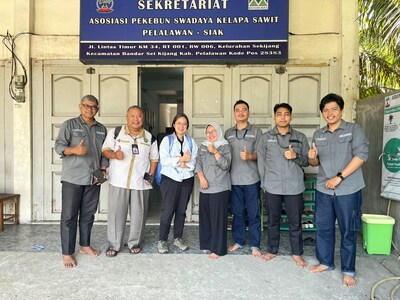
Associate Professor Janice Lee, NTU, with representatives from a farmers’ association in Pelalawan-Siak
Led by Associate Professor Janice Ser Huay Lee from the Asian School of the Environment, NTU Singapore, the research will focus on independent smallholders in Riau Province, Indonesia, including those within and outside the Asosiasi Perkebun Swadaya Kelapa Sawit Pelalawan Siak (APSKS-PS), a Musim Mas–supported smallholder association. The study will explore the behavioural, social, and spatial factors that shape how sustainable practices are learned, shared, and adopted.
While the palm oil industry has made progress in promoting sustainability among smallholders, adoption rates remain uneven. Training programs alone often fail to translate into lasting behavioural change. Factors such as trust, peer networks, perceived benefits, and access to reliable information play crucial roles in influencing farmers’ decisions. To scale sustainability effectively, the sector must understand how and why farmers choose to change their practices.
The NTU researchers will combine spatial analysis, social network mapping, and large-scale farmer surveys to study smallholder communities. The project aims to identify the factors that best predict the spread of sustainable behaviours, offering evidence-based insights to guide companies and policymakers in promoting sustainability among independent smallholders.
Musim Mas runs Indonesia’s largest independent smallholder program, having trained over 40,000 farmers since 2015. The Group has made smallholder training a cornerstone of its sustainability efforts—even though independent smallholders do not directly supply to the company—recognizing that helping farmers plant and replant sustainably is key to the long-term health of the palm oil industry.
“For sustainability to take root, we need to understand what truly motivates farmers to change—and how those changes spread through communities,” said Rob Nicholls, General Manager of Programs and Projects at Musim Mas. “This collaboration with NTU scientists will help us move from teaching sustainability to understanding it, so that our programs can be more effective, inclusive, and self-sustaining.”
Musim Mas will facilitate field access and data collection for the study, which will be independently led by the NTU team.
The collaboration aligns with ASE’s strengths in interdisciplinary environmental research, particularly its focus on the social dimensions of sustainability in Southeast Asia.
“Independent smallholders play a vital role in the palm oil landscape, yet their decision-making and social networks are often overlooked,” said NTU Associate Professor Janice Ser Huay Lee, Asian School of the Environment. “Through this partnership, we hope to uncover how knowledge, trust, and influence shape the adoption of sustainable palm oil practices—insights that can help design more effective and equitable interventions across the region.”
The project runs for about 2 years and 9 months from June 2025 and ends on March 2028, with field visits to the districts of Pelalawan and Siak, Riau. NTU works collaboratively with three other Indonesian universities, including North Sumatra University, IPB-University and The University of Riau. The findings will inform future smallholder program design and engagement strategies, with potential applications beyond palm oil to other smallholder-based agricultural sectors in Southeast Asia.
NANCHONG, CHINA – Media OutReach Newswire – 9 February 2026 – On February 4, at a briefing on cultural and tourism activities for the 2026 Spring Festival hosted by the Sichuan Provincial Department of Culture and Tourism, Nanchong City announced an extended Spring Festival holiday (from the eighth day of the twelfth lunar month to the sixteenth day of the first lunar month of the following year, that is, from January 26 to March 4 of the solar calendar), inviting visitors from around the world to Langzhong, known as the “Ancient City of the World and Birthplace of the Spring Festival”, to experience the most authentic and abundant traditions of the Chinese Lunar New Year.
The “Old Man of the Spring Festival” parades through the streets of Langzhong Ancient City while offering blessings.
The celebrations feature a wide range of programs designed to offer residents and visitors alike an immersive cultural experience. Visitors can explore the “Langzhong Stone Rubbing Exhibition for the Lunar New Year”, which showcases precious rubbings of stone inscriptions dating back 1,500 years, and trace the past through their tangible imprints. They may also encounter the “Old Man of the Spring Festival” roaming the streets in traditional costumes to bestow blessings and offer traditional New Year’s greetings.
To enrich the visitor experience, the ancient city has curated a wide array of interactive experiences, with millennium-old folk customs unfolding one after another. A vibrant intangible cultural heritage (ICH) market will present more than 40 nationally and provincially recognized ICH items. Visitors can try their hand at crafting delicate shadow puppets or cutting festive paper window decorations. They may also choose to watch a performance of the Ba Commandery Nuo Opera, a representative ICH item of Sichuan Province that blends ancient ritual practices with folk opera and carries a distinctive sense of regional mystique. Running throughout the festive period, the New Year Grand Temple Fair brings together cultural performances, themed exhibitions, and modern recreational attractions. Whether watching the large-scale cultural stage play Legend of Langyuan or experiencing water tours or low-altitude flights, visitors of all ages are sure to be thoroughly entertained.
Crowds fill the streets of Langzhong Ancient City, Langzhong City, Sichuan Province.
Langzhong’s reputation as the “Ancient City of the World and Birthplace of the Spring Festival” stems from Luo Xiahong, an astronomer of the Western Han Dynasty, who compiled the groundbreaking Taichu Calendar here. Luo was the first to incorporate the 24 solar terms into the Chinese calendrical system and to designate the first day of the first lunar month as the official start of the year, thereby establishing the Spring Festival as a fixed annual celebration. For this historic contribution, he is revered as the original “Old Man of the Spring Festival”. This calendar profoundly shaped Chinese agriculture and folk life for more than two millennia, securing Langzhong’s place as one of the cradles of Spring Festival culture. Today, Langzhong Ancient City stands ready to extend its warmest welcome to every visitor from afar, offering the most authentic New Year customs and the most heartfelt warmth of its people.Hashtag: #NanchongInformationOffice
The issuer is solely responsible for the content of this announcement.







 https://www.discoverasr.com/en
 https://sg.linkedin.com/company/the-ascott-limited
 https://www.facebook.com/discoverasr/
 https://www.instagram.com/discoverasr/
 TikTok