Home Blog Page 141

Codepresso Successfully Concludes ‘Zero100 AI Builderthon’ in Singapore, Forging Strategic Ties with Top Universities

  • 53 participants from 21 teams successfully developed working AI solutions to real-world business challenges within eight days.
  • Strategic MOU signed with Korean student associations of NUS, NTU, and SMU to establish regular hackathons and internship pipelines.

SINGAPORE, Sept. 15, 2026 /PRNewswire/ — To address the growing need for practical AI literacy among future talents, Codepresso, a leading AI competency assessment and training enterprise, announced the successful completion of the Zero100 AI Builderthon. Held from August 22 to 29 in Singapore, the event empowered local Korean university students to build functional AI solutions for real-world corporate challenges. To learn more about Codepresso’s innovative educational programs, visit [codepresso.io].

Uniting Singapore’s Top Talent

The event was led by Juhoeng Park, executive member of the Entrepreneurship Society at Singapore Management University (SMU), in collaboration with the Korean student associations at the National University of Singapore (NUS), Nanyang Technological University (NTU) and SMU. It was jointly planned with local venture builder Wilt Venture Builder. The program attracted 74 applicants, with 53 participants across 21 teams completing the eight-day program.

Juhoeng Park said: “We wanted this to be more than a ranking competition. The goal was for students to define a real problem, build a solution in a short period, and explain it directly to industry professionals for concrete feedback. Students from the three schools shared that experience for the first time, and we will carry the participants’ feedback and records into the next edition.”

Transforming Concepts into Working AI Solutions

Participants worked on bottlenecks in Codepresso’s workflows across two tracks: Judgement and Automation. Most participants were from non-technical academic backgrounds. 

Jihoon Kim, Chief AI Officer at Codepresso, led an intensive online workshop on vibe coding, an approach to building software using natural-language instructions and AI coding tools. Participants also received one-on-one project mentoring and joined an in-person roundtable discussion with industry experts from Amazon Web Services (AWS) and NetApp. The program also featured a talk by Heeduk Park, CEO of Translink Investment.

Rewarding Innovation and Business Potential

At the final presentations held at SMU on August 29, an eight-member judging panel evaluated the projects. Judges included Donghun Lee, CEO of Codepresso; Heeduk Park, CEO of Translink Investment; Daero Won, CEO of Wilt Venture Builder; Jungpil Hahn, a professor at NUS Computing; and Donghyuk Shin of AWS. Ten teams received awards across four categories: Beyond Brief, Business Potential, Builders Choice and 0→100. 

“The Builderthon showed us that students were more motivated by real-world problems and the opportunity to receive feedback on their solutions than by incentives,” said Donghun Lee, CEO of Codepresso. “The participants demonstrated that they were ready for more demanding challenges. Our agreement with the three student associations provides a foundation for making the Builderthon a recurring program.”

“We wanted this to be more than a competition focused on rankings,” said Juhoeng Park. “Our goal was for students to identify a real problem, build a solution in a short time and present it to industry professionals for specific feedback. This was the first time students from the three universities had shared this experience, and we will use participant feedback and documentation from the event to improve the next edition.”

Establishing a Sustainable AI Talent Pipeline

Solidifying its commitment to continuous education, Codepresso signed a Memorandum of Understanding (MOU) with the three student associations. The agreement aims to host the Builderthon regularly, connect participants with internship and employment opportunities, and foster a sustainable ecosystem where graduates return as mentors. Looking ahead, Codepresso plans to hold a second edition in December 2026 and launch the ZERO100 Busan Builderthon in South Korea in September 2026.

About Codepresso

Founded in 2019, Codepresso is an AI competency assessment and training company whose vision is to standardize AI literacy. The company provides hands-on training and competency assessments in data science, cloud computing and AI for major South Korean conglomerates, universities and public institutions. Its offerings include SkillCertify, a platform for practical IT skills assessment, and AI Fluent, an AI skills assessment and training service. Through these services, Codepresso supports organizational AI transformation and the standardization of workforce competencies. Codepresso placed third in the GITEX AI ASIA Supernova Challenge in Singapore in April 2026. It also operates Women in Vibe Coding, a global vibe coding community for women, across four countries, including Singapore.

Strengthening Core Manufacturing while Embracing Electrification and Global Partnerships in Indonesia

JAKARTA, Indonesia, Sept. 15, 2026 /PRNewswire/ — Indonesia carries one of ASEAN’s largest automotive markets, where internal combustion engine (ICE) two-wheeler and four-wheeler vehicles represent the core fleet. While electrification is gaining ground, the nation’s distinct geography and demographics require a tailored approach. To navigate this transformation, Indonesia’s leading automotive component manufacturer PT Astra Otoparts Tbk continues to support the country’s large existing ICE vehicle population while expanding its capabilities in EV components, infrastructure and international partnerships. Messe Frankfurt met with Astra Otoparts’ President Director Mr Yusak Kristian Solaeman to discuss the forces driving this transition and how Astra Otoparts’ integrated model achieves sustainable growth.

The foundations of a secure, high-potential market
Indonesia’s economy remains a cornerstone of Southeast Asian growth, defined by a steady annual expansion rate of around five percent[1]. This economic resilience underpins a dynamic automotive sector and provides a solid foundation for its continued development. Based on Astra Otoparts’ estimates, more than 11 million vehicles sold in Indonesia over the past 12 years remain in operation today. Despite this substantial installed base, four-wheeler ownership remains relatively low[2] compared with several more mature ASEAN automotive markets, suggesting room for long-term market development. This creates a distinctive automotive market shaped by Indonesia’s specific needs, while offering room for long-term growth and opportunities for foreign direct investment (FDI).

Positioned at the heart of this market is Astra Otoparts. Founded in 1976, Indonesia’s leading automotive component group comprises two business segments, manufacturing and trading, 55 entities and business units, and a workforce of over 30,000 employees as of June 2026. Today, the company continues to strengthen its core automotive component manufacturing and trading businesses while expanding its capabilities through business diversification.

In this interview, the company’s President Director, Mr Yusak, discussed Indonesia’s transition toward electric mobility and how Astra Otoparts’ integrated business model enables the company to strengthen its core automotive component business while capturing opportunities from evolving mobility trends and growing investment in Indonesia.

How does Astra Otoparts strengthen its core automotive business while adapting to the evolving demands of electrification?
To remain competitive amid rapid technological changes, Mr Yusak explained that Astra Otoparts maintains a balanced strategy across its products and services, strengthening its core automotive component business while expanding its capabilities to capture emerging opportunities from electrification. The company divides its portfolio into two core categories: resilient components that remain essential regardless of powertrain type (ICE, HEV, PHEV & BEV), and common components which cater directly to ICE vehicles.

Mr Yusak added that Astra Otoparts continues to strengthen its aftermarket business by addressing the replacement needs of Indonesia’s large existing ICE vehicle population. Indonesia features a mature vehicle market, averaging around 10 to 14 years old in urban areas and extending up to 20 years on the outer islands. To serve the replacement needs of this ageing vehicle population, Astra Otoparts maintains a strong aftermarket business that addresses recurring consumer demand for replacement parts across both two-wheeler and four-wheeler segments. This extensive market coverage is particularly relevant in Indonesia, which remains one of the world’s largest two-wheeler markets.

To serve the vast overall vehicle population, Astra Otoparts executes a multi-brand and multi-channel strategy. This includes Astra Otoservice workshops that deliver affordable maintenance, the Shop&Drive retail chain network, and a supply chain of regional hubs, dealers, and local parts shops. Mr Yusak noted: “by managing this diverse mix, we remain resilient regardless of changes in technology or consumer behaviour.”

Through its balanced portfolio and extensive aftermarket ecosystem, Astra Otoparts continues to adapt to the evolving automotive landscape while building capabilities to capture opportunities arising from electrification.

A prime example of this is Astra Otopower, its EV charging network. Beyond supporting the development of EV charging infrastructure, Mr Yusak mentioned that real-time data from Astra Otopower charging stations provides insights into charging usage patterns, helping the company better understand evolving customer needs and market trends, and in turn supporting the development of its long-term electrification strategy.

Navigating the realities of the electrification transition
Astra Otoparts navigates Indonesia’s evolving automotive landscape through a balanced approach that supports long-term growth and adaptability. Recognising that the transition toward electrification will evolve alongside market readiness, infrastructure development, and consumer needs, the company continues to adapt its portfolio in line with the changing automotive landscape.

While the momentum behind electric mobility is growing, the transition across Indonesia presents distinct geographic and demographic challenges. As an archipelago of over 17,000 islands spanning large distances and diverse terrain, infrastructure development naturally varies by region. Mr Yusak remarked that consequently, EV adoption currently remains concentrated in major urban hubs, whereas outer islands rely heavily on traditional ICE, influenced by factors such as charging infrastructure availability, travel distances, vehicle usage patterns, and consumer needs.  

Additionally, he said that EV ownership is largely seen in wealthier households buying secondary or luxury cars, while the high-volume middle class still relies on affordable ICE options. Data from Astra Otopower’s charging network reveals further consumer habits. In Jakarta, commuters buy EVs to bypass odd-even traffic restrictions, which restrict vehicle usage based on the final digit of a license plate. On the other hand, range anxiety remains a hurdle for travel outside the city.

As Mr Yusak explained: “Drivers still worry about charging availability on long-distance trips; if charging stations are sparse, consumers prefer ICE or hybrid vehicles, which offer convenience because gas stations are everywhere.” He added: “Electrified vehicle penetration could reach 25 to 30 percent over the next decade, with hybrid vehicles capturing most of this share. True market transformation will occur once adoption spreads beyond multi-car owners to first-time vehicle buyers.”

Why are international investors choosing Indonesia?  
This gradual transition towards electric mobility combined with sustained demand for traditional and localised vehicle components, creates an ideal entry point for international players. Original Equipment Manufacturers (OEMs) and suppliers from China, Japan, South Korea, and Vietnam, including recent entrants like VinFast, are actively expanding their local presence. Mr Yusak pointed out: “Foreign investors use Indonesia as a regional manufacturing hub for exporting complete built-up (CBU) units, engines, and components for global markets.”

Government policy acts as a major driver for this investment. To qualify for tax facilities and incentives, incoming manufacturers must operate within local content requirements. Under the domestic content framework, known as TKDN, compliance is determined by the percentage of local content originating from domestic manufacturing, labour and raw materials[3].

Therefore, instead of building new factories from scratch, Mr Yusak explained that partnerships with established local manufacturers such as Astra Otoparts can provide international companies with access to existing manufacturing capabilities and support more efficient localisation. “By leveraging existing production capabilities and creating manufacturing synergies, international partners can accelerate localisation while meeting applicable local manufacturing requirements.”

To accelerate this incoming of global capital, Astra Otoparts takes an active role: “We actively engage with government and industry stakeholders to exchange perspectives on component localisation, manufacturing competitiveness, and the development of Indonesia’s automotive ecosystem, contributing to a supportive environment for long-term investment.”

Indonesia’s automotive future
Ultimately, the country’s path towards future mobility will not be defined by an overnight EV takeover, but by a steady evolution. Supported by a stable five percent economic growth rate, strong FDI incentives, and low vehicle ownership density, the nation is positioned to become a central manufacturing and export hub for Southeast Asia.

Regarding the future market outlook, Mr Yusak concluded: “Two-wheeler vehicles will remain dominant due to regional road infrastructure, although we expect advancements in trends as consumer purchasing power continues to grow. For four-wheeler vehicles, annual sales should rebound towards one million units shortly, with hybrid vehicles seeing strong adoption due to practical infrastructure requirements.”

Indonesia, while keeping with the direction and momentum of the global push to electrification, is paving its own path towards future mobility. For now, hybrid vehicles are seeing greater adoption driven by lower infrastructure requirements and consumer preferences outside of Jakarta. Overall, this transition provides an attractive landscape for both local and international industry players, offering high-growth opportunities not only in emerging EV and hybrid technologies, but also in supporting the enduring demand of the country’s existing vehicle fleet. 

These projections further underscore the strength of Astra Otoparts’ strategy across automotive component manufacturing and trading businesses as it expands its capabilities through business diversification. By scaling alongside steady hybrid adoption and the consistent demand for two-wheeler and ICE four-wheeler vehicles, the company directly aligns with Indonesia’s economic trajectory while solidifying itself as a pioneer in Southeast Asia’s mobility innovation.

Automechanika Jakarta supporting Astra Otoparts’ goals
Sponsoring and strategically partnering with Automechanika Jakarta directly aligns with Astra Otoparts’ vision to operate as a premier global player. Mr. Yusak highlights that “our vision is to be a world-class automotive component manufacturer, and partnering with a world-class exhibition brand like Automechanika aligns directly with that goal.” Participating at the event allows the company to demonstrate domestic manufacturing leadership, display its diverse component capabilities, deepen ties with longstanding JV partners, and connect directly with international buyers seeking dependable local manufacturing partners.

Automechanika Jakarta 2026 takes place from 24 to 27 September 2026 at the Nusantara International Convention Exhibition. To find out more, please visit www.automechanika-jakarta.com.


[1] What Indonesia Needs to Achieve 7 Percent Economic Growth, Tempo English, August 10 2026, https://qr.messefrankfurt.com/R3065

[2] Menperin Optimistis Penjualan Mobil Tahun Ini Lampaui Target 850 Ribu Unit, July 30 2026,

https://qr.messefrankfurt.com/P70d2

[3] Indonesia Recasts Local Content as Investment Incentive: Key Highlights from the Ministry of Industry’s New Regulation, Makarim & Taira S., October 2025, https://qr.messefrankfurt.com/n7262


TAT Celebrates the Success of the Amazing Thailand Ambassador Campaign, Sparking a Viral “Feel All the feelings” Phenomenon with Over 448 Million Impressions


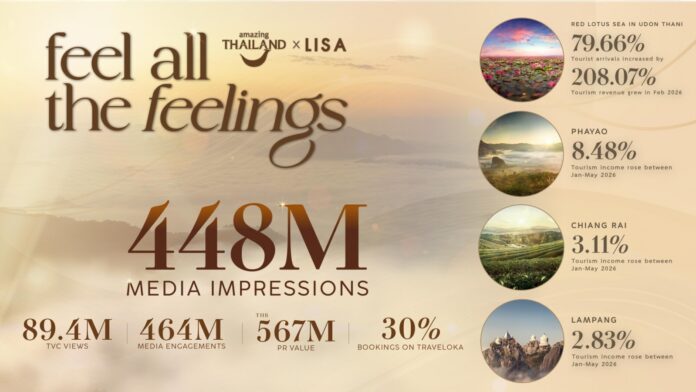
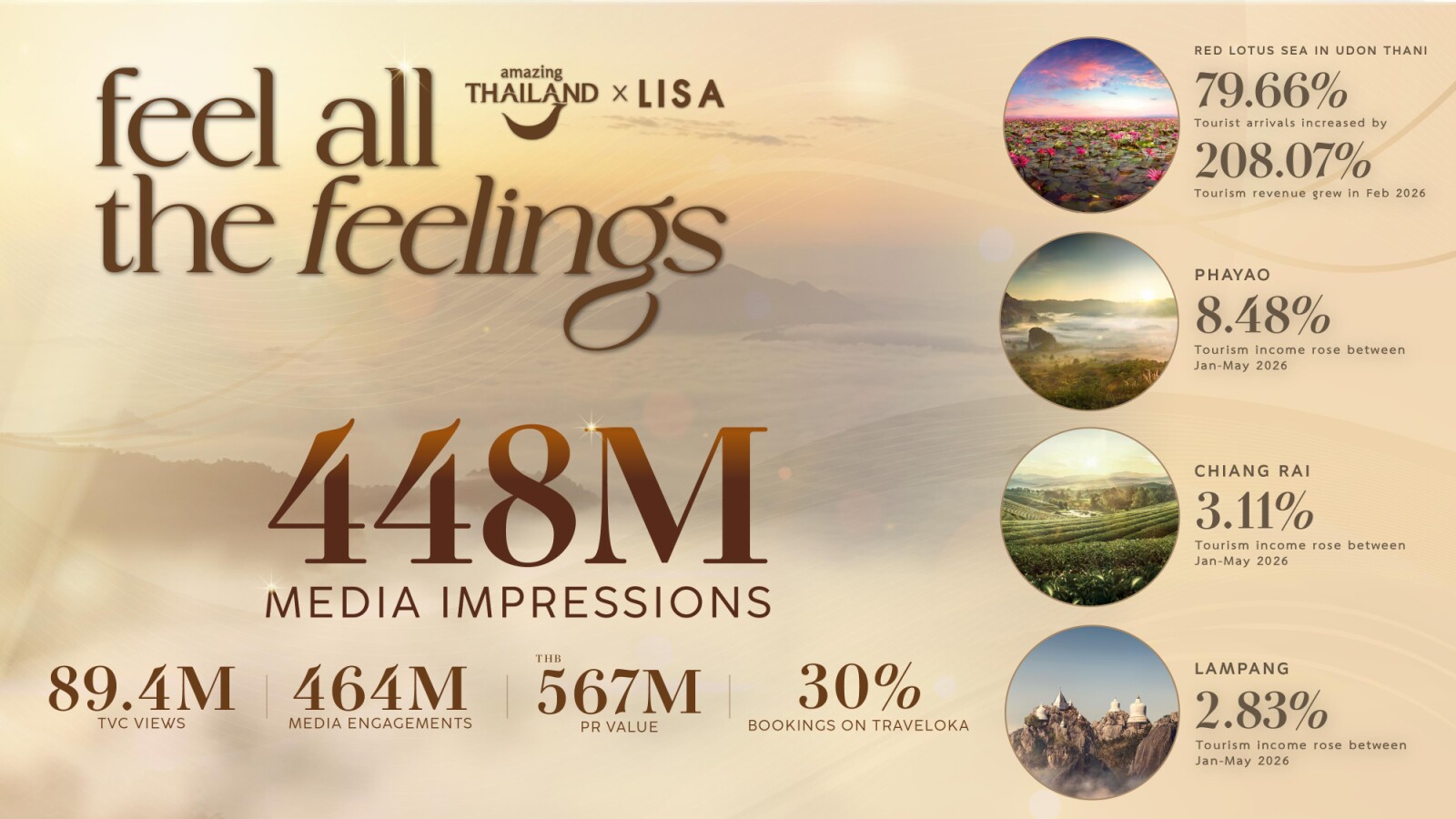
BANGKOK, THAILAND – Media OutReach Newswire – 15 September 2026 – The Tourism Authority of Thailand (TAT) celebrates the success of the “Amazing Thailand Ambassador” project, which generated more than 448 million impressions across media and digital channels. The initiative reflects TAT’s efforts to evolve how Thailand is communicated as a destination in response to today’s changing traveller behaviours and digital landscape, using contemporary stories, content, and perspectives to connect audiences with Thailand’s unique charm. As part of the initiative, LISA, as the Amazing Thailand Ambassador, helped showcase Thailand’s stories and perspectives to travellers through the “Feel All the feelings” campaign, sparking widespread conversation and inspiring people to experience and discover Thailand for themselves.

TAT - Amazing Thailand Ambassador - ENG Image

Ms. Thapanee Kiatphaibool, Governor of the TAT, said: “The Amazing Thailand Ambassador project was initiated with TAT’s intention to explore new ways of communicating Thailand in line with the behaviours of today’s travellers. Travel decisions are no longer driven solely by searches for destination information. They are increasingly influenced by stories, content, and experiences that inspire people and create an emotional connection even before the journey begins.

“TAT reinforced this approach through the ‘Feel All the feelings‘ campaign, introducing new perspectives on Thailand through people and stories that can resonate with audiences across different cultures. As the Amazing Thailand Ambassador, LISA helped convey Thailand’s charm through a contemporary, authentic, and more accessible perspective for younger audiences. The campaign also demonstrated how Thai identity can connect naturally and creatively with tourists, while highlighting the many destinations across Thailand that each possess their own distinctive character and charm, waiting to welcome travellers to experience and share their memorable journeys.”

The official launch of the Amazing Thailand Ambassador at Wat Arun Ratchawararam Ratchawaramahawihan captured the attention of media, creators, travellers, and online audiences, driving widespread conversations about Thailand. The launch generated a PR value of up to THB 409 million. TAT then introduced a key activation that transformed communication into participation under the theme “Feel All the feelings, Seeking Thailand’s Wonders,” inviting people to embark on journeys inspired by the charm of Thailand and discover its stories, experiences, and unique character alongside LISA. The initiative turned on-screen inspiration into real-life travel experiences. Throughout the project, TAT emphasised the power of communication to amplify Thailand’s stories, build awareness, and encourage meaningful participation. The results reflected the campaign’s broad reach, generating more than 448 million impressions across media and various channels, over 89.4 million total TVC views, and more than 464 million media engagements, while generating a total PR value of over THB 567 million.

The campaign’s success also translated into travel behaviour and economic activity across destinations. According to Traveloka, in 2026, demand for travel to Thailand among international travellers increased by 10%, while demand among Thai travellers increased by 25%. Meanwhile, accommodation bookings in Thailand by travellers from Southeast Asia grew by more than 30% compared with the previous year. Several destinations also gained increased attention from travellers inspired to follow LISA’s journey as the Amazing Thailand Ambassador, including Red Lotus Sea in Udon Thani, Wat Chedi Luang Varavihara in Chiang Mai, Wat Arun Ratchawararam Ratchawaramahawihan in Bangkok, and Koh Talu in Rayong. Red Lotus Sea in Udon Thani recorded a 79.66% increase in tourist visits and a 208.07% increase in tourism revenue in February 2026. Khao Sok National Park also welcomed 34% more visitors between February and June 2026. These figures reflect growing interest in a wider range of destinations and travel experiences across Thailand. At the regional level, tourism revenue also grew between January and May 2026, increasing by 8.48% in Phayao, 3.11% in Chiang Rai, and 2.83% in Lampang. The figures highlight growing interest in destinations beyond major tourist cities and opportunities for tourism to generate economic value across communities with distinctive local identities and experiences.

The Governor of the TAT added, “What we have seen throughout the project demonstrates that tourism communication today is no longer simply about telling people what Thailand has to offer. It is about inspiring people to want to travel and discover it for themselves.
As the Amazing Thailand Ambassador, LISA has helped showcase the charm of Thailand through a contemporary perspective, inviting travellers to experience the country in ways that feel fresh, vibrant, and naturally connected to diverse cultures.”

In 2027, TAT will mark an important turning point for Thailand’s tourism industry under the concept of ‘The Year of Transformation,’ shifting the focus from volume-driven growth to value-driven growth. This will build on the many stories of Amazing Thailand still waiting to be discovered—from destinations and people to culture and distinctive experiences found along different travel routes. TAT will continue to create new forms of communication and travel experiences to encourage visitors to explore beyond Thailand’s major cities and discover secondary destinations across the country. Through this approach, TAT aims to position Thailand as Asia’s No. 1 High-Value & Meaningful Destination, encouraging travellers from around the world to return and experience the country again and again.

Contact Information
International Public Relations Division
Tourism Authority of Thailand
Tel: +66 (0) 2250 5500 ext. 4545-48
Fax: +66 (0) 2250 0246
E-mail: prdiv3@tat.or.th
Website: www.tatnews.org

VERVE Public Relations
Khianthong Ngernphum (Thonghom)
Tel: +66 80 561 9511
E-mail: khianthong.ngernphum@vervethailand.com

Jirachaya Jaiyen (Linda)
Tel: +66 94 876 4938
E-mail: jirachaya.jaiyen@vervethailand.com

Reference Link: https://www.tatnews.org/2026/09/tat-celebrates-the-success-of-the-amazing-thailand-ambassador-campaign-sparking-a-viral-feel-all-the-feelings-phenomenon-with-over-448-million-impressions/
Hashtag: #AmazingThailand #AmazingThailandAmbassador #AmazingThailandxLISA #FeelAllTheFeelings

The issuer is solely responsible for the content of this announcement.

Skyro Unveils Refreshed Visual Identity as It Builds a Global Financial Ecosystem

The fintech is evolving from a consumer loans provider in the Philippines into an international multi-product financial ecosystem


MANILA, PHILIPPINES – Media OutReach Newswire – 15 September 2026 – Skyro, a fast-growing digital finance platform, today began rolling out its refreshed visual identity, launching first with a redesigned app in the Philippines ahead of a wider rollout across all markets, advertising and partner touchpoints in the coming weeks. The rebrand marks Skyro’s shift from a consumer loans provider into an international multi-product financial ecosystem.

Launched in the Philippines in 2022, Skyro has grown to more than 7 million users, built a current credit portfolio of more than $200 million, and reached operating break-even in the first half of 2026. The company now aims to scale this success by entering new markets and expanding into new financial products. In August, Skyro announced plans to expand into Saudi Arabia. The Philippines, Skyro’s most mature market, will be the first to introduce the new brand identity. The Skyro Philippines app will launch in its new design on September 15, followed by a wider rollout across markets and partners. The rebrand reflects the company’s aspiration to be a part of customers’ lives, following their natural rhythms and helping them grow consistently.

Arsen Liametov, Skyro Сo-founder and Co-CEO said:

“The rebrand reflects the strategy and ambition behind Skyro’s next chapter. We want to move beyond one-off lending and become an everyday financial partner, offering a broader set of products that support people and small businesses through different moments in their lives. Our ambition is for Skyro to fit more naturally into those moments, building lasting relationships with customers as their needs evolve. The new identity reflects that direction and gives us a platform to build on what we have proven in the Philippines as we enter new markets.”

As a financial ecosystem, Skyro aspires to be a part of customers’ lives, following their natural rhythms and helping them grow consistently. The new design system, along with new brand tagline, “Naturally, yours,” embody the idea that finance should be built around people’s lives: seasons, local holidays and other recurring cycles structure how people live and spend. The central mark of visual identity draws on the analemma, the figure-eight path traced by celestial bodies across the sky over the course of a year. Echoing the “Sky” in Skyro’s name, the shape represents continuity and flexibility, reflecting the company’s ambition to become part of customers’ everyday financial lives rather than serve individual transactions.

Nasim Aliev, Skyro Сo-founder and Co-CEO said:

“Skyro started with a simple idea: use AI and alternative data to make credit faster and more accessible for people who are often underserved by traditional lending. That model has proven itself, and the business has now grown beyond its original focus. With SkyroCredit already launched, and more B2C and B2B products in development, the business has started to outgrow the old branding.

This rebrand gives that evolution a clear identity and a platform for what we are building next. Whether that’s making a purchase, upgrading something at home, getting something you’ve been wanting, or simply making your next move possible, Skyro becomes the enabler that helps people take action”.

Skyro’s proprietary AI-driven credit decisioning model uses alternative data and advanced analytics to assess applications, helping the company make fast, responsible credit decisions and serve customers who may be underserved by conventional lenders. Skyro now works with more than 10,000 partner stores and over 3,000 merchants, with SMEs driving over 60% of volume. SkyroCredit, a reusable credit line that works via QR Ph, allows customers to use and repay their available credit repeatedly without reapplying each time. Its launch marked a shift from financing one-off purchases toward building an ongoing financial relationship with customers, giving them more ways to turn to Skyro as their financial needs and priorities evolve over time.

Skyro is seeking to apply the experience developed in the Philippines to new markets across Southeast Asia and the Middle East.

Hashtag: #Skyro

The issuer is solely responsible for the content of this announcement.

About Skyro

Skyro is a high-growth, digital-first fintech group delivering scalable, responsible financial access across high-potential emerging markets. Powered by proprietary data science, AI-driven credit decisioning, and alternative-data scoring, the company combines a mobile-native experience with modular fintech architecture to serve underserved client segments at scale.

As of 2026, Skyro has a registered user base of more than 7 million and a credit portfolio exceeding $200 million. The company’s ambition is to become a leading full-spectrum financial services group across high-potential markets by combining capability proven at scale with a commitment to building each business around the needs of the market it serves.

Flam Raises US$40 million (S$51 Million) in Series B Funding to Scale AI-Powered Interactive Content


SAN FRANCISCO, USA – Media OutReach Newswire – 15 September 2026 – Flam, an AI interactive content company, has raised US$40 million (S$51 million) in Series B funding led by QED Investors.

Claypond Capital, Martin Chavez, Olivier Pomel, Venky Harinarayan, and Shah Rukh Khan joined the round, with existing investors RTP Global and Dovetail doubling down.

Flam has signed more than 100 enterprise customers in six quarters, including Google, Grab, and KFC. They use Flam’s suite of products for marketing, product visualization, learning and development, entertainment, fan engagement, customer support, and sales. Flam has partnered with Elang Mahkota Teknologi Emtek in Indonesia to bring its technology to brands across Southeast Asia.

“Flam is built on a simple observation. Content has moved in waves, from text to images to video, and every wave flowed one way, creator to viewer. We think interactive is the next default for the internet,” said Shourya Agarwal, Founder of Flam. “The demand was always there. The technology wasn’t. We have made interactivity effortless to build and deploy at enterprise scale.”

Flam holds more than 15 patents and ships three formats.

Flicks are interactive videos that switch person, product, or scene mid-playback, using a patented compression algorithm, delivered programmatically at 50ms time-to-first-buffer. Forge, Flam’s editing model, takes image references and changes only the specified element.

Airboards are high-fidelity 3D content on a camera interface, with touch, voice interactions, and haptic feedback. Flam’s 3D streaming loads them in 300ms, with no app to install. Fable, an image-to-video model, generates the assets as native alpha channel videos.

Visual Agents are human-like characters that hold conversations and take agentic actions. A video call rather than a chat window. Fantom handles facial expression through identity preservation and motion transfer, Finesse handles voice in any language, and Falcon, a 26B-parameter MoE LLM, delivers responses at 30ms time-to-first-token. The pipeline returns an answer in under two seconds.

Nigel Morris, Co-Founder and Managing Partner at QED Investors, said: “Almost every frontier AI content company we see is optimizing what already exists. Flam pointed at something else: how much of the content ecosystem is still untouched. That gap is bigger than most people think, and Flam is the first team we’ve seen with the infrastructure to go after it.”

“The traction was too exceptional to ignore,” said Sandeep Patil, Partner at QED Investors. “Every major shift in internet content has created new platforms and new winners. What tells us Flam will be one is not just the growth rate but also the pace of their AI research and the partners choosing to build on it.”

The capital goes to R&D on Flam’s AI models, expanding the product suite, and scaling enterprise sales globally.

Hashtag: #Flam


The issuer is solely responsible for the content of this announcement.

Laos Highlights Clean Energy Plans as Power Demand Grows

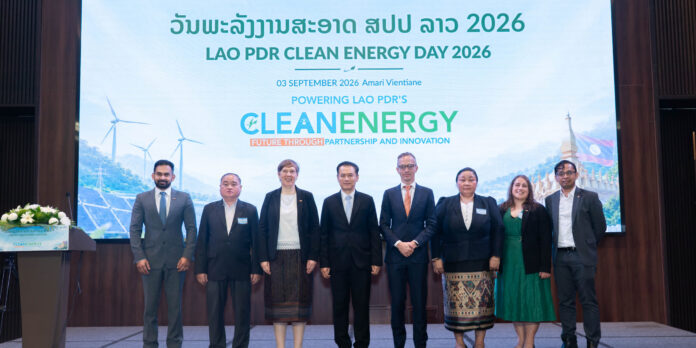
A picture of government officials, energy sector leaders and international experts attending Lao PDR Clean Energy Day 2026. (Photo by Energy Clean)

Laos brought together government officials, energy sector leaders and international experts for Lao PDR Clean Energy Day 2026, as the country looks to expand renewable energy, strengthen its power infrastructure and improve energy security.

The Ministry of Industry and Commerce organised the event in partnership with EnergyLab Asia, with support from Australia through the Mekong-Australia Partnership.

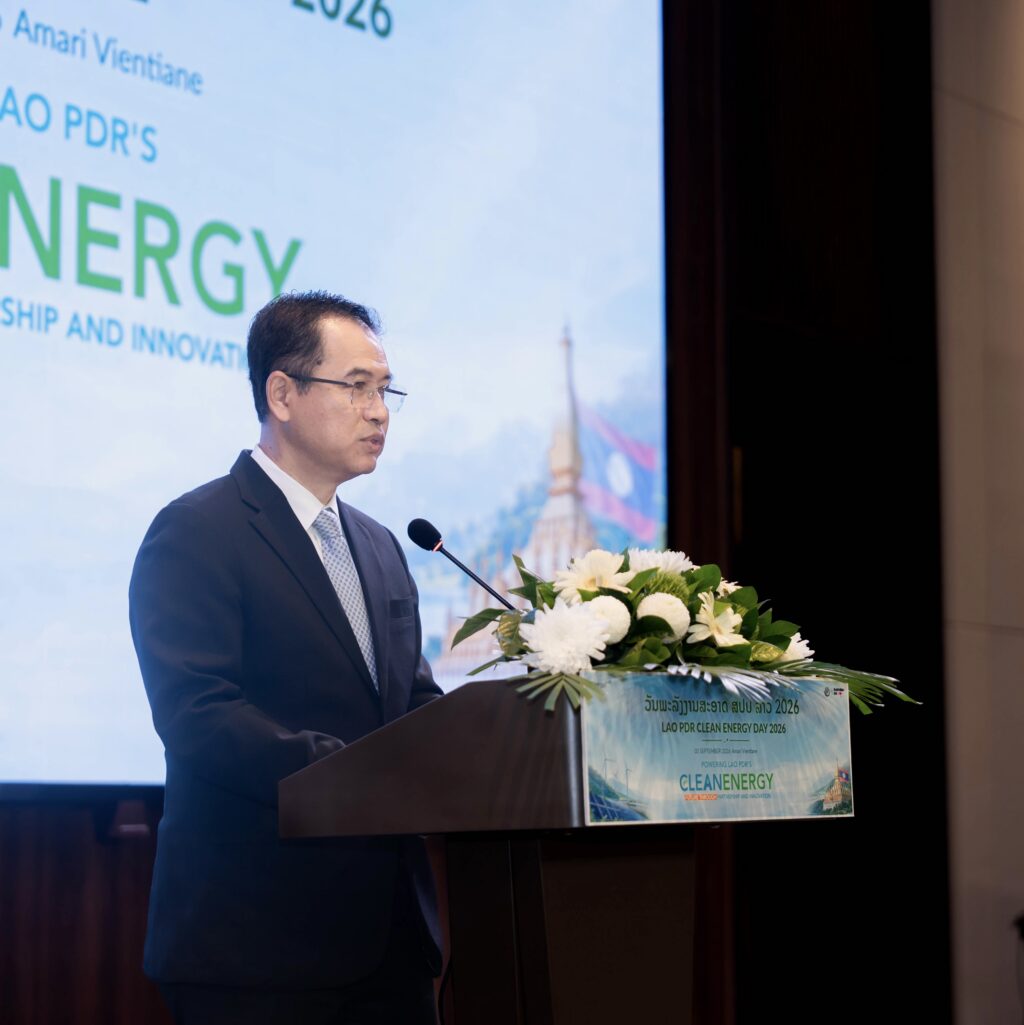
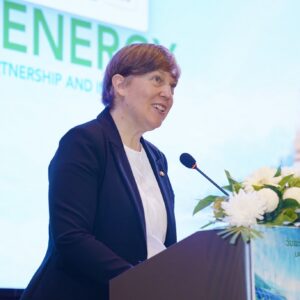
A picture of Minister of Industry and Commerce Malaithong Kommasith during the conference opening of Lao PDR Clean Energy Day 2026.

During the conference opening , Minister of Industry and Commerce Malaithong Kommasith said said Laos needs to move faster on clean energy as it faces rising fuel costs, climate risks and growing demand for electricity.

“Energy security is national economic sovereignty,” he said.

Malaithong said the government wants to reduce Laos’ dependence on imported fuel by expanding domestic renewable energy, electrifying transport and improving the country’s power infrastructure.

Under the Power Development Strategy 2026–2035, Laos plans to expand wind and solar power alongside hydropower, while upgrading its 500 kV, 230 kV and 115 kV transmission networks and adding battery storage to better manage fluctuations in renewable generation.

The strategy also calls for expanded electricity trade with Thailand, Vietnam and Cambodia, while strengthening Laos’ role in the ASEAN Power Grid.

A picture of Australia’s Ambassador to Laos Megan Jones’ speech during the conference.

Australia’s Ambassador to Laos Megan Jones said Laos had already made significant progress in developing its electricity system and becoming an important regional power trader.

“Energy will play a critical role” in Laos’ efforts to build a more diversified and competitive economy, she said, highlighting the importance of reliable, affordable and sustainable electricity for investment, employment and economic growth.

Singapore Employers Adopt More Strategic Hiring as Business Priorities Evolve, New ASEAN Survey Finds

Reeracoen Group x Rakuten Insight survey shows Singapore businesses are investing in AI and targeted hiring to build future-ready workforces

SINGAPORE, Sept. 15, 2026 /PRNewswire/ — Singaporean businesses are strengthening workforce capability through targeted hiring and increased investment in AI and technology, according to The Great Restructuring: ASEAN Consumer & Business Pulse Survey 2026, published by Reeracoen Group in partnership with Rakuten Insight.

Shoichi Sunaga, Branch Manager, Reeracoen Singapore

Among the subset of Singapore businesses reporting improving revenue, 52% continue to hire selectively while 23% are expanding headcount, suggesting organisations are prioritising critical capabilities and long-term productivity as they prepare for future growth. Singapore also recorded the highest proportion of businesses identifying AI and technology as a growth opportunity among the six ASEAN markets surveyed.

Striking a Balance: Businesses Combine Selective Hiring with Investment in AI, Technology and Operational Capabilities

With Singaporean businesses adopting a more strategic approach to growth and workforce planning, selective hiring remains the dominant hiring stance at 32%, as employers focus on building the capabilities needed for future growth.

“Today’s hiring environment is no longer about filling vacancies quickly. Employers are becoming more deliberate in identifying the capabilities they need to support long-term business priorities. Organisations that clearly define critical roles and invest in workforce capability will be better positioned to attract and retain the right talent,” said Shoichi Sunaga, Branch Manager, Reeracoen Singapore.

Singapore leads the six markets surveyed in AI and technology investment intent, with 33% of businesses citing AI and technology as a top growth opportunity. Operational efficiency (40%) and supply chain diversification (26%) are also key priorities, reflecting how technology, workforce and business strategies are increasingly shaped by digitalisation.

“What stands out in Singapore is how businesses are balancing a measured outlook with continued investment in future capabilities. The strong focus on AI, technology and operational efficiency suggests that businesses are not simply responding to uncertainty, but actively positioning themselves for longer-term growth,” said Cheryl Ng, Country Director, Singapore, Rakuten Insight.

Strategic Pragmatists: A Selective Labour Market That Values Stability

Just 13% of Singapore-based workers surveyed indicated that they are interested in a career change, the lowest in the ASEAN region. This figure suggests a workforce that values stability and is selective when it comes to job hunting. Of the comparatively small proportion of Singapore-based respondents considering a career change, 32% cite AI and automation as their primary motivator — the second-highest proportion among the six markets surveyed, behind Vietnam (39%).

As a nation of strategic pragmatists, consumers surveyed in Singapore are prioritising financial resilience, with saving emerging as the top financial response (59%).

For the full six-market findings, including country-by-country profiles and a Leadership Playbook of eight strategic priorities for regional expansion, download The Great Restructuring: ASEAN Consumer & Business Pulse Survey 2026.

Download the report at:
https://www.reeracoen.sg/en/events/client-the-great-restructuring-ASEAN-consumer-business-pulse-survey-2026?utm_source=sg_pr&utm_medium=cta&utm_id=asean-whitepaper-2026

About Reeracoen Group

Reeracoen is a leading Asia-based recruitment and HR solutions group, connecting talent with forward-thinking organisations across the region. With 9 offices across 6 major Asian markets, Reeracoen combines deep local market expertise with cross-border recruitment capabilities to support sustainable business growth.

Beyond recruitment, Reeracoen provides market intelligence, workforce insights, salary research, and employer advisory services, helping organisations make informed talent and business decisions in an evolving regional economy.

Reeracoen’s commitment to service excellence has been recognised through multiple industry awards, including Best Recruitment & Talent Acquisition Agency (2025, 2026), Client Service Excellence Award (2026), Best International Recruitment & Talent Acquisition Agency (2024), and Best Executive Recruitment Agency (2024).

For more information, visit www.reeracoen.sg.

About Rakuten Insight

Rakuten Insight, Inc. is a wholly-owned online market research subsidiary of Rakuten Group, Inc., a global leader in internet services headquartered in Tokyo.

Established in 1997 as AIP Corporation and integrated into the Rakuten Group in 2014, Rakuten Insight operates a research panel focused on 12 major Asian markets and the United States, with a panel network spanning 60 countries and regions.

With offices in 11 countries and regions, the company provides market research for more than 500 leading companies worldwide. Rakuten Insight Singapore serves as a regional hub providing multi-lingual and multi-functional operational support for clients across Southeast Asia.

For more information, visit https://insight.rakuten.com.

Cheryl Ng, Country Director, Singapore, Rakuten Insight

Avalara Named a Leader in IDC MarketScape: Worldwide E-Invoicing Compliance Solutions 2026

SYDNEY, Sept. 15, 2026 /PRNewswire/ — Avalara, Inc., the agentic AI leader in global tax and compliance, today announced that after a thorough evaluation of its strategies and capabilities, the company has been positioned in the Leaders Category in the IDC MarketScape: Worldwide E-Invoicing Compliance Solutions 2026 Vendor Assessment (doc #EUR154882626, September 2026).

According to the IDC MarketScape, “Avalara’s harmonized UBL model and single global API let customers integrate once and activate countries via configuration.” The report also noted, “Avalara supports a wide mandate footprint with an ambitious expansion road map, and customers expressed confidence in its depth of compliance expertise.”

“To us, being recognized as a Leader in the IDC MarketScape for Worldwide E-Invoicing Compliance Solutions reflects the trust our customers place in us to navigate one of the most complex and fast-moving compliance landscapes in the world,” said Jayme Fishman, Chief Strategy and Product Officer at Avalara. “As governments continue to accelerate e-invoicing mandates across every region, we’re committed to making it faster and easier for businesses to stay compliant everywhere, without the burden of managing country-by-country solutions.”

With Avalara E-Invoicing and Live Reporting (ELR), businesses integrate once and activate individual country mandates through configuration rather than repeated reimplementation. Built on a single global API and a harmonized data model, Avalara ELR supports clearance/CTC, post-audit, and hybrid e-reporting architectures through pre-built, country-specific workflows. The Avalara solution integrates with leading ERP and accounting platforms, as well as ecommerce and billing systems.

AI is also embedded within Avalara ELR, including error interpretation through Avi Insights, natural-language document search, and intelligent document processing, with further agentic capabilities planned.

“The global e-invoicing mandate landscape is expanding at a pace that challenges even the most well-resourced finance and IT teams,” said Kevin Permenter, Research Director, Financial Applications, IDC. “Avalara’s ability to offer a single global API with country-specific activation through configuration addresses one of the core pain points we see across midmarket and enterprise buyers. Combined with predictable, transaction-based pricing and a proven compliance track record, Avalara demonstrates the hallmarks of a vendor well-positioned to scale alongside the mandates its customers face.”

About Avalara
Avalara is the agentic AI platform for global tax and compliance. For more than two decades, Avalara has built one of the most expansive libraries of tax content and integrations in the industry, processing more than 54 billion transactions annually and supporting millions of businesses worldwide. The company’s purpose-built AI agents automate end-to-end compliance with greater precision, from tax calculations and return filings to exemption certificate management and beyond. For more information, visit Avalara.com.

About IDC MarketScape
IDC MarketScape vendor assessment model is designed to provide an overview of the competitive fitness of technology and service suppliers in a given market. The research utilizes a rigorous scoring methodology based on both qualitative and quantitative criteria that results in a single graphical illustration of each supplier’s position within a given market. IDC MarketScape provides a clear framework in which the product and service offerings, capabilities and strategies, and current and future market success factors of technology suppliers can be meaningfully compared. The framework also provides technology buyers with a 360-degree assessment of the strengths and weaknesses of current and prospective suppliers.