Home Blog Page 1492

Taiwan-Korea Startup Collaboration Accelerates as Startup Island TAIWAN Joins COMEUP 2025

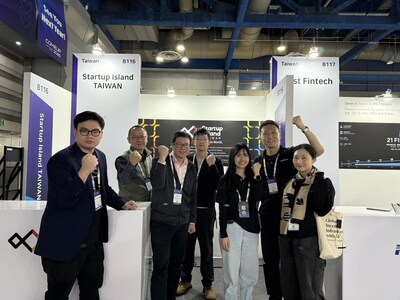
SEOUL, South Korea, Dec. 12, 2025 /PRNewswire/ — Startup Island TAIWAN, the national startup brand supported by Taiwan’s National Development Council, has been invited by the Korea Startup Forum (KSF) to join COMEUP 2025, Korea’s flagship global startup event. The invitation highlights increasing recognition of Taiwan’s rising influence in Asia’s innovation economy—driven by its AI capabilities, deep-tech talent base, and rapidly expanding startup ecosystem.

Taiwan, with a population of 23 million, now hosts more than 9,500 startups, forming one of the most concentrated innovation ecosystems in Asia. Startup investment in Taiwan has reached record highs since 2024: according to a 2025 report by the Taiwan Institute of Economic Research, over 70% of startup investment in Taiwan comes from corporates and CVCs. This corporate-driven funding landscape gives Taiwanese startups a distinctive advantage in commercialization and industry integration—qualities increasingly valued by Korean corporates and investors.

KSF, one of Korea’s largest startup organization, invited Startup Island TAIWAN after identifying Taiwan as a strategically important partner for AI, semiconductor-adjacent technologies, and cross-border execution. Beyond Seoul, Startup Island TAIWAN has alsohas expanded working relations with Busan, Gyeonggi Province, and Jeju, building multi-city channels for accelerator cooperation, demo days, talent exchange, and investment dialogues. This growing geographic network positions Taiwan as one of Korea’s most active regional partners in Asia.

This year’s delegation features five Taiwanese startups whose business performance reflects a distinctly international footprint. Across the United States, Japan, and Southeast Asia, these companies have secured tangible commercial orders, built mature operational networks, and proven their ability to scale globally.

21st Fintech offers cross-border payments, fraud detection, and BNPL infrastructure across Japan and ASEAN—highly relevant to Korean corporates expanding into those regions.

SurveyCake provides enterprise-grade data insights used in 20+ countries, aligning with Korea’s advancing SaaS and martech ecosystem.

Environmental and Human Technologies (MyComfyTech) delivers next-generation air filtration and AI sensing solutions suited for Korea’s mobility hubs and ESG-driven industries.

Giftpack applies AI and emotional intelligence to personalized enterprise engagement, resonating strongly with Korea’s dominant entertainment and consumer sectors.

On the deep-tech front, INFINITIX strengthens the technological bridge between the two markets. INFINITIX is a leader in enterprise-grade AI infrastructure management software. Its flagship product, AI-Stack, accelerates AI adoption and maximizes compute efficiency through three core modules. The Resource Management module applies proprietary GPU partitioning technology—compatible with both NVIDIA and AMD—to raise utilization from 20–30% to over 90%. The Model Deployment module incorporates Elastic Distributed Training (EDT) and Rapid Container Service (RCS), significantly shortening the cycle from model development to production. The newly released AI Cloud Service Solution (ixCSP) enables enterprises to monetize idle compute resources through commercial GaaS, MaaS, and TaaS offerings. Together, these capabilities transform AI infrastructure from a cost center into a sustainable, revenue-generating engine.

Startup Island TAIWAN’s participation at COMEUP is accelerating a new phase of Taiwan–Korea accelerator and investment collaboration, with Korean organizers confirming 2026 programs centered on Taiwan-focused incubation and soft-landing. These initiatives give Korean corporates and VCs direct access to Taiwan’s AI and semiconductor strengths and its proven global commercialization networks. As both ecosystems globalize, their complementary roles—Korea’s corporate innovation and Taiwan’s deep-tech and cross-border execution—make Taiwan an increasingly compelling destination for technology-driven investment and partnership.

Sunwoda’s 314Ah Cell is Now the World’s First Battery Product Certified by EPD International

SHENZHEN, China, Dec. 12, 2025 /PRNewswire/ — Sunwoda (Stock Code: 300207), a global full-scenario energy storage solution provider, announced that its 314Ah energy storage cell has officially been certified by EPD International, making it the first product in the global battery industry to receive this accreditation. Conducted by the internationally recognized Bureau Veritas, this certification marks a significant milestone in Sunwoda’s leadership in lifecycle management and green, low-carbon manufacturing.


As a flagship member of Sunwoda’s energy storage cell portfolio, the 314Ah cell is renowned for its outstanding safety, high energy density and ultra-long cycle life. Since mass production, it has earned strong recognition from customers worldwide and helped propel Sunwoda into the Top 10 for global energy storage cell shipments in China in 2025. Achieving EPD certification further validates the product’s technical excellence and sustainability performance.

The certification adheres strictly to the Product Category Rules (PCR) recognized by the EPD International system, covering the full lifecycle—from raw material extraction, production, and transportation, to application and end-of-life stages. Backed by rigorous, verifiable scientific data, Sunwoda provides transparent disclosure of the 314Ah cell’s environmental footprint, demonstrating its superior environmental performance to global customers.

This achievement reflects not only the strength of the 314Ah product but also Sunwoda’s commitment to its ESG strategy. Sunwoda now offers a comprehensive portfolio of energy storage cells—102Ah, 280Ah, 314Ah, 588Ah and 684Ah—and leverages digital platforms such as its self-developed Battery Passport to accurately trace raw materials, energy consumption and process parameters. With the long-standing expertise in supply chain management, energy efficiency and green manufacturing, Sunwoda continues to reinforce an environmentally responsible production system and embed ESG principles into its core capabilities.

Looking ahead, Sunwoda will continue expanding the application of the EPD framework across its full energy storage cell portfolio, driving the standardized adoption of EPD within the industry. By upholding higher standards in green innovation and sustainable manufacturing practices, Sunwoda is committed to contributing greater value to the global energy transition and the development of clean energy worldwide.

Contact:
Zeng Edward
zengqinghua@sunwoda.com 


Visa and VNPT Money launch the Visa Pay, driving digital transformation and financial inclusion in Vietnam

Pay easily with your mobile wallet, enjoy secure transactions, and access exclusive perks when traveling overseas, supporting Vietnam’s digital and financial inclusion goals.


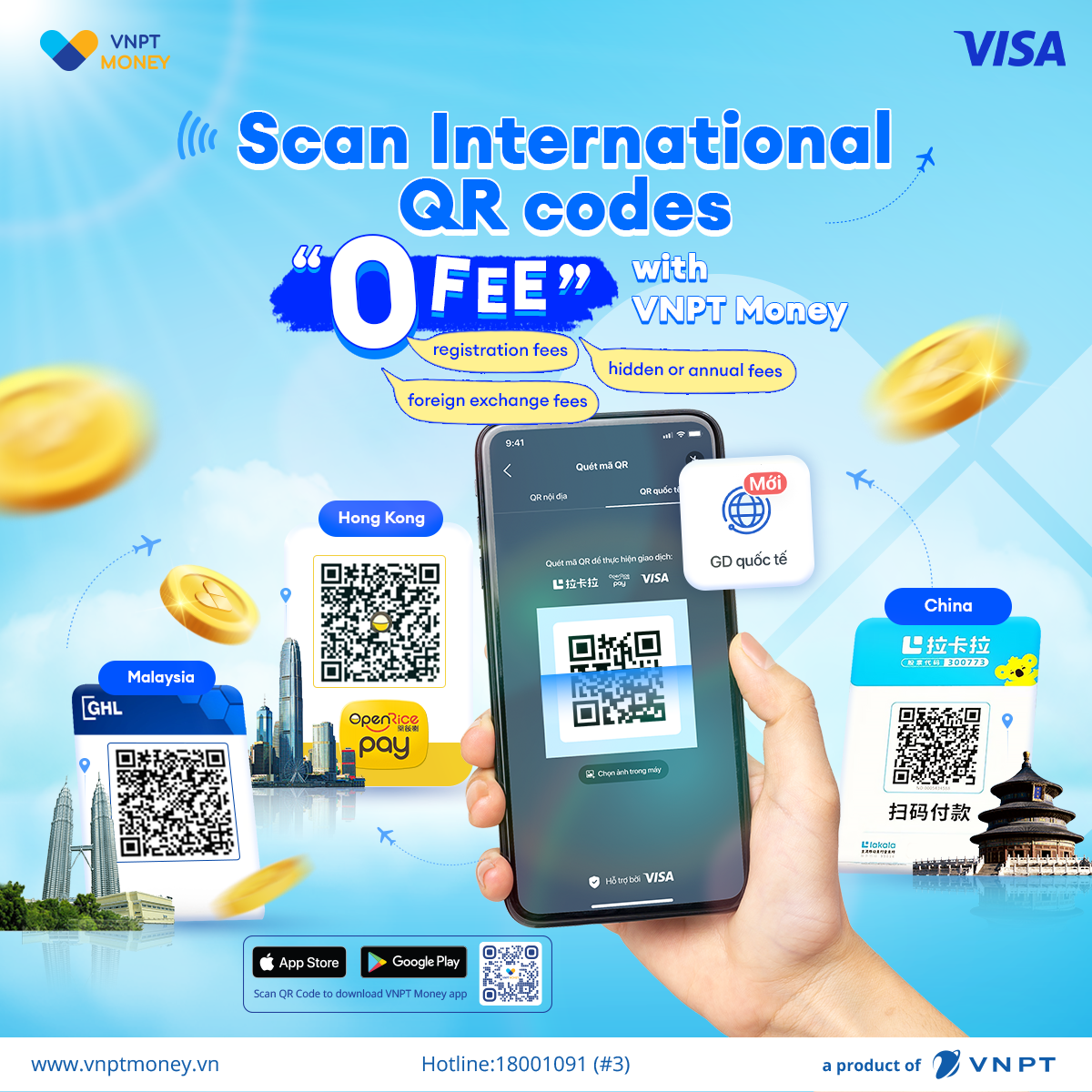
HO CHI MINH CITY, VIETNAM – Media OutReach Newswire – 12 December 2025 – Visa (NYSE: V), the world’s leader in digital payments, has partnered with VNPT Money to launch Visa Pay, a new feature that enables Vietnamese consumers to pay quickly and safely using their mobile wallet – whether shopping locally or traveling abroad. Visa Pay is now live with VNPT Money, marking the first digital wallet in Vietnam to enable this innovative service.

GDQT QuetQR ENG

The first phase introduces Scan to Pay, allowing Vietnamese consumers to make fast, secure payments at thousands of merchants using QR codes. More features like Tap to Pay and eCommerce are coming in 2026. For VNPT Money users, this means fewer steps, no extra apps, and peace of mind with Visa’s global security standards.

Vietnamese travelers can now use VNPT Money to scan QR codes and pay directly from their wallet balance while abroad, avoiding cash hassles and enjoying competitive exchange rates and costs, as well as exclusive promotions. The launch of this feature demonstrates the strong commitment of Visa and VNPT Money to expanding access to digital financial services, supporting the growth of the digital economy, e‑commerce, and international tourism, while contributing to Vietnam’s national digital transformation roadmap.

“Visa Pay is a catalyst for Vietnam’s digital and financial inclusion journey. By giving Vietnamese consumers seamless and secure ways to pay, we’re helping uplift the economy, empower small businesses, and create new opportunities for innovation. Our collaboration with VNPT Money ensures that every consumer – from urban centers to rural communities – can access trusted digital payments that make everyday life simpler and safer,” said Ms. Dung Dang, Country Manager for Visa Vietnam and Laos.


“The launch of international transaction feature via Visa Pay is an important milestone that demonstrates VNPT Money’s determination to expand its digital payment ecosystem and elevate the experience of Vietnamese users. We want every Vietnamese person – whether traveling, working abroad, or studying – to be able to use their familiar e‑wallet to make payments anywhere in the world, safely and transparently. This feature affirms VNPT Money’s direction toward becoming a comprehensive digital payment platform that meets international standards while supporting the Government in its national digital transformation roadmap and promoting financial inclusion,” shared Mr. Nguyễn Đăng Thắng, Director of the VNPT FinTech Center.

Hashtag: #Visa

The issuer is solely responsible for the content of this announcement.

About Visa

Visa (NYSE: V) is a world leader in digital payments, facilitating transactions between consumers, merchants, financial institutions and government entities across more than 200 countries and territories. Our mission is to connect the world through the most innovative, convenient, reliable and secure payments network, enabling individuals, businesses and economies to thrive. We believe that economies that include everyone everywhere, uplift everyone everywhere and see access as foundational to the future of money movement. Learn more at .

Tianlong Services Unveils Smart Bookkeeping Model


SINGAPORE – Media OutReach Newswire – 12 December 2025 – Tianlong Services, a corporate and accounting service provider in Singapore, has announced the launch of its Smart Bookkeeping Model. This framework integrates artificial intelligence (AI) with industry-specific plugins to streamline everyday accounting processes.

Hybrid Workflow Designed for Consistency and Clarity

The bookkeeping model incorporates AI-assisted data processing while maintaining human review at every stage of the bookkeeping cycle. The development reflects a broader shift in Singapore’s corporate services sector toward hybrid accounting models that combine automation with human oversight.

“We are seeing growing interest in accounting systems that balance automation with professional judgement,” said [Name], [Role] of Tianlong Services. “The model is designed to reduce repetitive preparation work without removing the contextual insight that practitioners contribute.”

Structured Onboarding for New Clients

The Smart Bookkeeping Model relies on plugins calibrated for specific industries to help standardise categorisation and improve the accuracy of repetitive tasks. To support implementation, Tianlong Services follows a multi-step onboarding process that begins before formal work commences. The sequence includes:

  • Preliminary system access for reviewing existing accounting records, transaction volume, and account structures.
  • A consultation call to understand the client’s business model, document flow, and current accounting procedures.
  • A dedicated WhatsApp group to serve as the primary channel for coordination and communication.

Following these steps, the firm begins live processing. Most organisations are expected to become fully operational under the new bookkeeping model within one month.

Long-Term Direction for Integrated Accounting Systems

The launch of the Smart Bookkeeping Model is part of Tianlong’s long-term vision to create an integrated “accounting operating system” for companies in Singapore. This future platform will bring together AI-powered preparatory work with structured human review, offering businesses a single ecosystem for bookkeeping, compliance, and financial reporting.

“Our goal is to bridge automation with accountability,” [Name], [Role] of Tianlong Services shared. “As regulations evolve and businesses scale faster than ever, accounting systems must keep pace. We see this model as the foundation for an all-in-one corporate platform that supports companies through every financial cycle.”

Hashtag: #TianlongServices


The issuer is solely responsible for the content of this announcement.

About Tianlong Services

Tianlong Services is an accounting and provider in Singapore. The firm focuses on delivering simplified financial reporting and insights that support clearer, more informed decision-making.

Global Times: Renowned sculptor Wu Weishan donates drafts of Nanjing Massacre memorial works

BEIJING, Dec. 12, 2025 /PRNewswire/ — As China prepares to commemorate on Saturday the National Memorial Day for Nanjing Massacre Victims, internationally acclaimed sculptor Wu Weishan (Wu) has donated the precious drafts of his landmark theme sculptures for the expansion project of the Memorial Hall for Victims of the Nanjing Massacre by Japanese Invaders to the memorial hall itself. In an exclusive interview with Global Times (GT) reporters Li Qian, Zhang Ni and Liu Yating, Wu shared his emotional journey of creating these works as a tribute to the Nanjing Massacre victims and a call for justice and peace. Wu is also vice chairman of the Central Committee of the China Democratic League, and vice chairman of the China Artists Association.

‘I want to revive their souls and let the world know this history’

GT: In 2007, the memorial sculptures you created for the Nanjing museum drew widespread attention. Eighteen years later, what motivated you to donate the original drafts?

Wu: In the 1980s, when I studied in Nanjing, the city’s history left a profound impact on me. The memory of the Nanjing Massacre was etched into my heart. Whether as a student or later as a faculty member, I often visited the memorial to pay tribute to the victims. The astounding number of casualties displayed at the entrance to the memorial shocked me, but even more haunting were the exhibits: cremation barrels, skulls, and bullet holes in bodies – the eternal reminders of collective agony.

In 2005, I was tasked with creating theme sculptures for the museum’s expansion. I knew this mission, rooted in history, was of immense significance. Thus, I resolved to portray the suffering of the victims, especially their state during the massacre, to revive their souls and let them converse with people living in peace today, as well as to inform the world of this sad history. During the creative process, I produced over 200 drafts and hundreds of figures, reconstructing the scenes. Due to space constraints in the museum, only the most representative works could be enlarged and cast in bronze for display. Now, with the support of the museum and colleagues from the Nanjing University Sculpture Art Research Institute, these sculptures are prominently exhibited in key areas. My accompanying texts are also engraved on the bases, with shadows cast on the white walls under the light – like historical imprints, eternal memories.

Donating the drafts was a decision I made years ago. Many were stored in my studio, but some were lost during moves. This time, I cast the remaining drafts in bronze and donated them to the memorial hall, to allow more people to witness and feel that history. As sculptors, we have a responsibility to present ironclad historical facts through art. Today, the souls of those who suffered during the War of Resistance against Japanese Aggression (1931-45) and the Nanjing Massacre may find solace in the afterlife, having known that China now possesses the strength of justice to counter the lingering specter of Japanese militarism.

GT: This year marks the 80th anniversary of the Victory in the Chinese People’s War of Resistance Against Japanese Aggression and the World Anti-Fascist War. With Japanese Prime Minister Sanae Takaichi making erroneous remarks about Taiwan and the rising right-wing nationalism in Japan, how do you view the importance of remembering the Nanjing Massacre and history?

Wu: The direction of human progress should be peace and prosperity, so all militaristic actions will ultimately be terminated by justice. But this does not mean we can forget the history or remain silent. The Nanjing Massacre was one of the most tragic events of WWII, and as the Chinese people who suffered deeply, we have the responsibility and duty to disclose this history to the world, refuting rumors and falsehoods with ironclad facts.

The number of sculptures in front of the memorial is limited, and their scale is modest, but behind these limited works lies a profound national memory and a painful history. By donating these drafts today, as a Chinese citizen, an artist, and a creator who has erected over 60 sculptures in more than 30 countries and regions, I am sending China’s voice of justice to the world. I hope that through more artistic creations based on the original images of the refugees and the victims, the public will remember history more deeply. The greatest power of this memory is the call for justice and peace.

‘Art that exposes ugliness and upholds justice resonates globally’

GT: What was your creative process like for these sculptures?

Wu: Sculpture can flexibly express and present the soul, embodying values. But what to sculpt and how to sculpt it is crucial. Especially for works permanently displayed in the memorial, they must help visitors understand the history, act as the warnings for the future, and prevent the tragedies and the resurgence of militarism. I felt it was essential to depict the tragic fate of unarmed Chinese people under the iron heel of Japanese militarism. For this, I researched extensively and interviewed many massacre survivors.

I created three groups of sculptures. The first, Family Ruined, is the central piece: a mother holding her dead child. Initially, I also made a figure of a husband being buried alive, with his hands and feet sticking out of the soil. But later, I felt that focusing solely on the grief-stricken mother and child could convey the theme more succinctly and powerfully, with the rest explained through text: “The slaughtered son will never return, the buried husband will never return.” The second group, Refugees, depicts unarmed civilians fleeing. Among them are those with blown-off legs, corpses carried by relatives after they had been killed, women who jumped into wells after being raped, people carrying belongings to escape, the dying, and infants frozen to death while clinging to their mothers’ breasts in winter… They could have lived peaceful lives, got married, worked, and thrived, but they lost their lives under the boots and blades of Japanese militarism, trampled like grass. The historical records I read often gave me nightmares. While creating Refugees, I felt as if I could converse with the victims’ souls, vividly portraying their states, expressions, and movements during their escape.

The third group, Screams of the Souls, is a 12-meter-high sculpture at the memorial’s entrance. It features a split mountain peak, with a hand emerging from the crevice, pointing forcefully toward the sky. This symbolizes the desperate yet powerful cry of a weakened China, trampled by Japanese invaders.

GT: How did you balance historical authenticity and artistic expression while creating these works?

Wu: Historical truth is the foundation of my creations. Before sculpting, I visited the memorial multiple times, each visit leaving a deep impact. The remnants of our slaughtered compatriots made me feel the blood of the Chinese flowing under the butcher’s knives of the Japanese invaders. Their voices seemed to call out, urging the literature and art to profoundly portray and revive their souls.

But art must present the essence of the soul through form, often requiring sublimation and refinement.

For example, in Refugees, while depicting escapees, I emphasized human nature. Under Japanese militarism, unarmed civilians fled in panic. Photos and videos can show parts of the scenes, but sculpture demands stronger expressiveness. Thus, I used exaggerated postures – bodies leaning forward, hands trembling, mouths agape in extreme fear – to convey the refugees’ inner terror. One piece shows an 80-year-old grandfather holding his 3-month-old grandson in his hands who was killed by Japanese soldiers. The child’s body, frozen in the coldest December, became as stiff as wood. The grandfather, wrapping the child in cloth, held him with hands that trembled – not just physically, but with the despair and heartbreak of losing his lineage.

Art must capture such emotions. Importantly, such artistic expression is not fictional but grounded in history, current affairs, national sentiment, and the people’s cries.

GT: As a world-class artist, your works are widely recognized overseas. Why do you think this series resonates with global audiences?

Wu: Many renowned scholars, including the late Nobel laureate Chen Ning Yang, who visited my Nanjing studio during the creation process, were moved to tears upon seeing the designs. Yang later attended the unveiling ceremony, standing in the cold wind, tears streaming as he said, “Seeing these tragic sights, I heard the bombings of Japanese planes…”

After the installation, many foreign visitors, including ambassadors from Germany and France, came to see them.

Models of the statues were exhibited at the Russian Academy of Arts, where they were permanently collected. The academy’s president praised their astonishing power in conveying justice. These sculptures were also included in children’s textbooks in South Korea and became widely known. In 2012, they were temporarily displayed at the UN Headquarters and praised by then UN secretary-general Ban Ki-moon.

Today, these sculptures have spread across nations, proving that human destinies are interconnected. Art that exposes ugliness and upholds justice will find global understanding and resonance. While form and style matter, what’s most important is the sculpture’s embodiment of humanity’s longing for peace, justice, and condemnation of the evil.

‘Sculpting for magnificent land and heroic people’

GT: Beyond the Nanjing Massacre-themed works, what other historical subjects have you tackled?

Wu: My connection to anti-war sculptures dates back to 1985, the 40th anniversary of the Victory in the War of Resistance against Japanese Aggression. That year, invited by my hometown of Dongtai, Jiangsu Province, I created the large-scale sculpture titled New Fourth Army Marching East, which remains a key city landmark in Dongtai. Later, I created Marching East and Memorial Group Sculptures for the Reestablishment of the New Fourth Army Headquarters for the New Fourth Army (a main anti-Japanese armed force led by the Communist Party of China) Memorial, depicting soldiers charging through the flames of war. I’ve also created works on other resistance themes, such as sculptures of the Eighth Route Army (a main anti-Japanese armed force led by the Communist Party of China), General Zuo Quan (a member of the Communist Party of China and a well-known Chinese hero of the War against Japanese Aggression), and the Long March. Additionally, I’ve crafted statues of international friends from the war, like John Rabe, whose statues stand in both Nanjing and Berlin.

My historical and cultural sculptures, such as those of Confucius and Laozi, have been erected in Greece and Italy. Statues of Karl Marx and Deng Xiaoping tell the world stories of China’s revolution and history. Notably, in Japan, I had placed the statue of Monk Jianzhen in Ueno Park and Monk Yinyuan’s statue in a 400-year-old temple in Nagasaki, along with Sun Yat-sen’s statue in Fukuoka. By bringing these great Chinese figures to Japan, I ensure the local Japanese remember China’s historical contributions as the sculptures spread China’s culture.

Today, we present to the world a great China: a land of etiquette, a nation always embracing peace and benevolence. Under the vision of building a community with a shared future for mankind, we must tell the world about a credible, respectable, and lovable China.

GT: You mentioned that sculpture is a dialogue across time. Your works span generations. What kind of peace and historical perspective do you want to pass on to the next generation?

Wu: What is the meaning of sculpture? All artistic creation must stem from values. Contemporary Chinese art should contribute to building a community with a shared future for mankind, serve the public, and elevate aesthetic literacy. I’ve repeatedly advocated for strengthening art education, especially in primary and secondary schools. Thus, the subjects and figures I create are all those with heroic deeds in Chinese history, worthy of becoming eternal role models through sculpture. For example, my statue of Yuan Longping, the father of hybrid rice, stands at the Italian Academy of Sciences, one of the oldest academies in the West. Yet the academy showcases a contemporary Chinese scientist, which is no small feat. In the past, in our schools and academies, people often spoke of Albert Einstein, Isaac Newton, and others – rightfully so. This proves that our era is nurturing great scientists, thinkers, and artists. Therefore, artists have found the best subjects and the finest environment to create. We should use our works to sculpt our magnificent land and heroic people, telling China’s story through art.


GCL SI Joins COP30 Efforts to Standardize Global Carbon Credits

SUZHOU, China, Dec. 12, 2025 /PRNewswire/ — As global attention turns to carbon credit standardization and traceability, in light of the recent COP30 climate conference held in Belém, Brazil, GCL System Integration (GCL SI) is accelerating the development of its GCL Carbon Data Platform to meet the rising demand for reliable, cross-border photovoltaic (PV) carbon data. The initiative aims to deliver verifiable baseline information needed to support internationally recognized carbon-asset trading.

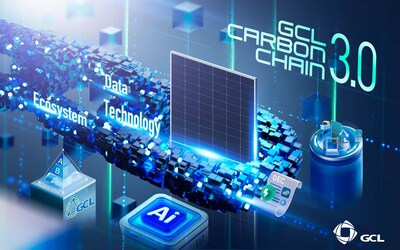
GCL Carbon Chain 3.0

The GCL Carbon Data Platform—introduced as the industry’s first comprehensive “Carbon Chain Management System”—serves as a core digital infrastructure for carbon traceability, product carbon footprint (PCF) accounting, and corporate emissions management. Powered by blockchain and artificial intelligence (AI), the platform interconnects all six major stages of the photovoltaic (PV) value chain, creating a continuous, transparent, and tamper-proof carbon data chain. Aligned with internationally recognized standards, it has also integrated with major certification organizations and databases, including TÜV, ISO, and Ecoinvent.

Its development has followed a structured three-phase roadmap. Phase 1.0 established full product carbon-footprint (PCF) models across all six tiers of the silicon-based PV value chain and obtained third-party verification, enabling comprehensive traceability across the manufacturing chain. Phase 2.0 expanded decarbonization pathways and strengthened green-supply-chain management by bringing the PCF models for glass and aluminum-frame components on-chain, while also introducing dynamic enterprise-level carbon accounting and the employee carbon-engagement program “Carbon Planet,” which enhances visibility into organizational and individual emissions. With the launch of Phase 3.0, the platform has evolved beyond internal use into an open and collaborative architecture that supports credible cross-enterprise and cross-border carbon data circulation.

Developed in collaboration with AntChain, Phase 3.0 strengthens the platform across four dimensions: extending the Life Cycle Assessment (LCA) boundaries from cradle-to-gate to cradle-to-grave; deepening supplier collaboration—currently spanning two non-silicon material categories and five external suppliers—through standardized templates and automated data-quality checks; integrating GEC and I-REC green-certificate services at the module level via blockchain to enable real-time global renewable-energy trading; and enhancing ESG digitalization through on-chain transparency and dynamic certification. Collectively, these upgrades position the platform as sector-level infrastructure for credible, internationally aligned carbon data.

A key outcome of this system is the creation of a foundational PV Carbon Factor Database. By standardizing methodologies and collecting emission coefficients, the database aims to serve as a global carbon data infrastructure for the PV industry, progressively building a “PV + Blockchain + AI” digital ecosystem. This initiative provides a credible, transparent foundation for carbon data transactions and empowers global partners to achieve decarbonization and a low-carbon transition.

The platform’s value is demonstrated across the PV chain. Upstream, GCL SI’s award-winning FBR granular silicon technology, known for its low energy consumption and reduced emissions, can reduce CO₂ emissions by approximately 389,000 tons per 10,000 tons produced. Downstream, the SiRo module, positioned as the world’s first carbon-chain module, uses “one item, one code” traceability and low-carbon materials to achieve an industry-leading footprint verified by third-party certification.

In the meantime, GCL SI is contributing to advancing industry-wide carbon-footprint standards for PV products. Under GCL SI’s leadership, more than 20 organizations and companies—including the Global Green Energy Industry Council (GGEIC), the New Energy Industry Association for Asia and the Pacific (NEIAAP), the Asia Photovoltaic Industry Association (APVIA), Ant Digital Technologies, and TÜV Rheinland—jointly launched the Global Green Carbon Chain Alliance Initiative, establishing the Green Carbon Chain Alliance globally and initiating the GCL Carbon Chain ecosystem framework.

Moving forward under the global cooperative framework of COP30, GCL SI will continue to advance its full-process carbon management and standardization system. By integrating its capabilities in technology, data, and ecosystem development, the company is positioned to deliver integrated carbon-neutral solutions to global clients. GCL SI aims to use credible and transparent carbon data to support the wider global deployment of clean energy and accelerate the worldwide transition to a green future.


“FUJIYA” New Visual Identity and “Tenjincho Place” Shine at Taiwan’s Golden Pin Design Award 2025

TAIPEI, Dec. 12, 2025 /PRNewswire/ — The 2025 Golden Pin Design Award Ceremony, one of Asia’s leading design events organized by the Taiwan Design Research Institute (TDRI), concluded on December 5 in Taipei, celebrating outstanding achievements from around the world. This year’s Golden Pin Design Award and Golden Pin Concept Design Award brought together submissions from 28 regions, culminating in 22 winners of the Best Design of the Year, 3 Special Annual Awards, and 3 Best Concept of the Year winners.

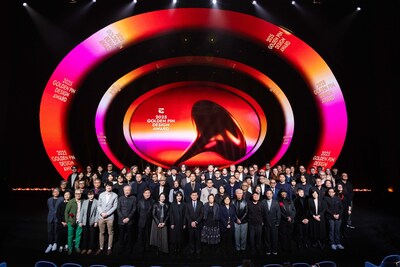
The 2025 Golden Pin Design Award Ceremony took place on December 5 in Taipei.

Among this year’s Best Design of the Year winners were two projects from Japan. Tokyo-based 6D-K was recognized for “FUJIYA,” the refreshed identity for the long-established confectionery brand. Representatives attended the ceremony and expressed their honor, noting that receiving recognition for such a challenging project was deeply meaningful.

Hiroyuki Ito Architects was awarded for “Tenjincho Place,” a residential project that transforms a highly constrained urban site through precise, human-centered spatial design. In a video message, the team shared that this international recognition strengthens their commitment to exploring “the relationship between people and objects,” and motivates them to expand this thinking into future projects and global collaborations.

In addition, Japanese architects also played a key role in another recognized project: SANAA’s “Taichung Green Museumbrary,” which received a Best Design of the Year title in the Spatial Design category for its fluid integration of library and museum functions.

Since its international expansion in 2014, Taiwan’s Golden Pin Design Award has attracted a growing number of global participants, with overseas submissions now exceeding half of all entries. This year, judging was conducted by 81 experts from 19 countries, including renowned Japanese designer Akira Minagawa, iF Design CEO Uwe Cremering, and Taiwanese graphic design master Liu Kai, offering a broad and authoritative international perspective.

A total of 429 projects received the Golden Pin Design Mark in 2025. From these, 90 advanced to the final round, and 22 works—including those from Japan, Taiwan, Germany, the United States, and Poland—were honored with Best Design of the Year.

The full list of winners is available at www.goldenpin.org.tw . All award-winning works are currently on view at the 2025 Golden Pin Design Award Exhibition at the Taiwan Design Museum in Taipei, open through April 26, 2026. Visitors are invited to experience the creativity and innovation shaping Asia’s design landscape.

“FUJIYA” New Visual Identity and “Tenjincho Place” Shine at Taiwan’s Golden Pin Design Award 2025

TAIPEI, Dec. 12, 2025 /PRNewswire/ — The 2025 Golden Pin Design Award Ceremony, one of Asia’s leading design events organized by the Taiwan Design Research Institute (TDRI), concluded on December 5 in Taipei, celebrating outstanding achievements from around the world. This year’s Golden Pin Design Award and Golden Pin Concept Design Award brought together submissions from 28 regions, culminating in 22 winners of the Best Design of the Year, 3 Special Annual Awards, and 3 Best Concept of the Year winners.

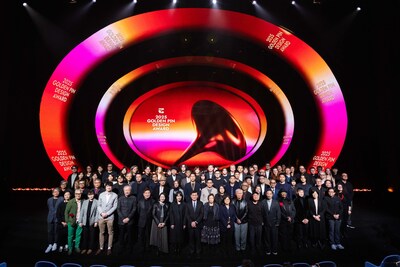
The 2025 Golden Pin Design Award Ceremony took place on December 5 in Taipei.

Among this year’s Best Design of the Year winners were two projects from Japan. Tokyo-based 6D-K was recognized for “FUJIYA,” the refreshed identity for the long-established confectionery brand. Representatives attended the ceremony and expressed their honor, noting that receiving recognition for such a challenging project was deeply meaningful.

Hiroyuki Ito Architects was awarded for “Tenjincho Place,” a residential project that transforms a highly constrained urban site through precise, human-centered spatial design. In a video message, the team shared that this international recognition strengthens their commitment to exploring “the relationship between people and objects,” and motivates them to expand this thinking into future projects and global collaborations.

In addition, Japanese architects also played a key role in another recognized project: SANAA’s “Taichung Green Museumbrary,” which received a Best Design of the Year title in the Spatial Design category for its fluid integration of library and museum functions.

Since its international expansion in 2014, Taiwan’s Golden Pin Design Award has attracted a growing number of global participants, with overseas submissions now exceeding half of all entries. This year, judging was conducted by 81 experts from 19 countries, including renowned Japanese designer Akira Minagawa, iF Design CEO Uwe Cremering, and Taiwanese graphic design master Liu Kai, offering a broad and authoritative international perspective.

A total of 429 projects received the Golden Pin Design Mark in 2025. From these, 90 advanced to the final round, and 22 works—including those from Japan, Taiwan, Germany, the United States, and Poland—were honored with Best Design of the Year.

The full list of winners is available at www.goldenpin.org.tw . All award-winning works are currently on view at the 2025 Golden Pin Design Award Exhibition at the Taiwan Design Museum in Taipei, open through April 26, 2026. Visitors are invited to experience the creativity and innovation shaping Asia’s design landscape.