Home Blog Page 1600

Euro Tech Holdings Company Limited Reports Interim Results For The Six Months Ended June 30, 2025

HONG KONG, Dec. 30, 2025 /PRNewswire/ — Euro Tech Holdings Company Limited (Nasdaq: CLWT) today reported its unaudited financial results for the six months ended June 30, 2025.

The Company’s revenue for the six months ended June 30, 2025 (“1H 2025”) were US$5,888,000, a 18.9% decrease as compared to  US$7,259,000 for the six months ended June 30, 2024 (“1H 2024”). Revenue from trading activities decreased significantly, primarily due to lowered sales of U.S. products to China following U.S. tariffs and Chinese retaliatory measures.

Gross profit decreased by 5.2% to US$1,697,000 for 1H 2025 as compared to US$1,790,000 for 1H 2024. The decrease was due to the decrease in revenue. However the gross profit margin % for 1H 2025 increased by 4.2% to 28.8% as compared to 24.6% for 1H 2024.

General and administrative expenses decreased by US$102,000 to US$2,065,000 for 1H 2025 as compared to US$2,167,000 for 1H 2024.

The Company’s net loss for 1H 2025 was US$127,000 as compared to net income of US$44,000 for 1H 2024 resulting from decrease in revenue and equity in income of affiliate.

Mr. David Leung, CEO of the company commented,

 “Despite the challenging business environment, we have seen a remarkable increase in sales orders, achieving double-digit growth in the first half of the year. This growth is primarily driven by heightened engineering activities in water and wastewater treatment (“WWT”), although the delivery timelines will be extended until the end of this year or early next year.

Recently, we have also secured additional purchase orders from international markets, including Mongolia, Norway, and Dubai, for both WWT and ballast water treatment systems (“BWTS”). 

In the coming days, we intend to diversify our sales channels and explore new product applications in high-growth regions and industries to further leverage this momentum.”

About BWTS

BWTS are an imminent requirement by The International Maritime Organization (“IMO”) to prevent the biological unbalance caused by the estimated 12 billion tons of ballast water transported across the seas by ocean-going vessels when their ballast water tanks are emptied or refilled. In 2012, ballast water discharge standard became a law in the US. Any vessel constructed in December 2013 or later will need to comply when entering US waters, and existing vessels will follow shortly after. IMO’s Ballast Water Management Convention entered into force for new-built vessels on September 8, 2017 after ratification by 52 States, representing 35.1441% of world merchant shipping tonnage. In July 2017, IMO decided that the phase-in period for ballast water system retrofits started on 8 September 2019. 

The company obtained type approval certificate from China’s Classification Society for its 200, 300, 500, 750, 1200 and 1250 Cubic Meters per hour BWTS in 2016.

The IMO convention stipulates that type approval for revised G8 requirements must be obtained for all BWTS installed on or after October 28, 2020, and the company have been in compliance with such requirements.

The ballast water port solution system is a system installed in port to offer ballast water treatment services for ocean going ships without their own BWTS and for those with damaged BWTS.

Certain statements in this news release regarding the Company’s expectations, estimates, present view of circumstances or events, and statements containing words such as estimates, anticipates, intends, or expects, or words of similar import, constitute forward looking statements within the meaning of the Private Securities Litigation Reform Act of 1995. Such statements indicate uncertainty and the Company can give no assurance with regard to actual outcomes. Specific risk factors may include, without limitation, having the Company’s offices and operations situated in Hong Kong and China, doing business in China, competing with Chinese manufactured products, competing with the Company’s own suppliers, dependence on vendors, and lack of long term written agreements with suppliers and customers, development of new products, entering new markets, possible downturns in business conditions, increased competition, loss of significant customers, availability of qualified personnel, negotiating definitive agreements, new marketing efforts and the timely development of resources. See the “Risk Factor” discussions in the Company’s filings with the Securities and Exchange Commission, including its Annual Report on Form 20-F for its fiscal year ended December 31, 2024.

EURO TECH HOLDINGS COMPANY LIMITED

CONSOLIDATED BALANCE SHEETS

As of

June 30,

2025

(Unaudited)

As of

December 31,

2024

(Audited)

US$’000

US$’000

ASSETS

Current assets:

Cash and cash equivalents

4,493

5,805

Restricted cash

1,517

1,132

Accounts receivable, net

1,342

1,386

Prepayments and other current assets

437

271

Contract assets

80

135

Inventories

302

500

──────

──────

Total current assets

8,171

9,229

──────

──────

Property, plant and equipment, net

157

159

Investments in affiliates

9,774

9,947

Goodwill

1,071

1,071

Operating lease right-of-use assets, net

231

101

Deferred tax assets

80

62

Restricted cash

315

139

──────

──────

Total non-current assets

11,628

11,479

──────

──────

TOTAL ASSETS

19,799

20,708

══════

══════

LIABILITIES AND SHAREHOLDERS’ EQUITY

Current liabilities:

Accounts payable

1,547

2,279

Contract liabilities

761

593

Other payables and accrued expenses

895

1,050

Current portion of long-term operating lease liabilities

127

83

──────

──────

Total current liabilities

3,330

4,005

──────

──────

Long-term operating lease liabilities, net of current portion

95

9

──────

──────

Total non-current liabilities

95

9

──────

──────

TOTAL LIABILITIES

3,425

4,014

──────

──────

Commitments and contingencies

–

–

SHAREHOLDERS’ EQUITY:

Ordinary share,

20,000,000 shares authorized and no par value; 7,899,832 and 7,899,832
shares issued as of June 30, 2025 and  December 31, 2024, respectively

123

123

Additional paid-in capital

9,774

9,774

Treasury stock, 330,306 and 183,533 shares at cost as of June 30, 2025 and
  December 31, 2024, respectively

(981)

(807)

PRC statutory reserves

345

345

Accumulated other comprehensive income

734

713

Retained earnings

5,468

5,595

──────

──────

Total shareholders’ equity attributable to Euro Tech Holdings Company
  Limited

15,463

15,743

Noncontrolling interests

911

951

──────

──────

Shareholders’ equity

16,374

16,694

──────

──────

TOTAL LIABILITIES AND SHAREHOLDERS’ EQUITY

19,799

20,708

══════

══════

EURO TECH HOLDINGS COMPANY LIMITED

CONSOLIDATED STATEMENTS OF OPERATIONS AND COMPREHENSIVE INCOME
FOR THE SIX MONTHS ENDED JUNE 30, 2025 AND 2024

2025

(Unaudited)

2024

(Unaudited)

US$’000

US$’000

Revenue, net:

Trading and manufacturing

3,424

5,138

Engineering

2,464

2,121

────────

────────

5,888

7,259

Cost of revenue:

Trading and manufacturing

(2,566)

(3,997)

Engineering

(1,625)

(1,472)

────────

────────

(4,191)

(5,469)

────────

────────

Gross profit

1,697

1,790

Operating expenses:

 Finance costs

–

(1)

 General and administrative expenses

(2,065)

(2,167)

────────

────────

LOSS FROM OPERATION

(368)

(378)

Interest income

43

45

Other income, net

10

10

Equity in income of affiliates

148

232

────────

────────

LOSS BEFORE INCOME TAXES

(167)

(91)

Income tax credit / (expense)

3

(10)

────────

────────

NET LOSS

(164)

(101)

Net loss attributable to noncontrolling interests

37

145

────────

────────

Net  (loss) / income attributable to Euro Tech
  Holdings Company Limited

(127)

44

════════

════════

Other comprehensive (loss)

    Net (loss)

(164)

(101)

    Foreign currency adjustments

21

(9)

────────

────────

COMPREHENSIVE LOSS

(143)

(110)

Comprehensive (income) / loss attributable to
  noncontrolling interests

(3)

151

────────

────────

Comprehensive (loss) / income attributable
  to Euro Tech Holdings Company Limited

(146)

41

════════

════════

Net (loss) / income per ordinary share
  attributable to Euro Tech Holdings
  Company Limited

– Basic

$  US(0.02)

$  US0.01

════════

════════

– Diluted

$  US(0.02)

$  US0.01

════════

════════

Weighted average number of ordinary
  shares outstanding

– Basic

7,660,243

7,717,695

════════

════════

– Diluted

7,660,243

7,717,695

════════

════════


Cango Inc. Secures US$10.5 Million Investment from EWCL to Accelerate Growth

DALLAS, Dec. 30, 2025 /PRNewswire/ — Cango Inc. (NYSE: CANG) (“Cango” or the “Company”), a leading Bitcoin miner leveraging its global operations to develop an integrated energy and AI compute platform, announced that Enduring Wealth Capital Limited (“EWCL”) increased its investment in the Company with a US$10.5 million commitment. EWCL will subscribe for additional Class B ordinary shares in cash at US$1.50 per share. This transaction underscores a strong, aligned vision for Cango’s future and provides substantial capital to accelerate its core growth initiatives.

Under the terms of this agreement:

  • Pursuant to an Investment Agreement dated December 29, 2025, between the Company and EWCL, the Company will issue and deliver to EWCL 7 million Class B ordinary shares, each carrying 20 votes per share.
  • Upon closing of the Proposed Investment, EWCL’s shareholding in the Company is expected to increase from approximately 2.81% to approximately 4.69% of the total outstanding shares.
  • Correspondingly, EWCL’s voting power is expected to rise from approximately 36.68% to approximately 49.61% of the total voting power of the Company’s outstanding shares.

Paul Yu, CEO and Director of Cango, commented, “The increased investment from EWCL is a powerful vote of confidence in our strategic roadmap. The strengthened alignment with a major shareholder who thoroughly understands our vision enables us to execute with greater certainty and ambition. In 2026, we will continue to strengthen our Bitcoin mining operational capabilities, with a focus on improving hashrate efficiency, upgrading our mining fleet, and selectively acquiring strategic mining assets. Beyond our core mining business, this capital also supports the parallel development of our strategic pillars in energy and AI compute. We are actively exploring and investing in synergistic opportunities in these areas as we build toward our long-term goal: establishing an integrated, global infrastructure platform capable of powering the future digital economy.”

Closing of the Proposed Investment is subject to certain customary closing conditions, including the requisite approval by the New York Stock Exchange. The Company expects to close the transaction in January 2026. This step is expected to support the Company’s progress on its strategic priorities and provide capital to implement key initiatives in the year ahead.

Investor Relations Contact

Juliet Ye, Head of Communications
Cango Inc.
Email: ir@cangoonline.com 

Christensen Advisory
Tel: +852 2117 0861
Email: cango@christensencomms.com

Uni-Bio Science Joins Forces with WMU NERC and Ouhai District Government to Build Growth Factor Innovation Ecosystem and Accelerate Regenerative Medicine Strategy Layout


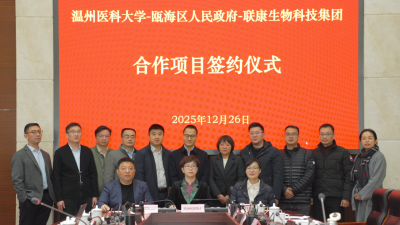
HONG KONG SAR – EQS Newswire – 30 December 2025 – Uni-Bio Science Group Limited (“Uni-Bio Science Group”, “Uni-Bio” or “the Group”) is pleased to announce the official signing of a tripartite strategic cooperation agreement in Wenzhou, Zhejiang, with the National Engineering Research Center for Cell Growth Factor Drugs and Protein Formulations of Wenzhou Medical University (“WMU NERC”) and the People’s Government of Ouhai District, Wenzhou. The parties also explored the subsequent co-establishment of the “Uni-Bio – WMU Joint Innovation Laboratory for Translational Medicine.” This collaboration marks a key step for Uni-Bio in deeply integrating with a national-level research platform and a regional industrial ecosystem. Through a synergistic “government-university-enterprise” model, the three parties will focus on the core regenerative medicine field of growth factors to establish an end-to-end innovation system spanning basic research, clinical translation, and industrial application. This represents a milestone for the Group in consolidating its R&D pipeline and accelerating its strategic execution.

Strategic cooperation signing ceremony group photo

Focusing on Growth Factor Frontiers, Unleashing “1+1>2” Clinical and Market Potential

Growth factors are key signaling molecules that regulate cell proliferation, migration, and tissue repair, representing some of the most transformative bioactive substances in regenerative medicine. Both EGF (Epidermal Growth Factor) and FGF (Fibroblast Growth Factor) have demonstrated significant efficacy across major indications, including wound healing, ophthalmic diseases, and metabolic disorders, underscoring their substantial market potential.

Uni-Bio possesses deep expertise in the EGF field, with its flagship products GeneTime® and GeneSoft® achieving large-scale production and nationwide commercial coverage. Concurrently, under the leadership of Academician Li Xiaokun, the WMU NERC has been a global pioneer in FGF drug R&D, having successfully translated several Class I New Drugs – including Recombinant Human Basic Fibroblast Growth Factor – and has accumulated substantial clinical data and authoritative expert consensus in trauma and metabolic diseases.

Building on this foundation, the three parties will initiate collaborative research on combined EGF/FGF therapies for key areas, including burns, dermatology, and ophthalmology. The goal is to unlock powerful therapeutic synergies, develop superior combination products and advance delivery systems, set new treatment benchmarks, and establish a leadership position in shaping this multi-billion Yuan sector.

Empowered by Academician Leadership & Platform, Creating a Fast Track from R&D to Production

The WMU NERC is an independent legal entity established by Wenzhou Medical University based on the national-level platform, the National Engineering Research Center for Cell Growth Factor Drugs and Protein Preparations. It undertakes downstream functions including engineering technology research and development, transformation of scientific and technological achievements, and technical services. In synergistic collaboration with the National Key Laboratory for Macromolecular Drugs and Large-Scale Preparation, which focuses on upstream basic research, the Center has built a next-generation growth factor drug pipeline targeting multiple systems such as metabolism and dermatology. Through the ongoing research of Academician Li Xiaokun’s team, the Center has achieved internationally leading breakthroughs in key technologies, including long-acting Modification, targeted delivery, and aerosol inhalation.

The planned “Uni-Bio – WMU Joint Innovation Laboratory for Translational Medicine” will conduct in-depth research into the synergistic mechanisms of Epidermal Growth Factor (EGF) and Fibroblast Growth Factor (FGF) in regulating metabolic homeostasis, improving insulin sensitivity, and promoting tissue repair. It aims to develop novel compound formulations and drug delivery systems targeting conditions such as endocrine diseases represented by non-alcoholic steatohepatitis (NASH), respiratory diseases represented by asthma, as well as bone tissue repair. These diseases affect a large global patient population, yet there remains a significant unmet clinical need for innovative therapies. Through this collaboration, it is expected to address treatment gaps in multiple specific indications, further unlocking clinical and commercial value in the broad chronic disease market.

The “Government-University-Enterprise ” Trinity, Systematically Strengthening Full-Chain Capabilities

This collaboration extends beyond technological synergy to ecosystem co-development. The People’s Government of Ouhai District, Wenzhou, is a key facilitator and supporter of this strategic cooperation, committed to building a first-class biomedical industry ecosystem. Its core platform, the “China Gene Valley,” will provide comprehensive spatial support and specialized policy assistance for the cooperative projects across all stages – from R&D and pilot-scale testing to industrialization.

For Uni-Bio, this tripartite cooperation delivers threefold empowerment:

  • R&D Front: Direct access to the National Engineering Research Center’s source innovation and core technologies, elevating the starting point of R&D.
  • Clinical Front: Collaboration with Wenzhou Medical University’s affiliated hospital network to accelerate clinical validation and indication expansion.
  • Commercialization Front: Leveraging the advanced manufacturing capabilities and regional policy benefits of the China Gene Valley to ensure efficient project implementation and facilitate market access.

This strategic partnership is a crucial step in the Group’s pursuit of its vision “To Be the Global Leader in Regenerative Medicine, Redefining How Science Restores and Extends Human Life” Moving forward, the Group will continue to deepen collaborations with national scientific institutions and local governments, driving the translation of more cutting-edge research into clinical and market value. This will further consolidate and enhance its comprehensive competitiveness and leadership in regenerative medicine.
Hashtag: #Uni-BioScience

The issuer is solely responsible for the content of this announcement.

About Uni-Bio Science:

Uni-Bio Science Group Limited is an innovative biopharmaceutical enterprise listed on the Main Board of The Stock Exchange of Hong Kong Limited in 2001(Stock Code: 00690.HK). The Group is committed to powering the advancement of regenerative medicine with next-generation synthetic biology and complex peptide innovation. Focusing on four core research areas—muscular-skeletal regeneration, skin regeneration, ocular regeneration, and ENT regeneration—the Group has built a diversified product pipeline encompassing innovative biologics, high-value generic drugs, and medical aesthetics. The Group operates GMP-compliant production bases in Beijing, Dongguan, and Shenzhen, with fully integrated capabilities spanning R&D, manufacturing, and commercial sales. Uni-Bio Science Group is dedicated to becoming a global leader in regenerative medicine, redefining how science restores and extends human life.

About the National Engineering Research Center for Cell Growth Factor Drugs and Protein Formulations of Wenzhou Medical University:

The WMU NERC is an independent legal entity established by Wenzhou Medical University based on the national-level platform, the National Engineering Research Center for Cell Growth Factor Drugs and Protein Preparations. It undertakes downstream functions including engineering technology research and development, transformation of scientific and technological achievements, and technical services. Under the leadership of Chinese Academy of Engineering Academician Li Xiaokun, the Center has long been engaged in foundational research and novel drug discovery for cell growth factor drugs, holding a globally leading position. It brings together top-tier scientific teams, undertakes major national science and technology projects, and has successfully developed a series of innovative FGF drugs with independent intellectual property rights. Through synergistic collaboration with the National Key Laboratory for Macromolecular Drugs and Large‑Scale Preparation, the Center forms a complete innovation chain from source discovery and key technological breakthroughs to industrial translation. As the important R&D engine of the China Gene Valley, it continuously promotes the incubation and translation of several original new drug candidates, including a long-acting FGF21 variant.

About the People’s Government of Ouhai District, Wenzhou:
The People’s Government of Ouhai District, Wenzhou, is a key facilitator and supporter of this strategic cooperation, committed to building a first-class biomedical industry ecosystem. Its core platform, the “China Gene Valley,” will provide comprehensive spatial support and specialized policy assistance for the cooperative projects across all stages – from R&D and pilot-scale testing to industrialization. Through specialized industrial policies, “full-cycle escort” services, and clinical resource coordination, Ouhai District empowers the implementation and growth of innovation projects, serving as a vital driver for regional biomedical industry innovation and development.

Huawei and PEA Jointly Release Next-Gen Intelligent Substation Solution


BANGKOK, THAILAND – Media OutReach Newswire – 30 December 2025 – An event themed “AI Empowers New-Gen Intelligent Substations” was successfully held in Bangkok where Huawei and Thailand’s Provincial Electricity Authority (PEA) jointly unveiled an innovative next-gen intelligent substation solution, marking a new milestone in the digital and intelligent transformation of Thailand’s power infrastructure.

pea-innovative-practice

William Zhang, President of Enterprise Business at Huawei Thailand, stated, “The new power system faces trends such as green energy integration and interactive power consumption. Digitalization and intelligence are key to addressing these challenges. As critical nodes in the grid, substations must be upgraded to enhance overall reliability. The solution we launched with PEA uses optical-visual linkage and AI-based predictive maintenance to enable intelligent inspections and efficient O&M, ensuring substations run safely, reliably, and efficiently.”

Pantong Thinsatit, Assistant Governor for Grid Network Operations at PEA, added, “Digital transformation is essential for high-quality development in the power industry. PEA is accelerating substation intelligence by harnessing innovation to reshape energy services. We’ve deployed intelligent unattended systems in 467 substations, using cutting-edge technology to ensure safe operations. Moving forward, we will push for full automation, eliminate data silos, and integrate smart poles, license plate recognition, battery monitoring, and emergency buttons for rapid, precise responses. This will make intelligent substations central to the energy ecosystem and provide a replicable model for industry-wide digital transformation.”

Traditional substations often struggle with three major issues: limited security monitoring, inefficient and error-prone manual inspections, and outdated cabling that causes high latency and poor stability, restricting multi-service processing and intelligent scheduling. Huawei’s solution tackles these challenges with three core capabilities:

Perimeter Protection—All-Weather Digital Security

Using fiber optic sensing and AI algorithms, the system automatically detects intrusions, links with video surveillance devices, and allows remote verification—shifting from reactive to proactive security with round-the-clock monitoring.

Intelligent Inspection—Innovative Maintenance

Multi-scenario AI inspection algorithms, computer vision models, and cloud-edge collaboration support automatic meter reading and transformer oil leakage warnings, enabling real-time remote management and minute-level fault responses.

Full Connectivity—Comprehensive Sensing Network

Intra-station passive optical networks (PONs) significantly reduce deployment time and costs, forming the power grid’s “nervous system” to deliver reliable, high-speed connectivity for intelligent O&M.

This joint achievement underscores Huawei and PEA’s progress in technological innovation and ecosystem cooperation. Looking ahead, Huawei will continue to work closely with Thai power companies and partners to accelerate the digital and intelligent transformation of the power sector.
Hashtag: #Huawei

The issuer is solely responsible for the content of this announcement.

The Hong Kong Green Building Council Reaches Milestone of 100 “Zero-Carbon-Ready Building Certifications”, Launches Third Edition of “Climate Change Framework for Built Environment”

Advocates Industry to Harness Green Finance to Tackle Climate and Ecological Challenges for Building a Sustainable Future

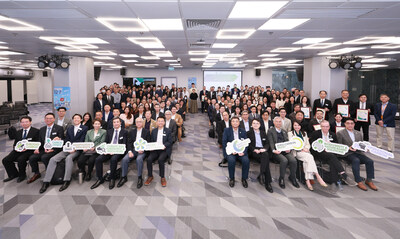
HONG KONG, Dec. 30, 2025 /PRNewswire/ — The Hong Kong Green Building Council (HKGBC) held the Zero-Carbon-Ready Building Certificate Presentation Ceremony on 26 November, presenting 35 certificates, bringing the cumulative total to 100 certificates to date. This marks a significant milestone for Hong Kong’s building industry on the path towards net zero. At the same event, the HKGBC officially launched the Third Edition of the “HKGBC Climate Change Framework for Built Environment”, which not only updates the original chapters but also features a new chapter on “Biodiversity & Nature-based Solutions”, further responding to the urgent global need to address climate change and ecological conservation, calling on the industry to leverage green finance to jointly tackle climate and ecological challenges.

The ceremony was officiated by the Guest of Honour, Mr TSE Chin-wan, BBS, JP, Secretary for Environment and Ecology, the Government of the HKSAR, and Dr CHEUNG Tin-cheung, SBS, Chairman of the HKGBC. The event brought together approximately 200 industry leaders and experts to witness this important moment. A total of 35 “Zero-Carbon-Ready-Building Certifications” were presented, covering 34 building projects across government department, developers, property management companies and the banking sector. These include the Electrical and Mechanical Services Department, Sino Group, Great Eagle Group, Shui On Group, Hong Yip Service Co. Ltd., JLL, China Construction Bank, Citigroup Inc., Hang Seng Bank. Among these, five projects were awarded “Target Setting Certificates” and one project received the first-ever “Progress Certificate”, demonstrating their commitment to achieving carbon reduction targets ahead of schedule and highlighting the industry’s proactive action in driving low-carbon transformation.

The “HKGBC Climate Change Framework for Built Environment (3rd Edition) Launching cum Zero-Carbon-Ready Building Certificate Presentation Ceremony” brought together approximately 200 industry leaders and experts to explore pathways for carbon reduction and sustainable development in the built environment.

The “Zero-Carbon-Ready Building Certification Scheme” is launched under the “HKGBC Climate Change Framework for Built Environment”, aimed at supporting the industry in formulating net zero strategies and promoting carbon reduction in the built environment. Since its launch, the Framework has recorded over 45,000 downloads, covering more than 50 regions globally, demonstrating Hong Kong’s leading position in the field of green building.

The Third Edition of the Framework has been revised by the HKGBC through the Editorial Panel and five Expert Groups comprising 46 industry experts. Major revisions include updates to the content and guidance on embodied carbon, operational carbon, carbon offsetting, climate risk assessment and disclosure, as well as showcasing practical case studies on climate adaptation and resilience. The edition also features a new chapter on “Biodiversity & Nature-based Solutions”, responding to the close interconnection between nature, biodiversity and climate change, and promoting Hong Kong as a low-carbon and resilient city.

Speaking at the event, Mr TSE Chin-wan, BBS, JP, Secretary for Environment and Ecology, the Government of the HKSAR, welcomed the launch of HKGBC’s Third Edition of Climate Change Framework for Built Environment. He said, “The new edition has incorporated the latest developments to address not only carbon emissions, but also carbon offsetting, biodiversity, and nature-based solutions. With local case studies compiled to illustrate effective applications, the updated Framework is a valuable reference for the building sector in achieving ‘net-zero’.” Secretary TSE also expressed appreciation to the recipients of the “Zero-Carbon-Ready Building Certificate” and thanked HKGBC for promoting “greener buildings”, adding that he looked forward to forging a more sustainable future together.

Dr CHEUNG Tin-cheung, SBS, Chairman of the HKGBC, remarked, “A biodiverse built environment can enhance liveability, residents’ wellbeing and climate resilience. However, human development can also disturb nature. As financial institutions increasingly integrate nature into their investment decisions, companies that effectively manage nature-related risks will have greater access to green finance. The Third Edition of the Climate Change Framework for Built Environment provides clear and definitive direction for the industry, helping enterprises strike a balance between development and conservation, while seizing green finance opportunities to jointly build a sustainable future for Hong Kong.”

Ir Prof. PAN Shu-jie, Chairman of the Sustainable Development Committee of the HKGBC, remarked in his closing speech, “The new chapter in the Third Edition of the Framework encourages the building industry to disclose nature-related impacts in line with established standards, and to assess associated risks, opportunities and dependencies, thereby identifying potential areas for improvement. We sincerely hope that this Framework will continue to advance Hong Kong towards a greener and more sustainable built environment.”

At the ceremony, Ir Harry LAI, BBS, Executive Director of the HKGBC, together with the convenors of various chapters, including Prof. Jack CHENG of The Hong Kong University of Science and Technology; Ir Dr Raymond YAU of Raymond Yau & Co.; Ms Grace KWOK of Allied Sustainability and Environmental Consultants Group Limited; Ir Dr Bruce CHONG of Arup; and Mr Alexander (Sandy) Main DUGGIE of URBIS Limited, introduced the updates in the new edition and future development directions.

Furthermore, Ir LAI moderated a panel discussion exploring issues related to climate change in the built environment. Panellists included Mr Arthur LEE, JP, of Environment and Ecology Bureau; Mr Ronald YOUNG of Hong Kong Monetary Authority; Ms Kitty CHEUNG of Hang Seng Bank; and Ir Joe CHOW of the IFMA Hong Kong Chapter. The discussion covered policy aspects including Hong Kong’s Climate Action Plan 2050 and the Hong Kong Taxonomy for Sustainable Finance, how Hong Kong’s built environment can respond to climate change and leverage green finance to build a sustainable future, and emphasised the urgent need for the Framework to guide the industry towards achieving net zero emissions targets.

For more details of the “Zero-Carbon-Ready Building Certification Scheme”, please refer to https://zcrbc.hkgbc.org.hk/

To download the Third Edition of the “HKGBC Climate Change Framework For Built Environment”, please refer to:
https://general.hkgbc.org.hk/guidebook/ClimateChangeFramework.html

About the Hong Kong Green Building Council (HKGBC)

The Hong Kong Green Building Council (HKGBC) is a non-profit, member-led organisation established in 2009 and has become a public body under the Prevention of Bribery Ordinance since 2016. The HKGBC strives to promote the standard and development of sustainable buildings in Hong Kong. The HKGBC also aims to raise green building awareness by engaging the government, the industry and the public, and to develop practical solutions for Hong Kong’s unique, subtropical built environment of high-rise, high density urban area, leading Hong Kong to achieve carbon neutrality by 2050 and to become a world’s exemplar of green building development. The Founding Members of the HKGBC include the Construction Industry Council (CIC), the Business Environment Council (BEC), the BEAM Society Limited (BSL) and the Professional Green Building Council (PGBC).

To learn more about the HKGBC, please visit www.hkgbc.org.hk.

KuCoin Releases 2025 Annual Review: A Renewed Brand, a Year Built on Trust

PROVIDENCIALES, Turks and Caicos Islands, Dec. 30, 2025 /PRNewswire/ — KuCoin today released its 2025 Annual Review, titled “A Renewed Brand. A Year Built on Trust.” The report highlights a pivotal year in the company’s evolution, marked by a clear strategic focus on compliance, security, and long-term platform sustainability.

2025 was a transformative year for KuCoin. Guided by its mission to build a trusted blockchain infrastructure that enables the protected and open flow of value, the company transitioned from a phase defined by resilience into a new era shaped by trust, regulatory alignment, and institutional maturity. While continuing to serve a broad global user base, KuCoin refined its platform and brand strategy to reflect a deeper commitment to safeguarding user assets and operating within evolving regulatory frameworks. Key milestones included major compliance progress in Europe and Australia, the launch of a USD $2 billion Trust Project, and the completion of four internationally recognized security certifications — laying the foundation for KuCoin’s next stage of development.

Despite a dynamic market environment, KuCoin delivered steady operational performance throughout 2025.
The average daily spot trading volume reached $4.76 billion, representing 55% year-on-year growth, while futures trading averaged $6.47 billion per day, up approximately 30% year-on-year, ranking KuCoin fourth globally by futures volume. These results reflected a balanced approach focused on liquidity, risk management, and platform stability. These outcomes were achieved without compromising KuCoin’s long-term priorities, as operational growth in 2025 was deliberately anchored in security, transparency, and risk discipline.

Security remained a core strategic priority in 2025. KuCoin achieved the industry’s “Quadruple Crown” of security certifications, including SOC 2 Type II, ISO 27001, ISO 27701, and CCSS, reinforcing its commitment to institutional-grade safeguards. The platform also maintained 36 consecutive months of Proof of Reserves verification, independently audited by Hacken, and was ranked #1 globally for security by CER.live, underscoring its emphasis on transparency and accountability. Central to these efforts was the launch of KuCoin’s USD $2 billion Trust Project, designed to strengthen asset protection, risk controls, and long-term operational resilience. Alongside technical safeguards, KuCoin continued to advance regulatory alignment as a parallel pillar of platform trust.

KuCoin made significant advances in regulatory alignment across multiple regions during the year. In Australia, the company secured AUSTRAC registration and established a dedicated local office in Sydney. In Europe, KuCoin obtained a MiCA license through KuCoin EU, enabling operations under the European Union’s unified regulatory framework. In Turkey, the company submitted an official application to the Capital Markets Board (SPK), aligning with local regulatory requirements. This regulatory and security foundation also shaped KuCoin’s approach to product development, ensuring that innovation progressed within a framework of responsibility and long-term sustainability.

Product development in 2025 focused on infrastructure-level innovation and user experience improvements. KuCoin expanded participation products such as GemPool, HODLer Airdrops, and Spotlight, supporting user engagement with structured protection mechanisms.

AI capabilities became an increasingly important part of the platform with the rollout of KIA, KuCoin’s crypto-native AI assistant, alongside KuCoin Feed, an AI-powered market intelligence hub. User experience upgrades, including KuCoin App 4.0 and KuCoin Lite, balanced advanced functionality with improved accessibility. Additionally, the mining ecosystem expanded through the integration of KuMining and KuPool, achieving a top-four global ranking in LTC/DOGE hashrate.

Reflecting on the year, BC Wong, CEO of KuCoin, said:

  “2025 required us to make deliberate choices focused on long-term responsibility rather than short-term momentum. Compliance and security are not optional for KuCoin — they are foundational to how we protect users and contribute to the industry’s sustainable future.”

As the crypto industry continues to evolve, KuCoin stated it will remain focused on disciplined execution, regulatory alignment, and technology-driven trust. The company views 2025 as a foundational year, positioning the platform for steady, long-term development in the years ahead.

For more details, readers are invited to explore the full 2025 KuCoin Annual Review.

About KuCoin

Founded in 2017, KuCoin is a leading global crypto platform trusted by over 40 million users across 200+ countries and regions. The platform delivers innovative and compliant digital asset services, offering access to 1,000+ listed tokens, spot and futures trading, institutional wealth management, and a Web3 wallet.

Recognized by Forbes and Hurun, KuCoin holds SOC 2 Type II and ISO 27001:2022 certifications, underscoring its commitment to top-tier security. With AUSTRAC registration in Australia and a MiCA license in Austria, KuCoin continues expanding its regulated footprint under CEO BC Wong, building a reliable and trusted digital-asset ecosystem.

Learn more: https://www.kucoin.com/

The making of an ethnically diversified China: The Achang ethnic group

BEIJING, Dec. 30, 2025 /PRNewswire/ — A news report from China.org.cn on The Achang ethnic group:

The making of an ethnically diversified China: The Achang ethnic group

https://www.youtube.com/watch?v=TcT-ZT5vnIo

Oh descendants of the Achang people, do you know our history?

Today is a good day; I will tell you a story:

First, let me speak of Zhepama creating the heavens, then of Zhemima weaving the earth…

— Excerpt from the Achang folk epic “Zhepama and Zhemima”

Cao Mingkuan, a representative inheritor of the national intangible cultural heritage project of Zhepama and Zhemima, began hosting various ceremonial activities at the age of 30, Known as a high priestcalled “living robe” among the Achang ethnic community, the now nonagenarian manis still able to perform the complete chants of the epicfor visitors.

The epic “Zhepama and Zhemima” is the oldest component of the oral literature of the Achang ethnic group, serving as a vital source for nurturing the national character and cultural psyche of the Achang people. In the epic, the sky-creating god Zhepama and the earth-weaving goddess Zhemima create the world, while today, the Achang people are also actively building a better life with their own hands.

The world-renowned Husa knife is a testament to the ingenuity of the Achang people. The production process involves ten distinct steps, with quenching techniques standing out prominently. Through thermal treatment, the hardness and toughness of the blade are optimized— “flexible enough to bend around a finger, yet sharp enough to break hair and hard enough to cut through iron.”

The iron-making industry in the Husa region has recently experienced a resurgence.These finished artisanal knives are produced under a cooperative model, allowing for customization of components such as handles and sheaths, which in turn stimulates related industries such as jewelry processing and inlay work.

Xiang Laosai, a national inheritor of the Achang Husa knife making technique: “Each knife we produce supports multiple households’ livelihoods. Selling just one knife can improve the quality of life for many families. This drives us to continually innovate and invent.”

At the age of 14, Xiang began learning the art of knife forging from his father. Through remarkable perseverance and innate talent, he mastered the complete set of techniques required for blade crafting. Due to his exceptional skills, he is honored in his village as the “chief master of making Husa knife.” His crafted dragon-phoenix Husa knifeis now part of the collection at the museum of the Minzu University of China.

Besides forging Husa knife, brocade weaving is also a long-standing tradition. Outside a traditional Husa knife handicraft workshop where sparks fly from the blades, the diligent hands of Achang women are weaving a tapestry of a happy life. The exquisite Achang garments—such as tube skirts, tube scarves, and headwraps, with the help of the internet, are reaching far beyond their local origins.

Yin Chunhuan, general manager of Lianghe County Achang Ethnic Apparel Co., is an Achang woman. As a young designer, she also serves as an organizer for the preservation and promotion of Achang culture. In recent years, Yin has organized training sessions for Achang women in brocade weaving and live streaming, showcasing Achang culture to a broader audience.

Yin Gaichun, a staff member at Lianghe County’s cultural center: “This is the production workshop of our Achang ethnic heritage center. The brocade features a variety of colors; previously, the base color was solely black. However, with societal development, people now prefer a range of colors. In response to these preferences, we have created Achang brocades with various colored bases.”

Yin Chunhuan is also keen on promoting the development of the tourism industry, including catering and homestays, for households once stricken by poverty. By combining intangible cultural heritage and tourism, she has signed contracts with local women to form a folk art performance team, showcasing Achang culture to visitors and opening up new avenues for income generation and prosperity for the community.

The majestic Gaoligong Mountain range extends southward from Tengchong City, forming a traditional home for the Achang ethnic group. Cao Mingkuan continues to live in his old house, where the rhythmic sound of the loom weaving fabric and the crackling of firewood echo together with the songs of “Zhepama and Zhemima,”reflecting the Achang people’s tranquil yet vibrant way of life.

The most melodious tune is the traditional tune of “Eluo,” and the most beautiful flower is kapok. Sing a song of “Eluo”in praise of Zhepama, and pick a bloom of kapok to present to Zhemima…

— Excerpt from the Achang folk epic “Zhepama and Zhemima”

The making of an ethnically diversified China: The Achang ethnic group

http://www.china.org.cn/2025-08/06/content_118013116.shtml


Laos’ Inflation Reaches 5.6 Percent in December 2025, Utilities Drive Price Pressures

This photo is used for representational purpose only.

Laos’ inflation rate stood at 5.6 percent in the last month of 2025, reflecting continued price pressures driven mainly by higher electricity, water, and household-related costs, according to official data.

This month’s inflation rate of 5.6 percent marked an increase from 4.8 percent in November and 4.0 percent in October.

Meanwhile, the consumer price index (CPI) is at 257.2, down slightly from 258.0 in November but significantly higher than 243.5 recorded in December last year, indicating sustained year-on-year price growth. 

The housing, water, electricity, and cooking fuel category was the primary driver, surging 18.1 percent. This increase was fueled by a dramatic 105 percent spike in electricity prices and a 40.1 percent rise in water supply costs, alongside higher construction and home repair service fees.

Other categories’ prices rose substantially. 

Healthcare and medicine prices climbed 14.4 percent, while education costs rose 11.4 percent. Clothing and footwear prices increased 8.1 percent. Household goods prices advanced 7.1 percent, and alcohol and tobacco products rose 7.2 percent. The miscellaneous goods and services category recorded the sharpest increase at 29.2 percent.

The Ministry of Finance noted that price adjustments in clothing and household goods were linked to fluctuations in the Thai baht exchange rate, as most of these products are imported from Thailand. The baht strengthened to its highest level in over four years against the US dollar during this period.

Despite the year-on-year increase, month-on-month prices declined 0.3 percent in December, offering temporary relief. 

Food and non-alcoholic beverages fell 0.8 percent due to lower vegetable prices, including spring onions, coriander, and cucumbers. Transport and communication costs decreased 0.6 percent, primarily reflecting a 3.7 percent drop in fuel prices.

For 2025 as a whole, the average inflation rate stood at 7.7 percent, a sharp slowdown from 21.3 percent in 2024 and 31.2 percent in 2023, when inflation surged in the aftermath of the Covid-19 pandemic.