Home Blog Page 204

Laos Collects USD 12 Million in Digital Taxes From Global Tech Companies

A picture of Deputy Prime Minister and Minister of Finance Santiphab Phomvihane reporting the tax performance during the 10th National Assembly on 7 July 2026. (Photo by Ministry of Finance)

Laos has collected approximately USD 12 million in digital taxes from global technology companies since introducing its digital tax system in late 2024, according to Deputy Prime Minister and Minister of Finance Santiphab Phomvihane.

The tax applies to foreign digital service providers without a physical presence in Laos, including Microsoft, Facebook, YouTube, and Netflix. Under the system, overseas companies providing digital services to Lao consumers must register and pay taxes under Lao law.

Santiphab said the digital tax forms part of a broader tax modernization program launched in 2020 to strengthen state revenue collection by reducing cash-based payments, improving tax compliance, widening the tax base, and bringing more businesses into the formal economy.

The reforms have also introduced digital tools such as the TaxRIS tax administration system and computerized accounting platforms to improve tax collection and reduce revenue leakage.

According to Santiphab, TaxRIS now manages more than 195,000 registered businesses nationwide, allowing tax authorities to register taxpayers, monitor compliance, process tax returns, and collect revenue more efficiently.

Revenue collected through the system has increased by 251 percent since its introduction in 2020, representing average annual growth of more than 20 percent, he said.

The government’s modernization efforts also extend to customs administration. Santiphab said Laos has deployed the Smart Customs system at international border checkpoints, where a centralized electronic platform now processes import and export declarations digitally.

The system has helped customs revenue grow by an average of 34 percent annually over the past three years by improving efficiency and strengthening import tax collection.

The reforms support Laos’ broader fiscal strategy. Earlier this year, the government announced a target of collecting approximately LAK 554.4 trillion (USD 24.5 billion) in state revenue by 2030, equivalent to about 21 percent of GDP, while improving tax administration, strengthening fiscal sustainability, and reducing public debt.

Laos Agricultural, Forestry Exports Top USD 1 Billion in First Half of 2026

This photo is used for representational purpose only.

Laos earned more than USD 1 billion from agriculture and forestry exports in the first half of 2026, reaching about 53 percent of the government’s full-year target of USD 1.9 billion, according to official figures.

Lao Prime Minister Sonexay Siphandone reported the figure at the First Extraordinary Session of the 10th National Assembly, running from 6 until 10 July in Vientiane.

Crops brought in the largest share, earning USD 752 million, followed by timber, rubber, and other forest products at USD 158.64 million. Livestock exports grew more slowly, totaling USD 98.67 million. 

During his speech, Sonexay said the sector grew 4.3 percent in the first half of the year, accounting for 17.4 percent of the country’s overall economic growth.

Laos has also been opening new markets for its farm goods. 

As of June, the country had secured approval to export 84 agricultural and livestock product lines to China, Vietnam, Thailand, and Cambodia, giving Lao farmers and exporters more places to sell their goods.

That momentum showed up in a series of new trade deals. In June, Laos and South Korea signed agreements worth more than USD 1.1 million to launch a pilot project exporting Lao-grown chili peppers and cabbage to the Korean market, along with a second deal to bring Korean tissue culture technology to Lao farms.

Laos also strengthened trade ties with Cambodia, launching new export and transit rules on 22 June that let Cambodian crops such as durian, longan, banana, mango, rice, and cassava pass through Laos on their way to China. Under the same agreement, Laos will export rice, coffee, blueberries, pumpkin, cabbage, and tamarind directly to Cambodia.

Officials said the government is relying on new tools like the Lao Agrolink digital platform, launched in late May, to make agricultural trade faster and easier for businesses by cutting paperwork and improving oversight of the supply chain.

Hong Kong SMEs Face “Triple Squeeze” from Rising Costs, Weak Demand and Interest Rates Fluctuations, Dah Sing Bank Survey

Consumption Outflow Continues to Weigh on Revenues As Local Business Environment Enters Adjustment Phase


HONG KONG SAR – Media OutReach Newswire – 8 July 2026 – Dah Sing Bank, Limited (“Dah Sing Bank”) today announced the results of its 2026 SME Survey (“the Survey”), which revealed that Hong Kong SMEs are facing a “triple squeeze” of rising costs, weakening demand and interest rates fluctuations. At the same time, outbound consumption continues to affect business revenues, reflecting local business environment enters adjustment phase.

SME Survey Results 2026

Dah Sing Bank remains committed to staying close to the needs of SMEs and understanding the challenges and opportunities they face in a rapidly changing business landscape. To gain deeper insights into the latest operating conditions of local SMEs, the Bank commissioned a survey[1] in May 2026 through a major local media outlet, interviewing over 340 Hong Kong SMEs to understand how they are responding to changing consumption patterns and advancing environmental, social and governance (ESG) initiatives under the current economic environment.

Operating Pressures Intensify Under “Triple Squeeze”

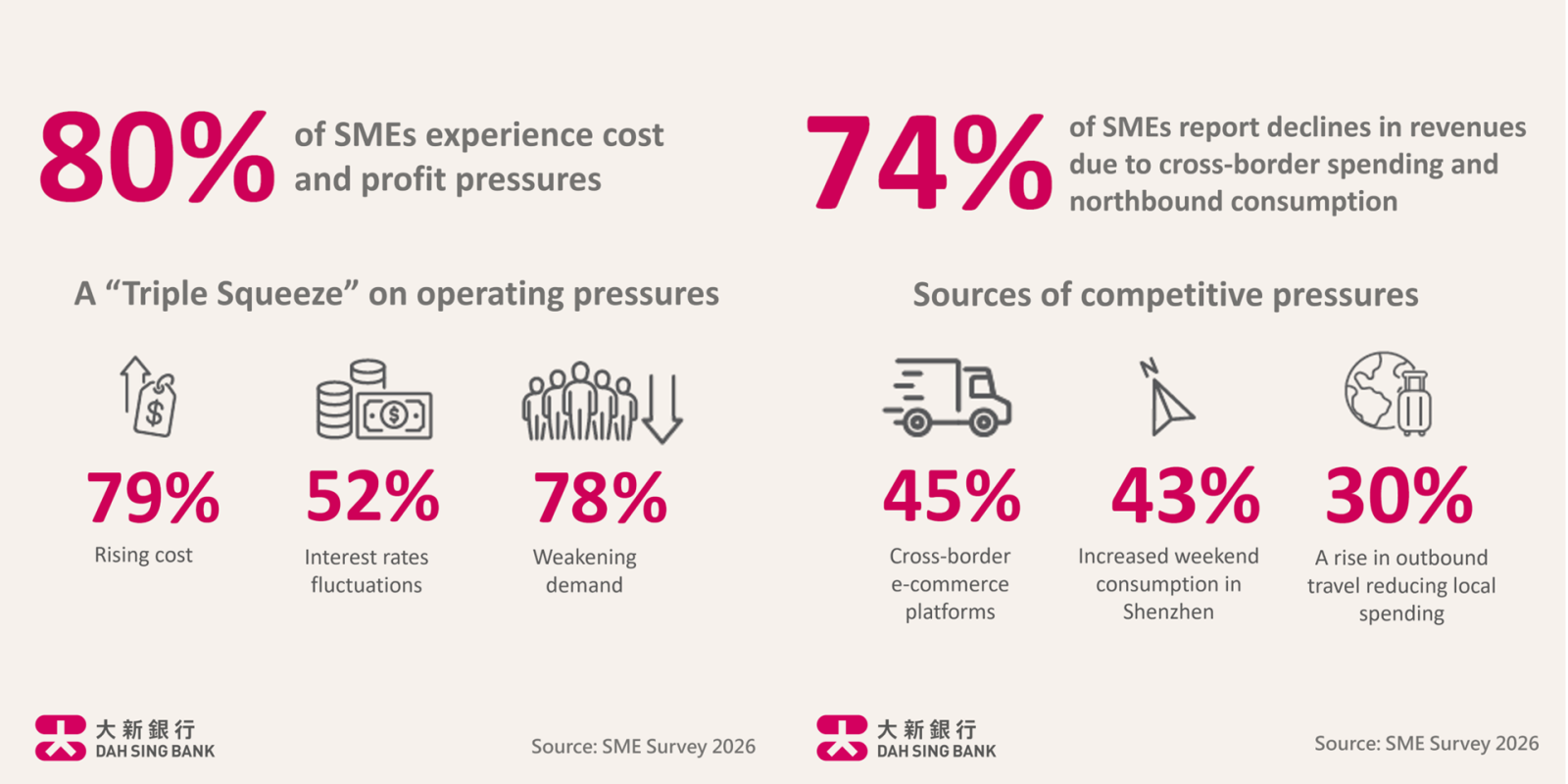
The Survey shows that 80% of respondents indicated that their operating costs and profit margins have been affected this year by geopolitical developments, energy price fluctuations or global supply chain instability. Rising costs (79%), weakening market demand (78%) and fluctuations in interest rates (52%) were identified as the most significant external risks.

With cross-border spending and northbound consumption becoming increasingly prevalent, approximately 74% of SMEs reported that their revenues have been negatively impacted, with nearly one in five experiencing declines of more than 20%. Key competitive pressures stem from cross-border e-commerce platforms offering lower-priced daily necessities (45%), increased weekend consumption in Shenzhen (43%), and a rise in outbound travel reducing local spending (30%).

SMEs Step Up Measures to Adapt

In response to the rising costs, SMEs are actively adopting various strategies to stabilise operations, including renegotiating supplier terms (26%), adjusting pricing (24%), and optimising inventory management (20%). At the same time, in light of outbound consumption trends, businesses are strengthening customer retention strategies. While price promotions remain the most common approach (34%), SMEs are also increasingly introducing experiential elements (29%) and strengthening digital marketing efforts (25%) to improve competitiveness.

Against a backdrop of ongoing uncertainty, SMEs are placing greater emphasis on business stability. A stable customer base (30%) and predictable cash flow (22%) are seen as key factors in sustaining operations, alongside lowering operating cost (22%). This reflects growing attention on financial resilience and liquidity management.

Constraints Persist Amid Rising Support Needs

Despite these efforts, SMEs continue to face resource and information constraints in navigating challenges and pursuing transformation. More than half of the respondents have never applied for or are unfamiliar with government support schemes. In addition, while some SMEs are interested in advancing ESG initiatives, 37% consider them burdensome due to costs, and 32% are unsure where to begin, indicating a cautious pace of adoption overall.

Dah Sing Bank Supports SMEs Resilience

In a rapidly changing business environment, Dah Sing Bank believes that enhancing cash flow efficiency and operational flexibility is key for SMEs to address business pressures. The Bank is committed to supporting SMEs through diversified and flexible lending and financing solutions tailored to their business needs. These include a wide range of import/export trade finance services and payment options, as well as the Merchant Receivables Loan – a service designed to provide merchants with quicker access to capital. Such initiatives enable SMEs to strengthen cash flow management and improve the predictability and efficiency of their daily operations.

Furthermore, Dah Sing Bank offers comprehensive hedging tools to help enterprises manage foreign exchange and interest rate risks. This support enables businesses to mitigate financial exposure arising from global economic volatility, enhance resilience, and expand their businesses in both local and global markets steadily. In addition, the newly launched Dah Sing Business Multi-Currency Mastercard Debit Card helps SMEs reduce transaction costs and manage expenses more effectively, providing a one-stop and seamless experience for local and overseas transactions.

Dah Sing Bank Deputy Chief Executive, Senior Executive Director and Head of Group Personal Banking, Ms Phoebe Wong, said: “The Survey shows that Hong Kong SMEs are facing multiple challenges, including rising costs, shifting demand and evolving consumption patterns. At the same time, it is encouraging to see businesses actively adopting measures such as optimising cost structures and enhancing customer experience. In an environment of heightened uncertainty, stable cash flow and operational agility has become even more important. Dah Sing Bank has long been a trusted partner to SMEs, and we remain committed to combining financial services with practical support to help enterprises improve capital efficiency and resilience. Our goal is to empower SMEs to maintain stability in a constantly changing market and lay a solid foundation for sustainable long-term growth.”


[1] The Survey was conducted through online questionnaires from 19 to 26 May 2026, interviewing 342 Hong Kong SMEs.

To borrow or not to borrow? Borrow only if you can repay!
The service(s) / product(s) mentioned in this document are not targeted at customers in the European Union.
Risk Disclosure Statement Foreign Exchange Transactions: Foreign exchange involves risk. Currency investments are subject to exchange rate fluctuations, which may result in gains or losses. Customers converting foreign currencies into HKD or other currencies may incur losses due to exchange rate movements. Investors should read and understand all offering documents, including risk disclosures and warnings, before making any investment decisions.
Currency Risk (RMB): Conversion of RMB into HKD or other currencies is subject to exchange rate fluctuations. Customers may experience gains or losses due to RMB exchange rate movements. RMB is currently subject to exchange controls imposed by the PRC government, and its exchange rate may be affected by policy changes.
Unless otherwise specified, this promotional material does not constitute an offer, solicitation, or recommendation to engage in any foreign exchange transaction, nor does it predict future exchange rate movements. This material has not been reviewed by the Securities and Futures Commission or any other regulatory authority in Hong Kong.

Hashtag: #DahSingBank

The issuer is solely responsible for the content of this announcement.

About Dah Sing Bank

Dah Sing Bank, Limited (the “Bank”) is a wholly-owned subsidiary of Dah Sing Banking Group, Limited (HKG:2356). Founded in Hong Kong over 75 years ago, the Bank has been providing quality banking products and services to its customers with a vision to be “The Local Bank with a Personal Touch”. Over the years, the Bank has been rigorous in delivering on its brand tagline to grow with its customers in Hong Kong, the Greater Bay Area and beyond – “Together We Progress and Prosper”. Building on our experience and solid foundation in the industry, our scope of professional services now spans retail banking, private banking, business and commercial banking. Meanwhile, the Bank is also making significant investments in its digital banking capabilities to stay abreast with smart banking developments in Hong Kong and to support financial inclusion at large.

In addition to its Hong Kong banking operations, the Bank has wholly-owned subsidiaries including Dah Sing Bank (China) Limited, Banco Comercial de Macau, S.A., and OK Finance Limited. It is also a strategic shareholder of Bank of Chongqing with a shareholding of about 13.5%. Dah Sing Bank and its subsidiaries now have 63 operating locations in Hong Kong, Macau and Chinese Mainland.

Binance Launches BTC Yield, Bringing Covered Call Bitcoin Income Strategy to Users

BTC Yield gives long-term Bitcoin holders a new way to seek potential weekly BTC income through a strategy from traditional finance

ISLAMABAD , July 8, 2026 /PRNewswire/ — Binance today announced the launch of BTC Yield, a new addition to its Advanced Earn product lineup. BTC Yield is a BTC-denominated, open-ended strategy designed for long-term Bitcoin holders seeking income potential without actively trading the market.

Binance Launches BTC Yield, Bringing Covered Call Bitcoin Income Strategy to Users

BTC Yield is among the first covered-call Bitcoin income products offered directly to both retail and institutional users by a major crypto exchange. Bitcoin does not have a native staking mechanism, creating demand for ways for long-term holders to seek income from their BTC.

This launch also reflects broader demand for Bitcoin income strategies in traditional finance. Covered call approaches are well established in institutional markets, and products such as the NEOS Bitcoin High Income ETF and BlackRock’s iShares Bitcoin Premium Income ETF have attracted significant assets. Goldman Sachs has also filed to launch a Bitcoin yield product, underscoring continued demand for Bitcoin income strategies.

By bringing this strategy into a streamlined crypto-native format, Binance is making it easier for users to access a familiar income approach within a single platform as it continues to expand beyond trading into a broader financial super app.

“BTC Yield underscores Binance’s focus on expanding the range of products available to users and giving them more ways to put their digital assets to work,” said Shunyet Jan, Head of Exchange and Trading at Binance. “Covered call strategies have long been used in traditional finance, but they can be complex for retail users to access directly. With BTC Yield, we are simplifying that experience for Bitcoin holders who want income potential without actively trading the market.”

“During periods of weaker market sentiment, many Bitcoin holders may be reluctant to sell or actively trade. BTC Yield gives long-term holders a simpler way to seek potential income while maintaining exposure denominated in Bitcoin,” he added.

Key product information:

  • BTC Yield is powered by a covered call strategy that seeks to generate option premiums from Bitcoin holdings.
  • Users subscribe with BTC to receive BTCY and may benefit through weekly BTC distributions. Remaining premiums are retained in the product, which may increase the convertible BTC value of each BTCY over time.
  • BTCY has no fixed maturity date and supports both Fast Redemption (T+1) and Standard Redemption.
  • BTC Yield offers simple access, APY potential, and large quotas for eligible users.
  • BTC Yield complements other Earn products such as Dual Investment and Discount Buy.

Important information: As an options-based strategy, BTC Yield carries risks and is not principal protected. Weekly BTC distributions are not guaranteed and users may receive back less BTC than they originally allocated. The covered call strategy may limit participation in upward BTC price movements, meaning BTC Yield may underperform a direct holding of BTC, particularly in strongly rising markets.

Disclaimer: Digital asset prices can be highly volatile. The value attributable to your BTCY strategy position may go down or up, and you may not receive back the amount of BTC you allocated. By participating in BTC Yield, you are converting your subscribed BTC to BTCY. BTC Yield is not capital protected, and you may lose some or all of your BTC. Any BTC Credits, APY, realised APY, illustrative yield, or similar figures shown in connection with BTCY are for information purposes only, are not guaranteed, may be zero, and refer to BTC-denominated amounts only rather than actual or predicted returns in fiat or any other digital asset. BTC Yield uses a strategy that may underperform holding BTC directly, including in periods of strong BTC price appreciation. When you exit BTC Yield, the amount of BTC returned to you will depend on the applicable valuation at the relevant processing time, and this may be higher or lower than the valuation shown when you submitted your request. Fast Exit may be unavailable, and Standard Exit may be subject to processing windows, capacity limits, delays and fees. Binance does not provide financial, legal, tax or investment advice, and you are solely responsible for your investment decisions. For more information, please see the BTCY Terms, Terms of Use and Risk Warning.

NEOS, BlackRock, iShares, and Goldman Sachs are referenced for market context only and are not affiliated with, nor have they endorsed, Binance or BTC Yield.

About Binance

Binance is a leading global blockchain ecosystem behind the world’s largest cryptocurrency exchange by trading volume and registered users. Binance is trusted by more than 320 million people in 100+ countries for its industry-leading security, transparency, trading engine speed, protections for investors, and unmatched portfolio of digital asset products and offerings from trading and finance to education, research, social good, payments, institutional services, and Web3 features. Binance is devoted to building an inclusive crypto ecosystem to increase the freedom of money and financial access for people around the world with crypto as the fundamental means. For more information, visit: https://www.binance.com.

PTT Lao Moves to Co-Invest in BlueDot’s EV Charging Network

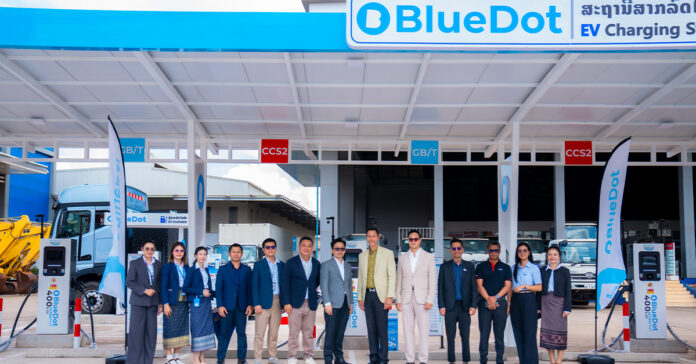
PTT Lao and BlueDot sign an agreement to conduct a feasibility study on a joint investment to expand EV charging stations along National Road No. 13 North and South across Laos. (Photo supplies)

PTT Lao signed an agreement with BlueDot, an EV charging brand, to study a joint investment in expanding electric vehicle charging stations across Laos.

Two companies signed the “Feasibility Study Project for Joint Investment in Expanding EV Charging Station” on 2 July in Vientiane.

Peravej NaRanong, managing director of PTT Lao, and Ladsasiphon Phimphachanh, managing director of Laothani Tractor Sole Co., Ltd., which operates BlueDot, signed the agreement, with executives from both companies attending.

BlueDot has operated as the sole investor in charging stations installed at select PTT stations nationwide under an earlier partnership. PTT Lao now aims to become a co-investor, and the two sides will study forming a new joint venture company to operate the charging business under the BlueDot brand.

The study will also examine a business model suited to consumer behavior in Laos.

The partnership targets expansion along Lao National Road No. 13 North and South, aiming to build a border-to-border charging network that supports heavy-duty electric trucks. 

The push aligns with Lao Prime Minister Sonexay Siphandone, issue date 13 March, which calls for urgent measures to reduce the country’s dependence on imported fossil fuel, a factor officials link to inflation and pressure on foreign currency reserves.

PTT Lao also plans to develop its stations into hubs that combine charging with other services, linking customers to its non-oil businesses such as Café Amazon and convenience stores. The company points to the 20 to 30 minutes EV drivers typically spend charging as an opportunity to expand those offerings at its stations nationwide.

BlueDot’s charging stations offer capacities ranging from 40 kilowatts (kW) and 120 kW to 180 kW, with an ultra-fast option reaching 400 kW, serving both private drivers and commercial fleets.

The stations connect to a mobile application and charging cards for payment and management, and are built to international engineering standards.

Both companies describe the collaboration as a step toward building a “Seamless Mobility Ecosystem” that connects charging infrastructure with lifestyle services, as Laos works to expand its EV charging network alongside growing EV adoption and government efforts to cut fossil fuel imports.

Humanforce launches AI-powered workforce intelligence and learning tools to help frontline employers reduce compliance risk and administrative burden

SYDNEY, July 8, 2026 /PRNewswire/ — As labour shortages, workforce turnover and compliance pressures continue to challenge frontline employers, Humanforce has developed two new solutions designed to help organisations identify workforce risks earlier and automate one of HR’s most time-consuming administrative tasks.

Frontline healthcare worker

Humanforce today announced the launch of Humanforce HR Analytics and Humanforce Learning, expanding its workforce management platform with AI-native tools built to analyse, interpret and act on workforce data, providing greater visibility into workforce trends, automating compliance training and help HR teams make more informed people decisions.

For many frontline organisations, workforce data remains fragmented across multiple systems, while mandatory training still relies on manual assignment, follow-up and record-keeping. At the same time, HR teams are being asked to manage growing compliance obligations, skills shortages and employee retention challenges with limited resources.

According to research from SHRM, more than 70 per cent of jobs globally are frontline or deskless, yet these workers have historically been underserved by traditional HR technology. The organisation also reports that 86 per cent of HR managers view training as critical to employee retention, despite compliance training remaining one of the most labour-intensive and manually managed processes for many employers.

“Frontline organisations are under pressure to do more than fill shifts,” said Clayton Pyne, CEO, Humanforce. “They need to understand where people risks are emerging, keep teams compliant, and make development part of everyday workforce operations. HR Analytics and Humanforce Learning give HR leaders and managers clearer visibility and more automated action, so they can spend less time chasing data and more time making confident people decisions.”

Humanforce HR Analytics: Workforce insight built for frontline HR teams

For many frontline HR teams, workforce reporting is a backward-looking exercise, requiring data to be extracted from multiple systems before it can be analysed and acted upon.

Humanforce HR Analytics is built with AI at its core, continuously analysing workforce data to surface trends, detect anomalies and flag emerging risks before they require escalation.

HR leaders can ask questions of their workforce data in natural language and receive instant, AI-generated answers, while custom dashboards, automated reporting and threshold-based alerts ensure critical workforce information remains visible and actionable.

“HR leaders shouldn’t have to wait until a monthly report lands on their desk to identify emerging workforce issues,” said Pyne. “Because AI is doing the analysis continuously, not periodically, organisations have more opportunity to address risks around compliance, retention, workforce planning and employee engagement before they become larger operational challenges.”

Humanforce Learning: Automating compliance training and workforce development

Alongside HR Analytics, Humanforce Learning aims to remove the manual administration traditionally associated with compliance and workforce training.

Integrated directly with Humanforce HR data, the platform automatically assigns learning when workforce changes occur, from induction for new employees, to role changes, internal transfers and compliance renewal requirements, ensuring every employee is roster-ready with the qualifications and training their role demands. Training completion records are automatically linked to employee profiles, creating a clear audit trail while giving managers visibility into training status, upcoming requirements and overdue learning activities.

“Training and compliance shouldn’t rely on someone remembering to manually assign courses every time an employee changes roles or joins the business,” said Pyne. “When learning is connected directly to workforce events, organisations can reduce administrative overhead while improving confidence that every employee is qualified, compliant and ready to work.”

A more connected view of workforce readiness

Training and compliance data generated through Humanforce Learning is surfaced within Humanforce HR Analytics alongside broader workforce metrics, providing HR leaders with a more connected view of workforce capability, readiness and compliance status.

Together, HR Analytics and Humanforce Learning reflect Humanforce’s ongoing investment in the Humanforce platform, built around how shift-based work actually operates. By bringing workforce insight and learning automation closer to core HR workflows, Humanforce is helping frontline employers reduce manual administration, improve compliance visibility and respond to workforce challenges more proactively.

Humanforce HR Analytics and Humanforce Learning are available now. For more information, visit humanforce.com.

-ends-

About Humanforce

Humanforce provides the market leading, employee-centred, intelligent and compliant HCM suite for frontline and flexible workforces, offering highly configurable, all-in-one WFM, HR, Talent, Benefits and Payroll – without compromise. Our vision is to make work easier and life better by focusing on the employee experience (EX), and the efficiency and optimisation of businesses.

Founded in 2002, Humanforce has a 2300-strong customer base and is heading towards one million employees under management, across a wide range of industries including Aged Care, Childcare, Healthcare, Retail, Hospitality, Events & Stadia, Local Government and more. Today, we have offices across Australia, New Zealand, the United Kingdom, the Philippines, and the USA.

Customers include Accor, Flight Centre, Hungry Jack’s, Vodafone, Fujitsu, Alfred Health, Hostplus and more: https://humanforce.com


PropertyGuru Group’s 2025 Sustainability Report Reinforces its Commitment to More Resilient and Inclusive Urban Futures Across Southeast Asia

  • Commitment to set Science-Based Targets, while maintaining net-zero Scope 2 emissions through 100% renewable electricity procurement
  • Scaled inclusive housing options, with 31% of Singapore rental listings adopting “Everyone Welcome” and expansion into Malaysia
  • Made sustainable living options easier to find with feature like Green Score in Singapore and its Sustainable Living filter in Thailand

SINGAPORE, July 8, 2026 /PRNewswire/ — PropertyGuru Group (“PropertyGuru” or “the Group”), Southeast Asia’s leading PropTech company, has released its 2025 Sustainability Report, titled Meeting Change with Resilience. The report documents a year of measurable progress, from a 36% reduction in total emissions to the regional expansion of tools that help millions of property seekers find greener, more inclusive homes.

PropertyGuru’s sustainability strategy is embedded in its Gurus For Good strategy — three interconnected pillars of Sustainable Living, Thriving Communities and Responsible Business — designed to make the Group’s platforms a force for more responsible and informed property decisions across the region.

“At PropertyGuru, we are committed to actively shaping Southeast Asia’s urban future using the power of our reach,” said Lewis Ng, Chief Executive Officer, PropertyGuru Group. “This report reflects how we put that commitment into action. It shows where we have made real progress and areas where we still have work to do. We are focused on making sustainability and inclusion tangible in the property journey. In the information we surface, the tools we build and the standards we help set across the ecosystem.”

Climate action: 36% emissions reduction and a commitment to science-based targets

PropertyGuru achieved a 36% year-on-year reduction in total market-based emissions in 2025, driven primarily by a decline in Scope 3 emissions, which account for the majority of the Group’s footprint. The Group also maintained net-zero market-based Scope 2 emissions for the second consecutive year, matching 100% of its office electricity consumption with Renewable Energy Certificates.

Building on this momentum, PropertyGuru has committed to setting Science-Based Targets, a third-party validated framework for corporate decarbonisation, with formal submission planned for 2026.

Sustainable home search: plan to expand tools to more markets in Southeast Asia

PropertyGuru continued to provide sustainability-related features that help property seekers make more informed choices.

  • In Singapore, Green Score rates properties based on proximity to public transport and recognised green building certifications. Demand is growing: 70% of property seekers surveyed in Singapore say sustainability features influence their home-buying decisions.
  • In Thailand, DDproperty’s Sustainable Living filter enables users to search for listings with features such as solar panels and electric vehicle charging stations.
  • In Malaysia, PropertyGuru plans to introduce a sustainability-related search feature in 2026, shaped by property seekers’ expectations.

These tools translate consumer demand into market signal — helping developers and agents understand the growing value of sustainable features.

Inclusive housing: Everyone Welcome has reached 31% of rental listings in Singapore and has now been rolled out in Malaysia

PropertyGuru’s ‘Everyone Welcome’ feature — which enables landlords to signal that their properties are open to all renters regardless of race, gender, religion or other characteristics — has gained significant traction in Singapore since its 2024 launch.

By end-2025, 31% of Singapore rental listings carried the ‘Everyone Welcome’ tag, reflecting strong and sustained adoption by landlords and agents. The feature was subsequently introduced in Malaysia, where 4% of listings were tagged within six months, a strong early signal given the shorter time frame.

Platform safeguards supporting inclusive housing practices also include advertisement guidelines, a language moderation tool, and a reporting mechanism to report unfair practices.

People and workplace: Top Employer recognition and a diverse workforce

PropertyGuru was recognised as a Top Employer in Singapore by the Top Employers Institute, reflecting the Group’s continued investment in people practices and employee experience.

As of 31 December 2025, women made up 65% of the Group’s workforce, with employees representing 28 nationalities. Through Be More, Be a Guru, the Group’s employee value proposition, PropertyGuru invested in skills development across communication, resilience, performance and AI, including Learning Fest 2025 and its Management 201 programme.

Community impact also extended beyond the office. Gurus For Good, the Group’s employee volunteering programme, delivered initiatives in 2025 that included rebuilding a primary school in Vietnam, restoring mangroves in Thailand, and supporting community outreach in Malaysia and Singapore.

Governance: integrated risk function and responsible AI principles

PropertyGuru strengthened its governance structure in 2025 by integrating its Legal and Risk teams into a single function — enabling closer coordination and a more holistic approach to risk management across its multi-market operations.

The Group also adopted a set of AI principles to guide responsible deployment of artificial intelligence across its platforms and business operations, with plans to explore AI-enabled tools to automate accessibility checks within its HIVE 2.0 design system.

In 2026, PropertyGuru expects to submit its Science-Based Targets, launch a sustainability search feature on its Malaysia platforms, and deepen programmes that advance women’s leadership and professional development across its workforce.

PropertyGuru’s 2025 Sustainability Report is available at https://www.propertygurugroup.com/wp-content/uploads/2026/06/PropertyGuru-2025-Sustainability-Report.pdf.

About PropertyGuru Group

PropertyGuru Group is Southeast Asia’s leading[1] PropTech company, and the preferred destination for over 30 million property seekers monthly[2] to find their dream home. PropertyGuru empowers property seekers with more than 2 million real estate listings[3], in-depth insights, and solutions that enable them to make confident property decisions.

Launched in Singapore in 2007, the Group has been advancing to make the property journey transparent and efficient for property seekers and sellers in Southeast Asia. In the last 19 years, PropertyGuru has grown into a high-growth PropTech company with a robust portfolio including leading property marketplaces and award-winning mobile apps across its markets in Singapore, Malaysia, Vietnam, Thailand as well as the region’s biggest and most respected industry recognition platform – PropertyGuru Asia Property Awards, events and publications across Asia.

For more information about PropertyGuru, please visit
PropertyGuru.com.sg and PropertyGuruGroup.com, or our social media pages on Facebook, Instagram, Twitter, YouTube and LinkedIn.

[1] Based on SimilarWeb data between January 2025 and December 2025.

[2]Based on Google Analytics data between January 2025 and December 2025.

[3] Based on data between January 2025 and December 2025.


/C O R R E C T I O N — Lazada Group/

In the news release, Lazada Joins Meta’s Affiliate Partnerships Programme to Streamline Social Shopping in Southeast Asia, issued 08-Jul-2026 by Lazada Group over PR Newswire, we are advised by the company that the first paragraph contains incomplete information. The complete, corrected release follows:

Lazada Joins Meta’s Affiliate Partnerships Programme to Streamline Social Shopping in Southeast Asia

SINGAPORE, July 8, 2026 /PRNewswire/ — Lazada, Southeast Asia’s leading eCommerce platform, has joined Meta’s Facebook Affiliate Partnerships programme, enabling content creators across Singapore, Malaysia, Thailand, Indonesia, Vietnam and the Philippines to tag Lazada products directly within their Facebook and earn commissions on every completed purchase, with Instagram integration expected to follow.

The launch comes as creator-led commerce continues to reshape how Southeast Asians discover and shop online. Video commerce now accounts for approximately 25% of the region’s eCommerce GMV[1], while 82% of Southeast Asian consumers purchased products based on influencer recommendations in 2024[2]. By bringing Lazada’s affiliate ecosystem closer to the content people already engage with daily, the partnership creates a more direct bridge between inspiration, product discovery and purchase.

Turning Everyday Content into Earning Opportunities

Historically, the path from content to commission has involved multiple steps, from external links to app redirects to separate checkout pages, which often results in lost conversions for creators, brands, and businesses alike.

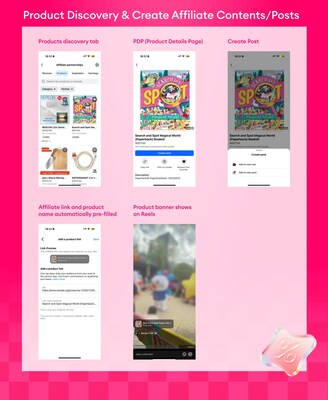
With this partnership, creators can now connect their Lazada affiliate accounts directly to Facebook today and soon on Instagram, search Lazada’s product catalogue, and tag items within their content in Reels or Feed posts. When a follower clicks through and completes a purchase on Lazada, the creator earns a commission, all within a single, uninterrupted experience.

For brands and sellers on Lazada, opening their product catalogues to creators unlocks a new avenue for discovery and conversion. For shoppers, it makes product discovery more intuitive. Instead of moving from a creator’s post to a separate link or searching for the item manually, they can tap directly from the content that inspired them and continue their shopping journey on Lazada.

“Through this partnership with Meta, we’re making it easier for shoppers to move from discovering products on Facebook and Instagram to completing their purchase on Lazada. By creating a more seamless path from discovery to checkout, we’re helping brands and sellers connect with customers more effectively while delivering a better shopping experience across Southeast Asia,” said Jared Chan, Head of Regional Affiliate, Lazada Group.

Building on Lazada’s Investment in Creator Commerce

The partnership with Meta builds on Lazada’s broader commitment to strengthening creator commerce across Southeast Asia. In 2025, Lazada announced an annual US$100 million investment in the LazAffiliate Programme to support creators, brands and sellers through enhanced commissions, campaign incentives, personalised voucher pools, custom storefronts and performance tools.

Together with Meta’s Affiliate Partnerships, this investment reflects Lazada’s continued focus on making affiliate marketing more accessible, measurable and rewarding for creators, while helping brands and sellers tap into trusted creator-led product discovery across the region.

How It Works

Lazada affiliates can get started through the following steps:

1. Enable Professional Mode on their Facebook or Instagram profile

1. Enable Professional Mode on their Facebook or Instagram profile

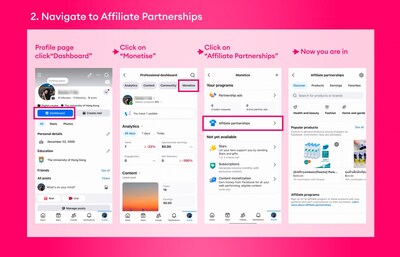
2. Navigate to Affiliate Partnerships via the Monetisation tab

2. Navigate to Affiliate Partnerships via the Monetisation tab

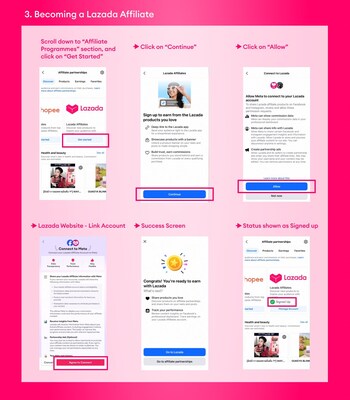
3. Connect their Lazada affiliate account and complete the sign-up process

3. Connect their Lazada affiliate account and complete the sign-up process

4. Begin tagging Lazada products directly in Facebook and Instagram content

4. Begin tagging Lazada products directly in Facebook and Instagram content

To learn more or join the LazAffiliate community, visit:

ID: https://lzdaff.co/LazAffiliatesApp
MY: https://pages.lazada.com.my/wow/gcp/my/aia/share-affiliate?from=promote
PH: https://lzd.co/LAZAFFREGISTER
SG: https://pages.lazada.sg/wow/gcp/sg/aia/share-affiliate?from=promote
TH: https://pages.lazada.co.th/wow/gcp/lazada/channel/th/marketing/Affiliate-Home VN: https://pages.lazada.vn/wow/gcp/vn/aia/affiliate

About Lazada Group 

Lazada Group is Southeast Asia’s pioneer eCommerce platform. For the last 14 years, Lazada has been accelerating progress in Indonesia, Malaysia, the Philippines, Singapore, Thailand and Vietnam through commerce and technology. Today, a thriving local ecosystem links about 160 million active users to more than one million actively selling sellers every month, who are transacting safely and securely via trusted payments channels and Lazada Wallet, receiving parcels through a homegrown logistics network that has become the largest in the region.