Home Blog Page 21

TCMA Advances ASEAN Cement Decarbonization with 14.4 Mt. of CO₂ Reductions

Building Global Partnerships and Technology Connections towards the 27th AFCM Technical Symposium & Exhibition 2027
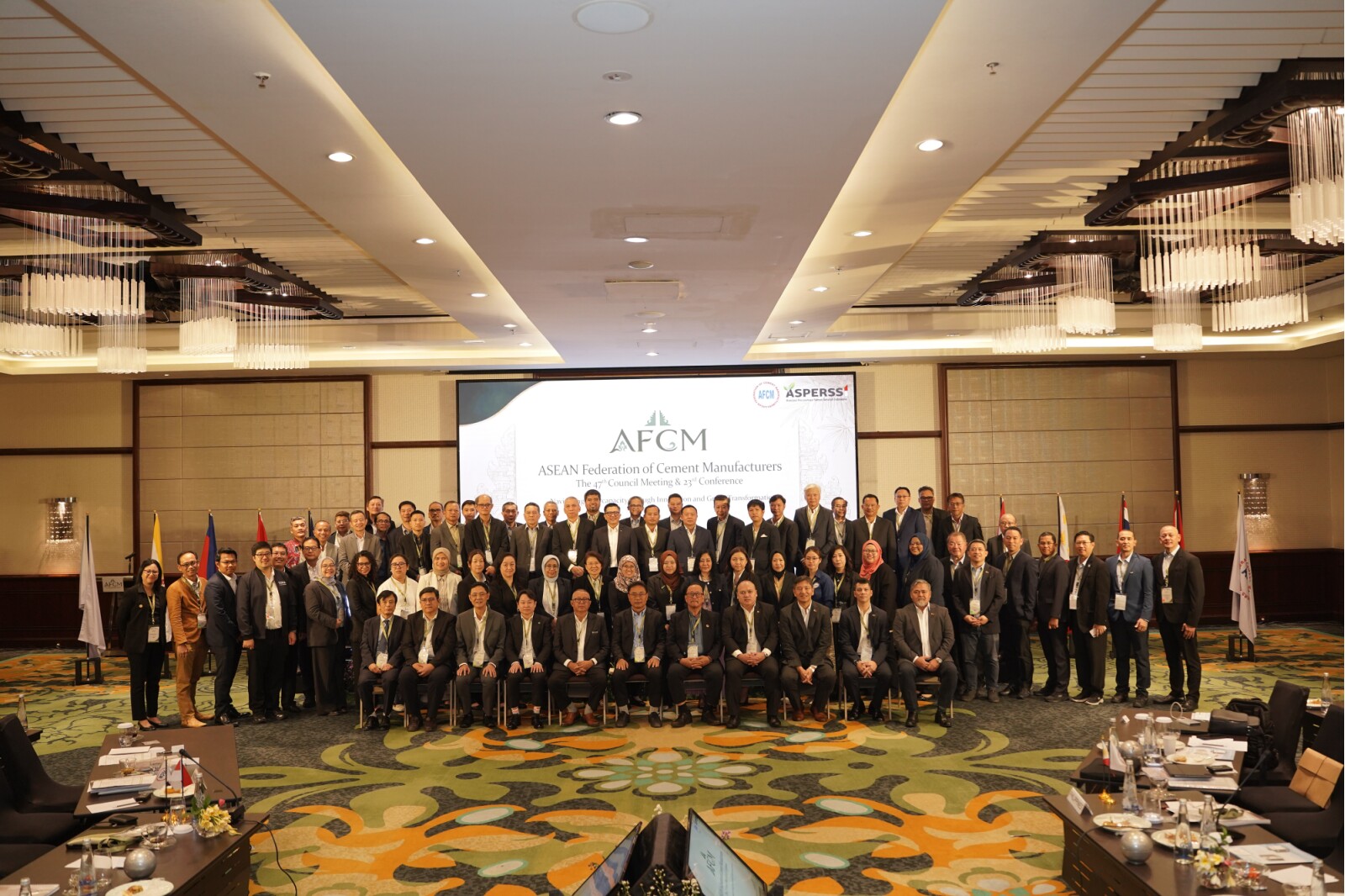

BANGKOK, THAILAND – Media OutReach Newswire – 18 November 2026 – Thai Cement Manufacturers Association (TCMA) continues to drive collaboration across the ASEAN cement industry under the 2035 AFCM Decarbonization Roadmap, which delivered more than 14 million tons of CO₂ emission reductions in 2025. This achievement demonstrates the power of collective commitment, translating a shared regional vision into measurable action while strengthening the industry’s technological capabilities and long-term competitiveness.

AFR06881 0 (1)

Following the handover of the ASEAN Federation of Cement Manufacturers (AFCM) presidency to the Philippines, TCMA remains committed to advancing regional cooperation and connecting ASEAN cement producers with global technology providers and international partners. Thailand will further contribute to this mission by hosting the 27th AFCM Technical Symposium & Exhibition in Bangkok in 2027.

Dr. Chana Poomee, Honorary Chairman of TCMA and outgoing AFCM President, highlighted the progress made following the AFCM Meetings. Since the eight AFCM member countries jointly announced the 2035 AFCM Decarbonization Roadmap in October 2025, members have continued to advance decarbonization initiatives, exchange technical knowledge and monitor collective progress, providing greater visibility into the region’s transition.

“A shared regional roadmap gives all eight member countries a common direction and clear targets, while allowing each country to move forward according to its own national circumstances and readiness. The emission reductions achieved demonstrate that when the industry shares a vision and takes collective action, measurable results are possible. The transition to low-carbon cement is not simply an environmental imperative; it is also an opportunity to advance technology, create added value and strengthen the long-term competitiveness of the ASEAN cement industry,” Dr. Chana said.

According to the latest data reported by all eight AFCM member countries, the ASEAN cement industry achieved cumulative CO₂ emission reductions of more than 14 million tonnes in 2025, equivalent to a 6.0% reduction against the 2020 baseline. Progress has been driven by the wider adoption of low-carbon cement, increased alternative fuel substitution and the use of renewable electricity, reflecting transformation across both materials and energy.

Under the regional roadmap, the industry aims to achieve cumulative CO₂ emission reductions of approximately 35.2 million tonnes by 2030 and 42.9 million tonnes by 2035, compared with the 2020 baseline.

Mr. Montri Nithikul, Vice Chairman of TCMA and outgoing Secretary General of AFCM, emphasized that an important milestone in regional cooperation is the translation of shared ambitions into national decarbonization strategies. The Philippines has developed its Philippine Cement and Concrete Decarbonization Roadmap, Indonesia has established the Decarbonization Roadmap of Indonesia Cement Industry, while Thailand is advancing its Thailand 2050 Net Zero Cement and Concrete Roadmap as the country’s overarching framework.

“Translating shared regional ambitions into national roadmaps demonstrates the growing strength of our collaboration. It also creates opportunities for countries to learn from one another and exchange experience in technology, innovation, standards and implementation approaches. This knowledge-sharing will help accelerate the industry’s transition and support the region’s long-term decarbonization ambitions,” Mr. Montri said.

Mr. Surachai Nimla-or, Chairman of TCMA and Head of the Thai Delegation, reaffirmed TCMA’s commitment to turning regional collaboration into tangible value for Thailand’s cement industry. TCMA will continue connecting Thai cement manufacturers with AFCM members, government agencies, academia and international partners to facilitate knowledge exchange and bring promising technologies and innovations into practical application.

This effort is closely aligned with Thailand’s 2050 Net Zero Cement and Concrete Roadmap and the Saraburi Sandbox, which serves as an important platform for integrating partnerships, piloting innovative solutions and demonstrating pathways towards a low-carbon industrial ecosystem.

“TCMA is committed to ensuring that regional and global cooperation delivers practical benefits for our members and the Thai cement industry. We aim to translate knowledge, technologies and experience from international networks into solutions suited to Thailand’s context. The Saraburi Sandbox provides an important opportunity to develop collaborative initiatives and innovation pilots that can be scaled up across the industry, both nationally and regionally,” Mr. Surachai said.

The AFCM Meetings also marked the formal handover of the AFCM Presidency from
Dr. Chana Poomee, following the completion of his term, to the Philippines. This transition reflects the continuity of regional commitment and the shared spirit of “One Team, One Community” in advancing ASEAN’s cement industry.

Looking ahead, TCMA will continue working with AFCM members and global partners to strengthen technical capabilities, connect technologies and innovation, unlock new economic opportunities and enhance the competitiveness of the ASEAN cement industry. Guided by the vision of “Made in ASEAN, for ASEAN”, the region will continue building its collective capabilities while strengthening its connections with the global industry.

A key next step will be Thailand’s hosting of the 27th AFCM Technical Symposium & Exhibition from 3–5 November 2027 in Bangkok, under the theme “CEMENT NEXUS – Bridging Innovation & Partnership for Cement Decarbonization.” Organized by TCMA, the event will bring together cement manufacturers, industry experts, technology providers and international partners from across ASEAN and around the world. It will serve as a dynamic platform for technical knowledge exchange, technology and innovation showcases, and strategic partnership-building—helping accelerate the industry’s transition while unlocking new opportunities for sustainable growth and competitiveness across ASEAN.

Hashtag: #TCMA #TCMAtoNetZero2050 #CementDecarbonization #SaraburiSandbox #AFCM #ASEANCement #CEMENTNEXUS #AFCMTS&E2027

The issuer is solely responsible for the content of this announcement.

Arrow Electronics to showcase technologies and engineering capabilities for intelligent edge AI systems at EdgeTech+


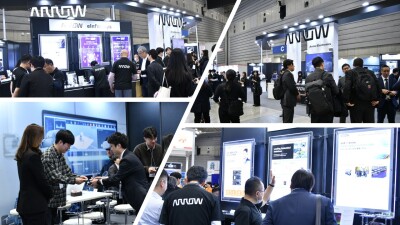
YOKOHAMA, JAPAN – Media OutReach Newswire – 18 November 2026 – Arrow Electronics, a global provider of technology solutions, is showcasing technologies and engineering capabilities for intelligent edge AI systems at EdgeTech+ 2026, taking place Nov. 18–20 at Pacifico Yokohama. Arrow will exhibit at Booth CC-21, together with NXP, YAGEO Group, Longsys, Bourns, Same Sky, and Toshiba.

Arrow Electronics to showcase technologies and engineering capabilities for intelligent edge AI systems at EdgeTech+

As AI moves closer to where data is generated and processed, edge AI applications are expanding across connected products and industrial systems. This is increasing the need to integrate compute, connectivity, memory and power while balancing performance, efficiency and reliability.

“Bringing intelligent edge AI systems to market requires more than choosing the right technologies,” said Dr. Raphael Salmi, president of Arrow Electronics’ semiconductor business for South Asia, Korea and Japan. “Arrow brings together technology, engineering and supply chain expertise to help customers address integration challenges and turn ideas into scalable, market-ready solutions.”

Arrow’s showcase will bring together capabilities and offerings across its technology ecosystem, including digital sourcing and BOM management through Arrow.com and Verical; product engineering from eInfochips; component data, analytics and lifecycle management from SiliconExpert; RF, wireless, IoT and power technologies from Richardson RFPD; and supply chain solutions from Converge. Participating suppliers will showcase technologies spanning edge AI processing, memory and storage, power management, sensing, circuit protection, connectivity and thermal management.

On Nov. 19 from 14:05 in room A, Uday Mohandas, vice president and APAC head of eInfochips, an Arrow company, will deliver the keynote “From Silicon to Intelligent Products: Engineering the Next Generation of AI Systems.” The session will explore how edge AI, physical AI, embedded software and hardware-software integration can help turn advanced silicon and AI technologies into intelligent, production-ready products.

More information about Arrow’s engineering, supply chain and technology solutions is available at arrow.com.

Hashtag: #ArrowElectronics

The issuer is solely responsible for the content of this announcement.
About Arrow Electronics

Arrow Electronics (NYSE:ARW) sources and engineers technology solutions for thousands of leading manufacturers and service providers. With 2025 sales of $31 billion, Arrow’s portfolio enables technology across major industries and markets. Learn more at .

Vientiane Plans Automated Traffic Fines for Early 2027

A picture of Lao authorities demonstrating how the new automated traffic system works. (Photo by Lao Security News)

Vientiane authorities plan to begin automated traffic enforcement in early 2027, using electronic police cameras and speed checkpoints alongside digital ticketing and payment services.

The plan follows the completion of a central Land Traffic Control Centre at the Traffic Police Department. The project’s monitoring and ticketing systems have been linked to central vehicle and driver databases, according to the Lao News Agency.

At a project review on 16 November, officials reported that 18 of 64 planned traffic signals had been installed, along with six of 47 planned electronic police cameras and four of 47 speed-monitoring checkpoints. Seven additional cameras are located along the Bus Rapid Transit corridor. Authorities have also identified 21 proposed no-parking enforcement zones in five central districts. The zones are awaiting final approval.

The new enforcement system comes as Vientiane continues to face traffic problems linked to faulty signals, flooding and a growing number of vehicles. In July, police said 29 of the capital’s 68 signalized intersections were either out of service or only partly working.

How the System is Expected to Work

Authorities say the system will use cameras to monitor traffic and issue violation tickets. Police are also preparing a mobile app and public service portals where motorists will be able to access services and pay fines digitally.

The government is working to connect vehicle records with household registration data to verify ownership, and with tax and customs systems to check road tax payments and customs records. Linking the platform to telecommunications databases, which would support SMS alerts, is planned for the first quarter of 2027.

Digital payments could include services such as BCEL One and LDB Trust if integration with the government’s Findlink payment system is delayed. Authorities are still seeking approvals for the mobile police app and public service portals before enforcement begins.

Before switching to automated fines, officials are connecting the traffic database to national ID, tax, and customs records to verify vehicle ownership and check for unpaid road taxes.

This links vehicle records to the Ministry of Technology and Communications’ mobile phone database which will begin in the first quarter of 2027 so the system can send out SMS alerts.

China’s Recombinant Collagen Technology Wins the INPD Innovative Manufacturing Process Award


PARIS, FRANCE – Media OutReach Newswire – 18 November 2026 – From 14 to 15 October 2026, the 2026 INPD Award was held at the Carrousel du Louvre in Paris, France. Under the annual theme “REGENERATIONS”, it gathered cosmetics research institutions and industry-chain companies worldwide to showcase frontier technologies and innovation.

China's Recombinant Collagen Technology Wins the INPD Innovative Manufacturing Process Award
China’s Recombinant Collagen Technology Wins the INPD Innovative Manufacturing Process Award

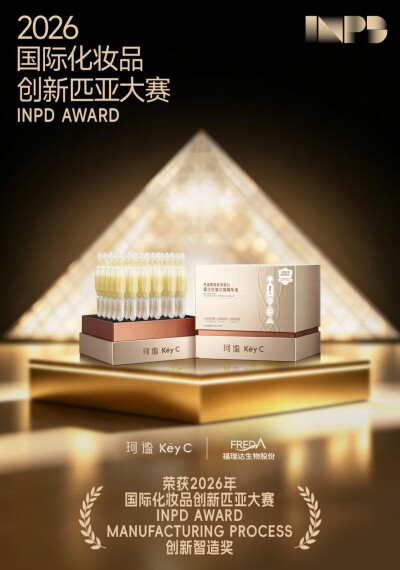
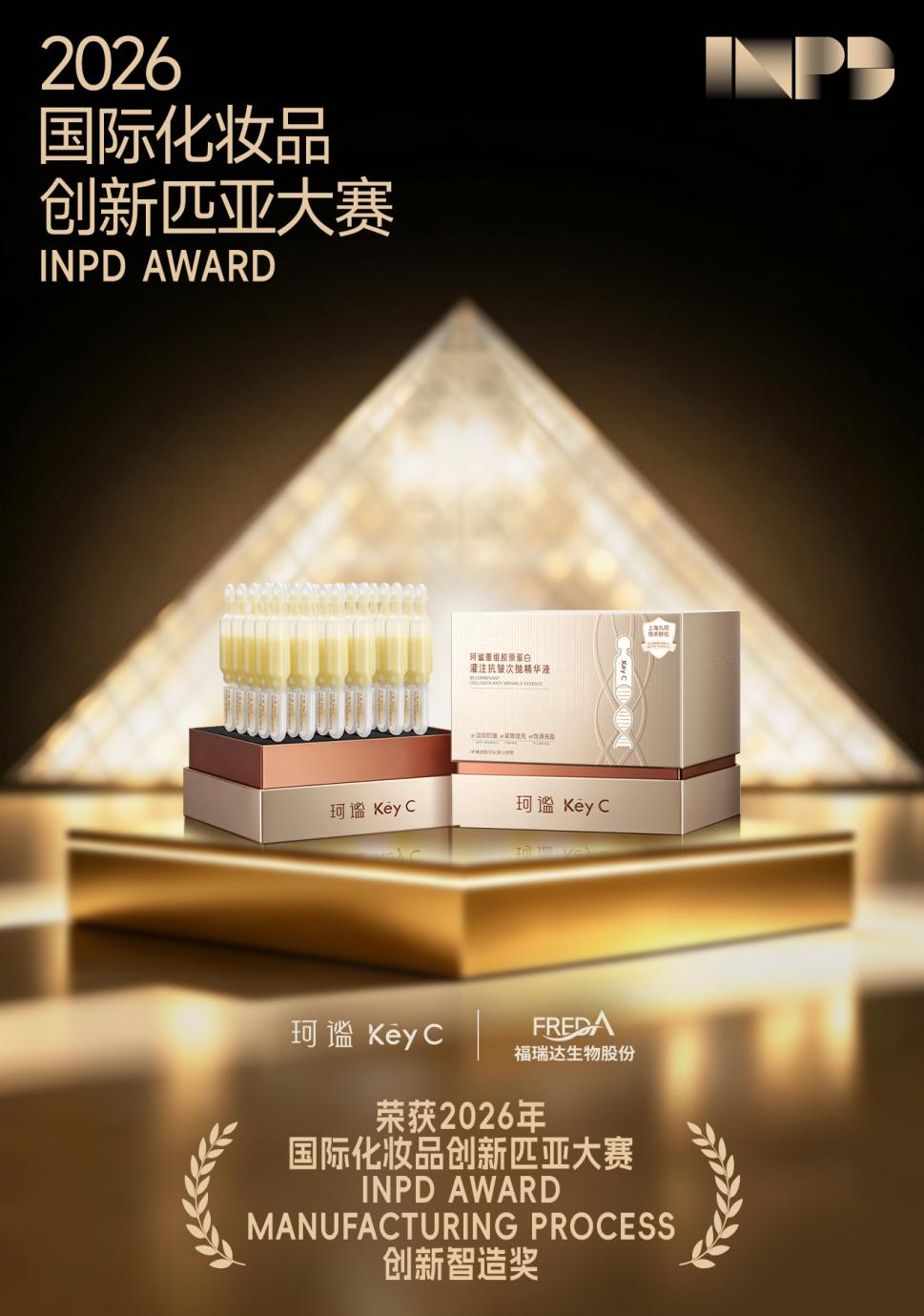
Key C, a brand under Shandong Freda Biotech Co., Ltd., won the INPD Innovative Manufacturing Process Award with its proprietary Membrane-Penetrating Collagen Technology, marking a new stage in which China’s collagen technology moves from “following ingredients” to “exporting intelligent manufacturing”.

01 Ending the Pain Point That “Intact Collagen Is Too Large to Penetrate“

Recombinant collagen, being a large molecule, penetrates the skin with difficulty, yet degrading it into small molecules destroys the activity of the intact structure. Building on Freda’s more than three decades of synthetic biology expertise, the Key C R&D team used gene editing to fuse a cell-penetrating peptide segment into the sequence of recombinant type III humanised collagen. The technology preserves the active structure of the large molecule while enabling it to actively cross the skin barrier and enter cells; assessments confirm that it is internationally leading.

Rather than miniaturising molecules, Key C reconciled penetration capability with structural activity, opening a new direction for recombinant collagen applications in skincare.

The 24-hour subcutaneous penetration rate of Key C’s membrane-penetrating collagen is 2,750% higher than that of ordinary recombinant type III collagen, and within two hours 91.67% of skin cells achieve membrane penetration. It activates 11 key skin proteins and restores the vitality of 60-year-old skin cells to 99.77% of that of 20-year-old cells. The single-dose ampoule delivers four-fold cellular anti-wrinkle action, smoothing fine lines within 10 minutes and, after seven consecutive days of use, achieving improvement comparable to in-clinic procedures. Human trial data also earned it China’s first procedure-level anti-wrinkle skincare certification from SGS.

02 From Technological Breakthrough to Standard-Setting

Key C is turning its technological advantage into industry-wide rules. In 2025, Freda Key C led the drafting of China’s first group standard, “Recombinant Collagen Penetration, Degradation and Regeneration Testing — In Vivo Human Raman Spectroscopy Method”, introducing Raman spectroscopy into recombinant collagen efficacy evaluation and making “transdermal absorption” a precisely measurable parameter. The group standard it led, “Guidelines for Perioperative Skin Care in Medical Aesthetics”, also filled a gap in this field.

Key C and the Shandong Academy of Pharmaceutical Sciences jointly inaugurated the “Joint Research Center for Skin Longevity Science and Pharmaceutical Innovation R&D”, bringing pharmaceutical development logic into skincare innovation and establishing Key C as a rule-maker in recombinant collagen and light medical aesthetics skincare.

03 Taking the International Stage: China‘s Biomanufacturing Solution

Global beauty innovation is shifting from incremental formulation tweaks to foundational hard innovation such as synthetic biology and biomanufacturing. The debut and award of Key C’s Membrane-Penetrating Collagen Technology at 2026 INPD illustrates this trend, offering a referenceable Chinese pathway for the technological evolution of the global recombinant collagen sector.

Hashtag: #ChinaCosmeticsReview #INPDAward #KeyC

The issuer is solely responsible for the content of this announcement.
Allocator One Launches with $100M+ Venture Capital Fund of Funds, with 17 Unicorns in Portfolio

Allocator One emerges from stealth; Flagship Fund I’s underlying fund investments report 11% DPI; the firm expands across Asia-Pacific from its Singapore hub and hosts Alpha Summit Asia on 18 November


SINGAPORE – Media OutReach Newswire – 18 November 2026 – Allocator One, a venture capital fund of funds and anchor investor in first- and second-time fund managers, today announced the final close of its oversubscribed Anchor Fund I (“Flagship Fund I”) 23% above target, marking the firm’s official public launch after building its portfolio in stealth since its 2023 founding. The fund closed on September 9, 2026. Flagship Fund I was launched in July 2024 and invests in fund vintages from 2023 to 2026. Total commitments across all Allocator One Group vehicles now exceed $100 million. As of September 1, 2026, Flagship Fund I’s underlying fund investments reported an aggregate 11% of paid-in capital (DPI), approximately 12 months ahead of Allocator One’s original projections.

Felix Staeritz, Founding Partner Allocator One Dr Céline Chi Hae Wong, Founding Partner & CEO Asia Allocator One
Felix Staeritz, Founding Partner Allocator One
Dr Céline Chi Hae Wong, Founding Partner & CEO Asia Allocator One

Expansion across Asia-Pacific

Allocator One’s business in Asia is led from Singapore by Dr Céline Chi Hae Wong, Founding Partner & CEO Asia. Applications to the firm from Asia-Pacific have grown substantially year on year, from 12% to 17.6% of all emerging-manager applications globally, and its investor base includes Asian single family offices. On 18 November, Allocator One hosts Alpha Summit Asia at the Capella Singapore, bringing together LPs, GPs and founders to discuss where capital moves next and why Asia is attracting so much of it.

In October 2026, Allocator One Bharat, the firm’s India vehicle, received registration from the Securities and Exchange Board of India (SEBI) as a Category II Alternative Investment Fund, enabling it to anchor India’s first- and second-time fund managers from their first institutional fund. India is now the fastest-growing single market for applications to the firm, its share rising from 7.7% to 11% year on year.

“Asia is where the reallocation of capital is most visible. The region’s best operators are launching funds of their own, and the institutional capital that should back them is still mostly looking elsewhere. From Singapore, we bring Asia’s emerging managers to a global LP base. With Bharat registered, we can now write the first institutional cheque in India. Our firm’s strategy to grow in Asia significantly within the next year is a clear signal to the industry that confirms our market reallocation,” said Dr Céline Chi Hae Wong, Founding Partner & CEO Asia, Allocator One.

Globally, since its 2023 launch, Allocator One has made more than 40 fund investments, typically committing $2 million to $10 million as an anchor investor in first- and second-time managers, providing capital at an early stage of those funds’ development. Allocator One is the largest investor in more than 60% of the funds it backs. Through the portfolios of its fund investments, Allocator One is exposed to approximately 600 underlying companies, including 17 unicorns. Flagship Fund I’s underlying funds hold positions in Lovable (via The Nordic Web Ventures), Thinking Machines and AMI Labs (via Don’t Quit Ventures), and xAI.

The close comes amid what Allocator One calls “The Great Divergence”: venture capital is increasingly separating into large platforms competing through scale and specialist managers winning through deep domain expertise and early access.

About 1,000 new emerging-manager funds are raised worldwide each year, according to Allocator One. The firm estimates it sees approximately 80% of them. Since 2023, it has reviewed more than 2,500 emerging-manager applications, with inbound applications up 32% year on year. Allocator One combines human investment judgement with its proprietary AI, Ori, which scores applicants on more than 75 data domains. Just under 20% of applicants are shortlisted for an interview. After due diligence, Allocator One invests in the top 1% of managers.

Allocator One’s fee structure is designed to avoid the additional layer often associated with funds of funds. LPs pay a combined 2% management fee and 20% carried interest across both investment levels, with fees shared between Allocator One and the underlying managers. Unlike traditional funds of funds, which often charge a combined 3% management fee and 30% carried interest, Allocator One adds no second fee layer.

“Returns are increasingly driven by manager selection. The key is finding the top specialist managers before they become obvious. That is a data problem, and we treat it like one,” said Felix Staeritz, Founding Partner of Allocator One. “Investors don’t need another fee layer between them and innovation. An 11% underlying DPI this early is a strong first signal that our approach is working.”

Allocator One’s investor base spans more than 25 countries, including family offices, successful technology entrepreneurs, experienced venture investors and institutional investors. Infra One, part of the Allocator One Group, provides fund operations infrastructure to Allocator One and to managers outside its portfolio. According to the firm, new fund managers can lose about a quarter of their time to administration. Infra One supports fund set-up, KYC onboarding, legal, compliance and ongoing administration, including accounting, reporting, capital calls and investor communications. Allocator One says operational work has been reduced on average by 500 hours per fund and new funds can be set up within 24 hours. Its AI agent, Ori, also lets LPs query terms, performance and holdings. Infra One has regulatory registrations across Austria, Germany, the UK, US, and India.

Hashtag: #AllocatorOne #AssetManagement #PrivateMarkets #AssetManagement #PrivateMarkets #VentureCapital #FundOfFunds #EmergingManagers


The issuer is solely responsible for the content of this announcement.

About Allocator One

Founded in 2023 by Felix Staeritz and Michael Ströck, Allocator One is a venture capital fund of funds that provides anchor capital to first-time and second-time fund managers, typically writing commitments of $2 million to $10 million. The firm has made more than 40 fund investments since 2023. Its Asia business is led from Singapore, and Allocator One Bharat is the firm’s SEBI-registered Category II AIF for India. Infra One, part of the Allocator One Group, provides fund operations infrastructure to Allocator One and to managers outside its portfolio. For more information, visit www.allocator.one.

Disclaimer: Performance figures are unaudited and relate to underlying fund investments. Returns are largely based on unrealized valuations. Past performance is not indicative of future results.

This announcement is for information purposes only and does not constitute investment advice or an offer to sell or a solicitation to buy interests in any fund. Interests in Allocator One Bharat may be offered only by private placement to eligible investors in accordance with applicable Indian regulations.

Puffin Secure Browser is back with a security-first focus built on its proven cloud architecture

After more than a decade developing cloud-based browser technology, CloudMosa is reintroducing Puffin Secure Browser with a security-first architecture at its core to help address AI-driven cyberattacks.


CUPERTINO, US – Media OutReach Newswire – 18 November 2026 – CloudMosa today announced the latest release of its Puffin Secure Browser, bringing its cloud-based technology back into focus with security at the forefront. Developed more than 15 years ago, Puffin’s split-browser architecture moves vulnerable web processing to the cloud, while keeping the user’s device focused on displaying the visual result. This approach eliminates endpoint exposure to malicious web content as online threats continue to evolve.

Puffin Secure Browser

Most clicks on links, attachments, and updates are made for routine reasons rather than bad intent, yet web-based threats continue to grow more sophisticated. As organizations and individuals rely on browsers for more of their daily activities, the browser itself has become an important consideration for cybersecurity. Research shows that more than 85% of enterprise workloads are projected to be accessed through the browser by 2027. Malicious websites, web-based malware, and zero-day exploits can target vulnerabilities in browser components. The emergence of AI-assisted threats adds to the challenge, with attacks by AI-enabled adversaries up 89% year on year, reinforcing the need to consider how and where web content is processed.

A different approach to everyday browsing
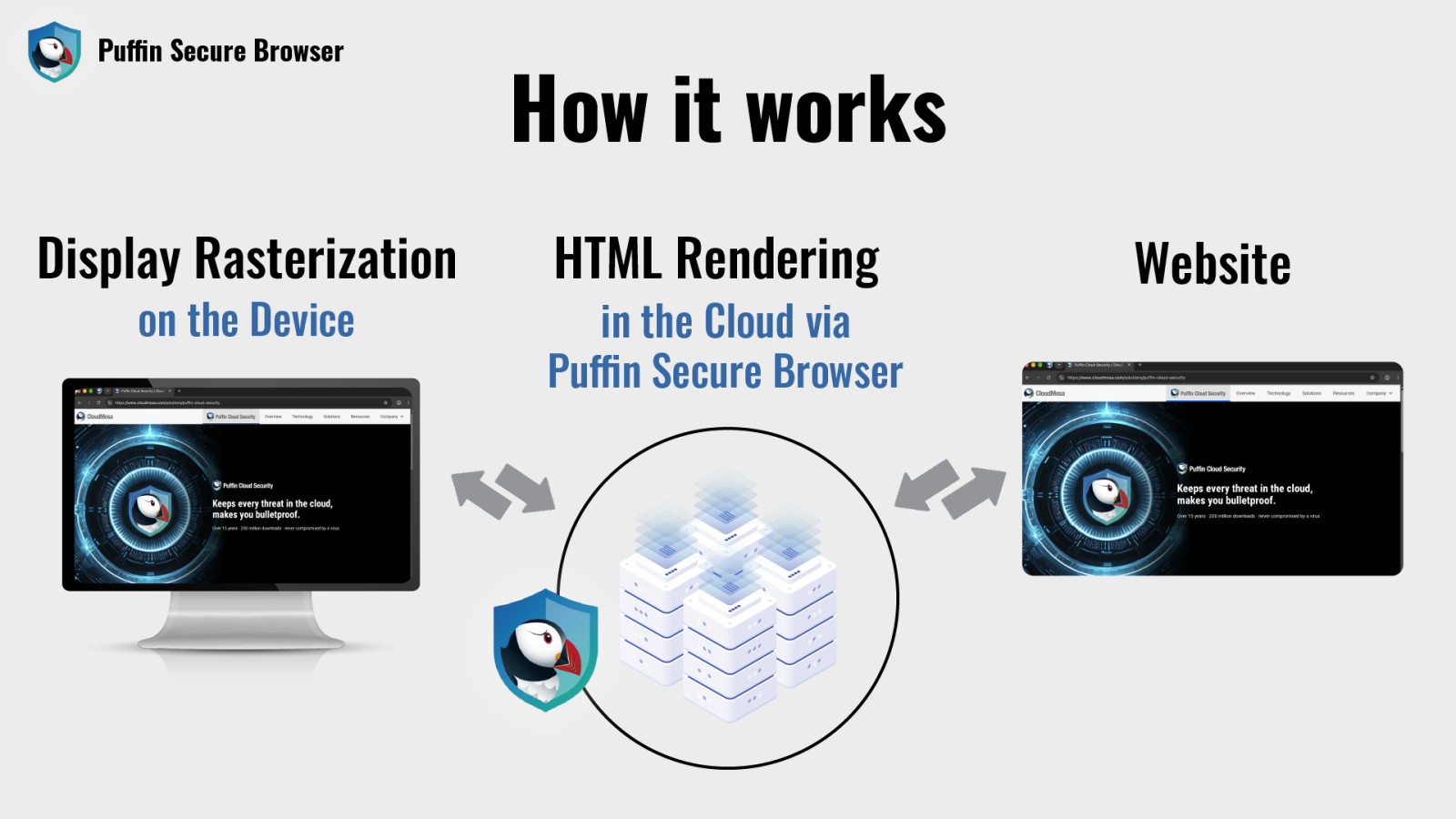
Puffin’s split-browser architecture is inherently built to separate heavy, high-risk web execution from local endpoints. Through its Network Vector Rendering technology, approximately 95% of HTML rendering takes place in the cloud, while the device handles the remaining display rasterization. This approach delivers a responsive browsing experience while keeping the on-device component lightweight and secure.

Now powered by the same split-browser architecture, Puffin returns to its security-first foundation. Rather than executing complex web rendering entirely on the local device, Puffin isolates and executes potentially malicious JavaScript within a cloud sandbox, helping achieve zero contact between the endpoint and unknown threats. The browsing experience is then delivered through a thin client-side layer, combining this added layer of protection with the lightweight performance Puffin is known for.

“For years, Puffin has been recognized for its speed, but true browser security requires rethinking where web processing actually happens,” said Shioupyn Shen, CEO of CloudMosa. “With Puffin Secure Browser, security is the priority. When it comes to modern work, click happens. But no one’s click rate will ever be zero, so security shouldn’t depend on perfect behavior. We want people to click, explore and follow their curiosity across the web with more confidence, without constantly wondering what might be hiding behind the next link. That’s why Puffin processes web content in the cloud rather than on the user’s device, so people can explore with greater peace of mind.”

Cloud-based protection for a changing web
Puffin was among the most downloaded browsers of the 2010s, trusted by hundreds of millions across its iOS and Android versions. It now unveils the Puffin Secure Browser, built with a security-first mindset naturally in its DNA. With more than 200 million downloads over its history, Puffin brings an established browsing architecture to an evolving security landscape. CloudMosa also reports no security breaches across that period.

Puffin Secure Browser is designed for browsing scenarios that involve everyday risks, such as clicking links in emails, visiting unfamiliar websites, or accessing third-party web content. By isolating vulnerable web processing from the endpoint, it can complement existing security measures and help individuals and organizations manage browser-related risks across employee, contractor, and other browsing environments.

Most people browse the web simply to get things done, discover information and explore new ideas. Security should support that everyday freedom, not make people more hesitant to click. With Puffin Secure Browser, CloudMosa aims to make safer browsing more accessible, giving users greater confidence to navigate the web while helping reduce exposure to potentially malicious content.

The latest Puffin Secure Browser is available to download for free on Windows and macOS. Users can visit puffin.com/secure-browser to get started, or learn more about CloudMosa at cloudmosa.com.
Hashtag: #CloudMosa #Cybersecurity


The issuer is solely responsible for the content of this announcement.

CloudMosa

CloudMosa is a pioneer in cloud computing and remote browser solutions for both consumers and enterprises. For over a decade, CloudMosa has developed technology that moves web processing into the cloud, helping devices stay light, fast, and secure. This began with the Puffin browser, downloaded more than 200 million times, and now includes Puffin Secure Browser for security-focused browsing and Cloud Phone, which brings internet and app experiences to affordable feature phones. To learn more, visit for Puffin, or for Cloud Phone.

Reeracoen Singapore Unveils Benefits & Total Rewards Guide to Help Singapore Employers Build Competitive Employment Packages

Paired with its Salary & Hiring Guide, the new resource helps employers benchmark pay and strengthen talent attraction and retention through benefits, flexibility and career development

SINGAPORE, Nov. 18, 2026 /PRNewswire/ — Reeracoen Singapore – a leading Asia-based recruitment and HR solutions group, today launched its Singapore Benefits & Total Rewards Guide 2026/2027, to help employers build competitive employment packages as they finalise hiring and compensation budgets for 2027.

Together with Reeracoen’s Singapore Salary & Hiring Guide 2026/2027, launched in October 2026, the resource addresses a practical challenge: balancing competitive base pay with benefits and working conditions that attract candidates, retain employees and remain sustainable for the business.

The launch follows the release of the National Wages Council’s 2026/2027 guidelines in October 2026, ahead of their implementation from 1 December 2026. The guidelines call for appropriate wage increases and variable payments that recognise employees’ contributions while considering business performance and prospects. Reeracoen’s guides help employers benchmark salaries and assess how bonuses, benefits and career development strengthen the overall offer.

Salary sets the starting point

The guides’ central message is clear: competitive pay establishes the foundation of an employment offer, while benefits, flexibility and career development strengthen its appeal.

Previously published findings from Reeracoen × Rakuten Insight’s Beyond the Paycheque 2026, which surveyed 337 Singapore employees between October and December 2025, illustrate the balance:

  • 69.1% would accept or consider lower pay for better overall working conditions, showing that the wider employment experience can influence job decisions.
  • 80.7% would accept a pay reduction of no more than 10%, or none at all, suggesting that willingness to trade salary for better conditions has clear limits.
  • 47.5% identified base salary as the single most important consideration when choosing a job, reinforcing the importance of competitive pay.

For employers, the implication is clear: establish competitive base pay, then strengthen the package through benefits employees value. These can distinguish closely matched offers, but should not substitute for appropriate salaries.

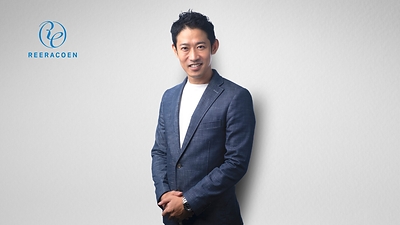
Shoichi Sunaga, Branch Manager, Reeracoen Singapore:

“Salary remains the starting point. Conditions can tip a close decision, but they rarely close a large pay gap,” said Shoichi Sunaga, Branch Manager, Reeracoen Singapore. “Employers first need to understand the market rate for the role, then explain the complete offer clearly, from bonuses and benefits to flexibility and growth. Our two guides are designed to help them do both as they prepare for 2027.”

Turning benchmarks into workforce decisions

The Salary & Hiring Guide covers 15 industry groups, five common functions and four career levels. Its indicative basic monthly salary ranges exclude bonuses, benefits and employer CPF contributions.

The Benefits & Total Rewards Guide adds guidance on bonus practices, employee preferences, flexibility, progression and employer costs. Reeracoen’s recommended “Comply, Match, Win” framework distinguishes statutory obligations from benchmarking and discretionary enhancements:

  • Comply: Review applicable statutory obligations and account for them in workforce budgets.
  • Match: Use relevant market benchmarks to assess pay and benefits.
  • Win: Consider flexibility, wellbeing support and career development tailored to employee needs and business capacity.

A supporting 90-day action plan guides employers through auditing existing provisions, benchmarking salaries and employee needs, and improving and communicating the complete offer.

For leaders, delivery matters: flexible arrangements must be workable, benefits accessible and career opportunities visible.

Kenji Naito, Group CEO, Reeracoen Group

“Across Asia, attracting and retaining talent increasingly requires employers to look beyond salary alone,” said Kenji Naito, Group CEO, Reeracoen Group. “Competitive pay remains essential, but long-term talent competitiveness also depends on how organisations invest in their people, support career development and create sustainable working environments.”

An evidence base for 2027 planning

The guides draw on vacancy data, published research and official statistics. Salary benchmarks use Reeracoen Singapore vacancy data from September 2025 to August 2026. Ranges are updated where at least five comparable current vacancies are available; otherwise, previous benchmarks are retained. They support role-specific pay decisions, rather than measuring year-on-year salary growth.

Download the complimentary guides:

About Reeracoen Group

Reeracoen is a leading Asia-based recruitment and HR solutions group, connecting talent with forward-thinking organisations across the region. With nine offices across six major Asian markets, Reeracoen combines deep local market expertise with cross-border recruitment capabilities to support sustainable business growth.

Beyond recruitment, Reeracoen provides market intelligence, workforce insights, salary research, and employer advisory services, helping organisations make informed talent and business decisions in an evolving regional economy.

Reeracoen’s commitment to recruitment expertise and service excellence has been recognised through multiple industry accolades, including Top Permanent Recruitment Services in APAC 2026 (Manage HR). Its Singapore operations have also received Best Staffing & Recruitment Company 2026, Best Recruitment & Talent Acquisition Agency 2026, and the Client Service Excellence Award 2026.

For more information, visit https://www.reeracoen.sg/.


Woori Bank Selects Nium to Power Cross-Border Payouts in Its Mobile Banking App.

Nium to power 20-corridor person-to-person payouts for Woori customers.

SINGAPORE, Nov. 18, 2026 /PRNewswire/ — Nium, a global cross-border payments infrastructure company, today announced at the Singapore FinTech Festival that Woori Bank, one of the largest commercial banks in South Korea, has selected Nium to power person-to-person payouts within its mobile banking app.

The service will run on Nium’s white-label payouts infrastructure, so customers will experience it entirely within the Woori brand. Nium will support real-time remittances for 20 corridors, spanning Asia-Pacific, Europe, and the US –– markets where Korean consumers frequently need to send and receive money.

Woori was looking for a partner that could match the speed and reach its customers now expect, along with full visibility into every transfer. It needed payouts to digital wallets, and end-to-end transaction tracking so that Woori and its customers can see where each payment stands at every stage, plus clear, competitive pricing, all backed by a strong local presence in Korea. Nium already works with several leading Korean financial institutions, which gave Woori further confidence in the partnership.

“Woori’s customers expect their bank to anticipate what they need next,” said Anupam Pahuja, Chief Business Officer at Nium. “Nium gives Woori the infrastructure to stay ahead of those needs, so that sending money abroad feels as simple as everything else they do in the app.”

About Nium

Nium is building the infrastructure to move money as freely as information. Its global, compliance-first platform gives banks, fintechs, and enterprises the rails to collect, convert, send, and spend funds across 100+ currencies, borders, and blockchains through one unified platform. Nium holds regulatory licenses in 40+ countries and operates its cross-border payout network across 190+ markets, with more than 100 settling in real time and with funds disbursed to bank accounts, wallets, and cards. As a principal member of schemes including Visa, Mastercard, Discover, and UATP, Nium issues over 41 million card credentials annually. The company is co-headquartered in San Francisco and Singapore. For more information, visit www.nium.com.