Home Blog Page 24

RoboParty Unveils RP1, a High-Performance Full-Stack Open-Source Humanoid Robot at IROS

From RPO and Romomo to PartyOS, RoboParty is building an open humanoid robotics foundation for developers worldwide.

PITTSBURGH, Oct. 4, 2026 /PRNewswire/ — On September 28, 2026, RoboParty publicly unveiled RP1 (ROBOTO 01) at IROS 2026, marking the robot’s global debut.

In January 2026, RoboParty fully open-sourced RPO (ROBOTO ORIGIN), its first open-source humanoid robotics project. To date, RPO has received more than 2,500 GitHub stars. As a developer-oriented open-source humanoid robot, RPO has attracted broad attention worldwide and inspired multiple community builds and reproductions.
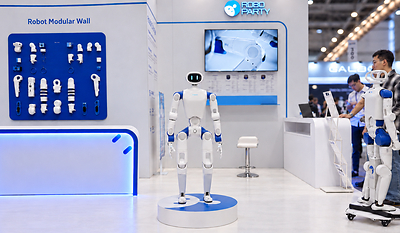
(RoboParty’s RP1 humanoid robot on display at IROS 2026)

Building on this foundation, RoboParty positions RP1 as the world’s first high-performance full-stack open-source bipedal humanoid robot. RP1 is designed for researchers, educators, robotics developers and embodied AI teams, with the goal of providing a humanoid robotics system that can be used, modified, trained and continuously extended in real development workflows.

Kick Me: Putting Dynamic Stability to the Test

At RoboParty’s IROS booth, the “Kick Me” interactive demonstration was one of the most direct ways for visitors to experience RP1’s capabilities.

During the demonstration, visitors could directly apply external disturbances to the robot. When pushed or kicked, RP1 rapidly adjusted its posture and recovered its balance. Unlike demonstrations based only on predefined motions, this open interaction allowed visitors to observe the robot’s dynamic stability and control performance under external disturbances.

The repeated high-intensity interactions also provided a direct test of the robot’s body performance and system-level robustness.

RP1’s dynamic motion and disturbance-recovery capabilities at IROS were supported by PartyOS, RoboParty’s open R&D foundation for humanoid robotics, which integrates the UFO framework.

UFO — short for “A General Unsupervised Reinforcement Learning Framework for Humanoid Control” — is a training framework for discovering humanoid motor skills through unsupervised reinforcement learning. It trains low-level motion policies that allow robots to learn dynamic behaviors without relying entirely on conventional predefined motion trajectories, including skill transitions, disturbance recovery and fall recovery.

Rather than treating motion control as an isolated algorithmic module, RoboParty is integrating the robot body, actuator modules, low-level control and embodied AI algorithms into one system for continuous joint validation. The goal is to ensure that algorithmic capabilities are built on a stable and reproducible humanoid robotics platform.

The IROS demonstration marked an important validation milestone for this technical direction.

Throughout the exhibition, researchers, university faculty and students, robotics developers and industry professionals from different countries and regions visited RoboParty’s booth. Discussions extended beyond motion performance to RP1’s robot body, Romomo actuator modules, motion control, modular design and future open-source plans.

Multiple research teams and developers also discussed the procurement of robots and core components, algorithm reproduction, embodied AI research and open-source collaboration with the RoboParty team.

From Closed Systems to Full-Stack Open Source

With RP1, RoboParty is exploring an alternative path for humanoid robotics.

Today, high-performance humanoid robots are typically delivered as complete products or closed systems. Researchers and developers may be able to use or observe these robots, but the underlying hardware, motion-control systems, simulation environments and software stacks are often difficult to inspect, modify, reproduce or extend.

RP1 is designed to redefine how humanoid robots are developed — from a developer’s perspective.

For RoboParty, “full-stack open source” does not mean releasing only mechanical files or a single software module. In addition to the robot body and core actuator modules, RoboParty plans to progressively open its motion-control systems, simulation environments, SDKs, training tools and PartyOS development foundation.

This will allow developers to participate more deeply in humanoid robotics development, from hardware and low-level control to model training and deployment.

“Humanoid robots should not be closed systems that only a small number of teams can build while everyone else can do little more than watch,” said Yi Huang, founder of RoboParty. “We want RP1 to become an open foundation that developers can access, modify, train and continuously improve. Full-stack open source has been our technical direction since the RPO project.”

RoboParty plans to announce further details of RP1’s open-source roadmap in October 2026, with broader software and hardware releases and a mass-production program to follow later in Q4.

RP1: A High-Performance Open-Source Body for Embodied AI

RP1 is designed to provide a high-performance humanoid platform for dynamic motion, embodied AI model training, validation and deployment, data collection and continuous development.

RP1 delivers peak joint torque of up to 160 N•m. From its in-house-developed Romomo actuator modules and mechanical structure to its real-time motion-control system, RP1 is designed around the requirements of dynamic motion, disturbance recovery and long-term development experiments.

These capabilities were demonstrated live at IROS. During the “Kick Me” interaction, visitors directly applied external disturbances while RP1 adjusted its posture and regained its balance. The robot also demonstrated continuous motion, disturbance recovery and fall recovery. These behaviors reflected not only algorithmic performance but also the coordination of the robot body, actuator modules and motion-control system.

RP1 builds on RoboParty’s broader full-stack open-source roadmap.

RoboParty began with RPO, its fully open-source bipedal humanoid robotics project. Through the development and community adoption of RPO, RoboParty expanded its technical capabilities to cover core actuators, robot bodies, motion control, dexterous manipulation and robotics software systems.

RoboParty subsequently introduced the Romomo actuator modules and its dexterous RP Hand while continuing to build PartyOS.

RPO validated an open-source bipedal robot body, motion-control system and developer workflow. Romomo expanded the technical foundation to cover core actuator modules. RP Hand extended the stack into dexterous manipulation and human-robot interaction. RP1 now brings these capabilities together into a humanoid robotics system designed for research and development.

Based on these capabilities, PartyOS is evolving across humanoid locomotion, perceptual interaction, whole-body manipulation and autonomous intelligent humanoids.

By bringing the robot body, actuators, motion control, perception, manipulation and intelligent software into one coordinated development system, RoboParty is building a full-stack open-source humanoid robotics platform from low-level hardware to high-level intelligence.

Building a Global Developer Community

RoboParty’s team spans robot hardware, motion control, artificial intelligence, systems software and manufacturing engineering. Core team members studied at Tsinghua University’s Yao Class, Peking University’s Zhi Class, Harbin Institute of Technology, Stanford University, Carnegie Mellon University, Zhejiang University and other leading institutions.

RoboParty has already built a global community of more than 5,000 developers across research, education and maker communities.

As RP1 becomes progressively more open, RoboParty aims to further develop this community into an open ecosystem spanning robot hardware, algorithms, data and applications, enabling more researchers, model-development teams and developers to participate in building and advancing humanoid robotics.

Media Contact: marketing@roboparty.com 

GitHub: https://github.com/Roboparty/roboto_origin

Website: https://roboparty.com/
RoboParty Unveils RP1, a High-Performance Full-Stack Open-Source Humanoid Robot at IROS

PITTSBURGH, Oct. 3, 2026 /PRNewswire/ — On September 28, 2026, RoboParty publicly unveiled RP1 (ROBOTO 01) at IROS 2026, marking the robot’s global debut. Building on RPO (ROBOTO ORIGIN), its fully open-source humanoid project launched in January 2026 with more than 2,500 GitHub stars, RoboParty positions RP1 as the world’s first high-performance full-stack open-source bipedal humanoid robot — designed for researchers, educators, robotics developers and embodied AI teams.

(RoboParty’s RP1 humanoid robot on display at IROS 2026)

At the company’s IROS booth, the “Kick Me” interactive demonstration let visitors directly push and kick the robot. RP1 rapidly adjusted its posture and recovered its balance under these external disturbances, testing its dynamic stability, body performance and system-level robustness. These capabilities were supported by PartyOS, RoboParty’s open R&D foundation for humanoid robotics, which integrates UFO — a training framework that discovers humanoid motor skills through unsupervised reinforcement learning, covering skill transitions, disturbance recovery and fall recovery without relying on predefined motion trajectories.

RoboParty is integrating the robot body, actuator modules, low-level control and embodied AI algorithms into one system for continuous joint validation. RP1 delivers peak joint torque of up to 160 N•m, built on in-house-developed Romomo actuator modules and a real-time motion-control system.

For RoboParty, “full-stack open source” means more than releasing mechanical files. The company plans to progressively open its motion-control systems, simulation environments, SDKs, training tools and the PartyOS development foundation, so developers can participate from hardware and low-level control to model training and deployment.

“Humanoid robots should not be closed systems that only a small number of teams can build while everyone else can do little more than watch,” said Yi Huang, founder of RoboParty. “We want RP1 to become an open foundation that developers can access, modify, train and continuously improve.”

RP1 builds on RPO’s validated open-source robot body and workflow, Romomo actuator modules and the dexterous RP Hand, with PartyOS evolving across humanoid locomotion, perceptual interaction, whole-body manipulation and autonomous intelligent humanoids.

Core team members studied at Tsinghua University’s Yao Class, Peking University’s Zhi Class, Harbin Institute of Technology, Stanford University, Carnegie Mellon University, Zhejiang University and other leading institutions. RoboParty has built a global community of more than 5,000 developers, and will announce further details of RP1’s open-source roadmap in October 2026, with broader software and hardware releases and a mass-production program to follow later in Q4.

Media Contact: marketing@roboparty.com 

GitHub: https://github.com/Roboparty/roboto_origin

Website: https://roboparty.com/

Chinese media praises Shanghai Electric’s latest Malaysian project: a step forward for China’s high-end power equipment in overseas markets


SHANGHAI, CHINA – Media OutReach Newswire – 3 October 2026 – China News Service (CNS) praises Shanghai Electric’s recent contract for Unit 3 of the Samalaju Combined Cycle Gas Turbine (CCGT) Project in Sarawak, Malaysia, highlighting it as the first overseas deployment of a heavy-duty gas turbine manufactured by the Chinese company.

Caption:Shanghai Electric's heavy-duty gas turbine makes its overseas debut
Caption:Shanghai Electric’s heavy-duty gas turbine makes its overseas debut

https://youtu.be/0rK3O7ispTQ?si=wZ_x_lXpo5SjxC_V

The deal is seen as a milestone in the international commercialization of China’s heavy-duty gas turbine technology, CNS said in a news report issued on Sept. 29.

According to the report, Shanghai Electric will provide a complete package of major equipment for the 500-megawatt-class power plant, including gas and steam turbines, generators, heat recovery steam generators (HRSGs) and an air-cooled system.

It will also serve as an engineering, procurement and construction (EPC) contractor and provide long-term lifecycle services covering the major equipment,.

“This is not simply an equipment export, but a substantive breakthrough for China’s heavy-duty gas turbines in international commercial competition,” Li Wenkai, deputy head of the Power Generation Engineering Consultancy Department under the China Electric Power Planning & Engineering Institute, quoted as saying by CNS.

Meanwhile, Shanghai Electric is also providing an integrated solution, with the core equipment manufactured within its own industrial system and coordinated under a unified project framework, CNS said.

Unlike projects that combine equipment from multiple suppliers, this model reduces the need for owners or EPC contractors to coordinate interfaces, technical parameters and control systems across different vendors. It also brings responsibility, technical interfaces, performance guarantees and project management under a unified framework, said the report.

“The Malaysian market is a mature commercial market, where clients make equipment selections based on technology, delivery and full lifecycle costs,” Liu Zhitan, deputy director of the Gas Turbine Power Generation Specialized Committee of the Chinese Society for Electrical Engineering, told CNS.

The successful bid means Shanghai Electric’s gas turbine products and integrated solutions are beginning to undergo commercial validation in a mature overseas market, Liu said.

Shanghai Electric has built up a presence in Malaysia through a range of energy projects, including the 2×300-megawatt Balingian coal-fired power plant, renewable energy projects in Selangor and the TG12 renewable energy project. In Sarawak, it has also completed a 106-kilometer, 500-kilovolt transmission line and built the state’s first off-grid microgrid project.

Such a local footprint provides an important foundation for the company to introduce core equipment into overseas markets, while strengthening its experience in project delivery and local services, CNS noted in the report.

The Samalaju project demonstrated Shanghai Electric’s overseas engineering competitiveness and core equipment capabilities, marking a shift from “equipment going overseas with engineering projects” toward direct exports of complete equipment and solutions.

The move also reflects changing demand in international power markets. Overseas developers are increasingly seeking turnkey solutions backed by long-term services rather than procuring individual pieces of equipment from multiple suppliers, said the Chinese media.

For years, China’s high-end equipment exports were mainly individual machines and equipment, with competition focused largely on hardware prices, leaving limited margins and little room for brand premiums, Liu said.

Shanghai Electric’s approach seeks to move beyond hardware-based competition by offering integrated solutions and full life-cycle support, he added.

The development comes as the global gas turbine market faces tight supply. Data shows that global gas turbine orders reached about 90-100 GW in 2025, while global manufacturing capacity stood at around 55–60 GW, highlighting a significant supply-demand imbalance.

Against this backdrop, overseas developers that have traditionally relied on established international suppliers are increasingly consider alternative providers, particularly Chinese companies capable of offering shorter delivery times and integrated solutions, Li said.

Shanghai Electric has identified global expansion as a key priority during the 15th Five-Year Plan period (2026-2030). It outlined three shifts: from a focus on taking engineering projects overseas to a greater emphasis on taking equipment overseas; from simple trade to international investment in production capacity and industrial supply chains; and from individual companies expanding overseas independently to broader, coordinated overseas development.

The issuer is solely responsible for the content of this announcement.

HKIS – Quantity Surveying Division Conference 2026

Transforming QS Practice in a New Era: Integrating Digital Construction, Collaborative Contracting and Payment Security


HONG KONG, CHINA – Media OutReach Newswire – 3 October 2026 – The Hong Kong Institute of Surveyors (HKIS) Quantity Surveying Division hosted the HKIS Quantity Surveying Division Conference 2026 (the Conference) today at the CIC-Zero Carbon Park.

This year’s theme, “Transforming QS Practice in a New Era: Integrating Digital Construction, Collaborative Contracting and Payment Security”, reflects the evolving role of Quantity Surveyors during a time of economic restructuring.

The Conference brought together around 200 participants both in person and online, including government officials, industry leaders, professionals, academics, and young practitioners.

Mr LAU Chun Kit, Ricky, JP, Permanent Secretary for Development (Works) for Development Bureau of the HKSAR Government, attended as the Guest of Honour and delivered a keynote speech.

Quantity Surveyors are trained professionals with expert knowledge of construction costs and contracts who play a crucial role throughout the project development cycle, from investment feasibility studies and procurement strategy to commercial governance, contract administration, and dispute management. The seminar aims to explore how, amidst the ever-changing landscape of the digital revolution and the implementation of new legislation, quantity surveyors can evolve from their traditional roles in contract and cost management into enablers who drive successful value creation in construction projects.

Mr. LAU Chun Kit, Ricky, JP, Permanent Secretary for Development (Works), Development Bureau, said: “The theme of this year’s conference is both timely and visionary. The Conference serves as a strategic platform for surveying practitioners and professionals to exchange insights, explore best practices, and formulate a collective vision for the future of the surveying profession. The insights and best practices generated will not only contribute in advancing the role of surveying profession in the new era, but also reinforcing Hong Kong’s position as a leader in construction excellence.”

The conference featured 20 distinguished speakers from Hong Kong Government bureaux and departments, the private sector, academia, professional institutions, and law firms to share their insights and best practices in the quantity surveying field. Through thought-provoking discussions, the event not only enhanced participants’ technical knowledge but also catalyzed long-term cross-sector collaboration, empowering the industry to continuously deliver highly efficient and resilient built assets in the future.”

Sr WAN Wai Ming, Tony, President of the Hong Kong Institute of Surveyors, noted in his welcome speech, “As the construction landscape undergoes profound shifts, quantity surveyors are evolving from traditional cost guardians into strategic value architects. Under this year’s theme, we gather to explore emerging challenges, tackle critical issues, and seize new opportunities. Together, we redefine our professional identity, share actionable insights, and shape a forward-looking roadmap for the quantity surveying industry in Hong Kong.”

Sr TING Yuen Chun, Eric, Chairman of the HKIS Quantity Surveying Division, acknowledged that the built environment is facing increasingly complex social and economic pressures. He emphasised that these challenges serve as an important reminder that, while technology is a vital enabler of progress, built-environment professionals must continue to apply their expertise and professional judgement, while strengthening collaboration across disciplines, to navigate change and deliver sustainable value to society.

Sr WONG Kin Yan, Winnie, Organising Committee Chair of the Conference stated in her closing remarks, “Developments in Collaborative Contracting, Digital Construction, and Payment Security present an opportunity for our profession to evolve beyond traditional cost management.

Today’s quantity surveyors are increasingly called upon to serve as trusted advisers, driving collaboration, leading digital transformation, and championing transparency and fairness across the entire project lifecycle. By embracing these changes, we can continue to play a pivotal role in delivering sustainable, resilient and high-performing built assets for our community.”

List of Speakers (in order of presentation delivery)

Keynote Speech by Guest of Honour

  1. Mr LAU Chun Kit, Ricky, JP, Permanent Secretary for Development (Works), Development Bureau, HKSARG

Session 1: Collaborative Contracting

  1. Mr LEUNG Lap Ki, Francis, Team Leader (Trade & Procurement), Development Bureau, HKSARG
  2. Sr CHOI Wing Chung, Hayman, Project Strategy and Delivery Leader (Asia), Mott MacDonald Hong Kong Limited
  3. Ir LEUNG Cheuk Lun, NEC Strategic Advisor, Civil Engineering and Development Department, HKSARG
  4. Ir WANG Yan Hua, Chairman and Managing Director, China Road and Bridge Corporation (Hong Kong)
  5. Sr Yau Wan Fong, Deputy Director, WT Partnership (HK) Limited

Session 2: Digital Construction

  1. Mr WU Jin Ying, Technical Officer, Glodon (Hong Kong) Software Limited
  2. Mr Elvis LI, CEO, isBIM Limited
  3. Ir NG Chun Keung, CEO, dRoW Limited
  4. Mr Put HUI, Senior Digital Transformation Lead, Innovative Technology, Gammon Construction Limited
  5. Mr Ronald CHAN, Head of Sustainability for APAC, Currie & Brown
  6. Sr Sunny CHOI, Chairman of Digitalisation Sub-committee, Quantity Surveying Division, The Hong Kong Institute of Surveyors; Past Chairman of Quantity Surveying Division, The Hong Kong Institute of Surveyors (2021-2023)
  7. Sr Dr Paul HO, Past Chairman of Quantity Surveying Division, The Hong Kong Institute of Surveyors (2005-2006)

Session 3: Payment Security

  1. Sr Tommy CHAN, Executive Director, Arcadis Hong Kong Limited
  2. Cr Sr Ir ZA Wai Gin, Tony, Executive Director, Hip Hing Construction Co., Ltd.
  3. Sr Hinson CHEUNG, Partner, Pinsent Masons
  4. Sr Terry CHAK, Director of North Asia Region, Rider Levett Bucknall Limited
  5. Sr TT CHEUNG, BBS, JP, Past President, The Hong Kong Institute of Surveyors
  6. Sr CHONG Lui Chuen, Executive Committee Member, CSHK Professional Committee
  7. Mr Eric CHUNG, Barrister-at-Law, Pacific Chambers
  8. Sr Prof LEUNG Hing Fung, Professor and Head, Department of Law and Business, Hong Kong Shue Yan University; Adjunct Professor, Department of Real Estate and Construction, University of Hong Kong; Barrister-at-law, Arbitrator and Mediator

List of speakers and topics are downloadable here

Conference booklet is downloadable here

High-resolution event photos are downloadable here

Photo Caption:

001 Mr Ricky LAU, JP, Permanent Secretary for Development (Works), Development Bureau, HKSARG, was invited as the Guest of Honour.
002 Sr Tony WAN, President of the Hong Kong Institute of Surveyors, delivered the welcome speech.
003 Sr Eric TING, Chairman of the HKIS Quantity Surveying Division, delivered the opening speech.
004 Mr LEUNG Lap Ki, Francis, Team Leader (Trade & Procurement), Development Bureau, HKSARG, delivered a keynote speech.
005 Ir LEUNG Cheuk Lun, NEC Strategic Advisor, Civil Engineering and Development Department, HKSARG, delivered a speech.
006 The event received extensive support from the government and industry.

Second Row: From left to right:

Dr Ada TSANG, Lecturer, Department of Construction and Quality Management, Hong Kong Metropolitan University;

Cr Amanda WONG, Council Member, Hong Kong Institute of Construction Managers;

Ar Stephen HO, Honorary Secretary, The Hong Kong Institute of Architects;

Prof Ling Kar-kan, SBS, Chairman, Hong Kong Housing Society;

Mr Kelvin NG, Assistant Director/Technical, Highways Department;

Sr Andrew LAM, Assistant Director (Project) 2, Housing Department, HKSARG;

Sr Winnie WONG, Organising Committee Chair of the HKIS Quantity Surveying Division Conference 2026;

Sr Tony WAN, President of the Hong Kong Institute of Surveyors;

Mr Ricky LAU, JP, Permanent Secretary for Development (Works), Development Bureau, HKSARG;

Sr Eric TING, Chairman of the HKIS Quantity Surveying Division;

Mr Arthur LEE, Deputy Director/Regulatory Services, Electrical & Mechanical Services Department, HKSARG;

Mr Samson LAM, Assistant Director/Sewage Services, Drainage Services Department, HKSARG;

Ir Prof Thomas HO, JP, Chairman, Construction Industry Council;

Sr Amelia FOK, Chairman, The Association of Consultant Quantity Surveyors;

Ir Prof Michael YAM, Head of Department and Professor, Department of Construction Management and Intelligence, The Hong Kong Polytechnic University;

Sr Renee CHAN, Senior Lecturer, Department of Design and Architecture, Technological and Higher Education Institute of Hong Kong

First Row: Past Presidents of the Hong Kong Institute of Surveyors, Executive Committee of the Hong Kong Institute of Surveyors, and Council Member of the Quantity Surveying Division, the Hong Kong Institute of Surveyors

007 Sr Winnie WONG, Organising Committee Chair of the HKIS Quantity Surveying Division Conference 2026, delivered closing remarks.
008 The Conference gathered around 200 industry professionals, participating in person and online.

Hashtag: #surveyor #QS #quantitysurveying


Wechat: HKIS-Official

The issuer is solely responsible for the content of this announcement.

About the Hong Kong Institute of Surveyors

Established in 1984, The Hong Kong Institute of Surveyors (HKIS) is the only surveying professional body incorporated by ordinance in Hong Kong. As of 30 September 2026, the number of members reached 11248, of which 8301 (FHKIS: 579, MHKIS: 7722) were corporate members, 49 were associate members and 2898 were probationers and students.

HKIS work includes setting standards for professional services and performance, establishing codes of ethics, determining requirements for admission as professional surveyors, and encouraging members to upgrade skills through continuing professional development.

The Institute has an important consultative role in government policy making and on issues affecting the profession. We have advised the government on issues such as building safety and unauthorized building works, problems of property management, town planning and development strategies, construction quality, construction costs and housing problems. We have also issued guidance notes on floor area measurement, real estates valuation and land boundary survey, etc.

We have an established presence in the international arenas, have overseas connections, and have entered into reciprocal agreements with professional surveying and valuation institutes in Australia, Canada, Japan, New Zealand, Singapore, the United Kingdom, and Mainland China recognizing the counterpart’s member’s qualifications. In addition, HKIS is a member of various leading international surveying organisations.

‘Global Civilization Dialogues’ Series Arrives in Xi’an with Orchid Awards Guests

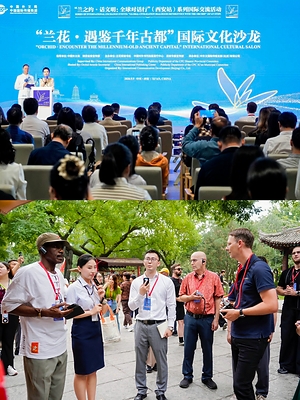
XI’AN, China, Sept. 30, 2026 /PRNewswire/ — An international exchange event in the “Global Civilization Dialogues: Rendezvous with the Orchid” series recently took place in Xi’an. The initiative was held under the guidance of China International Communications Group (CICG) and the Publicity Department of the Shaanxi Provincial Party Committee, and organized by the Orchid Awards Secretariat, the China Center for International Communication Development (CCICD), and the Publicity Department of the Xi’an Municipal Party Committee.

Series of International Exchange Events: 'Global Civilization Dialogues Rendezvous with The Orchid' Xian Stop
Series of International Exchange Events: ‘Global Civilization Dialogues Rendezvous with The Orchid’ Xian Stop

The Orchid Awards is an international cultural prize founded by CICG to recognize foreign individuals and institutions dedicated to strengthening cultural ties between China and the rest of the world. Over 20 guests—among them final-round judges and participants in the Third Orchid Awards, along with social media creators from Cambodia, Germany, Brazil, and the UK—joined a four-day immersive tour of the ancient capital.

The delegation’s first stop was the Xi’an Museum, whose “Ancient Capital Xi’an” exhibit presents a rich trove of relics spanning the Zhou, Qin, Han, and Tang dynasties through the Ming and Qing—charting the history of a city that served as a capital under 13 dynasties. Guests lingered over the displays, absorbing the depth of Chinese civilization.

They then headed to the Mausoleum of the First Qin Emperor and its Terracotta Warriors. Each figure bears a distinct face, and the craftsmanship is remarkable—a vivid portrayal of the Qin army and a valuable source of physical evidence for studying the era. The underground formation left a lasting impression on Chinese and international visitors alike.

After revisiting ancient history, the delegation proceeded to local tech firms to observe China’s manufacturing innovation up close. At LONGi, they learned about the company’s latest strides in solar and energy storage, including industrial applications of AI and solar-powered green hydrogen. They next toured the exhibition hall at BYD’s Xi’an R&D center, learning about the company’s history, global footprint, and core electric vehicle technologies—and seeing firsthand the advances in China’s electric vehicle industry.

During their stay, guests are also scheduled to participate in the “Orchid • Encounter the Millennium-Old Ancient Capital” International Cultural Salon and visit industrial and cultural sites including the Aiju Grain and Oil Industrial Group and the Chang’an Twelve Hours cultural district. These visits offer further opportunities to explore how Xi’an is preserving its heritage, supporting industrial innovation, and opening up to the world—and to use cultural exchange as a bridge for telling China’s story and Xi’an’s story, deepening mutual understanding between China and other nations.

Since the Orchid Awards was inaugurated, the series has traveled to Beijing, Guangzhou, Dunhuang, Chongqing, Chengdu, and Harbin. Through site visits and face-to-face discussions, the Xi’an stop gives international guests an immersive taste of China’s millennia-old cultural heritage—and a firsthand look at the country’s modern vitality. It provides a forum for deepening cultural exchange between China and the world.

Huawei Highlights Continuous Innovation, Securing Competitive Edge Through Technological Breakthroughs


SHENZHEN, CHINA – Media OutReach Newswire – 3 October 2026 – Huawei hosted an international media roundtable today featuring Richard Yu, Executive Director, Chairman of the Investment Review Board, and Chairman of the Board of Directors of the Consumer BG. Yu shared comprehensive insights into Huawei’s consumer business and HarmonyOS ecosystem.

IMG 8638

Richard Yu joined Huawei in 1993, working on early developments like the first-generation program-controlled switch and participating in the establishment of Huawei’s wireless communications business, which started with GSM. Over the past decade, Yu has led Huawei’s consumer business with the vision to deliver a seamless AI life experience to all consumers across five key scenarios: HIMA-powered Smart Travel, HarmonyOS Office, Smart Home, Fitness & Health, and Entertainment, which he said is also the long-term strategy for Huawei’s consumer business over the next 10 years.

Between 2007 and 2025, Huawei invested more than CNY1.8 trillion into R&D shifting from roughly 10% of annual revenue in early years to over 20% recently. Huawei has continued to increase investment into the core technologies of the ICT domain and basic research, which has translated into robust core capabilities, extensive intellectual property, and a vast patent portfolio, and helped with achieving a series of breakthroughs in technological innovation.

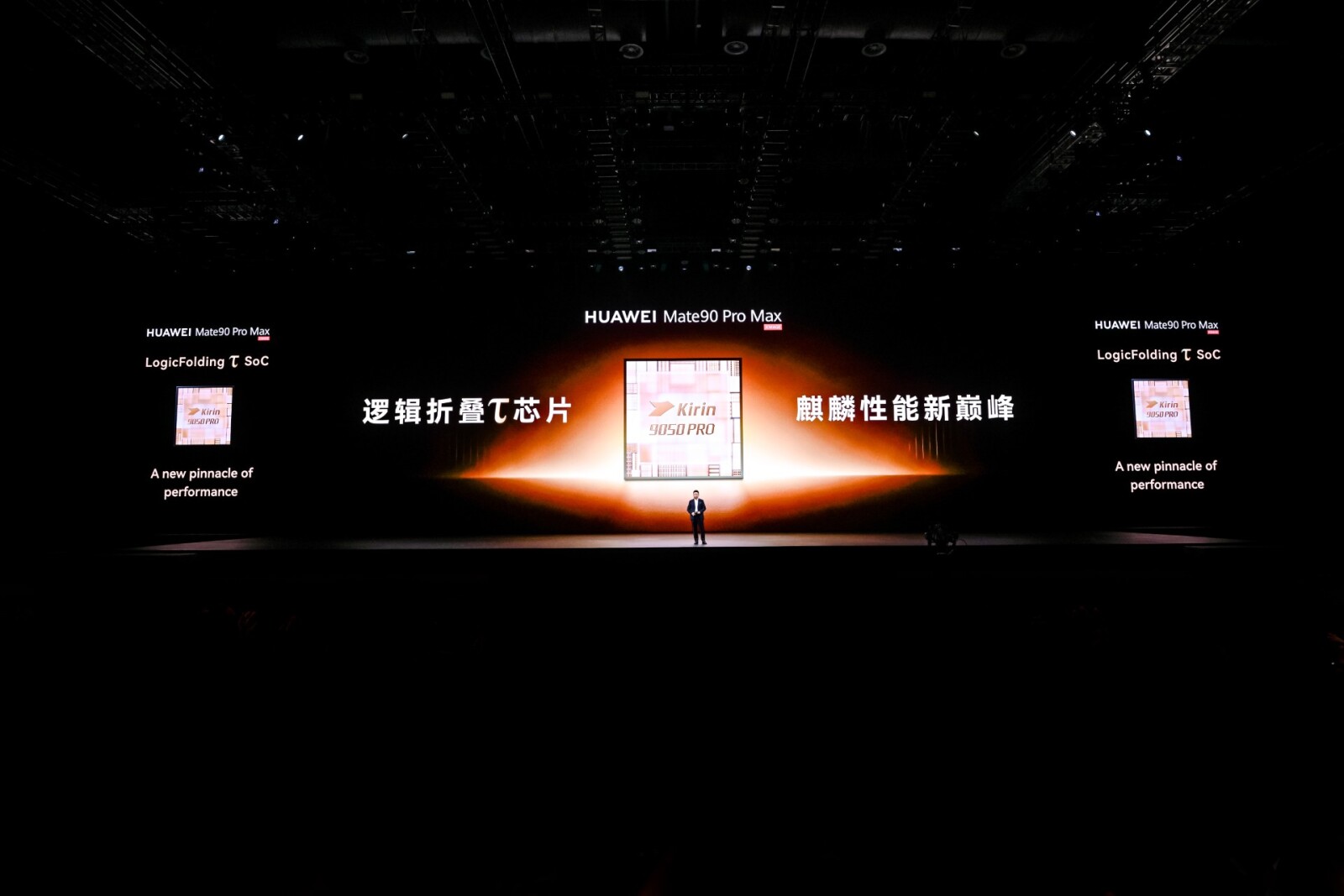
The Mate 90 series smartphones Huawei just launched come with the latest Kirin 9050 Pro chip. The overall device performance is 31% higher than the previous generation. The Balong modem, image sensor processor (ISP), mobile security processor (MSP), Lingxi CPU, Maleoon GPU, and the NPU that adopts Huawei’s Da Vinci architecture for AI processing are all designed by Huawei. They offer higher energy efficiency and deliver much-improved overall system-level performance.

Even though Yu admitted that Huawei has limited access to advanced semiconductor processes, Huawei recently made a new breakthrough in the semiconductor domain – the LogicFolding technology under the Tau Scaling Law. Unveiled by He Tingbo, head of Huawei’s Semiconductor Business Department this May, this technology vertically stacks the logic layers of chips and restructures the circuit layout through inter-layer high-density interconnect to shorten critical paths and reduce latency. This technology was adopted on Kirin 9050 Pro chip, which shows very strong AI processing power. The Mate 90 series powered by this chip can run a 30B MoE on-device AI model.

In the AI domain, Yu talked about the Ascend compute foundation that Huawei provides, by remarking Huawei’s large models called openPangu, AI capabilities for intelligent driving, and HarmonyOS Celia, which is similar to Gemini in the Google Android ecosystem. Huawei is also using AI to improve the O&M of communications network equipment. By combining AI computing power with domestic open-source large models, Huawei’s vision is to help enterprises and industries around the world to become more productive and bringing more convenience to everyone.

In the past years, Huawei has launched a broad series of products and solutions, including smartphones, PCs, tablets, wearables, TWS audio products, Smart TVs, home routers, smart home control solutions, as well as intelligent electric vehicles together with partners. Underlying these products and solutions are Huawei’s chip hardware platform and HarmonyOS – another OS ecosystem after iOS from Apple and Android from Google that Huawei developed to support all the smart devices and smart hardware across all scenarios.

Development of HarmonyOS began in 2019. Before that, Huawei was a major contributor to the Android community as well as the entire Android ecosystem. Now, more than 90 million devices, including smartphones, PCs, and tablets, currently run on HarmonyOS 6 and HarmonyOS 7. This figure is expected to hit the 100 million mark by the end of this year. The number of apps and services in the HarmonyOS ecosystem has already exceeded 450,000. Its global registered developer count has reached 11 million, and Huawei now has over 23,000 app innovation partners. Expressing his special thanks to all partners and developers for their trust and support, Yu also pointed out that Huawei is considering gradually bringing HarmonyOS to the global market in the future.

Globalization is another topic of the conversation. Yu mentioned that Huawei had very good collaboration with many companies from the US, Europe, Japan, South Korea, and Taiwan, delivering huge business value and benefits to those partners. When it comes to the difficulties that Huawei overcame since 2019, Yu said that relying on homegrown technologies and capabilities, Huawei gradually designed its own operating system and developed basic tools and software by themselves, putting a domestic supply chain in place. In 2023, Huawei started to manufacture the chips used by smartphones domestically again. With these chips and HarmonyOS, and by relying on China’s domestic supply chain, materials, and process nodes, Huawei has basically gotten rid of the dependence on US technologies.

While Huawei’s global market share was once No. 1, nowadays it only sells several million units of smartphones outside China every year. However, Yu revealed that Huawei is trying to return to the overseas market step by step.

Taking wearables as an example, Huawei is No. 1 in terms of the market share both in China and globally. Other innovative products such as TWS earphones, are also growing fast and have reached No. 1 in many countries. While Huawei’s tablet and PC business was greatly affected after it was denied access to Windows and Intel x86 chips, the HarmonyOS-based tablets are now performing strongly. Another example would be CPE, which is a mobile router that provides connectivity to the unconnected in remote and rural areas. These products are also very well received across many regions outside China, helping more people connect to the rest of the world and live better lives.

Question: Both the Huawei XT 2 and the two most advanced models of the Mate 90 series use a LogicFolding chip. Will LogicFolding chips be used for more phones in the future? We understand that Huawei’s chip production capacity is still limited. Huawei has launched SuperPoDs, and AI infrastructure is a huge business. They are both very important in China. How do you secure a larger share of the chip supply internally?

Richard Yu: We started introducing the chip that adopts the LogicFolding technology powered by the Tau Scaling Law to the Mate XT 2 tri-fold phone. To answer your question, yes, more of our phones will definitely use these LogicFolding chips in the future.

Currently, the production capacity for advanced semiconductors in China still cannot meet the rapidly growing demand. Huawei’s Ascend chips for the AI domain also use such capacity. But we have developed a requirement plan, which also covers the chip requirements of smartphones.

The sharp price increase for memory components over the past two years has somewhat limited the smartphone sales volume. Even though the production capacity remains tight right now, generally it is sufficient to meet our market shipment needs.

We hope that production capacity will ramp up in China’s semiconductor industry so that we can manufacture more advanced products for consumers in the Chinese market as well as the overseas market in the future.

To read the full Q&A session:
https://www.apmultimedianewsroom.com/multimedia-newsroom/continuous-innovation-securing-our-competitive-edge-through-technological-breakthroughs

Hashtag: #Huawei

The issuer is solely responsible for the content of this announcement.

Govee Turns Up the Spooky With Sarah Michelle Gellar in New Nationwide Halloween Campaign

The horror screen icon stars in Govee’s “Turn Up the Spooky. Slay Halloween.” outdoor lighting campaign, bringing a little Hollywood drama to Halloween at home

LOS ANGELES, Oct. 3, 2026 /PRNewswire/ — Govee, the No. 1 brand for household permanent outdoor lights in the U.S.*, today announced the nationwide launch of its new Halloween campaign, “Turn Up the Spooky. Slay Halloween.”, starring actress and genre icon Sarah Michelle Gellar.

Govee Turns Up the Spooky With Sarah Michelle Gellar in New Nationwide Halloween Campaign

Known for some of the most recognizable horror and supernatural roles of her generation, Gellar brings a fitting dose of Halloween nostalgia to the campaign. In the new TVC, Govee Outdoor Lights help transform an everyday home into a more cinematic Halloween setting, playing with color, atmosphere and a little after-dark drama.

Bringing a Little Hollywood Home for Halloween

A memorable Halloween setup is rarely about a single decoration or light. It is about creating an atmosphere that carries across the entire property.

Govee’s broad outdoor lighting portfolio gives homeowners the flexibility to build that experience from the roofline all the way to the yard. Permanent Outdoor Lights can define the architecture of the home and establish the overall mood, while Outdoor String Lights and Light Bulbs bring color and personality into porches, trees and gathering spaces. Outdoor Wall Lights and Pathway Lights can extend the scene to entrances, walkways and landscaping, adding depth and helping different areas of the exterior feel connected.

Sarah Michelle Gellar also brings her own take on creating atmosphere. “Instead of covering every inch of the exterior in light, choose one architectural or landscape feature to be the focus, such as the roofline, a tree or the front facade,” says Gellar. “Leaving some areas darker will make the lit areas feel more dramatic.”

Beyond Halloween, Govee’s all-occasion outdoor lighting portfolio can evolve with the home throughout the year, shifting from spooky seasonal scenes to holiday celebrations, entertaining and everyday outdoor ambiance.

Set the Scene for a Smart Halloween

Govee’s technology brings those individual lighting layers together into a more coordinated experience.

With DreamView, multiple Govee lights can work together as one connected lighting environment, synchronizing colors and effects across the home and with music for a more immersive experience.

Govee AI Lighting Bot 2.0 makes the creative process more intuitive. Powered by Govee’s AI capabilities, it supports natural interactions through text, voice and image inputs, as well as multi-turn conversations that allow users to describe, refine and personalize their desired lighting experience.

A simple prompt such as “moonlit and mysterious,” “classic and dramatic,” or “playful and family friendly” can become the starting point for a customized Halloween look, making it easier to experiment with trendy colors, effects and seasonal themes while still creating something personal.

“Turn Up the Spooky. Slay Halloween.” is rolling out nationwide now.

To explore Govee Outdoor Lights and create your own Halloween look, visit Govee.com.

*Source: Euromonitor International Co., Ltd., based on the sales value of household permanent outdoor lights in the USA across retail channels in 2025; household permanent outdoor lights refer to lighting fixtures designed for fixed, year-round installation on household building exteriors (such as eaves, facades, and decks); research completed in June 2026.

About Govee

Govee has been revolutionizing the smart living experience with innovative, ambient lighting solutions since 2017. From living spaces, gaming setups, and outdoor areas, Govee’s smart home tech is not just visually stunning, but also functional – transforming small everyday moments into more personalized and brighter engaging lighting experiences. Embracing the idea that users should “Life is Colorful” and push the boundaries of what lighting can do by blending design, and utility. To learn more about Govee, please visit govee.com.

Ractigen Therapeutics Presents Positive First-in-Human Data for RAG-18 at WMS 2026, Establishing Clinical Proof-of-Mechanism for RNA Activation in Duchenne Muscular Dystrophy

  • First clinical evidence demonstrating that a systemically delivered small activating RNA (saRNA) can safely upregulate an endogenous target protein in human skeletal muscle in a monogenic disease.
  • Paired muscle biopsies reveal 3.5- to 5.3-fold increases in sarcolemmal utrophin expression, accompanied by definitive tissue histopathological remodeling
  • Concordant positive trajectories observed across motor and pulmonary functional endpoints
  • Favorable safety and tolerability profile demonstrated, with zero dose-limiting toxicities (DLTs) and zero serious adverse events (SAEs)
  • Cohort 2 (30 mg) fully enrolled

HIROSHIMA, Japan and NANTONG, China, Oct. 3, 2026 /PRNewswire/ — Ractigen Therapeutics, a clinical-stage biotechnology company pioneering RNA activation (RNAa) therapeutics, today presented positive first-in-human clinical data from its ongoing Phase I trial of RAG-18 (NCT07282652) during a Late-Breaking Oral Presentation at the 31st Annual Congress of the World Muscle Society (WMS 2026), held in Hiroshima, Japan.

The data establish the first clinical proof-of-mechanism for RNA activation (RNAa) in a human monogenic disease, demonstrating that a systemically delivered saRNA can safely enter human skeletal muscle and upregulate an endogenous, therapeutically relevant target protein.

The presentation, titled “First-in-human evidence of RNA activation-mediated sarcolemmal utrophin upregulation in Duchenne muscular dystrophy,” was delivered orally by the study’s Principal Investigator, Professor Yi Dai, MD, PhD, Department of Neurology, Peking Union Medical College Hospital (PUMCH), Chinese Academy of Medical Sciences.

For more than two decades, the neuromuscular field has recognized utrophin — a naturally occurring structural relative of dystrophin — as one of the most compelling therapeutic ideas in DMD. Because utrophin can substitute for dystrophin at the muscle membrane regardless of which DMD mutation a patient carries, sufficiently increasing it would represent a mutation-independent approach relevant to the entire patient population. The historical obstacle was never the biology, but the absence of a modality capable of safely switching on endogenous gene transcription directly in human muscle. The data presented today directly demonstrate how RNAa overcomes this longstanding barrier.

RAG-18 is developed on Ractigen’s proprietary RNAa platform and delivered using the company’s Lipid-Conjugated Oligonucleotide (LiCO™) technology as an aqueous saline formulation via monthly intravenous (IV) infusion. It harnesses the cell’s endogenous transcriptional machinery to increase utrophin production without viral vectors or permanent DNA editing. RAG-18 has received Orphan Drug Designation (ODD) and Rare Pediatric Disease Designation (RPDD) from the U.S. Food and Drug Administration (FDA).

Professor Yi Dai, MD, PhD, Principal Investigator, commented:
“In the first three boys treated, we observed a complete and internally consistent chain of evidence: paired muscle biopsies showed utrophin robustly upregulated and correctly localized at the sarcolemma, muscle architecture improved with less fibrosis and fat infiltration, and motor and pulmonary measures held steady or improved over the same window. What is particularly striking is that these three boys carry three different types of DMD mutations, yet all showed signals in the same direction — a clinical illustration of what a mutation-independent strategy means in practice. As a clinician who has cared for patients with neuromuscular disease for many years, being part of this first human validation from mechanism to tissue to function is deeply encouraging.”

Long-Cheng Li, MD, Founder, Chairman and Chief Executive Officer of Ractigen Therapeutics, added:
“The data presented today at WMS establish the first clinical proof-of-mechanism for RNA activation. With rigorous patient-level evidence, we have shown that saRNA can reliably activate an endogenous target gene in human skeletal muscle and drive repair at the tissue level. This is a milestone not only for the RAG-18 program but for the field of RNA medicine, which can now move beyond silencing genes to switching them on. RAG-18 has the potential to become a disease-modifying therapy for patients across all DMD genotypes. With Cohort 2 fully enrolled, we are committed to accelerating clinical development so that this pioneering therapy can reach patients worldwide as soon as possible.”

Key Highlights from the WMS Late-Breaking Presentation (NCT07282652):
The open-label, dose-escalation first-in-human trial is evaluating the safety, tolerability, pharmacodynamics, and exploratory efficacy of RAG-18 in ambulatory boys aged 4–15 with genetically confirmed DMD. The presentation reported multi-dimensional data through Day 169 from Cohort 1 (15 mg monthly IV, n=3):

  • Favorable Safety & Tolerability: There were zero dose-limiting toxicities (DLTs), zero serious adverse events (SAEs), and no Grade ≥3 treatment-emergent adverse events (TEAEs). All reported adverse events were mild (Grade 1–2), transient, and resolved spontaneously without medical intervention. No dose interruptions, reductions, or discontinuations occurred.
  • Robust & Precise Sarcolemmal Target Engagement: Paired contralateral muscle biopsies at Day 113 analyzed via whole-field quantitative immunofluorescence (IF) revealed a 3.5- to 5.3-fold upregulation of sarcolemmal utrophin signal density in mature myofibers (and a 4.1- to 4.7-fold increase in regenerating myofibers) compared to pre-dose baseline. Co-staining with laminin confirmed precise and uniform localization to the sarcolemma.
  • Histopathological Structural Remodeling: Morphometric analysis at Day 113 showed increased mean myofiber cross-sectional area (+5% to +15%) and mean myofiber diameter (+5.34 μm to +27.50 μm) without evidence of drug-induced myonecrosis or inflammation. Muscle fat fraction decreased by 3% to 10%, indicating tissue stabilization.
  • Reduction of Active Tissue Edema: Quantitative muscle MRI (qMRI) revealed reductions in thigh muscle T2 relaxation times (up to −11.6% at Day 169), consistent with the resolution of active muscle edema and inflammation.
  • Positive Functional & Pulmonary Trajectories:
    • Pulmonary Signals:  All three participants showed positive numerical trends in spirometric parameters over 24 weeks, with percent predicted forced vital capacity (FVC%) increasing by +2.8% to +41.0% and forced expiratory volume (FEV1%) by +2.8% to +34.0%.
    • Ambulatory Trajectories: In an early-ambulatory participant (age 6.8), 6-minute walk distance (6MWD) improved by +36.5 m. In a late-ambulatory participant (age 12.7), 6MWD remained preserved (−1.0 m delta) alongside improved 4-stair climb time. Participant 1 (age 7.3) experienced a decline of −62.5 m in 6MWD. NSAA scores declined uniformly by −3 points across all three participants, underscoring the heterogeneous and progressive nature of DMD motor function.
    • Cardiac Function: Left ventricular ejection fraction (LVEF) remained within normal limits (≥55%) across all participants throughout the 24-week follow-up.

Clinical Program Update
Cohort 2 (30 mg monthly IV) is fully enrolled and safety follow-up is ongoing as planned.

About Duchenne Muscular Dystrophy (DMD)
DMD is a rare, severe, X-linked progressive neuromuscular disorder caused by mutations in the DMD gene that result in deficiency or absence of dystrophin, a protein essential to protecting muscle fibers from contraction-induced injury. Affected boys experience progressive muscle degeneration, loss of ambulation, respiratory insufficiency and cardiomyopathy. Utrophin is a structural and functional homolog of dystrophin, highly expressed during fetal development; increasing endogenous utrophin is a mutation-agnostic strategy with the theoretical potential to be relevant to patients across all DMD genotypes.

About RAG-18
RAG-18 is an investigational small activating RNA (saRNA) developed on Ractigen’s proprietary RNAa platform. Administered systemically, RAG-18 targets regulatory regions of the human UTRN gene to induce nuclear, Argonaute-dependent transcriptional activation, increasing endogenous utrophin production. RAG-18 is currently being evaluated in an ongoing first-in-human, open-label, dose-escalation clinical trial (NCT07282652).

About Ractigen Therapeutics
Ractigen Therapeutics is a clinical-stage biopharmaceutical company innovating next-generation RNA therapeutics, with a primary focus on small activating RNAs (saRNAs) developed through its clinically validated RNA activation (RNAa) technology. Leveraging proprietary delivery platforms such as SCAD™, LiCO™, and GLORY™, Ractigen is advancing a robust pipeline addressing unmet medical needs in oncology, neurological diseases, and genetic disorders. Its versatile technologies also enable the rapid development of RNA-based solutions, including siRNAs, where applicable, to target life-threatening, fast-progressing conditions such as those in the CNS. Committed to scientific excellence and patient-centered innovation, Ractigen strives to transform healthcare through the power of RNA therapeutics. For more information, visit www.ractigen.com, and follow us on X and LinkedIn.