Home Blog Page 2552

Global-local alliance powers a new era in Japan’s geothermal energy

Swedish company Baseload Capital today announced a strategic investment in Japanese geothermal energy developer Furusato Netsuden. The partnership aims to unlock Japan’s untapped geothermal potential and build a replicable model for sustainable energy development worldwide.

STOCKHOLM, Sept. 1, 2025 /PRNewswire/ — Combining a global investment portfolio with a community-rooted business model, this strategic partnership aims to scale clean, renewable energy respectfully, revitalizing local economies while honoring cultural heritage.

Furusato Netsuden brings deep local roots, trust, and operational expertise to the partnership, while Baseload Capital contributes international investment, global reach and the power of committed owners such as Google and Breakthrough Energy Ventures.

Japan’s untapped geothermal power

Japan has the third largest geothermal potential globally, with an estimated 23 GW, yet its current installed capacity is only 576 MW. This represents a major untapped opportunity for a country whose Green Transformation (GX) Strategy aims for net-zero emissions by 2050. Geothermal energy is clean, always-on, and space-efficient. That makes it an ideal solution for a mountainous, densely populated nation with high reliance on energy imports and growing clean-energy demand from AI and data centers.

Japan’s geothermal development has been slow, in part, because there’s no common business model that enables communities to share in the benefits. However, Furusato Netsuden and its local partners have developed a system to ensure communities benefit directly from geothermal energy.

The Waita model – a ground-breaking approach

In 2011, residents of the Waita area in Oguni Town, Kumamoto Prefecture, formed the limited liability company Waita-kai, which is owned by the community. In partnership with Furusato Netsuden, they set out to develop geothermal power together in a way that would revitalize the community. The name Furusato Netsuden combines the words for “hometown”, “heat” and “electricity”.

A respectful and collaborative business model

This model protects local land rights, ensures development is carried out on a scale appropriate for the area, and guarantees some of the revenues are re-invested in the community. Furusato Netsuden and Waita-kai regularly hold meetings with residents to share updates on operations, development, and environmental monitoring.

A growing geothermal portfolio

  • In 2015, the 2 MW capacity Waita No. 1 geothermal power plant began commercial operation.
  • Waita No. 2, currently under construction, is expected to deliver 5 MW and go online in March 2026.
  • In addition to the 7MW currently operating or under construction in Waita, the overall portfolio includes a tangible pipeline of projects across Japan that are expected to deliver an additional 30+ MW over the next five to ten years.

Alexander Helling, CEO, Baseload Capital

“Furusato Netsuden has successfully proven that community-based geothermal development works. Through this first investment, we’re proud and humbled to partner with them in scaling this approach, combining local engagement with sustainable energy development. Together, we aim to help Japan reach its 1.5 GW geothermal goal and strengthen national energy resilience.”

Kazuyuki Akaishi, Representative Director, Furusato Netsuden

 “Since 2020, we’ve built a foundation of trust with Baseload Capital, and seen that they are a committed, long-term partner in Japan’s energy transition. Their role as a strategic investor provides financial stability for our current and future projects. They also bring valuable global resources, including technology, business insights and an international network of investors and energy partners.”

Carmichael Roberts, Breakthrough Energy Ventures
“Geothermal is one of the largest untapped opportunities in the global clean energy transition—providing reliable, carbon-free heat and power that can strengthen energy security and serve communities worldwide,” said Carmichael Roberts, Breakthrough Energy Ventures. “Baseload Capital is demonstrating how to unlock this potential by working hand in hand with trusted local partners like Furusato Netsuden. This partnership is a model for how communities across the globe can harness geothermal power.”

The goal of this partnership is to support Japan’s 7th Strategic Energy Plan and GX (Green Transformation) while establishing a scalable, community-focused blueprint for clean energy development – creating global impact with local roots.

About Baseload Capital 
We lead partnerships to scale up geothermal energy: a 24/7 available source of clean power and heat. Our global portfolio de-risks investments, expands the market and accelerates learnings in collaboration with strong owners and partners. 

Our parent company Baseload Capital invests in geothermal projects worldwide. Our subsidiaries, the Baseload Power companies, build, commission and operate geothermal heat and power plants funded by Baseload Capital. 

About Furusato Netsuden

Our mission is to promote a geothermal power generation model that can coexist with the local community and revitalize rural areas, while also effectively utilizing geothermal resources in the carbon-neutral era.

Furusato Netsuden was established in 2012. Apart from our existing power plant and project pipeline, we are also advancing development in other regions in Japan and aim to expand this community-friendly model nationwide alongside Baseload Capital and our existing shareholders, including NTT Anode Energy Corporation, Rezil Inc., Matsuoka Kenki Co., Ltd., and The Kansai Electric Power Co., Inc. (Furusato Netsuden Website: https://furusato-nd.co.jp/)

CONTACT:

For more information, please contact:
Kristina Hagström-Ilievska CMO, Baseload Capital
kristina.hagstrom.ilievska@baseloadcap.com
Tel: +46 (0) 732330039

This information was brought to you by Cision http://news.cision.com

https://news.cision.com/baseload-capital-sweden-ab/r/global-local-alliance-powers-a-new-era-in-japan-s-geothermal-energy,c4227852

The following files are available for download:

https://mb.cision.com/Main/17753/4227852/3641893.pdf

Baseload x Furusato 2025 – FINAL press release-2

https://mb.cision.com/Public/17753/4227852/99ad3940ec26f985.docx

photo captions

https://news.cision.com/baseload-capital-sweden-ab/i/1-baseload-capital-s-leadership-team-from-meeting-with-furusato-netsuden-staff-at-oguni-office-1,c3465827

1 Baseload Capital s leadership team from meeting with Furusato Netsuden staff at Oguni office 1

https://news.cision.com/baseload-capital-sweden-ab/i/2-baseload-capital-s-leadership-team-from-meeting-with-furusato-netsuden-staff-at-oguni-office-2,c3465828

2 Baseload Capital s leadership team from meeting with Furusato Netsuden staff at Oguni office 2

https://news.cision.com/baseload-capital-sweden-ab/i/1-1,c3465829

1 1

https://news.cision.com/baseload-capital-sweden-ab/i/2-2,c3465830

2 2

https://news.cision.com/baseload-capital-sweden-ab/i/3-ceo-of-baseload-capital-and-representative-director-of-furusato-netsuden-at-the-waita-power-plant,c3465831

3 CEO of Baseload Capital and Representative Director of Furusato Netsuden at the Waita Power Plant

https://news.cision.com/baseload-capital-sweden-ab/i/3-ceo,c3465832

3 CEO

https://news.cision.com/baseload-capital-sweden-ab/i/4-ceo-of-baseload-capital-and-representative-director-of-furusato-netsuden-in-oguni-town-japan,c3465833

4 CEO of Baseload Capital and Representative Director of Furusato Netsuden in Oguni Town Japan

https://news.cision.com/baseload-capital-sweden-ab/i/4-ceo,c3465834

4 CEO

https://news.cision.com/baseload-capital-sweden-ab/i/5-baseload-capital-and-furusato-netsuden-meeting-with-johanna-lindquist-deputy-head-of-mission-at-th,c3465835

5 Baseload Capital and Furusato Netsuden meeting with Johanna Lindquist Deputy Head of Mission at the Embassy of Sweden

https://news.cision.com/baseload-capital-sweden-ab/i/5,c3465836

5

https://news.cision.com/baseload-capital-sweden-ab/i/6-baseload-capital-team-with-representative-director-of-furusato-netsuden-at-the-oguni-townhall-japa,c3465837

6 Baseload Capital team with Representative Director of Furusato Netsuden at the Oguni Townhall Japan

https://news.cision.com/baseload-capital-sweden-ab/i/6,c3465838

6

https://news.cision.com/baseload-capital-sweden-ab/i/7-shareholder-meetings-furusato-netsuden-baseload-capital-ntt-anode-energy-corporation-rezil-matsuok,c3465839

7 Shareholder meetings Furusato Netsuden Baseload Capital NTT Anode Energy Corporation Rezil Matsuoka Kenki and KEPCO

https://news.cision.com/baseload-capital-sweden-ab/i/7-ntt,c3465840

7 NTT

https://news.cision.com/baseload-capital-sweden-ab/i/8-waita-power-plant-japan,c3465841

8 Waita Power Plant Japan

https://news.cision.com/baseload-capital-sweden-ab/i/8-1,c3465842

8 1

https://news.cision.com/baseload-capital-sweden-ab/i/furusatoxbaseload-pressr-jp-v3,c3465864

FurusatoxBaseload pressr jp v3

https://news.cision.com/baseload-capital-sweden-ab/i/baseloadxfurusato-pressrelease-v2,c3465865

BaseloadxFurusato pressrelease v2

Remembering a forgotten World War II ally

BEIJING, Sept. 2, 2025 /PRNewswire/ — In his book Forgotten Ally: China’s World War II, 1937-1945, Rana Mitter, British historian and professor of U.S.-Asia relations at the Kennedy School of Government, Harvard University, offers a deeply researched account of China’s war against Japanese aggression in the 1930s and 1940s and the country’s long-overlooked role in the global fight against fascism. 

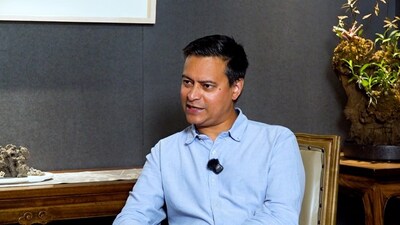
Harvard professor of U.S.-Asia relations and British historian Rana Mitter in an interview with Beijing Review (YIN KANG)

In an exclusive interview with Beijing Review reporters Peng Jiawei and Tao Xing, Mitter discusses China’s place among the Allies, how the war reshaped the country’s international standing, and why this chapter of history remains underrepresented and why it matters now more than ever. Edited excerpts from their conversation follow:  

Beijing Review: What made you want to write about China’s role in World War II (WWII)? And why did you choose Forgotten Ally as the title of your book? 

Rana Mitter: I use Forgotten Ally as the title–technically, it is the American title–for the book quite deliberately. Because if you ask most Westerners who the major Allied powers were, they would probably say the United States, the Soviet Union and the United Kingdom. 

But they might not remember that China was not only one of the Allied powers, but actually the first–if you count the beginning of the war in Asia, before it started in Europe. 

In what ways was China’s wartime experience transformative for the world?

To better understand the relevance of China, I would point people to the year 1938. Why 1938? First of all, for most people who consider the war to have begun in Europe in 1939, it’s important to remember that after the Marco Polo Bridge Incident, which occurred just outside Beijing on July 7, 1937, China and Japan quickly escalated into an all-out war. 

What was the country’s situation at that point? It had no foreign allies, and most people, including many foreign diplomats from Western countries, believed its case was hopeless and China stood little chance of defeating the Japanese. 

Remember, most of China’s great heartland cities, including Beijing, known in those days as Beiping, Shanghai, Nanjing and Guangzhou, were essentially under Japanese occupation, and it seemed only a matter of time before Japan would conquer the rest of China. 

In hindsight, continuing the fight appears to have been the right decision, as China ultimately became one of the Allied powers, and the Allies did go on to win the war. But in 1938, choosing to fight rather than striking a deal with Japan was a high-stakes decision. 

That is why it is worth remembering that had China not continued to hold on at that moment, the course of the war in Asia could have unfolded very differently. And with it, the trajectory of WWII–including the fight against Hitler in Europe–might have looked very different. 

How did China’s wartime experience reshape its role on the global stage?  

I would say that WWII was the time when China shifted from being a semi-colonized victim of imperialism to being an independent state and one of the makers of global orders. 

A clear example of this transformation came in 1945, when China sent a delegation to San Francisco to sign the UN Charter. This essentially paved the way for China to secure one of the five permanent seats on the UN Security Council, alongside the UK, the Soviet Union, the U.S. and France. 

My research is now moving into what I call the post-war period, where China began actively participating in the work of the UN. During this time, a new global economic order was also taking shape with the creation of institutions such as the International Monetary Fund, the World Bank and other key bodies, where China also began to assume a more important role. 

Why is it important to revisit and bring this chapter of history back into focus?  

I do think Western perceptions have changed–and are continuing to change. If you visit, for example, the National WWII Museum in New Orleans, the U.S., or the Imperial War Museum in London, the UK, you will now find displays that speak in much greater depth about China’s wartime role. I don’t think those displays would have existed 20 or 25 years ago. 

In major global histories of the war, China’s role is now mentioned much more prominently as well. However, there is still a long way to go. China’s wartime experience is just still less well-covered in much of the outside world than other major theaters such as Western Europe, North Africa and the Pacific. 

It is impossible to make sense of today’s rapidly changing global order without understanding the part China played in shaping it–a role that stretches back as far as the 1930s and 1940s. China was not only involved in the formation of key institutions, such as the UN, but also a key wartime ally whose resistance helped keep an Asian front open against Japan at a time when it would be easier to surrender. 

So even in a very different age today, 80 years after the end of WWII, it is important to remember China’s role–and to understand the many complex, and in many ways still under-examined, aspects of that history, which continue to call for further historical study and reflection. 


Vietnam Tells Its 80-Year Journey at a World Top 10 Exhibition Venue

As the first event held at the newly inaugurated Vietnam Exposition Center in Hanoi, the exhibition titled “80 Years of Independence – Freedom – Happiness” has become a symbol of a modern, ambitious, and globally engaged Vietnam.


HANOI, VIETNAM – Media OutReach Newswire – 2 September 2025 Anyone who finds themselves in Hanoi these days can sense that history is not just something written on faded pages. The memory of President Ho Chi Minh reading Vietnam’s Declaration of Independence before a crowd of half a million people at Ba Dinh Square in Hanoi on September 2, 1945, remains vivid in the national consciousness. That moment opened a new chapter for Vietnam after decades of colonial rule.

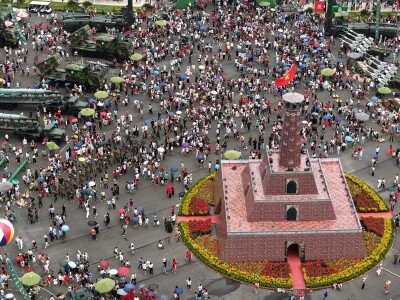
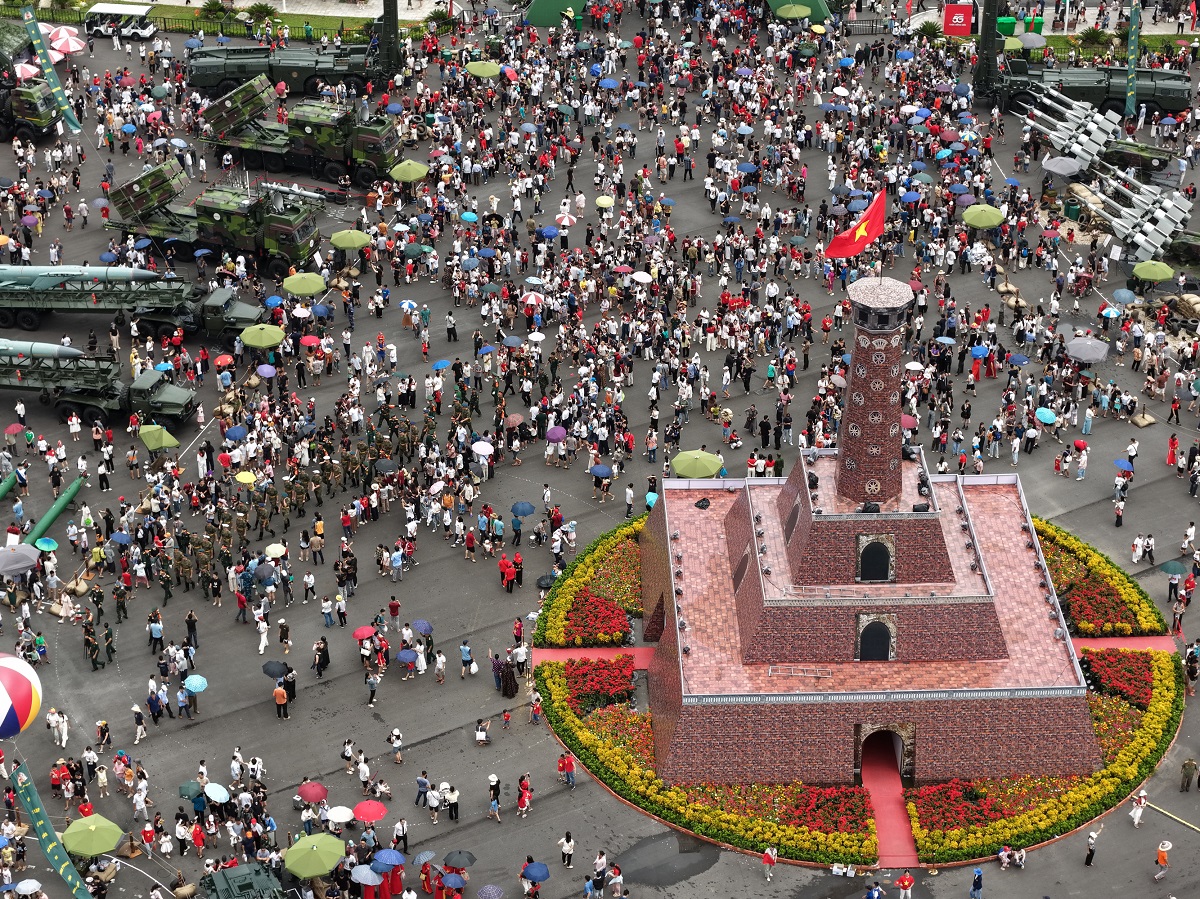
The Vietnam Exposition Center in Hanoi attracted hundreds of thousands of visitors

From a war-torn and impoverished country, Vietnam has quietly navigated many turning points. With determination and resilience, the nation has gradually found its place in the world, contributing its own voice to the global chorus.

This year’s 80th Independence Day is not just a time for celebration but also a time to look back at Vietnam’s journey. Now, that story is being told in a new way at the “80 Years of Independence – Freedom – Happiness” exhibition, taking place at the new Vietnam Exposition Center in Dong Anh, just outside central Hanoi.

A Living Portrait of Eight Decades

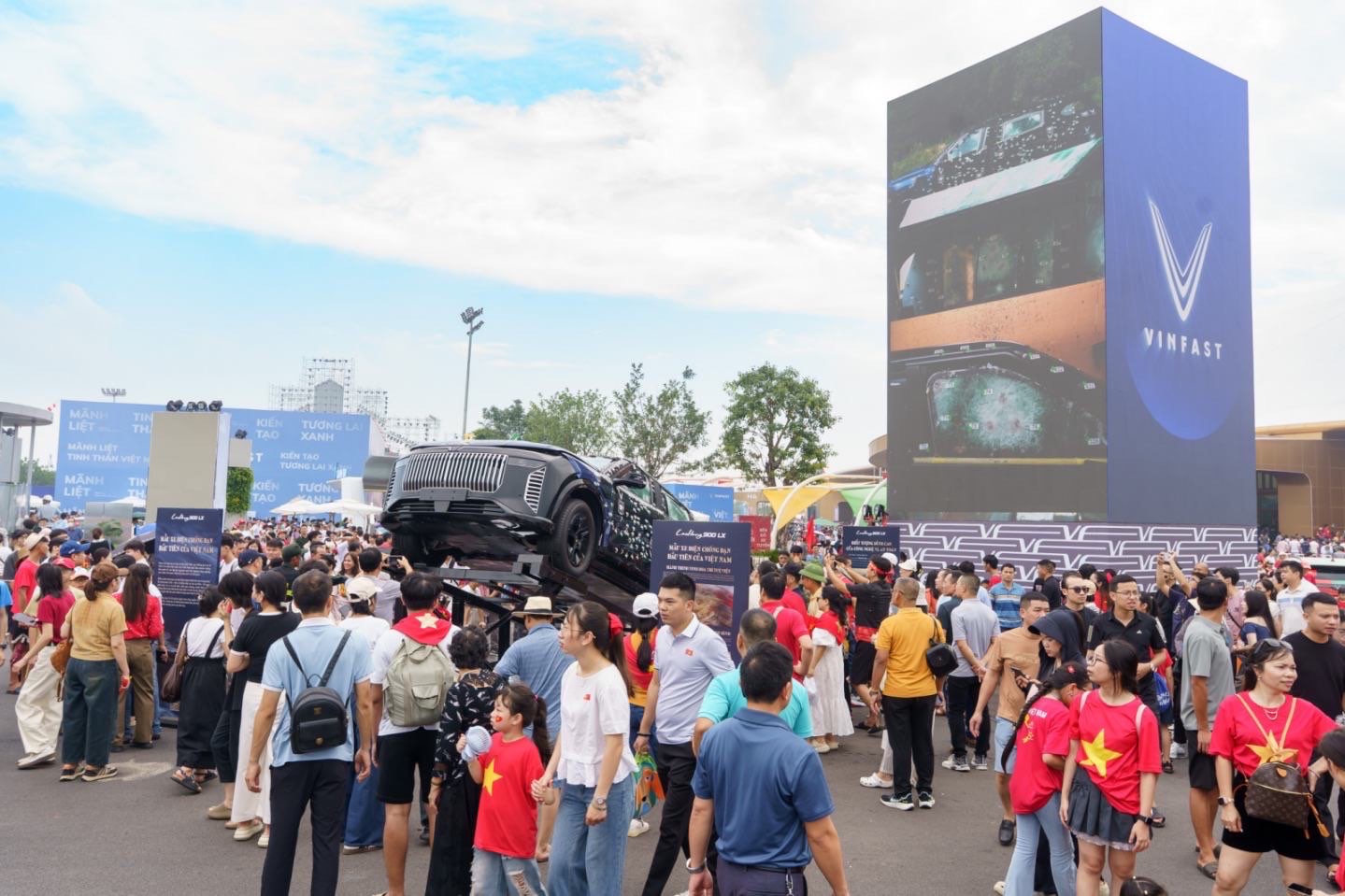
In late August, crowds from across Vietnam flocked to visit the Vietnam Exposition Center, a project by Vingroup, the nation’s largest private conglomerate by both size and tax contributions, to take part in the grand celebration of Vietnam’s 80th National Day. The exhibition features more than 200 indoor and outdoor displays, weaving together a vivid, multi-dimensional portrait of Vietnam’s transformation over the past eighty years.

The exhibition showcases not only Vietnam’s achievements in economics, technology, defense, and education, but also highlights everyday stories of its land and people—simple yet proud moments that reflects the nation’s steady progress, powered by countless individual efforts.

What sets this exhibition apart is its use of virtual reality, digital models, and interactive AR/VR presentations, allowing visitors to experience history as if they were truly there. Both indoor and outdoor spaces are packed, with people searching for their own special view within the grand setting.

This is more than just a commemorative event. The exhibition is a clear statement that Vietnam is moving forward—open to the world, proud of its identity, and brimming with creativity.

Photo2.jpg

A Place Where Ambition Meets Opportunity

Sometimes, the medium is just as important as the message itself. And the stage a nation chooses for its story can reveal its aspirations. Seen from this perspective, the Vietnam Exposition Center is more than Southeast Asia’s largest exhibition complex—it is a symbol of Vietnam’s long-term vision for integration and renewal. More than that, the Center bears the hallmark of Vingroup as a strategic brand. With its forward-looking orientation, it is set to become a bridge connecting Vietnamese businesses with the global community through international-scale exhibitions, trade fairs, and major events.

From now on, this will be more than a venue for major exhibitions. It is set to become a new hub for Vietnam’s event industry, welcoming the fresh energy of international integration: global music festivals, AI forums, community marathons, conferences—a place where ideas, initiatives, and friendships can flourish.

Few people know that to complete the center in time for National Day on September 2, nearly 3,000 workers and engineers worked around the clock. Heavy-duty cranes and cutting-edge machinery from across the country converged on the site. Over more than a year, the project’s owner, Vingroup led a race against time to keep its promise to history and the hopes of many generations. The inauguration coincided with Vietnam’s August Revolution anniversary, and the center was awarded the First-Class Labor Medal, honoring the spirit of daring to dream and daring to deliver.

Many may see this exhibition as a chance to reflect on the past. But on a deeper level, both the exhibition and the Vietnam Exposition Center are a real test of Vietnam’s ability to connect and engage with the world today.

Once standing on the sidelines, Vietnam now confidently invites international partners to share in its achievements and discuss topics like green development, digital transformation, culture, and creativity. With a packed schedule of events and an expected tens of millions of visitors, this space promises to be a gateway for cooperation, investment, and learning.

This is also a national stage: Every festival, art show, sporting event, or global forum held here is a chance to showcase a welcoming, open Vietnam. Here, the power of culture and hospitality will resonate, spreading further than any grand display.

Hashtag: #Vingroup

The issuer is solely responsible for the content of this announcement.

smart Confirms Reinvention of Iconic City Car

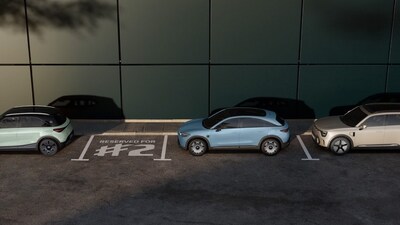
The All-Electric smart #2 Will Premiere in 2026

  • Successful feasibility completion of “project: two” leads to final development of the smart #2 as a new all-electric city car.
  • The smart #2 is styled by Mercedes-Benz and will be built on smart’s own all-new proprietary architecture for ultra-compact vehicles.
  • The new addition to the product portfolio will be launched in China, Europe, and other selected global markets, with plans to premiere in late 2026.

HANGZHOU, China, Sept. 2, 2025 /PRNewswire/ — smart has made a big decision in favor of a small vehicle: The premium intelligent electric automotive brand will create an all-new city two-seater. The smart #2 will extend the product portfolio of the company with an ultra-compact vehicle in the A-segment, marking smart’s return to the segment it defined. The new all-electric model will integrate mindful technology solutions while evolving the unique characteristics that made the original smart fortwo an urban icon. With the smart #2 set to lineup alongside the smart #1, #3, and #5, the inventor of the original city car underlines its commitment to diverse customer needs – proving that smart comes in many forms. 

smart #2 will be an all-electric two-seater city car

The smart #2 is styled by Mercedes-Benz Design and will be built on all-new proprietary architecture for ultra-compact vehicles, developed by smart’s in-house R&D team. Featuring new technology solutions for its segment, the model is currently in its final design and development phase and will be produced in China. The all-new smart #2 will be launched in China, Europe, and other selected global markets, with plans to premiere in late 2026.

smart #2 will expand the brand‘s portfolio to the A-segment

Mr. Tong Xiangbei, Global CEO of smart, said: “I’m thrilled to confirm a new two-seater smart – the smart #2. Developing an ultra-compact vehicle on an entirely new all-electric architecture is far more complex than creating a larger car. But now, we’re ready. Thanks to the unwavering support of our shareholders, we’ve strengthened our production and development capabilities and successfully renewed our brand and product lineup. It’s the perfect moment to reinvent our iconic city car.”

Ms. Mandy Zhang, Global CMO of smart, said: “27 years ago, the first smart fortwo took the world by storm – becoming an icon for both the brand and the industry. Loved by over two million customers worldwide, our original city car stood as a solution for urban mobility and a symbol of urban culture. With our new smart #2, we are responding to the market’s enthusiasm with an all-electric two-seater that blends smart’s cutting-edge technology and latest design philosophy into our iconic concept. The smart two-seater is reborn.”

Following the successful feasibility check of the smart internal “project: two”, the company is preparing to premiere the new model in late 2026. Building on the successful introductions of the smart #1, #3, and #5, as well as the upcoming launch of the smart #5 EHD (Electric Hybrid Drive) in mainland China, the smart #2 will expand the brand’s portfolio in a segment that has special meaning for smart and and its customers. smart will thus cover all the key requirements of modern mobility, from agile city cars to premium mid-range SUVs.

With #2, smart returns to the segment it defined

-End-

Contact

Jack Bailey

jack.bailey@smart.com

About smart

Since the birth of the brand in the 1990s, smart has always maintained the vision of exploring the best solutions for future urban mobility. In late 2019, Mercedes-Benz AG and Zhejiang Geely Holding Group officially established smart global joint venture.

From 2019 to 2024, after the comprehensive renewal of its brand, products, and business model, smart successfully achieved the strategic objectives set for its initial five-year phase. Adhering steadfastly to the “ChinaEurope, Dual Home” global development strategy, smart has transformed into a leading premium intelligent electric automotive brand. It now boasts an expanding product matrix and a global footprint spanning around 40 countries and regions. In 2025, smart aims to boost its global business operations.

GameChange Solar expands into New Zealand with Bright Fern Energy’s Dannevirke Solar Farm

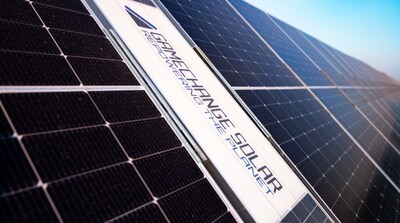
SYDNEY, Sept. 2, 2025 /PRNewswire/ — GameChange Solar, a leading global supplier of solar tracker and fixed-tilt racking technology, announced that it has secured its first solar tracker project in New Zealand with Bright Fern Energy’s upcoming Dannevirke Solar Farm. The 23 MWp utility-scale project marks a key milestone in GameChange Solar’s footprint in Oceania, expanding its tracker presence into a new geography with locally adapted solutions. Bright Fern Energy is a cornerstone customer for GameChange Solar in the New Zealand market.

GameChange Solar expands its footprint into New Zealand with its Genius Tracker systems

The project will feature GameChange Solar’s Genius Tracker™ 1P system with a four-string configuration and integrated SpeedClamp™ technology, designed to reduce module installation time and costs. This will be the first deployment of speed clamps in the region. The system is also equipped with HailStow™ functionality, which tilts modules to a safer angle during hail events, helping to mitigate potential damage and reduce insurance premiums. GameChange Solar’s early engineering involvement, particularly the detailed cut and fill assessment, was a key differentiator in optimising site design and reducing overall project costs.

“GameChange Solar brought engineering insight, experience, and a clear understanding of project execution from an early stage in the process,” said Cassidy Prent, acting Chief Executive Officer, Bright Fern Energy. “They aligned with our technical priorities and were able to provide solutions tailored to our site conditions. We see them as a strong partner for this project.”

Located near the town of Dannevirke, the project is expected to be commissioned by March 2026. It represents the first of three fully consented projects that Bright Fern Energy will be taking through construction over the next 18 months.

“Our collaboration with Bright Fern Energy is an important step in strengthening our presence in New Zealand and across Oceania,” said Vaibhav Joshi, Managing Director – Oceania, GameChange Solar. “Our technology is designed to adapt to varied terrain and weather conditions, enabling more efficient builds and long-term reliability for utility-scale projects in this region. This project reflects our ability to align with developer objectives and deliver solutions that perform both in design and on the ground.”

About GameChange Solar

GameChange Solar is one of the top three global providers of solar tracker solutions used in utility-scale and ground-mounted distributed generation solar projects around the world. We have delivered over 48 GW of solar tracker and fixed tilt systems that combine fast installation, bankable quality, and unbeatable value through superior engineering, innovative design, and high-volume manufacturing. Our products enable solar panels at power plants to follow the sun’s movement across the sky and optimize plant performance while protecting the array from damaging weather conditions.

For more information about GameChange Solar and its solar tracking solutions, visit www.gamechangesolar.com.

Media Contact

Nisha Wadhwani

Lead – Marketing, GameChange Solar

nisha.wadhwani@gamechangesolar.com

About Bright Fern Energy

Bright Fern Energy is a New Zealand based vertically integrated renewable energy platform focused on the development, construction, long-term ownership and operation of utility scale solar and battery energy storage systems. Backed by private equity and led by an experienced team of renewable energy professionals, Bright Fern Energy has a pipeline of projects exceeding 550MW in development across the North and South Islands. 

Media Contact

Cassidy Prent
Acting Chief Executive Officer, Bright Fern Energy
cassidy@brightfern.energy


Aker Horizons ASA: Update on merger with Aker

FORNEBU, Norway, Sept. 2, 2025 /PRNewswire/ — Reference is made to the announcement made by Aker Horizons ASA (the “Company” or “Aker Horizons“) on 9 May 2025 whereby the Company announced a merger between its subsidiary, Aker Horizons Holding AS (“AKHH“), and AKH HoldCo AS (“AKH HoldCo“), a subsidiary of Aker ASA (the “Merger“). Reference is also made to the extraordinary general meeting in the Company held on 6 June 2025 (“EGM“) where it among other things was resolved to distribute all of the Company’s shares in AKHH as a dividend in-kind (the “Dividend Shares“) to the Company’s shareholders in order to enable the Company’s shareholders to benefit directly from the Merger consideration.

The creditor notice period for the Merger expired on 17 July 2025. The Company’s board of directors has, in accordance with the EGM’s resolution, concluded that all conditions for completion of the distribution of the Dividend Shares have been met and decided that the Dividend Shares shall be distributed to the Company’s shareholders as of 4 September 2025, as registered in the Company’s shareholder register in the VPS on 8 September 2025.

Following the distribution of the Dividend Shares, all conditions for completion of the Merger are satisfied, and the Merger is on this basis expected to be completed during the first half of September 2025.

Shareholders in Aker Horizons (other than AKH HoldCo as the acquiring company in the Merger) will upon completion of the Merger receive merger consideration in the form of NOK 0.267963 in cash and 0.001898 shares in Aker ASA for each share owned in Aker Horizons. Fractions of Aker ASA consideration shares will not be allotted in the Merger. For each shareholder the number of Aker ASA shares will be rounded down to each whole number, or to zero shares. Excess shares, which because of this round down will not be allotted to eligible shareholders, will be issued to, and sold by, DNB Bank ASA according to instructions from Aker ASA at the expense and risk of the beneficiaries with a proportionate distribution of net sales proceeds among the shareholders who have the number of consideration shares rounded off. The Merger consideration shares are expected to be delivered to the eligible Aker Horizons shareholders’ VPS account and the Merger cash consideration is expected to be paid out to such shareholders on or about 12 September 2025.

Since the Merger is between AKHH and AKH HoldCo, shareholders in the Company will retain their Aker Horizons shares, in addition to the allotted Merger consideration shares in Aker ASA, following completion of the Merger. For more information on Aker ASA, please visit www.akerasa.com.

After completion of the merger, Aker Horizons will have a cash position of approximately NOK 20 million, NOK 1.6 billion in convertible debt and a corresponding receivable from AKHH and the Company will remain listed on the Oslo Stock Exchange. The Board will work on defining Aker Horizons’ future strategy and structure following completion of the Merger and will revert with an update once the Company’s board of directors has concluded in this respect.

For further information:

Investor Relations:

Jonas Gamre
Mobile: +47 97 11 82 92
E-mail: jonas.gamre@akerhorizons.com

Media:

Mats Ektvedt
Mobile: +47 41 42 33 28
E-mail: mats.ektvedt@corporatecommunications.no

This information is subject to disclosure requirements pursuant to Section 5-12 of the Norwegian Securities Trading Act.

This information was brought to you by Cision http://news.cision.com

https://news.cision.com/aker-horizons/r/aker-horizons-asa–update-on-merger-with-aker,c4227935


Decoding Yucun: How a Village’s Inspiring Evolution Illustrating China’s Green Growth Philosophy is showcased on National Ecology Day

HUZHOU, CHINA – Media OutReach Newswire – 2 September 2025 – A series of activities highlighting ecological progress were held on August 15th as the country embraces its third National Ecology Day. The focus is on protecting the ecological environment, addressing climate change and how China’s meteorological departments are taking action. This year it was Yucun Village, nestled in Anji County of Zhejiang Province in eastern China that took center-stage, becoming the most talked-about village in the country during the period.

This year marks the 20th anniversary of the pivotal concept “Lucid waters and lush mountains are invaluable assets”—a guiding principle that has steered China’s green transition. Visitors from across the globe have flocked to this scenic village of Yucun where the concept was born, eager to trace the evolution of China’s economy from a resource-driven model to one centered on sustainability.

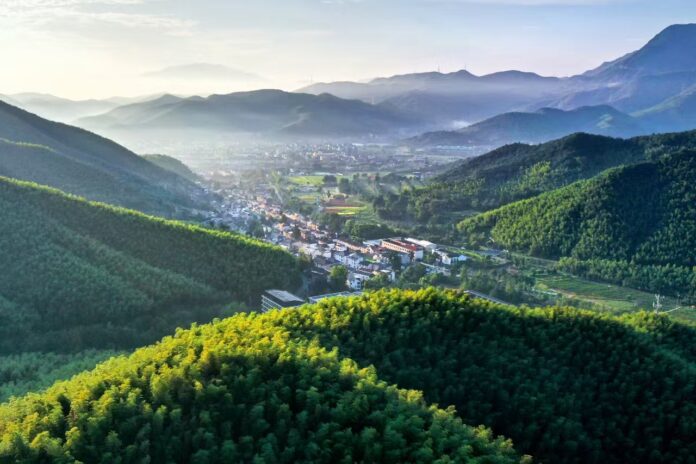
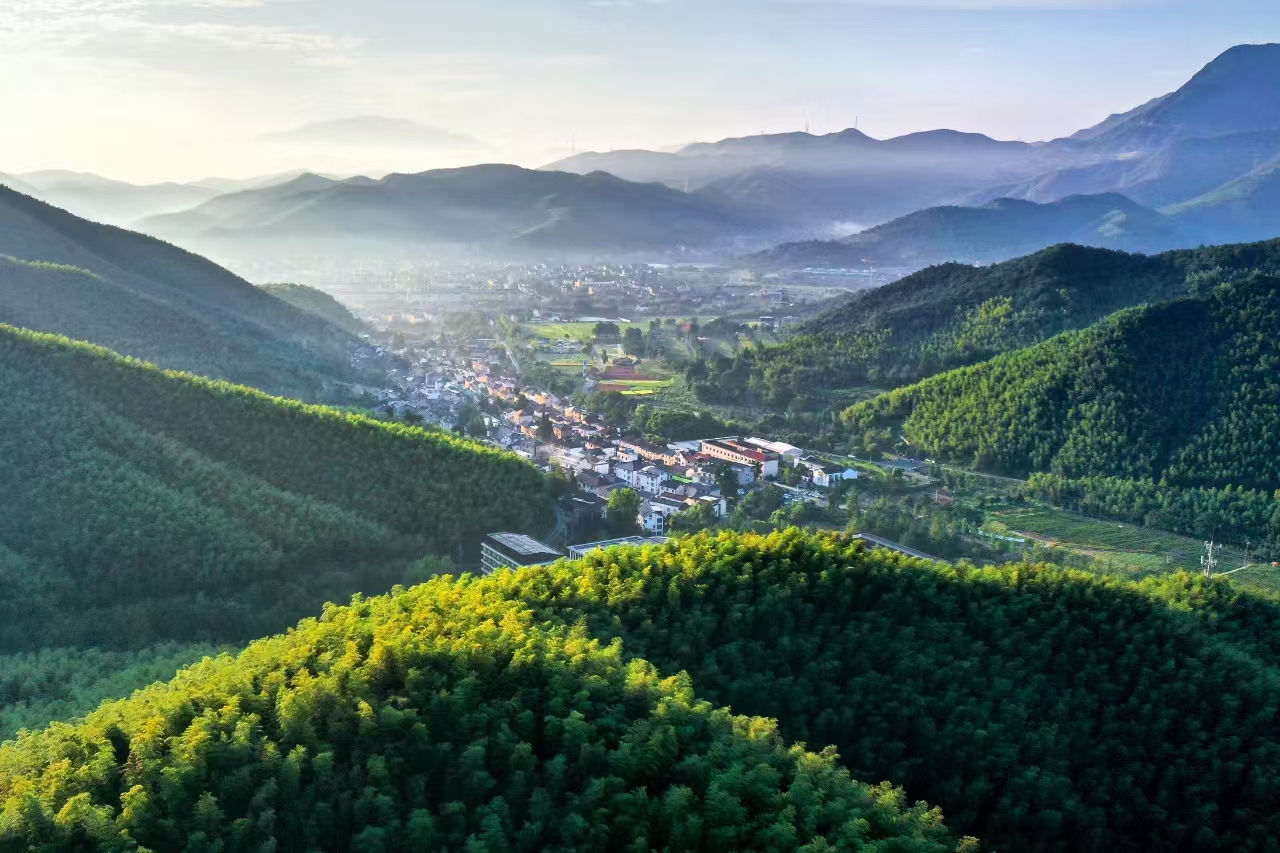
Tianhuangping Town, Anji County, Zhejiang Province

Over the past 20 years, this village has undergone a dramatic transformation. It hasn’t just rewritten its own fate; it has also shown how a nation’s commitment to green development can reshape rural landscapes and transform people’s lives.

Two decades ago, Yucun was known for a very different reason.

In the 1980s and 1990s, the 4.9-square-kilometer village thrived as Anji’s “richest village” thanks to its high-quality limestone reserves. But mining came at a steep ecological cost: “Blasting scared birds from the mountains; sand and gravel filled the air”—a vivid description of its environmental scars.

When the village resolved to shut down its mines and cement factories, few anticipated that this move would pave the way for a whole new development path. Today, the stone stele at the village entrance, inscribed with “Lucid waters and lush mountains are invaluable assets,” stands not only as a symbol of Yucun’s transformed development model but also as a beacon for resource integration.

In 2020, Yucun joined forces with four neighboring villages to form a 43-square-kilometer cluster. By the end of 2022, this expanded to 245 square kilometers, linking one town, two townships, and 23 villages. The “Greater Yucun” framework has turned the once-small village into a cross-regional development hub.

This expansion is far more than a simple increase in area. As Xu Jinjing, head of Tianhuangping Town, explains: “After closing the mines, we started rural guesthouses and rafting activities—that was Version 1.0 of practicing the green development concept. Now, ‘Greater Yucun’ is building industrial clusters for new economy, new cultural tourism, and new agriculture—that’s a leap to Version 2.0.”

The numbers tell the story of this upgrade: In 2024, the average collective operating income of villages in “Greater Yucun” reached 2.82 million yuan, an 11.5% year-on-year increase. Even more striking is the world-class pumped storage cluster here: Tianhuangping and Changlongshan power stations, with a combined installed capacity of 3.9 million kilowatts, have made green energy a new hallmark of “Greater Yucun.”

Industrial reforms have revitalized the countryside’s appeal. What was once a village of 280 households (1,060 people) now covers over 40,000 residents under the “Greater Yucun” umbrella. Tourism hit new heights in 2024, with Yucun welcoming 1.22 million visits and the broader “Greater Yucun” area exceeding 10 million.

This influx of people reflects a diverse landscape shaped by industrial shifts. Tourists come to savor its ecological beauty; new villagers arrive to seize opportunities in the industrial shifts;local residents enjoy expanding prospects right at their doorstep. Additionally, nearly 80,000 online users have registered as virtual villagers, with some 6,000 adopting farmland via the cloud and participating in local development.

“Efficient government services and ecological strengths make this more appealing than any urban office building,” says Duan Yi, CEO of Photoplus, who relocated his company’s headquarters here.

Despite growing larger, diversifying its industries, and welcoming more people, Yucun’s ecosystem remains unharmed—this is both the foundation of the concept of “Lucid waters and lush mountains are invaluable assets” and one of its core goals.

In 2021, Yucun was named one of the first Best Tourism Villages by the World Tourism Organization. Its 10 landmark scenes weave together attractions like lotus pond serenity, Longqing Temple’s spiritual ambiance, and the haunting beauty of abandoned mines.

Visitors can take sightseeing buses or scan codes to rent electric vehicles and explore the lanes. At 1,168 meters above sea level, a fairy town on grassland recreates a celestial realm, where mist-shrouded bamboo forests evoke the ethereal mood of the Oscar-winning film Crouching Tiger, Hidden Dragon. An 18-kilometer winding mountain road leads to a year-round scenic spot that has become a must-visit for cyclists.

Beyond its natural beauty, Yucun buzzes with cultural fusion. Last July, French pianist Richard Clayderman performed in an abandoned mine, his music blending with the rustle of bamboo leaves—a perfect metaphor for ecological transformation.

Zhuo Li, who moved from Shanghai, traded the bustle of skyscrapers for a European-style blue villa here, where she runs a mountain biking business. “I came to live and work here because of the stunning scenery and the relaxed rural lifestyle.”

Over 20 years, Yucun has shifted from selling limestone to forging a sustainable path where ecology and industry thrive together—a testament to the vitality of green development.

As early as 2016, the UN Environment Programme released a report on the concept of “Lucid waters and lush mountains are invaluable assets,” highlighting China’s efforts to integrate ecological progress into national planning. Today, the 572 national ecological civilization demonstration zones and 240 green development bases exploring models like “trading green protection for prosperity” and “turning collective green into shared wealth” all trace their roots to this small village.

As “Greater Yucun” continues to grow and more young dreamers arrive, the village is penning more stories of harmony between humans and nature, and of industry and ecology boosting each other.

The issuer is solely responsible for the content of this announcement.

Beijing Review: How a young voice spreads the truths of history

BEIJING, Sept. 2, 2025 /PRNewswire/ — In winter 1937, as Japanese forces invaded Nanjing, then the capital of China, Richard Brady, an American surgeon at the city’s Drum Tower Hospital, made a choice that would define his legacy.  


Megan Brady, great-granddaughter of U.S. surgeon Richard Brady, who aided civilians during the Nanjing Massacre, has written a song calling for peace and love.

On December 13, 1937, Nanjing, located in the eastern province of Jiangsu, witnessed one of the darkest chapters in modern history—six weeks of mass killings, sexual violence and other atrocities that claimed more than 300,000 lives. The tragedy became known to the world as the Nanjing Massacre.

Amid the terror, Brady and a handful of other foreigners risked their lives to protect civilians, offering medical care and refuge while the city burned. He also documented the atrocities through diaries, photos and letters, leaving behind invaluable historical records.

His courage created a legacy of compassion and responsibility for future generations. One of those carrying the legacy today is his great-granddaughter, Megan Brady.

“History is the building block of our future. It is absolutely essential that everyone understands what happened in the past so that we will not repeat it in the future,” she told Beijing Review.

Voices beyond times  

Born in the United States, Megan Brady moved to Canada with her family at age 10. After graduating from a university in Switzerland with a degree in communications, she began working for a hospitality group in the United Kingdom.

Growing up, she knew little about Richard Brady’s role in China. That changed in 2014, when she first traveled to Nanjing with her father to learn about the massacre.

Inside the Memorial Hall of the Victims in Nanjing Massacre by Japanese Invaders, a faded black-and-white photo shows Richard Brady with his wife and son. For the young woman standing in front of it, the image bridged generations.

“Seeing his pictures in the memorial hall and in Nanjing Drum Tower Hospital and hearing about the work that he did, I know a lot about the type of person he was—and the type of person he would want me to be,” Megan Brady said.

She added that he would want her to “share the work of the International Committee for the Nanjing Safety Zone and what happened in 1937 in Nanjing as much as I can.”

Almost 90 years have passed since the massacre, and its survivors are becoming fewer and fewer. Their memories are fading, she said, and time is running out to preserve their testimonies. “It’s up to the younger generations to continue to speak their truths and give them a voice beyond their time,” she emphasized.

On August 15 in Nanjing, Megan Brady was named among the fourth group of inheritors of the historical memory of the Nanjing Massacre. The initiative, launched in 2022, has recognized 38 descendants of survivors as well as Chinese and international individuals who aided the Chinese people or preserved irrefutable historical evidence.

“As a Nanjing Massacre Historical Memory Inheritor, I am profoundly aware of the weight of this responsibility,” she said while receiving her certificate. “I will carry forward my ancestors’ legacy of compassion and courage, and preserve humanity’s warmth. I also hope people will transcend hatred through reconciliation and build a world that honors history and cherishes peace.”

Singing forward 

For Megan Brady’s family, Nanjing has become a place of remembrance and connection. Each time they visit, they go to the Drum Tower Hospital. “This place holds strong family memories and deep emotional connections,” she said.

“At first, I was a little bit too young to understand really the depth of the tragedy and the reality of the people that suffered during the Nanjing Massacre. While I have gained more knowledge and more information, the more I come here, I’m always learning something new.”

Megan Brady now feels a growing urge to share this history with others. “I think that there are a lot of nontraditional ways to share information. My passion has always been for music and telling stories through songs, because it’s such an interesting way to convey emotion and ideas,” she explained.

Her song Mercy, written six years ago, was inspired by the courage of people like her grandfather and Minnie Vautrin, the American missionary who turned the Jinling Women’s College in Nanjing into a refugee shelter during the massacre.

“Love douses the fires, peace comes with the rain, rise from the ashes, harness all the pain…” the lyrics go. Simple yet powerful, they reflect the inheritor’s empathy for the victims’ suffering and her call for peace and reconciliation.

She first performed Mercy during China’s National Memorial Day for Nanjing Massacre Victims in 2019. Standing in Nanjing, singing words born from both sorrow and hope, Megan Brady felt she was adding her own voice to the chorus of remembrance.

“Even as we witness, still, so many horrible things are going on in the world today. If you can do an individual part and put some good into the world, such as a song or an act of good service to a neighbor or a friend, even some sort of small positivity is going to create a domino effect that can have some real long lasting change.”

Comments to liqing@cicgamericas.com 

TikTok:
https://www.tiktok.com/@cachinachic/video/7544934239188372766?is_from_webapp=1&sender_device=pc&web_id=7227134149436605995

X:
https://x.com/BeijingReview/status/1962095963595735265

Facebook:
https://www.facebook.com/watch/?v=2265541313918387 

Weibo:
https://weibo.com/1719349955/Q2wV13if9

Website:
http://www.bjreview.com/Multimedia/Video/Through_Their_Eyes/202509/t20250901_800413445.html