Home Blog Page 315

The 7th Cross-Strait Financial Forum and Taiwan-Funded Enterprise Development Forum

XIAMEN, CHINA – Media OutReach Newswire – 12 Jun 2026 – On June 12, the 7th Cross-Strait Financial Forum and Taiwan-Funded Enterprise Development Forum was held in Xiamen.The event was jointly organized by the Fujian Provincial Financial Regulatory Administration, the Xiamen Municipal Financial Regulatory Administration, and the Association of Taiwan Investment Enterprises on the Mainland, hosted by Xiamen Jinyuan Investment Group, and executed by Jinyuan Uni-President Securities. Under the theme “Three Years of Integration Embarking on a New Journey, United Development Writing a New Chapter,” the forum focused on cross-strait financial cooperation, expanded financing channels for Taiwan-funded enterprises, industrial transformation and upgrading, and financial innovation between Fujian and Taiwan. It aimed to support Fujian’s efforts to accelerate the development of the first-choice home for Taiwan compatriots and Taiwan-funded enterprises on the mainland.

This year’s forum is an important supporting event of the 18th Cross-Strait Forum. During the event, nine Fujian-Taiwan financial integration projects were signed, with a total value of RMB 9.1 billion. The projects cover a wide range of financial services across areas including cross-strait industrial cooperation, water supply security for public welfare, capacity upgrades for long-established Taiwan-funded enterprises, technology and innovation industries, and modern agriculture. These initiatives continue to unlock the benefits of financial policies, promote shared access to financial resources for Taiwan compatriots and Taiwan-funded enterprises, and inject new momentum into industrial integration between Fujian and Taiwan.

At the forum, the Cross-Strait Wealth and Asset Management Cross-Sector Alliance was officially inaugurated. Supported by Jinyuan Group and jointly proposed by its affiliated financial institutions, the alliance was co-founded by Xiamen International Trust, Jinyuan Uni-President Securities, Yuanxin Yongfeng Fund, Fubon Bank (China), Junlong Life Insurance, and Xiamen Chang Gung Hospital, among others. Centered on serving the wealth management and asset management needs of people on both sides of the Taiwan Strait, the alliance aims to build a one-stop service platform covering asset allocation for Taiwan compatriots and Taiwan-funded enterprises on the mainland, family trusts and wealth succession planning, pension finance, and healthcare protection solutions.

The forum also unveiled a series of innovative financial achievements related to Taiwan. The banking industry’s first group standard dedicated to Taiwan-related financial services on the mainland, the “Specification for Taiwan-Related Financial Services of Banking Financial Institutions,” was officially released. At the same time, the “Bailufen” Taiwan Compatriot Financial Service Platform was introduced, further enhancing financial services for Taiwan compatriots living in Fujian and supporting the development of Taiwan-funded enterprises.

Hashtag: #StraitsFinancialForum

The issuer is solely responsible for the content of this announcement.

Verdant Rock Receives BBB+ Long-Term Insurer Financial Strength Rating with a Stable Outlook from Fitch Ratings


HAMILTON, BERMUDA – Media OutReach Newswire – 12 June 2026 – Verdant Rock Limited has received a BBB+ Long-Term Insurer Financial Strength Rating with a Stable Outlook from Fitch Ratings effective 12 June 2026. Combined with a Class 3B Insurer license from the Bermuda Monetary Authority (BMA), effective 6 May 2026, the company is in a strong position to extend financial guarantees on bonds and loans in emerging markets for beneficiaries globally. We provide irrevocable, unconditional, on-demand financial guarantees designed to qualify as eligible credit protection under Basel and major insurance solvency regimes. We are focused on private liabilities and do not cover sovereigns, municipalities or provinces. Bonds and loans issued by emerging market corporations and banks, structured financings, asset-backed (ABS) and mortgage-backed (MBS) exposures in securities or loan format, and project finance are all within the Company’s remit.

“The infrastructure and capital markets we are targeting have been systematically underserved over the past decade. Verdant Rock enters this space with an investment grade rating, a strong capital position, the regulatory standing, the technical capability, and the long-term commitment that issuers and their advisers have been unable to find elsewhere.”

— Tolga Uzuner, Co-Founder, Chief Executive Officer, Verdant Rock Limited

The Fitch Ratings report can be accessed here:
Fitch Rates Verdant Rock at ‘BBB+’; Outlook Stable

Verdant Rock’s Class 3B registration can be verified via the BMA’s register of regulated entities (search “Verdant Rock”): https://www.bma.bm/regulated-entities

Notes to editors: For the May 2026 licensing announcement, see https://bernews.com/2026/05/walkers-supports-verdant-rock-licensing/

This announcement is (i) for information only; (ii) not an offer or solicitation to buy or sell any security, insurance product, or financial guarantee; and (iii) not for distribution in any jurisdiction where to do so would be unlawful. Forward-looking statements are not guarantees of future results, and Verdant Rock undertakes no obligation to update them. A credit rating is not a recommendation to buy, sell or hold any security and may be subject to revision, suspension or withdrawal at any time by the assigning rating agency.

Hashtag: #VerdantRock

The issuer is solely responsible for the content of this announcement.

ABOUT VERDANT ROCK

Verdant Rock Limited is a Bermuda-based insurance company, regulated by the Bermuda Monetary Authority, providing Basel III and Solvency II compliant financial guarantees in emerging markets, designed to qualify as eligible credit protection under Basel and major insurance solvency regimes, for the benefit of institutions globally.

TVBS deploys AI translation for NVIDIA GTC Taipei keynote


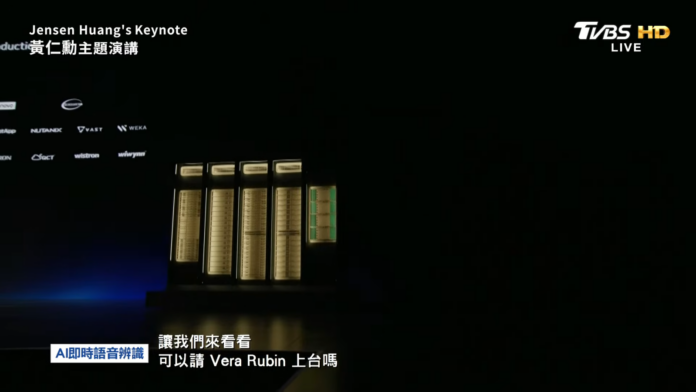
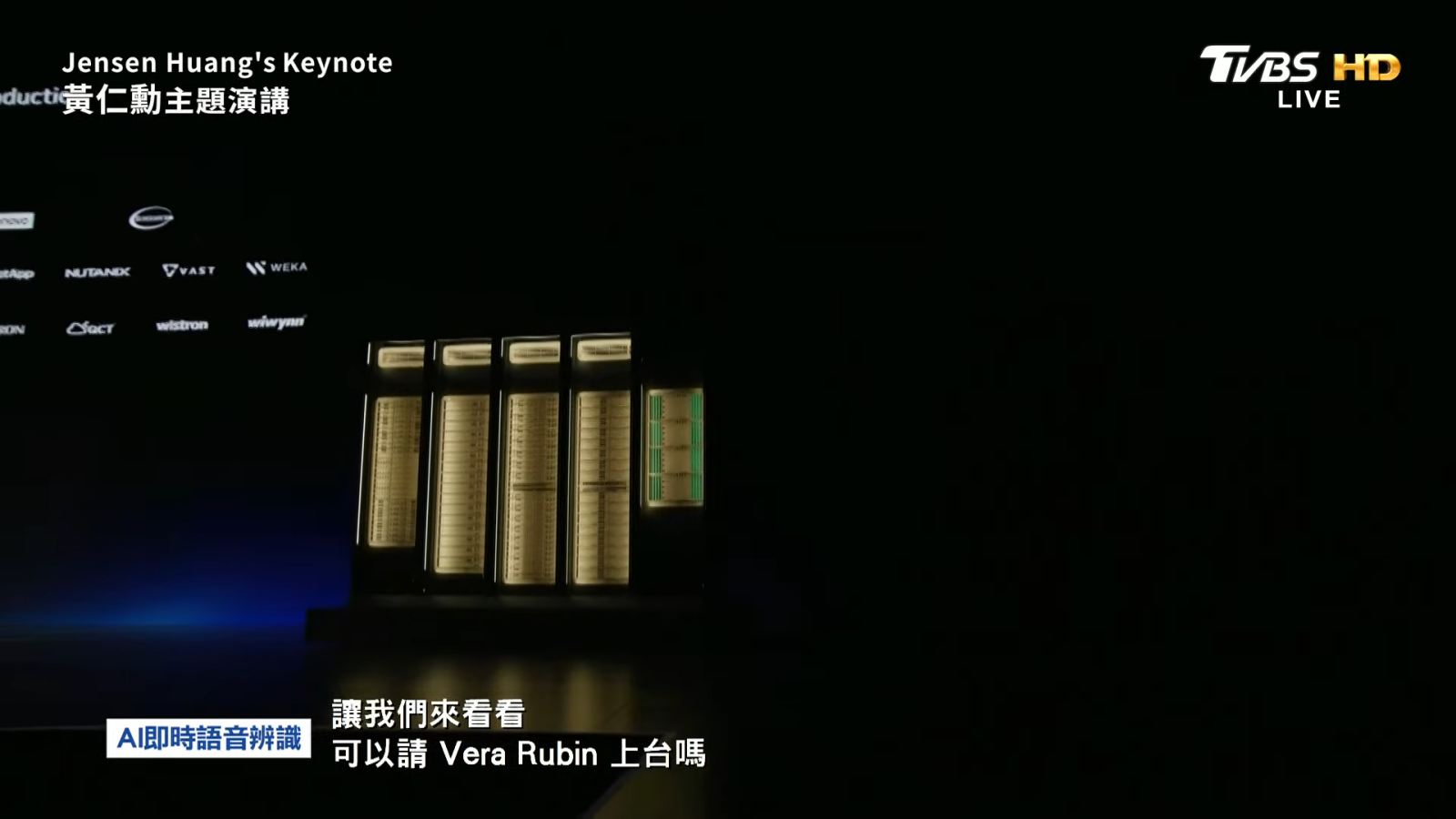
TAIPEI, TAIWAN – Media OutReach Newswire – 12 June 2026 – TVBS deployed its self-developed real-time AI translation system during NVIDIA CEO Jensen Huang’s keynote at GTC Taipei 2026 on June 1. The system delivered near-simultaneous Chinese subtitles that viewers initially mistook for official NVIDIA translations. The in-house technology marked a rare instance of a news organization independently developing live translation for a large-scale broadcast.

TVBS deployed its self-developed real-time AI translation system during NVIDIA CEO Jensen Huang's keynote at GTC Taipei 2026 on June 1.
TVBS deployed its self-developed real-time AI translation system during NVIDIA CEO Jensen Huang’s keynote at GTC Taipei 2026 on June 1.

Online viewers praised the translation quality, with comments including “The quality of this real-time translation is amazing,” “The translation is incredibly fast,” and “The live speech recognition quality is surprisingly good.” Some viewers assumed the subtitles came from NVIDIA’s official translation team.

The achievement demonstrates how Taiwan’s media industry is adapting to AI-driven transformation. TVBS is positioning itself as a leader in integrating proprietary AI development with real-world broadcast applications. The company completed optimization and deployment of the system in just nine days — a process that traditionally requires months of dedicated training, according to Andy Yang, manager of TVBS AI Future Technology Department.

Yang explained that the biggest challenge in real-time translation lies in balancing “content accuracy” with “reading fluency” under extremely tight time constraints. Huang’s speaking style is highly improvisational and frequently switches between English, Mandarin and Taiwanese, while audience applause and cheering often occur simultaneously.

Applying standard off-the-shelf translation software in such an environment would likely result in sentence segmentation errors and unclear semantic interpretation, Yang said. Rather than pursuing “zero-latency” translation at all costs, TVBS designed a subtitle presentation mechanism specifically tailored to the keynote format.

Prior to the event, the TVBS team conducted extensive cross-platform testing on multiple AI translation models, evaluating latency and error rates. By introducing a carefully calibrated broadcast delay, the system gained additional time to process semantic meaning and contextual alignment. This approach enabled smoother subtitles matching natural Chinese reading habits, Yang said.

The team also built a dedicated knowledge base for NVIDIA GTC Taipei, compiling AI industry terminology, product names and technical keywords in advance. This significantly improved translation quality and the accuracy of professional content delivery. TVBS’s real-time translation system can be customized based on different broadcasting scenarios, Yang noted.

Yang emphasized that the key to the rapid nine-day deployment was cross-department collaboration. Engineering teams handled hardware tuning and signal integration, while internal technical and content teams managed ongoing model training and refinement. TVBS established a collaborative workflow integrating both technology and editorial expertise.

Through continuous iteration and adjustment, the team incorporated Taiwanese linguistic nuances and natural Chinese phrasing into the system. This enhanced fluency and readability beyond what generic AI models alone could achieve, ultimately shaping what Yang called a distinct “TVBS AI style.” The approach reflects the company’s “3T” philosophy — Truth, Trust and Technology.

In his keynote at the Taipei Music Center, Huang focused on AI infrastructure, next-generation computing platforms and NVIDIA’s latest technological roadmap. GTC Taipei 2026 attracted significant international attention as AI continues to reshape global industries. Through its own transformation journey, TVBS hopes to help lead Taiwan’s media industry into a new era shaped by AI.

Hashtag: #TVBS

The issuer is solely responsible for the content of this announcement.

New Quality, Shared Future – Beijing CBD Extends a Global Invitation for Cooperation

If there are only three days to understand China’s economic development, Beijing CBD is a good place to start.


BEIJING, CHINA – Media OutReach Newswire – 12 June 2026 – In mid-June this year, 2026 Beijing CBD Forum Annual Conference will be held as scheduled. Nearly ten thousand participants from five continents will gather here, with international speakers accounting for more than 50% of the lineup. Yet the Forum is but a window; the true landscape worth the world’s attention lies just outside – the central business district itself.

The skyline of Beijing's Central Business District
The skyline of Beijing’s Central Business District

“International Density” on Seven Square Kilometers

In the core area of Beijing CBD – a mere seven square kilometers – nearly 16,000 foreign-funded institutions and 125 regional headquarters of multinational corporations (MNCs) are located. This represents half of all MNC headquarters resources in Beijing.

This is no coincidence. The district is one of China’s most internationally oriented, service-rich, and mature international business zones. From law firms and consultancies to financial institutions, the world’s top professional services firms have formed a complete ecosystem here.

What makes the area even more valuable for overseas companies and organizations is that policies here are not just written on paper – they are embedded in actual processes.

From pilot schemes on cross-border data flows, to facilitated access for foreign financial institutions, to one‑stop service desks for international talent – Beijing CBD has long served as a pilot zone for institutional opening‑up. Foreign enterprises find that issues they encounter here tend to be addressed and resolved more quickly.

During this year’s Beijing CBD Forum annual conference, the Ambassadors’ Roundtable Dialogue will establish a regular communication mechanism, and the “International Delegations’ China Tour” will allow overseas business representatives and zone managers to conduct in‑depth site visits and exchange experiences. What is even more noteworthy, however, is that such exchanges are not confined to the Forum – they continue year-round here.

Beijing CBD: A Sincere and Pragmatic Invitation

Artificial intelligence, the digital economy, green technologies – these areas, known as “new quality productive forces,” are not empty buzzwords here. The Forum includes dedicated sessions on technological innovation, financial opening‑up, law-business integration, cultural industries, and international consumption. Yet what truly deserves the attention of potential international partners is the industrial foundation behind these topics.

Beijing CBD is home to the densest concentration of foreign financial institutions and cross‑border capital in China. A large number of tech companies are engaged in cross‑sector collaboration with traditional industries here. High‑end professional services – international law, arbitration, compliance – are highly concentrated, providing support for both inbound and outbound business activities. Moreover, as the starting area of the city’s international demonstration zone for law-business integration, the district continues to focus on strengthening the rule of law in commercial affairs, improving its legal services framework, enhancing the resolution of international commercial disputes, and fostering a stable, transparent, predictable, and internationally competitive business environment. In the future, Beijing CBD will build a one‑stop legal and commercial service platform that integrates legal, auditing, intellectual property and other professional resources to precisely serve companies going global and managing cross‑border operations.

Here, you will find that its vitality derives mainly from genuine business judgments about market opportunities. For enterprises, the cooperation logic here is predictable, commercial, and sustainable.

Beijing CBD is not merely a striking poster – it is a real‑world district where hundreds of thousands of business people move every day, thousands of foreign‑funded institutions operate, and countless cross‑border transactions take place.

If you are looking for a stable gateway to the Chinese market, or a high-level hub to connect global resources with local applications, it deserves your consideration.

The Forum’s 2026 annual conference lasts only three days. But Beijing CBD is open all year round.

Hashtag: #Chaoyang

The issuer is solely responsible for the content of this announcement.
Singapore Music School Launches Structured Beginner String Learning Method


SINGAPORE – Media OutReach Newswire – 12 June 2026 – LVL Music Academy has introduced a structured beginner string learning method designed to support students who are starting violin or cello lessons for the first time.

The framework brings together lesson planning, posture development, instrument handling, basic technique, and instrument setup guidance. It was developed in response to common challenges faced by beginner string students, including discomfort while holding the instrument, poor bow grip, inconsistent sound production, unsuitable instrument sizing, and difficulty building good practice habits in the early stages of learning.

Unlike some instruments where students can begin with fewer setup considerations, the violin and cello require careful attention to posture, hand position, bow control, instrument fit, and tuning stability from the start. For young beginners in particular, an instrument that is too large, poorly adjusted, or difficult to play can affect both progress and confidence.

LVL Music Academy’s method aims to make the early learning process more structured by connecting what happens in the lesson room with the physical condition and suitability of the instrument itself. The academy’s in-house luthier support allows teachers and staff to assess factors such as instrument size, bridge height, string condition, peg function, bow quality, and general playability where needed.

“Many beginner students struggle not because they are not musical, but because the instrument is difficult to manage or the early foundations are not clear enough,” said a spokesperson for LVL Music Academy. “For violin and cello, comfort, posture, instrument setup, and lesson structure all affect how a student learns. This method is designed to address those areas together rather than treating them separately.”

The beginner framework covers several core areas: posture and body awareness, correct instrument hold, bow hold development, left-hand position, rhythm, note reading, tone production, listening skills, and home practice guidance. Students are also guided on how to care for their instrument, tune safely with support, and understand when an instrument may need adjustment.

The approach is intended for children and adult beginners who are new to string instruments. It also provides parents with clearer guidance on what to expect during the early stages of violin or cello learning, including how to support practice at home and how to recognise whether an instrument is suitable for the student’s size and level.

LVL said the framework is part of its wider effort to make beginner string education more practical and better supported. By combining teaching, instrument guidance, and luthier knowledge under one roof, the academy hopes to reduce common early-stage barriers that can affect motivation and long-term progress.
Hashtag: #LVLMusicAcademy


The issuer is solely responsible for the content of this announcement.
About LVL Music Academy

LVL Music Academy is a Singapore-based music school, string instrument shop, and in-house luthier workshop located in Bukit Timah. The academy provides violin, cello, piano, viola, and music theory lessons for children and adults, alongside instrument sales, rentals, repairs, restoration, and professional setup support.

Founded with a focus on practical music education and proper instrument care, LVL Music Academy supports students from beginner to advanced levels through structured lessons, performance opportunities, examination preparation, and access to luthier guidance under one roof.

For more information, visit .

Little Lao Culture Bar Celebrates Second Anniversary in Luang Prabang

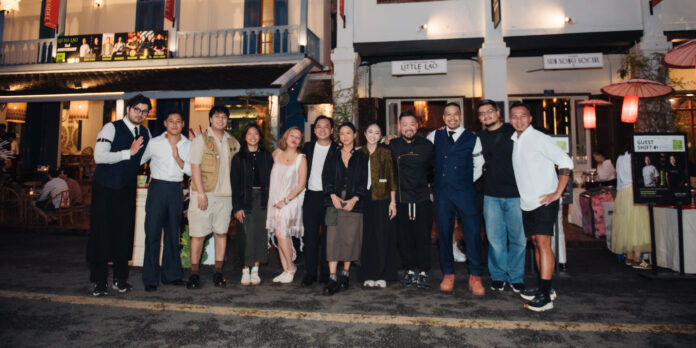
A picture of international bartenders and bars participanting in the Little Lao Culture Bar in Luang Prabang, Laos. (Photo by Little Lao)

On 5–6 June, Little Lao Culture Bar celebrated its second anniversary by bringing together some of Asia’s most influential bars and bartenders for a landmark event in Luang Prabang that united award-winning hospitality professionals from across the region.

The event welcomed six internationally recognized bars and prominent figures from Asia’s bar industry, including Laura Prabowo and Agung Prabowo of Penicillin (Hong Kong), Niks Anuman of Asia Today (Bangkok), Bent Nattachai of TAX Bar (Bangkok), Nick Nattaphon of G.O.D. (Bangkok), Alex and RZ of OTO (Manila), and Kai Ng of Quinary (Hong Kong). Several participating bars have been recognized by Asia’s 50 Best Bars.

During the event, hundreds of people attended the celebrations in Luang Prabang, including local residents, government representatives, hospitality professionals, and visitors from overseas. This highlights growing interest in Laos’ food and beverage scene and the support for Little Lao Culture Bar since 2024.

The celebration began with a traditional Lao blessing ceremony, reflecting the values that have guided the venue since its founding. Staff, family members, friends, and community representatives gathered to honor local customs, give thanks, and seek blessings for the future. The ceremony included offerings dedicated to ancestral and protective spirits, a practice deeply rooted in Lao culture and community life.

Together, the six bars offered visitors an opportunity to experience a diverse cross-section of contemporary Asian cocktail culture in a single destination.

The anniversary also provided a platform for industry dialogue and professional networking, allowing participating bartenders and hospitality leaders to share perspectives on creativity, sustainability, and the evolving cocktail landscape in Asia.

Celebrating Lao Culture and Collaboration

Founded in 2024, Little Lao Culture Bar aims to share the stories, flavors, and traditions of Laos through contemporary hospitality. Over the past two years, the bar has become known for its ingredient-driven cocktails, immersive guest experiences, and efforts to showcase Lao culture internationally.

The Little Lao Culture Bar team described the anniversary as an opportunity to bring together bars that have inspired its own journey while highlighting the possibilities of Lao ingredients through hospitality and cultural exchange.

Beyond celebrating the venue’s second anniversary, the event also highlighted the growing role of Luang Prabang as a destination for cocktail and culinary tourism. Organizers said bringing internationally recognized bartenders and bar teams to Laos demonstrated the country’s potential to contribute to the wider conversation surrounding contemporary Asian hospitality.

Look ahead, the Little Lao Culture Bar team said it remains committed to creating experiences that celebrate Lao culture and ingredients while fostering connections between local communities and the international hospitality industry.

Vientiane Police Arrest 19 Suspects in Online Lottery, Shopping Scam

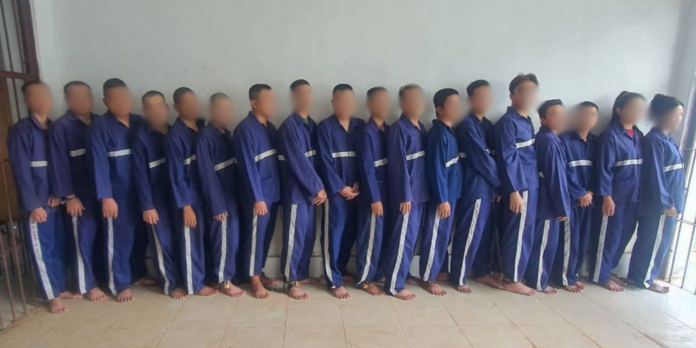
A picture of 19 suspects linked to an online fraud through fake scratch lottery sales and fraudulent online shopping schemes in Sikhottabong district, Vientiane Capital. (Photo by Lao Security News)

On 26 May, authorities in Vientiane Capital arrested 19 suspects linked to an online fraud through fake scratch lottery sales and fraudulent online shopping schemes in Sikhottabong district.

According to Sikhottabong authorities, the group had been operating from the rented property since early April this year under the supervision of a Chinese national identified as Wu Mingxing. The suspects reportedly received monthly salaries ranging from USD 400 to USD 800 to carry out online fraud activities.

The investigators said the group allegedly used Facebook livestreams to sell scratch lottery tickets. Victims who won small prizes were paid to gain their trust. When victims appeared to win larger prizes, victims were asked to pay fees of between VND 30 million (USD 1,140) and VND 40 million (USD 1,520) to claim their winnings. After the scammers received the money, they blocked the victims and never paid out the prizes.

Police said the group also operated fake online shopping pages offering products at prices below market value. Customers were instructed to transfer money in advance through Vietnamese bank accounts and were promised delivery details afterward. Once payment was received, the operators reportedly cut off all contact with the buyers.

No further information was shared by the authorities on the operation activities. For now, police are holding the suspects and the seized equipment while investigators continue examining the case and identifying other individuals who may have participated in the operation.

Ongoing Cases 

Separately, authorities in Savannakhet province raided two locations in Kaysone Phomvihane City following reports of suspected cybercrime activities on 10 June.

During the operation, police detained 94 suspects from seven nationalities, including 72 Chinese nationals, 11 Indonesians, four Taiwanese, three Myanmar nationals, two Ethiopians, one Cambodian national, and two Lao nationals, according to Lao state media. 

On 11 June, police in Champasak province also arrested 50 suspects during a raid on a suspected scam operation in Bachiengchaleunsouk district. The group included 48 Chinese nationals and two Lao nationals. 

In both Savannakhet, and Champasak cases, authorities confiscated large quantities of computers, mobile phones, and other electronic equipment believed to have been used in online fraud and telecommunications scam activities. 

Authorities said both cases remain under investigation.

Thailand’s Princess Bajrakitiyabha Dies at 47 After Nearly Four Years in Coma

Thai Princess Bajrakitiyabha Narendiradebyavati passed away on Thursday night at the age of 47. (Photo: Royal Household Bureau)

Princess Bajrakitiyabha, the eldest daughter of Thailand’s King Maha Vajiralongkorn (Rama X) and one of the country’s most accomplished royals, died on 11 June after spending nearly four years in a coma. She was 47.

The Royal Household announced that the princess, formally known as Her Royal Highness Princess Bajrakitiyabha Narendiradebyavati, died at 7:48 PM local time. Her death marks the end of a long public vigil that had gripped Thailand since she suffered a medical emergency while training dogs for a military working-dog event in Nakhon Ratchasima Province on 14 December, 2022.

Born on 7 December, 1978, Princess Bajrakitiyabha was the only child born to King Vajiralongkorn and his first wife, Princess Soamsawali. Known affectionately to many Thais as “Princess Pa,” she distinguished herself early through academic achievement and public service, forging a career that extended well beyond the ceremonial duties traditionally associated with royalty.

Educated in Thailand and the United States, she earned a law degree from Thammasat University before pursuing advanced legal studies at Cornell University. There, she obtained a Master of Laws degree and later a Doctor of Juridical Science, becoming one of the few members of the Thai royal family to hold a doctorate.

Rather than moving directly into a full-time royal role, Princess Bajrakitiyabha entered the legal profession. She worked as a prosecutor in Thailand’s Office of the Attorney General, gaining practical experience in criminal justice and legal administration.

The princess became particularly associated with prison reform and the welfare of vulnerable women. Through the Kamlangjai, or “Inspire,” Project, she advocated for improved treatment of female prisoners, pregnant inmates, incarcerated mothers and children affected by imprisonment. Her work brought attention to rehabilitation, reintegration and broader criminal justice issues, earning recognition both within Thailand and internationally.

Her legal expertise also led her into diplomacy. She served as Thailand’s ambassador to Austria and represented the kingdom at international organizations based in Vienna.

Alongside her work as a lawyer and diplomat, Princess Bajrakitiyabha took on a growing number of royal duties. She held senior military positions and served in the Royal Security Command. King Vajiralongkorn later awarded her the title Krom Luang Rajasarini Siribajra, one of the highest honors given to a royal daughter.

Although Thailand’s succession laws have traditionally favored male heirs and she was never formally designated heir to the throne, she was frequently discussed as a significant figure in the future of the monarchy.

That future was abruptly interrupted in December 2022 when she collapsed during a training session involving military working dogs. Initial reports described heart-related complications, and subsequent palace statements revealed severe infections and organ complications. Despite intensive medical treatment and prolonged life support, she never regained consciousness.

Over the following years, updates from the Royal Household remained infrequent but increasingly grave. In May 2026, officials disclosed that her condition had deteriorated significantly due to multiple infections affecting several organs.

Princess Bajrakitiyabha never married and had no children. A lawyer, prosecutor, diplomat, military officer and advocate for justice reform, she represented a modern image of royalty grounded in professional achievement and civic engagement.