Home Blog Page 3168

Zilliz Introduces Zero-Downtime Migration Services for Seamless Unstructured Data & Vector Embeddings Transfers

New solutions eliminate friction, enabling effortless portability of unstructured data and embeddings across systems — with no downtime, no vendor lock-in, and no added cost.

REDWOOD CITY, Calif., June 3, 2025 /PRNewswire/ — Zilliz, creator of the world’s most widely adopted open-source vector database, Milvus, introduced a powerful new set of Migration Services designed to make moving unstructured data and vector embeddings between platforms fast, reliable, and cost-free. These solutions eliminate the technical and operational barriers that typically slow down AI data infrastructure modernization.

“Organizations working with unstructured data for AI applications face migration challenges that traditional ETL pipelines simply can’t solve,” said James Luan, VP of Engineering at Zilliz. “Our new tools provide the missing infrastructure layer — making it easy to migrate from Elasticsearch to Milvus, consolidate across multiple vector stores, or move to Zilliz Cloud with zero disruption.”

Breaking Down Migration Barriers for Unstructured Data

Unstructured data — including images, text, audio, and video — now accounts for over 90% of enterprise data. As organizations turn this data into vector embeddings, they run into major roadblocks:

  • Format Variety: Unstructured data exists in diverse formats (JSON, CSV, Parquet, images, etc.), requiring specialized processing
  • System Fragmentation: Business information is scattered across S3, HDFS, Kafka, data warehouses, and data lakes
  • Vendor Lock-in Risks: Moving vector embeddings between databases often creates technical dependencies and potential vendor lock-in
  • Complex Transformations: Converting unstructured data requires AI model integration for embedding generation and schema mapping

Two Flexible Options for Every Environment

Zilliz offers Migration Services that directly respond to these challenges through two complementary deployment options:

  • Zilliz Migration Service provides a free, fully managed solution with zero configuration requirements and zero downtime. This service handles all aspects of migration while maintaining continuous synchronization between source and target systems.
  • Vector Transport Service (VTS), available as open-source software, offers the same capabilities for organizations that require self-hosted deployments in secure or air-gapped environments.

Purpose-Built for AI and Vector Workloads

Both solutions deliver essential features specifically designed for unstructured data and vector embeddings:

  • Zero-Downtime Migrations: Continuous synchronization keeps applications running seamlessly during transitions
  • Broad Source Compatibility: Support for Elasticsearch, Pinecone, Qdrant, PostgreSQL, Milvus, and more
  • Flexible Migration Modes: Options for one-time batch imports or real-time streaming synchronization
  • Purpose-Built for Unstructured Data and Vector Embeddings: Specialized handling with schema mapping and transformations
  • Enterprise-Grade Reliability: Designed for massive datasets with robust monitoring and alerting

Empowering Data Freedom Across Industries

Organizations across sectors are already using Zilliz Migration Services to transform their AI infrastructure:

  • A global retailer migrated 200 million product embeddings from Elasticsearch to Zilliz Cloud, improving search accuracy by 40% while cutting infrastructure costs in half
  • A healthcare organization moved patient data vectors between systems while maintaining strict HIPAA compliance
  • A financial services provider eliminated vendor dependency by moving to an open-source foundation while maintaining continuous operation

“Migrating between platforms without rebuilding pipelines from scratch is a game-changer for our AI strategy,” said one customer. “What would have taken months of engineering was completed in days, allowing us to focus on innovation rather than infrastructure management.”

Availability

Zilliz’s new migration solutions are now generally available:

  • Zilliz Migration Service: Available as a free, fully managed service within Zilliz Cloud
  • Vector Transport Service: Available as open-source software under the Apache 2.0 license atgithub.com/zilliztech/vts

For more information about Zilliz Migration Services, visit zilliz.com/zilliz-migration-service or contact support.

About Zilliz

Zilliz is an American SaaS company that builds next-generation vector database technologies, helping organizations unlock the value of unstructured data and rapidly develop AI and machine learning applications. By simplifying complex data infrastructure, Zilliz brings the power of AI within reach for enterprises, teams, and individual developers alike. Zilliz offers a fully managed, multi-cloud vector database service powered by open-source Milvus, supporting major cloud platforms such as AWS, GCP, and Azure, and is available across more than 20 countries and regions.

Headquartered in Redwood Shores, California, Zilliz is backed by leading investors including Aramco’s Prosperity7 Ventures, Temasek’s Pavilion Capital, Hillhouse Capital, 5Y Capital, Yunqi Partners, Trustbridge Partners, and others.


Blokees Initial Release Minions Mokoo Series: Minions-N-Disguise, Becomes a Banana Day Hotspot

SHANGHAI, June 3, 2025 /PRNewswire/ — On June 1, 2025, the 2025 Minions Banana Day was officially launched in Shanghai and Beijing, marking the commencement of a five-month tour across six cities in China. The Chinese building block character toy brand Blokees made a special appearance at the event. At the flagship station in Shanghai, Blokees globally unveiled and simultaneously made available to purchase its latest Minions Mokoo Series: Minions-N-Disguise.

This series showcases six iconic Minions characters: King Bob, Soldier Stuart, Golf Tim, Knight Dave, Maid Phil, and Caveman Kevin. Their distinctive physical traits and classic appearances are meticulously replicated. Each figure features detachable outfits, interchangeable accessories, and 11 articulated joints, enabling engaging and realistic interaction. In addition, a hidden cute skeleton design serves as a surprising Easter egg, offering an unexpected delight to dedicated Minions fans.

Blokees has been actively promoting user innovation, further cultivating the innovative culture of the BFC (Blokees Figures Creator) brand, and encouraging users to become creators within the BFC ecosystem. In the Minions Banana Day exhibition area, Blokees has specifically established a dedicated display zone for BFC creations.

The Blokees booth attracted considerable attention and became a prominent destination for Minions enthusiasts. Attendees participated in photo sessions and group portraits while experiencing the innovative process of construction and transformation. The atmosphere was lively, characterized by laughter and enthusiasm. A dedicated Minions fan commented with excitement, “These Minions building blocks exhibit highly detailed and realistic designs, offering versatility through customizable outfits. The integration of a skeletal framework represents an ingenious and surprising feature, enhancing the product’s appeal significantly.”

The Minions Banana Day will continue until October 26, making stops in Shanghai, Beijing, Chengdu, Wuhan, Changsha, and Shenyang. Throughout the tour, Blokees will introduce additional Minions-themed releases and interactive activities.

With a portfolio encompassing over 500 patents, Blokees remains at the forefront of innovation. Through its “All Ages, All Price Points, Global Reach” strategy, Blokees is progressively propelling Chinese brick-based character toys onto the global stage.

AI linked to a fourfold increase in productivity growth and 56% wage premium, while jobs grow even in the most easily automated roles: PwC 2025 Global AI Jobs Barometer

  • Workers see rising wages: AI-skilled workers see average 56% wage premium in 2024, double the 25% in the previous year
  • Confounding expectations, data shows job availability grew 38% in the roles more exposed to AI, albeit below the growth rate in less exposed occupations
  • Industries most exposed to AI saw 3x higher growth in revenue per employee (27%) compared to those least exposed (9%)
  • The skills sought by employers are changing 66% faster in jobs most exposed to AI

LONDON, June 3, 2025 /PRNewswire/ — AI is making workers more valuable, productive, and able to command higher wage premiums, with job numbers rising even in roles considered most automatable, according to PwC’s 2025 Global AI Jobs Barometer, released today. The report is based on analysis of close to a billion job ads from six continents.

The report finds that since GenAI’s proliferation in 2022, productivity growth has nearly quadrupled in industries most exposed to AI (e.g. financial services, software publishing), rising from 7% from 2018-2022 to 27% from 2018-2024. In contrast, the rate of productivity growth in industries least exposed to AI (e.g. mining, hospitality) declined from 10% to 9% over the same period.

2024 data shows that the most AI exposed industries are now seeing 3x higher growth in revenue per employee than the least exposed.

Carol Stubbings, Global Chief Commercial Officer, PwC, said:

“This research shows that the power of AI to deliver for businesses is already being realised. And we are only at the start of the transition. As we roll out Agentic AI at enterprise scale, we are seeing that the right combination of technology and culture can create dramatic new opportunities to reimagine how organisations work and create value.”

Job numbers are rising in virtually every type of AI-exposed occupation, even those highly automatable

Contrary to some expectations, the data from the report does not show job or wage destruction from AI.

While occupations with lower exposure to AI saw strong job growth (65%) in recent years (2019-2024), growth remained robust even in more exposed occupations (38%). Within more exposed occupations, jobs can be further divided into ‘automated’ (i.e., the job contains some tasks that AI can carry out) and ‘augmented’ (i.e., where AI helps a human do their job better). Across both classifications between 2019-24, job numbers are growing in every industry analysed, although augmented jobs are generally growing faster.

Wages are growing twice as fast in AI-exposed industries

Wages are growing twice as fast in industries more exposed to AI versus less exposed, with wages rising in both automatable and augmentable jobs.

Jobs which require AI skills also offer a wage premium (over similar roles that don’t require AI skills) in every industry analysed, with the average premium hitting 56%, up from 25% last year. Jobs that require such AI skills also continue to grow faster than all jobs – rising 7.5% from last year, even as total job postings fell 11.3%.

Joe Atkinson, Global Chief AI Officer, PwC, said:

“In contrast to worries that AI could cause sharp reductions in the number of jobs available this year’s findings show jobs are growing in virtually every type of AI-exposed occupation, including highly automatable ones. AI is amplifying and democratizing expertise, enabling employees to multiply their impact and focus on higher-level responsibilities. With the right foundations, both companies and workers can re-define their roles and industries and emerge leaders in their field, particularly as the full gambit of applications becomes clearer.”

The skills earthquake accelerates – AI is creating deep change in the skills workers need to succeed

While the picture on productivity, wages and jobs is broadly positive, the research does highlight the need for workers and businesses to adapt to a much faster pace of change. The skills sought by employers are changing 66% faster in occupations most exposed to AI, up from 25% last year.

What it takes to succeed in AI-exposed jobs is changing in other ways. Employer demand for formal degrees is declining for all jobs, but especially quickly for AI-exposed jobs. The percentage of jobs AI augments that require a degree fell 7 percentage points between 2019 and 2024 from 66% to 59%, and 9 percentage points (53% to 44%) for jobs AI automates.

The findings show that AI’s impact on women and men may be unequal – in every country analysed, more women than men are in AI-exposed roles, suggesting the skills pressure facing women will be higher.

Pete Brown, Global Workforce Leader, PwC, said:

“AI’s rapid advance is not just re-shaping industries, but fundamentally altering the workforce and the skills required. This is not a situation that employers can easily buy their way out of. Even if they can pay the premium required to attract talent with AI skills, those skills can quickly become out of date without investment in the systems to help the workforce learn.”

The AI business imperative

If businesses are to turbocharge their growth and leverage the opportunity afforded by AI, they must put AI front-and-centre, now. The report recommends five key actions for businesses:

  1. Use AI for enterprise-wide transformation.
  2. Treat AI as a growth strategy, not just an efficiency strategy.
  3. Prioritise Agentic AI.
  4. Enable your workforce to have the skills to make the most of AI’s power.
  5. Unlock AI’s transformative potential by building trust. 

About the PwC 2025 Global AI Jobs Barometer

The AI Jobs Barometer analysed close to a billion job ads and thousands of company financial reports across six continents to reveal AI’s impact on jobs, wages, skills, and productivity. The Barometer includes some of the most recent available data on AI’s impact including the latest available job ads and company reports through the end of 2024. We define a job as ‘AI-exposed’ if it contains many tasks in which AI can be used according to the well-established AI Occupational Exposure index. Definitions: ‘More exposed’ jobs are the 50% of jobs with greater AI exposure; ‘Less exposed’ jobs are the 50% of jobs with lower AI exposure; ‘Most exposed’ jobs are the 25% of jobs with the greatest AI exposure. We use the IMF’s methodology to separately analyse AI-exposed jobs that are highly automatable (which means the job contains many tasks AI can perform) versus jobs that are highly augmentable (which means the job contains many tasks in which AI supports human expertise and judgment). You can read the full report and learn more about the key takeaways for business at www.pwc.com/aijobsbarometer 

About PwC 

At PwC, we help clients build trust and reinvent so they can turn complexity into competitive advantage. We’re a tech-forward, people-empowered network with more than 370,000 people in 149 countries. Across audit and assurance, tax and legal, deals and consulting we help build, accelerate and sustain momentum. Find out more at www.pwc.com

Experimental Drug Development Centre Announces the Presentation of Updated Data from the Phase 1 Study of Antibody-Drug Conjugate EBC-129 at the 2025 Annual Meeting of the American Society of Clinical Oncology (ASCO)

  • EBC-129 is an antibody-drug conjugate (ADC) that selectively targets a novel, tumour-specific N-glycosylated epitope found on both CEACAM5 and CEACAM6. 
  • The expansion cohort for pancreatic ductal adenocarcinoma (PDAC) in the ongoing Phase 1 trial has completed enrolment. Notably, 82% of patients had tumours expressing the antigen at levels considered treatable with EBC-129. 
  • EBC-129 demonstrated positive overall response rates and prolonged progression-free survival in PDAC patients that have been heavily pre-treated, including those that have received prior treatment with standard of care (SoC) typically containing taxanes.
  • The US FDA also recently granted Fast Track Designation for EBC-129 in the treatment of PDAC patients.

SINGAPORE, June 3, 2025 /PRNewswire/ — The Experimental Drug Development Centre (EDDC), Singapore’s national platform for drug discovery and development, has announced the presentation of updated clinical data for the ongoing Phase 1 trial for EBC-129 at the 2025 Annual Meeting of the American Society of Clinical Oncology (ASCO) in Chicago.

EBC-129 is a first-in-class antibody drug conjugate (ADC) targeting a novel, tumour-specific N256-glycosylated epitope on CEACAM5 and CEACAM6. The updated findings showed promising efficacy data from 21 heavily pre-treated pancreatic ductal adenocarcinoma (PDAC) patients across the dose escalation and the dose expansion portions of the Phase 1 study. Patients received EBC-129 at doses between 1.8 and 2.2 mg/kg, given once every 3 weeks. 17 out of 21 patients (81%) of the patients had received prior treatment with taxanes. 82% of patients had tumours which expressed the EBC-129 antigen at ≥1% at 3+ intensity and were therefore considered treatable. The overall response rates (ORRs) were 25% and 20%, with disease control rates (DCRs) of 87.5% and 63.6% and progression-free survival (PFS) of 19 and 12 weeks for 1.8 mg/kg and 2.2 mg/kg, respectively.

“Pancreatic adenocarcinoma remains one of the most challenging cancers to treat, particularly in the metastatic setting where resistance to standard therapies is common. The clinical signals observed with EBC-129 in refractory pancreatic adenocarcinoma, including tolerability, prolonged disease control and a confirmed response in a heavily pre-treated patient, are encouraging and clinically meaningful. Continued prioritisation of biology-guided trials targeting EBC-129 will be key to sustaining momentum in this important therapeutic effort,” said Assistant Professor Robert W. Lentz, MD, Division of Medical Oncology, Department of Medicine, University of Colorado Anschutz School of Medicine. 

This presentation follows the recent Fast Track Designation granted by the U.S. FDA for EBC-129 in the treatment of PDAC patients. This designation supports EDDC’s efforts to accelerate the advancement of the programme through increased regulatory engagement and the potential for expedited review pathways.

Other Results to Date

The dose escalation study of the Phase 1 trial was open to all patients, while the ongoing dose expansion study comprises of three cohorts in PDAC, gastroesophageal adenocarcinoma (GEA) and tumour-agnostic patients with other immunohistochemistry (IHC)-positive solid tumours. Recruitment for the GEA and IHC-positive cohorts is still ongoing.

EBC-129 showed a manageable safety profile in the 58 patients treated so far, with uncomplicated neutropenia and infusion-related reactions as the main treatment-related adverse events (TRAEs) observed.

The EBC-129 antigen was also found to be highly expressed, with 52% to 100% of tumour tissues assessed during the trial showing moderate to high expression levels of ≥20% at 2+ and/or 3+. This included samples from gastroesophageal, appendiceal, colorectal and lung cancer patients, making EBC-129 a potentially viable treatment option for these cancers. 

“We have seen encouraging signs of efficacy of EBC-129 as a single-agent therapy, even in heavily pre-treated patients with metastatic pancreatic cancer. This, combined with the observed safety profile, underscores the promise of EBC-129 as a possible treatment option for PDAC patients. As a first-in-class ADC that targets both CEACAM5 and CEACAM6, EBC-129 has also shown potential against a range of other solid tumours, and we look forward to expanding clinical evaluations with the ongoing dose expansion cohorts and accelerating the development of EBC-129 to address critical unmet needs in cancer,” said Professor Damian O’Connell, CEO of EDDC. 

About EBC-129 

EBC-129 is an ADC that targets a tumour-specific N256-glycosylation site conserved on CEACAM5 and CEACAM6. CEACAM5 and CEACAM6 are known to have functional importance in tumour formation, migration and metastasis. In the ongoing trial, the tumour-specific marker is found to be widely expressed in multiple solid tumour types, including gastric, oesophageal, pancreatic, lung, colorectal, and appendiceal cancers, based on an analytically validated immunohistochemistry (IHC) assay. The payload used in EBC-129 is monomethyl auristatin E (MMAE), which has been extensively tested and approved for clinical use in other marketed ADCs, and has demonstrated synergy with PD-1 inhibitors. The ongoing Phase 1 trial of EBC-129 is assessing the safety and tolerability of EBC-129 as a single agent and in combination with pembrolizumab in patients with advanced solid tumours. Enrolment for the PDAC cohort in the Phase 1 dose expansion study is now complete, while recruitment continues for the gastroesophageal adenocarcinoma (GEA) and IHC-positive cohorts.

For information about the trial, please visit Clinicaltrial.gov, trial identifier NCT05701527. 

About the Experimental Drug Development Centre 

The Experimental Drug Development Centre (EDDC) is Singapore’s national platform for drug discovery and development, formed from the integration of the Experimental Therapeutics Centre (ETC), Drug Discovery and Development (D3), and Experimental Biotherapeutics Centre (EBC) in 2019. EDDC aims to develop therapeutics and diagnostics that save and improve the lives of patients in Singapore, Asia and around the world. Hosted by the Agency for Science, Technology and Research (A*STAR), EDDC works collaboratively with public sector and industry partners to translate the great science arising from Singapore’s biomedical and clinical sciences R&D into innovative healthcare solutions. For more information about EDDC, please visit www.eddc.sg.   

Kepler K2 “Bumblebee” Debuts at ICRA 2025, Captivating Attendees

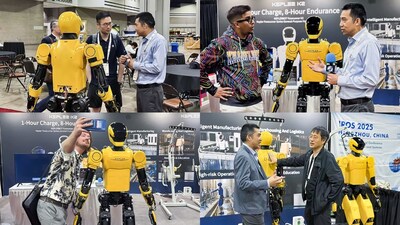
ATLANTA, June 3, 2025 /PRNewswire/ — During the IEEE International Conference on Robotics and Automation 2025 (ICRA 2025) held in Atlanta from May 19 to 23, Shanghai Kepler Robotics Co., Ltd (“Kepler Humanoid Robot”) introduced its latest industrial-grade humanoid robot, the K2 “Bumblebee,” drawing global attention with a live demonstration of its real-world operational capabilities. The event brought together leading researchers, executives, and engineers from across the robotics ecosystem.

Notable visitors to the Kepler Humanoid Robot booth included Jim Fan, Senior Research Scientist at NVIDIA, and Hesheng Wang, General Chair of the International Conference on Intelligent Robots and Systems (IROS), among other robotics experts. They engaged in discussions on the trajectory of humanoid robotics and the path to scalable deployment in industrial environments.

Kepler’s booth quickly became a high-traffic destination at ICRA 2025. The K2 “Bumblebee” greeted attendees with natural gestures, navigated the venue with steady, autonomous mobility, and interacted fluidly with other robotic systems. Its engaging presence prompted a flurry of photos and videos, with many attendees lining up to pose with the robot.

Debo Hu, CEO of Kepler Humanoid Robot, stated, “The next major focus for the humanoid robot sector is achieving a complete commercial value loop, and industrial environments present the clearest path to near-term deployment. Our fifth-generation humanoid robots are now in limited-series production, with industrial use cases as our initial focus. Our latest round of funding reinforces our confidence in the commercial viability of our platform.”

Kepler Humanoid Robot is dedicated to developing industry-leading blue-collar humanoid systems. Purpose-built for industrial settings, the K2 “Bumblebee,” stands 175 cm tall, weighs 75 kg , and features 52 degrees of freedom and more than 80 integrated sensors. Its onboard compute reaches 100 TOPS, enabling it to autonomously execute task sequences in structured operational environments.

As the humanoid category moves into early-stage mass production, robots must demonstrate high payload capacity, endurance, and cost-efficiency to achieve sustainable deployment.

The K2 “Bumblebee” features Kepler’s proprietary planetary roller screw actuators, engineered for smooth motion control and reduced energy draw. With near-zero static power consumption, the robot offers extended uptime. Combined with its innovative series-parallel architecture and advanced actuation system, the K2 supports payloads of 15 kg per arm and up to 30 kg with both arms. The robot delivers up to 8 hours of operational time on a single 1-hour charge. Additionally, its proprietary rotary actuators enable millimeter-level precision for fine motor tasks.

In addition, the Kepler K2 “Bumblebee” also includes Kepler’s proprietary Dexterous Hands, each featuring 11 degrees of freedom, 25 force-sensing contact points per finger, and a 6-axis force/torque sensor at the wrist. These capabilities allow for advanced manipulation tasks across a range of industrial applications.

Kepler reports that over 80% of the robot’s core hardware is developed and manufactured in-house—supporting vertical integration, reducing costs, and improving supply chain resilience. The base model of the K2 “Bumblebee” is priced at $30,000 and can perform the equivalent workload of approximately 1.5 full-time human workers in comparable timeframes. 

Deployment flexibility is a key enabler for humanoid adoption. According to Goldman Sachs, humanoid robots are expected to begin integration into manufacturing environments between 2024 and 2027. Kepler is targeting intelligent manufacturing, warehousing and logistics, niche industries, academic research, and education as its primary markets. The company’s commercialization roadmap prioritizes penetration of specific verticals before expanding into general-purpose use cases.

K2 “Bumblebee” units are currently being trialed across a range of real-world industrial scenarios. Kepler continues to expand its partnerships throughout the robotics value chain to accelerate the transition from prototyping to commercial-scale deployment.

Affordable and Reliable: Maxim Gains Ground in Laos’ Ride-Hailing Market

Maxim

Maxim is becoming a popular ride-hailing app in Vientiane, as more people choose the service for its low prices, reliability, and easy-to-use features.

Project InnerSpace Launches Initiative to Accelerate Geothermal Development in Indonesia

Geothermal has the potential to unlock vast amounts of affordable, reliable, and clean energy and heat, becoming a vital part of Indonesia’s energy security and economic development

JAKARTA, Indonesia , June 3, 2025 /PRNewswire/ — Project InnerSpace, an independent, not-for-profit organization committed to eliminating the major barriers to scaled development of geothermal energy, launched a new effort in partnership with the Institute for Essential Services Reform (IESR), a leading energy think tank in Indonesia, to further expand development of Indonesia’s vast geothermal resources.

Project InnerSpace and Institute for Essential Services Reform (IESR), a leading energy think tank in Indonesia, will publish a comprehensive geothermal report and roadmap, entitled “The Future of Geothermal in Indonesia,” this fall.

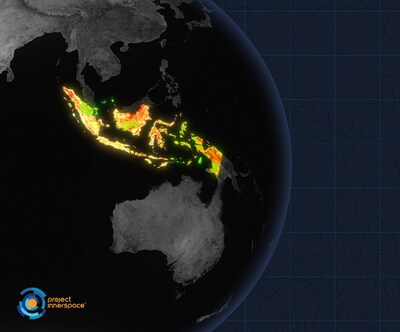
Indonesia is the second largest producer of geothermal energy for electricity worldwide, according to the International Energy Agency’s “The Future of Geothermal Energy” report. Indonesia added more than 1GW of geothermal net power capacity to its energy supply between 2013 and 2023 and has large-scale geothermal projects underway. Much more is possible. An initial analysis of data from Project InnerSpace’s GeoMap™ shows that Indonesia has about 3,000 GW of geothermal potential, of which about 20 GW — or half of Indonesia’s total energy demand — can be reached at an LCOE of less than $150 per MWh. There is also significant opportunity for direct-use heat.

Project InnerSpace and IESR convened a broad group of industry leaders, policy-makers, and subject matter experts in Jakarta today to solicit ideas and feedback for a concrete and actionable plan to meet that potential and rapidly scale geothermal development in Indonesia. Project InnerSpace and IESR will publish a comprehensive geothermal report and roadmap, entitled “The Future of Geothermal in Indonesia,” in English and Bahasa Indonesia in the fall. The report will leverage Indonesia-based subject matter experts and expertise to examine the country’s total geothermal potential across all applications and technological concepts, and offer recommendations for overcoming investment barriers, adopting policies that encourage geothermal development, and implementing practical strategies to move the industry forward. Contributors include Universitas Gadjah Mada, Enerka, Purnomo Yusgiantoro Center and Universitas Brawijaya.

“Indonesia has long recognized geothermal energy as a central component of its energy strategy,” said Fabby Tumiwa, Executive Director of IESR. “Working in partnership on this initiative with Project InnerSpace, we hope to accelerate development so we can truly take advantage of the vast geothermal resources beneath our feet. Indonesia is already a global leader in geothermal energy generation, but, through initiatives like this report, the nation can continue to advance into the next-generation of geothermal exploration and growth.”

“Indonesia sits atop massive geothermal resources so it is only fitting that it is among the countries at the forefront of geothermal development,” said Jamie Beard, Executive Director of Project InnerSpace. “By bringing together Indonesia’s geothermal energy and policy leaders, we can foster collaboration, accelerate the timeline and turn potential into action. Geothermal will be a huge win for Indonesia’s energy future.”

Project InnerSpace  is a 501(c)3 non-profit focused on expanding the use of geothermal energy globally. We are a team of scientists working to combine the voices of visionaries, entrepreneurs, and disruptors with the breakthrough expertise of geologists, drilling experts, and well engineers to build a future where geothermal powers the world with abundant and affordable energy. Project InnerSpace’s catalogue of “Future of” reports includes Texas and Pennsylvania (US), with reports in New Mexico (US), India and Indonesia in development. For more information, visit ProjectInnerSpace.org or connect with us on LinkedIn.

Photo – https://laotiantimes.com/wp-content/uploads/2025/06/indonesiapressimage.jpg

Logo – https://laotiantimes.com/wp-content/uploads/2025/06/pi_logo_2023_2x_logo.jpg

Dmall Debuts AI-Powered Retail Solutions at NRF APAC 2025, Charting Global Expansion Strategy

SINGAPORE, June 3, 2025 /PRNewswire/ — From June 3 to 5, NRF APAC 2025 (Retail’s Big Show Asia Pacific) will take place at the Marina Bay Sands Expo and Convention Centre in Singapore. Co-organized by the National Retail Federation (NRF) and Comexposium, the premier event highlights retail digitalization, enhanced customer experiences, and industry innovation, offering a high-impact networking hub for exhibitors and attendees worldwide.

DMALL stand
DMALL stand

Dmall Inc. (02586.HK), a leading Chinese retail tech pioneer, debuts at the event, showcasing its latest AI-powered solutions, best practices, and ESG achievements. 

At the event, Dmall partners with Frost & Sullivan to release its White Paper on Current Situation and Trends of Overseas Development of China’s Retail Digitalization Solution Providers. The report analyzes the evolving demands for retail digital transformation and outlines the expansion strategies of Chinese tech innovators. 

Frost & Sullivan notes that rising consumer expectations and sustainability goals are unlocking growth potential across global retail markets. AI, cloud computing, and big data are enabling retail tech firms to optimize and expand their global footprint. 

Dmall OS, the company’s flagship product, will take center stage. The display traces its evolution from Dmall OS 1.0 to 3.0, highlighting globally-compliant, AI-powered, premium-grade, and ecosystem-oriented features. 

Dmall OS 3.0, integrated with IoT capabilities, delivers end-to-end retail digitalization, empowering businesses to thrive through comprehensive operational enhancements and data-driven growth strategies. 

Dmall also collaborates with Urovo, SuperHii and other hardware makers to demonstrate interactive experiences powered by PDA devices, smart shopping carts, POS systems, and electronic shelf labels —demonstrating how software-hardware synergy transforms retail operations and consumer experiences.

China has become a leader in AI applications, with vertical models addressing sector-specific challenges. At the expo, Dmall spotlights its next-gen AI-enabled solutions, including AI Shopping Assistant, AI-enabled Clearance, and AI Inspection. 

Notably, AI-enabled Clearance utilizes sales and inventory history to auto-calculate discount rates, generating real-time promotions to maximize margins and reduce waste.

Additionally, Dmall showcases its ESG accomplishments, focusing on governance, data security and privacy protection, low-carbon initiatives, and community programs. As ESG gains prominence globally, Dmall’s practices offer retailers a blueprint for balancing business success and social responsibility. 

From 2015 to 2025, Dmall has expanded its presence from China to APAC, Europe, and beyond. Guided by the vision of “Chinese Innovation, Empowering Global Retail”, the company continues to integrate best practices with retail digitalization solutions, streamlining operations for retailers while enhancing consumer experiences.