Home Blog Page 4397

Top CEOs navigate global turbulence by betting big on AI, says KPMG

  • Tenth anniversary of the KPMG CEO Outlook shows that despite CEO confidence in the growth prospects of the economy declining since 2015, 72 percent of CEOs remain confident.
  • Ninety-two percent of CEOs are looking to increase the overall headcount of their workforce – the highest since 2020.
  • AI remains the top investment priority for most CEOs (64 percent), with a significant majority (76 percent) believing that it will not fundamentally impact job numbers.
  • Threats to growth have also shifted, with supply chain challenges and operational issues pushing ahead of cyber security and last year’s number one threat – geopolitics and political uncertainty.
  • Three quarters (76 percent) of CEOs said they would be willing to divest a profitable part of the business that was damaging reputation.
  • Eighty-three percent of leaders now predict a full ‘return to office’ in three years’ time, up from 64 percent in 2023

HONG KONG SAR – Media OutReach Newswire – 30 September 2024 – From the race to embrace artificial intelligence (AI) to ever-mounting geopolitical concerns, the challenges faced by the CEOs of today are vast and complex. Alongside these external pressures, internal challenges such as upskilling the workforce and hybrid working are pushing CEOs to be agile and adaptable in their stakeholder management while also keeping an eye on long-term growth.

First launched globally 10 years ago, the KPMG CEO Outlook surveys more than 1,300 global business leaders overseeing companies with revenues of at least US$500M from some of the world’s biggest economies and key industries.

The last 10 years have been defined by volatility, ranging from the economic and social shockwaves of the COVID-19 pandemic to the resurgence of inflation and geopolitical tensions. In the face of this, leaders have had to adapt to an unprecedented array of challenges that have not only placed greater pressure on CEOs’ shoulders but driven a waning of confidence in the global economy.

Yet, global leaders remain resilient, leading their businesses on a path to sustainable growth. Global leaders continue to create a solid foundation by betting big on AI and bolstering their workforce to adapt to evolving business needs. This year’s survey shows that CEOs are optimistic about their organization’s future, with 92 percent of leaders looking to increase the overall headcount of their workforce, but also recognizing they need to future proof the skillsets of their people and demonstrate increased employee value proposition to attract and retain talent. Balancing ambition and appropriate caution will be key when it comes to ESG issues if CEOs want to avoid stakeholder criticism and, more importantly, do the right thing.

Bill Thomas, Global CEO & Chairman, KPMG International, said: “The last ten years has been framed by a backdrop of volatility and change, from a global pandemic to surging inflation and the rise of AI. In the face of such pressures, CEOs are steadfast about the need to invest in the future. Turbulence calls for leaders to be more resilient, agile and innovative than ever before. As we look ahead to the next ten years, CEOs who set bold strategies to adapt to our fast-changing world and invest in the right technologies and talent to make their plans a reality, can deliver sustainable, long-term growth.”

Economic outlook: Business growth challenged by the pace of technology

Over the past decade, the confidence of CEOs in the global economy has waned, reflecting the growing complexities of the environment they face. While confidence has remained relatively stable over the past three years, with 72 percent of CEOs optimistic about the economy, this marks a significant shift from the robust 93 percent seen in 2015 when the survey first launched.

The growing complexity and variety of demands of leading a large organization are being felt keenly by CEOs, with almost three quarters (72 percent) confessing they feel under more pressure to ensure the long-term prosperity of their business.

This additional pressure felt by CEOs could be attributed to an evolving list of threats to business growth with this year’s survey showing that CEOs are the most concerned about the impact of supply chain disruption, and operational issues on their business’ growth in the next three years, coming in above cyber security and even last year’s number one threat – geopolitics and political uncertainty.

Ten years of survey data demonstrates how leaders have sought to create confidence in business growth, from increased investment in innovation and tech, to placing a fresh focus on the employee value proposition and renewing their commitment to ESG and sustainability as a source of value creation. Looking more closely at the next three years, respondents identified their top operational priorities as advancing digitization and connectivity across their business (18 percent), understanding and implementing generative AI across the business and upskilling their workforce (13 percent), and execution of ESG initiatives (13 percent). By futureproofing their business for a digital world and focusing on fostering and retaining great talent, CEOs not only address their immediate operational needs but also position their organizations for sustainable, organic growth.

Technology and generative AI: AI front and center as the urgency around adoption accelerates

David Rowlands, Global Head of AI, KPMG International, said: “When KPMG first launched CEO Outlook ten years ago, AI technologies simply weren’t something people were talking about. Fast forward to today, and it’s now front and center for business leaders, with workforces eager to embrace the seemingly endless possibilities the technology creates. While I’m encouraged that the CEOs surveyed are taking AI so seriously and investing in innovation and technology, it’s important that the rush to adopt doesn’t come at the cost of genuine, ethical and transformative implementation. AI can add value to every aspect of business, but all employees need to be part of that journey. With the right upskilling and a focus on unlocking the true potential of AI, there’s an opportunity for the business community to play a major role in shifting the world’s economies back toward a trajectory of long-term, sustainable growth.”

For the CEOs surveyed, technological innovation has been the single most disruptive force over the past 10 years, with emerging and disruptive technology landing as a top three risk to growth in six of the past nine surveys.

When KPMG first launched the CEO Outlook a decade ago, AI was gaining traction with breakthroughs in areas such as image recognition, natural language processing and autonomous vehicles. In 2024, the majority (64 percent) of global CEOs indicated that they would invest in AI regardless of economic conditions. And while today’s AI use-cases generate plenty of buzz in the public discourse, global CEOs recognize the need to seize the challenges that lie ahead, considering AI’s potential to transform every aspect of our everyday life.

Workforce upskilling a key piece of the AI puzzle

Despite public concern around the risk of redundancies, CEOs recognize the transformative potential of AI and remain confident that it will not have a detrimental impact on the workforce, with over three quarters (76 percent) of CEOs anticipating AI will not fundamentally reduce the number of jobs within their organizations over the next three years. Yet, CEOs also recognize their workforce will need to adapt to fully harness the opportunity, as when asked about their organization’s current AI readiness, only 38 percent of CEOs were confident that their employees have the right skills to fully leverage the benefits. Furthermore, 58 percent agree that the integration of generative AI has made them rethink the skills required for entry-level roles.

Where CEOs invest will be key

This growing commitment to AI shows that global CEOs are building on the capital expenditure momentum witnessed last year, as all CEOs say they plan to invest in AI in some form. They recognize AI’s potential to increase efficiency and productivity (16 percent), upskill the workforce for future readiness (14 percent) and increase organizational innovation (13 percent). However, a majority of CEOs (63 percent) acknowledge an ROI on AI is unlikely for at least three to five years — in line with last year.

Ethical implementation of AI a concern for most

Amid growing concerns about the ethical use and implementation of AI, CEOs are increasingly aware of the risks tied to its rapid adoption. Well over half (61 percent) identified ethical challenges as some of the most difficult issues to address when implementing AI within their businesses — an increase from 57 percent in 2023. Additionally, concerns over a lack of regulation (50 percent) and insufficient technical skills and capabilities (48 percent) further complicate the path forward.

Talent: CEOs doubling-down on the return-to-office debate

Nhlamu Dlomu, Global Head of People, KPMG International, said: “This year’s findings highlight a widening gap between the expectations of CEOs and their employees. The world is changing at pace and the employee-value-proposition is changing with it. The successful leaders of tomorrow will be those who understand that their talent dilemma can only be solved by investing in, nurturing and supporting talent through a ‘social contract’ that understands today’s employees don’t just desire, but expect a more agile, flexible working environment and a better work-life balance – especially in the midst of a pervasive cost of living crisis.”

Since 2015, as employees have demanded more flexibility in working patterns and a stronger alignment between personal beliefs and organizational purpose, successful leaders have adapted well to this shifting workforce dynamic. The leaders who prosper are those who put people at the heart of their growth strategy and evolve their social contract to keep up with the evolving expectations of current and future talent.

However, the leaders surveyed show that the return-to-office debate continues to give food for thought. This years’ findings reveal that CEOs are hardening their stance on returning to pre-pandemic ways of working, with 83 percent expecting a full return to the office within the next three years — a notable increase from 64 percent in 2023. And this expectation only increases with age: 75 percent for those aged 40 to 49, 83 percent for those aged 50 to 59, and 87 percent for those aged 60 to 69. Interestingly, there is also a gender split emerging in this debate: while 84 percent of male CEOs predict a full return to the office within three years, only 78 percent of female CEOs anticipate the same shift back. Furthermore, 87 percent of respondents say they are likely to reward employees who make an effort to come into the office with favorable assignments, raises or promotions.

CEOs also acknowledge that other talent-related issues could affect future growth and competitiveness. Almost a third of them say they are concerned about labor market shifts — specifically the number of employees that will soon retire, and the lack of skilled workers available to replace them. In response to this talent shortage, 80 percent of CEOs agree that organizations should be investing in skills development and lifelong learning within local communities to help safeguard access to future talent. With this local commitment, 92 percent of leaders hope this will help to increase the overall headcount of their workforce over the next three years.

ESG: Navigating an increasingly politicized landscape

John McCalla-Leacy, Head of Global ESG, KPMG International, said: “The tenth anniversary edition of the KPMG CEO Outlook highlights how much progress the business community has made on ESG and sustainability. Only a few years ago, environmental, social and governance commitments were regarded as a badge of honor which was not necessarily integrated into company’s strategy. Today, our findings show that ESG is a top priority with purposeful, sustainable growth remaining a core ambition for global business leaders. However, in 2024, we’re seeing growing politicization and polarization of issues such as social mobility and climate change, and this is creating fresh new challenges for CEOs who are already under pressure to perform. The good news is that this survey shows that CEOs are remaining steadfast on the importance of sustainability they continue to demonstrate resilience and agility, for example, shifting how they communicate their efforts, rather than ditching their commitments.”

This year’s findings expose the reality of navigating environmental, social and governance priorities in today’s climate. Alongside a growing awareness of ESG’s impact on trust and reputation, the increasingly politicized nature of the ESG agenda is heightening the pressure felt by today’s leaders.

In 2015, CEOs ranked environmental risk as their least concerning priority risk; fast-forward to 2024 and almost a quarter (24 percent) acknowledged that the principal downside of failing to meet ESG expectations would be giving their competitors an edge, coming out ahead of threat to their own tenure (21 percent) and recruitment challenges (16 percent).

It’s clear that leaders are willing to take action when it comes to ESG, with three quarters (76 percent) of CEOs saying they would be willing to divest a profitable part of the business that was damaging their reputation. More tellingly, a majority (68 percent) indicate that they would take a stance on a politically or socially contentious issue, even if the Board raised concerns with them doing so. The survey also shows that today’s CEOs recognize just how vital ESG is to value creation — just under a quarter (24 percent) cite giving their competitors an edge as the principal downside of failing to meet ESG expectations.

Two-thirds of CEOs admit they aren’t prepared to withstand the potential scrutiny and expectations of shareholders when it comes to ESG, suggesting they will take action to mitigate this. Interestingly, there are emerging generational differences among CEOs, with 43 percent of younger leaders (aged between 40 and 49) feeling more confident they can take on scrutiny around ESG compared to 33 percent of CEOs aged 50-59 and 30 percent of those aged 60 to 69.

We’re also seeing a growing level of politicization and polarization of issues such as social mobility and climate change, and it’s creating challenges for CEOs who are already under pressure to meet or reassess established targets. As a result, some global CEOs are shifting how they communicate their ESG efforts. In this year’s survey, 69 percent reveal that while they’ve retained the same climate related strategies over the last 12 months, they’ve adapted the language and terminology they use internally and externally to meet changing stakeholder needs. For example, political and social forces have pushed some businesses to change the language they use, with some organizations preferring to use general terminology such as “sustainability” over the more encompassing term of “ESG.”

Finally, 30 percent say the greatest barrier to achieving their climate ambitions is the complexity presented by the decarbonization of their supply chain — an issue further compounded by current geopolitical tensions around the world and activities impacting major global trade routes. As we head into 2025, it will be interesting to see how this impacts opinions and organizations overall, as ESG reporting begins to take hold across the globe.
Hashtag: #KPMG

The issuer is solely responsible for the content of this announcement.

About KPMG International

KPMG is a global organization of independent professional services firms providing Audit, Tax and Advisory services. KPMG is the brand under which the member firms of KPMG International Limited (“KPMG International”) operate and provide professional services. “KPMG” is used to refer to individual member firms within the KPMG organization or to one or more member firms collectively.

KPMG firms operate in 143 countries and territories with more than 273,000 partners and employees working in member firms around the world. Each KPMG firm is a legally distinct and separate entity and describes itself as such. Each KPMG member firm is responsible for its own obligations and liabilities.

KPMG International Limited is a private English company limited by guarantee. KPMG International Limited and its related entities do not provide services to clients.

For more detail about our structure, please visit kpmg.com.

Sahm Capital’s Chairman Shares Insights at Annual Financial Services Forum in Riyadh


RIYADH, SAUDI ARABIA – Media OutReach Newswire – 30 September 2024 – This past Saturday, the Annual Financial Services Forum in Riyadh successfully convened regulatory and industry leaders to discuss the future of the Saudi financial landscape. Hosted by j. awan & partners, the forum emphasized key strategies to enhance Saudi Arabia’s position as a global financial hub.

In attendance at the forum were key figures such as Mr. Raed Ibrahim Alhumaid, Deputy of Market Institutions at the Capital Market Authority (CMA), and Mr. Mohammed Al Rumaih, CEO of the Saudi Exchange, along with innovative entrepreneurs.

Steven Chou, Chairman of Sahm Capital, shared his insights on how Saudi Arabia can effectively compete with established financial powerhouses to attract top global talent. “Saudi Arabia has successfully drawn international professionals by offering diverse opportunities, and incentive policies,” Chou stated. “We have seen talent from financial hubs like Hong Kong relocate to the kingdom, enriching our financial ecosystem.”

Steven also discussed strategies such as relaxed visa policies and streamlined certificate recognition processes as essential incentives for attracting talent. He emphasized the growing importance of remote work structures and flexible arrangements in appealing to global professionals.

As the first non-bank international brokerage licensed by the CMA and the pioneer behind the innovative Sahm App, Sahm Capital has harnessed cutting-edge technology to serve domestic Saudi investors. This commitment has led Sahm Capital to become the fastest-growing brokerage in the KSA. Moreover, Sahm Capital has become the exclusive sponsor of the Saudi Tadawul Group’s Invest Wisely Program, aimed at improving financial literacy. Furthermore, the Sahm App has secured its position as one of the top three free finance apps in Saudi Arabia.

Hashtag: #Brokerage #Sahm

The issuer is solely responsible for the content of this announcement.

About Sahm Capital

Registered in Riyadh, Sahm Capital holds licenses (22251-25) from the Capital Market Authority (CMA) to conduct Dealing, Advising, and Custody services in KSA, making it the first non-bank international brokerage firm to provide online brokerage services in KSA. The company is also a registered member of the Saudi Exchange, as well as its affiliates, the Securities Depository Center Company (Edaa) and the Securities Clearing Center Company (Muqassa). For more information about Sahm, please visit: https://www.sahmcapital.com/

Quality Building Awards 2024 results unveil: Hong Kong Palace Museum acclaimed Quality Excellence Award

Building in GBA’s debut bolsters regional exchange


HONG KONG SAR – Media OutReach Newswire – 30 September 2024 – The Quality Building Awards 2024 (QBA 2024) Award Presentation Ceremony took place in the Hong Kong Grand Hyatt Hotel, with Ms Bernadette LINN Hon-ho, JP, Secretary for Development, Development Bureau, HKSARG, as the Guest of Honor. Hong Kong Palace Museum has triumphed in two awards including the most prestigious, the Quality Excellence Award, and the Grand Award for Hong Kong Non-Residential (New Building – Government, Institution or Community) category. To promote the building industries in regional exchange, this year, the QBA 2024 has debuted a new award category, Building in GBA (Not include Hong Kong), and its Grand Award is won by DJI SKY CITY.

Mr Daniel SHUM, Chairman of the QBA 2024 Organising Committee, expressed his gratitude to Ms LINN and Ms YU Po Mei, Clarice, JP, Chairlady of Jury Panel and Director of Buildings, Buildings Department, HKSARG. He also congratulated all the awardees and applauded their effort. Mr SHUM stated, “As Hong Kong actively integrates into the overall development of the country, the Government’s participation in and promotion of the national strategic plan for the Greater Bay Area in various aspects reflects the high degree of integration and inseparability between Hong Kong and the Greater Bay Area. Therefore, this year’s Quality Building Award has also set up a new award category, Building in GBA (Not include Hong Kong), to promote cross-regional collaboration and exchange among the industry and strengthen the connection between Hong Kong and the rest of the Greater Bay Area through project exchanges, site visits and project presentations.”

Over the past 22 years, the Quality Building Award has witnessed the outstanding contributions of all the professionals in the construction sector. With their insight, the courage to take on challenges and innovative technologies, they are committed to both local and non-local residential, commercial and renovation projects, and their achievements are remarkable.

“Every building contains a story and embodies the vision of its creator. I believe that the significance of the Quality Building Awards is not only to commend outstanding architectural works but more importantly, to promote a spirit, value and a sense of social responsibility that adhere to the people-oriented concept of building. I am delighted to see so many construction teams continue to make breakthroughs, show their ingenuity and continue to inject new elements with innovative thinking.” Said by Ms Bernadette LINN Hon-ho, JP, Guest of Honor, Secretary of Development, Development Bureau, HKSARG.

There were 8 categories in QBA 2024, and all the projects were closely scrutinized by a Jury Panel formulated by 16 industries leaders. The result unveiled that the Hong Kong Palace Museum wins the most prestigious Quality Excellence Award and Grand Award in the category of Hong Kong Non-Residential Projects (New Buildings – Government, Institution or Community) for its combination of aesthetics, practicality and creativity, as well as its state-of-the-art technology and energy-saving effects, which are particularly embodying this year’s theme, especially “Empowering Innovation” and “Sustaining Green”.

Two special awards, the Innovative Project Award and Sustainable Development Award are continued to be presented, while The Henderson and Leung Fung Yee Building and Kunkle Student Centre at The Chinese University of Hong Kong (Chung Chi Student Development Complex) are awarded respectively. The Henderson is also the Grand Award winner of Hong Kong Non-Residential (New Building – Non-Government, Institution or Community) category, and the winner of Sustainable Development Award is also the Merit winner of Hong Kong Non-Residential (New Building – Government, Institution or Community) category.

Hong Kong Residential (Single Building) also saw some brilliant awardees, with Blissful Place and KENNEDY 38 winning the Grand Awards together. Meanwhile, Grand Victoria and St. George’s Mansions and CLP Pulse likewise win the Grand Awards together for Hong Kong Residential (Multiple Buildings) category. The Staunton Street / Shing Wong Street Revitalization Project (H19) claimed the Grand Award for Hong Kong Building (Renovation / Revitalization) category. For Building Outside Hong Kong, Ningbo New World Phase 2 succeeded the category’s Grand Award. The Grand Award owner for Temporary Building category is United Court.

To convene professionals and institutions from the Greater Bay Area and promote cross-sector cooperation and development of the construction industry in the Greater Bay Area, this year’s Quality Building Award has set up a new award category, Building in GBA (Not include Hong Kong). The Grand Award of this category owner goes to DJI SKY CITY.

“The Buildings Department has always been actively promoting building safety and the quality of building developments to provide a safer and higher-quality living and working environment for our community. Through QBA 2024, we hope to commend those teams that have shown outstanding achievements in architectural design, engineering construction, and facility management, and encourage them to continue to pursue excellence and promote the development and progress of the industry. We look forward to seeing more excellent building projects flourishing in the Greater Bay Area, adding unique features to this land, and creating a better future for our city,” said Ms YU Po Mei, Clarice, JP, Chairlady of Jury Panel and Director of Buildings, Buildings Department, HKSARG.

The next edition of the Quality Building Award will be presented in 2026 and will be presented by The Hong Kong Institute of Housing will serve as the rotating chair. Moreover, from the next QBA onwards, BEAM Society Limited will join the 10th co-organiser of the Quality Building Award from the next edition of the Quality Building Award. The addition of BEAM Society Limited will bring more expertise in environmentally friendly building design and practices to the Awards, encouraging architects and developers to consider environmental and social impacts more when designing and constructing buildings.

QBA 2024 Awardees (in alphabetical order):
Quality Excellence Award
Hong Kong Palace Museum
Innovative Project Award
The Henderson
Sustainable Development Award
Leung Fung Yee Building and Kunkle Student Centre at The Chinese University of Hong Kong (Chung Chi Student Development Complex)
Hong Kong Residential (Single Building) Award Type
Blissful Place Grand
KENNEDY 38 Grand
ONE SOHO Merit
Mei Yun Tang Finalist
Hong Kong Residential (Multiple Buildings) Award Type
Grand Victoria Grand
St. George’s Mansions and CLP Pulse Grand
Public Housing Developments at Queen’s Hill, Fanling Merit
Monaco Finalist
One Innovale Finalist
Hong Kong Non-Residential (New Building – Government, Institution or Community) Award Type
Hong Kong Palace Museum Grand
Hoi Tat Connectivity Hub Merit
Inland Revenue Centre Merit
Kwu Tung North Multi-welfare Services Complex Merit
Leung Fung Yee Building and Kunkle Student Centre at The Chinese University of Hong Kong (Chung Chi Student Development Complex) Merit
Hong Kong Non-Residential (New Building – Non-Government, Institution or Community) Award Type
The Henderson Grand
AIRSIDE Merit
Two Taikoo Place Merit
11 SKIES Phase 1 Merit
Hong Kong Building (Renovation / Revitalization) Award Type
The Staunton Street / Shing Wong Street Revitalization Project (H19) Grand
Nina Park (and Wood Fossil Experience Centre) – Revitalization of an old podium roof garden Merit
Metro South Finalist
Pound Lane Public Toilet and Bathhouse Finalist
Temporary Building Award Type
United Court Grand
Tenacity Residence, Transitional Housing Project Merit
Sik Sik Yuen Ho Yuet Home Finalist
Transitional Housing Project at Hung Shui Kiu, Yuen Long, New Territories Finalist
Tung Chung Community Liaison Centre Finalist
Building Outside Hong Kong Award Type
Ningbo New World Phase 2 Grand
Shenzhen Qianhai CTF Finance Tower Merit
City University of Hong Kong (Dongguan) Project (Phase I) Finalist
Building in GBA (Not include Hong Kong) Award Type
DJI SKY CITY Grand
Hengqin Port and Integrated Transportation Hub Project Merit
No.1~4 Commercial Residential Building, No.5 Kindergarten and Basement, Tianyue Home Merit
De-Rucci Bedding Supplies Production and Supporting Project Finalist
Guangzhou Baiyun International Airport Expansion Project Third Runway Placement Area Phase II (East Area) Finalist


Photo captions:

1. Mr Daniel SHUM, Chairman of the QBA 2024 Organising Committee gives his welcoming speech.
2. Ms Bernadette LINN Hon-ho, JP, Secretary for Development, Development Bureau of HKSARG attends the QBA 2024 Presentation Ceremony as the Guest of Honor.
3. Ms YU Po Mei, Clarice, Chairlady of Jury Panel and Director of Buildings, Buildings Department, HKSARG, gives her comments on winning projects.
4. Hong Kong Palace Museum has triumphed in two awards: the Quality Excellence Award, and the Grand Award for Hong Kong Non-Residential (New Building – Government, Institution or Community) category.
5. The Henderson wins Innovative Project Award and the Grand Award for Hong Kong Non-Residential (New Building – Non-Government, Institution or Community) category.
6. Leung Fung Yee Building and Kunkle Student Centre at The Chinese University of Hong Kong (Chung Chi Student Development Complex) wins both the Sustainable Development Award and the Merit Award for Hong Kong Non-Residential (New Building – Government, Institution or Community) category.
7. Blissful Place (Up) and KENNEDY 38 (Down) win the Grand Award for Hong Kong Residential (Single Building) category.
8. Grand Victoria (Up) and St. George’s Mansions and CLP Pulse (Down) win the Grand Award for Hong Kong Residential (Multiple Buildings) category
9. DJI SKY CITY wins the Grand Award for the new category, Building in GBA (Not include Hong Kong).
10. Ms Bernadette LINN Hon-ho, JP, Secretary for Development, Development Bureau of the HKSARG (Right 6), Mr Daniel SHUM, Chairman of the QBA 2024 Organising Committee (Left 6), Mr Eddie LAM, MH, President of Hong Kong Construction Association (Right 5), Hon Tony TSE Wai Chuen, BBS, JP, Legislative Council Member (Functional Constituency – Architectural, Surveying, Planning and Landscape) (Right 4) together with nine co-organizing local professional associations and institutions in the real estate and construction industry, commenced the 2024 Quality Building Award, incorporating the con-current building elements in construction industry into Hong Kong’s skyline.
11. Group photo of officiating guest with the jury and committee members.

Photos of the Presentation Ceremony are available from the link below:
https://drive.google.com/drive/folders/1v-TJpKfzCbydFW8Jk0HzIFVA3WmMZvoT?usp=sharing

For more information about Quality Building Award, please visit qba.com.hk or facebook.com/QBAHK.
Hashtag: #QualityBuildingAward2024

The issuer is solely responsible for the content of this announcement.

About Quality Building Award

Co-founded by leading professional institutions and organizations in housing, real estate and construction industries, the biennial Quality Building Award (QBA) has become one of the highlights among professionals in the building industry as well as interested stakeholders in the community. It sets the standard in addressing excellent teamwork in the design and construction of quality buildings.

QBA 2022 is jointly organized by nine professional bodies in Hong Kong:

  • The Hong Kong Construction Association (QBA 2024 Chairing Organization)
  • The Hong Kong Institute of Architects
  • The Hong Kong Institute of Construction Managers
  • The Hong Kong Institution of Engineers
  • The Hong Kong Institute of Housing
  • The Hong Kong Institute of Surveyors
  • The Hong Kong Quality Assurance Agency
  • The Hong Kong Chapter of International Facility Management Association
  • The Real Estate Developers Association of Hong Kong

Laos Attracts 2.6 Million International Tourists in First Eight Months

Laos Attracts 2.6 Million International Tourists in First Eight Months
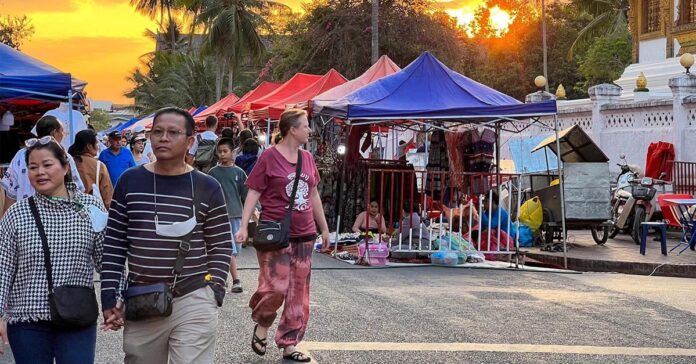
Tourists in night markets in Sisavangvong Road , Luang Prabang (photo credit: XYZAsia)

From January to August, Laos welcomed a total of 2.6 million international visitors while seeing approximately 2.3 million domestic travelers, according to the Tourism Development Department under the Ministry of Information, Culture, and Tourism.

Uncounted, Uncertain: Cambodian Lao Community’s Quest for Identity, Recognition

Photo credit: Cambodian-Laotian Community Strength & Resilience Project.

Kai Sy remembers her childhood fondly, riding a water buffalo through the rice paddies and singing in Lao.

Though her home province of Ratanakiri has been part of Cambodia since 1904, Kai Sy grew up unable to read or write Khmer, preferring to speak Lao like most of those around her.

Today, she is a government functionary and fully literate in Khmer, yet still nurtures her Lao roots. Kai Sy performs traditional Lao songs to audiences across Cambodia, reaching those who speak Lao natively, but feel disconnected from their roots. 

Despite being a significant part of Cambodia’s population, the Lao community lacks official recognition, placing them in a unique position within Cambodian society.

Nobody knows exactly how many Khmer-Lao (Or Lao Cambodians) like Kai Sy there are today, as they are not counted separately by the Cambodian census, because they are not registered as an “indigenous group” by the Cambodian government.

However, estimates fall between 50,000 and 100,000 thousand. If they were to be recognized as an indigenous group, they would likely surpass the Kuoy and Bunong, currently listed as the largest indigenous populations by the Cambodian Indigenous People’s Organization, with estimated populations of 70,000 and 50,000, respectively. 

Cultural Roots and Identity of the Khmer-Lao Community

The Khmer-Lao community has diverged over time from mainland Laos, developing its own unique dialects. Many Khmer-Lao distinguish their way of speaking by referring to it as “Lieu,” as opposed to the “Lao” spoken in Laos.

“The Lao in Cambodia and the Lao in Laos have a lot of differences,” said Meach Mean, a Khmer-Lao government official. “Even the language cannot be understood by each other anymore.”

He went on to say the Khmer-Lao traditions today are 30-40 percent Lao in origin, with the rest being Khmer.

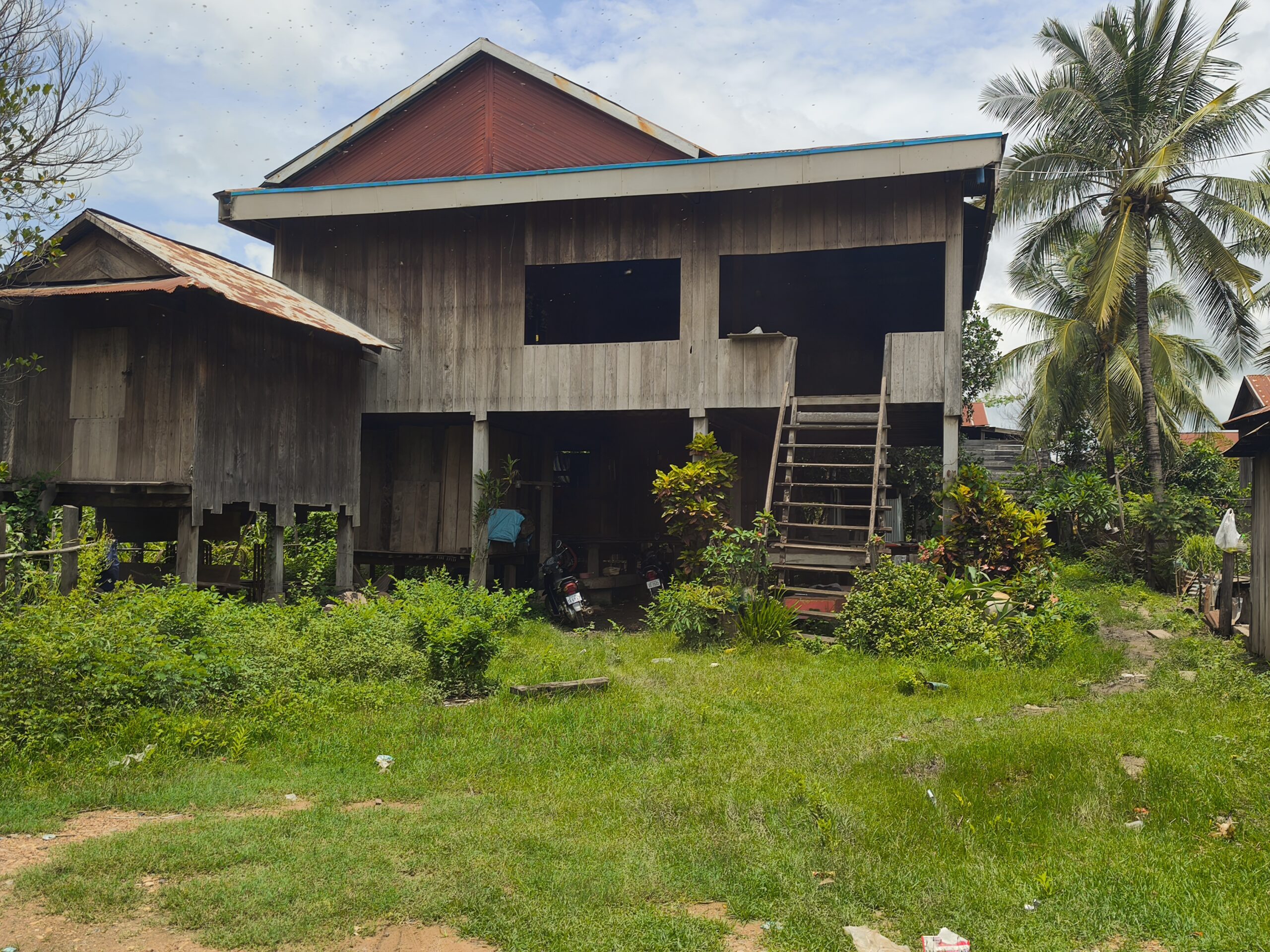
A typical house in Phleuk village. (Daniel Zak, 24 July)

In 2001, the Cambodian government passed an amendment to the Land Law, giving specific protection of land rights for indigenous communities, and giving the first official recognition of indigenous groups as separate legal entities. However, the Khmer-Lao community was not included in this designation. As a result, they do not benefit from the same land protections afforded to the recognized indigenous groups nearby, leaving them vulnerable in terms of land rights and access to resources.

In 2015, local protests erupted over the construction of the Sesan Hydroelectric Dam, drawing attention from international groups and media, especially regarding the displacement of nearby Bunong villages.

Media reports showed that the much larger Lao community in the area received comparatively little recognition. 

Today, the villages near the dam still mostly speak Lao, but there are no organized cultural groups to advocate for their rights and heritage. Many villagers flatly denied the existence of Lao culture, insisting that they were not a separate ethnic group from the Khmer, but rather spoke Lao due to their proximity to the border. They believed that, over time, even this connection would fade.

“The teachers decided that we should all speak Khmer, so we speak Khmer. Our children will learn only Khmer,” said a barber in Phlouk village, which is notable for having its own dialect referred to by other Khmer-Lao as “Original Lieu.” 

He also mentioned that the children would not learn the dialect, a decision supported by the entire village. While outside sources claimed that many in Phlouk village were unhappy about the fading of their Lao heritage, no villagers felt comfortable expressing that sentiment in on-the-record interviews.

“They’re afraid that their loyalty to Cambodia is going to be questioned,” said  Ian Baird, a professor of Southeast Asian studies at the University of Wisconsin, who specializes in indigeneity in Southeast Asia and Lao history, theorizing about the villagers’ reluctance to tell more about their culture.

Bainua, a 69-year-old resident, said that there was “no such thing” as Khmer-Lao traditions beyond language, as they are fully Khmer. He noted that his grandchildren would not learn Lieu, viewing this as beneficial for easier communication.

“One Khmer, two mouths,” Bainua and his fellow villagers repeated. 

Another villager nearby explained that the local population identifies as Khmers, attributing the use of the Lao language to the fact that many had fled to Laos for a few years during the Cambodian Civil War in the 1970s.

Bits of History of Lao Immigration to Cambodia

After the decline of the Khmer Empire (1431 CE), Northeastern Cambodia received waves of immigration by Lao peoples who largely governed themselves, due to a lack of centralized authority by the Khmer state. Later, Lao Kingdoms such as Lan Xang and the Thai vassal Champassak took control of these areas,  building urban centers such as the now regional capital of Stung Treng (A Khmerization of the original Lao name of Xiang Taeng).

When the French took over, they referred to these parts of Indochina as “Southern Laos,” before eventually transferring these territories to their Cambodian protectorate in 1904. 

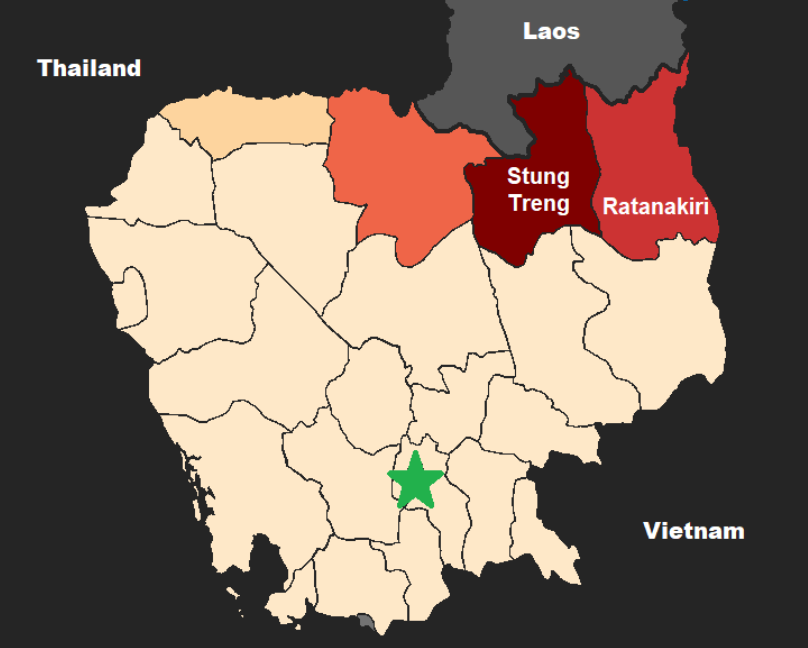
Today, there is a large population of ethnic Lao in these areas, in some localities even as a majority. In Cambodian’s Steung Treng Province and parts of Ratanakiri, many members of other minority groups, such as the Brao and Tampuan, also use the Lao language as a Lingua Franca.

A map depicting the parts of Cambodia with higher concentrations of Khmer-Lao. Made with Mapchart.net

According to Baird, some individuals identified as “Khmer-Lao” may actually be genetically unrelated to the original Lao populations, as they might come from other non-Khmer ethnic groups that have assimilated into the Lao community due to their widespread presence. He also believes that it would be more accurate to call the Khmer-Lao “Lao Cambodians,” as they are citizens of Cambodia but not ethnically Khmer.

“I am ethnically Lao, but Khmer by citizenship,” said Kai Sy, the Khmer-Lao singer, echoing Baird’s sentiment.

Baird has been working with the Khmer-Lao since 1995, and written extensively about their history and relationship with the government.

“It is probably one of the more oppressed groups,” he said over a call, comparing the Lao to other minorities that faced harsh policies.

He explained that in the 1960’s, there were fines for speaking Lao in the city of Stung Treng. Buddhist temples, which once served as centers of Lao culture and literacy, had their lay clergy replaced with Khmers.

In the following years, the Khmer Rouge, while brutal towards many ethnic minorities, took a lighter approach with the Khmer-Lao and other groups in the Northeast, initially leveraging their stronghold by using Lao in communications to evade the Cambodian government.

Today’s Stance and Community Sentiments

Today, the Cambodian government is more inclusive toward indigenous groups and minorities. However, opposition figures still sometimes use xenophobic rhetoric. This, combined with past experiences, can make Khmer-Lao individuals hesitant to discuss their heritage with outsiders, according to Baird.

Lieu Chovannari, a Khmer woman who married into a Khmer-Lao family, acknowledged the existence of cultural differences between Khmer and Khmer-Lao. She moved to the village ten years ago.

“When I first came here, there was some discrimination,” she said. “The elders would talk about me as an outsider.”

She added that it was difficult to adjust to “all their superstitions.”

However, not all Khmer-Lao have the same perspective on their cultural heritage. 

“There are so many of us, but we have lost our way,” said Sai Bunlam, who has been working on creating an association for Khmer-Lao. “When it comes to ceremonies, weddings, house warmings, etc – there’s nobody who really knows it well and to keep our traditions alive. After the elders are gone, nobody will know or understand it.”

He hopes a formal Khmer-Lao organization will help lobby for Lao language education to preserve their culture. Although he received strong community support, momentum waned during the COVID pandemic, and economic challenges have hindered fundraising. 

He envisions establishing Lao language and cultural centers, acknowledging that while full schools may be unrealistic, lessons could be offered in temples and community spaces.

“We want to preserve our identity for the next generation to know the way of life, traditions, and culture of their ancestors,” he said. “If we don’t do it, it will be lost.”

The Khmer-Lao community possesses a distinct culture that is vital to Cambodia’s cultural diversity. With support from the government and civil society organizations, efforts to preserve and promote Khmer-Lao traditions can continue.

The legendary Dusit Thani Bangkok reopens after a landmark transformation

Dusit’s reimagined flagship hotel returns, redefining luxury in the heart of Bangkok.


BANGKOK, THAILAND – Media OutReach Newswire – 30 September 2024 – Dusit Thani Bangkok, the flagship hotel of Dusit International, one of Thailand’s leading hotel and property development companies, has made its highly anticipated return after a stunning transformation as part of the upcoming Dusit Central Park project opposite Lumpini Park in the heart of the city.

The new Dusit Thani Bangkok echoes the spirit of the original hotel, which opened in 1970, and reinterprets its classic qualities through a modern lens.

The opening, held on 27 September 2024, was marked by a special ceremony featuring Mr Chanin Donavanik, Vice Chairman of the Board of Directors and Chairman of the Executive Committee, Dusit International, who had the honour of being the first guest to check in. This gesture pays tribute to his mother’s enduring legacy in launching the original hotel in 1970.

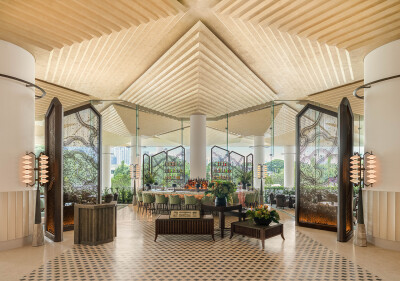
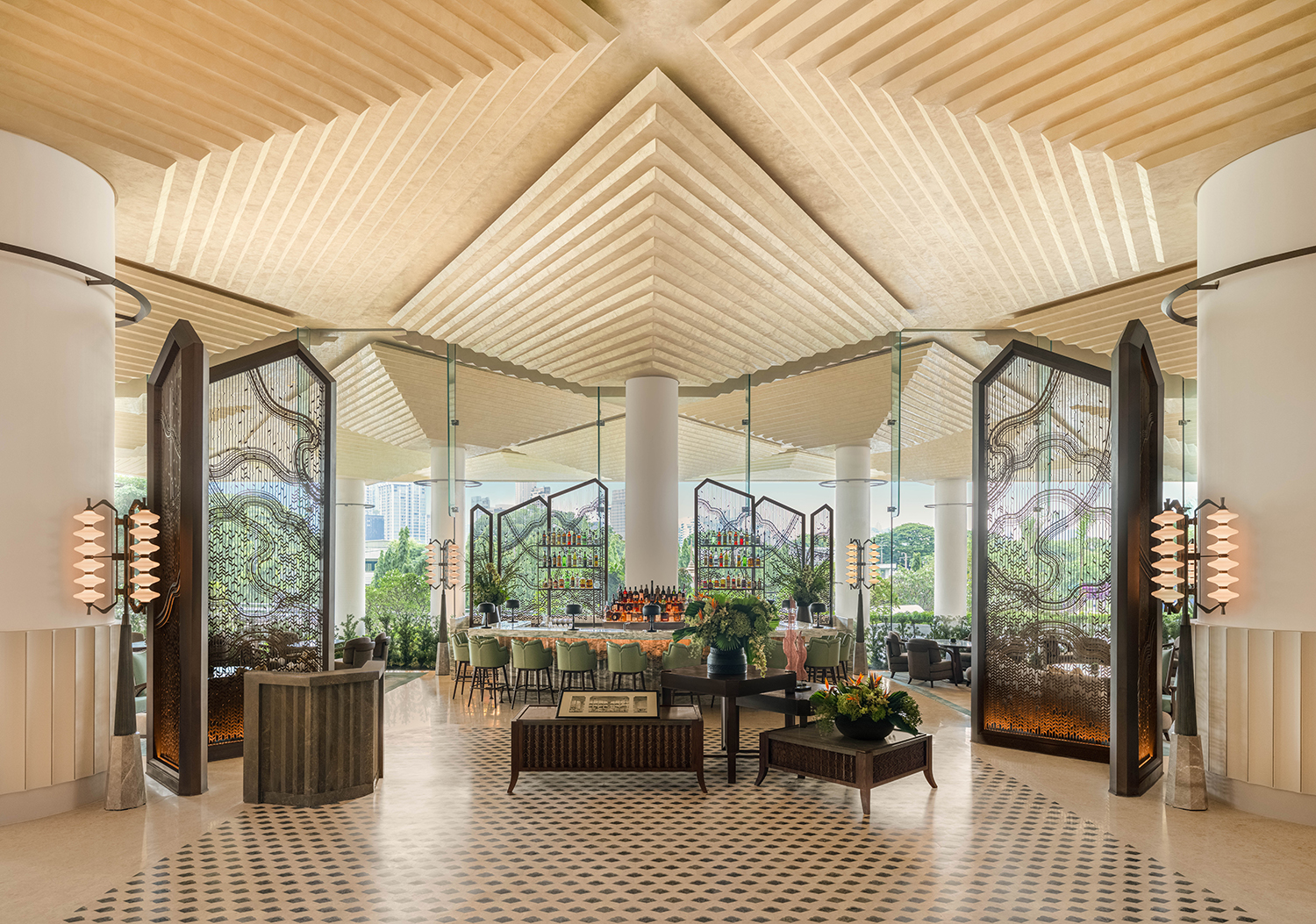
Guests from across the globe travelled to be among the first to experience the hotel’s exquisitely designed Suites and Club Rooms, where expansive, cantilevered picture frame windows capture breathtaking, uninterrupted views of Lumpini Park, providing an unmatched accommodation experience in the city.

The newly transformed hotel also unveiled its expansive meeting and events space, which in keeping with the grandeur of its predecessor, boasts one of the largest ballrooms in Bangkok. The Napalai Grand Ballroom, with its soaring eight-metre-high ceiling and full-width, 55-metre-wide panoramic window, frames picturesque park and cityscape views, creating a dramatic backdrop for any event.

The hotel’s dining venues are equally captivating, each with its own signature touch. The initial offerings include The Pavilion, where guests can savour Thai, Chinese, and international delicacies, and Dusit Gourmet, which offers artisanal bites and international favourites from an open kitchen. Soon, guests will be able to enjoy four more dining concepts, including collaborations with world-class chefs and a chic, multi-level rooftop bar situated alongside the hotel’s iconic spire.

Also launching soon is Devarana Wellness, a unique urban wellness sanctuary concept designed to provide tailored wellness experiences for guests, visitors, and locals, ensuring that every stay is an opportunity for rejuvenation.

“Just as my mother envisioned the original Dusit Thani Bangkok as a beacon of Thai hospitality on the world stage, the new Dusit Thani Bangkok aims to elevate that legacy,” said Mr Donavanik. “This opening marks not only a new chapter for Dusit but also a new era for Thai hospitality. We are excited to welcome our guests to experience this extraordinary transformation, where heritage and tradition seamlessly blend with innovation to establish a new benchmark for luxury accommodation in Bangkok.”

The new Dusit Thani Bangkok is the centrepiece of Dusit Central Park, a landmark THB 46 billion mixed-use development also comprising ultra-luxury residences (Dusit Residences and Dusit Parkside), a state-of-the-art office tower, a high-end retail centre, and an 11,200 sq m Roof Park. These additional components are expected to open gradually in 2025.

Special opening offers with exclusive privileges, including a complimentary airport limousine service in a Porsche Panamera Executive – the first of its kind in Thailand – are now available for booking at dusit.com/bangkok.
Hashtag: #DusitInternational

The issuer is solely responsible for the content of this announcement.

About Dusit Thani Bangkok

The iconic Dusit Thani Bangkok reopens its doors to welcome guests once again following a captivating transformation. Presiding over Lumpini Park, the hotel redefines luxury with all park-view accommodations and sets the scene for unforgettable experiences with world-class dining and peerless event venues.

More than just a hotel, Dusit Thani Bangkok brings classic grandeur to life and invites discerning travellers to experience a vibrant blend of modern elegance and timeless charm inspired by Dusit’s world-renowned gracious hospitality.

For more information, please visit

Singapore: The Gateway for Global and Southeast Asian Businesses to Thrive Beyond Borders


SINGAPORE – Media OutReach Newswire – 30 September 2024 – As Southeast Asia (SEA) experiences strong economic growth, Singapore is strategically positioned to support manufacturers in expanding their market presence and leveraging advanced manufacturing capabilities. With a population of approximately 670 million and the potential to become the world’s fourth-largest economy by 2030, SEA presents immense opportunities for global manufacturers. Singapore’s robust manufacturing industry, a skilled workforce, and strategic connectivity are essential for unlocking this potential.

How manufacturers can drive their Southeast Asia go-to-market strategy from Singapore

Singapore’s vibrant manufacturing landscape offers a stable base for companies seeking to pursue market expansion in Southeast Asia. With a business-friendly environment, proximity to vibrant and growing markets, and a network of high-tech contract manufacturers, Singapore provides an enabling ecosystem for manufacturers to scale their operations efficiently. The country’s strategic location, coupled with its robust infrastructure, makes it an ideal partner for companies seeking to establish or expand their market footprint in the region. Its world-class infrastructure, including modern ports, airports, and a robust transportation network, ensures efficient logistics and seamless trade flows. This connectivity enables manufacturers to not only access Southeast Asia as a vast consumer market but also leverage it as a production hub, strengthening supply chains and reducing disruptions.

Central to Singapore’s appeal is its advanced research and innovation ecosystem. The government’s Research, Innovation, and Enterprise 2025 (RIE2025) plan underscores Singapore’s commitment to maintaining its competitive edge in global manufacturing. With an investment of S$25 billion – and an additional S$3 billion committed in 2024 – the plan focuses on enhancing Singapore’s capabilities in areas such as Industry 4.0 (i4.0), digital transformation, and sustainable manufacturing.

Initiatives like the National Robotics Programme (NRP) and the Advanced Remanufacturing and Technology Centre (ARTC) demonstrate Singapore’s commitment to turning research into impactful manufacturing solutions. Other significant partners include the Institute of Microelectronics (IME), a leader in semiconductor research, and the National Additive Manufacturing Innovation Cluster (NAMIC), which supports companies in additive manufacturing through design, technology consultancy, and prototyping capabilities. Together, these initiatives ensure that Singapore remains at the forefront of global manufacturing, offering businesses the tools and partnerships to thrive in a rapidly evolving industrial landscape.

A significant factor in Singapore’s success is its highly skilled and adaptable workforce. Manufacturing is the largest component of the Singapore economy, with one in every eight jobs in the country related to this sector. The government’s commitment to upskilling and reskilling workers through initiatives like SkillsFuture Singapore, the Industry 4.0 Human Capital Initiative (IHCI), and the Global Ready Talent Programme ensures that Singapore talent remains at the cutting edge of industry advancements. These initiatives ensure that Singapore’s workforce is equipped with the latest skills and knowledge to navigate the evolving manufacturing landscape while helping companies develop a strong talent pipeline capable of driving innovation and growth.

Singapore’s robust innovation ecosystem, diverse contract manufacturers, and skilled workforce make it an ideal base for companies expanding in Southeast Asia. As the region grows, Singapore’s role as a manufacturing hub becomes increasingly critical, offering opportunities for market expansion and leveraging the thriving Singapore manufacturing industry and talent for long-term success.
Hashtag: #EDB #SingaporeEconomicDevelopmentBoard #Singapore


The issuer is solely responsible for the content of this announcement.

Singapore Economic Development Board

The Singapore Economic Development Board (EDB), a government agency under the Ministry of Trade and Industry, is responsible for strategies that enhance Singapore’s position as a global centre for business, innovation, and talent.

2024 Smart City Expo World Congress · Hangzhou Stage Wraps Up, Driving Global Smart City Collaboration

Theme: “Converge! Blooming Our Business in Transition”


HANGZHOU, CHINA – Media OutReach Newswire – 30 September 2024 – The 2024 Smart City Expo World Congress · Hangzhou Stage has concluded with great success, uniting over 150 international organizations from 18 countries, nearly 200 global smart city leaders, and more than 70 city delegations. With the theme “Converge! Blooming Our Business in Transition,” the event showcased the latest advancements in smart city technology while promoting cross-border collaboration and innovation.

In opening speech, Ugo Valenti, CEO of the Smart City Expo World Congress, emphasized China’s pivotal role in the global smart city ecosystem. “China has demonstrated leadership in leveraging technology to transform cities, offering valuable lessons to urban areas worldwide,” remarked Ugo.

The congress aimed to foster a transnational network for smart city cooperation, focusing especially on strengthening connections among Asian cities for sustainable urban growth. It also encouraged collaboration between global governments and enterprises. The event featured more than 40 public activities, including keynote speeches, thematic forums, and exclusive showcases of Asian cities. In addition, nearly 40 closed-door meetings were held to facilitate project collaborations between key stakeholders, exploring new opportunities in smart city development.

The Public Exhibition Area was organized into five tracks: Enabling Technologies, Energy and Environment, Urban Logistics and Mobility, New Consumption and Livability, and Public Services and Economy. Over 100 smart city companies, including leading firms such as Huawei, Dahua, and Leyard, demonstrated how cutting-edge technologies can enhance urban environments and provide innovative solutions for future cities.

The event also hosted the 2024 Region* & China Smart City Awards (powered by the World Smart City Awards), recognizing excellence in categories such as City, Enterprise, Best Projects (X-SDI), and Leadership. The China Smart City Awards attracted 166 proposals from 45 cities across China, while the Region Awards received 149 proposals from 9 countries, reflecting the diversity and growth of the global smart city ecosystem.

Among the winners, Shenzhen, from Guangdong Province, received the China Smart City Awards – “City Award” for its leadership in digital transformation and smart urban governance, which have significantly enhanced its social management and city services.

China’s forward-thinking strategies, advanced technologies, and effective urban governance continue to gain international recognition, setting trends and driving the sustainable and intelligent development of cities worldwide.
Hashtag: #SmartCityExpoWorldCongress

The issuer is solely responsible for the content of this announcement.