


U.S. Ambassador Dr. Peter M. Haymond presented personal protective equipment and hygiene supplies to Minister of Health Dr. Bounfeng Phoummalysith, on Tuesday as part of the United States’ ongoing Covid-19 support to the Lao PDR.
Laos Forms Special Taskforce to Combat Fake News

Authorities have established a special taskforce to monitor and respond to illegal online media and fake news in Laos.
Rising expectation of ‘cashless’ societies worldwide: a second annual report by the Economist Intelligence Unit (EIU), shows growing acceptance of digital currencies, accelerated by covid-19
- Consumers are increasingly adopting cashless payment methods while governments are stepping up planning or piloting of central bank digital currencies (CBDCs) and companies are experimenting with accepting open-source digital currencies, such as Bitcoin, for treasury or portfolio allocation.
- A cashless trend was already strong, according to the previous year’s research but in 2021, covid-19 prompted more movement away from physical cash. In 2020, only about 72% of respondents said that their country was likely to become a cashless society; that grew to over 81% this year. Meanwhile, the percent of respondents believing their country would never become cashless, saw a stark drop from 28% to 19%.
- While transaction settlement is a main function of any currency, digital or otherwise, the institutional investor and corporate treasurer respondents in the EIU research appear to be using digital currencies more as a store of value with a deflationary hedge than purely as a settlement option.
- About 76% of corporate treasury and institutional investor executives say covid-19 accelerated demand for, and adoption of, digital currencies.
- The concept of a digital currency playing a role as a “digital gold” asset in corporate treasuries or institutional investor portfolios is gaining acceptance among executives.
HONG KONG SAR – Media OutReach – 27 May 2021 – In 2020, the Economist Intelligence Unit conducted a survey to measure the relative acceptance of digital currencies and other digital payment methods, finding that a cashless trend was strong with consumers globally. In February and March of 2021, a new survey set out to gauge how sentiment has changed in the past year. Results from this year indicate favour for both digital transactions and currencies has risen further.
Over the past 12 months, 27% of survey respondents report that they always (as close to 100% of purchases as possible) use digital payments instead of physical banknotes, coins or credit cards versus 22% in the previous year’s study. Examining the metric from the opposite angle—those reporting only very rare use of digital payment options—the rate declined from 14% to 12%, indicating a shrinking holdout for physical cash. Further details on comparative annual results, along with the 2020 survey, can be found at Digimentality 2021, commissioned by crypto.com.
While there are a variety of ways people can transact digitally—including smartphone apps or digital currencies—the most common form of digital currency consumers recognise is the open-source variety, typically called a cryptocurrency—such as Bitcoin. Cryptocurrencies remain the most commonly known form of digital currency options; more than half (55%) of consumers in the 2021 survey say they are aware of them even if they have never owned or used one. Despite increased media coverage of CBDCs recently, it was still the least recognized form of digital currency.
The covid-19 crisis has contributed to digital currency awareness, with about half of the consumer respondents agreeing that the pandemic has heightened the use case for a cryptocurrency.
The pandemic had an even more marked influence on institutional and corporate executives, who were tested in a supplementary survey during the same time period; about 76% of executives say covid-19 has accelerated demand for and adoption of digital currencies.
The executive survey had deeper questions on how digital currencies play a role in either corporate treasuries or institutional investor portfolios. While a majority of respondents classified a digital currency as something that should be used primarily for transactional purposes (ie settling payments), the most common commercial uses presently appear to be for capital appreciation and asset diversification.
A key finding in the report, which includes interviews with Henri Arslanian, PwC’s crypto lead, and Mathew McDermott, managing director and global head of digital assets for Goldman Sachs, is corporate and institutional support for the concept of a digital currency playing a role similar to gold in a portfolio. As a notional “digital gold”, cryptocurrencies can hold similar patterns in terms of limited supply, being authenticatable and dividable, and providing a level of diversity in asset allocation and value storage. However, regulatory, trust and technological-understanding concerns linger.
Jason Wincuinas, the Economist Intelligence Unit editor who spearheaded the report said: “Money is rapidly evolving. Only a few years ago there seemed to be very little commercial or popular support for even the idea of a digital currency and within the past year, we’ve seen several governments announce new plans to create digital versions of their currencies. It’s like a new space race on that level. At the same time, we’ve seen interest and trust in cryptocurrencies grow among consumers. Now that we’ve added perspective from some of money’s heaviest users—corporate treasuries and institutional investors—we have a more comprehensive view of how digital currencies might evolve. Sentiment on the institutional side of the scale already seems much higher than expected.”
More detail on how institutional investors and corporate treasurers use or expect to use different forms of digital currencies can be found in the full report, as well as year-over-year comparisons on consumer sentiment.
Visit digitalcurrency.economist.com for the full report.
About the research
Digimentality—digital currency from fear to inflection is a report from The Economist Intelligence Unit, commissioned by Crypto.com, exploring the extent to which digital payments and currencies are trusted by consumers and what barriers may exist to basic monetary functions becoming predominantly electronic or digital. The analysis is now bolstered with a survey of corporate treasurers and asset managers. Both the consumer and executive surveys were conducted through February and March of 2021. About half of the consumer respondents came from developed economies, and half from developing ones. The full demographics are available at digitalcurrency.economist.com . The consumer survey tested 3,053 respondents across Asia, Europe and North America; the second part of the report draws from a survey of 200 institutional investor and corporate treasury management respondents in the same regions.
About The Economist Intelligence Unit
The EIU is the thought leadership, research and analysis division of The Economist Group and the world leader in global business intelligence for executives. We uncover novel and forward-looking perspectives with access to over 650 expert analysts and editors across 200 countries worldwide. More information can be found on www.eiuperspectives.economist.com. Follow us on Twitter, LinkedIn and Facebook.
About Crypto.com
Founded in 2016, Crypto.com today serves over 10 million customers with the world’s fastest growing crypto app, along with the Crypto.com Visa Card — the world’s largest crypto card program — the Crypto.com Exchange and Crypto.com DeFi Wallet. Recently launched, Crypto.com NFT is the premier platform for collecting and trading NFTs, curated carefully from the worlds of art, design, entertainment, sports.
Crypto.com is built on a solid foundation of security, privacy and compliance and is the first cryptocurrency company in the world to have ISO/IEC 27701:2019, CCSS Level 3, ISO27001:2013 and PCI:DSS 3.2.1, Level 1 compliance, and independently assessed at Tier 4, the highest level for both NIST Cybersecurity and Privacy Frameworks.
Crypto.com is headquartered in Hong Kong with a 1,000+ strong team. Find out more by visiting https://crypto.com

African Energy Chamber: Africa Must Fight Energy Poverty with Oil and Gas Development
JOHANNESBURG, SOUTH AFRICA – EQS Newswire – 26 May 2021 – On May 18, 2021, the International Energy Agency (IEA) released “Net Zero by 2050: A Roadmap for the Global Energy Sector,” which outlines plans for the global energy sector to reach “net zero” greenhouse gas emissions by 2050.
Achieving net zero emissions means the amount of greenhouse gases being emitted into the atmosphere would equal the amount being removed. Achieving this balance, the IEA maintains, would require more than aggressive carbon-capture measures: It would call for a swift and immediate shift from petroleum energy sources to energy provided through naturally replenished sources like wind, water, and solar power.
From an environmental standpoint, this is a great concept.
But we live in reality. And today, in real-world Africa, this goal is not feasible. Nor is it advisable. While I agree with their data on many topics, the IEA’s conclusion is flat-out wrong on this issue. Africa needs oil and gas.
Unreasonable Objectives
Some of the critical steps in IEA’s roadmap include:
– No new investment in new fossil fuel supply (including oil and gas) after 2021
– No new sales of fossil fuel boilers after 2025
– No new internal combustion engine (ICE) car sales after 2035 globally
– 60% of car sales are electric by 2030, and 50% of heavy truck sales are electric from 2035
These steps assume a lot about the state of the world – assumptions that are faulty, especially for Africa. For one, it will require universal energy access by 2030, meaning that everyone has access to electricity and clean cooking. And with approximately 592 million Africans currently without this access, we’re going to be hard-pressed to flip that switch in less than 10 years.
The IEA’s roadmap to net zero also relies on unprecedented investments in renewables – a substantial boost in clean energy investments from the $1 trillion made over the last five years all the way up to $5 trillion annually by 2030 – and cooperation from policymakers who are unified in their efforts. In this idyllic partnership, our Western counterparts talk a good game. But the fact is, to date, these same Western countries have invested little to no funding into Africa’s renewables space. To our dismay even the International Oil Companies that have tried to accept the IEA’s publicity stunt have little or no renewable projects in Africa.
“For many developing countries, the pathway to net zero without international assistance is not clear,” OPEC wrote in response to IEA’s roadmap release, issuing a “critical assessment” on the very same day. “Technical and financial support is needed to ensure deployment of key technologies and infrastructure. Without greater international co‐operation, global CO2 emissions will not fall to net zero by 2050.”
As I have stated in the past, demonizing energy companies is not a constructive way forward, and ignoring the role that carbon-based fuels have played in driving human progress distorts the public debate. We cannot expect African nations, which together emitted seven times less CO2 than China last year and four times less than the US, according to the Global Carbon Atlas, to undermine their best opportunities for economic development by simply aligning with the Western view of how to tackle carbon emissions.
Creating New Problems
China, meanwhile, appears willing to continue investing in fossil fuel projects in Africa. This means that to keep their nations energized, African governments will have little choice but to partner with China – whose performance is notoriously poor when it comes to environmental protection, despite having signed the Paris climate accord. In this scenario, China will become the most influential entity in the African oil and gas industry. And giving China (or any foreign entity) such a monopoly is a dangerous play.
For the IEA plan to work, no new oil and natural gas fields would be developed. The potential energy security risk here is twofold: Concentrated production means that demand will exceed the supply of traditional fuels, while new energy security issues emerge related to the new technologies such as cybersecurity and a dwindling supply of rare earth and critical minerals. And energy insecurity brings economic insecurity and geopolitical instability.
At the same time, a ban on fossil fuel production would bring about the collapse of many carbon-dependent governments. The oil industry is the primary source of income for many African nations. Without the continuation of petroleum production – or time and opportunities to cultivate new revenue sources – their economies will suffer – along with their citizens.
Interestingly, the very announcement of this roadmap features an admission by IEA Executive Director Fatih Birol that net zero will unhinge socioeconomic structures.
“This gap between rhetoric and action needs to close if we are to have a fighting chance of reaching net zero by 2050 and limiting the rise in global temperatures to 1.5 C. Doing so requires nothing short of a total transformation of the energy systems that underpin our economies,” Birol wrote.
And many of the world’s economies cannot bear this.
Excellent Points from Australia
Energy officials from Australia, for example – incidentally, one of the IEA member countries – had plenty to say in response.
“There are many, ways to get to net zero, and the IEA just looked at one narrow formula,” said Australian Petroleum Production and Exploration Association chief Andrew McConville. “The IEA report doesn’t take into account future negative emission technologies and offsets from outside the energy sector – two things that are likely to happen and will allow vital and necessary future development of oil and gas fields.”
In urging policymakers to maintain a degree of skepticism about the wisdom of the IEA roadmap, McConville isn’t alone.
“We are bringing emissions down,” stated Angus Taylor, Australia’s Minister for Energy and Emissions Reduction, “but we’re going to do it in a way that ensures we’ve got that affordable power that Australians need.”
Rather than being dictated to by entities abroad, Taylor argued that Australia must proceed at a pace that makes sense locally. And part of these local considerations includes ensuring that people have energy and jobs. The IEA’s call to cease investment in fossil fuels will impede both of these metrics.
“Global gas demand is forecast to grow by 1.5% on average per year out to 2025, providing incentive to ensure our large gas fields . are developed as soon as possible,” said Keith Pitt, Minister for Resources. “Large upcoming offshore developments . will create thousands of new high-wage jobs.”
Africa’s Realities
The same holds true for African countries.
While environmental causes are a major focus in the West, lawmakers in Africa’s developing countries are more concerned with living wages and supplying basic necessities to the continent’s growing population.
The IEA plan amounts to austerity measures that would see Africans leaving petroleum resources in the ground. It would essentially brand poor Africans criminals – or at the very least enemies of the environment – for using fossil fuels.
This is folly. Let’s keep in mind the critical role that natural gas is playing in the global transition to clean energy: It’s an affordable and reliable bridge to renewables. And natural gas is particularly important to Africa. As I’ve written in the past, the African Energy Chamber’s 2021 Africa Energy Outlook report projects that African gas production and consumption are going to rise in the 2020s. As a result, Africa’s natural gas sector will soon be responsible for large-scale job creation, increased opportunities for monetization and economic diversification, and critical gas-to-power initiatives that will bring more Africans reliable electricity. These significant benefits should not be dismissed in the name of achieving net zero emissions on deadline. To tell African countries with gas potential like Mozambique, Tanzania, Equatorial Guinea, Nigeria, Senegal, Libya, Algeria, South Africa, Angola and many others that they cant monetize their gas and rather wait for foreign aid and handouts from their western counterparts makes no sense.
What’s more, we can’t overlook the fact that renewable energy solutions are still young technologies -they are less reliable and more expensive per unit of power than tried-and-true petroleum products. Not only that, but achieving net zero by 2050 would require widespread adoption of technologies that are not even available yet.
Don’t get me wrong: I understand the importance of working toward renewables. I believe they are the future of the energy industry. But the global energy transition must be inclusive, equitable, and just. Unfortunately, the roadmap laid out by the IEA is none of these.
The IEA is a respected institution whose opinions help shape the rhetoric of the global energy market. So instead of mandating these strict guidelines from abroad, the IEA should try working with African countries to find solutions that we can actually abide. At the very least, I encourage the IEA to consider partnerships with African Private sector and financial institutions, whose collaboration with indigenous and international energy stakeholders provides invaluable insight from all sides across the energy industry. The IEA should use its voice to push for what I have always believe Africa needs the most at this time, free markets, personal responsibility, less regulation, low taxes, limited government, individual liberties, and economic empowerment will boost African energy markets and economies.
Africa deserves the chance to capitalize on its own oil and gas to strengthen itself, rather than being bullied onto a path determined by Western institutions that don’t face the same obstacles. We must be able to improve our energy sector by exploring our continent’s full potential in a way that benefits our people.
Download image: https://bit.ly/2RLZACk
By NJ Ayuk, Executive Chairman, African Energy Chamber (www.EnergyChamber.org)
#AfricanEnergyChamber

Laos Sees Trade Deficit of USD 64 million in April
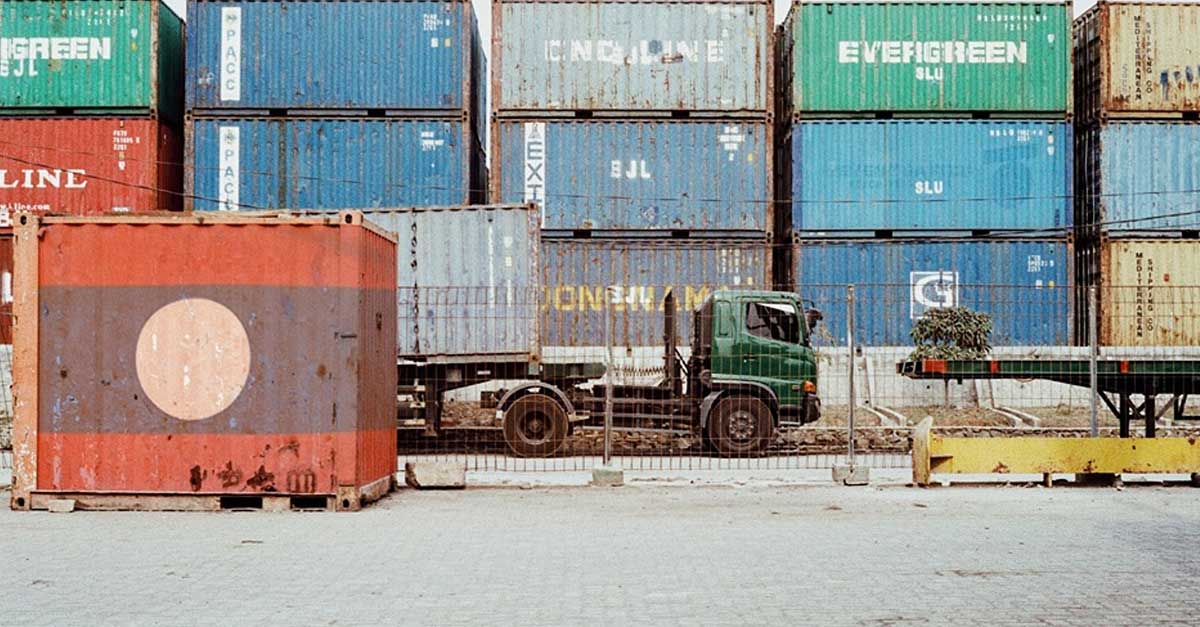
Laos recorded a trade deficit of USD 64 million in April, according to information from the Lao Trade Portal.
Laos Confirms Five New Cases of Covid-19

Laos has confirmed 5 new cases of Covid-19, bringing the total number of cases to 1,883.
Beauty Salons Shut Down in Vientiane Capital

Beauty salons and hairdressers in Vientiane Capital have failed to comply with the lockdown order issued by the mayor.
Coface China Corporate Payment Survey 2021: Rising Payment Risks in Construction and Energy Sectors Despite Stronger Economic Outlook
HONG KONG SAR – Media OutReach – 26 May 2021 – Overall, the Chinese economy expanded by 2.3% in 2020, being the only major economy to record growth, and Coface expects the GDP to accelerate to a 7.5% growth in 2021. This would be the fastest pace since 2013, and comfortably above the minimum of 6% set by the authorities.
In normal times, higher economic growth should translate into fewer incidents of payment delays, but the recovery has been uneven across sectors.Thus, Coface’s 2021 China Corporate Payment Survey[1] shows that payment terms shortened by 11 days on average in 2020, falling to 75 days, while the distribution of credit terms leaned towards a shorter rather than longer period.
Finally, firms also benefited from greater fiscal and monetary support measures last year, which are expected to be further tapered this year. Coface expects an increase in bond defaults and insolvencies in 2021, especially among sectors that accumulated higher cash-flow risks in 2020 amid a slowdown in credit growth.
Bernard Aw, Economist for Asia Pacific at Coface, said:
“Coface’s latest China Payment Survey showed Chinese companies taking the necessary step to strengthen credit management in 2020 due to the Covid-19 pandemic. Credit terms were shortened in many sectors, and more credit management tools were deployed, including the use of credit insurance and credit reports, alongside debt collection and factoring services. As a result, fewer companies experienced payment delays in 2020 compared to the previous year.
“While the path of the pandemic remains uncertain and a sustained economic recovery is far from guaranteed, Chinese firms are optimistic about China’s economic prospects, with 73% of respondents expecting growth to improve this year, up significantly from 44% in 2020. This coincided with more firms anticipating better sales performance and improved cash flows this year.
“Nevertheless, the survey indicated that credit risks are building up in specific sectors, which warrant close monitoring in the coming months. The proportion of firms in the construction and energy sectors that reported ultra-long payment delays (ULPDs, over 180 days) amounting to more than 10% of annual turnover doubled in 2020 to over 60%, hinting at heightened cash flow risks. This development overlapped with rising bond defaults in mainland China, especially in the construction and real estate sector.
“Looking ahead, Coface expects corporate bond defaults and insolvencies in China to increase in 2021, especially among sectors that accumulated higher cash flow risks in 2020 due to the pandemic.”
Payment delays[2]: Most sectors experienced shorter delays, except construction
Fewer companies experienced payment delays in 2020, with 57% of respondents reporting overdue payments, down from 66% in 2019. The drop in payment delays reflected a strong government policy response to soften the impact of the pandemic on business activity, which included tax relief, loan guarantees and loan interest waivers. According to Coface survey, firms in 11 out of 13 sectors reported a decline in payment delays, despite the difficult context. Among them, wood, pharmaceuticals, transport and ICT reported the largest drops.There was no change in retail, while construction saw an increase in overdue payments.
Customers’ financial difficulties were the main reason for payment delays. The lack of financing resources was the second most common reason – after fierce competition – suggesting that pockets of the economy may not have access to government support.
Upturn boosts optimism, but higher prices remain key concerns
With China being the only major economy to see GDP growth in 2020, and recent economic data pointing to a steady expansion in the first quarter of 2021, firms are overall optimistic about economic conditions, according to the survey. Over 70% of respondents expect growth to improve in 2021, up considerably from 44% in 2020. This optimism was accompanied by a greater share of firms anticipating higher sales and cash-flows over the next 12 months. Consequently, a majority (62%) of respondents expects their business to return to pre-COVID-19 levels in less than a year, while nearly a quarter estimates this period between one and two years. Higher prices was the most common impact mentioned by respondents, where almost two-thirds stated that the pandemic led to an increase in commodity prices, as governments’ public health measures disrupted global supply chains.
Despite the pandemic, 47% of respondents admitted not using any credit management tool to mitigate cash-flow risks in 2020, after 40% in 2019. At the same time, a greater proportion deployed more than one credit management tool. The percentage of firms using credit insurance increased from 17% in 2019 to 27% in 2020, while those using credit reports were at 31% in 2020, up significantly from 19%. Both factoring and debt collection also saw an increase compared to the previous year, reaching 10% and 13%, respectively.
Bond defaults and insolvencies set to rise in 2021
At first glance, our survey’s findings may not seem to illustrate the connection between cash-flow risks and corporate bonds defaults, but a sectoral breakdown shows a strengthening of the link. The trend in China’s corporate bond defaults has been on the rise since the first case in 2014, rising from less than USD 1 billion in 2015 to a record USD 27 billion in 2020, according to data compiled by Bloomberg. In the first four months of 2021, bond defaults surged by over 70% to USD 18 billion, mostly in real estate, aviation and electronics. A significant proportion of the defaults (37%) was linked to HNA Group, a Chinese conglomerate involved in various industries including aviation, real estate, financial services, tourism and others. Our survey suggested that many of these sectors also had high cash-flow risks, with 67% of respondents in construction reporting over 10% of annual turnover tied up in ULPDs (Ultra Long Payment Delays), alongside 29% in ICT and 19% in transport.
Looking ahead, Coface expects corporate bond defaults and insolvencies to increase in 2021, especially in sectors that accumulated higher cash-flow risks in 2020, as indicated in our 2021 China Corporate Payment Survey. These are the sectors with the highest proportion of ULPDs amounting to over 10% of annual turnover, including construction (67%), energy (62%) and retail (30%).
[1] This 2021 China Corporate Payment Survey was conducted between February and April this year, and surveyed over 600 companies across 13 broad sectors located in mainland China.
[2] Payment delay – the period between the due date of payment and the date the payment is actually made.
Coface: for trade
With 75 years of experience and the most extensive international network, Coface is a leader in trade credit insurance and adjacent specialty services, including Factoring, Debt Collection, Single Risk insurance, Bonding and Information services. Coface’s experts work to the beat of the global economy, helping ~50,000 clients, in 100 countries, build successful, growing, and dynamic businesses across the world. Coface helps companies in their credit decisions. The Group’s services and solutions strengthen their ability to sell by protecting them against the risks of non-payment in their domestic and export markets. In 2020, Coface employed ~4,450 people and registered a turnover of €1.45 billion.
COFACE SA. is listed on Compartment A of Euronext Paris.
ISIN Code: FR0010667147 / Mnemonic: COFA
#Coface

