Home Blog Page 6265

VietinBank Opens Laos Headquarters in Vientiane

VietinBank Opens Laos Headquarters in Vientiane

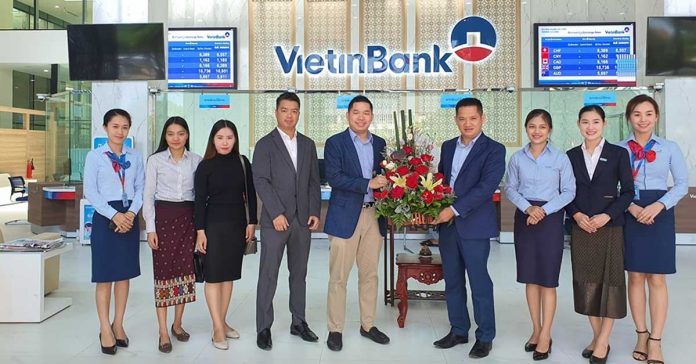
Vietnam Joint Stock Commercial Bank for Industry and Trade (VietinBank) has inaugurated the headquarters in the Lao capital Vientiane, a move that comes amid increasing cooperation between Laos and Vietnam in the banking and finance sectors.

VietinBank opened its first branch in Laos in 2012, which was officially upgraded in 2015 to VietinBank Laos to become a wing of VietinBank. Then the bank opened a branch in Champasack Province in September 2016.

Speaking at the inauguration ceremony on September 17, Lao Deputy Prime Minister and Finance Minister Somdy Duangdy said the new headquarters will contribute to raising the brand name of the bank, and giving a facelift to Vientiane and Laos in general, as quoted by Nahn Dan newspaper.

VietinBank’s move comes with the latest cooperation between Laos and Vietnam in the finance and banking areas.

The Bank of the Lao PDR and the State Bank of Vietnam held a conference on September 17 to share experience in macro-economy management, particularly in the finance-banking area.

They exchanged views on macro-economic and currency policy as well as the method of management over commercial banks run by the State and related matters while having agreed to continue foster affiliation in professional activities and information technology application.

In particular, the two sides vowed to encourage and create favorable conditions for commercial banks of each other to seek partnership and invest in each other’s country to promote the banking system in both countries.

They also discussed “difficulties” and “obstacles” that six Vietnamese commercial banks in Laos, including VietinBank, are facing and how to tackle them, Vietnam Plus reported without providing further details.

Chinese-Lao Collaborative Movie “Champa Blossom” Premieres

Chinese-Lao Collaborative Movie “Champa Blossom” Premieres

A Chinese and Lao collaborative production, Champa Blossom, has officially premiered at Vientiane’s Major-Platinum Cineplex.

The movie was jointly produced by Laos and China, and begins screening nationwide today.

A ceremony was held for the premiere at the cineplex on Wednesday, attended by the cast, crew, producers, and relevant government officials from both countries.

“It is a please to celebrate the friendship between Laos and China, especially during Visit Laos-China Year 2019,” said Mr. Vithoun Soundara, Director General of the Cinema Department, Lao Ministry of Information, Culture, and Tourism.

The story of Champa Blossom demonstrates the friendly and cooperative relationship between Laos and China, and delves into the significance of the friendship and unity between the two nations while presenting the beautiful natural scenery of Laos to the audience.

Shooting commenced in 2016, with a cast of Lao and Chinese actors, telling the story of love between Lao and Chinese nationals, and demonstrating the differing but equally beautiful cultures of each.

The star of the show is Lao doctor-turned-actress Chandaly Ningnang Sitpraxay.

In the 90-minute film, five Chinese youths who travel among ASEAN countries, one of which is Laos.

During the visit, they meet a young Lao girl who is half-Lao and half-Chinese, and who works part-time in a restaurant. Together they join to sing the song Thian Mi Mi.

Later, two of them meet again in Luang Prabang and young love blossoms between them.

The movie is in celebration of the 55th anniversary of bilateral relations between Laos and China.

Morning Market Mall Complex Slated for Redevelopment

Morning Market Mall Complex Slated for Redevelopment
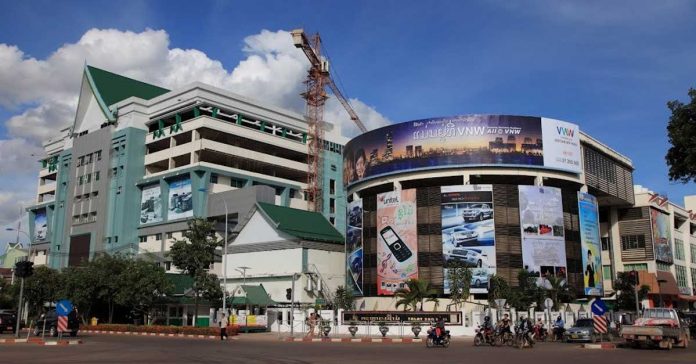
The Morning Market Mall

A press conference was held last Friday at Vientiane’s Talat Sao (Morning Market) Mall to inform the public of the future of the market and mall complex, which has been uncertain for some years.

The press conference was held by Mr. Atsaphangthong Siphandone, Vice Mayor of Vientiane Capital, Mr. Xaykham Ounmixay, Vice President of the State Inspection and Anti-Corruption Authority, Mr. Khammone Bouaphane, Deputy Head of the Vientiane Capital Department of
Finance, alongside heads of urban planning and public works departments.

Shopkeepers and retailers currently operating inside the mall complex were also present at the press release.

According to a recent Lao Post story, Mr. Khammone said that in line with a notice by the Prime Minister’s Office on dispute resolution in relation to the concession of the morning market, the Vientiane Capital administrative authorities are making every effort to find a resolution to the ongoing dispute.

Whilst details of the nature of the dispute were not revealed, resolution of the dispute will involve the redevelopment of the morning market site as part of a wider plan drafted by the Vientiane Capital Department of Public Works and Transport, and in line with current market conditions.

The Morning Market complex is currently under the custodianship of the government, with the original market and first Morning Market Mall being managed by a special government department. The Morning Market Mall II complex is under the management of Houasinh Phattana Ltd, who won the right to management by court order.

Signage for a non-existent Big C Super Center remains at the mall

Because the morning market complex is situated in a prime location in central Vientiane and is a center for many types of trading, there has been interest in redevelopment by various developers.

The government is calling upon any interested party to submit a proposal for redevelopment and management of the Talat Sao complex under the guidance and in line with certain conditions. One such condition is that whoever takes over the project will be responsible for the construction of a pedestrian bridge linking the three Talat Sao buildings with the adjacent bus station.

The new project owner will also be responsible for the repayment of the debts left over from the previous project owner.

Paksan Customs Fails to Meet Revenue Target in First 8 Months

Paksan Customs Fails to Meet Revenue Target in First 8 Months

Paksan International Customs in Bolikhamxay Province has failed to meet its revenue target between January and August amid a drop in the volume of imports.

The Paksan checkpoint, which connects Thailand, Vietnam and Laos by road, serves as an economic and services gateway, facilitating trade, investment and tourism and contributing to the country’s revenue collection.

The customs checkpoint was only able to collect revenue amounting to LAK 132 trillion (USD 14.9 billion) in the first eight months of this year, meeting only 43.81 percent of its planned LAK 302 trillion. The customs met 57.68 percent of its target last year during the same period.

This is mainly because of the decrease in imports of fuel, vehicles, spare parts, gas, electric appliances, and other goods this year, according to Mr. Xayxana Vongsomphou, Deputy Chief of Paksan International Customs.

In particular, Mr. Xayxana cited the drop in imports of fuel for Nam Ngiep 1 Hydropower Construction project and Phubia Mining projects as the main reason for the decrease in revenue this year.

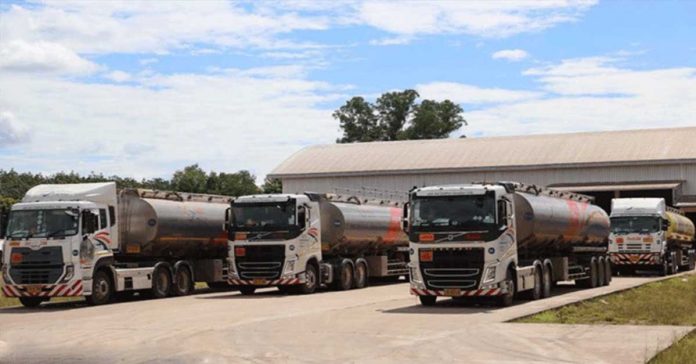
The customs checkpoint collected LAK 106 trillion in tax in the first eight months of last year through the imports of 51 million liters of fuel, while it only collected LAK 90 trillion of tax during the same period of this year through 43 million liters of imported fuels.

In addition, Lao Thani Company imported 650 vehicles, paying about LAK 97 trillion in tax in the first eight months last year, but the company only imported 55 vehicles during the same period of this year, amounting to taxes of only LAK 11.7 trillion.

Meanwhile, Mr. Vongvilay Lordpany, the Deputy Chief of the Customs, said there are other obstacles that the customs point needs to overcome in order to collect higher revenue.

“The location [of the checkpoint] bears risks of accidents as it is narrow… the transportation of goods through the checkpoint still takes a long time. The warehouse area is still under renovation. The services have not yet reached international standards, such as CIQ [Customs, Immigration and Quarantine],” said Mr Vongvilay.

Going forward, the customs has set up a goal to collect LAK 170 trillion of revenue in the remaining four months this year.

To that end, it plans to work with the Provincial Tax Surveillance Division to protect and monitor imported products for export as well as various investment projects.

The Paksan customs checkpoint will also monitor the behavior of employees to ensure ethnical behavior while cracking down on smuggling activities both in and out of the checkpoint.

Xieng Khouang Airport Gets Russian-funded Upgrade

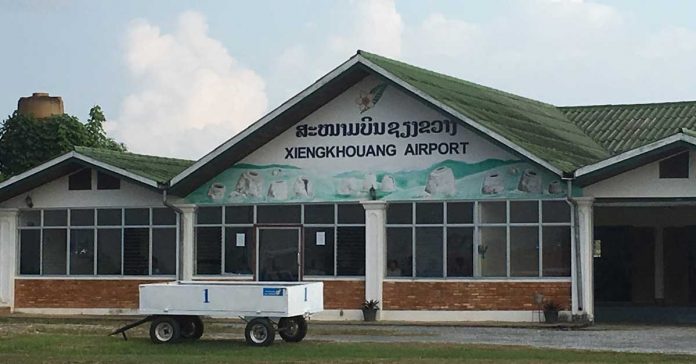
Xieng Khouang Airport

Xieng Khouang Province has renovated its airport in order to provide a smoother service for tourists who visit the Plain of Jars UNESCO World Heritage site.

Funded by Russia, renovations include the installation of an electronic scanner and lights on the runway, improving the radar hall and the passenger building.

Apart from that, local authorities are currently improving roads and traffic lights within the downtown of Paek district, which is slated for completion by the end of the year.

Such a move came after the Plain of Jars in the province was added to the list of UNESCO World Heritage Sites in July.

The Plain of Jars, located on a plateau in northern Laos, is named for the more than 2,100 tubular-shaped megalithic stone jars that are believed to have been used for funerary practices in the Iron Age.

The authorities are keen to promote the site and attract more domestic and foreign tourists.

To that end, the province will organize three events: The National Games, a celebration for the Plain of Jars as a UNESCO World Heritage Site, and the 65th anniversary of the establishment of Lao People’s Party on March 22, 2020.

According to the Tourism Development Department under the Ministry of Information, Culture, and Tourism, around 144,000 visitors visited Xieng Khouang Province last year.

Lao Prime Minister Thongloun Sisoulith visits the Kingdom of Cambodia

Lao Prime Minister Thongloun Sisoulith visits the Kingdom of Cambodia

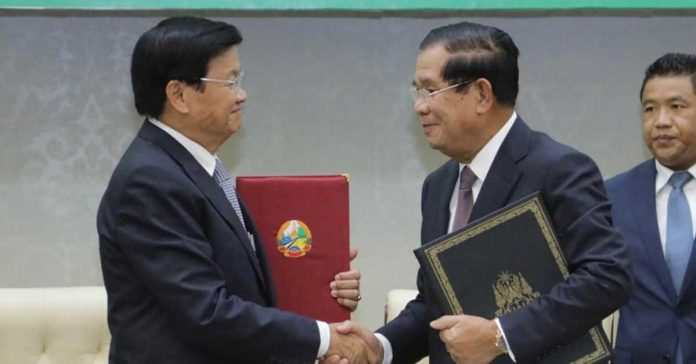
Lao Prime Minister Thongloun Sisoulith, in response to the invitation of Cambodian Prime Minister Hun Sen, is visiting the Kingdom of Cambodia during 12-13 September to strengthen traditional ties of friendship and solidarity, and enhance cooperation.

The high-level delegation arrived in Phnom Penh this morning to an honorary welcoming ceremony hosted by Prime Minister Hun Sen at the Peace Hall. Following the welcoming ceremony, Prime Minister Hun Sen, along with senior Cambodian leaders, held a bilateral meeting with Prime Minister Thongloun Sisoulith and the high-level delegation of Laos.

PM Thongloun expressed his appreciation for the warm and cordial welcome from the Cambodian government and people.  The Lao Prime Minister is visiting the Kingdom of Cambodia for the second time in his prime ministerial term. Prime Minister Thongloun Sisoulith congratulated his counterpart on the success of the May 2019 elections, which demonstrates the confidence and faith of the Cambodian people towards the Cambodian People’s Party.

The two sides exchanged opinions and gave guidance to relevant sectors on the issue of border demarcation along their shared border, ensuring that all prior orders had been implemented. 

Image may contain: 4 people

During the visit, the two Prime Ministers signed and witnessed six bilateral documents: a Memorandum of Understanding between the Prime Minister of Lao PDR and the Prime Minister of the Kingdom of Cambodia; an agreement on electricity co-operation, an agreement for the sale of 500 MW of electricity between Electricité du Laos and the Electricité du Cambodge; two agreements on the sale of coal power to Electricité du Cambodge, and a Memorandum of Understanding on labor cooperation.

After completing the meetings and signing documents, both Prime Ministers held a press conference in which they confirmed their strong intention to continue to enhance ties of friendship, solidarity, and mutual assistance.

During the visit, the two sides also agreed to upgrade bilateral relations between the Lao PDR and the Kingdom of Cambodia into a comprehensive and long-term strategic partnership. The two sides agreed that ministries and related sectors will continue to implement the agreements, and these agreements are expected to be more fruitful through a two-way cooperation mechanism: the Lao-Cambodia Joint Cooperation Committee (JC). 

The two parties have agreed and confirmed that the Keng Tor Mor Khoy – Houay Ta Ngao area is still unresolved, so it was resolved that during this period that: 1. There shall be no military presence in this area; 2. There shall be no inhabitants or movement in this area; and 3. There shall be inspections carried out by land, water, and air. Bilateral inspections can be performed by humans or by drones. 

The two sides agreed to maintain the original border demarcation status without any construction that would alter the landscape until both sides completed the survey and demarcation of the border. The two sides also agreed to draft a border demarcation treaty between the Lao People’s Democratic Republic and the Kingdom of Cambodia in which both sides surveyed and agreed on 86% of the border between the two countries to complete border demarcation.

After the conclusion of the treaty, the two parties will work to demarcate and upgrade existing border landmarks. On the border, the two sides agreed to continue to work towards a comprehensive solution.

During his recent visit to the Kingdom of Cambodia, Thongloun Sisoulith paid a courtesy visit to the Samdech Say Chhum, the President of the Senate and Acting Head of State, as well as Samdech Heng Samrin, President of the National Assembly, as well as laying wreaths at Independence Monument and the King Norodom Sihanouk Memorial.

Agility is key in times of distress

Agility is key in times of distress

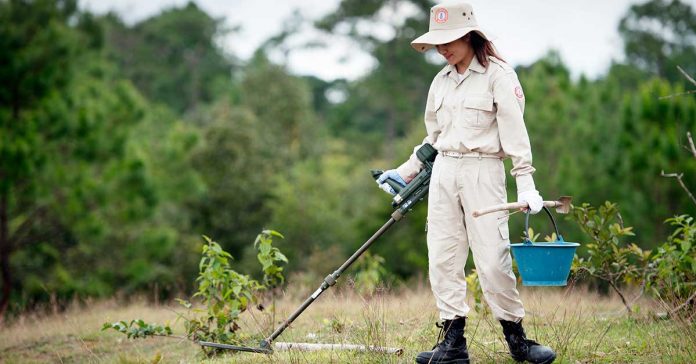
UXO, short for Unexploded Ordnance, is a term well known in Laos. One-third of the munitions that were dropped on the country between 1964 and 1973 failed to detonate on impact, posing a risk even today, many decades later. One village in four is exposed to the risks from UXOs, and some provinces are more affected than others.

Especially in rural areas, villagers have to be wary of where they walk, play, or cook. Farmers are prevented from cultivating their fields for fear of plowing into UXOs. This insecurity cuts at livelihoods, and in turn affect the country’s economy. The presence of UXOs is a major impediment to social, economic and environmental development.

This well-known problem can be exacerbated by the current changes in weather patterns caused by the changing climate. This year, flash floods are ravaging Northern and Southern parts of Laos, while the shock of the national emergency last year is still fresh in our memory. When rivers deluge and water masses billow across the land, they seize everything in their path, regardless of size, weight or composition, wrenching people, animals and their livelihoods out of their foundation.

Floodwaters can dislocate UXOs easily, carrying them to locations previously surveyed, cleared and deemed safe. In such cases, recovery actions need to be paired with quick and agile surveys, clearance, or – at the minimum – risk education activities for villagers.

In spite of many actors in the UXO sectors, as of today, both Lao PDR and its partners are challenged to clear all the UXOs in the country – let alone undertake an all-encompassing survey to assess whether the cluster munitions have recently shifted place. The process of survey and clearance is very labor-intensive and costly, and it is almost impossible to estimate when all UXOs will be eliminated in Laos.

All the more important, then, that there are partners who are willing to engage quickly and in an unbureaucratic manner, especially in times of or immediately following a crisis. The Government of Australia, for example, swiftly provided funding for the deployment of UXO clearance teams to ensure the safety of resettled communities in Attapeu Province that were dislocated by the floods of 2018. The United Nations Development Programme (UNDP) has been engaging in the UXO sector in Lao PDR since 1996, working together with a range of development partners who all see the importance of contributing to ending Lao PDR’s war legacy.

A few donors provide so-called “unearmarked” funding, which can be deployed swiftly where gaps and funding shortfalls are evident, without being tied to specific activities or areas. The Grand Dutchy of Luxembourg and Ireland currently contribute such untied funding in the height of US $ 3 million over a period of four years. Funds that are not slotted for a specific activity allow UNDP to engage with the National Regulatory Authority for UXO and Mine Action and the national clearance operator UXO Lao without delay, thus helping communities directly and supporting authorities who are assisting UXO victims and vulnerable people in risk areas. In times where funds for development assistance are dwindling and proposal processes lengthy, such allocations are much needed, allowing the sector to be agile and reactive to changes and shocks.

The country’s own addition to the global palette of 17 Sustainable Development Goals (SDGs), SDG 18: Lives safe from UXO, is a commitment to put an end to the cluster munitions problem, with a target date of 2030. Laos and its partners have made significant inroads into realizing SDG 18, and decreasing the impact UXOs have on lives. Casualty rates are at an all-time low: between 1964 and 2012, almost 1,000 people fell prey to UXOs annually. Last year, 24 victims were counted. On the long road ahead towards bringing that number down to zero, in the light of increasingly unpredictable weather patterns, it will be all the more important that we can jointly engage, provide funding and expertise where needed, moving in quickly when situations are dire. With the help of flexible partners like Luxembourg and Ireland, UNDP will be able to realize its commitment to “Leave no one behind”.

Written by Ricarda Rieger, Resident Representative, Lao PDR, United Nations Development Programme


Cambodia to Purchase 2,400MW Energy from Laos by 2027

Cambodia to Purchase 2,400MW Energy from Laos by 2027

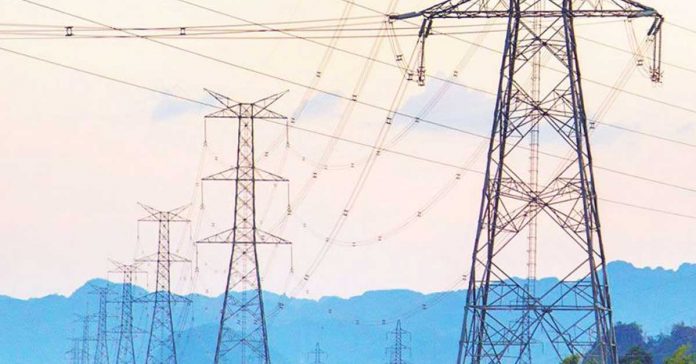
Cambodia has agreed to purchase 2,400MW of electricity from Laos by 2027, in a move to meet growing energy demand in the country.


Cambodia will buy exclusive power from two coal-fired power plants in Laos: TSBP Sekong Power and Mineral Company that will produce 600MW of electricity and Xekong Thermal Power Plant Company, which will produce 1,800MW, The Phnom Penh Post reported.

The USD 4.97 billion plan calls for the two coal-fired power plants to be divided into four phases. The first is set to go online by the end of 2024 and generate 300MW while the second phase will go into operation by 2025, generating an additional 600MW.

The third phase is set to launch in 2026 to produce 600MW, and the last phase will go online by 2027 and produce a 900MW, which will make a total of 2,400MW.

The Lao government has given the green light on both firms to develop coal mines and power plants to supply energy to Cambodia.

The Phnom Penh Post quoted a spokesperson at Cambodia’s Ministry of Mines and Energy Victor Jona as saying that the project will be signed on September 12 during the Lao Prime Minister Thongloun Sisoulith’s visit to Cambodia.

Cambodia imports 442.5MW of energy from its neighboring countries – 277MW from Vietnam, 135.5MW from Thailand and 30MW from Laos.

Laos is currently pushing for more energy exports by considering it as the key sector expected to drive the growth of the economy.

According to the Lao Ministry of Industry and Commerce, the value of electricity exported jumped from USD 600 million in 2015 to USD 1.4 billion in 2018, making it Laos’s top export earner.

The country’s goal is to earn about USD 1.328 billion from energy exports this year. Under this plan, Laos expects to export 14,800 MW of electricity annually to neighboring countries by 2025.

Laos currently has operational power plants with a total installed capacity of 7,207 MW and an electricity generation of 37,366 GWh per year.