Home Blog Page 6294

Thai Soccer Team Found Alive in Tham Luang Cave

Thai Soccer Team Found in Cave

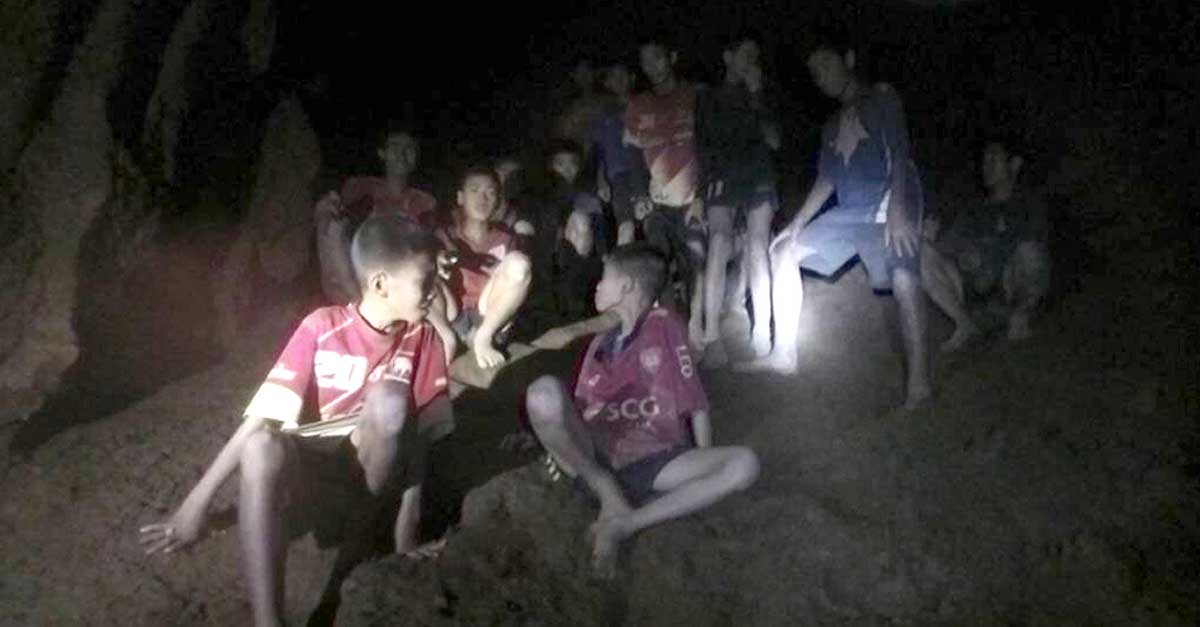
The twelve boys and their soccer coach missing in a cave system in Thailand for nine days have finally been found by rescuers in a drama that captured the world’s attention.

The team were reached by two British divers in a large cavern, all alive and well, and a short conversation was held between the rescuers and the boys.

A video of the exchange has been posted on the Thai Navy SEAL Facebook page:

Hooyah…..ทีมหมูป่าพบเยาวชนทีมหมูป่าบริเวณหาดทรายห่างจาก Pattaya beach 200 เมตร โดยนักดำน้ำหน่วยซีลดำน้ำวางไลน์เชือกนำทาง ร่วมกับนักดำน้ำจากประเทศอังกฤษ ระยะทางจากห้องโถง 3 ยาว 1,900 เมตร เมื่อเวลา 21.38 น. คืนวันที่ 2 กรกฎาคม 2561#ThainavySEAL

Posted by Thai NavySEAL on ວັນຈັນ ທີ 2 ກໍລະກົດ 2018

“How many of you are there?” asks one of the rescuers.
“Thirteen!” answers one of the boys.
“Thirteen? Brilliant!”
After a lengthy search operation that lasted nine days through the Tham Luang cave system in Thailand’s Chiang Rai province, families of the missing boys are ecstatic at news of the rescue.

The British rescuers who located the boys are believed to be Rick Stanton and John Volanthen, who arrived in Thailand last week.

Many countries offered assistance and sent volunteers, including Laos, whose famed Vientiane Rescue team sent volunteer divers to aid in the search.

Laos Will Issue Bonds in KIP

The Lao government has announced that it will issue domestic bonds in LAK (kip) – instead of foreign currencies – with a two-pronged objective aimed at avoiding risks linked to the exchange rate and strengthening the domestic capital market.

According to the Ministry of Finance, under this scheme, the payment of interest will be made to internal bond holders, which is expected to make capital circulate within the domestic economy.

The government has issued bonds of 3,300 billion kip (approximately US$392 million) through the national treasury to finance its budget deficit. Bonds to pay for public investment projects amounted to about 2,500 billion kip (approximately US$296 million) and triangle-debt-diversion bonds have been valued at about 7,800 billion kip (approximately US$924 million).

A majority of government bonds are held by commercial banks. Combining all these figures, it stands at 14 percent to 15 percent of the credit to economy (55,000 billion kip – approximately US$6.5 billion). Ninety percent of these bonds are set to mature within one year and are very difficult to manage, according to the Ministry of Finance.

The Ministry of Finance explained that there are two key difficulties linked to issuing domestic bonds – low savings in the economic system and underdeveloped and low-level social security as well as life insurance funds to issue long-term bonds, and the level of current domestic bonds is already high when compared to credit to economy.

The Ministry of Finance argued that the high budget deficit over the past four to five years has forced the government to issue foreign currency denominated bonds to finance its budget deficit every year since domestic bonds were unable to respond to the demand.

According to an IMF report, Laos first issued Thai baht-denominated bonds in Thailand in May 2013, followed by three more issuances in December 2013, October 2014 and June 2015.

In December 2015, Laos issued its first US dollar-denominated floating-rate bond, amounting to US$182 million. The bond proceeds financed the budget deficit and the government’s share in power projects.

The outstanding bonded debt at the end of 2015 was US$838 million, accounting for 12.8% of the total external public and publicly guaranteed (PPG) debt.

The Ministry of Finance said the issuance of the bonds annually is based on the approval of the National Assembly. It is essential to ensure foreign currency balance in the economic system, given that the Bank of Laos has encountered falling foreign currency reserves. If the government does not borrow in foreign currencies, it could need to purchase more foreign currencies to repay debts each year. This would reduce foreign currency reserves even further, which could result in a higher exchange rate risk.

Under the draft government budget and debt structure improvement plan, loans with commercial rates to finance the budget deficit will be gradually limited. It is expected that in the next four to five years, the state of the budget deficit and deficit financing will be more manageable.

Source: Vientiane Times

How is Laos Doing on Social Development?

The Lao Statistics Bureau and the Ministry of Planning and Investment, in collaboration with the Ministry of Health and the Ministry of Education and Sports, and with technical support from UNICEF and UNFPA, launched on June 27th the Lao Social Indicator Survey – LSIS-II. This is the largest effort to date to measure the country’s progress on social development.

The survey demonstrates that important progress has been made in several areas of the wellbeing of women and children in Laos such as child mortality, stunting, skilled birth attendance, water and sanitation coverage, primary education attendance, and to some extent in reducing violence against children.

However, disparities persist between households from different geographical regions, rural and urban areas, households with different wealth and education level of mothers; and between ethnic groups.

LSIS-II is a nationwide household survey, using the Multiple Indicator Cluster Survey 6 (MICS) platform which aims at generating national and provincial level data disaggregated by age, residence, sex, wealth quintile and ethnic groups. It has been carried out with collaborative funding from the Lao government and a broad number of international partners, including UNICEF, the European Union, UNFPA, UNDP, WFP, WHO, USAID (that also provided technical support), the Swiss Agency for Development and Cooperation (SDC), Lux Development and the Japan International Cooperation Agency.

“The survey findings provide quality baseline data for monitoring and informing the 8th National Socio-Economic Development Plan (NSEDP). They will be extremely useful for the upcoming Midterm Review, and to support the monitoring of the Sustainable Development Goals (SDGs) and the Voluntary National Review. Thanks to LSIS, we have produced a range of population and social indicators that are statistically sound and can help advocate for policy making, programme formulation and monitoring,” stated Lao Statistics Bureau Head, Samaychanh Boupha.

The complete results of the 2017-2018 LSIS-II presented on June 27th indicated that important progress has been made in reducing under-five mortality, which currently stands at 46 deaths per 1,000 live births. However, more efforts are required to improve vaccination coverage for all the vaccines, which is still below the target of 90%. Full immunization coverage, however, has increased from 40% in 2011 to 48% in LSIS–II.

Stunting (low weight for age) has decreased from 44% in LSIS-I to 35.6% in 2015 (Lao Child Anthropometric Assessment Survey) and to 33% in 2017. Despite this positive downward trend, there remain significant disparities across the 18 provinces. Exclusive breastfeeding during the first six months increased from 40.1% in 2011 to 44.9% in 2017.

There has been a 27% increase in deliveries assisted by a skilled birth attendant for all women aged 15-49 between 2011-2017 (from 37.5% to 64.4%), although there are still important differences between urban (89.7%) and rural areas without road access (34.1%).

It is the first time that a national survey has included and provided important data on abortion among women of reproductive age (15-49 years of age). The results showed that, on average, 6.1% of women have experienced at least one induced abortion in their lifetime, with a pronounced difference between provinces.

In terms of education, despite progress over the last years, the overall status of Early Childhood Education (ECE) remains weak. Two thirds (67.9%) of children under five years of age still do not have access to early childhood education. The completion of the full cycle of compulsory education (primary and lower secondary) for all children remains a challenge.

While the adjusted primary net attendance ratio stands at 89.6%, there is a low adjusted net attendance ratio for lower secondary which stands merely at 60.5%.

The overall birth registration rate of children under five currently stands at 73%, two percentage points less than in LSIS-I (75%). The percentage of women aged 20 to 49 who married before the age of 18 dropped from 37% in 2011 to 32.7% in 2017.

Good progress has been made in water supply coverage. The percentage of people using improved sources of drinking water reached 83.9%. However, the quality of water remains an issue. 86.3% of the samples tested at the household level were found positive for E-Coli (proxy indicator for fecal contamination which was tested for the first time in LSIS-II).

Access to improved sanitation facilities reached 73.8%. However coverage varies significantly from rural to urban settings.

“The data released today is of critical importance in enabling outreach to the most remote and poor, as well as the country’s broad range of ethnic groups. LSIS-II shows that overall progress has been made in critical areas including child survival, nutrition and education, just to mention a few. Unfortunately, gains are uneven. Children in hard to reach areas, from poor backgrounds and those who belong to ethnic groups are lagging behind. With this evidence in hand, we will work closely with the government and development partners to ensure that every child survives and thrives through better targeting of interventions,” said Octavian Bivol, UNICEF Representative to Laos.

“In order to achieve universal health coverage and the Sustainable Development Goals, particularly SDG 3, 4 and 5, we must put young people and adolescent girls at the forefront of the development agenda in the Lao PDR. However, adolescent girls are barely visible in the list of development indicators. The LSIS data collection and analysis provides all stakeholders and partners involved in the implementation of effective interventions with crucial and accurate evidence. This is vital to maintaining an in-depth understanding of the circumstances and challenges that adolescent girls are currently enduring,” said Frederika Meijer, UNFPA Representative to Laos.

175 field workers from the central and provincial offices of the Lao Statistics Bureau, MoH and MoES were engaged in the data collection from July to November 2017, and 23,400 households, 3,400 more than in LSIS-I, constituted the sample.

Source: KPL

This Week in Lao Social Media

Lao social media was dominated by news from Thailand this week as the search continues for a Thai football team lost in a Chiang Rai cave network. The number of vehicles registered in Vientiane suggests future traffic woes, and unscrupulous market vendors cause a stir once again. Other viral posts include discrimination by Thai police and concerns over dams in Northern Laos.

Vientiane Rescue Joins Efforts to Locate Lost Thai Football Team

Vientiane Rescue Cave Efforts

The population of Laos have been closely following the events unfolding surrounding the search for a Thai boys soccer team who went missing inside a cave complex in Chiang Rai province.  Members of Laos’ homegrown heroes, Vientiane Rescue, have been dispatched to Thailand where they will join an international effort to locate the 13 members of the boys soccer team lost in the Tham Luang cave network. Laos is said to be the first nation to have offered support by sending divers from the Vientiane Rescue team.
Image: Vientiane Rescue


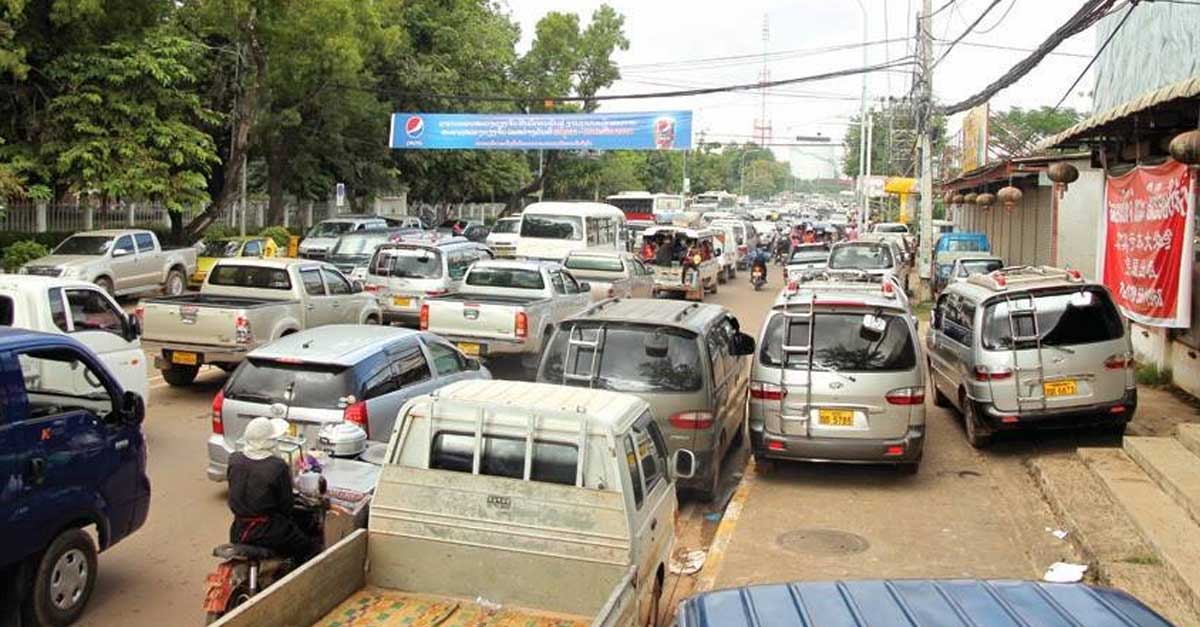
900,000 Vehicles Registered in Vientiane Capital

900.000 vehicles registered in vientiane capital

The Head of the Vientiane Capital Vehicle and Driving Management Unit, Mr Nouanxay Phaxaysombath, announced that the number of vehicles registered in Vientiane Capital is steadily rising, with almost one vehicle for each member of the population. With a lack of public transport in commission, this could spell worsening traffic headaches for everyone.
Image: Jotmaikhao


Cheating Market Vendor Stuffs Fish with Weights

One consumer took to social media this week after opening a fish purchased at Suan Mone market to find 28 fishing weights stuffed inside. The post went viral, drawing widespread ire as users shared their own experiences with being cheated at the markets. Users called upon authorities to undertake more thorough and frequent inspections of consumer goods and foodstuffs.
News: Lao Post


Discrimination Against Lao Vehicles by Thai Police

Posted by B Manilat Latsavong on ວັນເສົາ ທີ 23 ມິຖຸນາ 2018

A post by a Lao couple stopped by police in Thailand has gone viral as a case of discrimination against Lao vehicles comes to light. The couple, in their Lao registered vehicle, crossed the border into Thailand to visit a friend at Bangkok Hospital, Udon Thani. The couple were stopped by a Thai police checkpoint in the middle of the road, where the police claimed that the couple ran a red light. Behind them were a long line of Lao registered vehicles, while Thai vehicles were being waved through. Luckily the couple had a dash-cam installed in their car and were able to show a recording to the police. However, the police claimed that the dash-cam footage was unclear and ordered the couple resolve the problem at the police station. At the police station the couple stuck to their guns and were finally released without paying a fine. They posted their experience on social media as a warning to others.

Video: B Manilat Latsavong 


Footage of Nam Ou 6 Dam

Posted by Xaisomphone Cps on ວັນພຸດ ທີ 27 ມິຖຸນາ 2018

Footage of water being released at Nam Ou 6 Dam, Phongsaly Province, has gone viral after one citizen voiced his concerns for nearby villagers. However, no explanation for the footage has come to light, so it is unknown if the situation at the dam is normal or not.
Video: Forgot Someday

ACLEDA Bank Lao Launches Mobile App ‘ACLEDA Unity Thanchai’

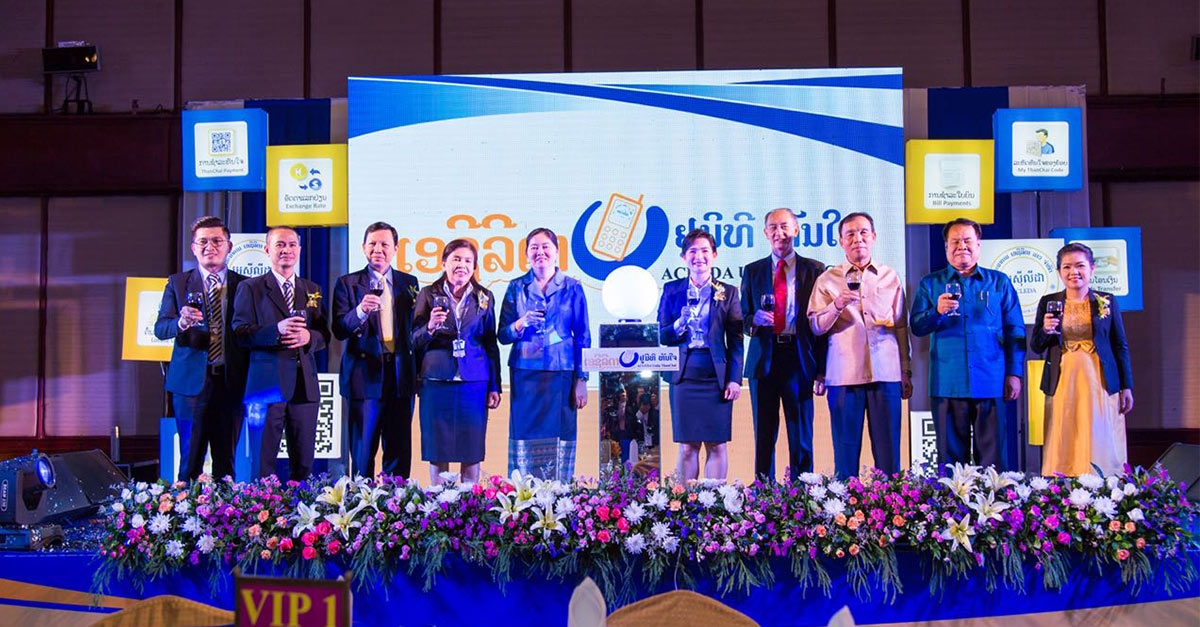
ACLEDA Bank Lao announced yesterday launched its new ACLEDA Unity Thanchai” mobile phone banking service. A virtual ‘bank in your hand,’  it provides a convenient and secure way to manage all daily banking transactions anytime and anywhere. It is available in both Lao and English languages and handles transactions in LAK (Lao Kip), USD (US Dollars) and Baht.

“Our aim is to offer access to financial services to the whole community”, said ACLEDA’s Managing Director/CEO Dr. Hay Svay. “ACLEDA Unity ThanChai, also known as ‘ACLEDA ThanChai’, works with all mobile phone networks and a very wide range of mobile handsets. It ‘unites’ a whole selection of financial services under one umbrella that simplifies day-to-day banking through mobile phones anywhere in the country,” he stated.

The app is available on a 24/7 basis and possesses high-level multilayer security features. Customers can view their account balances, obtain mini-statements, transfer between their accounts, transfer from account to mobile number, make payments to other people, make bill payments (pay their utility bills, etc), top-up their mobile phones and pay for other goods and services via QR Code anytime and anywhere right from their personal mobile phone.

By tonight, the bank is expecting the number of downloads and registrations for ACLEDA ThanChai to reach 5,000 and the number of QR Code partners to reach 177. Other services will be added in the near future according to customer demand.

“As a fast-growing bank in a rapidly developing economy, we are looking for a complete integrated mobile banking and payment solution. We want to make sure that our mobile services are universally available to our customers, are safe for them to use and deliver the dependability and reliability that ACLEDA is known for,” said Svay.

“We will be leapfrogging over traditional delivery channels to provide our customers with the latest banking technology.”

About ACLEDA Lao Ltd

ACLEDA Bank is a subsidiary of parent company ACLEDA Bank Plc, which currently has 41 branches and offices nationwide, with over 10-year presence in the domestic financial services sector. At the end of May 2018, the value of the loan portfolio has reached US$115 million with 32,981 borrowing customers. The total savings and deposits was US$92 million with 107,244 accounts. Its total assets was US$158 million and employed 1,064 staffs.

The Bank offers a wide range of banking products and financial services to corporate and retail customers through a variety of delivery channels. ACLEDA is a player in the retail banking market and services its large customer base through a broad network. With 56 ATMs, 80 POSs and ACLEDA Thanchai for customers to have access to the bank’s services anytime and anywhere.

For more information contact:

Kaysone LINTHONG,

Head of Marketing Department

Tel:020 9300 0212

Email: kaysone@acledabank.com.la

Vientiane’s Problematic Donnokkhoum to Nakhuay Road to be Expedited

ທonnokkhoum to 450 years road construction

Authorities in Vientiane Capital hope to resolve the problems facing construction of a new road stretching from Donnokkhoum to Nakhuay villages, connecting to the 450 Years Road in Saysettha District.

Issues faced during construction, which began in 2012, include the contractor running out of money to complete the project, and villagers airing concerns about installation of drainage along both sides of the road, which temporarily affects their livelihoods.

The amount of compensation issued to those who have lost land to the project has not yet been agreed upon.

Represenatives from the Vientiane Department of Natural Resources and Environment have been tasked with holding discussions with affected villagers to explain the necessity of drainage installation, as well as issues related to compensation.

The project is being jointly implemented by the Vientiane Department of Public Works and Transport and the Namtha Road and Bridge Construction Company.

The road is being constructed in three phases. Phase one begins at Donnokkhoum village in Sisattanak District and runs 4,100 meters to Xiengda village in Saysettha District. This section will be 32 meters wide to allow for six lanes of traffic.

Phase two includes a section running from Xiengda village to Nakhuay village, and will be 5,400 meters long.

Phase three, the final section, runs from Nakhuay village to the 450 Years Road. It will be 2,160 meters long and include four lanes for traffic.

Source: Vientiane Times

Ground Broken at First Private Data Center in Laos

LaoDC Data Center Groundbreaking Ceremony

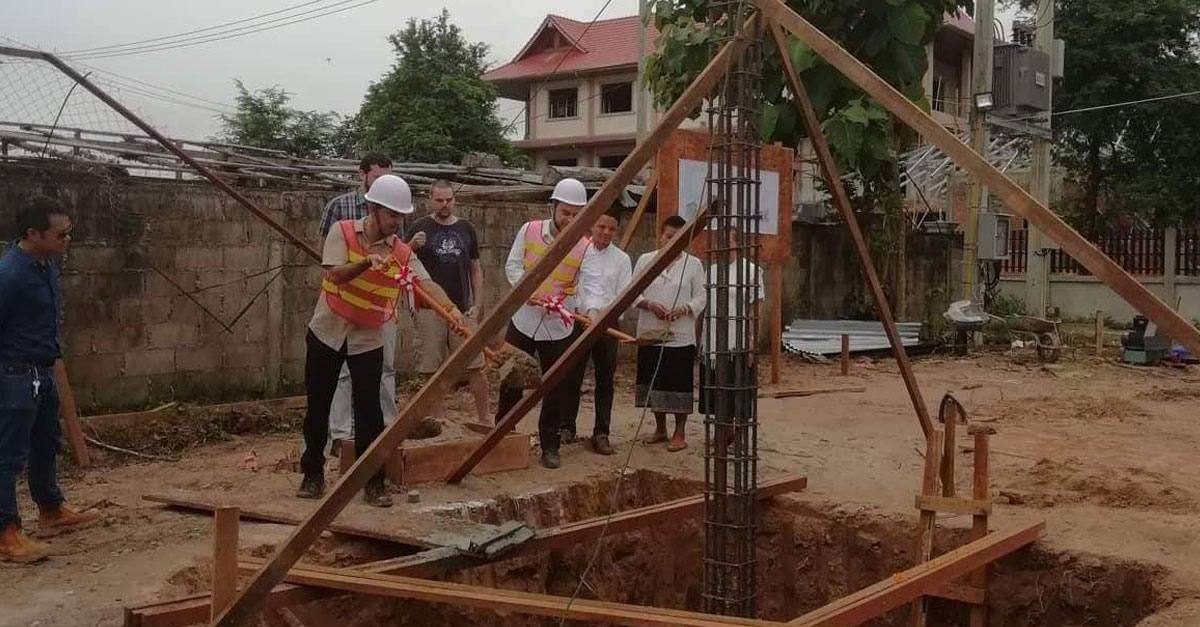
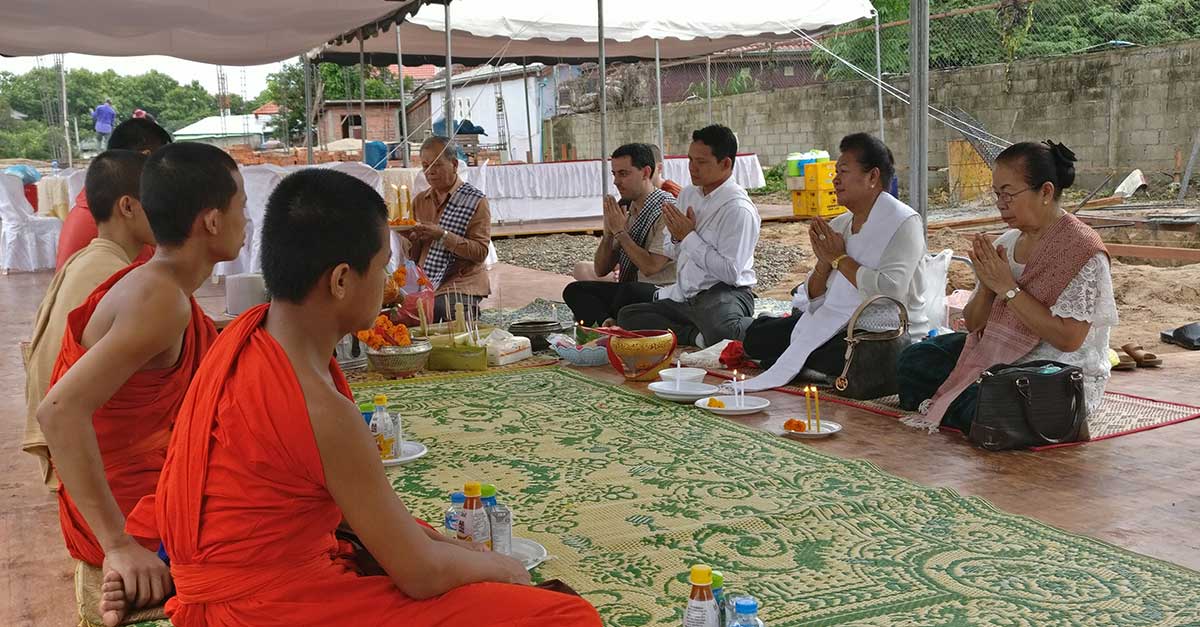
A groundbreaking ceremony was held in Hatxaykhao village yesterday as construction began for the LaoDC data center, the first licensed, privately owned data center in Laos.

The LaoDC data center will be one of the largest data centers in Laos, and will be able to host hardware as well as offering dedicated and virtual services.

“The aim of the data center is to offer international standards at a reasonable price that will be affordable for small to medium-sized and larger enterprises in Laos,” said LaoDC Director, Mr Derek Spranger.

“We will offer a range of IT services, including web and email hosting, as well as off-site data backup solutions, integrated business IT hosting, and on-site setups. Training and consulting will also be available,” he said.

LaoDC Director Derek Spranger Attends Ceremony

The LaoDC data center will offer safe and secure hosting services that allow users in Laos to view websites much faster than those hosted overseas, with full local technical support.

The data center, built to international standards by local construction teams, will be ISO certified, and is to be backed up by emergency diesel generators. It will feature a solar plant to reduce environmental impact.

LaoDC Data Center Plans

The LaoDC data center will use industry standard technology suppliers like APC, Cisco, DELL, Super Micro and Synology.

With over 30 years of combined industry experience in Sweden, Australia, and Thailand, LaoDC can provide customers with the most expert advice and solutions.

The data center is expected to be complete by February next year.

Laotian Times Reporters

Buddha Park Vientiane Undergoes Makeover

Vientiane Capital’s Buddha Park (Wat Xiengkhuan) has just received a makeover. How refreshing!

Visitors will now be able to stroll around the park in clean, paved cement pathways as they enjoy the breathtaking sights of the amazing sculpture park with more than 200 religious statues. Travelers will also appreciate the improved lawn and gardening work made within the vicinity. Upgrades are soon to be made to the front parking area as well.

According to many tourists, the ideal place for a great Instagrammable photo-op is from the top of the giant gourd structure which is approximately three stories high. The entrance is designed to resemble a demon’s mouth (about three meters high) with a stone ladder inside leading to a magnificent view of the entire park.

ໂສມໜ້າໃໝ່ວັດຊຽງຄວນ

Posted by ປະກາດ Pakaad on ວັນຈັນ ທີ 11 ມິຖຸນາ 2018

According to Visit-Laos.com, Buddha Park Vientiane was built in 1958 by Luang Pu Bunleua Sulilat, a monk who studied both Buddhism and Hinduism. This explains why his park is full not only of Buddha images but also of Hindu gods as well as demons and animals from both belief systems. The most outstanding ones include Indra, the king of Hindu gods riding the three-headed elephant (also known as Erawan and Airavata), a four-armed deity sitting on a horse and an artistic deity with 12 faces and multiple hands, each holding interesting objects. They are all equally impressive not only because of their enormous size but because they are full of fascinating details and interesting motifs.

Buddha Park Vientiane Wat Xiengkhouan, Hatsayfong District, Vientiane By: All in LAOS

Posted by All in LAOS on ວັນຈັນ ທີ 11 ມິຖຸນາ 2018

Source: Pakaad, All in Lao, Visit-Laos