Home Blog Page 6331

2017 Road Tax Now Available

road
road

The questions surrounding the delay in the 2017 road tax stickers have finally been clarified. Road users are now able to pay road tax for 2017, which will be valid from October 2017 to March 2018. The road tax for 2018 will then need to be repurchased again in March, due to the massive delay for 2017’s road tax.

The Ministry of Finance has authorized BCEL to officially start collecting road taxes and distrubiting stickers as of last Thursday.

Deputy Director General of the Tax Department, Mr Khampien Boupphavong stated, “ Tax collection has now commenced and tax stickers for display on windshields can be received at BCEL only.”

Those who bank with BCEL can pre-purchase their road tax stickers using the BCEL One App on their computers, smartphones or at an ATM. Those who don’t, can purchase the stickers directly from any BCEL branch.

Those who utilize the BCEL One app will receive a code after the sticker has been paid for, the user can note the confirmation number or snap it on their smartphone or computer, then swing by any BCEL with their yellow technical inspection book and vehicle documents. Bank clerks will then issue car owners their 2017 road tax stickers.

Payments can also be made directly to any BCEL branch.

According to the Tax Department, Laos has an estimated 1.8 million vehicles utilizing its roads, however only 30 percent have been reported to pay road tax every year. Authorities expect an estimated 30 billion kip coming from road tax for 2017, up from the reported 10 billion kip last year.


2-3 Wheeled Motorbikes

Engine Type

Fee

<110cc

15.000 KIP

111cc-150cc

20.000 KIP
151cc-200cc

30.000 KIP

>200cc

100.000 KIP


Privately owned Sedans, SUVs, Vans and Pickups


Engine Type

Fee

<1000cc

100.000 KIP

1001cc-1600cc

150.000 KIP

1601cc-2000cc

200.000 KIP

2001cc-2500cc

250.000 KIP

2501cc-3000cc

300.000 KIP

30001cc-4000cc

350.000 KIP

4001cc-5000cc

  400.000 KIP

>5001cc

500.000 KIP

Transport Vehicles

Truck Type

Engine Type        OR               Weight

Fee

Small

<2500cc

<3.5 Tonnes

150.000 KIP

Medium

2501cc-5000cc

3.5-15 Tonnes

200.000 KIP

Large

>5000cc

15-30 Tonnes

300.000 KIP

Large

>5000cc

30-50 Tonnes

400.000 KIP

Large

>5000cc

>50 Tonnes

500.000 KIP


Passenger Vehicles

Vehicle Type

Engine Type         OR

    Seats

Fee

Tuk Tuk or Jumbo

50.000 KIP

Small Van

>2500cc

<9

150.000KIP

Medium

2501cc-5000cc

10-35

200.000 KIP

Large Bus

>5000cc

>35

400.000 KIP

Lao Government Buys Beeline

Government of Laos Buys Beeline

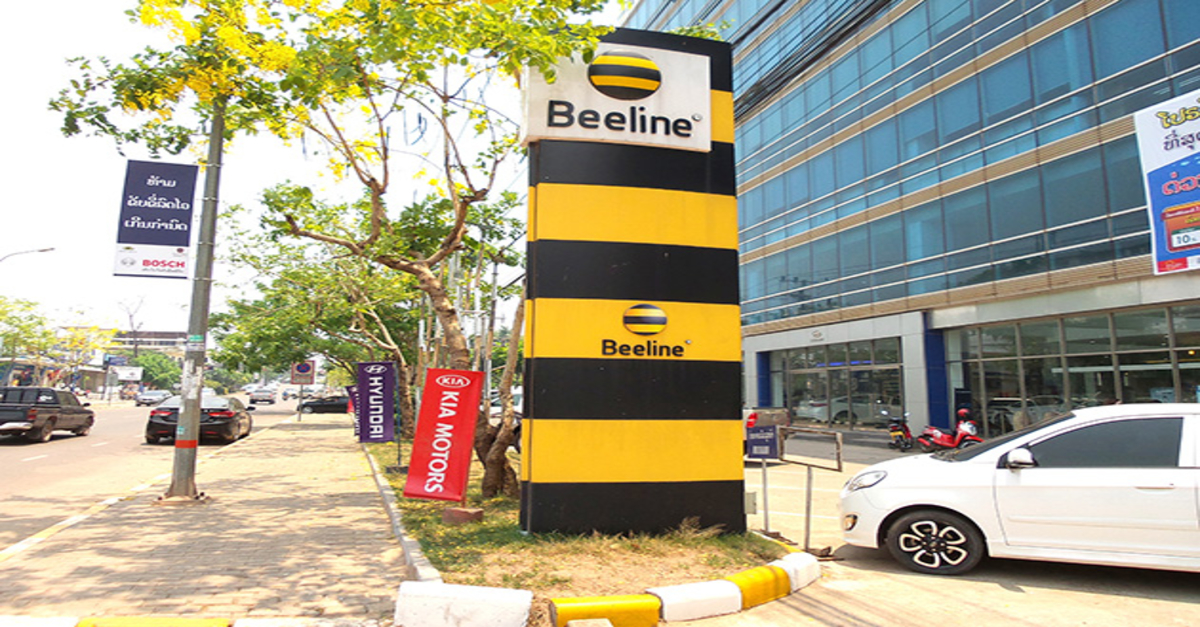
VimpelCom Lao Co., trading as Beeline, has officially entered an agreement to sell its 78% stake to the Government of Laos for gross proceeds of USD 22 million, making the Lao government the sole owner of the telecommunications company.

A source has confirmed that the sale of Beeline will be fully executed 120 days from signing. The change in ownership is said not to affect company operations, and the company will continue to operate under the Beeline brand.

The sale comes as Amsterdam-based Veon Ltd, owner of VimpelCom Lao, moves to sell off its non-core assets.

Transfer of ownership of VimpelCom Laos to the Government of the Lao PDR is pending the satisfaction of certain conditions, including receipt of necessary corporate and regulatory approvals.

As at 30 June 2017, VimpelCom Lao had 289,000 customers.

France to Assist in Mekong Hydro Resource Coordination

In attempt to develop the energy sector and improve the management of water resources on the Mekong River, Laos and France have enhanced cooperation by signing an agreement to build a new Coordination and Monitoring Centre (CMC).

The centre will be equipped to monitor hydroelectric power project (HPP) development on the Mekong River in Laos.

The Coordination and Monitoring Centre will play a role in coordinating “run-of-the-river” HPPs developed by different Independent Power Producers on the Lao stretch of the Mekong River.

An agreement to build the new centre was signed in Vientiane this week between the Director General of the Department of Energy Policy Planning, Ministry of Energy and Mines, Dr Chansaveng Boungnong, and chairwoman and CEO of CNR Engineering, Ms Elisabeth Ayrault.

Dr Chansaveng stated that the objective was to provide a global overview and the information needed for the coordinated management of HPPs along the Mekong.

Feasibility studies, chiefly financed via the French Development Agency will allow for the defining of the objectives, needs and future operation of the CMC.

Under the agreement, the two parties will implement feasibility studies for an 18-month period from January 2018 to June 2019, he said. The CMC is a government body essential for the coordination and joint management of HPP development on the Mekong mainstream and its main tributaries.  

The CMC’s planned scope of action covers five main areas, being governance and capacity building, dialogue and coordinated management, water resources management and climate change adaptation, environmental and social management, dam management and safety, he added.

It seeks to develop and share reference databases regarding all water used for hydroelectric power production, navigation, irrigation, tourism, flood and low water forecasting, sediment management, the protection of biodiversity, fish migration monitoring and more.

The planned centre fulfills the stipulations of the new Lao laws on both water and electricity for integrated water resource management, coordinated from upstream to downstream between independent operators of different HPPs.

According to the CNR, the collaboration between the centre and the Ministry of Energy and Mines solidifies efforts based on the MoU signed by CNR in 2015 to provide and share with Laos and CNR unique know-how in run-of-river hydroelectric and river engineering, in the framework of the country’s integrated water resources management for the sustainable development of the Mekong.

Laos to Ship 20,000 Tonnes of Organic Rice to China

Chinese premier Li Keqiang has approved an order for 20,000 tonnes of genuine organic rice to be delivered to China from Laos.

During a meeting with Khong district authorities in Champassak last week, Prime Minister Thongloun Sisoulith informed officials that although the Chinese prime minister had mentioned  that 20,000 tonnes of rice is a significantly small quantity for China, Lao officials and farmers will have to work hard to produce this amount of organic rice for shipment.

“Laos will need to deliver 20,000 tonnes of genuine organic rice to China. The shipment must not contain non organic rice,”  Prime Minister Thongloun stated.    

4,000 tonnes of sticky rice and non glutinous rice have already been delivered to China, and though the order was originally only for  8,000 tonnes, China has increased its shipment  to 20,000 tonnes.   

According to the Ministry of Agriculture and Forestry, as of October of last year the only rice mill that was able to produce rice of sufficient quality to meet the standard required by Chinese buyers, was IDP Rice Mill in Savannakhet province.

Although rice mills in Laos are abundant and produce good quality rice, most are inefficient and fail to meet international exporting standards.  Rice mills must maintain high standards if they hope to export large amounts of rice internationally. Mills that use low quality methods will need to improve their operations and the machinery they use. Based on a nationwide survey, only the IDP Rice Mill has been able to meet Chinese standards.

In an effort to increase crop yields for food security and commercial gain, the government is continuing to build more irrigation systems using its own budget and low-interest loans. Higher yields are helping to contribute significantly to socio-economic development and poverty reduction.

More than 778,000 hectares of wet season rice and over 126,600 hectares of dry season rice are grown annually in Laos.

However, about 226,000 hectares of rice fields in flatland areas are totally dependent on rainfall because irrigation channels have not yet been built in those areas.

Lao grown rice is favored in China due to its pure white grains, softness and the pleasant aroma.

NRA Aims to Clear UXO From 50,000 Hectares

The National Regulatory Authority (NRA) for the UXO/Mine Action segment has set an objective to clear and eradicate unexploded ordnances on 53,737 hectares of land from 2017-2021.

The target was announced at Wednesday’s 2018 work design meeting on the prioritization of UXO surveys, clearance, mine risk education and victim assistance.

The meeting was attended by NRA Director General, Mr Phoukhieo Chanthasomboun, and government authorities from Vientiane and other provinces.

NRA Deputy Director, Mr Bounpheng Sisawath stated that 3,860 villages require UXO reviews and more than 53,737 hectares of land still need to be cleared of potentially active devices.

UXO surveys and clearance are currently in progress in Borikhamxay, Xaysomboun, Huaphan, Xieng Khuang, Luang Prabang, Khammuan, Savannakhet, Saravan, Xekong, Attapeu and Champassak provinces.

The coming year will see further UXO clearance, roving, surveys, community awareness programmes, and risk education in target provinces, while assistance will be available to victims in UXO-related accidents.

The NRA has reported that clearance teams have worked with international organizations in an effort to clear cluster munitions and other devices on 49,619 hectares of land in 15 provinces. This includes 38,391 hectares of agricultural land and 11,228 hectares of land required for development.

An estimated 1,288,974 cluster munitions have been cleared, in addition to more than 4,200 larger bombs, 646,044 bombies, 2,218 mines, and 636,536 other lethal devices.

The presence of unexploded ordnance slows development in the fields of agriculture, forestry, mining, tourism, hydro-electric power, transport, education and health.

One of the major obstacles for the government is sourcing funds for clearance operations. The NRA must continue to mobilize funds because the budget allocated to victim assistance is very limited at present.

UXO is an obstacle for economic and social development, contaminating land that could otherwise be used for the development of agriculture, industry, tourism and the construction of infrastructure.

During the Indochina War from 1964-1973, over 3 million tonnes of ordnance were dropped from enemy aircrafts on Laos, including 270 million cluster bombs and 4 million significantly larger bombs.

Tests conducted in the United States have found that cluster munitions have a failure rate of up to 30 percent, meaning a large amount of unexploded devices still remain in Laos.

A total of 87,000 square kilometres of land are thought to still be contaminated with UXO.

Inspector Calls for Support on Anti-Corruption Measures

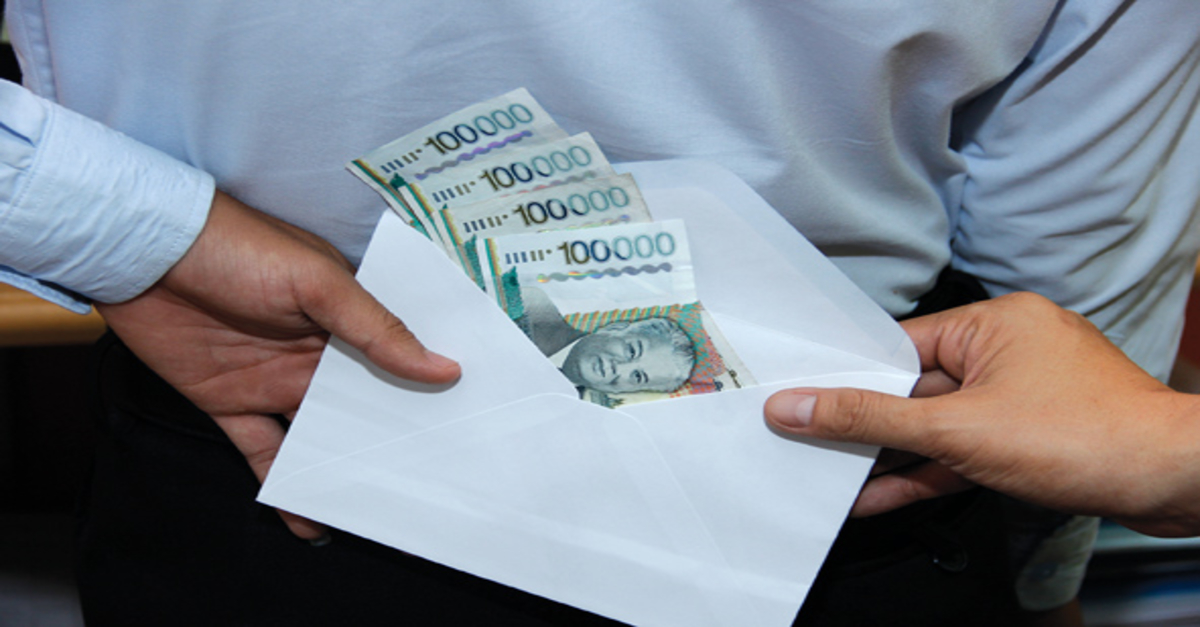
In response to enquiries from National Assembly (NA) members regarding the performance of GIA over the past year, President of the Government Inspection Authority (GIA), Dr Bounthong Chitmany, has urged tougher measures against violations of planning and financial discipline in order to prevent further losses to the nation.

At the NA session held this past week, Dr Bounthong mentioned the 100 projects that were discovered to to have begun in 2015/16 without proper assessment and the estimated 120 projects that were executed without National Assembly approval.

“We want to stress on this point where Departments of Planning and Investment at the provincial level and Ministry of Planning and Investment at central level must be active in addressing this,” Dr Bounthong said. Adding, “If we don’t follow the procedures, further problems will be created for the nation.”

Over 113 implemented projects did not pass a tender bidding process, and although 106 projects were approved, the following procedures were not .

The inspector also proposed, in the presence of Prime Minister Thongloun Sisoulith, for implementation of unapproved projects to no longer be allowed noting that if violations were found, the inspections would take legal action against the responsible officials who authorized the projects.

“This is our Government Inspection Authority decision to solve the problem,” Dr Bounthong added.

As an immediate solution, GIA suggested inspecting all unapproved projects and classifying them while postponing those which are deemed ineffective and unnecessary. The postponement would focus primarily on projects currently being implemented.

The State Audit Organisation audited 118 projects in 2013/14 and 2014/15. These projects were conducted without initial approval by the National Assembly but the legislative body approved them later year by year, and only 24 projects have yet to be approved.

GIA proposed for a review of project costs compared against base rates defined by the related ministry. If the costs are found to be higher than the base rates, GIA suggested a renegotiation of an appropriate cost while identifying the actual quantity of work and project quality before submitting for re-payment approval.

Dr Bounthong also reminded NA members about the resolution made at the second ordinary session of the NA’s Seventh Legislature (NA Resolution No. 04 Dated December 21, 2011), which states that the National Assembly would not approve projects which began implementation after December 31, 2012.

Additionally, Prime Ministerial Order No.16 dated April 18, 2013, states that the government will not pay for any unauthorized investment projects.

First Holiday Inn to Enter Laos 2019

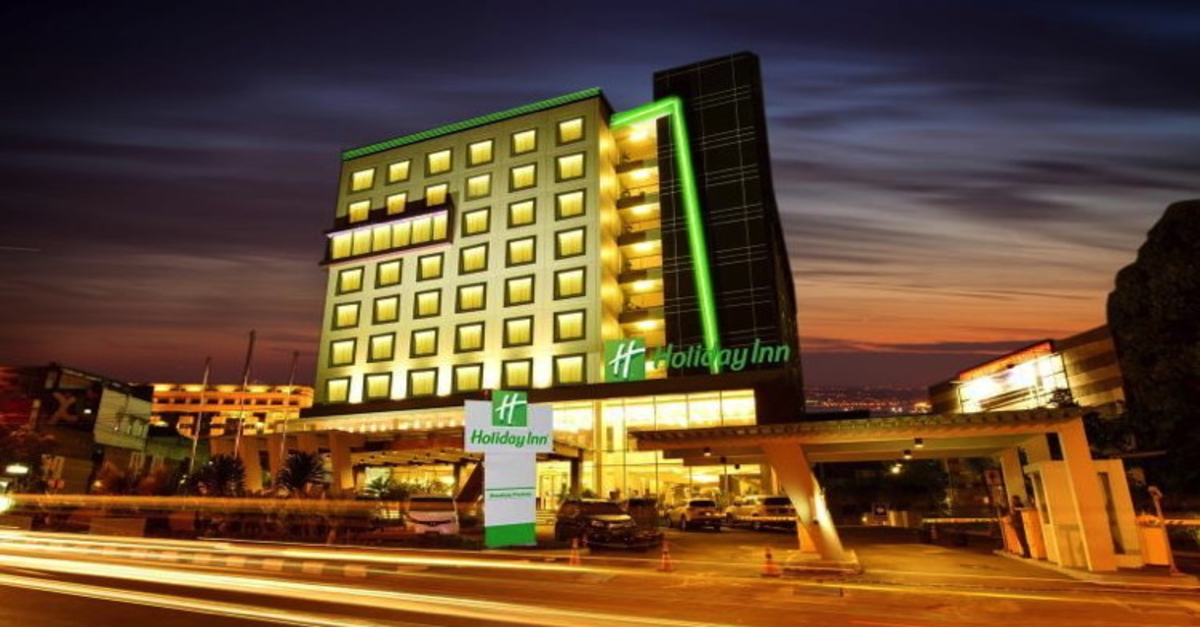
With construction slated to be completed by 2019, the first Holiday Inn will be opening up its doors in Laos for the very first time.  

InterContinental Hotels Group (IHG) and BIM Group’s Crowne Plaza Vientiane signed a contract on October 19th solidifying the deal on the internationally recognized American hotel chain.

Holiday Inn & Suites Vientiane will be IHG’s third project with BIM Group, who also owns the upcoming Inter Continental Phu Quoc Long Beach Resort & Residences.

Commenting on the partnership, Rajit Sukumaran, Chief Development Officer, Asia Middle East Africa, IHG stated “the country’s growing prominence as a business and tourism destination is in line with our strategic expansion plans in Laos, which include Crowne Plaza Vientiane, the first internationally branded upscale hotel in Vientiane, and the upcoming Holiday Inn & Suites Vientiane. With the excellent experience we’ve had working with our partner, BIM Group, we are excited to continue this relationship, bringing our mid-scale offerings to the Lao capital with the debut of our trusted Holiday Inn brand.”

Holiday Inn & Suites Vientiane will include 250 rooms, 50 of which will be long-stay suites, and will be part of a mixed-use development, consisting of the existing Crowne Plaza Vientiane, office towers and a retail shopping complex.

With a selection of lifestyle offerings within the multi-use complex, guests will be able to enjoy shopping and dining options, take a short stroll to downtown Vientiane, or explore key tourist attractions located nearby, such as the night market along the Mekong River.

Holiday Inn & Suites Vientiane will be equipped with versatile function spaces for meetings, receptions and events, including a large ballroom capable of seating more than 1,000 people.

The Holiday Inn brand has a strong presence in the region with 23 hotels and resorts in Southeast Asia, including six in Indonesia, three in Malaysia, two in the Philippines, two in Singapore and 10 in Thailand.

Progressively over the next five years, IHG will almost double its Holiday Inn presence across the region with an additional 20 hotels.

Laos has been recognized as one of the fastest-growing nations in Southeast Asia, with up to 8 per cent GDP growth over the past few years. In addition to infrastructural and industrial developments that are set to boost economic growth and attract foreign investment, there is also a strong upward trend in its tourism sector.

The Double Tree by Hilton Vientiane will soon follow after with the first of its kind opening its doors in early 2020.

Entertainment Venues Ordered to Stay 500-Meters Clear of Schools

Entertainment venues will soon be prohibited from conducting business within 500 meters of schools and educational institutions.

With the National University of Laos (NUoL) being used as a model, the Minister of Education and Sports, Ms Sengdeuan Lachanthaboun, informed parliament that certain measures are being made in an attempt to enforce the ban, with removal efforts being piloted proximate to the NUoL in Saythany district, Vientiane.

Ms Sengdeuan responded to questions raised by members of the National Assembly (NA) last week, during the ongoing 4th ordinary session of the NA’s 8th legislature in Vientiane.

Following the government’s decision to reinforce rules in maintaining an entertainment-venue-free 500-meter buffer around all educational institutes, lawmakers asked for progress on the enforced zoning restrictions nationwide,

Authorities aim to inspect all entertainment venues that are currently in violation of the regulations and relocating them at least 500 meters away from the university by December.

The meeting concluded that village authorities will survey entertainment venues including discothèques, bars, karaoke venues, snooker and games halls, massage salons, drinking or gambling venues situated within 500 meters of the university grounds.

Venues operating legally, especially those seeing considerable investments into facilities, will be required to stop selling alcohol and encouraged to convert such venues to more appropriate business models.

Those entertainment venues found operating unlawfully will be warned and ordered to shut down.  

Ms Sengdeuan said village authorities have been entrusted to educate and warn the venues’ operators to follow these measures, stating “We will hold a meeting to assess the implementation [of the measures] by this month.“

The move to relocate entertainment venues came after public complaints arose that such enterprises were being established too close to educational institutes, which may negatively influence students and encourage drinking.