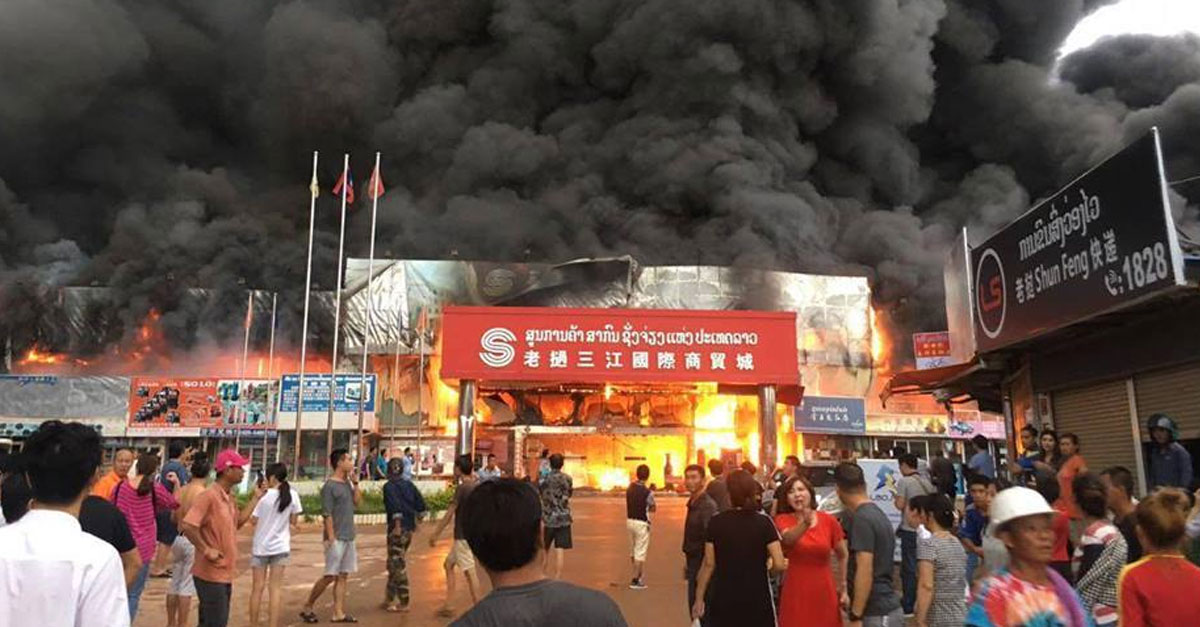
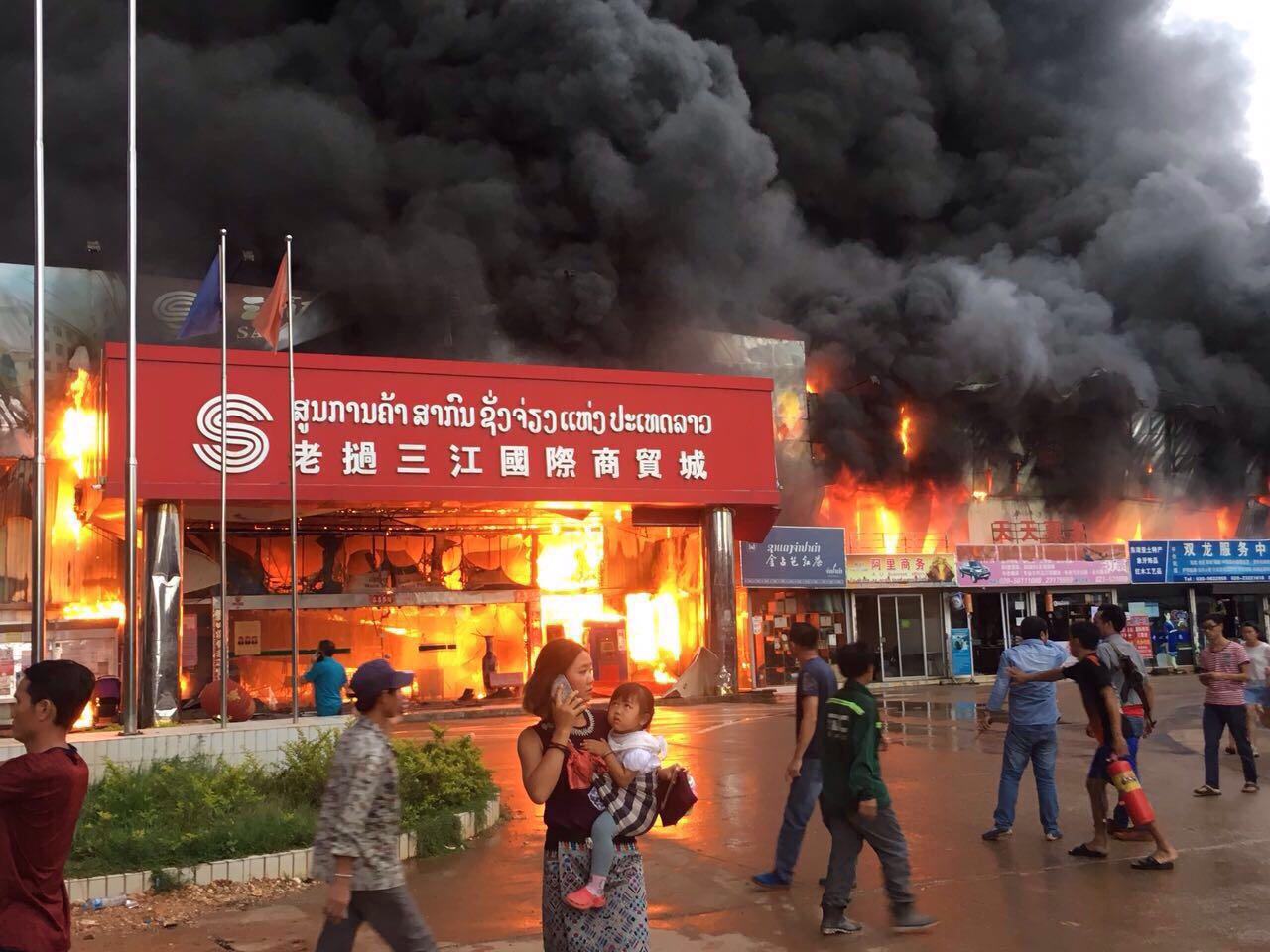
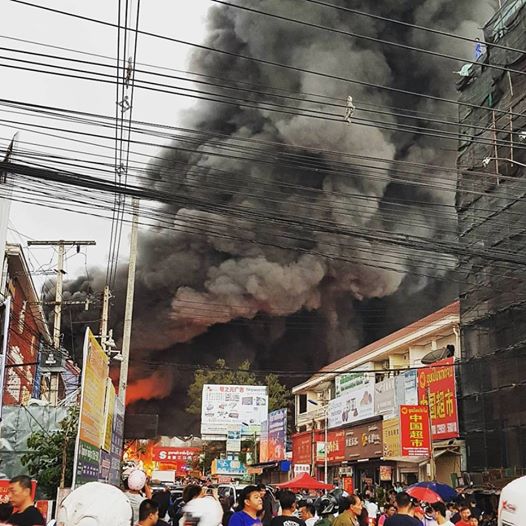
Meanwhile, the construction of a new and modern Sang Jiang shopping center directly adjacent to the existing market has raised questions among the population regarding the cause of the blaze.
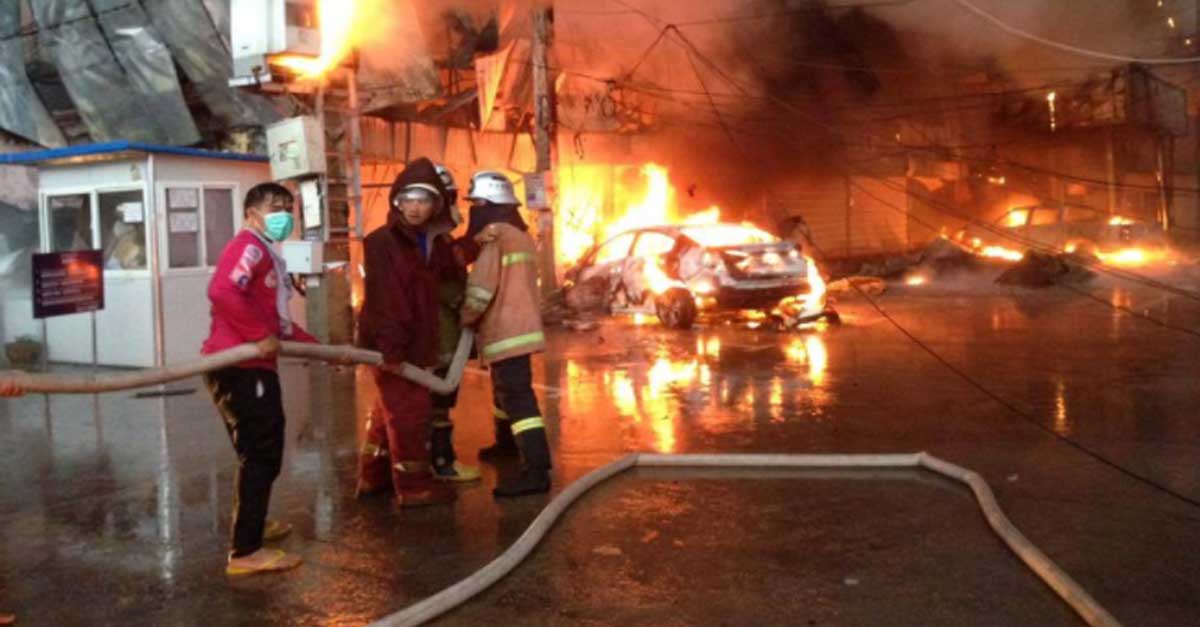
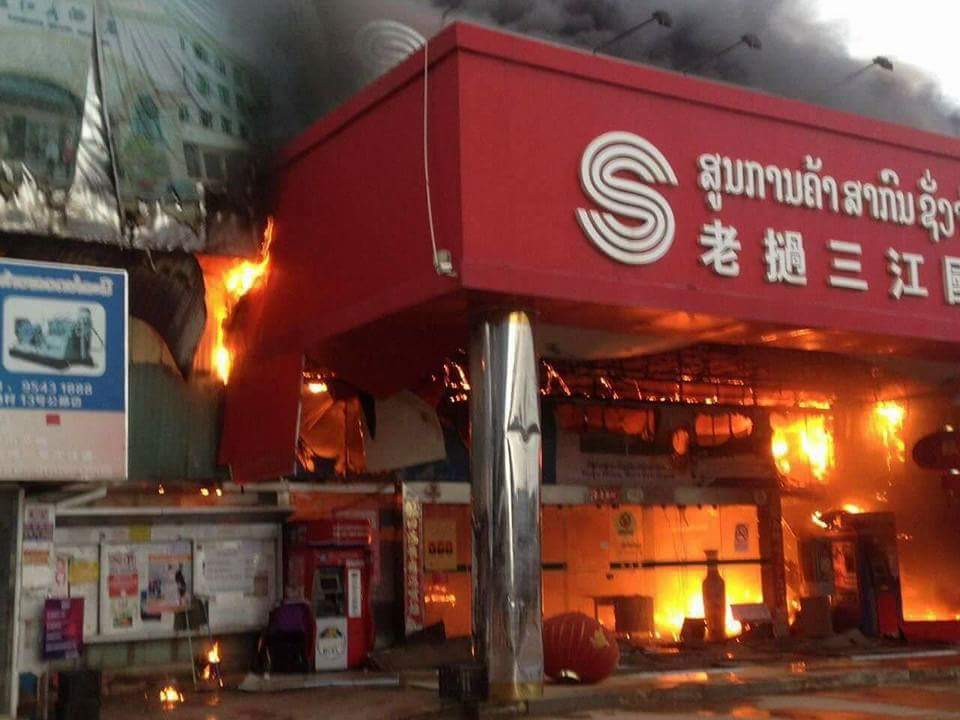
Mr Ding Guao Jiang, a representative of Sang Jiang Lao Sole Co., Ltd, addressed the media at a press conference held yesterday. He said that the fire started at around 5:30pm, spreading quickly and raging for over three hours before firefighters were able to fully extinguish it.
Sang Jiang Market Overdue for Demolition
“Most of the market stalls and shops had already reached the end of their lease agreements last year.”
“Our company had plans in place to demolish the existing market and move stall owners to the new shopping complex in April this year,” added Mr Ding.
He stated that the company has set up a specific task force to investigate the incident.
Scale Model of New Sang Jiang Shopping Center
Shopkeepers and stall owners have expressed their concerns regarding the cause of the fire, many of them now out of work and with no place of business.
One shopkeeper was quoted as saying, “we had all been informed about the eventual requirement to move to the new shopping center. Many of us had already paid deposits to reserve stalls at the new mall, but since the mall has not been completed on time, we had to continue operating our shops at the original market location.”
The new Sang Jiang Shopping Center is currently only 70% complete, although due to open this year.
Total Fire Damage Still Unknown
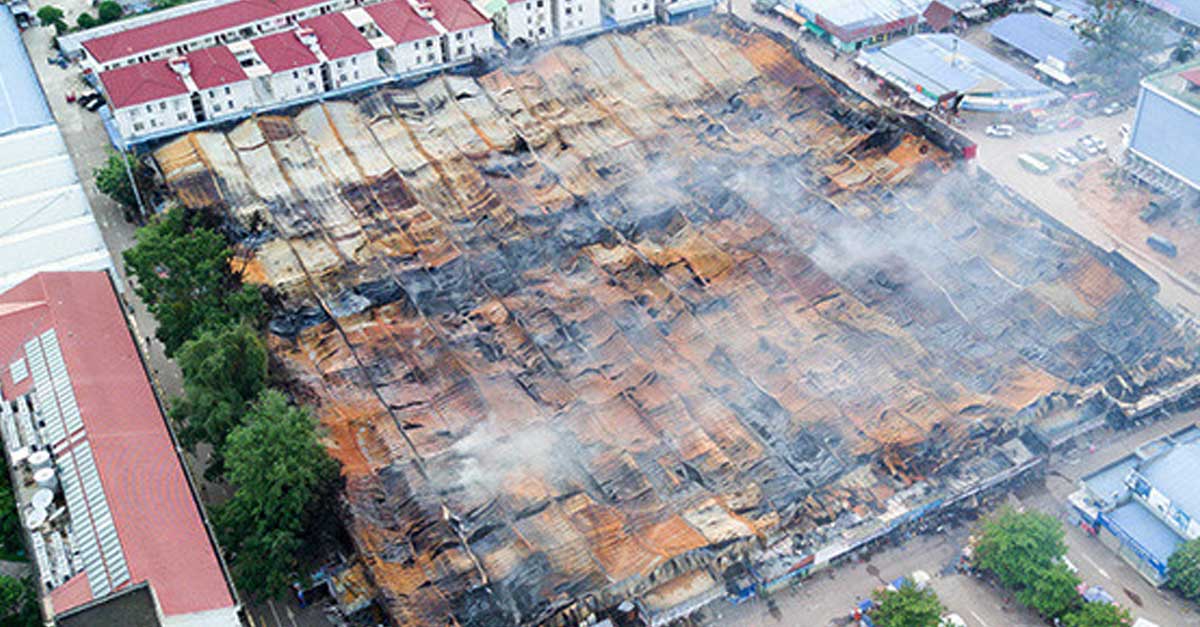
Over two hundred and sixty market shops and stalls were devastated by the fire, as well as several vehicles parked nearby.
The total cost of the damage caused by the fire has not yet been revealed, while authorities have stated that there has been no loss of life or injuries among stall owners or customers.
“Sang Jiang Lao Sole Co., Ltd shares the grief and sadness felt by all the victims’ families,” said Mr Ding.
20 fire trucks were dispatched to the scene, with 100 firefighters from the Vientiane Fire Suppression and Protection Police Department fighting the blaze, while rescue workers attended to victims.
The total destruction of Sang Jiang comes as the busy marketplace was due to celebrate its 10th anniversary this August, having been officially opened in 2007.
In the aftermath of the Sang Jiang fire, it is clear that the destruction of the Chinese market has been total and indiscriminate. It is not yet confirmed whether anyone has been injured, but sources report that there have been no casualties.
The cause of the fire at Sang Jiang is still unknown.
In recent years, markets in Vientiane Capital have increasingly fallen victim to similar conflagrations, leading many to speculate as the source. Everything from faulty and poorly maintained circuit breakers to unusually hot weather conditions have been cited as incendiary factors. However, much of the population remains skeptical that this is the true story.
A number of conspiracy theories suggesting foul play and the involvement of nefarious business interests in the capital have been gaining wider acceptance. While a full scale, impartial investigation is far from being underway, this has not stopped casual observations on social media wondering why there seem to be high rise shopping center style buildings so conveniently and rapidly replacing these burnt down markets. Some observers are of the belief that markets were deliberately burned down to make way for these high rise shopping centers.
A full explanation may remain forever elusive. The sad fact of the matter is there are innocent small to medium sized shop owners who have lost much due to these fires and there seems to be no end in sight to the destruction of what some are calling “undeveloped markets.”
Chinnaly Norasing, also known as MG19, has just been declared the winner of the first ever Miss Grand Laos 2017. Ms Norasing is the first contestant from Laos to win this title and will be representing her home country in the world competition, Miss Grand International 2017 in Vietnam this October.
The runners-up were MG13, MG16, MG1, and MG5 (first runner-up, second, third and fourth, respectively).
Vientiane, 17:00
A severe fire has broken out at Sang Jiang Chinese Market in Vientiane Capital. Firefighters are on the scene, however the fire has spread throughout the shopping center. The cause of the blaze at Sang Jiang is as yet unknown. More to come as the story unfolds.
Words: Francis Savanhkham Photos: Phoonsab Thevongsa
Way back in 1994, a Canadian living in Vientiane opened a bakery. Much and More, as it was then called, had two main reasons for existing. One was to produce and supply sandwich bread to surrounding businesses. But its main purpose was to provide jobs for returning refugees, mainly Hmong people being repatriated into Laos.
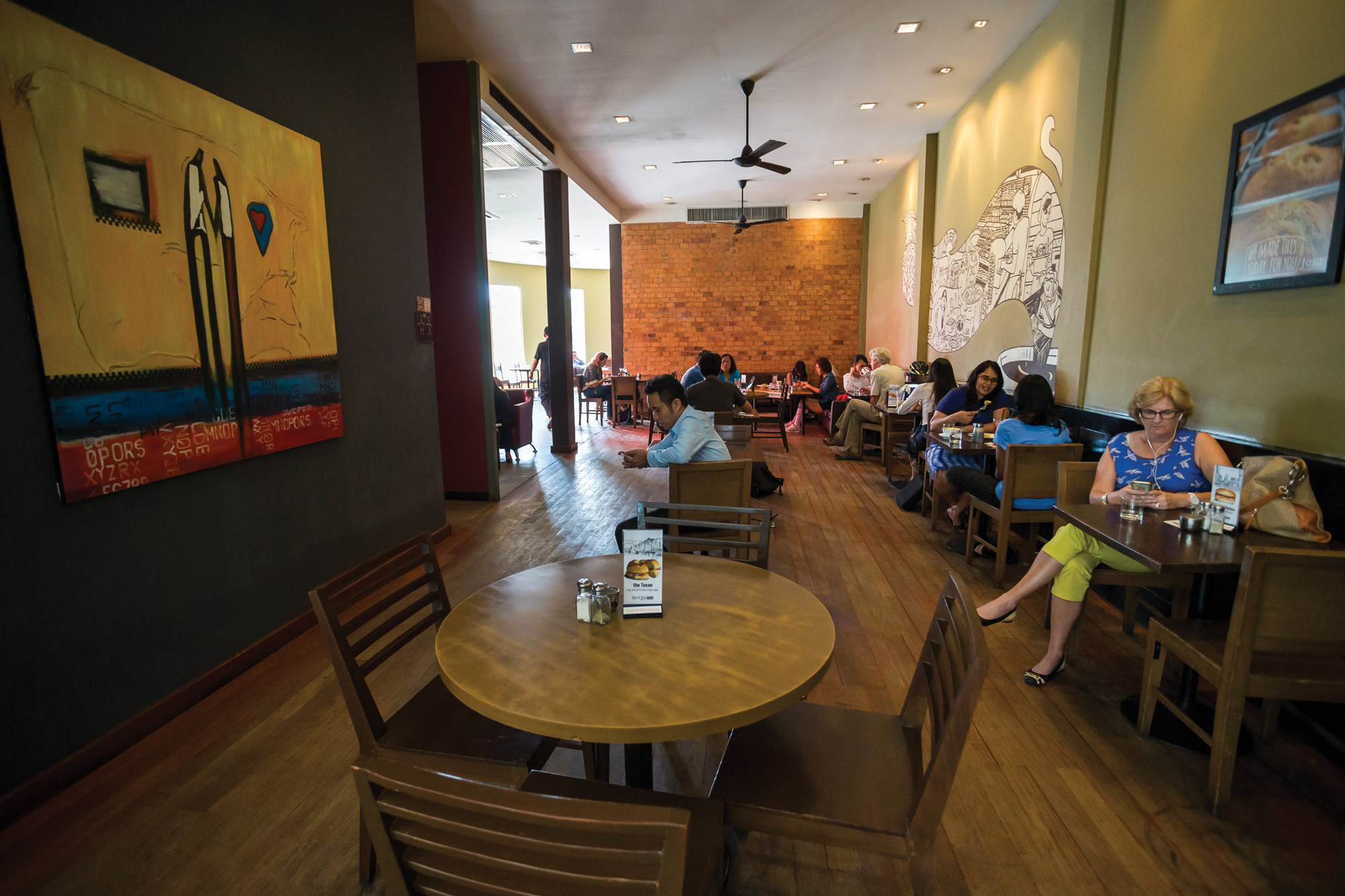
More than two decades later, Joma – the name derived from the names of its four founders, Jonathan and Jocelyn, Michael and Aun – is a Lao institution, a legendary fixture in the country’s burgeoning modern café scene, with five branches in Laos, four in Cambodia and three in Vietnam.
From a humble wholesaler, to a café on Vientiane’s then-quiet main drag, to a slick, well-run chain spruiking coffee, bread, pastries and many more things besides, Joma is a comforting constant in a rapidly changing city, and a formidable presence in a market increasingly cluttered with coffee shops and bakeries. But despite different ownership, two name changes, and a secure place in the urban landscape, the business’ main ethos when it comes to its staff has stayed the same.
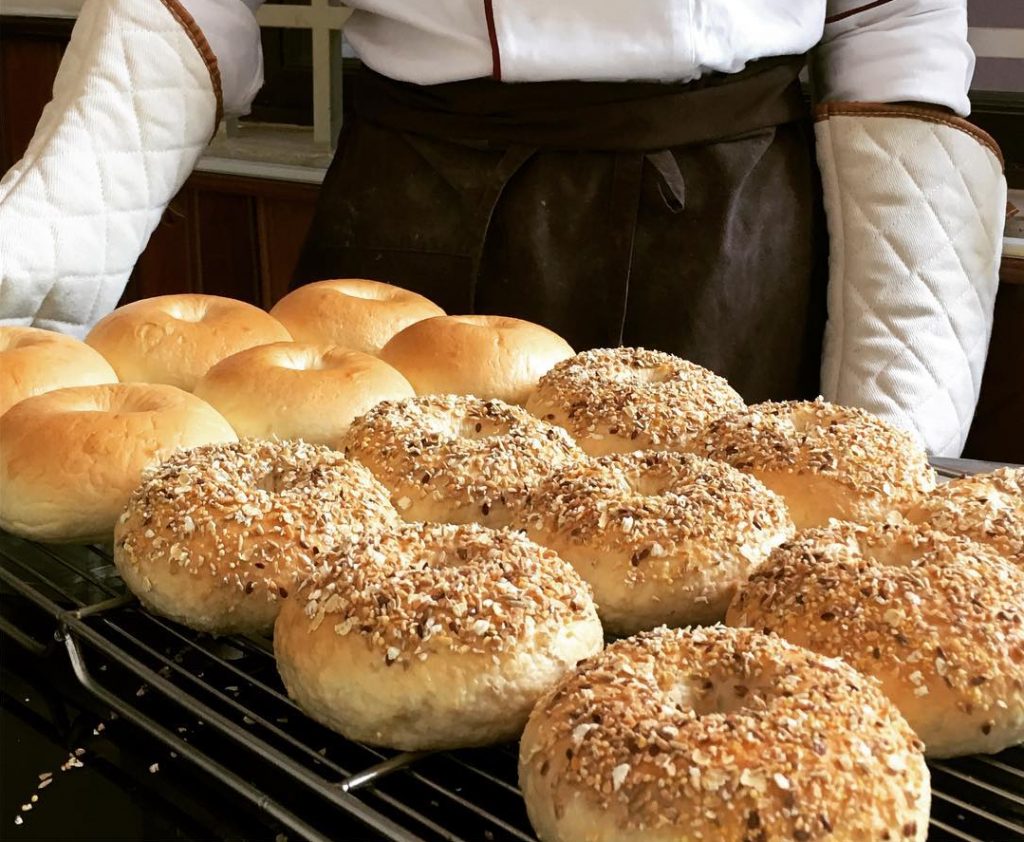
Stepping into a Joma café to order something from its extensive and “unapologetically Canadian” menu – staples include a “double-double” (a sandwich whose name is a riff on the Canadian habit of ordering a coffee with two creams and two sugars – a “double double”), taco salad and bestselling “bagel egger” – the average customer would be unaware that many of the staff were entirely unskilled when first hired. Some have disabilities, some are returning from traumatic situations, others were illiterate before fronting up for a job. And this, says country manager Jeff Spohr, is entirely the point.
“That core of creating jobs for refugees, that has influenced the company a lot,” he says. “Our hiring practice is one of our things I’m most proud of. People will often interview me, and say, ‘I’m just wondering if you have difficulty getting skilled labour’. And I tell them, ‘I don’t want skilled labour’. Our whole point is we give preferential hiring to people without skills. In fact, if you’ve got a disability, you’re going to get the job first.”
From deaf women baking in the kitchen to supervisors who, when hired, could not even read Lao script, the variety of disadvantaged and low-skilled workers who have worked at Joma is remarkable mainly for how little it affects the actual customer experience.
On a personal level, Spohr is heavily invested in the company’s staff. Another Canadian (and high school friend of one of the original owners), he first visited Laos in 2003 while honeymooning with his wife Alicia, fell in love with the place, and the two returned four years later to help run the Lao side of the business. In the nine years that he’s lived here, he has heard all the negative talk about Lao-style service, and resolutely ignored it.
It’s not surprising that, like many institutions, Joma has a certain mythology attached to it. The original Much and More wholesale bakery morphed into a café called Healthy and Fresh – taking up part of what is now the café’s flagship store in Vientiane’s downtown – which was eventually bought in 1999 by the two couples who comprise Joma. They rebranded the business in 2003, and since then the company’s defining altruism – both in terms of its staff, and the many, many projects it has funded through its business – is for real, and remains constant.“I really believe that there isn’t a lot of difference between me and them,” he says, of his staff. “The difference is I had the opportunity of good parents, good schools, good nutrition and good health…I’m not sure that all of those staff we hire have those opportunities. In fact, I’m sure they don’t. If they did, would they be any better at this than me? Yes they would… So if we can start there, all they need is an opportunity and a loving push.”
But despite its famous consistency and seamless service, times are changing for Joma. Look around, and suddenly there are cafes on every corner. Other chains that shall remain nameless are popping up in Cambodia and Vietnam. And more, and more, they’re filled with just as many locals as foreigners.
When Joma first opened, its clientele was almost exclusively foreign tourists and expatriates, and market competition was non-existent.
But, in the past five or six years, there has been a dramatic shift in the people who come through Joma’s doors, from branch to branch, and city to city. And this has led the company to make some adjustments. Regulars will notice subtle (some stalwarts might say dramatic) changes in the menu. There’s a whole new range of salads and sandwiches, five variations on the bagel egger (sales went up noticeably after this one), an almond croissant, doughnuts, baguettes and, in keeping with worldwide “wellness” trends, a range of matcha drinks. Everything, even the jam, is made in-house, and it’s all the result of market research, of responding to a morphing market.
Spohr says much of Joma’s business is focused on raising the bar, both in terms of training staff and giving back to the community. Joma now invests 10 percent of its profits into grassroots initiatives, local communities and projects involving those in need.
But for a long time, Joma didn’t publicise these activities.
“In the beginning, the ‘don’t let your right hand know what your left hand is doing’ principle was very heavily applied – they didn’t tell anybody,” he says.
But that principle no longer applies. Spohr says that with an increased profile comes increased responsibility, and Joma can also set an example.
“The company is showing that good business, ethical business principles and social responsibility in action can also still be done and have profit,” he says. “So we’re trying to raise the bar, and if you do good things and don’t tell anyone, it’s hard to raise the bar. That’s now become [a goal] in the last four or five years, figuring out how to tell people properly about the things that we’re doing…We’re definitely interested in giving back, through the way we run the business but also what we do with the money in the end.”
Like all countries, the number of Lao citizens who suffer from mental health issues are abundant. However, due to the lack of treatment options readily available to patients, 41,000 people in Laos live with their mental health issues untreated.
More than forty percent of construction for the new bridge crossing the Nam Ngum River, that will connect Nabong village to Thakokhay village in Pakngum district, has been completed.
With assistance from Lao World Public Co., Ltd, the estimated 105 billion kip (USD $12,728,100) bridge was expected to take 24 months to complete from the time of the groundbreaking ceremony, which took place in February, 2016.
Plans for construction somberly began after a boat capsized at the site on May 26, 2015, leading to the tragic drowning of 10 children.
Director of the Vientiane Public Works and Transport Department, Mr Detsongkham Thammavong, stated that the project is expected to be completed by the end of 2018. He added, “Now the project is concentrating on construction of the top of bridge pylons and then will continue on to other work. When the bridge is finished it will be toll free to serve the people.”
According to the latest blueprint, the bridge will be 236 meters in length and 11 meters wide, with two sidewalks of 1.5 metres each.
The finished bridge will provide a direct contribution to Vientiane’s development in support of the government’s overall socio-economic development plan, as it will be essential for the economic development of the region by improving the flow of goods between communities and easing transport.
The bridge will also boost trade along the river by providing convenient access to transporting goods and offering locals an incentive to participate in agricultural production due to the area having potential to grow a variety of crops.
Most importantly, local school children in the Pakngum district will now be able to travel across the bridge between Nabong and Thakokhay villages safely and conveniently.
With many car owners using social media as a platform to vent their frustration about petrol stations defrauding customers in Vientiane, Savannakhet and Champassak provinces, authorities have too found that several petrol stations are, in fact, cheating consumers by not providing sufficient amounts of fuel or providing dirty fuel.
Over the past two months, the Standards Department at the Ministry of Science and Technology has prompted authorities to inspect the quality and quantity of fuel at frequented petrol stations, and though the department won’t release information on what petrol stations or how many are guilty of the scam, it has been confirmed that the stations have been warned to cease operations until all meters have been reset properly.
A senior official at the Ministry of Science and Technology has asserted that authorities have warned several stations in the capital after being caught cheating customers. The official further explained that if these operators are found to be guilty of cheating consumers again, regulations will be enforced and the stations will be fined and penalized.
The Ministry of Science and Technology in cooperation with relevant sectors implemented a pilot project last October, where they inspected petrol stations and discovered that several stations were selling contaminated fuel.
The inspection of petrol stations have gained traction in recent months due to requests and complaints made by the Petroleum and Gas Group Association, vehicle dealerships and members of the public. Dirty fuel not only damages engines but also affects the reputation of vehicle and fuel businesses in Laos. Dirty fuel could derive from poor management of oil imports, resulting in petrol stations buying fuel from any source at a cheap price, regardless of quality.
According to the Ministry of Science and Technology, all fuel will be tested at border checkpoints for quality assurance before being distributed to petrol stations from this point on. In addition, the ministry will check petrol stations routinely, particularly those that are popular amongst motorists.
The fuel quality testing and inspection is part of the government’s efforts to protect the rights of consumers.
Laos imports all its fuel from other countries, but there is no official report about the exact figure of petrol imported to Laos for 2015 or 2016. However, according to the latest report released in 2013 by the Lao Petroleum and Gas Association, Laos imported over 911 million liters of fuel. An estimated 45 to 50 percent of the fuel Laos imports is used in Vientiane capital and Vientiane province alone.