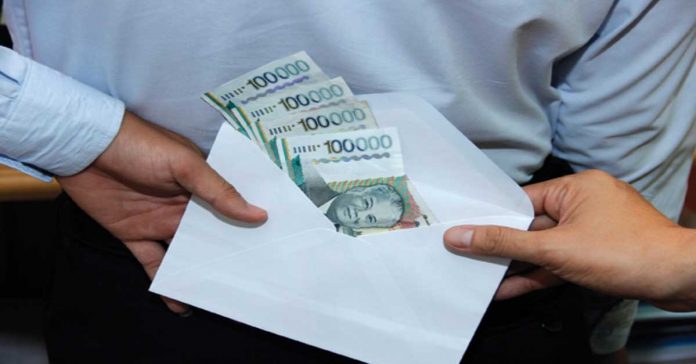
Laos has been ranked 130th on the 2019 Corruption Perceptions Index (CPI,) two places above last year, becoming one of a few countries in Southeast Asia to see less corruption.
CPI, released by Transparency International, ranks 180 countries and territories by their perceived levels of public sector corruption, according to experts and businesspeople.
Laos has gradually climbed the index over the past few years. Its ranking rose from 135 in 2017 to 132 in 2018 and 130 in 2019. It is one of very few countries in Southeast Asia to climb the ranking.
In contrast, some of its close neighbors have slipped further down. Thailand, for instance, ranked 96th in 2017 but it slipped to 99 in 2018 and 101 in 2019.
Laos signed the United Nations Convention against Corruption in 2003 and ratified it in 2009, with 186 State Parties.
The Lao government has been focusing on anti-corruption awareness-raising among civil servants and students to increase transparency in the country.
In an attempt to crack down on corruption, the government is pursuing capacity building in the development of human resources and improved legislation such as the Law on Anti-Corruption.
In addition, the Government Inspection Authority issued an instruction in February last year to law enforcement agencies to create conditions that enable people from all walks of life to participate in the fight against corruption.
“The instruction appeared to be the first-ever reference to detailed ways that members of the public can participate in the fight against misconduct and corruption,” Vientiane Times said at that time.
The number of Lao visitors to Japan’s city of Kumamoto is expected to grow four times bigger in the next ten years after the new airline routes between the Lao capital Vientiane and the Japanese city are launched, according to the latest estimation.
Such estimation was made at a forum, which was held in Kumamoto on January 20, to discuss the possible economic impact of the new routes, which will be launched on March 18 and operated by Lao Airlines.
Norihiro Izuno, a professor at Kumamoto Gakuen University and a forum participant, said South Korea has seen the number of visitors from Laos increasing sixfold after opening direct routes between Laos and South Korea eight years ago.
Japan could enjoy the same benefit with the new routes, and the number of Lao visitors is expected to increase to about 160,000 in the next ten years, about four times bigger than the current number, he said.
In addition, experts who participated in the forum said that the exports and imports of light and small electronic equipment and other high-value-added goods are expected to increase between the two countries, while there would be more business opportunities for Japanese firms that are interested in not only in Laos but also in Southeast Asia.
In November last year, soon after the news of the new routes came out, the Kumamoto city said it will increase its promotional efforts for the routes amid a drop in the number of passengers who use the city’s airport.
During an interview with local press, an unnamed city official stressed the importance of the new routes to Laos, adding that the city would try its best to attract more visitors to and from Laos.
A total of 7,161 people used the city airport in September, a 41.7 percent drop from the same month last year.
At that time, the official cited the stalled relationship between Japan and South Korea and the ongoing protest in Hong Kong as the main reasons that might have contributed to the decrease.
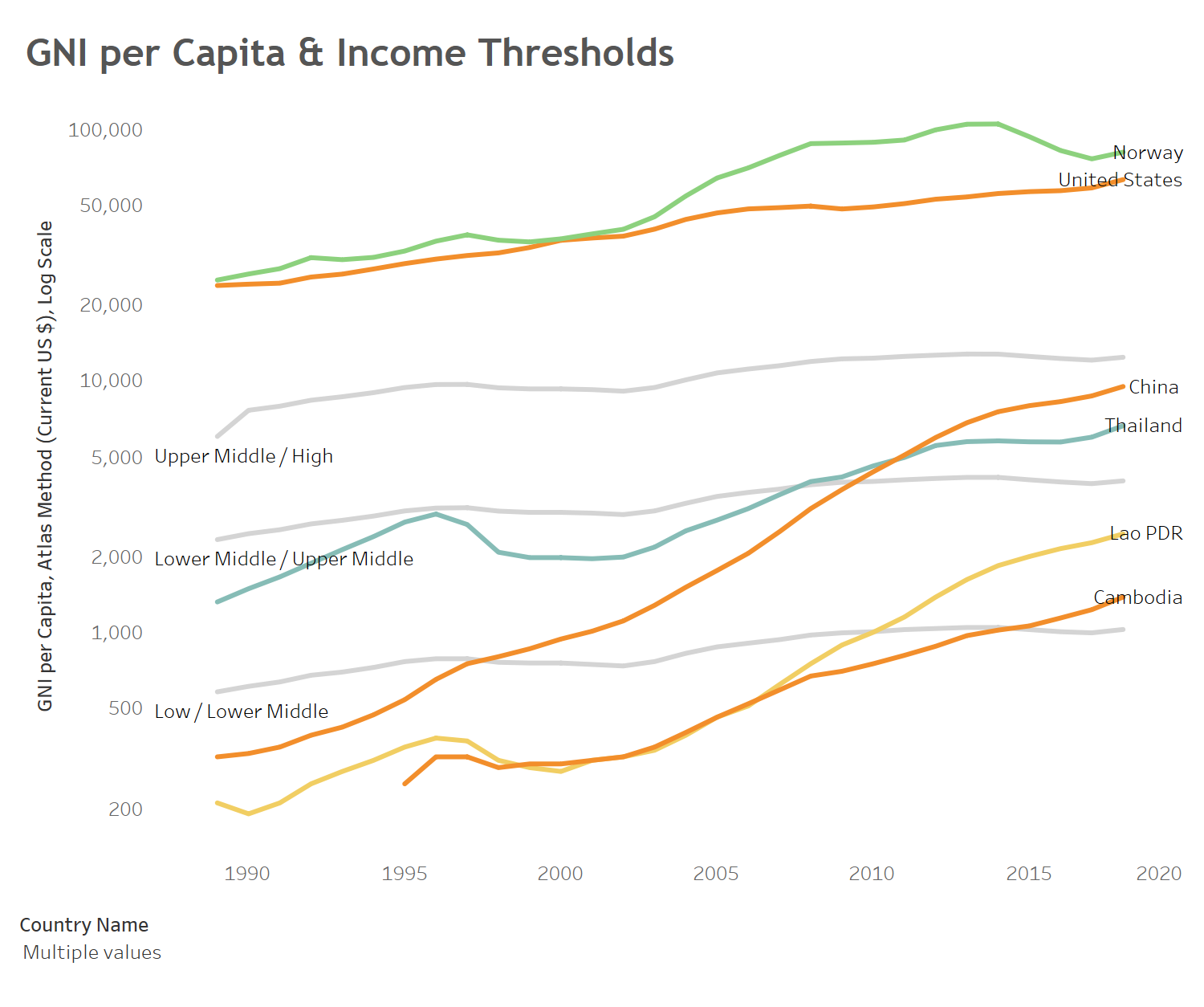
The World Bank has classified Laos as a lower-middle-income economy in its latest classification for the 2020 fiscal year.
The bank classifies the world’s economies into four income groups, namely high, upper-middle, lower-middle, and low, based on Gross National Income (GNI) per capita in U.S. dollars.
Lower middle-income economies are those with a GNI per capita between USD 1,026 and USD 3,995.
The World Bank decides such classifications by two factors: a country’s GNI per capita and classification threshold.
GNI Capita & Income Thresholds (US, Finland, China, Thailand, Laos, and Cambodia)
A country’s GNI per capita can change with economic growth, inflation, exchange rates, and population, while the thresholds are adjusted for inflation annually using the SDR deflator, which is determined by summing the values in U.S. dollars, based on market exchange rates, of a basket of major currencies, the U.S. dollar, Euro, and Japanese yen.
The threshold for the upper-middle-income classification is USD 3,996 and USD 12,375, while that for the high-income classification is more than USD 12,375.
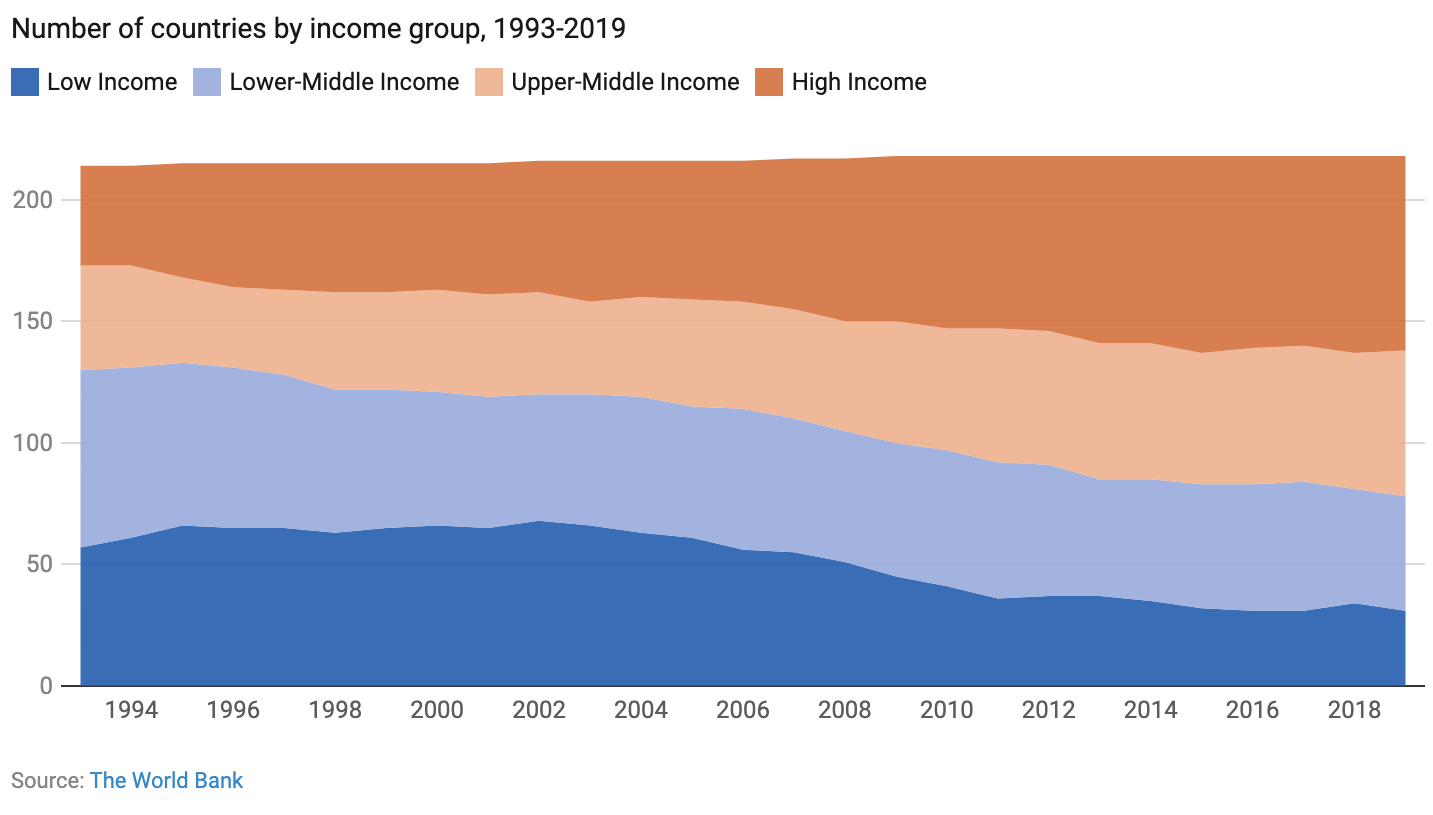
The number of high income countries has increased and the number of low income economies has decreased since 1993 (source: World Bank)
The classification tables include all World Bank members, plus all other economies with populations of more than 30,000, according to the bank.
The term country is used interchangeably with economy and does not imply political independence but refers to any territory for which authorities report separate social or economic statistics, it added.
Laos will set a new official price for pork as merchants struggle to sell the meat at the set government price of LAK 36,000 (USD 4) per kg.
Currently, the Grade A pork is traded between about LAK 43,000 and 45,000 per kg in the market, with merchants blaming middleman raising the price.
Vientiane Times quoted an official from the Domestic Trade Department, Ministry of Industry and Commerce, as saying that the department and Vientiane authorities are discussing setting a new price to bring it in line with market mechanisms amid complaints from both consumers and vendors about the price.
The official said the new price is expected to be announced to the public and related sectors this week and it will not be too high for consumers.
The official also noted that vendors who sell pork above to-be-announced price will be fined or otherwise penalised in line with the law.
The sharp increase of the pork price comes after a viral infection that killed many pigs over the past few months and caused a shortage, the official told Vientiane Times.
Such an infection also affected neighboring countries, including Thailand, Vietnam and China, raising the pork price there as well.
Laos Army Import and Export Trading and Korean firm ROAD have agreed to produce and distribute Korean rice wine in Laos.
Korean rice wine, or known as Makgeolli in South Korea, is a milky, off-white and lightly sparkling rice wine that has a slight viscosity characterized by sweet, tangy, bitter, and astringent tones.
To that end, the two parties agreed to set up a new Laos-based entity and will complete the process of obtaining licenses for its liquor business and the establishment of local production facilities and begin production and sales, according to Dongpo News.
The new entity plans to distribute and sell Korean rice wine not only in the domestic market but also in foreign countries, including China, Thailand, and Vietnam.
Such a move comes amid Laos’ efforts to increase its connectivity with neighboring countries through new railways, roads, and bridges.
For instance, the Laos-China Railway is currently under construction, which is a strategic docking project between the China-proposed Belt and Road Initiative and Laos’ strategy to convert itself from a landlocked country to a land-linked hub.
The 414.332-km railway, with 198-km tunnels and 62-km bridges, will run from Boten border gate in northern Laos, bordering China, to Vientiane with an operating speed of 160 km per hour.
American credit rating agency Moody’s has assigned a B3 rating with a positive outlook to the government of Laos, citing the country’s high economic growth potential.
The rating agency pointed out, however, the country’s weak executive institutions, limited transparency, and the small economy could be potential challenges.
It is the first time for Laos to receive such a rating from one of the three major international rating agencies. The other two are Standard & Poor’s and Fitch Group.
Having sovereign credit ratings means investors can have insights into the level of risk associated with investing in the debt of a particular country, including any political risk.
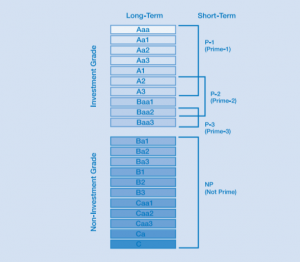
Moody’s rating scale ranges from a maximum Aaa to a minimum C, consists of 21 notches and two categories, namely the investment category for the financially sound companies and speculative category for the companies with a higher risk of default.
Rating scale by Moody’s
Rating B, which is divided into B1, B2, and B3, falls into the speculative category, and the agency suggests that it is “subject to high credit risk.”
Other countries on this scale include Angola, Belarus, Ecuador, Mongolia and Pakistan.
Supporting factors
Moody’s laid out four factors that support the rating.
Laos received “ba3” for economic strength, which balances the country’s high economic growth potential against relatively low incomes, the small size of the economy and exposure to environmental risks.
The country was rated with “b3” for the institutions and governance strength, which balances weak executive institutions, low administrative capacity, and very limited transparency and accountability against a lengthening track record of effective monetary management.
The agency gave Laos “caa1” for fiscal strength, which reflects a high government debt burden for the size of the economy and the government’s narrow revenue base that constrains fiscal flexibility, although the largely concessional debt supports debt affordability.
The country got “ba” for the susceptibility to event risk, driven by external vulnerability risk given structural current account deficits and low foreign exchange reserve buffers.
Positive outlook
The positive outlook is driven by Moody’s assessment that the implementation of large infrastructure projects, including the hydropower dams and the Laos-China Railway, if managed effectively, would deliver net positive benefits to the economy and raise government revenue and exports, Moody’s said in a report on January 8.
“This would allow for a faster reduction in the debt burden and alleviate external risks compared with Moody’s current expectations,” the agency added. “Ongoing fiscal reforms, including efforts to widen the tax base and strengthen expenditure and debt management, also have the potential to shore up fiscal strength and Laos’s credit profile over time.”
What could change the rating
Moody’s explained that prospects of a substantial and sustained reduction in the debt burden, including through fiscal consolidation or revenue expansion beyond Moody’s current expectations, would be credit positive.
“This could happen in the context of effective implementation of the large infrastructure projects that raise economic competitiveness and prospects for diversification, increasing the resilience of the economy to shocks, and raise government revenue. In addition, a reduction in external vulnerability risk, in particular through a sustained accumulation of foreign exchange reserve buffers would also place upward pressure on the rating,” it added.
While saying the positive outlook signals that a rating downgrade is unlikely over the near term, the agency noted that downward pressures on the rating would be likely in case of a further weakening of Laos’s external position, evidenced by a decline of already low foreign exchange reserves coverage of imports and external debt.
It cited a weakening of fiscal and debt metrics and further failures in the banking system that involved material fiscal costs and weighed on growth on a prolonged basis because of constrained credit supply as possible factors that would weigh on the rating.
Gearing up international dollar bond debut
The Lao Government engaged in November last year with Standard Chartered, JP Morgan, and Credit Suisse for its planned international US dollar bond debut.
In December of 2015, Laos sold USD 182 million worth of dollar bonds in two tranches to institutional investors in Thailand and regularly issues sovereign bonds denominated in Thai baht, but it has yet to offer a bond to international investors.
At that time, financial advisor Victor Rattanavong of Kindersen Raleigh & Associates said that China and Thailand are two of Laos’s biggest funding sources, but people in Thailand are getting a bit full with credit, and Laos may need to look elsewhere.
“This is potentially good for Laos because of the wider pool of investors, meaning there will be more liquidity for Lao government bonds,” Rattanavong noted.
Japan has submitted proposals to Laos on how to improve its fiscal stability as the country faces debt problems due to heavy borrowing from China.
The proposals by the Japan International Cooperation Agency experts stressed the need to make major infrastructure projects profitable and to scrap money-losing state-run companies, NHK reported.
They also pointed out that Laos depends on foreign currency borrowing and advised the country to shift to longer-term loans while maintaining confidence among investors.
NHK quoted Mr. Toshiro Nishizawa, a professor at the Graduate School of Public Policy of the University of Tokyo, as saying that Laos was overly optimistic when it procured the loans.
He added that it’s necessary for Laos to think about how ongoing infrastructure projects can contribute to economic development.
Laos is suffering mounting fiscal deficits amid its reliance on massive loans from China to finance its infrastructure projects, such as railway construction. Accordingly, China has asked Laos to grant rights to operate major infrastructure as collateral.
According to the World Bank, the Lao government is currently seeking to maintain macroeconomic stability by reducing the fiscal deficit and strengthening public debt management.
As a result, there has been fiscal consolidation, with the fiscal deficit expected to decline to 4.3 percent of GDP in 2019 from 4.4 percent in 2018 and 5.5 percent in 2017, according to the bank.
“The government is strengthening revenue administration and efficiency through the introduction of electronic tax payments and modernizing the tax collection system while containing wages and investment spending in 2019,” it added.
Fiscal consolidation is expected to slow down the accumulation of public debt in the medium term, the bank noted.
Laos has promulgated a new prime ministerial decree clarifying the import and export of vehicles, dealerships, and assembly plants as different types of business.
According to the new decree, a company that wants to operate all three types of business must obtain three separate operating licences from the commerce ministry. In the past, some companies used a single business licence to enjoy other businesses, Vientiane Times reported.
The new decree, which details information on business areas and requirements for the country’s vehicle industry, can be viewed at: https://www.laotradeportal.gov.la/
The Lao government’s move is designed to help state agencies to agencies to effectively administer vehicle businesses, which have been growing rapidly in recent years.
It is also aimed at limiting the number of operations that sell low-quality vehicles, which are harmful to the environment, while encouraging the sale of vehicles that are environmentally friendly, such as electric vehicles.
The government wants to encourage Lao companies to operate vehicle assembly plants through tax incentives.