Home Blog Page 6389

Urban Water, Environment Need Improvement

The (Project for Urban Water Environment Improvement) has raised the awareness of the capital’s residents since the release of its master plan to promote better water and drainage solutions.

However, despite Vientiane having improved its drainage network, the water quality in the drainage canals and marshes is still getting worse if compared with other ASEAN neighbouring cities.

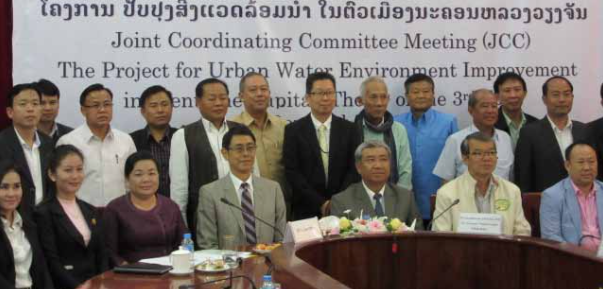
The matter was discussed by senior officials from line ministries involved and a JICA expert team at the joint coordinating committee meeting on the Project for Urban Water Environment Improvement, held on Friday in Vientiane. The meeting was attended by Vientiane Deputy Mayor, Mr Keophilavanh Aphaylath, representatives from JICA and other invited guests.

The urban water situation remains bad because of the increasing discharge of domestic wastewater from residential areas as a result of improved lifestyles, as well as rapid economic and population growth, according to the Ministry of Public Works and Transport.

The project has developed facilitators and resource persons for environmental education and implemented campaigns for load reduction from wastewater and regular cleaning activities of canals by communities and the Vientiane Urban Development Administration Authority.

Speaking at the meeting, Mr Keophilavanh stressed that the drainage channel system is being developed to help the natural function of the marsh; however the system will work better if waste water can be managed more efficiently to ease the load on the marsh.

“If it is better managed the marsh could become a great energy and water resource for Vientiane,” he said.

Most of the floodwater and grey water waste originating from households flows into the canals and marshes, which actslike a natural filter before the water eventually makes its way into the Mekong River.

However, it seems the marsh can no longer contain the amount of chemicals and industrial pollutants that are now draining into it.

“With the development of Vientiane, many roads, factories and houses have been built nearby, which are putting more strain onthemarsh,”hesaid.

Another problem is that of illegal dumping, with many residents living near canals and marshes dumping plastic and household garbage around the shores of the lake, instead of disposing of it in a more responsible way. The Urban Water Environment Improvement Project aims to strengthen the institutional framework and organisation for wastewater treatment in Vientiane capital through a participatory approach.

In Laos, less attention has been paid to the sanitation sector than others. Therefore, this project can be treated as a milestone, both for the urban sanitation sector in the country and for raising issues on urban sanitation. The National Strategy on Environment up to the year 2020 of the Lao PDR stipulates to implement measures for sustainable development as one of its main objectives, where water environment management is included.


Source: Vientiane Times
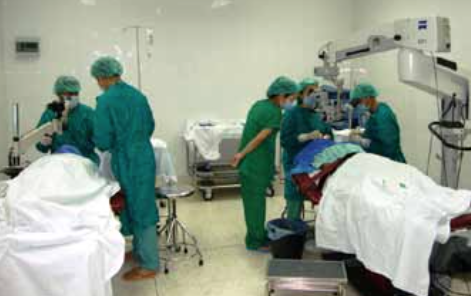
Vietnam and Laos Provide Free-of-charge Cataract Surgery

Vietnamese and Lao ophthalmologists provided free-of-charge cataract surgery in Laos from November 13 to 16 to assist poor patients in the country in regaining their eyesight.

The cataract surgery was performed under the Cataract Surgery Programme of Vietnam-Laos Friendship with support from the Ho Chi Minh City Eye Hospital of Vietnam

Patients in Vientiane and nearby provinces with cataract problems received treatment at the National Ophthalmology Centre and 103 Military Hospital in Vientiane. The surgery dramatically reduces the magnitude of blindness, which is largely avoidable. The treatment was conduced in accordance with the government’s obligation to provide the highest attainable standard of health for its citizens.

Director of the National Ophthalmology Centre, Dr Khamphoua Soutthisombat, spoke with Vientiane Times last week. He said the team removed cataracts from about 200 elderly people.

This programme has helped many poor patients regain their eyesight. It also gives poor patients the opportunity to access high quality medical services and support themselves instead of depending on others, Dr Khamphoua said.

Ho Chi Minh City Eye Hospital started to perform operations in Laos in 2006, focusing on the problem of blindness. The programme aims to raise public awareness about the prevention and treatment of vision loss. Moreover, the programme is a step forward in strengthening the traditional friendship, solidarity and comprehensive cooperation between Vietnam and Laos and in particular between Vientiane and Ho Chi Minh City.

From 2006 to 2016, over 3000 poor patients with cataract problems in Laos have benefited from this programme.

According to the centre, a recent survey in Laos estimated that 3 percent of the population aged 50 years old and above is blind. This prevalence level contrasts with that of a developed country such as Australia, which is under 1 percent.

The incidence rate among the population in ASEAN member countries was 0.1 percent. Cases were mostly found in the elderly, while others occurred because of eye injuries, diabetes and genetic defects. But the condition can easily be treated, according to World Health Organisation.

Primarily, blindness in Laos is caused by cataracts, while poor vision is caused by uncorrected refractive errors.

The prevalence of blindness is estimated to be as high as 5 percent in some rural or remote areas of the country. Women account for up to twice as many cases of blindness as men. Besides the impact of vision loss on a person’s quality of life, there is also a substantial economic loss associated with blindness, including increased unemployment, decreased productivity and increased welfare costs.

Preventable blindness is a significant global health problem, which hinders development and disproportionately impacts the poor; yet many of the cases can be prevented or treated. Programmes like the Cataract Surgery Programme of Vietnam-Laos Friendship help overcome this obstacle.


Source: Vientiane Times

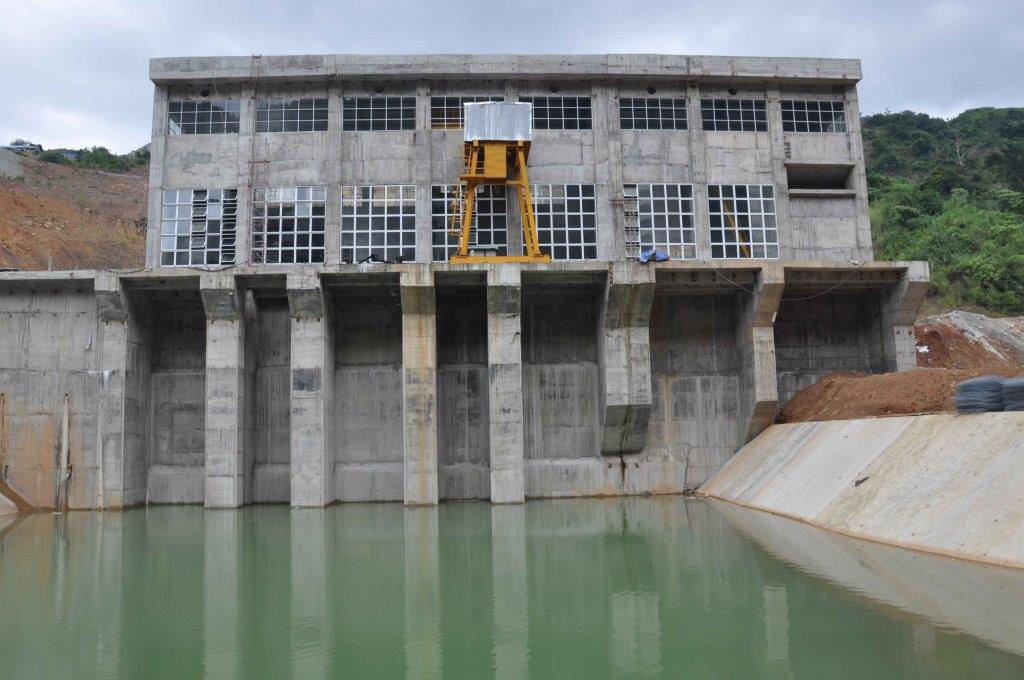
Xekong Hydro Plant Out of Action

The Xekhaman III hydropower plant in Xekong province has not been generating electricity for a few days since a pipe that delivers water to the turbine developed a leak.

Head of the province’s Administration Office, Mr Khanty Silavongsa, told Vientiane Times on Monday that the pipe became unserviceable last Friday.

We don’t know the details of the problem because technicians are still carrying out checks, he said.

An official from Xekong province, who asked not to be named, said the power plant was located in Dakcheung district but power supplies there had not been cut off because the district’s electricity did not come from this particular dam.

He said he had heard it would take 10 days for technicians to fix the problem.

Social media showed a photo of a car at the dam that was covered in wet red soil after the pipe broke.

Looking to the future, Vietnam’s Deputy Prime Minister Trinh Dinh Dung asked the Ministry of Industry and Trade to submit a master plan to develop power generation sources by 2025, emphasising the need to diversify supply sources and consider power supplies from Laos, Vietnam Net reported. There were no details concerning the amount of energy required.

According to Laos’ Ministry of Energy and Mines, Laos has sold 250MW of electricity generated by the Xekhaman III hydropower plant to Vietnam. The Xekhaman I dam is set to generate 290MW for Vietnam at the experimental-operations stage. Laos and Vietnam signed a Memorandum of Understanding in which Vietnam expressed its intention to buy as much as 5,000MW from Laos.

Laos is expected to generate 10,000MW by 2020, of which up to 75 percent is expected to be exported as domestic demand is forecast at only 25 percent.

By 2030, Laos’ power production capacity is expected to rise further to 20,000MW, which will be in excess of domestic demand and set for export to its neighbours.

Vietnam is looking to buy more power from Laos as the country’s requirements are considerable and growing, according to Vietnam Net.


Source: Vientiane Times

Project to Help Human Trafficking Victims

The US government has provided more than 5.35 billion kip (US$655,700) to launch a project on preventing and strengthening the victims and people at risk for human trafficking in Laos, through the Village Focus International NGO.

The project center is located at Phonpapao village, Sisattanak district, Vientiane; but the assistance will be open for the whole country, and will begin on the date of approval until December, 2018.

The memorandum of understanding signing ceremony took place yesterday in Vientiane, between the Director General of the Social Welfare Department from the Ministry of Labour and Social Welfare, Mr Prasong Vongkhamchanh and Director of Village Focus International in Laos, Mr Rechard Lee Reece.

The Deputy Minister of Labour and Social Welfare, Ms Baykham Khattiya and officials from concerned ministries witnessed the ceremony. The main focus of the project is to operate a rehabilitation centre in Vientiane for assisting and rehabilitating the victims and people at risk for trafficking in the country and for Lao people who have been trafficked to other countries.

The second focus is to assist the victims and people at risk for human trafficking to reintegrate into society, providing them education, vocational training and finding suitable jobs.

The third focus is to provide capacity building to government counterparts and the project staff on assisting and protecting the trafficking survivors and the people at risk of being trafficked.


Source: Vientiane Times

Reform Measures Improve Governance

The implementation of governance and public administration reform has improved various ministerial sectors in the country.

This conclusion was reached at a meeting held in Vientiane yesterday to review the National Governance and Public Administration Reform Programme (GPAR).

Strengthening Capacity for Service Delivery for Local Administration Projects (SCSD) and the Secretariat Supported Project are two of the schemes under the programme, which came to an end this year after five years of implementation.

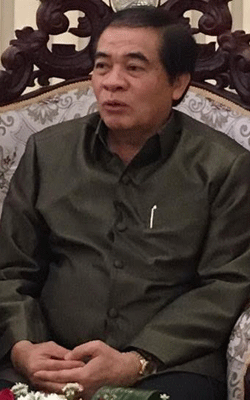
Speaking at the meeting, Deputy Minister of Home Affairs, Mr Khammoun Viphongxay, said the two projects have been implemented with effective management and met the planned targets.

He pointed to the Governance Sector Working Group as an important stage for regular constructive consultation of the sectors related to governance.

I think we should continue to support the group next year and the years to come as it provides a good model for constructive consultation, Mr Khammoun said.

This showed the effective cross-sector collaboration between the government agencies and other organisations, including the Ministry of Finance, the Ministry of Planning and Investment, the Ministry of Justice, the National Assembly, provincial authorities and development partner organisations, he added.

Around US$8 million has been spent for GPAR projects in the past five years with funding from the United Nations Development Programme (UNDP), the UN Capital Development Fund, the Swiss Agency for Development Cooperation, the Republic of Korea, the Council of Government of Luxembourg, the Asian Development Bank and the European Union.

The deputy minister noted the District Development Fund (DDF) under the programme as a form of inclusive planning and decision making, saying the DDF has been implemented well with participation of many constituents at the local level.

According to a report delivered at the meeting, a challenge to the programme is the execution of the One Door Service Centre (ODSC), which members of the public confirmed has been implemented, but remarked, however, that the programme remains ineffective in mitigating the various bureaucratic barriers financiers face when investing in the country.

The Deputy Minister of the Ministry of Home Affairs Department of Planning and Cooperation, Mr Nisith Keopanya, said the system needs improvement with more cross sector cooperation.

According to him, experts have been hired to assess the system services, who have recommended conducting service level benchmarking. Mr Nisith said the new model of ODSC will be tested in several locations before rolling out a working model. Justice, effective governance and public administration are necessary facilities for sustainable, inclusive development as well as poverty reduction, the Deputy Minister said.

Working effectively is fundamental for the country’s graduation from least developed status to a modern state, overcoming the challenges accompanied by regional and international integration, Mr Khammoun concluded.


Source: Vientiane Times

WB Helps Laos to Upgrade Rural Roads

The World Bank’s Board of Executive Directors is providing US$25 million credit for Laos to strengthen its road maintenance systems and improve road connectivity throughout the country.

The credit comes from the International Development Association (IDA), according to a report published on the World Bank’s Board of Executive Directors’ website on December 13.

The approved Laos Road Sector II Project is part of the country’s national programme to build climate-resilient infrastructure nationwide through a stronger institutional framework for road maintenance.

The project will help to strengthen the government’s capacities for sector financing, planning, integration of climate change adaptation into road sector strategies, business processes, standard designs for climate-resilient road asset management, governance and accountability, monitoring and evaluation.

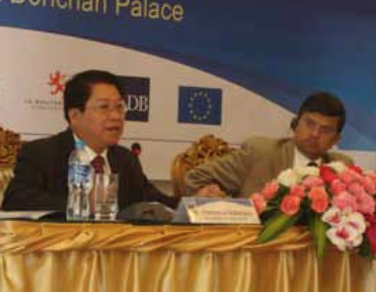
We thank the World Bank for the assistance it has extended to help Laos fulfill its National Socio-Economic Development Plan, Minister of Public Works and Transport Dr Bounchan Sinthavong said.

Through this project, we are able to partner with the World Bank to support Laos’ road maintenance programme, resulting in better and safer roads. Many people in rural areas will benefit from more reliable roads, in both the dry and rainy seasons.

In addition, the project will support road maintenance in the six provinces of Phongsaly, Huaphan, Oudomxay, Xieng Khuang, Xayaboury and Borikhamxay, which are highly vulnerable to flash floods, landslides and other events as a result of severe weather.

Under the project, around 1.6 million people in these provinces will benefit from improved and more reliable roads, ensuring year-round access to basic services such as schools and markets, even during the rainy season. Laos is one of the Asean countries most vulnerable to floods, droughts and storms, with local transport infrastructure particularly exposed due to the climate-related increase in the frequency and intensity of natural disasters. Better roads can help Laos avoid disaster-related road closures, improve people’s mobility and access to basic services, markets and sources of livelihoods, World Bank Country Director for Southeast Asia Ulrich Zachau said.

The World Bank is pleased to help finance this project and support the Lao government’s goal to build stronger, safer roads to provide more services and more income opportunities for more people.

This project is co-funded with an additional grant of 5 million euros, credit of 6 million euros from the Nordic Development Fund and US$10 million from the Lao government. The terms for the IDA credit include a maturity of 25 years, with a grace period of five years and a service charge of 0.75 percent and interest rate of 1.25 percent.


Source: Vientiane Times

Laos-China Railway: Details of Required Workforce still Unknown

Authorities are still waiting for information on the kind of work to be undertaken by Lao labourers and the number required to help build the railway that will link Vientiane to the Chinese border.

Minister of Labour and Social Welfare, Dr Khampheng Saysompheng, told local media last week that his ministry has not yet been informed about worker numbers and the skills required, despite the fact that construction of the 427-km railway is scheduled to start this month.

He stressed the need for the bodies involved to coordinate with and inform his ministry as soon as possible so that training in the requisite skill sets can be given.

Dr Khampheng said that while the railway has been under discussion for some time, no labour requirements have yet been supplied.

We still don’t know what kinds of skills are needed, he told the media while attending a meeting in Vientiane of the cabinet, Vientiane Mayor and provincial governors, which ended last week.

Labour issues have been a topic of debate since a plan to build the US$6 billion railway was proposed several years ago. Given that Lao workers lack skills in this area, some people have voiced concern that the mega project will not create as many jobs for Lao people as hoped. The matter has been discussed but the details remain unclear.

It was previously stated that more than 50,000 workers would be required to build the railway.

Dr Khampheng said he had suggested that the project should create as many jobs as possible for Lao people.

There is a need for further detailed talks on the labour issue, otherwise foreign workers will be hired [for railway construction], he added.

Given the limited timeframe between now and the start of the project, he said Laos was unlikely to be able to train and prepare highly skilled technicians.

Minister of Public Works and Transport, Dr Bounchanh Sinthavong, said previously that the coordinating committee had been preparing details on labour recruitment and promised that the recruitment plan would ensure that local people would be employed.

A senior official at the Lao Federation of Trade Unions previously expressed concern that local workers could suffer in competing for jobs on the project given that Lao workers have no skills in railway construction. The official, who asked not to be named, said there were no training courses in Laos in this field.

It will probably be inevitable that a large number of foreign workers will be hired once construction starts, he said, adding that the number would likely exceed the quantity of foreign workers permitted by law.

The amended Labour Law, which was passed by the National Assembly in December 2013, allows a workplace or enterprise to employ up to 15 percent of the total workforce on a project as manual labourers.

In addition, a workplace can employ up to 25 percent of its workforce as white-collar professionals.


Source: Vientiane Times

Oudomxay Planning to Roll Out Welcome Mat for Visitors

Oudomxay province is setting its sights on developing tourist attractions so as to bring in more Chinese investors and visitors.

Chinese visitors are steadily increasing in number at the province’s main tourist destinations and now Oudomxay is planning to attract another two million.

Provincial Deputy Governor, Mr Somchith Panyasack, told the press that China’s Xishuangbanna province receives about 20 million visitors a year.

When I visited Xishuangbanna, it was suggested I bring 10 percent of Chinese tourists or two million people to Oudomxay each year from Xishuangbanna, he said.

If this number of people were to visit Oudomxay from Xishuangbanna, it is envisaged that the province’s economic growth would increase rapidly.

But Mr Somchith was concerned about whether there would be sufficient accommodation for such a large influx of tourists.

An official at the Oudomxay tourism office, Mr Van Mingboupha, told Vientiane Times on Monday that accommodation in the provincial capital, Xay district, was sufficient to house more than two million visitors a year and there would be no problem supplying enough food.

There are almost 3,000 rooms available in the capital’s hotels and guesthouses, many of which are currently empty, Mr Van said.

Mr Somchith added that there were several places of interest in the province- one of which is Nam Kat waterfall. This beautiful spot is popular with locals and foreigners alike and receives about 100 visitors a day.

Last year, about 215,000 foreigners visited the province. According to the Ministry of Information, Culture and Tourism, the total number of foreign tourist arrivals in Laos increased from 2.7 million people in 2011 to 4.1 million last year.

People driving to the northern provinces of Luang Namtha, Bokeo and Phongsaly from Vientiane often stay overnight in Oudomxay to break the journey.

A road connecting to Phongsaly through China’s Yunnan province offers a shortcut for motorists visiting Phongsaly, but not many people use this route yet.

Due to the number of trucks queuing at the Laos-China border in Luang Namtha province, many people prefer to drive to Phongsaly through Oudomxay instead.


Source: Vientiane Times