Home Blog Page 6391

Ministry, UN Mark International Migrants’ Day

Over the past five years, more than 120,500 Lao labourers have registered legally through recruitment agencies to work abroad, but many remain impacted by unsafe migration and exploitation, and could become victims of human trafficking.

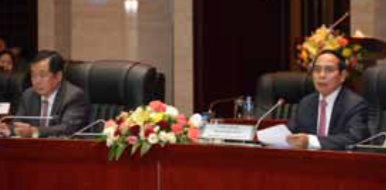
This information was outlined by Minister of Labour and Social Welfare, Dr Khampheng Saysompheng in a meeting on Friday in Vientiane to mark the 16th anniversary of International Migrants’ Day (December 18).

Dr Khampheng said, the migrant labour problem is increasing in many countries with many workers looking for better jobs and income, safe workplaces for health and living standards, as well as some wanting to develop their skills, while others suffer from hunger, poverty, natural disasters and war.

In Laos, some migrant labourers come from remote areas to work in urban centres while others go to work in neighbouring countries, both legally and illegally.

However, the Ministry of Labour and Social Welfare and development partners are paying more attention to migrant labour protection, and have supported some Lao labour to train in agriculture and construction skills abroad every year.

Dr Khampheng said no one alone could prevent the migrant labour problem, but everyone could help by sharing information about labour protection rights, labour laws on safe migration and obtaining the right income and reaching social welfare to alleviate poverty.

The Lao government, local and international organisations have also jointly improved vocational system development and career recruitment.

Currently, there are 18 recruitment agencies in the country, working to arrange jobs for Lao labourers who would like to work in the local region and foreign countries. There are also nine labour recruitment service centres and two information centres for migrant labour.

International Migrants’ Day is held every December 18 to share information with migrant workers. This year the theme was Strengthening employment services to advance the promotion of decent work and safe migration.

The meeting was organised by Ministry of Labour and Social Welfare, International Labour Organisation (ILO), International Organization for Migration (IOM) and other development partners.

According to statistics, in 2015, a total of 244 million migrant labourers around the globe live in developing countries.


Source: Vientiane Times
Govt Initiates Policy Dialogue to Ensure Benefits from Population Dynamics

With more than half of the population below the age of 25, the Lao government needs to take advantage of the demographic bonus and address inequality and disparities between ethnic groups and geographic areas.

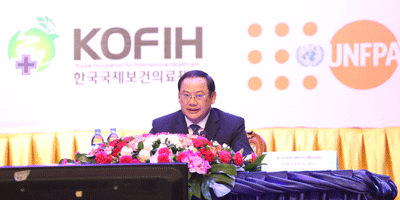
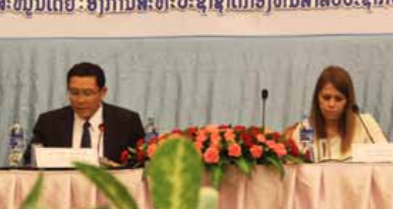
The United Nations Population Fund (UNFPA) Deputy Representative of Laos Ms Ulrika Rehnstrom made the statement during a high-level forum held on Friday.

I am calling for empowering of young people in a holistic manner especially young women and adolescent girls. They deserve special attention and support in grabbing opportunity and claiming their rights, Ms Re hnstrom said.

I hope that public policies including the revised population policy will take the needs of young people into account, particularly adolescent girls.

The objective of the forum was to discuss population policy, in particular the potential future dividend of the demographic opportunity that can help the country achieve inclusive and sustainable growth.

Knowing the population structure is vital for designing effective policies and programmes. The population policy can help us achieve more sustainable and inclusive development, Deputy Minister of Planning and Investment Dr Kikeo Chanthaboury said.

To ensure benefits from population dynamics, Dr Kikeo stated the ministry was planning to start the revision of the National Population and Development Policy starting in 2017 using new and updated evidence, such as the Population and Housing Census 2015.

The 2015 Population and Housing Census showed the large generation of young people. About 60 percent of the total population is below the age of 25.

Organising this discussion highlights the government’s efforts in bringing population dynamics into socio-economic development of the country, Dr Kikeo added.

The recent Population and Housing Census 2015 indicated a continued growing population from 4.5 million in 2005 to 6.5 million in 2015. However, the population growth rate declined to 1.4 percent per annum between 2005 and 2015.

The average number of children per women decreased to 3.2 at present from 6.4 in 1985. These provide both opportunities and challenges for the country’s development.

The population aged 10-24 accounts for 32 percent. The work age population continues to rise from 57 percent in 2005 to 64 percent in 2015.

Fertility and mortality continue to decline. These features provide Laos with unique opportunities and challenges for the country, according to UNFPA.

The Lao government after adopting its commitment to the International Conference on Population and Development developed the National Population and Development Policy in 1999 aiming to ensure a balance between population and development and improve the life of people.

The policy was revised in 2006. After 10-years of its implementation, the Ministry of Planning and Investment, therefore, would like to take stock and revise the policy to meet the current population and socio-economic context of the country.

The forum was organised by the Ministry of Planning and Investment with support from UNFPA.


Source: Vientiane Times

Govt Focusing on Developing ICT Infrastructure

The government has set the target of developing and expanding the nation’s information and communications technology (ICT) infrastructure, according to a leading official.

This was the message highlighted by Deputy Prime Minister, Dr Bounthong Chitmany during the closing day of a meeting from December 15-16 in Vientiane which summarised the Ministry of Posts and Telecommunications’ work over the past year and revealed plans for next year concentrating on expansion of ICT infrastructure.

He called on the ministry to accelerate the rollout of connections and internet speeds, along with improving quality standards while keeping costs low.

Laos needed to have a national data and information centre for saving all electronic data of ministries and government-private organisations around the country, he said.

Other needs included inspections to confirm the technical standards of telecommunications equipment and their compliance with international standards at a reasonable price.

Dr Bounthong called for the continuation of awareness raising campaigns so people in society fully understood how to use social media appropriately while paying attention to ICT human resource development and guidance of Laos’ first telecommunications satellite (Lao Sat-1) project.

During the meeting, the Minister of Posts and Telecommunications Dr Thansamay Kommasith also gave a presentation on the achievements of the ministry. The past year involved capacity building for the ministry’s officials in the use of ICT systems and operations, especially concerning Lao Sat-1, as well as paying attention to social media management.

The ministry has responsibility for managing the nation’s ICT and has concentrated on developing modern technical structures such as the National Internet Centre, Cyber Safe Protection Centre, Lao Computer Emergency Response Centre, National Transmission Line, and the Lao Satellite.

The ministry has also improved and developed legislation to manage and improve ICT such as the laws on telecommunications, posts, prevention and combating cyber crime and the law on information technology.

However the ministry recognised IT as a double-edged sword as it has faced challenges in the areas of knowledge and capacity building in ICT use.

The IT sector will play a major role in society and socio-economic development. The government aims to develop all working sectors of ICT in a bid to create an advanced government administration in the modern digital era.

For next year’s plan, the ministry will continue implementing the Party’s policy and socio-economic development plan relevant to the sector.


Source: Vientiane Times

Authorities Will Legalise Lao Workers in Thailand

Lao authorities expect to begin a new round of verifying nationality and legalising the status of thousands of Lao workers in Thailand in the coming months, Minister of Labour and Social Welfare said last week.

Dr Khampheng Saysompheng told local media during his attendance to the meeting between the cabinet, Vientiane Mayor and provincial governors that discussions with Thailand are needed to set a precise date to begin the work.

Currently, more than 100,000 Lao workers and family members are still residing in Thailand without proper documents, the minister said citing information provided by Thai authorities.

Lao and Thai authorities completed the joint mission earlier this year to legalise illegal Lao workers and more than 70,000 have been granted work permits.

Originally, the two authorities planned to complete legalising all the Lao workers during the last joint mission, but the number of Lao workers still without work permits is huge, therefore they could not complete the task.

In addition, numerous Lao workers are scattered with smaller and family-based businesses making the legal processing difficult unlike Cambodian and Myanmar workers who are working together in big factories, the minister explained.

Some Lao workers are working as housekeepers or work on farms, he said.

Dr Khampheng said the Lao government agreed on the need for local authorities to continue working with Thailand to legalise the remaining workers.

To address the issue of illegal workers in the longer term, the government told the Ministry of Labour and Social Welfare to improve labour recruitment mechanisms to ensure that all workers travelling to work in foreign countries are recruited through labour recruitment agencies so that they are granted legal documents prior their departure.

The minister admitted that recruitment through the labour recruitment agencies was considerably more costly and time-consuming which deterred workers from using the services, who instead decided to go abroad through illegal channels.

Despite the fact that Laos still needs many workers to fulfil jobs in local workplaces, Thailand has been a popular destination for Lao workers lured by higher wages. Similarity in culture and language has also motivated Lao job seekers to go there.

Officials have warned those wanting to go abroad seeking employment to do so through labour recruitment agencies and obtain legal documents so they are fully protected by laws, as those going through illegal channels are vulnerable to fall victim of human trafficking.


Source: Vientiane Times

Residents Still Unaware of Railway Plans

Many residents have yet to know that a high-speed railway will be built in Laos from the Laos-China border in Luang Namtha province to Vientiane.

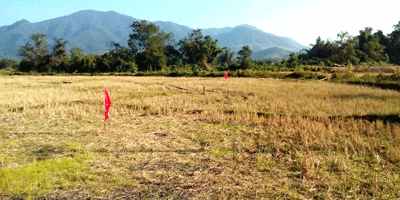
The railway worker camps and flags marking the railway land have been erected in the four provinces of Luang Namtha, Oudomxay, Luang Prabang and Vientiane.

Deputy Govern  or of Oudomxay province, Mr Somchith Panyasack, told the press that many people still do not know that the railway will be built in Laos.

If they knew that the railway was really happening they would be excited to see high-speed rail in Laos, he said.

However, there are 40 villagers in the province of Oudomxay in the three districts of Xay Nga and Namor where the railway will pass through, which are currently seeking compensation and resettlement.

A railway coordinator in Oudomxay province, Mr Phonpradith Phommachith said last week the railway will pass through the province over a distance of 126 kilometres.

Right now, the relevant authorities are installing markers for the railway and mediating to compensate the families who will have to make way for the railway construction.

A provincial coordinator of the Laos-China project, Mr Chanthachone Keolakhone said the three villages of Boten, Tinsan and Nateuy in Luang Namtha province are located within the vicinity of the construction site.

But the number of families who will have to move is as yet unknown because they are surveying and installing markers on the land that the railway will pass through.

A section of about 16.9 kilometres in length runs through these three villages.

Compensation is to be paid to the owners of parcels of land or buildings in the three villages that will be used or demolished to make way for the Laos-China railway.

Negotiations for compensation are currently underway. All of the affected families have agreed to make way for the construction of the Laos-China railway but say they expect reasonable compensation to move.

Residents in Nateuy village will be moved to make way for the Laos-China project. This will be the second time they have been resettled after firstly making way for the Boten special economic zone at the Boten international checkpoint.

Mr Chanthachone added that people are complaining as they have built nice houses, but they must resettle again.

They will make way for railway construction and the new site will be located along the main road.

Director of the Luang Prabang Public Works and Transport Department, Mr Fasanan Thammavong said the railway through Luang Prabang province covers a length of 80 kilometres taking in the three districts of Chomphet, Luang Prabang and Xiengngeun.

Prime Minister Thongloun Sisoulith will officially launch the start of construction for the Laos-China railway project at a ceremony on December 25.

The US$6 billion railway, to be built over a distance of 427 km, will be completed by 2021.


Source: Vientiane Times

Deputy PM Pushes for Speedy Mother and Child Health Improvements

Deputy Prime Minister has called on the Ministry of Health to speed up improvements to health services for mothers and their children especially at district and community levels.

Dr Sonexay Siphandone made the call in his address at a meeting held last week to review implementation of the Strategy and Action Plan for Integrated Service on Reproductive Maternal, Newborn and Child Health.

The strategy focuses on improving reproductive health, safe birthing, emergency care at birth, basic care needs of newborns, children’s healthcare, immunisation, nutrition, health personnel, health financing, and medical information.

Speaking at the meeting on Friday Deputy PM Sonexay reminded the audience about the government giving priority to mother and child healthcare by putting disease prevention and health promotion alongside the quality treatment and coverage of service delivery.

He stressed for women to receive health services during pregnancy and to have a doctor or midwife assisting at birth and after-birth monitoring.

Dr Sonexay referred to results of the 2015 National Population and Housing Census, which showed the mortality rate for children under one year of age decreased from 70 per 1,000 in 2005 to 61 per 1,000 last year.

Meanwhile, the mortality rate of children under five fell from 98 per 1,000 to 71 per 1,000 and the maternal mortality rate fell from 260 per 100,000 births to 206 per 100,000. The country has been third-ranked by the United Nations regarding the progress in reducing maternal mortality.

Dr Sonexay, representing the government, praised the ministry for the achievements.

However, according to the ministry, access to reproductive health, family planning services and health information was still limited for many communities, especially people living in remote rural areas, who rely on subsistence farming for making a living.

Moreover, the quality of the mother and child services, especially healthcare during pregnancy, emergency births and newborn childcare was not in place for many communities with a lack of appropriate facilities, capable staff and equipment.

This caused some mothers to be unaware of using appropriate health services, and only 50 percent of pregnant women utilised them.

I propose the ministry speed up improvements that can make people confident in our healthcare services, DPM Sonexay said.

He noted the medical staff needed for the communities alongside building integrated service facilities that met the ministry’s standards and were accepted by the World Health Organisation.

He called on provincial authorities to facilitate the health sector to fully implement its duty, with the establishment of clearly mandated health committees at village level.

On financing, the deputy prime minister proposed the ministry continue coordinating with the government in building a financial plan and mobilise support from international development partners so that state health allocations could reach 9 percent of total expenditure as approved by the National Assembly.

He also called on provincial authorities to actively contribute to the government action.


Source: Vientiane Times

Construction of Petroleum Refinery to Resume This Month

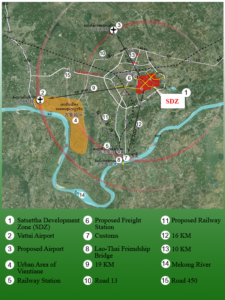
A petroleum refinery project located in the energy and chemical precinct of Saysettha Development Zone, Vientiane is expected to resume this month after construction was halted for about six months.

The refinery project began in 2015 under Laos-China Dongyan Petrochemical Co., Ltd. (LCPC).

Under the project, Yunnan Dongyan Industrial Co., Ltd holds a 75 percent share, while 20 percent is held by Lao State Fuel Company and the other 5 percent by Lao-China Joint Investment Co., Ltd.

At present, work on the project was about 35 percent complete with construction to be finished in November next year, Deputy General Manager of the Lao-China Joint Venture Investment Co., Ltd., Mr Kiengkham Phoutchantavongsa, told Vientiane Times during a visit to the zone recently.

He cited a change in shareholders leading to a halt in the project.

The petroleum refinery project will cover an area of over 280,000 square metres with total investment of about US$179 million.

The refinery would use low grade mixed light oil as raw material and adopt advanced technologies to produce gasoline, diesel, LPG, purified petroleum benzene, sulphur and other petroleum based products, according to information provided by LCPC.

Production capacity of standard gasoline would be 300,000 tonnes per annum and 500,000 tonnes of diesel per year.

In addition it will also produce 18,000 tonnes per annum of liquefied petroleum gas, 12,600 tonnes per year of benzene and 5,000 tonnes per annum of industrial-grade sulphur.

Once operational the refinery would become among the nation’s largest industrial enterprises and be able to supply about 65 percent of fuel in Laos, Mr Kiengkham said.

He added the project would also include construction of a petroleum products storage facility with a capacity of 60 million litres.

At present, the oil warehouses of the Lao State Fuel Company around the country contain only 40 million litres.

Saysettha Development Zone was established in 2010 with the aim of developing an eco-industrial city.

About 35 Chinese and foreign companies have already moved into the zone, with an aggregate investment of about US$350 million.

According to the company, in the first phase the zone will mainly develop industry, focusing on the processing of agricultural and other primary products like hardware, building materials and machinery .

The zone will also support the technological innovation and entrepreneurship of small and medium enterprises.

In the second phase from 2016-2020 and the third phase from 2020-2030, the zone will mainly develop commerce and trade along with a focus on building a new part of Vientiane.

The zone expected to spend about US$650 million on infrastructure investment over three phases, on about 1,149 hectares of land, according to the company’s development plan.

locationsdz_en

Source: Vientiane Times

Auto Lao Receives Mercedes Benz Star Award

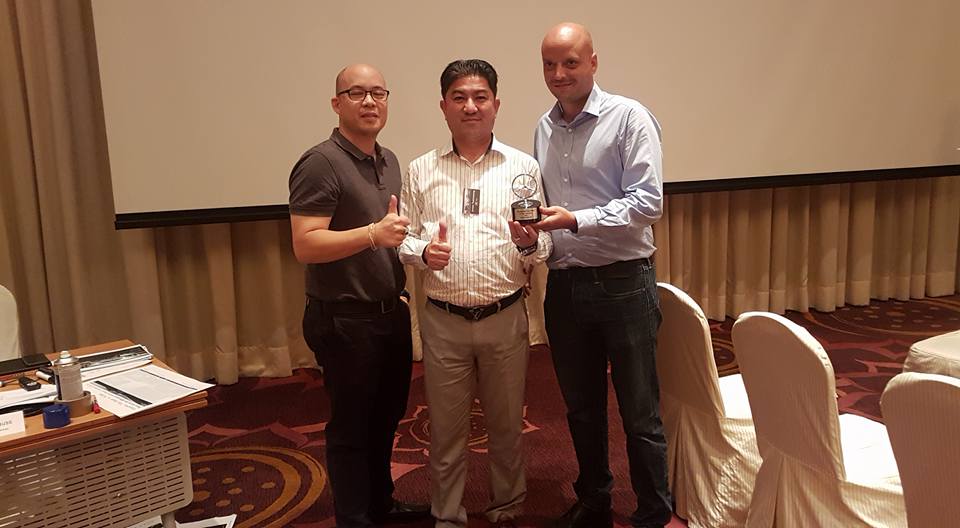
Known as the first company to import the Mercedes-Benz brand name from Germany to sell in Laos in 1957, Auto Lao was honoured to receive a special award of “Mercedes-Benz Star Award” for Best Start in Van Business South East Asia 2016.

The award ceremony took place during the Mercedes-Benz Commercial Vehicle Conference, held on November 25 in Bangkok, Thailand. The award was presented to Auto Lao Company Limited General Manager Mr Anolack Thammavong.

Regional Sales and Marketing Manager Mercedes Benz Vans South East Asia, Indian Subcontinent and South Pacific, Mr Thomas Berner, was honoured to present a trophy to Mr Anolack.

Lao Auto’s Sales Manager Commercial Vehicles, Mr Sirichith Inthavong, also attended the award ceremony with other VIP guests from regional and international countries.

“It was a great honour and pleasure to accept the award in recognition of the work the company has done to improve itself in Laos, especially exceeding our vans sales target to customers,” Mr Anolack said.

The award particularly recognises Mr Anolack’s efforts in leading the company, which has seen outstanding performance in selling the Mercedes Benz brand name in Laos, and for having made significant progress in establishing and reinforcing his company in the international business arena.

Mr Anolack stressed that the company brought these vans for sale in Laos in June of this year, saying “we have exceeded our sales target for the year and this has led to Mercedes Benz awarding us with the best start in Van Business for 2016.”

Citing the development of the company, Mr Anolack said Auto Lao has developed strategies to engender trust in its customers, including convenient and fast service, and high standards of this brand name.

“We are now launching our hotline 1868 to provide customers with 24-hour service and they don’t need to worry and wait any longer if their vehicle has technical problems or related issues,” Mr Anolack said.

Auto Lao has also improved its methods in the workplace and has developed its staff’s capacity to prepare them to lead the company forward.

Known for being easy-going and happy, Mr Anolack has become a well respected leader within the company.

In recognition of the tireless efforts and achievements made by the company in exceeding the vans sale target, it is not surprising that the concerned authorities unanimously agreed to present an award to Mr Anolack .

Mentioning the Mercedes Benz brand name, Mr Anolack explained that Auto Lao has many types of Mercedes Benz brand name, which are mostly designed to be luxury and comfortable, safety first, friendly for environment, long term use, oil save and other related issues for users .

“All of our vehicles are imported from Germany under Daimler AG. Our service centre guarantees the authenticity of our parts and the expertise of our mechanics,” Mr Anolack added.

For more information customers can visit the Auto Lao Company Limited showroom and head office, which is located on Asean Road at Oupmoung village in Sikhottabong district, Vientiane. P.O. Box: 592, Tel: (856-21) 244 472 or Fax: (856-21) 244 473, www.autolao.com.

Source: Vientiane Times