Home Blog Page 6413

Xayaboury Vocational School Initiates Solar Power Engineering Course

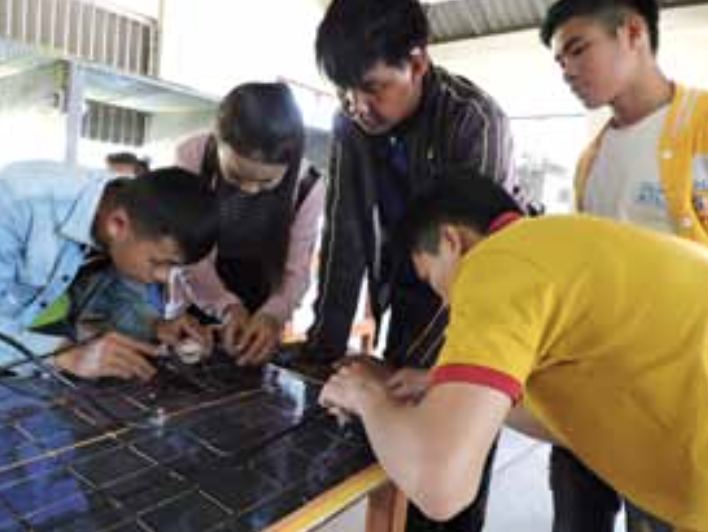
A solar power system engineering class is being trialled at Xayaboury Technical and Vocational School with a view to it becoming a regular subject, according to a press release from the Energy and Climate Policy Institute (ECPI Korea).

The Director of the province’s statistics planning division education office and the Dean of the school’s Electricity Department suggested opening a renewable energy education track, a press release noted.

Next year it will be a regular electricity subject at the school, said the Director of the Renewable Energy Centre, Ms Yee Young Ran.

Regular teaching of the subject would enable the sustainable learning of solar power systems which it is hoped would become self-sufficient after outside support dries up. If trained students can be responsible for installing, repairing, consulting, and teaching renewable energy, it will be a suitable long-term initiative.

The Lao Renewable Energy Centre delivered a solar power system engineering course recently at Xayaboury Technical and Vocational School. It was part of the preparation process for one of the elective courses ‘renewable energy controlling skills’ in the school’s electricity department.

The centre is attached to the Energy and Climate Policy Institute for Just Transition (ECPI), an NGO based in the Republic of Korea.

ECPI has been supporting the teaching of solar power systems at the school in Xayaboury since 2009 under the ‘Supporting Renewable Energy System and Training Programme’.

After many years of effort, graduates of the training programme are skilled in solar power system engineering and teaching and can train junior students at the school as main agents in this programme, the press release noted.

The ECPI has continued to implement the Supporting Renewable Energy System and Training Programme’ in Laos through solidarity with the Third World and also through the practical activity of climate justice since 2009.These activities were reinforced in 2012 when KOICA supported the ECPI project.


Source: Vientiane Times

Laos, Partners all Set to Debate Development Priorities

A string of consultations are leading up to the Round Table Implementation Meeting, to be held in Vientiane province from November 24-25, according to the United Nations Development Programme (UNDP).

The cross-sectoral topics of Sustainable Development Goals (SDGs), effective development partnerships, food and nutrition security, green growth, climate change and disaster preparedness are in the limelight at the meeting.

These issues have also been discussed in several consultations in the weeks leading up to the meeting, UNDP reported.

The meeting serves as a forum to discuss how partners can collaborate on national development priorities. It will take stock of progress made in 2016 and guide the joint efforts in 2017.

As a main output of the meeting, the government is planning to endorse, with its partners, the Vientiane Declaration Country Action Plan for 2016-2025. This Action Plan outlines key actions to enhance effective development cooperation, and will help put into practice the SDGs and the 8th National Socio-Economic Development Plan.

The Vientiane Declaration Country Action Plan and the revision of the Prime Minister’s Official Development Assistance Decree were discussed in a consultation last week.

Participants agreed that among other things private sector, civil society, and regional partners need to be brought to the table, and domestic resource mobilisation needs to be enhanced for sustainable development.

Another pre-consultation addressed the question how the global Agenda 2030, with the SDGs at its core, can be brought to the national context and accelerated.

The SDGs entered into force at the beginning of this year as a universal call to action to end poverty, protect the planet and ensure that all people enjoy peace and prosperity. Their aim is to shift the world onto a sustainable development path, with 2030 as the target date.

The national round table process is being driven by 10 Sector Working Groups, jointly chaired by government and development partners, which promote information sharing, policy dialogue and joint action. Key messages distilled by the Sector Working Groups will flow into the Round Table Implementation Meeting.

This year’s Round Table Implementation Meeting will take in Vientiane province, shifting the focus to the provincial implementation of national policies.

The meeting includes field visits and a development exhibition, grouped around the priorities of the 10 Sector Working Groups.

Source: Vientiane Times

Laos, China Partner in Drug Control

The Lao National Commission for Drug Control and Supervision has agreed to future cooperation with the Chinese government in the fight against illicit drugs.

Laos is already working to fulfil existing bilateral and multilateral agreements in drug control cooperation and the exchange of information and intelligence on drug trafficking with ASEAN countries and China.

Enhanced regional cooperation such as the joint operation Safe Mekong has strengthened networks and collaboration between Laos, China, Myanmar, and Thailand.

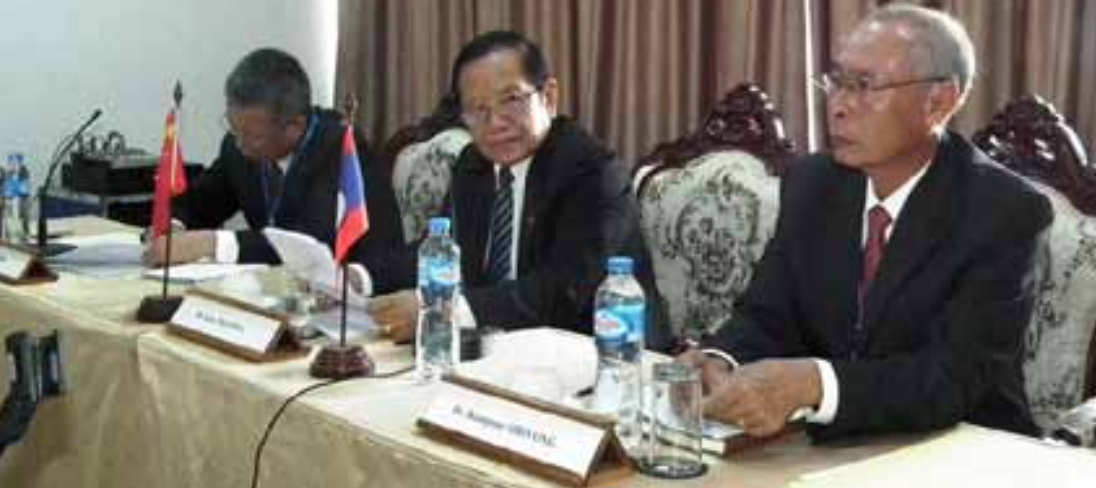
The 13th Laos-China Bilateral Meeting on Drug Control Cooperation took place in Vientiane yesterday to discuss and plan future cooperation on drug control, especially along the Laos-China border.

The meeting was attended by the Chairman of the Lao National Commission for Drug Control and Supervision, Mr Kou Chansina, Deputy Secretary-General of China’s National Narcotics Control Commission, Mr An Guojun, and other officials from the two countries.

The two sides discussed future activities such as the exchange of information and law enforcement in relation to drug trafficking.

Speaking at the meeting, Mr Kou said that over the past year the two countries had partnered in the training of officials and police officers to implement the Safe Mekong project. They had also shared information about drug trafficking through the two nations.

Laos is used as a transit country for the shipment of methamphetamine and heroin as well as precursor chemicals. Drug trafficking through Laos has been increasing with higher frequency and volume.

The northwest border in the Golden Triangle area is the main gateway for drug flow into Laos, while the southern border is increasingly used for drug outflow.

Methamphetamine tablets are the most abused drug in Laos, while the number of opium users remains almost stable.

According to a recent report from the Ministry of Public Security, more than 2,200 drug-related cases were handled in the first nine months of this year with more than 3,200 suspects arrested.

More than 1,850kg of methamphetamine tablets were seized along with 181kg of heroin, 106kg of raw opium, 300kg of dried cannabis, more than 130kg of crystal amphetamine (ice) and 1,105kg of powder used to mix and produce drugs.

Laos is closely involved in regional and international collaboration to combat drugs and tackle challenges. The government pays great attention to strengthening international cooperation to clamp down on drug trafficking and abuse.

Laos has signed bilateral agreements on cooperation against the illicit trafficking of narcotic drugs, psychotropic substances and precursor chemical control with a number of friendly countries such as China, Cuba, India, Russia, and the USA, as well as the UN Office on Drugs and Crime.


Source: Vientiane Times

Hundreds of Police Dismissed for Corruption

Some 737 police officers have been dismissed from their posts over the past five years after taking bribes and abusing their power.

More than 1,000 police officers were found to have violated laws and regulations including the 737 who were dismissed, the Khuamsangob newspaper reported.

A report on the cases was presented at the recent fifth meeting on inspection affairs within the public security sector.

The cases resulted in losses of more than 41 billion kip, Vice President of the Party Inspection Committee and Director General of the Inspection Department of the Ministry of Public Security, Brigadier General Duangpi Damanivong, told the meeting.

Most of the money had been recovered, he said. The most prominent cases involved police officers who abused their power for personal gain.

In one example, police officers in Huaphan province accepted bribes from a drug trader amounting to more than 979 million kip (US$120,000) in exchange for 93 packs of heroin, which were used as evidence in a criminal case.

Another case occurred in Luang Namtha province where police accepted bribes amounting to more than 114 billion kip (14 million Thai baht) in exchange for freeing a death penalty prisoner over a drug trafficking case.

Brigadier General Duangpi said another 144 police officers were warned, 341 police officers had not been promoted, 101 police had been demoted, and 20 had been transferred.

Of these, 17 police were sent for investigation and prosecution.

The Inspection Committee has committed to work harder and intensify its inspections in an attempt to curb corruption, bribery and abuse of power within the public security sector.

Nationwide, more than 4,807 billion kip has changed hands due to corruption over the past five years and 734 officials were found to be involved, according to the Inspection Committee of the Party Central Committee of the Lao People’s Revolutionary Party.

Some 1,806 Party cadres have been disciplined for violating the Party’s statutes and state laws. Of these, 1,007 cadres were expelled from the Party.

Party and government leaders have vowed to escalate the fight against corruption.

Talking to the third nationwide inspection meeting recently in Vientiane, Party Secretary General and President, Bounnhang Vorachit, instructed the top anti-corruption body to appropriately punish officials found violating the regulations in a bid to stamp out malpractice and lax discipline.


Source: Vientiane Times

Cabinet Approves Five Decrees to Boost Economy, Improve Administration

The government cabinet has approved five new and amended draft prime ministerial decrees to boost socio-economic development and improve administration.

They are the draft Decree on Government Bond, Decree on Tourism Fund, Decree on Technical Positions of Civil Servants, amended draft Decree on Private Education Institute Promotion, and amended draft Decree on Administrative Positions.

The approval was made at the government’s monthly meeting for November held on Monday, which was chaired by Prime Minister Thongloun Sisoulith and attended by cabinet members.

Final revisions will be made to the five draft decrees in accordance with recommendations from cabinet members.

The cabinet instructed the Ministry of Finance to work out measures to implement the Decree on Government Bonds to regulate bonds in order to create confidence among investors while minimising risk.

The Decree on Tourism Fund defines regulations and measures on how money can be raised for the fund and the purpose of its expenditure.

Amendments to the Prime Ministerial Decree on Private Education Institute Promotion have been made to ensure the decree coincides with the amended Law on Education and amended Law on Investment Promotion.

The Decree on Administrative Positions and Decree on Technical Positions of Civil Servants give guidance to provide support for administrative and technical officials in Party, state and mass organisations.

The meeting approved a report on the establishment of an education centre for community development of the Southeast Asian Ministers of Education Organisation (SEAMEO) in Laos.

Concluding the meeting, Mr Thongloun highlighted the work cabinet members needed to pay particular attention to in December.

He instructed the cabinet to maintain law and order, while curbing antisocial activities, particularly the illegal drug trade, robbery and theft to create an environment conducive to celebrating the 41st anniversary of Lao National Day on December 2.

The cabinet was told to prepare a report on the government’s performance since it took office in April for the meeting of cabinet members, provincial governors and the Vientiane Mayor, which is scheduled for December 14-15.

Mr Thongloun instructed the cabinet to translate the Resolution of the National Assembly (NA)’s second ordinary session, which ended last week, into a prime ministerial decree and other regulations to realise the Resolution so that its implementation can be reported to the next NA ordinary session scheduled for April 2017.

The cabinet was told to keep a close eye on the exchange rate and define appropriate measures to regulate it in order to prevent increased inflation.

The premier told the meeting to closely monitor the price of goods in markets and define measures to intervene appropriately to prevent significant fluctuations that would affect business operations and people’s living conditions.

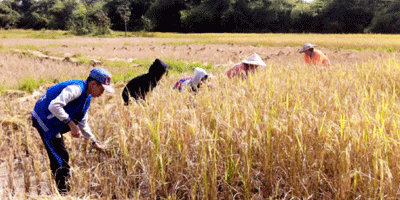
In order to boost dry season crop yields, Mr Thongloun instructed the relevant sectors to prepare necessary measures to help farmers.

The cabinet was told to keep an open ear to public complaints to determine the root cause and address any issues. The cabinet was also asked to investigate any possible immediate and long term solutions to address the intensifying traffic congestion.

Mr Thongloun also stressed the need for the cabinet to ensure that state laws and regulations are strictly observed.


Source: Vientiane Times

Lese Majeste Suspects ‘Bottled Up in Laos’

Laos Lese Majeste

A number of suspected lese majeste offenders are holed up in Laos and police will work with public prosecutors and Interpol to track them down, the national police chief says.

Pol Gen Chakthip Chaijinda said the Thai and Lao governments have discussed the matter and police are waiting for the green light to proceed.

Prosecutors will have to work with the Foreign Ministry to seek the extradition of suspects hiding in Laos, he said.

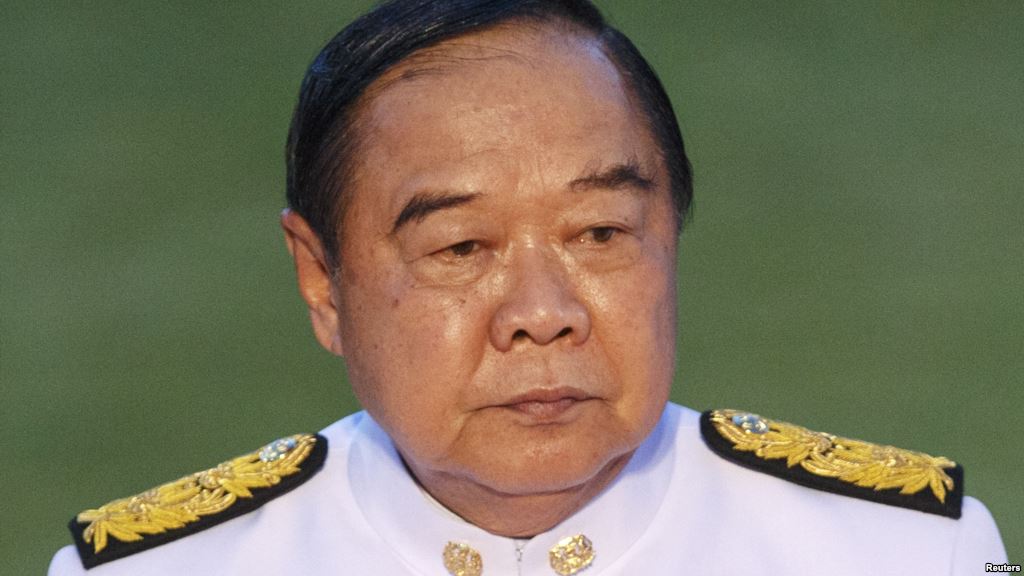
The police chief’s remarks came after Deputy Prime Minister Prawit Wongsuwon on Monday revelaed Lao authorities told him they were acting to stop lese majeste suspects from staging activities and broadcasting content targeting the Thai Monarchy.

Lese Majeste Fugitives Using Radio and Social Media in Laos

Lao authorities have also suspended local radio programmes with content attacking the monarchy.

Gen Prawit said he asked the Lao government to take care of the matter following reports that lese majeste fugitives were using social media and radio stations in neighbouring countries to spread their message. The request was made when he attende the ASEAN Defence Ministers Meeting retreat in Vientiane, Laos, last week.

SPeaking after Tuesday’s cabinet metting, Foreign Minister Don Pramudiwinai said the Lao authorities have cured anti-monarchy activities by fugitives in the country.

If other countries cooperated in the same way, the problem would ease, he said.

The minister said the monarchy is revered by Thais but the concept is often disorted elsewhere, particularly by the Western media, who always cite human right issues in their commentary on the country, regardless of Thai law on the matter.

He said after the King’s passing on Oct 13, people around the world learned more about the King.

“When the media spread his story, people knew the late King had put great efforts into helping people,” he said.

The minister declined to comment on the chance of lese majest fugitives being extradited to Thailand, saying the matter is unique to each country.
He insisted no country would want to see foreigners use their nation to create political conflicts with their government and Thailand.

Suspects Detained in Khon Kaen

Meanwhile, three people have been detained in cases of alleged sedition for leaflets distributed in northestern provinces, according to police.

The trio, ed by Sakda Sakulpanarak, 68, were detained in Khon Kaen.

Citing an investigation, deputy neational police chief Srivara Ransibrahmanakul said Tuesday that Mr Sakda created the leaflets with content intended to stir up division and the documents were put in mailboxes in the Northeast.

He said the three were in military custody where they would be questioned.

It remains unclear whether they were connected to any policital group.

The trio could face charges under Section 116 of the Criminal Code in relation to sedition.

Source: Bangkok Post

President Gives Development Advice in Vientiane Province

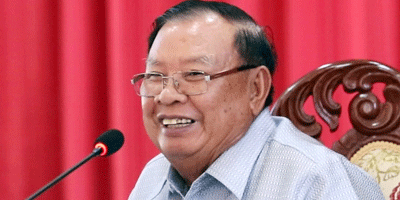
Cracking down on illegal activities, alleviating poverty, and addressing economic disparities are some of the issues that President Bounnhang Vorachit has told local administrations to focus on.

These were the main items the president raised when meeting with leaders and core officials in Vientiane province yesterday.

Mr Bounnhang took the opportunity to praise the province’s recent achievements in national defence, public security, and socio-economic development.

He noted that social order and economic growth had been maintained in the province, saying they were the result of joint efforts by all sectors, including education, public health, national defence, and public security.

The president also outlined issues that the provincial authorities needed to make more effort to address, including land-related disputes, duplicate land use authorisation, and unclear property-to-capital transference.

Mr Bounnhang said he wanted the authorities to pay particular attention to land issues as they were increasingly common.

He also wanted the authorities to make more detailed inspections of forest enrichment, environmental and mining activities.

He reminded those present about various undesirable activities taking place in society, especially drug trafficking, which he said was of great concern to the general public, and told the authorities to prioritise this problem.

The president also mentioned transparency in public service and embezzlement by government officials. He referred to the large amounts of additional revenue earned by some budgetary units, which had been uncovered by audits.

Mr Bounnhang said economic disparity between urban and rural areas was a challenge to Party ideology in developing the country into a socialist community. He said that even though the Party had encouraged the building of townships as economic centres in rural areas, there had not been much progress in this regard.

Disparities can lead to antagonism between social extremes. And it hinders the building of socialist communities, he said.

Migration from rural to urban areas, theft and robbery were other problem areas cited by President Bounnhang, who asked the authorities to address them more effectively.

He advised the authorities to obtain clear information, analyse the situation and determine the truth in each case before making decisions about how to address them.

He stressed the implementation of the Party’s Sam Sang (Three Builds) directive and poverty alleviation as being essential to maintain social order. He also stressed the building of a transparent and strong political system that serves people’s interests.

He advised leaders and officials to be good models in all progressive dimensions, and to comply with the law both in speech and action.

Source: Vientiane Times

Thoulakhom-Pakngum Road nears Completion

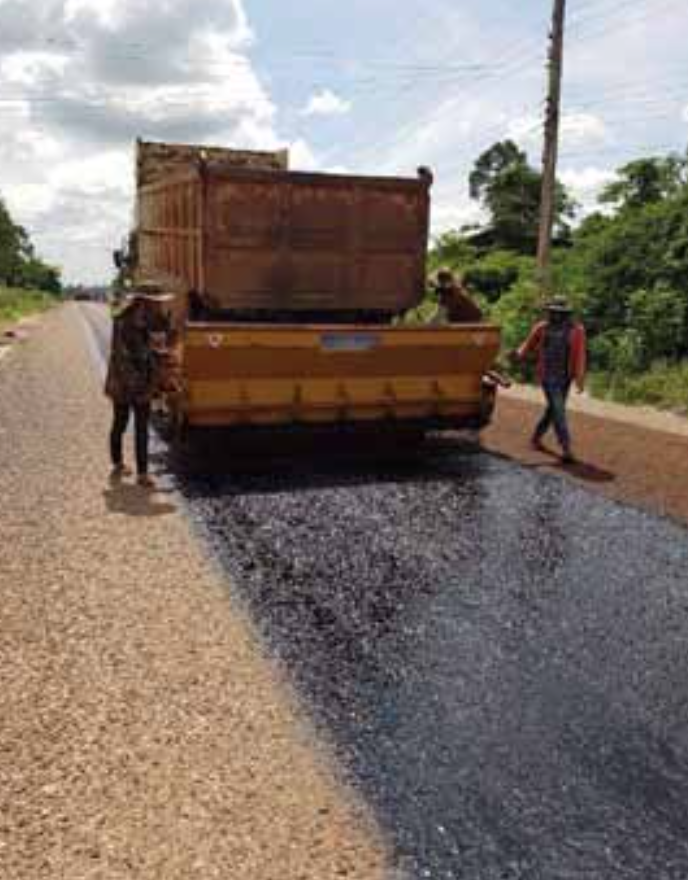
The rebuilding of a 47-km road from Nanokkhoum village in Thoulakhom district, Vientiane province, to Naxay village in Pakngum district, Vientiane, is now more than 70 percent complete.

The road links Pakngum and Xaythany districts in Vientiane with Thoulakhom district to the north.

The upgrade will provide a faster road for traffic travelling between the north and south of the country and will divert traffic away from the centre of Vientiane, helping to ease congestion in the city centre .

President of the contracting company Phinthong Co., Ltd., Mr Somphan Panyathilath, told Vientiane Times yesterday we’ve finished the main works such as widening the road, laying drainage pipes, filling in low areas, and grading the surface.

Now we’re concentrating on asphalting and have laid asphalt on three kilometres. We’ve also begun work on the first bridge, he added.

The project began in April 2013 and should be finished in April 2017. Over its length, the road will have eight bridges and causeways across water courses.

It is expected to cost about 373 billion kip and is funded by the government. The road will have two layers of asphalt over a distance of 46 kilometres, which will be nine metres wide.

Local residents are looking forward to project completion as they will be the immediate beneficiaries of the upgrade.

Completion of the road will also open up the area to tourists as there are a number of scenic attractions in the area, including Tad Hinpafa, Phou Khao Khouy and Thevada.

The income generated by the increasing number of tourists is expected to boost the incomes of local residents and so improve their economic status.


Source: Vientiane Times