Home Blog Page 6488

Authorities Will Legalise Lao Workers in Thailand

Lao authorities expect to begin a new round of verifying nationality and legalising the status of thousands of Lao workers in Thailand in the coming months, Minister of Labour and Social Welfare said last week.

Dr Khampheng Saysompheng told local media during his attendance to the meeting between the cabinet, Vientiane Mayor and provincial governors that discussions with Thailand are needed to set a precise date to begin the work.

Currently, more than 100,000 Lao workers and family members are still residing in Thailand without proper documents, the minister said citing information provided by Thai authorities.

Lao and Thai authorities completed the joint mission earlier this year to legalise illegal Lao workers and more than 70,000 have been granted work permits.

Originally, the two authorities planned to complete legalising all the Lao workers during the last joint mission, but the number of Lao workers still without work permits is huge, therefore they could not complete the task.

In addition, numerous Lao workers are scattered with smaller and family-based businesses making the legal processing difficult unlike Cambodian and Myanmar workers who are working together in big factories, the minister explained.

Some Lao workers are working as housekeepers or work on farms, he said.

Dr Khampheng said the Lao government agreed on the need for local authorities to continue working with Thailand to legalise the remaining workers.

To address the issue of illegal workers in the longer term, the government told the Ministry of Labour and Social Welfare to improve labour recruitment mechanisms to ensure that all workers travelling to work in foreign countries are recruited through labour recruitment agencies so that they are granted legal documents prior their departure.

The minister admitted that recruitment through the labour recruitment agencies was considerably more costly and time-consuming which deterred workers from using the services, who instead decided to go abroad through illegal channels.

Despite the fact that Laos still needs many workers to fulfil jobs in local workplaces, Thailand has been a popular destination for Lao workers lured by higher wages. Similarity in culture and language has also motivated Lao job seekers to go there.

Officials have warned those wanting to go abroad seeking employment to do so through labour recruitment agencies and obtain legal documents so they are fully protected by laws, as those going through illegal channels are vulnerable to fall victim of human trafficking.


Source: Vientiane Times
Residents Still Unaware of Railway Plans

Many residents have yet to know that a high-speed railway will be built in Laos from the Laos-China border in Luang Namtha province to Vientiane.

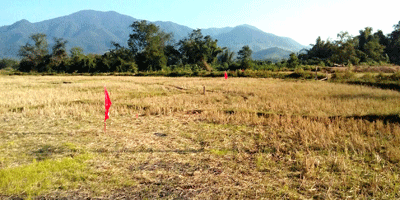
The railway worker camps and flags marking the railway land have been erected in the four provinces of Luang Namtha, Oudomxay, Luang Prabang and Vientiane.

Deputy Govern  or of Oudomxay province, Mr Somchith Panyasack, told the press that many people still do not know that the railway will be built in Laos.

If they knew that the railway was really happening they would be excited to see high-speed rail in Laos, he said.

However, there are 40 villagers in the province of Oudomxay in the three districts of Xay Nga and Namor where the railway will pass through, which are currently seeking compensation and resettlement.

A railway coordinator in Oudomxay province, Mr Phonpradith Phommachith said last week the railway will pass through the province over a distance of 126 kilometres.

Right now, the relevant authorities are installing markers for the railway and mediating to compensate the families who will have to make way for the railway construction.

A provincial coordinator of the Laos-China project, Mr Chanthachone Keolakhone said the three villages of Boten, Tinsan and Nateuy in Luang Namtha province are located within the vicinity of the construction site.

But the number of families who will have to move is as yet unknown because they are surveying and installing markers on the land that the railway will pass through.

A section of about 16.9 kilometres in length runs through these three villages.

Compensation is to be paid to the owners of parcels of land or buildings in the three villages that will be used or demolished to make way for the Laos-China railway.

Negotiations for compensation are currently underway. All of the affected families have agreed to make way for the construction of the Laos-China railway but say they expect reasonable compensation to move.

Residents in Nateuy village will be moved to make way for the Laos-China project. This will be the second time they have been resettled after firstly making way for the Boten special economic zone at the Boten international checkpoint.

Mr Chanthachone added that people are complaining as they have built nice houses, but they must resettle again.

They will make way for railway construction and the new site will be located along the main road.

Director of the Luang Prabang Public Works and Transport Department, Mr Fasanan Thammavong said the railway through Luang Prabang province covers a length of 80 kilometres taking in the three districts of Chomphet, Luang Prabang and Xiengngeun.

Prime Minister Thongloun Sisoulith will officially launch the start of construction for the Laos-China railway project at a ceremony on December 25.

The US$6 billion railway, to be built over a distance of 427 km, will be completed by 2021.


Source: Vientiane Times

Deputy PM Pushes for Speedy Mother and Child Health Improvements

Deputy Prime Minister has called on the Ministry of Health to speed up improvements to health services for mothers and their children especially at district and community levels.

Dr Sonexay Siphandone made the call in his address at a meeting held last week to review implementation of the Strategy and Action Plan for Integrated Service on Reproductive Maternal, Newborn and Child Health.

The strategy focuses on improving reproductive health, safe birthing, emergency care at birth, basic care needs of newborns, children’s healthcare, immunisation, nutrition, health personnel, health financing, and medical information.

Speaking at the meeting on Friday Deputy PM Sonexay reminded the audience about the government giving priority to mother and child healthcare by putting disease prevention and health promotion alongside the quality treatment and coverage of service delivery.

He stressed for women to receive health services during pregnancy and to have a doctor or midwife assisting at birth and after-birth monitoring.

Dr Sonexay referred to results of the 2015 National Population and Housing Census, which showed the mortality rate for children under one year of age decreased from 70 per 1,000 in 2005 to 61 per 1,000 last year.

Meanwhile, the mortality rate of children under five fell from 98 per 1,000 to 71 per 1,000 and the maternal mortality rate fell from 260 per 100,000 births to 206 per 100,000. The country has been third-ranked by the United Nations regarding the progress in reducing maternal mortality.

Dr Sonexay, representing the government, praised the ministry for the achievements.

However, according to the ministry, access to reproductive health, family planning services and health information was still limited for many communities, especially people living in remote rural areas, who rely on subsistence farming for making a living.

Moreover, the quality of the mother and child services, especially healthcare during pregnancy, emergency births and newborn childcare was not in place for many communities with a lack of appropriate facilities, capable staff and equipment.

This caused some mothers to be unaware of using appropriate health services, and only 50 percent of pregnant women utilised them.

I propose the ministry speed up improvements that can make people confident in our healthcare services, DPM Sonexay said.

He noted the medical staff needed for the communities alongside building integrated service facilities that met the ministry’s standards and were accepted by the World Health Organisation.

He called on provincial authorities to facilitate the health sector to fully implement its duty, with the establishment of clearly mandated health committees at village level.

On financing, the deputy prime minister proposed the ministry continue coordinating with the government in building a financial plan and mobilise support from international development partners so that state health allocations could reach 9 percent of total expenditure as approved by the National Assembly.

He also called on provincial authorities to actively contribute to the government action.


Source: Vientiane Times

Construction of Petroleum Refinery to Resume This Month

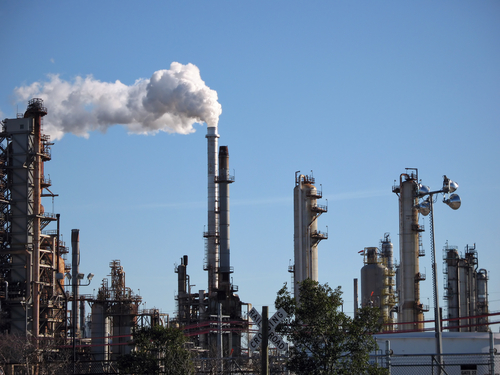
A petroleum refinery project located in the energy and chemical precinct of Saysettha Development Zone, Vientiane is expected to resume this month after construction was halted for about six months.

The refinery project began in 2015 under Laos-China Dongyan Petrochemical Co., Ltd. (LCPC).

Under the project, Yunnan Dongyan Industrial Co., Ltd holds a 75 percent share, while 20 percent is held by Lao State Fuel Company and the other 5 percent by Lao-China Joint Investment Co., Ltd.

At present, work on the project was about 35 percent complete with construction to be finished in November next year, Deputy General Manager of the Lao-China Joint Venture Investment Co., Ltd., Mr Kiengkham Phoutchantavongsa, told Vientiane Times during a visit to the zone recently.

He cited a change in shareholders leading to a halt in the project.

The petroleum refinery project will cover an area of over 280,000 square metres with total investment of about US$179 million.

The refinery would use low grade mixed light oil as raw material and adopt advanced technologies to produce gasoline, diesel, LPG, purified petroleum benzene, sulphur and other petroleum based products, according to information provided by LCPC.

Production capacity of standard gasoline would be 300,000 tonnes per annum and 500,000 tonnes of diesel per year.

In addition it will also produce 18,000 tonnes per annum of liquefied petroleum gas, 12,600 tonnes per year of benzene and 5,000 tonnes per annum of industrial-grade sulphur.

Once operational the refinery would become among the nation’s largest industrial enterprises and be able to supply about 65 percent of fuel in Laos, Mr Kiengkham said.

He added the project would also include construction of a petroleum products storage facility with a capacity of 60 million litres.

At present, the oil warehouses of the Lao State Fuel Company around the country contain only 40 million litres.

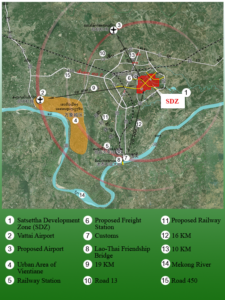
Saysettha Development Zone was established in 2010 with the aim of developing an eco-industrial city.

About 35 Chinese and foreign companies have already moved into the zone, with an aggregate investment of about US$350 million.

According to the company, in the first phase the zone will mainly develop industry, focusing on the processing of agricultural and other primary products like hardware, building materials and machinery .

The zone will also support the technological innovation and entrepreneurship of small and medium enterprises.

In the second phase from 2016-2020 and the third phase from 2020-2030, the zone will mainly develop commerce and trade along with a focus on building a new part of Vientiane.

The zone expected to spend about US$650 million on infrastructure investment over three phases, on about 1,149 hectares of land, according to the company’s development plan.

locationsdz_en

Source: Vientiane Times

Auto Lao Receives Mercedes Benz Star Award

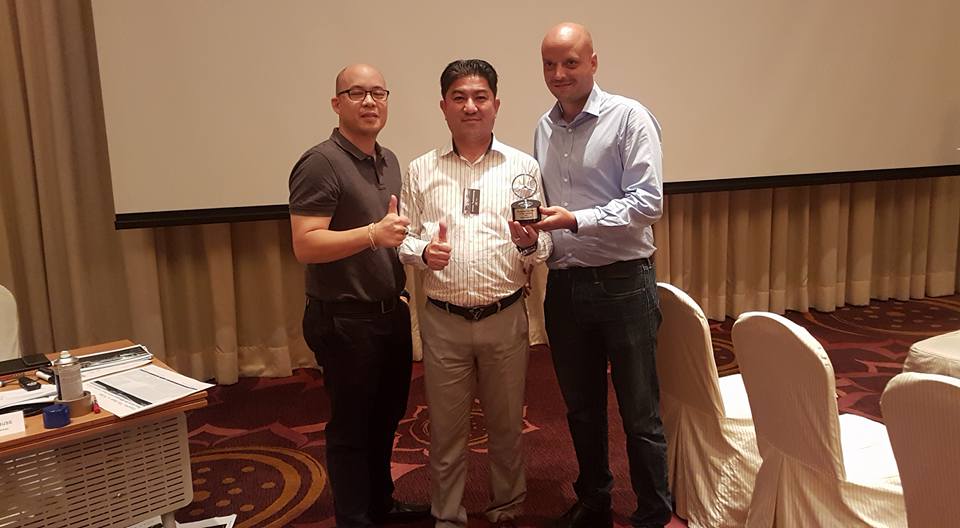
Known as the first company to import the Mercedes-Benz brand name from Germany to sell in Laos in 1957, Auto Lao was honoured to receive a special award of “Mercedes-Benz Star Award” for Best Start in Van Business South East Asia 2016.

The award ceremony took place during the Mercedes-Benz Commercial Vehicle Conference, held on November 25 in Bangkok, Thailand. The award was presented to Auto Lao Company Limited General Manager Mr Anolack Thammavong.

Regional Sales and Marketing Manager Mercedes Benz Vans South East Asia, Indian Subcontinent and South Pacific, Mr Thomas Berner, was honoured to present a trophy to Mr Anolack.

Lao Auto’s Sales Manager Commercial Vehicles, Mr Sirichith Inthavong, also attended the award ceremony with other VIP guests from regional and international countries.

“It was a great honour and pleasure to accept the award in recognition of the work the company has done to improve itself in Laos, especially exceeding our vans sales target to customers,” Mr Anolack said.

The award particularly recognises Mr Anolack’s efforts in leading the company, which has seen outstanding performance in selling the Mercedes Benz brand name in Laos, and for having made significant progress in establishing and reinforcing his company in the international business arena.

Mr Anolack stressed that the company brought these vans for sale in Laos in June of this year, saying “we have exceeded our sales target for the year and this has led to Mercedes Benz awarding us with the best start in Van Business for 2016.”

Citing the development of the company, Mr Anolack said Auto Lao has developed strategies to engender trust in its customers, including convenient and fast service, and high standards of this brand name.

“We are now launching our hotline 1868 to provide customers with 24-hour service and they don’t need to worry and wait any longer if their vehicle has technical problems or related issues,” Mr Anolack said.

Auto Lao has also improved its methods in the workplace and has developed its staff’s capacity to prepare them to lead the company forward.

Known for being easy-going and happy, Mr Anolack has become a well respected leader within the company.

In recognition of the tireless efforts and achievements made by the company in exceeding the vans sale target, it is not surprising that the concerned authorities unanimously agreed to present an award to Mr Anolack .

Mentioning the Mercedes Benz brand name, Mr Anolack explained that Auto Lao has many types of Mercedes Benz brand name, which are mostly designed to be luxury and comfortable, safety first, friendly for environment, long term use, oil save and other related issues for users .

“All of our vehicles are imported from Germany under Daimler AG. Our service centre guarantees the authenticity of our parts and the expertise of our mechanics,” Mr Anolack added.

For more information customers can visit the Auto Lao Company Limited showroom and head office, which is located on Asean Road at Oupmoung village in Sikhottabong district, Vientiane. P.O. Box: 592, Tel: (856-21) 244 472 or Fax: (856-21) 244 473, www.autolao.com.

Source: Vientiane Times

KOWEPO-LAO Launches in Laos

Known as one of the top power generating companies in the Republic of Korea, KOWEPO-LAO International Company Limited will continue to provide its best resources and efforts to fulfill its mission as well as co-contribute to the mutual growth of Laos and the Indochina peninsula.

This was the statement delivered by the Vice President of Korea Western Power Company, Mr Yung Chul Jung during the official opening ceremony of KOWEPO-Lao International Company Limited, held on Wednesday in Vientiane.

The meaningful event was attended by Minister of Energy and Mines, Dr Khammany Inthirath, Vice President of Electricite du Laos, Mr Duangsy Pharanhok, President of EDL-Gen, Ms Rattana Prathoumvanh, a representative from the Korean Embassy to Laos, Mr Sung Soo Park and other invited guests.

The KOWEPO-LAO International Company is a 100 percent subsidiary company of Korea Western Power.

KOWEPO-LAO International will operate the Xe Pian-Xe Namnoy Hydro Power Plant for 27 years which is located in Champassak and Attapeu provinces and the total capacity is 410 MW.

In his opening remarks, Mr Jung stressed that he and his team are looking forward to sharing their experiences of power generation with young Lao people as they will be working together for the long term operation of the plant.

“Today’s starting will become the milestone to cooperate in the power industry between KOWEPO and Lao power companies,” Mr Jung said.

Mr Jung said he strongly believed that young Lao engineers who joined the Operation and Maintenance Company will become the competent experts and great leaders so they can contribute to the promising future of Laos as they are going to experience and share the new high technology for hydro power plant together with the Korea Western Power Company.

“As you all know, KOWEPO is one of the leading power generation companies in Korea as we have many experiences in the field of power generation through various projects such as coal-fired, oil-fired, combined cycle and hydro power plants in Korea and many other countries,” Mr Jung said.

“There is still a long journey ahead of us and there are many challenges to overcome. But I assure you that KOWEPO-LAO International will do their best with their assignments as well as contribute to the Lao government,” Mr Jung added.

Dr Khammany said Xe Pian-Xe Namnoy Hydro Project is the first case that a Korean company invested into the power industry in Laos.

“The success of this project contributes to building a strong relationship and creating mutual benefits between the two countries,” he said.

Dr Khammany said he expected that new business opportunities can be created in the Indochina peninsula including Laos by the success of the project.

He highlighted that annual rainfall is about 2,000 millimeters and the Mekong river runs along the Laos borderline.

“Electricity is Laos’s third largest export earner. The country also has a plan to export about 80 percent of total power capacity,” he said.

“Neighbouring countries of Laos have steadily kept economic growth and they continuously need a power supply,” Dr Khammany added.

Besides hydropower, KOWEPO can consider other power resource like coal and renewable energy. Renewable energy may be prospective although development conditions are insufficient until now.

Mentioning KOWEPO-LAO International Company, the company has three steps of strategy developing projects in Laos, including establishing operation and maintenance in Laos, finding new operation and maintenance projects in Lao, and developing through the new power business including construction management, operation, maintenance, technical services in Laos.

Korea Western Power Company is owned by the Republic of Korea’s government and their total generation capacity is 11,808 MW.

The Korea Western Power Company produces and supplies electricity. It focuses on thermal, wind, solar, hydro, fuel, and combined cycle projects in Republic of Korea and internationally.

Korea Western Power Company is doing operation and maintenance service in overseas countries like Saudi Arabia, Nigeria, Indonesia, India and developing new power projects in more than five countries.

Korea Western Power Company has the Integrated Project Development and Management Solutions including investment, project development, financing, construction management, operations, maintenance, and technical services in overseas power business.

KOWEPO-LAO International Company is located on Khouvieng Road at Vientiane Centre 9th Floor, Vientiane Capital. E-mail: koyounho@gmail.com

Source: Vientiane Times

The Grand Opening Ceremony was managed and organized by Sengdara Communications, one of the leading event management and advertising firms in Laos.

Fuel Prices Rise…Yet Again

The Ministry of Industry and Commerce has announced that fuel prices have increased across the country as of yesterday (December 15) in line with changes on the world market.

In Vientiane Capital, the cost of premium grade petrol has increased to 8,560, regular petrol is now 7,560 kip a litre, and diesel is 6,560 kip a litre.

In Phongsaly province, the price of regular petrol is now 8,290 kip a litre, while diesel has increased to 7,290 kip a litre.

In Luang Namtha province, the price of regular petrol has increased to 7,920 kip a litre with diesel increasing to 6,920 kip a litre.

In Oudomxay province, regular petrol will now cost motorists 8,010 kip a litre and diesel 7,010 kip a litre.

In Bokeo province, the cost of premium grade petrol is now 8,660 kip, while regular petrol is 7,660 kip and diesel 6,660 kip a litre.

In Luang Prabang province, the cost of premium grade petrol will set vehicle owners back 9,020 kip a litre, regular petrol is now 8,020 kip, and diesel has increased to 7,020 kip a litre.

In Huaphan and Xayaboury provinces, the price of regular petrol is now 7,960 kip and diesel has jumped to 6,960 kip a litre.

In Xieng Khuang province, the price of regular petrol has increased to 7,750 kip with diesel costing 6,750 kip a litre.

In Vientiane province, the pump price of premium grade petrol is now 8,560 kip a litre, while regular is 7,560 kip, and diesel 6,560 kip a litre.

In Borikhamxay province, the price of petrol has increased to 7,680 kip and diesel is now 6,680 kip a litre.

In Khammuan and Savannakhet provinces, the cost of a litre of premium has jumped to 8,590 kip, while regular petrol is now 7,590 kip and diesel 6,590 kip a litre.

In Saravan province, regular petrol is now 7,770 kip a litre with diesel costing 6,770 kip a litre.

In Champassak province, the price of premium is 8,620 kip a litre, regular petrol is 7,620 kip and diesel 6,620 kip a litre.

In Xekong, Attapeu, and Xaysomboun provinces, the price of regular petrol has increased to 7,800 kip a litre and diesel is now costing 6,800 kip a litre.

Source: Vientiane Times

SIBS Magical Christmas 2016 Showcases Students’ Talents

Sengdara International Bilingual School (SIBS) staged its “SIBS Magical Christmas 2016” last Friday at the school to promote the ability of its talented students.

The performance told the story of a lad who is turned into an ugly boy by a witch because of his stubbornness. The only way for the boy to restore his normal good looks is to conduct good deeds every month.

The school selected students i ts best performers from different classes and grades to highlight their singing, dancing, and dramatic skills onstage.

The performance also aimed to encourage students in school to perform good deeds for others along with concentrating on their studies.

The evening’s show was well received by both teachers and parents of students.

Sengdara International Bilingual School Director Ms Leodia Pagunsan gave an opening speech to kick off proceedings where she highlighted the success of students at the school in Laos and abroad.

SIBS has 275 students in kindergarten, primary along with lower and higher secondary school classes.

Source: Vientiane Times