

UNFPA Laos – The road often disappears during the rainy season in Nongmek village, Paksong district, Champasak.
The first four kilometres remain unpaved. Heavy rain turns the red soil into thick mud that motorbikes cannot cross.
For pregnant women, that road can decide if they reach the care center in time or give birth at home without support.
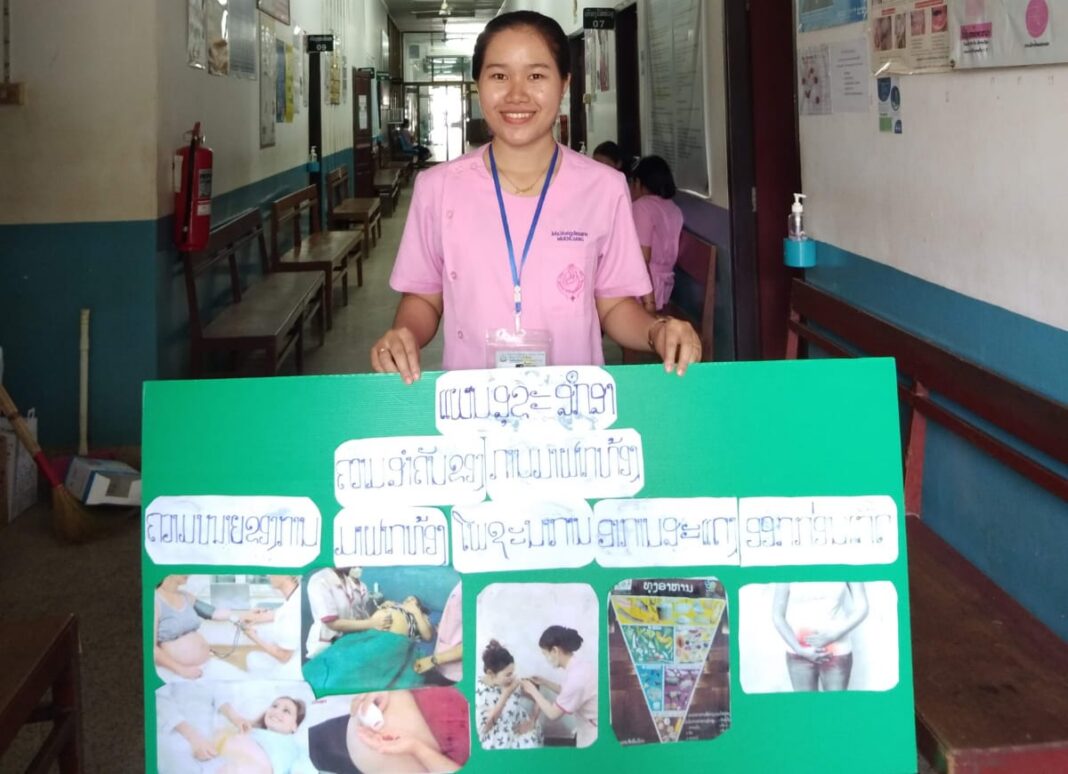
But for 25-year-old Vongdeuane Muenluang, those conditions shaped her future. Today, she is a newly graduated midwife. Her story reflects a wider effort to strengthen maternal health in remote and ethnic communities across Laos.
Before becoming a midwife, Vongdeuane witnessed a traumatic birth in her village. A teenage mother laboured at home for two days, believing it was safer and cheaper than going to a health centre.
When her condition worsened, she was referred to the district hospital. Doctors saved the mother through a caesarean section, but the baby did not survive.
The experience showed how delays in seeking care and reaching facilities can turn dangerous. It also revealed deeper barriers in distance, cost, language and belief.
Vongdeuane decided to train as a midwife so she could help women recognise risks earlier and seek timely care.
Why Midwives Matter in Remote Areas
In many rural districts, midwives are the first and sometimes only skilled health workers available to pregnant women.
They provide antenatal care, assist with safe deliveries and monitor mothers during the first critical hours after birth. They also can quickly respond to emergencies such as postpartum haemorrhage, one of the leading causes of maternal death worldwide.
In ethnic communities, the challenge is not only geography. Some women do not speak Lao fluently, while others lack information about pregnancy risks.
Cultural norms may discourage facility births or limit women’s power to make decisions about contraception and birth spacing.
Midwives from local communities help bridge these gaps. When they speak the same language and understand local customs, they build trust, explain health risks clearly, and counsel families with respect.
From Loss to Achievement
Vongdeuane’s journey was also shaped by her personal loss.
Two months after starting her studies, her father passed away, leaving her family in financial difficulty. She considered leaving school.
With encouragement from her mother, she continued. She later received a UNFPA scholarship supporting ethnic midwifery students. The support reduced financial pressure and allowed her to complete her studies with strong results.
Now training further at Champasak Provincial Hospital, Vongdeuane plans to return to serve her own communities.
She stresses simple but life-saving messages: attend antenatal care early, go for regular check-ups and give birth in facilities where trained staff and equipment are available.
She also wants to address harmful food taboos that can affect maternal nutrition. As someone from the community, she believes she can discuss sensitive issues without judgement.
Investing in People, Not Only Infrastructure
Across Laos, improving maternal health depends on more than building facilities. It requires trained health workers deployed where they are most needed.
UNFPA, in partnership with the Ministry of Health, continues to support midwifery education, practical training and workforce expansion. Increasing the number of midwives from ethnic backgrounds helps close language gaps and reduce inequality in access to care.
In Nongmek village, the road may still turn to mud during the rainy season. But when skilled midwives live and work within communities, the distance between home and safe childbirth becomes shorter.
Investing in midwives remains one of the most direct ways to reduce maternal and newborn deaths while strengthening rural health systems in Laos.
