Cambodian Prime Minister Hun Sen (left) meets Myanmar leader Senior General Min Aung Hlaing (right) via video link on Monday (Phnom Penh Post).
Cambodian Prime Minister and ASEAN chair Hun Sen has suggested that the Senior General of Myanmar, Min Aung Hlaing, should permit ousted leaders Aung San Suu Kyi and Win Myint to meet with the ASEAN special envoy Prak Sokhonn next month.
“Best.Ever.” sees foodies engage in a heated debate over different versions of Malaysia’s favourite dishes
“Green Crashers” showcases urban garden makeovers across the city intertwined with homeowner’s stories
“Star Vs Food Malaysia” features a star-studded line-up of Malaysian celebrities paired with renowned chefs
SINGAPORE – Media OutReach – 5 May 2022 – Warner Bros. Discovery today announced a partnership with Astro, Malaysia’s leading content and entertainment company, to celebrate Malaysia’s food, culture, and intimate gardens with the premiere of brand-new shows “Green Crashers” on HGTV and “Best.Ever.” on Asian Food Network (“AFN”). “Green Crashers” sees urban garden makeovers across Malaysia against the backdrop of homeowners’ intimate stories. In “Best.Ever.”, AFN invites audiences to engage in a heated debate over different versions of Malaysia’s favourite dishes. The partnership also includes “Star Vs Food Malaysia”, a new cooking show premiering on AFN and TLC with a star-studded line-up of Malaysian celebrities paired with renowned chefs.
In “Green Crashers”, celebrity host Aishah Jennifer Sinclair surprises guests in their houses and apartments and helps spruce up their gardens to add new life and a touch of nature into their homes. In the process, the show fleshes out some of the guests’ most intimate personal stories to emphasise the joy that the new garden will bring to them.
The series follows Aishah’s visit with her team, getting to know the guests before their makeover to better curate a tailored oasis of flora and fauna. The premiere episode sees a guest looking to build an edible garden on her balcony inspired by memories of her grandmother. The following episodes spotlight the stunning remodelling of gardens to create a cosy atmosphere where guests can make memories with friends, family and pets. The final episode sees the HGTV team provide inexperienced gardeners with the tools to help better tend to the gardens for their elderly tenants. HGTV (Astro Ch 715), 5th May 2022, Thursday, 9:10 PM (SEA/PH), 8:10 PM (BKK/JKT).
In “Best. Ever.”, viewers see professional foodies immerse themselves in Malaysia’s rich and vibrant culinary scene by engaging in a fun yet heated debate over their favourite dish or favourite version of the dish, with resident anchor host Daphne Iking casting the deciding vote. In the introductory episode, “Best. Nasi Lemak. Ever.”, the foodies will get to pick their favourite Malaysian classics, from Nasi Lemak to Satay.
The following episodes dive deeper into the food culture, spotlighting amazing fusion creations, delicious street food options, and even tackling revered dishes made of rice, from the Hainanese Chicken Rice to Nasi Kerabu, highlighting an ingredient that transcends all differences. The episodes go on to showcase foodies debating over the best cheap eats, laksa, dessert and the spiciest dishes. AFN (Astro Ch 709), 5th May 2022, Thursday, 9:10 PM (SEA/PH), 8:10 PM (BKK/JKT).
Following the celebration of Malaysia’s thriving food scene, Discovery Network and Astro present Star Vs Food Malaysia, which features a star-studded line-up of Malaysian celebrities paired with renowned chefs. The localised cooking reality show is based on an original Discovery format, ‘Star Vs Food’, originally created in India.
The series follows celebrities exploring and learning recipes as well as the necessary food preparation from chefs. Star Vs Food Malaysia sees chaos ensuing in the kitchen as the celebrities whip up delicious cuisine and try to hone their craft. AFN (Astro Ch 709), 18th August 2022, Thursday, 9:00 PM (SEA/PH), 8:00 PM (BKK/JKT), and TLC (Astro Ch 707), 18th October 2022, Tuesday, 9:00 PM (SEA/PH), 8:00 PM (BKK/JKT).
About Warner Bros. Discovery
Warner Bros. Discovery (NASDAQ: WBD) is a leading global media and entertainment company that creates and distributes the world’s most differentiated and complete portfolio of content and brands across television, film and streaming. Available in more than 220 countries and territories and 50 languages, Warner Bros. Discovery inspires, informs and entertains audiences worldwide through its iconic brand’s and products including: Discovery Channel, discovery+, CNN, CNN+, DC, Eurosport, HBO, HBO Max, HGTV, Food Network, Investigation Discovery, TLC, TNT, TBS, truTV, Travel Channel, MotorTrend, Animal Planet, Science Channel, Warner Bros. Pictures, New Line Cinema, Cartoon Network, Adult Swim, Turner Classic Movies and others. For more information, please visit www.wbd.com.
Notes to editors Best.Ever. Images here Best.Ever. Promo Video here Host Daphne Iking’s Profile here Best.Ever. Foodie Contestants Bio here: Green Crashers Images here Green Crashers Promo Video here Host Aishah Jennifer Sinclair Profile here Star Vs Food Malaysia Images here Stars Vs Food Malaysia Video here Star Vs Food Malaysia Talents Bio here For more information on Astro, click here Link to HGTV and AFN logos here
SINGAPORE – Media OutReach – 5 May 2022 –SP Jain School of Global Management, a Forbes #12 ranked business school, announced impressive career outcomes for its Master of Global Business (MGB) program.The MGB program is designed for pre-experienced students and the average in-class work experience is one year.
Mr Kunal Goenka, a graduate from SP Jain School of Global Management MGB 2021 batch placed at KPMG, Singapore
The highest international offer for the program went up to USD 51163, a 15% rise from last year’s USD 44601. The average international salary stood at USD 32795, up from USD 23611 in 2020. Over 50% of students bagged full-time offers from leading companies in Southeast Asia and the Middle East. The school also reported international internships for 63% of its students.
Top international recruiters this season include leading companies such as Amazon, KPMG, Bayer, Landmark Group, Aramex, Michelin, Lenovo, DSV, Network International, Movado Group, Westcon, Agility, Redington Gulf, Kantar, Sharaf DG, StoneX, TIER Mobility, iMile and Global Shipping & Logistics.
Students who opted for domestic placements received offers from Unilever, Henkel, IBM, Aditya Birla Capital, Micron India, Thermo Fisher, Blackberrys, McKinsey and Co., TIAA, Cedar Consulting, Cognizant, Accenture, Johnson and Johnson, Steer Advisors, IBS Intelligence, First Cry and L&T Infotech. The school also reported recruitment by several start-ups and tech companies such as TruKKer, Indegene, Azentio, Fero.Ai and Westcon.
The technology sector took the top spot, with 26% of students joining tech companies, fintech firms and last-mile delivery apps. Consulting (9%), logistics (7%), and retail and BFSI (6%) were the other leading sectors. General management roles constituted 18% of the offers, followed by consulting, marketing, operations and project management.
“The MGB program is designed for graduates with little to no work experience. Some students to have received salaries of USD 32795 or higher is very gratifying. I am particularly pleased to note the presence of several first-time recruiters from the technology industry.
The SP Jain curriculum is designed to train students to leverage cutting edge business management skills in fast-evolving digital ecosystem. Students are not only prepared for management specific careers, but also for positions that are technology and data-driven requiring deep analytical skills,” shared Dr Balakrishna Grandhi, Dean of SP Jain’s MGB and Global MBA programs.
The MGB is a 16-month full-time master’s program with a mandatory 4-month international internship component. It is offered in two flexible learning formats. Students may opt to spend four months each at SP Jain’s campuses in Singapore, Sydney and Dubai, or four months in Singapore and the remaining duration of the program in Dubai, where they will receive assistance with internships and job placements.
ABOUT SP JAIN SCHOOL OF GLOBAL MANAGEMENT (SP JAIN GLOBAL)
SP Jain School of Global Management is an Australian business school that provides modern, relevant and practical global business education. With campuses in the dynamic business hubs of Dubai, Mumbai, Singapore and Sydney, SP Jain Global is renowned for its multi-city undergraduate and postgraduate programs as well as doctoral, executive and short-term online programs. For its flagship Global MBA program, the School has been ranked by reputed international publications such asForbes, Times Higher Education–Wall Street Journal, Financial Times and The Economist.
S P Jain Global is registered as an Institute of Higher Education by the Australian Government’s Tertiary Education Quality and Standards Agency (TEQSA). Upon graduation, students receive a degree conferred by SP Jain School of Global Management, Australia. The School is registered as a Private Education Institute (PEI) by the Committee for Private Education (CPE), Singapore, and permitted by the Knowledge and Human Development Authority (KHDA), Government of Dubai, UAE. Click hereto read more.
MANILA, PHILIPPINES – ACCESSWIRE – 4 May 2022 – META.N GROUP is an artificial intelligence (AI) social technician company that creates and supplies technology that fits the cultural environment and times. META.N GROUP plans on providing platform-based technology that supports various financial and trading systems based on HyperNEX technology researched and developed by the subsidiary HyperNEST.
HyperNEX technology was developed to solve the problems with value sharing and the consistency of distribution that have emerged in the convergence process of technology and finance. It supports the distribution of online media content creation and sharing activities based on fifth generation AI-distributed computing technology.
The core goal of the technology is to implement a central execution system. After that, the goal is to implement a distributed audit system for quick processing and fair distribution. We have introduced an AI system into the distributed audit node, which allows it to prevent mistakes and biases for the benefit of a specific group when human intervention occurs.
David Han Lee, CEO of HyperNEST (the developer of HyperNEX technology), said, “It’s possible for AI to make mistakes or form a bias, but AI lacks human emotions. That’s why a fair distribution has more advantages than a human-directed distribution. We will block intervention for specific interests and improve the completion degree of technology. The more we experience fair distribution, the more competitive we will become. We want to be a company that others want to follow.”
META.N GROUP provides the W (Wallet) – M (Messenger) – M (NFT Marketplace) service based on the aforementioned HyperNEX technology to solve the problems with value sharing and distribution for those who use grid chain technology. META.N GROUP puts media content into NFTs with NFT Marketplace and NFTs that are traded in the market as the core axes. We will use these axes to achieve sharing and distribution. The GxG NFT Marketplace launched by META.N GROUP has the capacity for 1 GB minting. This means that users can utilize tools to convert various forms of media such as videos and high-quality images into NFTs to create new records and certifications. The market’s attention is focused on the fact that it is possible to solve the intellectual property problem (a common problem in the NFT market) through high-capacity minting.
It is said that a large-capacity hardware infrastructure is needed for the advancement and development of minting services of 1 GB or more as well as AI services. META.N GROUP is focusing on achieving “One Korea, One Cloud” in hopes of solving these problems. In other words, individuals or companies from the Republic of Korea will build a shared network infrastructure by sharing some of their PC storage, network, and GPU with us. The platform that is created will provide a fair distribution of shares. We want to be the first in the world to connect one country with one Cloud.
Eom Meen, the chairman of META.N GROUP, said, “There are a lot of conceptual examples of resource sharing. They have proved to be effective, but the practical implementation plans have been insufficient. With the NFT Marketplace as the main axis, we will provide services by combining the production of media content with the shared physical environment. This will allow us to create a feasible final touchpoint. The concept of value sharers refers to groups that share physical resources as well as groups that produce content. This will lead to the creation of natural DAO activities and an environment in which everyone is united. In the future, we will expand the market from ‘One Korea, One Cloud’ to ‘One World, One Cloud.’ We are currently receiving calls of support from global companies interested in our platform and technology.”
Vietnamese and Japanese Prime Ministers talk Ukraine (Photo: Japan Times).
Vietnamese Prime Minister Pham Minh Chinh announced a USD 500,000 donation in humanitarian aid to Ukraine during a visit by the Prime Minister of Japan.
SINGAPORE – Media OutReach – 4 May 2022 – In an unprecedented move, Apple has shared on Wednesday, 17 November 2021, that it will begin sales of spare parts and tools to the general public for the first time. This is to facilitate their own repairs on certain models of iPhones and Mac computers.
This move is a result of pressure from consumers over the years who have been requesting for Apple to give a more direct channel of access to repair manuals and genuine parts. The self-service repair programme launch was well-received after the lengthy anticipation, with consumer groups signalling appreciation for Apple listening closely and systematically to customer insights.
Months earlier in March 2021, Apple also announced that it will be expanding its Independent Repair Provider (IRP) Program beyond its US shores. The program, which was originally launched in 2019 and expanded to Canada and Europe in 2020, will now be available worldwide in more than 200 countries. This means nearly every country where Apple products are sold will also have access to Apple’s Independent Repair Provider Program now.
In a strategic partnership with Apple, LYK Mobile is one of the authorised Apple Independent Repair Provider Program partners in Singapore. This partnership gives LYK Mobile access to genuine Apple parts, tools, repair manuals, and diagnostics to offer Apple-approved reliable repairs for iPhones and Mac computers.
Apple’s idea of access to quality repairs no matter where you live in the world has been widely and positively welcomed by both consumers and authorised repair program providers. Customers without access to an Apple store nearby or those with preferences to patronise a local store, now have the opportunity to access genuinely-sourced Apple parts and repair services of a direct Apple trained and certified provider.
LYK Mobile, along with all other providers globally, have to go through an application and qualification process in order to be a part of the Independent Repair Provider Program. While the program is free to apply for and join once approved, repair providers are required to adhere to Apple’s specific standards. Technicians who will carry out the repairs also have to be certified by Apple.
Apple Independent Repair Program providers like LYK Mobile have access to free training from Apple, and the same genuine parts, tools, repair manuals and diagnostics that are used at Apple Stores and Apple Authorised Service Providers (AASPs). With the aid of Apple’s training and tools, common issues that customers face like iPhone battery replacement requiring original parts can be resolved professionally at an Independent Repair Provider with quicker repair turnaround times and no loss of existing phone data.
As one of Apple’s selected providers, LYK Mobile can furnish original iPhone and Mac repair services, on top of existing third-party repair services. LYK Mobile technicians are able to carry out a complimentary diagnosis of Apple iPhones and Mac computers and perform out-of-warranty Apple repair services. Customers globally can benefit from the same Apple repair services that LYK Mobile provides at any of their local Independent Repair Providers. Apple’s global expansion of the Independent Repair Provider Program now equips customers with more accessibility and choice of a seamless product repair.
The world’s largest Finance and Auto companies ranked against their competitors by their likelihood of survival released today in the Future Readiness Indicator 2022
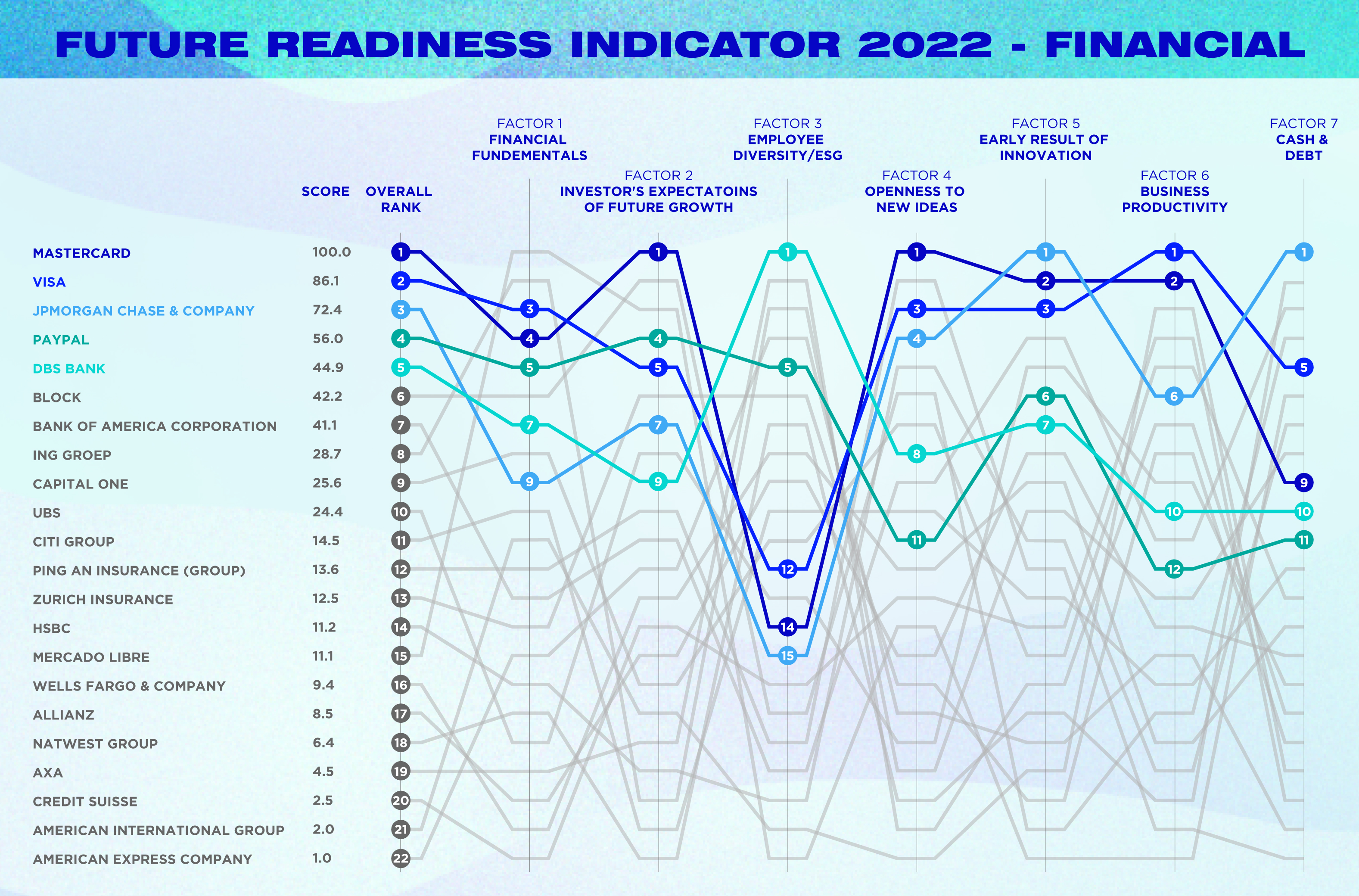
Retail banks trump fintech companies this year in contrast to last year, with J.P. Morgan climbing ten spots, Block lands in 6th place behind stalwart banks
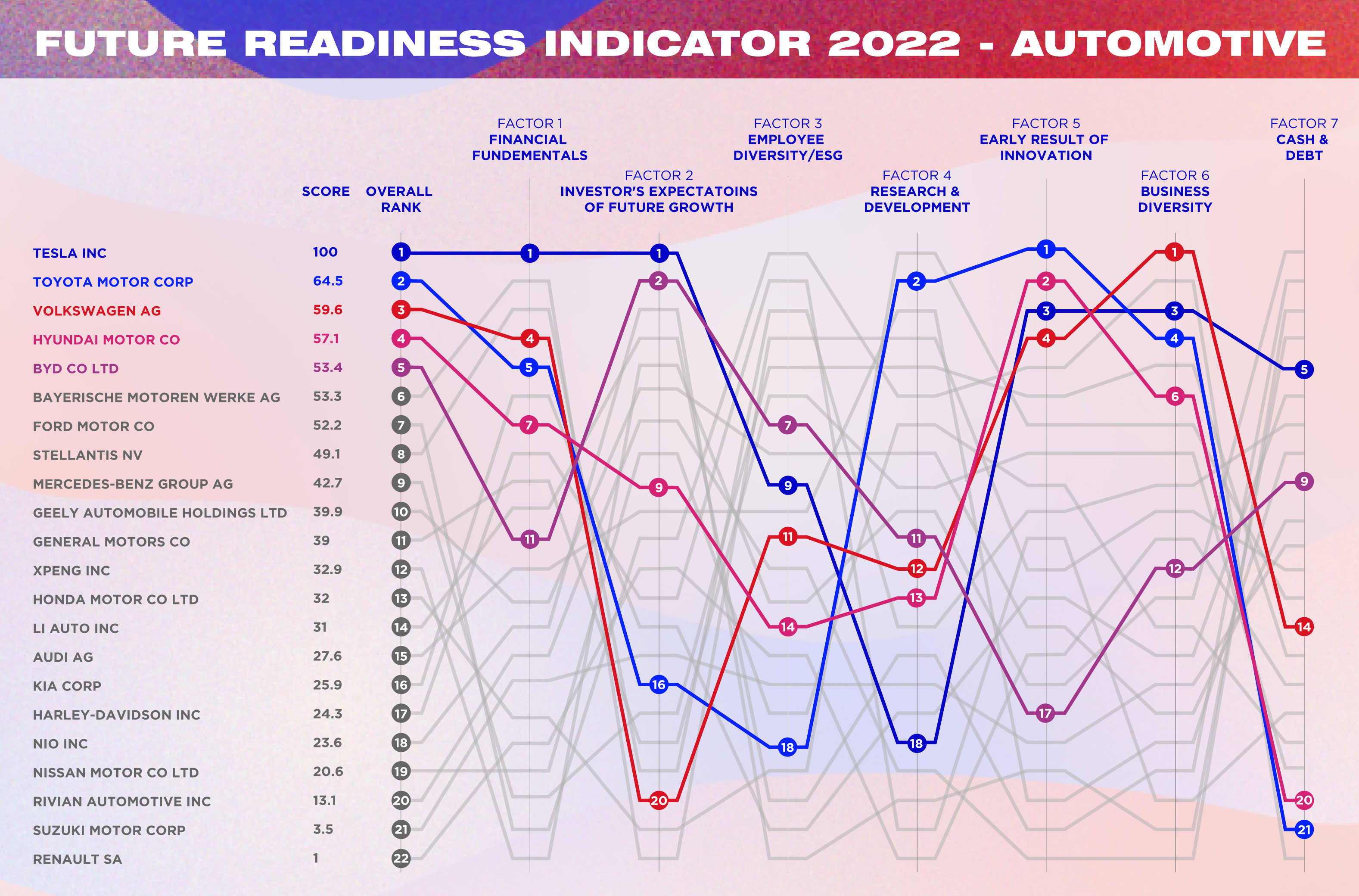
Tesla dominates the Auto industry rankings but Chinese BYD is in close pursuit
Singapore’s DBS surges up the ranks, Asian performance lags behind USA
LAUSANNE, SWITZERLAND – Media OutReach – 4 May 2022 – US companies Tesla, Mastercard, Visa, and J.P. Morgan, topped the global rankings in their respective industries in the latest edition of the Future Readiness Indicator – Automotive & Financial Industry 2022, released today. Several global companies fared much worse than expected; Credit Suisse, Allianz, PingAn and Block – all for different reasons.
IMD Business School released its inaugural Future Readiness Indicator in December 2021, based on over a decade of data (2010 to 2021), to rank the highest-revenue companies against their competitors by how future-ready they are for the post-pandemic economy and the likelihood of thriving in a world of fast and frequent change. This year’s new ranking benchmarks the corporate world’s resilience in two industries: Automotive and Financial Industry against their competitors.
“The era of easy growth fueled by the pandemic stimulus programs is over. For banks and other financial services companies, there is a changing emphasis from innovation at all costs to quality growth in 2022,” explains Professor Howard Yu, author of the Future Readiness Indicator at IMD Business School. “What you see is conservatism pays this year. Business diversification makes good sense. This is why being future-ready equals corporate success.”
Asian companies performance
The results show a decline in the ranking of Chinese companies driven by the decrease in profits. Whether this is a short or long-term impact remains to be seen, but their readiness for 2022 certainly took a hit. Emerging economies that rely on the export of commodities have been doing well because of the long boom in China, but that has now come to an end.
From China: BYD ranks 5th, Geely 10th, XPeng 12th, Li Auto 14th, and 18th for NIO. From Japan: Toyota places 2nd, Honda 13th, Nissan 19th, and 21st for Suzuki. South Korea‘s Kia reaches 16th and Hyundai is 4th just behind Volkswagen (3rd).
Chinese insurance Ping An ranks 12th and Singapore’s DBS bank stellar performance in the financial services industry is at 5th out of a total 22 companies.
The Financial Services industry shows a reversal of fortune from Fintech to big banks. Credit card companies Mastercard and Visa are the most future-proof companies this year, topping the rankings, followed closely by JP Morgan Chase as the highest-ranking bank. In contrast, Credit Suisse and American Express ranked the worst in the financial industry, holding the last places 20 through 22.
This year, some surprising results include Block (formerly Square), which landed in 6th place, behind two stalwart banks: JP Morgan Chase and DBS bank. Insurance companies Ping An and Zurich Insurance also fared surprisingly poorly. Zurich Insurance sits at 13th place while Chinese Ping An drops five positions to 12th place. While the company is still strong at exploring new technologies and business models, cash flow problems (cash and debt factor) are partially due to the impacts of the China crack-down.
Unlike other banks, Credit Suisse dropped sharply, from 11th to 20th place, partially due to its recent losses and the internal turmoil due to reputation scandals. JP Morgan Chase’s surge as best performing bank is primarily due to the cloudier economic environment, favouring conservative risk management.
Banks trump fintech this year
This year, the strongest reveal is the quick return of banks that prioritize innovation and digitalization. Fintech companies have dropped slightly as raising cheap capital to buy market share with low-cost products now no longer works. This has allowed for the meteoric surge of JP Morgan and DBS to come out strong this year. As the world economy moves from one uncertainty to the next, companies that consistently hold strong balance sheets coupled with innovation will win. For fintech, this suggests that having an exciting product alone will no longer cut it as easily as last year.
The results find that for financial companies, being future-proof in today’s volatile business environment means being slightly more conservative than before in lending while driving low operating costs through digitization. Leveraging NFTs and AI to drive top-line growth and reduce the complexity of an organization to contain costs are strengths that are rewarded. The research predicts that stronger performers will be the ones to drive growth through the non-labour-intensive business models.
Financial Services Industry methodology TheFuture Readiness Indicator examines the top 23 retail banks, insurance companies, and payment platforms based on $7.1 billion to $183.4 billion revenue and ranks against data from 2015 to March 2022. The indicator measures against the following criteria: financial fundamentals, investors’ expectation of future growth, employee diversity/ESG, cash and debt, business productivity, early results of innovation, and openness to new ideas.
In the Automotive industry, Tesla dominates again this year, Toyota ranks second, and Volkswagen comes in third. This year, the ranking introduced four new companies. Three are EV producers, Chinese XPeng, Li Auto, and Rivian, and industry stalwart Suzuki although along with Renault, they rank at the very bottom, taking the last two spots of the global ranking.
Chinese EV producers, XPeng and Li Auto, at 12th and 14th places, are performing better than industry heavyweights Audi (15th) and Nissan (19th).
The sharpest climber, BYD, jumps nine places to the 5th position this year. An early mover in EV, they stopped creating combustion engine vehicles and are now 100% electric. The company is also one of the rare automakers producing its own chips. In addition, BYD has 40% of its sales outside its home base in China, resulting in a big jump in its business diversity factor.
The industry winner remains Tesla, but quickly catching up are Hyundai and BYD, both have steadily increased in future readiness over the past few years, and they are not only strong in EV but also demonstrate strong electronics capabilities. In the case of BYD, its stellar surge reflects how the global semiconductor shortages have exposed the importance of having chipset manufacturing capabilities in-house. NIO is a newcomer, and as recently as 2016, BYD ranked 18th. Their 2021 rankings –13th for NIO and 14th for BYD – suggest that these two companies are poised to survive future crises and achieve continuous growth.
Interestingly, to an extent, Toyota, Nio, and even Tesla ranked surprisingly poorly on gender diversity, whereas Harley-Davidson (17th) and Ford Motor (7th) ranked highest on this metric.
Navigating the chip shortage and supply chain threats
The research finds that industry convergence is seen where the gap widens between traditional and EV. The analysis reveals that most traditional automakers, despite mechanical expertise, share conservative views and are relatively unsuited to address vehicle electrification, connectivity, and autonomous driving. Still, the most valuable know-how for the future is not just EVs anymore but capacities in software and electronics for automakers. As seen with self-driving public buses in the UK soon to trial, the future resilience of the auto industry hinges on autonomous vehicles and electronic transport – but most importantly, self-reliance on electronics, heightened by the global chips shortage.
The second-ranking Toyota had prepared itself by stockpiling chips, and Toyota avoided the worst of the disruption and reclaimed the position of world’s largest automaker.
During the chip shortage, Tesla’s expertise in programming allowed it to rewrite its firmware, continue production, and sell a record number of vehicles. Tesla was future-ready before they ever built their first car.
Renault remains in last place. Its recent turmoil has cast constraints on the company’s capital expenditure, allowing for less effort into research and development than its peers.
As COVID-19 repercussions on the economy recede slowly, the industry grapples with equally turbulent new threats. Fuel prices will accelerate the energy transition to electronic parts and battery availability for the auto industry. Suppose the pandemic, which triggered a surge in purchasing of goods, caused the global supply chain to buckle. In that case, Russia’s invasion of Ukraine and China’s continuing zero-Covid policy risk is breaking it completely.
Global supply chains are too complex and interconnected to be immune to shocks, especially as seismic as a worldwide pandemic or wars. Therefore, new capacities force companies to adopt novel strategies to keep goods moving. Today, backlogs and breakdowns are the new normal, making getting ahead of disruptions as early as possible more crucial than ever for future-readiness.
Automotive Industry methodology
TheIndicator included the top 22 automakers based on $6.2 billion to $284.4 billion revenue and ranks against data from 2010 to March 2022. We added three young EV makers, XPeng, Li Auto, and Rivian, whose revenue is relatively small but high market value, into this year’s ranking.
The rankings results are based on objective measurements to reach a composite score via an AI-driven algorithm to compare against the industry average. It uses hard data to rank companies against critical drivers of innovation: Financial Fundamentals, Investors’ Expectations of Future Growth, Employee Diversity/ESG, Research & Development, Early Results of Innovation, Business Diversity, and Cash and Debts. The data period for the ranking is from 2016 through March 2022
ESG (Environmental, Social, and Governance)
Thisyear’s Indicator results consider companies’ ESG (Environmental, Social, and Governance) performance in the ranking. This includes the gender diversity of the board and executive teams and diversity in leadership mindset, which correlates to better innovation in companies. This metric also considers the country’s competitiveness of each company’s headquarters to gauge the ease of doing business and governance.
Looking at Tesla’s ESG score as an example, it’s governance controversies as reported by the media. Although Tesla has acquired its green credentials for electric vehicles, it scores poorly on the overall ESG because of chief executive Elon Musk’s governance style.
Gender diversity and inclusion boosts future-readiness
This year’s Indicator includes the influence of female board-level executives and mid-senior managers on a company’s future-readiness. The results reveal that most industries are going through an industry convergence seen as colliding trends. The ranking considers diversity in gender, nationality, and mindset of executives playing an increasingly influential role in corporate success – outperforming their competitors and being more resilient.
The trend sees the limited capacity of an overly homogenous company to reinvent when too many employees come from the same background, whether in terms of CEO mindset or gender, and critical mass is the tipping point to success.
China’s BYD and Volkswagen rank highly in gender diversity among the auto companies, while Nissan and Kia are the opposite. In financial services, DBS Bank and JP Morgan have performed well in this area, allowing their future-readiness score to be the highest among banks. However, HSBC and Credit Suisse perform poorly in diversity.
Overall, the 2022 Future Readiness Indicator draws the following lessons for corporations to navigate:
1)Supply chain game-changer: from transparency in 2021 to resilience in 2022
Despite economic volatility, industry convergence is accelerating. Compared to last year, Tesla’s readiness score surges far ahead of other carmakers in the auto industry. Last year’s Toyota at #2 commands a total score of 77.9. This year, Toyota remains at #2, but the overall score drops to 64.5. What’s needed even more urgently is for carmakers to build up capabilities in electronic components and software. Last year Toyota stockpiled to keep the lights on – but it isn’t effective in the long- term. Digitizing the supply chain might have sufficed during the Covid pandemic as the industry adjusted supply to new demands. In 2022, it’s about supply chain resilience not just supply chain transparency.
2)The changing game for growth strategy: from a deep singular market in 2021 to broad, diverse geography in 2022
With the increasing tension of geopolitics, companies must diversify away from individual country risks. As growth slows down across the board, the company’s readiness is reflected in the development quality. Specifically, it’s whether a company can diversify its reliance from a single geographic market. BYD, for example, is not only vital in electronics and batteries, and those are the capabilities for future mobility. But it has, like other top-ranking companies, increasingly diversified its revenue sources across broader geographic regions. The combination of new capabilities and diversification propels these companies to climb up the rank for 2022 and beyond.
3)The changing risk appetite: from growth at all costs in 2021 to stewardship in 2022
Last year’s pandemic has pulled up much of the future demand, and that one-off driver has been depleted. Fintech is dropping in its ranking, including Block and PayPal. We see big banks like JP Morgan Chase or DBS surging up this year’s rankings in their place. But the top-ranking companies remain Mastercard and Visa. Their speed of decision is high – similar to the tech sector. And at the same time, they can forge strategic partnerships with big banks and Fintech at the same time. With healthy balance sheets, these are the winning behaviours to adopt in 2022.
4)The (un)changing definition of future readiness: from resource abundance to scarcity
The top-ranking companies all share similar capabilities relevant for future survival. During the pandemic in 2021, top-ranking companies succeeded in helping people to work from home (Zoom) or be entertained (Netflix), or shop (PayPal). In 2022, executives need to assume better resource scarcity, driven by rising interest rates and the slowing economy. Top ranking companies succeeded by going back to the basics: cost control, risk diversification, pursuing growth carefully and handling government regulations.
In 2022, both quality and size of earnings matter. As recession is a possibility, those who can navigate the next crisis when it comes will be more likely to achieve a robust financial balance sheet and an unparalleled growth trajectory.
Notes to editors:
IMD produces the Future Readiness Indicator
View the Automotive Industry ranking from 2021 here
About The Institute for Management Development (IMD)
The Institute for Management Development (IMD) develops leaders who transform organizations and contribute to society. IMD is an independent academic institution with Swiss roots and international reach, established by business leaders for business leaders. Led by an expert, diverse faculty, IMD delivers Real Learning Real Impact through a unique combination of teaching, research, coaching, and advisory services. Challenging what is and inspiring what could be, IMB is the trusted learning partner of choice for ambitious individuals and organizations. www.imd.org
#TheInstituteforManagementDevelopment
The issuer is solely responsible for the content of this announcement.




 www.wbd.com.
 here
 here
 here


 Forbes,


 www.imd.org