Home Blog Page 6315

Laos Utilises Cooperatives and Confederations to Support Agricultural Growth

Lao researchers and academics are expected to benefit significantly from the Research 4 Life project, which aims to increase understanding among Lao researchers about how to access academic papers and other research free of charge.

A workshop to announce the project was launched recently, attended by Representative of Food and Agriculture Organisation of the United Nations, Dr Stephen Rudgard, along with concerned officials, academics, researchers and other participants.

Research 4 Life is the collective name for the four programmes under its umbrella, those being Research in Health (Hinari), Research in Agriculture (AGORA), Research in the Environment (OARE) and Research for Development and Innovation (ARDI).

The initiative is focused on supporting free or low-cost access to academic and professional peer-reviewed content online with the aim of reducing the scientific knowledge gap between industrialised countries and developing nations.

The project is designed to enhance the scholarship, teaching, research and policy-making of the many thousands of students, faculty, scientists, and medical specialists, focusing on health, agriculture, environment and other life, physical and social sciences in the developing world, according to senior officials associated with the project.

Deputy Head of Planning and Cooperation Department under the Ministry of Sciences and Technology, Mr Sipheng Sengphompunh said recen tly at the country based Research 4 Life on the Hinari and AGORA workshop that the project definitely has an important role to play in Lao research. Mr Sipheng said most Lao researchers lack funding support or donors in carrying out their work, so access to peer-reviewed papers and other research documents can be prohibitively expensive if researchers are required to pay.

Therefore this initiative to provide access to large troves of research and scientific papers free of charge or at low or minimal cost will benefit Lao researchers greatly.

World Health Organisation Representative to Laos, Dr Luo Dapeng also noted that it was an important workshop that will go a long way to improving research work in Laos.

As many of you who do research are aware, the subscriptions to printed journals are very expensive. They usually consume a significant chunk of libraries’ budgets.

In developing countries, these budgets are often small or non-existent. This means that researchers, scientists, students and those who need to do research cannot access needed information. In the public health arena, this information can sometimes be life-saving.

Since 2002, the number of participating publishers and journals and other full-text resources has grown steadily.

Today, Hinari provides free or very low-cost online access to up to 14,000 e-journals and 33,000 online books in biomedical and related social sciences to non-profit institutions in more than 100 low and middle-income countries and areas.

Recipients include teaching hospitals, government offices, universities and research institutes.

Source: Vientiane Times

Environmental and Social Monitoring Receives World Bank Support

The Ministry of Natural Resources and Environment and its development partners organised a review of the Second Lao Environment and Social Project in 2016 and planning meeting for next year’s works.

The concerned departments at the ministry highlighted the key achievements of 13 sub-projects under the Second Lao Environment and Social Project at the meeting on Tuesday in Vientiane.

The Planning and Cooperation Department reviewed the sub-project named Strength building, planning and coordination for the natural resources and environment sectors, at a cost of US$498,000.

The department also highlighted the achievements of a sub-project in 2016 which was supporting local natural resources and environment sectors in eight target provinces and upgrading the skills of department officials.

Meanwhile, department representatives also outlined plans for next year, as the project will continue to support sub-projects in other provinces around the country. Meanwhile, the Environmental Quality Promotion Department reviewed a sub-project called General capacity building for scaling up ISP and SEA, which is being un undertaken at a cost of US$799,115.

A sub-project has been operated in six target provinces as well as the capital and there is a pilot sub-project in Luang Namtha province, supporting new technology for environmentally sustainable development. It also organised the green/clean programmes in targeted communities.

Department representatives offered plans for next year, during which time the sub-project will continue strength building initiatives at the National Environment Committee.

It will also assess the pilot sub-project in Luang Namtha province, as well as develop more pilot sub-projects in target districts and promote green technologies that are good for the environment.

During the meeting, the Pollution Control Department reviewed a sub-project named Capacity Building for Pollution Control, Waste and Hazardous Chemicals Management, at a cost of US$699,773. The sub-project has helped to develop and improve the juristic acts on pollution control, waste and hazardous chemicals management.

All sub-projects have been funded by the World Bank through the Environment Protection Fund under the Ministry of Natural Resources and Environment and will run from 2016 to 2020.

According to the World Bank, the funds of the Second Lao Environment and Social Project for Laos have helped to strengthen selected environmental protection management systems, specifically for protected areas conservation, enforcement of wildlife laws and environmental assessment management.

The fund has been provided financing to scale-up activities including improving the financing capacity of the Environment Protection Fund, as well as supporting capacity building at national, provincial and district institutions to implement the Lao legislation on environmental and social impacts.

It has also supported strengthening the university environment and social curriculum and broadening project support to forested upper-watersheds of rivers important to hydropower, agriculture, irrigation and flood prevention.

Source: Vientiane Times

Govt Promotes Human Rights, Foreign Ministry Says

The Lao government has always attached great importance to protecting and promoting human rights and basic rights of its population, the Ministry of Foreign Affairs said in a statement.

The ministry issued the statement to mark the International Human Right Day, which is observed on December 10.

The political, economic, social, cultural and family rights of the people have been assured and enshrined in the constitution, laws and regulations of Laos, which coincide with Laos’ regional and international obligations and commitments on human rights.

Under the 2015-version of the constitution, in Article 34, the state recognises, respects, protects and assures human rights and basic rights of the population.

Laos has been a state party to the United Nations (UN) seven core treaties on human rights including the Convention on the Elimination of All Forms of Discrimination against Women; UN Convention on the Rights of the Child; International Covenant on Civil and Political Rights; International Covenant on Economic, Social and Cultural Rights; and International Convention on the Elimination of All Forms of Racial Discrimination.

In addition, a number of laws and regulations have been promulgated to protect and promote human rights of the Lao multiethnic people equally without discrimination, the ministry said.

Currently, Laos is drawing up a national action plan to implement 116 recommendations made at the Universal Periodic Review (UPR) – a process which involves a review of the human rights records of all UN Member States.

The Lao government has formed a national coordinated mechanism to coordinate among the state bodies from the central to the local levels on human rights affairs in order to ensure effective oversight and progression.

The Lao government has attached great importance to educating and disseminating the international conventions on human rights in order to create better understanding on human rights amongst the people. Attention has also been paid to capacity building for state officials including law enforcers so they are capable of implementing and fulfilling the regional and international obligations Laos has committed to, the ministry said.

In regional engagement, Laos has been an active player to cooperate on human rights within the frameworks of the ASEAN Intergovernmental Commission on Human Rights (AICHR) and ASEAN Commission on the Promotion and Protection of the Rights of Women and Children (ACWC) among others.

In the coming years, the Lao government has committed to continuing to work with the international community to promote and protect human rights based on the principle of equality, non-interference in each other’s internal affairs and shared interests, the ministry said.

The government is also striving to make Laos a state ruled by law by 2020 to create conditions for the Lao multiethnic people to enjoy their basic rights in line with the constitution and laws along with pursuing regional and international obligations on human rights that Laos has committed to.


Source: Vientiane Times

President Pardons Reformed Prisoners

The President of the Lao PDR has granted pardons to 1,450 reformed prisoners around the country to mark the 41st anniversary of National Day which fell on December 2.

The pardons were granted under the authority of the presidential pardon announced in Vientiane recently, where long serving or well behaved prisoners have received outright pardons or reductions to their sentences.

Out of 1,450 prisoners across the country, 1,123 people (including 25 foreign prisoners) have had their sentences reduced while another 327 have been freed immediately after already serving long sentences. Most of the prisoners were involved in drug related crimes, according to a recent report from the Ministry of Public Security.

The pardoned prisoners were originally sentenced for offences including drug dealing, theft, robbery, human trafficking and other crimes.

In Vientiane alone, the ministry last week released and pardoned 436 reformed prisoners. Out of the 436 prisoners, 333 people (including 13 foreign prisoners) have had their sentences reduced while103 have been freed immediately.

The ministry has also reduced the sentences of 204 reformed prisoners from life to 20 years because of their good behaviour. The pardon demonstrates the right and just policies of the Party and state of Laos, especially in terms of enforcing the law according to the particular circumstances of the province, and administering justice in a strict but fair manner.

The Party and state have a responsibility to promote the Lao People’s Democratic regime and to maintain order in society, with the Party considered as the leader, the government as the supervisor and the people as the owners, he said.

Under this approach, national socio-economic growth is continuing and the livelihoods of Laos’ multi-ethnic people have gradually improved, and this is especially true for people around the country. The Party and state have issued many laws and regulations to protect the country and the public, and if anyone breaks these rules they will punished according to the law, he said.

Those prisoners who have been given pardons need to contribute positively to the development of the country, especially in regard to complying with laws and regulations to help preserve defence, security, and respect for the state. All the pardoned prisoners need to follow the policies of the Party and state, and contribute positively to society. Thus, they all need to become good citizens who work to contribute to national development.


Source: Vientiane Times

Foreign Affairs Stresses Need for Personnel Development

Despite the country having made good achievements in foreign affairs, the lack of skills among young civil servants remains a challenge for the sector.

This finding was revealed at the annual meeting of the sector, which continues in Vientiane this week, with Minister of Foreign Affairs, Mr Saleumxay Kommasith presiding over the gathering.

This year has been noted as a year of success for Laos in foreign affairs, with the country serving as ASEAN chair and hosting several important regional events, especially the 28th and 29th ASEAN Summits, which have also highlighted the country’s success in its diplomacy.

Despite the successes, Laos still needs to improve the skills and talents of the personnel in the sector to meet with the requirements of regional and international integration.

Speaking at the meeting yesterday, a representative from Vientiane’s Department of International Relations noted the participation of all residents in the capital in hosting the big events, which he said contributed to their success.

Meanwhile, he said his department still faced difficulties in terms of the capabilities of its personnel, especially their knowledge of the English language .

The majority of personnel in my department graduated from the National University of Laos but their work performance was poor, the official said, adding that the capable ones are those who graduated from institutes in Vietnam and China.

According to him, the young civil servants performed satisfactorily but they did not have skills in terms of compiling reports.

The ministry has around 1,000 personnel in total, of whom 250 people are implementing their mandates in overseas locations.

A representative from the ministry’s Department of International Organisations gave his assessment that the country is fifty percent prepared for international integration, noting that preparedness in human resources is a crucial component in this respect.

He called for a greater focus on enhancing the enthusiasm of civil servants and government employees to be active in their work and also continuously studying and learning.

Regarding foreign affairs personnel in the army, an official from the Ministry of National Defence’s Foreign Relations Department, Colonel Khamsene Mahavong told the meeting about concerns in regards to the development of successors in this section of the army.

He said even though they have worked for the ministry for two or three years, the newly recruited generation could not manage to write proposals to other departments and organisations within.

He proposed that leaders and commanders enhance their attention in relation to addressing the challenges.

In his view, many people received their bachelor’s and master’s degrees only on paper, and they will gain real knowledge and skills only after three to five-years of work experience.

Training accompanied by practice in their places of work is a necessary channel for the skills development of personnel, according to Col Khamsene.

He also agreed with the need for knowledge and skills in foreign languages, especially English language, which was taken as a very important component of knowledge for public servants in the era of international integration.

He told the audience that the Ministry of National Defence had achieved success in hosting an ASEAN meeting on the defence sector without using translators from outside the ministry.

Source: Vientiane Times

PM to launch railway construction in Luang Prabang

Luang Prabang province: — Prime Minister Thongloun Sisoulith will officially launch the start of construction for the Laos-China railway project at a ceremony on December 25.

The ceremony to kick off railway construction will take place in Luang Prabang district’s Phonxay village where a railway bridge spanning the Mekong River will be built.

Director of the provincial Public Works and Transport Department Mr Fasanan Thammavong, told the press on Wednesday that the PM has agreed to launch construction on December 25.

Last week Minister of Public Works and Transport Dr Bounchanh Sinthavong, also discussed the matter with relevant officials in the province.

The railway bridge will be part of the planned 427-km Laos-China railway running from the Chinese border to Vientiane and through the four provinces of Luang Namtha, Oudomxay, Luang Prabang, and Vientiane.

The railway through Luang Prabang province covers a length of 80 kilometres taking in the three districts of Chomphet, Luang Prabang and Xiengngeun.

A Chinese construction company will build the railway bridge across the Mekong and four ports that will be used to handle construction materials. The contractors would have preferred to utilise six river ports, but two locations were not suitable as they are tourism sites. Mr Fasanan added that a Chinese construction company would spend two years building the railway bridge across the Mekong River.

Presently, Luang Namtha and Oudomxay provinces have installed some red markers to set out the railway land, while Vientiane province is constructing the railway worker camps for thousands of labourers.

The Laos-China Railway Project is estimated to cost about US$6 billion and will run from the border area of Boten in Luang Namtha province to Vientiane. It is scheduled for completion in 2021 and is 70 percent owned by China and 30 percent by Laos.

A railway will also be built to connect Khammuan province’s Thakhaek district to the Vietnamese border, from where it will run to a coastal port in Vietnam. Another track will be built from Thakhaek to the Cambodian border.

The Laos-China railway will have a 1.435-metre standard-gauge track with 33 stations, 21 of which will be operational initially.

There will be 72 tunnels with a combined length of 183.9 km, representing 43 percent of the railway’s entire length.

The line will also have 170 bridges totalling 69.2 km in length, accounting for 15.8 percent of the total. Passenger trains will travel at 160 km per hour, while the speed of rail freight will be 120 km per hour.

Source: Vientiane Times

NUOL Discusses Lifelong Learning Module for Teacher Education

The Faculty of Education at the National University of Laos (NUOL) is discussing and studying the possibility of integrating a lifelong learning module into teacher education programmes.

The brainstorming w orkshop about the idea took place the NUOL on Tuesday and was attended by Vice President of NUOL, Assoc. Prof Dr Oudom Phonekhampheng, the Regional Director of DVV International, Mr Uwe Gartenschlaeger, in addition to many educators.

A senior official from DVV International, Mr Ounpheng Khammang, presented the concept of lifelong learning, meaning that every human should continuously learn from the cradle to the grave including formal and informal learning. It focuses on the triangle of knowledge, skills and competencies, which increase employability, personal development, active citizenship and social inclusion.

The importance of lifelong learning is amplified by the fact that we are now living in a fast changing and complex socio-economic and political world to which we need to adapt by rapidly acquiring new knowledge, skills, and attitudes in a wide range of evolving contexts.

An individual will not be able to meet life’s challenges unless he or she becomes a lifelong learner and a society will not be sustainable unless it becomes a learning society.

The target of lifelong learning is a holistic educational continuum for learner-centred educational opportunities from cradle to grave in a borderless, nurturing educational landscape from infancy through even to retirement. With the adoption of such a revolutionary policy at the societal level, Laos will surely achieve a level of sustainable development that benefits every citizen.
Source: Vientiane Times

Drug Traffickers Arrested in the Provinces

Phongsaly provincial police recently arrested a drug trafficker after finding more than 108,000 amphetamine pills, two kilogrammes of opium, an ingot of heroin, a small bag of crystal methamphetamine and other items in his possession.

According to the Khuamsangob newspaper, police received a tipoff from people regarding the transport of illegal drugs from Nhot-ou district to Bounneua district, Phongsaly province.

The police had joined with local authorities to set up a roadblock in Nhot-ou district and inspected a target pick-up truck and found the illegal drug stash inside the vehicle.

The drug trafficker was named as Mr Khae-chiem, 52, of Audomsin village, Sing district, Luang Namtha province.

Mr Khae-chiem admitted to police he bought the illegal drugs from Mr Asan, 33, of Nhot-ou district and bought the two kilogrammes of opium from Mr Singkham, 23, of Phousang village, in the same district.

Police are continuing their investigation into the case in the hope of identifying other people involved in the drug ring.

Elsewhere police in the provinces of Bokeo and Luang Namtha have made significant arrests involving large quantities of illegal drugs.

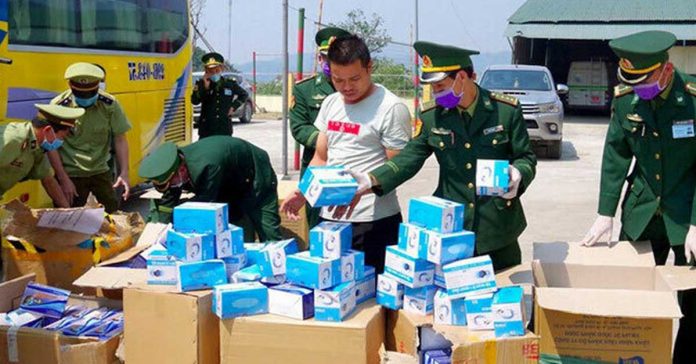
The Bokeo Drug Prevention and Control Department recently arrested a couple and confiscated 12kg of crystal methamphetamine and about 42,000 amphetamine pills in Namkerng village, Tonpheung district.

Police used a vehicle inspection checkpoint in Namkerng village to stop and examine a bus and found the crystal methamphetamine and amphetamine pills in the couple’s bags.

The pair were named as Mr Maysengyod, 51, and Ms Fong, 48, of Huaypherng village, Tonpheung district.

They told police that a drug dealer, who they couldn’t name, hired them to take the drugs from Bokeo province to Vientiane for which they would be paid about 102,000 Thai baht.

Meanwhile, in Luang Namtha province police arrested two men after finding 18,000 amphetamine pills concealed in a motorbike.

The men were named as Mr Korpa, 32, and Mr Kermue, 27, both of Poungxay village, Long district.

Under the amended Article 146 of the Criminal Law, for cases involving refined drugs as opposed to precursor chemicals, the penalties are the following.

For the possession, trading, sale or trafficking of between 0.3 and 100 grammes of synthetic drugs such as amphetamines, ecstasy, ice or crystal methamphetamine or other mind altering substances, the punishment shall be a prison sentences of between 10-20 years in jail plus financial penalties.

Under the law, anyone convicted of possessing over 500g of heroin can be handed the death penalty.


Source: Vientiane Times