Home Blog Page 6338

ASEAN Confers on Migrant Workers’ Rights

The 9th ASEAN Forum on Migrant Labour focusing on their protection in the region opened in Vientiane yesterday.

The two day meeting has been organised by the Ministry of Labour and Social Welfare aiming to discuss improving the protection of migrant workers’ rights by strengthening the legal mechanisms governing their status.

Speaking at the forum’s opening ceremony, Deputy Minister of Labour and Social Welfare, Ms Khambay Khatthiya, said its objective was to allow participants to review the progress of the ASEAN Labour Ministers Work Plan for 2010-2015 as well as various action plans and ASEAN Vision 2016-2020. This included reviewing the progress made in implementing the Protection and Promotion of the Rights of Migrant Workers plan for 2011-2020 in the region and other cooperation programmes with dialogue partners.

She said officials would also share their experiences and suggestions regarding the protection of workers’ rights in addition to practical issues relating to development in ASEAN countries.

Discussions would include stepping up protection and promotion of migrant workers’ rights against exploitation and mistreatment by enhancing labour migration governance in ASEAN countries along with regional cooperation to fight human trafficking in ASEAN and developing an ASEAN instrument on protection and promotion of migrant workers’ rights, she said.

The government, including the Ministry of Labour and Social Welfare, has worked to protect and promote the rights of migrant workers.

It has identified a labour and social welfare programme until 2025 to enhance the quality of labour to match market needs so that Lao workers can be competitive at regional and international levels, she said.

Ms Khambay noted in addition, that workers would have improved employment security with the social protection floor and social dialogue in Laos strengthening.

The programme is developing the labour force based on economic structure, promoting employment services and self employment, strengthening workers’ protection, and enhancing industrial relations.

More importantly, the government is focusing on poverty reduction and increasing the income earned by migrant workers and their families by running various programme activities throughout the country, such as microcredit schemes.


Source: Vientiane Times

Fifty Officials Sanctioned for Corruption in Saravan

Fifty provincial authorities in southern Saravan province under investigation by inspection authorities have been found to have been receiving bribes over the past five years.

The Provincial Committee of the State and Party Inspection, Mr Khamchan Chemsamone reported at the third meeting on work inspection in the prefecture last week that many billions of kip were lost as a result of the corruption.

These 50 wrongdoers were found guilty of embezzlement after nine targets were checked.

The inspection authorities estimate that the state has lost more than five billion kip due to the payment of bribes to these corrupt officials.

Provincial authorities were able to recoup a total of only 67 million kip from the 50 corrupt officials.

Based on the report tabled at the meeting, the provincial inspection authorities found there had been 50 wrongdoers involved in the illegal felling, purchase and sale of timber, with about 9,000 cubic metres of timber thought to have been illegally removed. Stemming from that, six wrongdoers were punished, 21 were educated, five had their positions dissolved or were reposted to lower ranking positions, while 18 members of the security forces and civil service were expelled.

Provincial authorities were keen to demonstrate that they had taken care of their inspection and anti-corruption obligations regarding this matter.

According to the report presented at the 3rd Congress of the Inspection Committee of the Party Central Committee held in Vientiane recently, more than 4,807 billion kip has been lost to corruption over the past five years and 734 targets were found involved, a top anti-corruption body reported.

Vice Chairman of the Inspection Committee, Sinai Mienglavanh told the congress that more than 887 billion kip of the money lost to corruption has been recovered.

More than 303.1 million cubic metres of timber were found logged and sold illegally over the past five years, Mr Sinai told the participants as he delivered the report.

Over the same period, some 1,806 cadres of the Lao People’s Revolutionary Party have been disciplined as they violated the Party’s statutes and state laws in various cases. Of those, a total of 1,007 cadres were expelled from Party membership.

In addition, the committee has received 3,640 petitions including 2,719 petitions that have been resolved. Most of the petitions were related to land disputes, business disputes, and dissatisfaction over court verdicts.


Source: Vientiane Times

Booths all Set for Brisk Trade at That Luang Festival

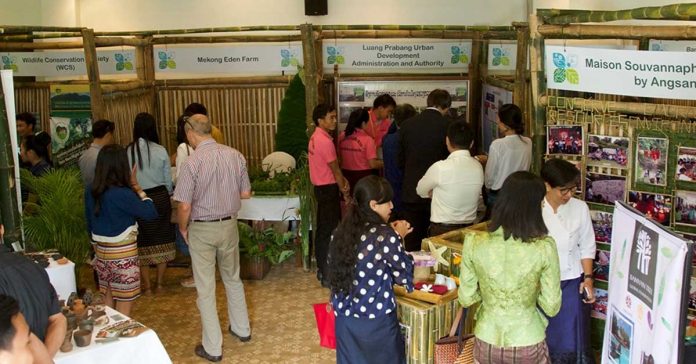
This year’s That Luang Festival comprises different zones for the display and sale of various goods including those made under the One District, One Product (ODOP) scheme and imported products.

In a new move, the authorities have banned vendors from selling alcoholic drinks in the festival grounds.

The zones for the display and sale of ODOP and other local products are at That Luang esplanade, with over 300 booths selling ODOP products made in various districts around the country.

Meanwhile foreign-made goods will be on sale at the Lao International Trade Exhibition and Convention Centre (Lao-ITECC).

Vendors are already displaying their products during the annual festival, which runs from November 8-14.

Vientiane Times spoke to a concessionaire in the That Luang area, who asked not to be named, about booth availability.

He said there were over 200 booths in his area in the high-demand zone between the National Assembly and the Phonkheng village zone in Xaysettha district.

In his concession area, the rental for pitches ranged from 1 million kip to 3.5 million kip, depending on location. Booths in this zone could only sell ordinary goods and food, not ODOP products, he explained.

He had rented out 95 booths already, with the authorities announcing that all booths are to sell their goods from November 8-14.

Festival organising officials told Vientiane Times they had prepared a special attraction this year, and commissioned a traditional village to be reproduced near That Luang-tay temple.

The model village will feature a traditional arts show and display foods symbolic of the northern, central and southern regions, as well as selling old items that would have been used in days gone by. Visitors can also watch weaving demonstrations.

The main activities at the That Luang Festival will be similar to those of previous years. Event organisers are seeking to perpetuate Lao customs and culture and put them on full view for local and foreign visitors.

The religious part of the festival will run from November 12-14 and give people the chance to pray at the That Luang stupa and pay their respects to the grand monument.

On November 13, the festivities will begin with the wax castle procession at Vat Simueang and end with a colourful procession around the stupa.

Almsgiving to monks will take place on the last day of the festival, November 14, in the early morning. This will be followed by the ritual game of tikhy and other traditional activities.

To ensure public safety, security officials will station teams of officials in and around the That Luang esplanade.

Organising officials are working with village authorities to arrange car and motorbike parking, aiming to ensure orderliness and reduce traffic jams.

Authorities have designated parking areas around the That Luang crossroads. They have set a parking fee limit of 15,000-20,000 kip for a car and a maximum of 10,000 kip for a motorbike, depending on location.

If drivers feel they are being charged too much, they may discuss the matter with security staff at police boxes around the National Assembly and in That Luang-tay village.


Source: Vientiane Times

NA Members Vow to Tighten Petition Handling

Enhancement of inspection measures and measures against violators involved in abuses of power that lead to injustices in resolving disputes and court cases became a hot topic at the ongoing National Assembly (NA) debate.

NA members at the ongoing 2nd ordinary session of the 8th National Assembly legislature were debating the draft amendment to the Law on Handling Petitions.

Thirteen NA members gave their opinions on the draft amendment to the law, which was introduced to the NA session for consideration yesterday.

The latest amendment to the law was made in 2014 but it has been amended again to be compliant with the constitution and other laws such as the Law on National Assembly, and the Law on Local People’s Councils.

The latest amendment was made last year and led to the improved role and obligations of the concerned authorities.

At the debate with NA Vice President Somphanh Phengkhammy presiding, 104 of 116 NA members present voted for the approval of the draft while 10 members did not approve it and two members were neutral.

The current law (2014 law) contains 64 articles, while the draft amendment (2016 law) has one article less than the promulgated one.

Both the promulgated law and draft amendment include three types of petitions: a request, which is presented to a state administrative body, a claim, which is presented to an investigating orgnisation, the Office of the Public Prosecutor or the People’s Court, and a petition for justice, which is presented to the local people’s council and the National Assembly.

Speaking at the debate on the draft amendment, NA member for Vientiane, Mr Saithong Keoduangdy praised the draft, saying this would prevent the presentation of a petition to several organisations at the same time.

Meanwhile, he noted the reason for presenting a petition for justice needs to be identified, saying this related to investigating officials, prosecutors, judges, and law enforcement teams.

Our National Assembly and local people’s councils have to enhance their inspection. The law should make details about this, Mr Saithong said.

If we don’t do so, those people who used to earn money from dealing with court cases will continue to take advantage of the situation, he added.

Mr Saithong agreed with the NA vice president’s call for the punishment of judges who have been involved in offences or injustices. He said judges sometimes make the right judgment in accordance with the law but the decisions are not accurately supported by the facts.

He explained that non-factual decisions come about as a result of misconduct by information providers such as investigating officials, who change the information or testimony. He reminded the session about a case where investigating officials removed a document from the whole set provided by one party to the case.

Punishment should be meted out on the officials concerned, Mr Saithong said.

He also wanted inspections to focus on judges whose judgments made parties to the lawsuit continue to appeal consecutively.

The draft stipulates in Article 28, that the period for presenting a petition for justice to local people’s councils and the National Assembly is within 60 days from the date the concerned person is informed of the final decision of the public administrative authority or the final decision of the court.

NA member for Champassak province, Mr Meksavanh Phomphithak proposed the time limit for the acceptance of a reconsideration of a petition be extended, mentioning a time period of 30 years as is the practice in Vietnam.

NA member for Attapeu province, Mr Phetkeo Heuangpanya said he wanted the higher authorities to better define this law when it comes to dealing with petitions concerning disputes between individuals and local authorities.


Source: Vientiane Times

Asean, China Join Forces to Tackle Transnational Crime

ASEAN member states and China will further boost their joint efforts through bilateral and multilateral cooperation mechanisms to tackle transnational crime.

Transnational crime includes drugs and human trafficking which are increasing in scale as reflected by the large number of young people that fall victim to these crimes.

Vice President of the National Assembly, Dr Bounpone Bouttanavong, highlighted this point during his opening remarks at the 10th ASEAN-China Prosecutors-General Conference, held in Vientiane yesterday under the theme: Strengthening Cooperation to Effectively Combat Transnational Crime.

To address these issues, we need to increase our combined efforts, including ensuring effective coordination, the capacity building of prosecutors, and expertise exchange, he said.

The world is currently undergoing rapid changes that present both opportunities and challenges. Moreover, different regions of the world are facing challenges that impede socio-economic development, especially transnational crime, he added.

Dr Bounpone said that although the Lao government has made a strong effort to address these issues, including through the adoption of laws and strict measures, the country was still facing challenges in this area.

Such activities have caused great loss of life and property and are posing a threat to the peace, stability and security of nations, regions and the world as a whole.

These crimes are transnational in nature and involve many countries, and they are a pressing issue that no single country can handle on its own.

We should exchange information on the activities of offenders or groups of criminals with the aim of responding to and combating these crimes in an effective and timely manner, Dr Bounpone said.

Dr Bounpone noted that the conference was taking place at a time when ASEAN is focusing its efforts on the implementation of the ASEAN Community Vision 2025 and the three community Blueprints as well as the Initiative for ASEAN Integration (IAI) Work Plan III and the Master Plan on ASEAN Connectivity 2025.

He said the cooperation between the offices of the prosecutors general of ASEAN member states and China would contribute to the implementation of related activities under the ASEAN-China Plan of Action.

The conference provides a good opportunity for ASEAN prosecutors general and China to discuss and together find ways and means to combat transnational crime, in particular drugs and human trafficking, he added.

Dr Bounpone stressed that with the cooperation and support of ASEAN member countries and China, the conference would meet with success, thereby significantly contributing to the ongoing ASEAN community building efforts and ASEAN-China relations as well as the common cause of maintaining and promoting peace, stability and prosperity in the region and the world.

Dr Bounpone said he highly valued the important role played by the conference, which was first held in 2004. He congratulated participants on the achievements made in past years in the fight against transnational crimes of mutual concern, further contributing to cooperation between ASEAN and China as Strategic Partners towards a higher plane.


Source: Vientiane Times

NA Approves Draft-amended Law on Government

The National Assembly (NA) approved a draft-amended Law on Government on Tuesday that revises the mandates of the prime minister, ministers and some state departments.

The amendments came after the Government Office was renamed the Prime Minister’s Office following the assumption of office of the new cabinet in April and the recent establishment of the provincial assemblies, the promulgation of the Law on Provincial Assemblies and other changed circumstances which require the amendments.

Minister of Home Affairs, Mr Khamman Sounvileuth told the parliament that the amendment to the 2015 law’s Article 6 would give the Prime Minister eligible rights to comment on the proposals of provincial governors or the Vientiane mayor regarding the appointment, removal from official or reshuffling of deputy provincial governors or vice mayors before such proposals are submitted to provincial assemblies for approval.

The amendment will be in line with the 2015-version amended constitution, which stipulates that the Prime Minister is eligible to appoint provincial governors and the Vientiane Mayor following the approval of the provincial assemblies.

Meanwhile the provincial governors and Vientiane Mayor are eligible to appoint their deputies following the approval of the provincial assemblies, the minister explained.

Therefore, prior to the provincial governors or the Vientiane mayor proposing to the provincial assemblies to approve [their deputies], comments should be sought from the prime minister, Mr Khamman told the law makers at the ongoing ordinary session of the NA.

He added that the government will also propose to the parliament to amend the Law on Local Administration in line with the relevant laws accordingly.

The minister said the fundamental content of the 2015-version law, which comprises eight Chapters and 36 Articles, remains unchanged and amendments were made to only six articles.

The amendment to Article 8 changed the name of the Administrative Office of the Government Office to the Administrative Office of the Prime Minister’s Office, while the amendment to Article 9 establishes the Minister to the Prime Minister’s Office instead of the Minister to the Government Office.

Amendments to Article 11 changed the name of the Government Office to the Prime Minister’s Office, while the titles of the ministers to these offices, their scopes of work and the responsibilities of the offices and the ministers have also been amended accordingly.

Yesterday, the law makers also approved a draft-amended Law on the Handling of Petitions. A draft-amended Law on Defence Lawyers was also debated at yesterday’s session.


Source: Vientiane Times

Laos, China Prosecutors Confirm to Strengthen Future Cooperation

The Office of Supreme People’s Prosecutor of Laos and China’s equivalent organization made a commitment in Vientiane on November 8 to further strengthen the existing cooperation between the two prosecutors.

The bilateral commitment focusing on mutual cooperation in the framework of technical terms of the Supreme People’s Prosecutor in the northern provinces of Laos is to ensure that future cooperation is fruitful.

The commitment was made at a meeting between Director of the Office of the Supreme People’s Prosecutor of Laos Khamsan Souvong, and the Prosecutor General of the Supreme People’s Prosecutor of the People’s Republic of China Cao Jianming.

The main purpose of Mr Jianming’s visit to Laos is to attend the 10th China-ASEAN Prosecutors-General Conference which is being held from Nov 8 – 11 in Vientiane Capital.

At the talks, both sides noted that the two countries have been witnessing the constant growth of bilateral cooperation over the past years.

The representatives of the two countries exchanged points of view regarding the implementation of the MoU signed by the two countries, the effectiveness of formal exchanges of visits by high-ranking official delegations of the two countries, and the extent to which the knowledge and capacity of the prosecutors could be improved with the help of China.


Source: KPL

51st Meeting of ASEAN Committee on Culture and Information Held

Representatives of ASEAN member countries met in Vientiane on Tuesday for the 51st Meeting of the ASEAN Committee on Culture and Information to discuss creative and relevant projects to further raise ASEAN awareness and deepen understandings among the people of ASEAN countries.

The meeting was held under Lao-ASEAN Chairmanship in 2016 along with other ASEAN meetings currently being held in Vientiane.

Recently, the 15th and 16th ASCC Council Meetings were organized in Luang Prabang and Vientiane with productive success. Several important documents of culture were endorsed by ASEAN Socio-Cultural Council (ASCC) ministers namely: the Bandar Seri Begawan Declaration on Culture and Arts to promote ASEAN’s Identity towards a Dynamic and Harmonious ASEAN Community, the Vientiane Declaration on Reinforcing Cultural Heritage Cooperation in ASEAN, and other related documents.

The ASEAN Committee on Culture and Information is one of the oldest institutions of ASEAN. COCI and its two sub committees SCC/SCI have played a key role in raising awareness among the people of ASEAN countries over the years. Activities such as the ASEAN Quiz have done much to educate people, particularly young people in the region, about ASEAN’s cultural diversity.

During the opening remarks, Deputy Minister of Information, Culture and Tourism Savanakhone Razmountry highly valued the contributions and efforts of the ASEAN Committee on Culture and Information in developing and implementing a series of important projects on culture and information, for instance, the ASEAN TV News Exchange (ATN), ASEAN in Action (AiA) now known as the Voice of ASEAN-Beyond Boundaries, and some other projects under SCC.

“All the projects are highly appreciated by AMRI (ASEAN Ministers Responsible for Information) and AMCA (ASEAN Ministers Responsible for Culture & Arts) and considered as recurring projects carried out for two decades,” said Mr Savankhone.

“Our meeting today is to follow up on the outcomes of previous meetings.  I strongly believe that, through kind consideration, consultation and active participation on the part of all of us, ASEAN Colleagues as well as the ASEAN Secretariat, the meeting today will be crowned as a great success,” said Director General of the International Cooperation Department Bounleuane Boupha.


Source: KPL